In a groundbreaking discovery announced Monday, a team of archaeologists, historians and ethnographers shook the scientific world by determining that the island of Taiwan was populated before the Kuomintang settled there and declared it a part of the territory of the Republic of China.
The announcement shocked many students of Asian history as well as institutions of higher learning, as it was commonly believed before the discovery that Taiwan had no human settlements and was therefore an unoccupied territory that could be rightfully claimed by any government who cared to lay claim to it.
The nature of the pre-Kuomintang settlements on Taiwan are as yet unclear, but the team has announced plans to continue its research if additional funding becomes available. "The funding issue is far from settled," noted Dr. Jill White of the University of Southern Dakota. "We will first have to negotiate with the Confucius Institutes and Chinese Student Associations at our respective schools to secure backers in our departments. If we wanted to study, say, the Qing Dynasty presence in Taiwan this would not be a problem, but the era we are interested in - 1895 to 1945 specifically - is, shall we say, a sensitive issue."
Asked for further comment, Dr. White did not respond as of press time.
The announcement outlined what life may have looked like in Taiwan before 1945. "There appear to be the ruins of many structures resembling Japanese-style architecture," the transcript noted. "The exact nature of these structures is unclear, but point to a potentially Japanese-influenced culture on Taiwan. If true, this overturns everything we thought we knew about Chinese history."
Not everyone was convinced, however. "Pre-Kuomintang settlements in Taiwan? Well if that's true, then everything we write about Taiwan in the media now is wrong!" exclaimed media worker Ralph Wiggum. "That's unpossible!"
"This isn't news," noted Taipei housewife Doris Ouyang. "Everyone in Taiwan has always known that Taiwan has been a part of the Republic of China since 1911."
However, some people watching the news seemed hopeful that this could lead to a more accurate understanding of Taiwan and East Asia in general.
"This is earth-shattering," said Ridgemont High School Social Studies teacher Lucy Brown. "All this time I had been teaching my students that the Kuomintang took refuge in Taiwan in 1945. I didn't even think to consider that there might have already been people there. Oh well, it probably doesn't matter, I'm sure they were primitives living in a backwater. Anyway it looks like things worked out well for Taiwan."
The team has submitted a paper to the Journal of Applied Asian Studies, however, it was rejected without feedback by the journal.
"This is inaccurate and harmful false 'history' propagated by splittist elements looking to discredit and harm the image of China abroad," noted journal director and China specialist Dr. Bill Black when asked for comment. "It is, as Confucius says, merely a clumsy oxen throwing stones among tigers."
"I know that obscure idiom because I'm a scholar of China," he added.
"In addition, such mendacious falsehoods hurt the feelings of the Chinese people. Have they no respect for China's excellent 5,000 years of culture?"

Tuesday, October 3, 2017


Monday, October 2, 2017
...that's a lot of rapists
Focus Taiwan reported yesterday that a special operation that took place from March to May resulted in the apprehension of 31 fugitive rapists.
While this ought to be good news - 31 is a lot of rapists - it raises more questions than it answers.
First of all, would a "special mission" have been necessary if the Taipei City police had paid more attention and allocated more resources to catching rapists generally? I don't think anyone knows how many people in a city the size of Taipei would, on average, be rapists, but...this just seems like a lot, no?
Assuming we should not be nervous that there even were 31 rapists to apprehend - again, I have no idea how many any given Taipei-sized city would typically have on the files - I have to wonder how they managed to catch so many in 3 months. Could it possibly be because they had some idea who these people were, and therefore once it was made a "special mission" with "extra resources", finally bothered to go out and nab them?
Could they not have apprehended any of these fugitives sooner? Because really, I cannot emphasize this enough: 31 rapists is a lot of rapists.
I know I'm supposed to be applauding the police, but I can't shake the feeling that they were sitting on their hands before, not taking rape cases seriously when it was even remotely challenging - or perhaps not even challenging - to find an accused rapist and take him (or her - but usually him) into custody.
Let's keep in mind that the rape law in Taiwan was only changed in 1999, which is a very long time to wait for a change in such a law. Until then, the old law was written to define rape as an offense against women, in which the offender used force so that she "could not resist", and was a "crime against public decency" (it is now a "crime against sexual autonomy"). Under the old law, men were not included, and not all types of coercion or non-consensual pressure or activity were covered. The 1999 change was an improvement, but I have to wonder if its being less than 20 years old has anything to do with current attitudes towards rape: not that I think the police don't care, but that they don't care enough to devote resources to finding offenders, or perhaps still think of rape as an issue of "chastity", or something that is perhaps, to them, not as much of a crime if the use of force was not as violent as they might expect.
I know that's a pretty strong accusation to make, and to be fair, every police officer is an individual, and I am sure many of them take rape reports seriously. However, if there is no truth to it, why is it that it took until May of this year to apprehend so many rapists, and how were they apprehended so quickly?
Finally, I fear that the general attitude of law enforcement is laid bare in the final paragraph of the Focus Taiwan article, and it is deeply problematic.
Although the mission has ended, police efforts to crack down on sexual assaults will continue, Taipei City Police Department Commissioner Chen Chia-chang (陳嘉昌) said. He also urged women to take precautions for their own safety, such as avoiding walking alone in remote areas and always locking their car doors after getting in.
Ahem - excuse me?
First, this ought to cause any woman in Taipei to question the old belief that the city is completely safe for women.
Secondly, while I understand the impulse to warn women to be careful, I can assure you that more or less every woman is already well aware that the world is a more dangerous place for her than for men. By admonishing women with something we already know, Chen is not only being condescending, but drawing very close to victim-blaming.
Instead of telling women how to be safe, Commissioner Chen, how about working to make Taipei safe for women? How about continuing to spend the resources necessary to apprehend rapists in a timely manner rather than waiting for a "special mission" so that women can safely walk alone in remote areas and don't have to fear being chased into their cars? You know - so that we can walk around safely and not feel nervous whenever we get into said car?
A woman being as safe as a man on the streets of most Western cities is often considered a distant dream, but it is possible in Taipei, which is generally regarded as safer. I walk around in Taipei, alone, at all times of night. Just this past Saturday I walked from my sister's apartment to my own - Brendan had gone home early - at 2:30am and did not feel unsafe.
Taipei could be a city where women are safe in public as men are, but it won't happen if it takes a special mission to capture all of those rapists - really, let's just consider one final time how many rapists that is - and it certainly won't happen if the police themselves, rather than allocating resources to keeping women safe, admonish women that Taipei is not safe.
While this ought to be good news - 31 is a lot of rapists - it raises more questions than it answers.
First of all, would a "special mission" have been necessary if the Taipei City police had paid more attention and allocated more resources to catching rapists generally? I don't think anyone knows how many people in a city the size of Taipei would, on average, be rapists, but...this just seems like a lot, no?
Assuming we should not be nervous that there even were 31 rapists to apprehend - again, I have no idea how many any given Taipei-sized city would typically have on the files - I have to wonder how they managed to catch so many in 3 months. Could it possibly be because they had some idea who these people were, and therefore once it was made a "special mission" with "extra resources", finally bothered to go out and nab them?
Could they not have apprehended any of these fugitives sooner? Because really, I cannot emphasize this enough: 31 rapists is a lot of rapists.
I know I'm supposed to be applauding the police, but I can't shake the feeling that they were sitting on their hands before, not taking rape cases seriously when it was even remotely challenging - or perhaps not even challenging - to find an accused rapist and take him (or her - but usually him) into custody.
Let's keep in mind that the rape law in Taiwan was only changed in 1999, which is a very long time to wait for a change in such a law. Until then, the old law was written to define rape as an offense against women, in which the offender used force so that she "could not resist", and was a "crime against public decency" (it is now a "crime against sexual autonomy"). Under the old law, men were not included, and not all types of coercion or non-consensual pressure or activity were covered. The 1999 change was an improvement, but I have to wonder if its being less than 20 years old has anything to do with current attitudes towards rape: not that I think the police don't care, but that they don't care enough to devote resources to finding offenders, or perhaps still think of rape as an issue of "chastity", or something that is perhaps, to them, not as much of a crime if the use of force was not as violent as they might expect.
I know that's a pretty strong accusation to make, and to be fair, every police officer is an individual, and I am sure many of them take rape reports seriously. However, if there is no truth to it, why is it that it took until May of this year to apprehend so many rapists, and how were they apprehended so quickly?
Finally, I fear that the general attitude of law enforcement is laid bare in the final paragraph of the Focus Taiwan article, and it is deeply problematic.
Although the mission has ended, police efforts to crack down on sexual assaults will continue, Taipei City Police Department Commissioner Chen Chia-chang (陳嘉昌) said. He also urged women to take precautions for their own safety, such as avoiding walking alone in remote areas and always locking their car doors after getting in.
Ahem - excuse me?
First, this ought to cause any woman in Taipei to question the old belief that the city is completely safe for women.
Secondly, while I understand the impulse to warn women to be careful, I can assure you that more or less every woman is already well aware that the world is a more dangerous place for her than for men. By admonishing women with something we already know, Chen is not only being condescending, but drawing very close to victim-blaming.
Instead of telling women how to be safe, Commissioner Chen, how about working to make Taipei safe for women? How about continuing to spend the resources necessary to apprehend rapists in a timely manner rather than waiting for a "special mission" so that women can safely walk alone in remote areas and don't have to fear being chased into their cars? You know - so that we can walk around safely and not feel nervous whenever we get into said car?
A woman being as safe as a man on the streets of most Western cities is often considered a distant dream, but it is possible in Taipei, which is generally regarded as safer. I walk around in Taipei, alone, at all times of night. Just this past Saturday I walked from my sister's apartment to my own - Brendan had gone home early - at 2:30am and did not feel unsafe.
Taipei could be a city where women are safe in public as men are, but it won't happen if it takes a special mission to capture all of those rapists - really, let's just consider one final time how many rapists that is - and it certainly won't happen if the police themselves, rather than allocating resources to keeping women safe, admonish women that Taipei is not safe.
Sunday, October 1, 2017
I have massive flag angst
 |
| From Wikimedia Commons |

Who would have thought a simple question about a flag could bring up so many emotions about a country I'm not even a citizen of?
But that's exactly what's happened.
A friend pointed this out on Facebook, and he's not wrong:
I think younger people have actually subverted the image and robbed the KMT of the intended meaning....
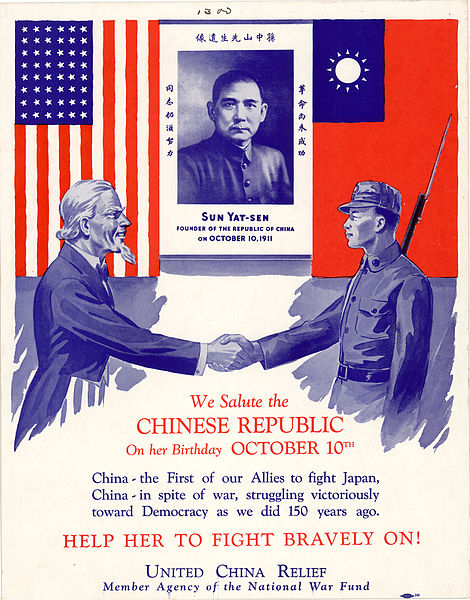
Now, it seems, the people who have grown up with the ROC flag as a symbol of Taiwan...only see it as representing Taiwan. The China part has been totally lost no matter how hard the KMT tries to push it. The KMT has had their dear symbol stolen from under their noses and they can't do a single thing about it.
This is true (and is also not the first time the point has been made). The current generation of Taiwanese have taken that symbol and turned it into their national flag, stripping it of its previous association with the KMT one-party state and its inherent Chinese/Han chauvinism and unificationism.
Stores sell it, people wear shirts decorated with it and get in trouble if they try to wave it at international sporting events. Some may feel a wave of pride when they see it abroad, as its image is suppressed anywhere Chinese 'soft' power (there is nothing soft about it).
Try as I might to be okay with this, I'm just not. To me, this isn't a victory, although it has positives. This is an accident of history in which a flag that stands for authoritarianism, annexationism and ethnic chauvinism, by being subverted, has made it harder to create something better, something uniquely Taiwanese, something that doesn't create deep feelings of discomfort among some people. Although I'll probably be criticized for this, on some level it feels like that flag, with its KMT sun in the upper left feels like it sort of Stockholm Syndromed itself into the national consciousness (I await your hate mail). With no other clearly superior options forthcoming it became the de facto choice, perhaps making its own subversion necessary. What else do you do without other clear options?
Before you get on my back about those other options, a quick re-tread of a road we've already been down: the green-and-white independence flag is too similar to the DPP flag and the hearts flag and moon flags are a bit boring, and for most don't stir much association with Taiwan. The tiger flag has its own issues - although it is my favorite design by far, I have been told by someone who should know that the tiger was chosen because in Chinese symbolism, tigers are subordinate to dragons, and the stated fealty of the 1895 Republic that flew that flag was to the Qing Empire, whose symbol was a dragon. Also, there have never been tigers in Taiwan. With all of these other choices wanting, what other choice is there but to take the national symbol shoved down your throat and turn it into an actual national symbol of the nation you always envisioned rather than the nation it was meant to represent?
But let me be clear: that KMT sun makes me want to barf. There it sits, as though that party has some sort of special privilege or sacred place in Taiwanese politics more so than any other party; as though their brutal, dictatorial and murderous past could be so easily whitewashed. As though any party deserves a place of privilege in a free democracy, with their party symbol on the national flag. If adopting/subverting the ROC flag as the Taiwanese flag settled the question, to me, that question was settled with the wrong answer.
I'm not entirely sure why I care so much - I didn't grow up here. The KMT didn't torture, murder, imprison, force into exile or 'disappear' any of my family members. I'm an English speaking white girl from New York and not a citizen of Taiwan - why on Earth should I care what the flag is?
And yet here I am, going against the mainstream and being open about not liking it one bit.
This brings up all sorts of difficult questions.
On most issues of Taiwanese civil discourse, I have in the last few years found myself agreeing with a pretty substantial majority, or at least a strong plurality, of locals. I don't hide my pro-marriage equality, pro (eventual, de jure) independence views, my general gravitation towards the views of the Third Force parties, and my support of Taiwanese identity not as a problematic ethnocentric belief but as one of shared history (even recent history) and values.
There was a time when this was not the case - the early Ma years, for example - but back then I didn't have such a strong 'Taiwan identity'. I still don't feel fully comfortable claiming to be anything other than a foreigner, but I don't feel remotely the same way as I did in 2008. Back then I still assumed I'd go 'home' someday, or travel and live elsewhere, and that 'home' was in the United States. It was easy to say that my personal opinions didn't really matter because I was not Taiwanese, I could not vote, and ultimately what I thought wasn't important. This was a good thing for the time, because many of my views, while now mainstream, were absolutely not the majority view then.
At some point, something changed; something inside cracked open (if you were wondering if this happened around 2014 - yes, yes it did). I went from "I'll probably go home someday" to "I want dual nationality because this is my home." Not everyone understands this, though, so when I talk to such people, I still tend to frame my opinions this way: yes, I believe in certain things, but so do many, if not a strong majority, of Taiwanese. So I'm not trying to force my opinions on anyone - I more or less support what most people do.
This is the easiest way to buffer the criticism that being a foreigner living in and writing about Taiwan inherently courts, because honestly, there will always be people who just don't get it. Some might incorrectly think that my considering Taiwan home is a weird racial fetish thing (it's not - the desire to change one's race strikes me as deeply odd and problematic). Some might think I want to be just another whitey hoping to climb to the top of the dogheap in some kinder foreign country where being white confers extra privilege simply due to standing out, because I couldn't make it where I came from (also not true: my ambitions don't include wanting to be at the top of anything.) Some will think a foreigner in Taiwan - or a Westerner in any non-Western country - is always an invader, leech or both. Some will think any opinion I have that diverges from the mainstream is simply that of yet another whitey who thinks their 'superior' view can 'enlighten' the 'locals'.
Very few understand that I simply have an opinion on my home because I live here too. What happens here affects me, and it is natural to have opinions about issues concerning one's home. American politics, at this point, feels like 'foreign affairs' to me even though that is the country in which I vote. What happens in Taiwan affects me on a granular level. Why wouldn't I care about that?
Even fewer understand that I'm not necessarily out to change local minds on this or almost any issue, and in fact I rarely write in Chinese because I don't necessarily like the idea of a foreign resident trying to affect local discourse in that way (one exception can be found here, regarding convicted sex offenders being allowed to hire domestic workers).
I might say I support self-determination - the right of the Taiwanese to decide how to run their country. And I do. At the same time, I just don't agree with the way society has chosen to accept that flag, so saying "well I just support self-determination" comes across as insincere if not hollow. I just don't like it, and although the people I hang around tend to agree with me, most people don't.
Of course, these two things are not the same, which is easy to digest when the discussion is centered on one's native country. I don't like the way the latest American election turned out, but that doesn't mean I think democracy is a load of crap (I do think the electoral college is, but that's another issue). I can likewise support the right of Taiwanese citizens to decide for themselves what the ROC flag symbolizes, without liking the outcome.
However, it's so common for critics of expat political commentary in any country to not draw that distinction - assuming that foreign nationals must agree with local decisions otherwise they're just White Savior Western Cultural Imperialist Jerks - that it must be clarified.
So, to what extent do I get to have and express my own opinions on Taiwan, especially when they diverge from the mainstream? At what point does doing so make me someone trying to push a foreigner's view on the rest of the country? How long do I have to live here, and what sort of assimilation is necessary, before my views are as legitimate as those of any Taiwanese? I can't say it enough: this is my home. Am I still obligated to subordinate my personal views to that of the majority in a way a dissenting local would not? What right do I have to have a minority opinion about a country I'm not from?
At what point is this an opinion I hold about my home, rather than an opinion a foreigner holds about a country she does not hold citizenship in?
I could ignore all of this, knowing that haters are, as the adage goes, gonna hate. If someone has decided to believe that foreigners' dissenting views are never welcome, that's just what they're going to believe. On a molecular level I don't really care what they think. If you're reading this now and you hate me - well, first, you're probably not alone, but secondly, I sincerely and truly don't care. My opinion isn't going to change just because you don't like it.
On the other hand, if I am going to advocate for Taiwan more generally, I have to engage with these questions. It keeps me honest - if I ever tread too close to 'enlightened white lady wants to make the benighted locals' I want to know about it so I can stop. It also helps me remember that I'm not writing about these issues because I think I know better than Taiwanese society, but because this is my home too, so I get to have and express an opinion. It helps me remember when it's worth taking that expression beyond the expat and English-speaking bubble and into the realm of local discourse (answer: almost never). It also helps me work on framing what I have to say in a way that can't be as easily dismissed.
It also helps me remember what privilege I do have. I lack the ability to be activist in certain ways here - I'm too easily identified, too easily made a target, too easily criticized for being "not Taiwanese" or "making it all about me" (Taiwanese Americans might be similarly criticized as not 'Taiwanese' enough, but it's not quite the same as having an obviously foreign face). I do think it's important to seek out Taiwanese voices on Taiwanese issues and to actually listen to them. That might get me down, but I have to remember that, for all of the things I can't do, standing out (that is, making it easier to draw attention to what I have to say) and being a native-level English user from a background of comparative advantage - how many Taiwanese can up and move to the US the way I moved to Taiwan? - are privileges I should neither forget I have nor take for granted.
I don't have answers - I'm still not sure where that line is. All I can say for sure is that this is my home, so I do get to have an opinion as what happens here affects me too. Everything else is still kind of up in the air.
My politics are open: I'm not a fan of the flag of the Republic of China, nor of the Republic of China generally. I view it as a foreign entity that unfortunately governs, but is philosophically and historically distinct from, Taiwan. Taiwan is my home; the Republic of China is not. I feel nothing when I see the flag of the Republic of China flying. I feel quite a bit when I see images I more closely associate with Taiwan.
It's easy to get involved when one agrees with the zeigeist. It's not so easy when one opposes it, but is very obviously foreign. I know there are locals who agree - it's not just Lao Ren Cha against the rest of Taiwan. The question going forward is how to best support those locals and work with them without making it all about me.
Subscribe to:
Posts (Atom)