Saturday, November 11, 2017

Sometimes I change my mind

IMG_8279


You know, I have said that I have trouble voting my conscience in American elections, because the people I support on (almost) every other platform are the people who either don't care or seem to be just plain wrong about Taiwan (although even that is sometimes hard to gauge). It's the same reason why I do not attempt to get into more hardcore pro-Taiwan advocacy in the US - when it comes to the conservative blowhards whom I want to mouth-punch on one hand for trying to take away my bodily autonomy as a woman, I doubt I could just turn around and talk to them civilly about Taiwan. It's my reproductive system they want to get their grimy hands in - it's kinda personal. I can't distance myself from it the way a lot of (male) people who are not threatened because of their gender can. I don't doubt they abhor it as well, but the ability to compartmentalize...well, that seems like a really nice privilege of having a penis.

I have also said that, while I was generally a Sanders supporter back when I could be one, and did vote for him in the primary, that I was concerned about what kind of president he would be vis-a-vis Taiwan. He was not exactly known for his foreign policy acumen, or at least was seen as weak in that area.

I mean, Trump is Trump and he's just hair and fart sounds so whatever, but generally Republican presidents have been better for Taiwan than Democratic ones. Those same Republican presidents have been bad news for women.

When you love Taiwan but have a vagina, this is a problem. It didn't seem possible to fully vote my conscience, because it appeared that those I could never vote for had the best possible Taiwan policy - that's not to say great, but the best thing going under the circumstances - and those I otherwise supported, shall we say, did not.

I had friends assure me that support for Taiwan was bipartisan, but that seemed unlikely in a world where Republicans were in the media doing everything I wanted Democrats to be doing - meeting with Hong Kong dissidents, introducing pro-Taiwan legislation. Then we have (rumors? Leaks? Real? Fake? Who even knows?) that Hillary Clinton wanted to discuss ditching Taiwan.

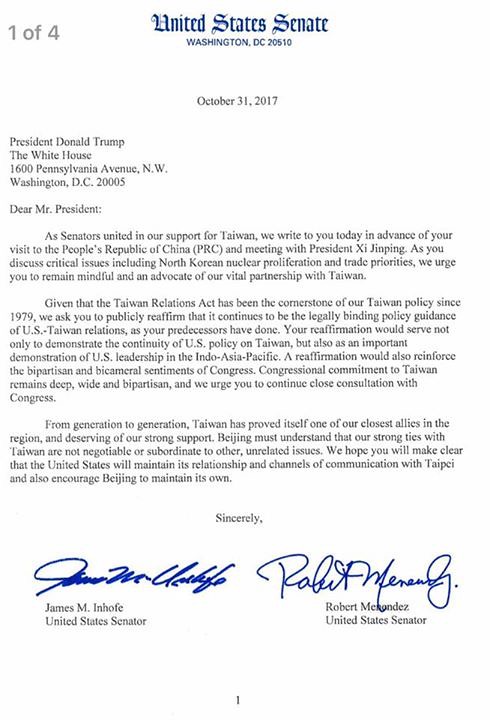
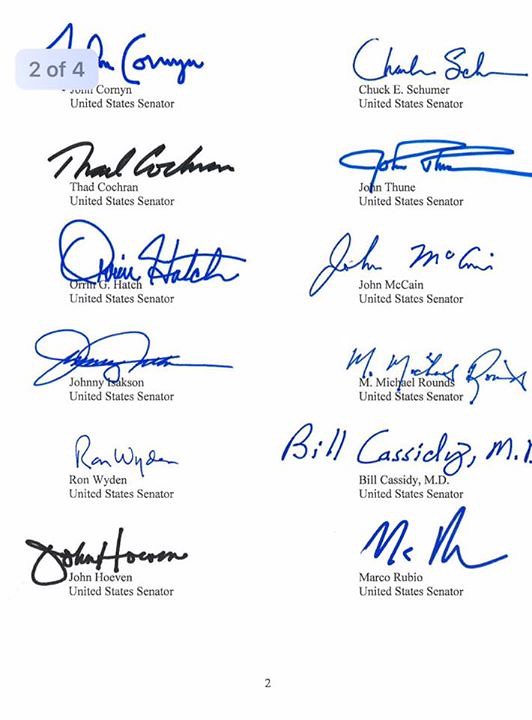
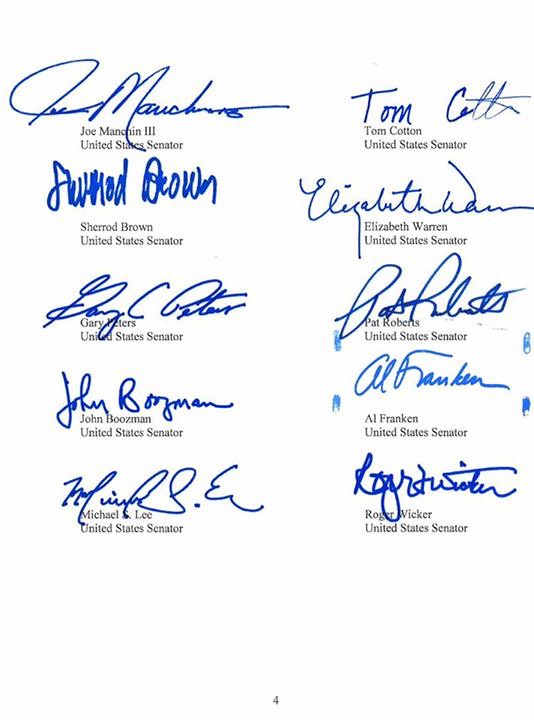
Then I saw this letter urging President Hair and Fart Sounds to support the Taiwan Relations Act in light of his (then upcoming) visit to China to meet with President Angry Pooh.  And unless it's some elaborate troll job aimed specifically at me (it's not), it induced elation and despair at the same time.
IMG_8281
IMG_8280IMG_8282

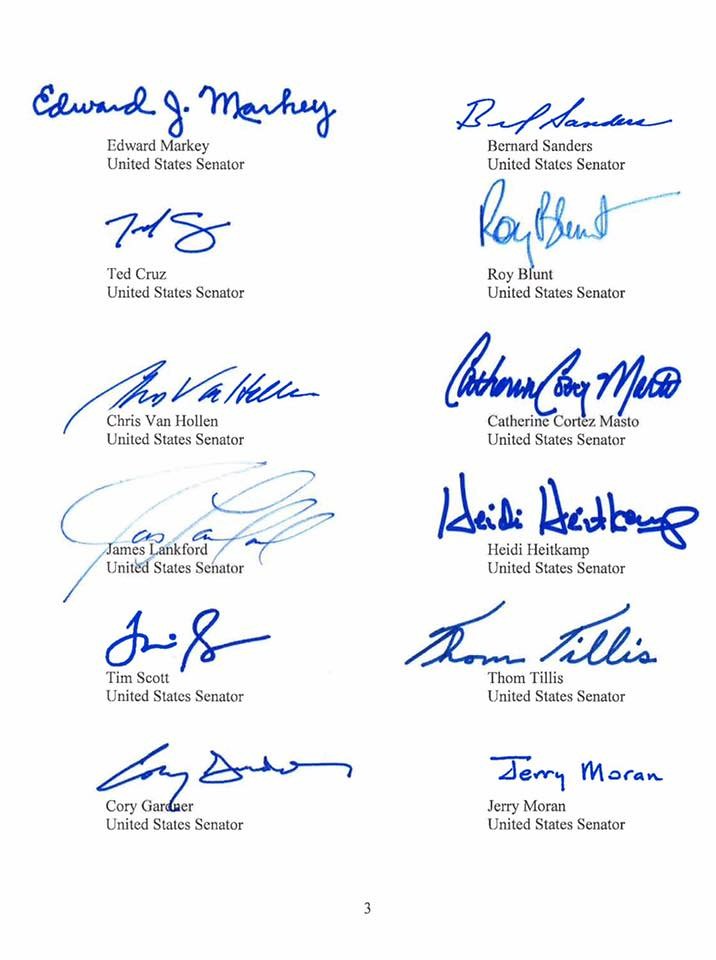
Robert Menendez. Ron Wyden. Edward Markey. Chuck Schumer. Chris Van Hollen. Catherine Cortez Masto. Heidi Heitkamp (though I don't always agree with her). Joe Manchin. Sherrod Brown (who says a lot about Taiwan and it almost never seems to get media attention). Gary Peters. Elizabeth Warren. Al Franken. Bernard Sanders.

Now, I'm not trying to claim that the Taiwan Relations Act is the gold standard of the way the world should be treating Taiwan. It's not. Nobody in the world is treating Taiwan the way it should be treated, not even its (checkbook) diplomatic allies. Taiwan deserves better than what it's getting, period. It deserves international recognition and support, including support for changing its governmental framework from fundamentally Chinese to fundamentally Taiwanese. I'm not a fan of support for the "ROC on Taiwan" as a way of opposing Communism or even simply opposing China - I'm not a fan of the ROC at all.

I'd prefer a world in which it was a given that Taiwan could decide its future without international threat, and in which support for Taiwan was based on it simply being the right thing to do - supporting Taiwan for Taiwan's sake and everything it has to offer the world - and not in any sort of relation to how the world handled China. That is, however, not the world we live in.

Considering Taiwan's former authoritarian leadership's complicity in creating the state of limbo the country still finds itself, and considering that "rah rah ROC because we hate the PRC" - and "well, here's the Taiwan Relations Act which is a bit milquetoast but it's something and frankly a unique piece of policy given the situation" are not ideal but are, unfortunately, how the 20th century shook out, I'll take it.

So, I've changed my mind on a few things.

Yes, GOP rhetoric on Taiwan, while imperfect, is still closer to the mark than Democratic rhetoric. Conservative rhetoric on Taiwan is more acccurate - though again, flawed - than liberal discourse.

However, it is clear that despite this, support for Taiwan is a bipartisan issue. Call me a Doubting Thomas - I needed to see it in the flesh. You don't get Al Franken, Elizabeth Warren and Bernie Freakin' Sanders signing a letter alongside Marco Rubio and Ted Cruz if something is a partisan issue. You just don't.

This helps, but does not make me any happier that more than one "friend of Taiwan" is no friend of mine, as a person in a female body who expects bodily autonomy. For every good thing they do or say regarding Taiwan or Hong Kong, I can name some way in which they have tried to subjugate women. The part of me that loves Taiwan cannot reconcile this with the part of me that has, and would like to retain control over, ovaries.

It is also clear that, as much as I might disagree at times, and as much as I might think the US can and should offer something a bit stronger to Taiwan than the weaksauce currently on the table, that those at the top forming policy do, in fact, understand (at least enough of) the intricacies of the Taiwan issue.

Do I entirely trust them? Nope. But I'll take it for now.

So why do I despair?

Because the one thing that consoled me as Sanders left the 2016 race and I cast my vote for Clinton - besides genuinely wanting a female president and knowing that, while I might not like a lot of what she does, I did trust her to do the job competently - was that "Sanders would have been weak on Taiwan".

Except...oops. Nope.

It's not possible to know what a President Sanders would have done vis-a-vis Taiwan, but we can make some educated guesses, and his name on this letter is telling.

And because I actually voted against Chuck Schumer in 2016. Hey, don't judge me, I knew he'd win anyway, I just wanted to give a big pointless middle finger to the Democrats in some small way. I voted Green Party for Senate, knowing they'd lose. Now I kind of regret that a little, maybe?

Oh yeah, and I despair because despite this being a bipartisan issue, Taiwan is still stuck in the status quo morass with a world that does not appreciate what it has to offer and can't bring itself to just do the right thing, and also because this letter was delivered to President Hair and Fart Sounds, which means...ugh.

Sunday, November 5, 2017

So are we Garbage Foreigners or not?

IMG_8178
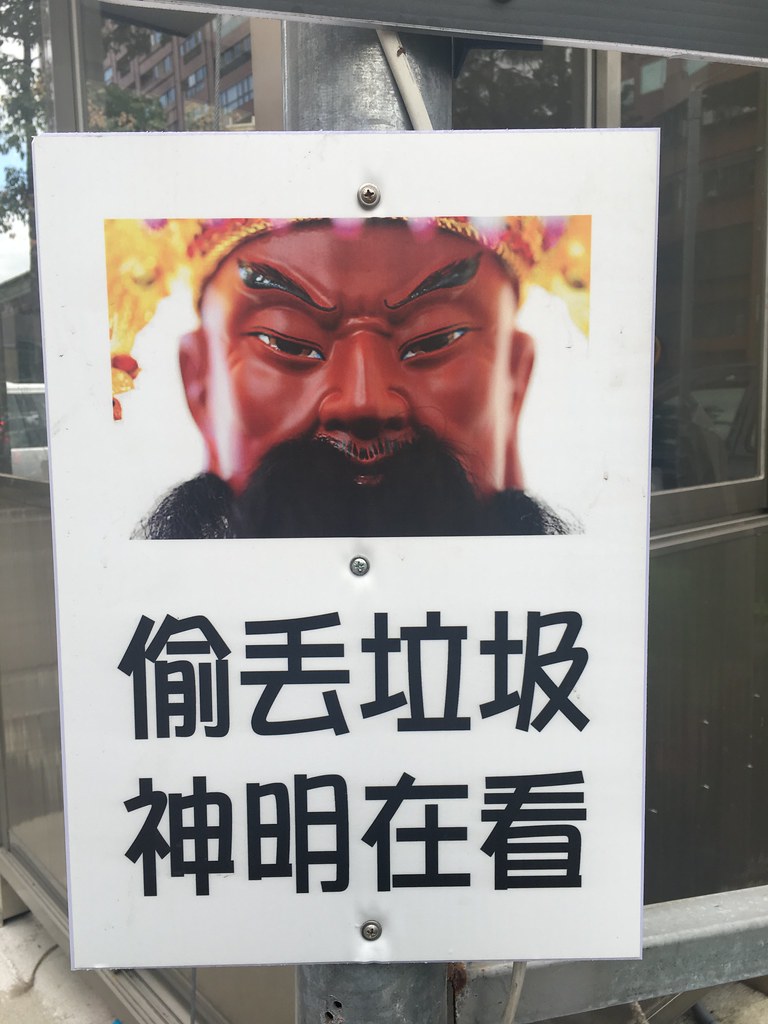
Yeah, Taiwanese government. Don't just throw us anywhere. God is watching. 

A few days ago, the Legislative Yuan passed the Act Governing Recruitment and Employment of Foreign Professionals (外國專業人才延攬及雇用法), something the long-term expat community has been talking about for awhile. In theory, the Act gives out lots of benefits to all foreign professionals. In practice, who gets what is less clear.

I'm only writing about it now because it became clear early on that news coverage of its passage was perhaps a more interesting angle to consider than simply providing another analysis of the act itself.

I'll start with the one article I have little criticism of: a News Lens piece on the limbo many foreign artists in Taiwan find themselves in, as the visa laws don't appropriately cover them. This piece correctly notes that the new law makes it easier to apply for a visa independently - as most foreign artists do not have a single employer and may not have an "employer" at all - and also that the new regulations may not include those who arrive for the purposes of unpaid art exchanges.

I'll also get this point out of the way: this Act covers foreign professionals, who are a minority of all foreigners in Taiwan. The majority are migrant workers - mostly laborers from Southeast Asia - will not see any change or any respite in their uphill battle for fairer immigration policy and more protections guaranteeing better treatment while they are here. This is not right.

Regarding all other issues, for those who are interested, you can read an English version of the full Act here (Google Drive), and a Chinese version here (the English version should also be available for download on that site). I do recommend that you do so.

Notably, the Act continues the tendency to differentiate foreign professionals into Foreign Special Professionals (special Lords and Ladies "who possess special expertise needed by the State in science and technology, the economy, education, the arts, sports and other fields "as announced by the relevant central competent authority" which means little except that the government has to designate you as such - this seems to mostly cover old missionaries), Foreign Senior Professionals ("senior professionals needed by the State...as specified in the Immigration Act") and Foreign Professionals (or, essentially, Garbage Foreigners - good enough to get a professional visa to come here, but not good enough to qualify for any other benefits fair-minded immigration policy because they are not really wanted or not really considered 'professionals' despite the visa). Don't think I'm dumping on Garbage Foreigners - despite all of my relevant qualifications, experience and expertise, I am one too.

However, it is not clear to what extent the differentiation will matter in implementation. This is where the coverage of the Act's passage becomes relevant. If you read the Act itself, most of the benefits will be applicable to all classes of foreign professionals - different articles cover each class, but all are covered in most cases.

What this means is that permanent residents like Brendan and I will be eligible for the labor pension scheme, and should I get a university job I'll be eligible for that pension scheme just as a local would. This is brilliant, and something sorely needed. The money isn't much, but it's something, and it's simply the fair and right thing to do.

The Act also stipulates that dependents of permanent residents will be able to apply for permanent residence as well. This is great news for a few friends of mine, notably at least one whose spouse would benefit greatly from being able to apply for permanent residence. This doesn't affect me as I have no dependents and Brendan is now officially a permanent resident as well, but it does affect people I know and care about.

However, the News Lens article on the Act terrified a number of us in the foreign community, noting:

As for “senior” professionals, or those whose spouses, minor children and disabled children may apply for permanent residency along with the worker, not to mention qualify for certain tax benefits, they are likely to be defined as those with a minimum monthly salary of at least NT$160,000 (US$5,300). Again, regulations and letters of interpretation will be issued to defined this as part of the Executive Yuan’s implementation phase.


This language is not in the Act itself, which only refers to "foreign professionals" (as well as Foreign Special Professionals and Foreign Senior Professionals). It caused quite a stir, and even led to accusations of inaccurate or lazy reporting and "spreading false information", but if you read that paragraph carefully, it is clearly speculation regarding how the Act will be implemented. 
The Act's language does differ between Foreign Special Professionals and the rest of us trash, where our dependents have a 5-year residency requirement that is not present in the article pertaining to Foreign Special Professionals. This has led some people to believe that for we regular trashcan dwellers, dependents must wait an additional five years to be covered. However, it's not clear that those five years must take place after the original applicant receives their APRC. It could well be that dependents of Better Superior Super Awesome foreigners can apply even if they don't have 5 years' residency (say, if they joined the working parent/spouse later), whereas we regular roaches don't get this benefit. I'm going to look for clarification on this.

That said, we should all be on guard regarding implementation, as it is possible for extra layers of regulation and further requirements to qualify may be added at that time. 

In fact, I reached out to the News Lens for clarification on where speculation that this requirement would be added came from, and received a timely and useful reply (thanks, News Lens!). The speculative ideas here came from this source.

I suspect, reading through that source, that it's not that those eligible to have their dependents apply for APRCs that will be constrained by the $160,000NT/month income requirement, but merely one definition of what constitutes a "foreign special professional". 

As dependents of foreign professionals (not just Foreign Special Professional Wonderful Lords and Ladies) will be allowed to apply for APRCs, what is defined as a "foreign special professional" doesn't seem to actually apply for this specific purpose. 

So, for now, we can relax. 

It is very important that we stay on our guard to ensure that requirements for dependent APRCs are not regulated to only apply to some foreigners for one simple reason - and I am highlighting this paragraph because it is probably the most important thing I'll say in the entire post: 

It is not fair to discriminate against the children and spouses of some long-term professionals simply because the breadwinner who holds the visa allowing them all to stay is not the "right kind" of foreigner. It is not right to tell the children of comfortable or moderately prosperous foreign teachers that, because their mother or father is not rich enough, or because he or she is a teacher rather than, say, an engineer, that they do not deserve permanent residency in the only country they have ever known or called home. "Sorry kids, I know you were born and raised here and one of your native languages is Mandarin, but your Mom went into the noble profession of education instead of being a highly-paid businessperson, so when you turn 20 you should GTFO and go live in a country you've only visited a few times and feel like a foreigner in!" goes against basic humanity as well as the civic values of what it means to be Taiwanese. 

This is not a threat yet, but it could become one in the implementation phase, and we cannot let that happen.

Another improvement will be the issuance of Gold Cards which wrap a work permit, residence visa, residence permit and re-entry permit (which is odd - your residence permit
is your re-entry permit now so what's the change?) into one, and ensure that you hold your own work permit rather than it being dependent on your employer. 

This would be wonderful, as one major issue foreigners in Taiwan face is that, if they are in a dire or problematic employment situation, it is difficult to change jobs as a malicious employer may attempt to cancel your visa and work permit before you can find another job. Even if you do find another job, some malicious employers cancel your visa/work permit a bit too early before the switch can be processed. I have known more than one person facing this issue, and it has affected how long they'd had to wait for permanent residency. 

Focus Taiwan reports this in a very unclear way, making it sound as though everyone qualifies for Gold Cards (New Bloom makes the same mistake). In fact, only Foreign Special Professional Wonderful Lords and Ladies qualify, not Garbage Foreigners. 

That is to say, most people - we normal plebes - who are likely to find themselves in a bad employment situation will actually not be able to get out of it more easily, because they won't qualify for being treated with basic humanity. 

Another point that has been met which is universally good news is that children born to foreign professionals in Taiwan will no longer have a 6-month gap between birth and when they are eligible for enrollment in National Health Insurance. This is a deeply-important and much needed change, as there have been several cases of new parents, who happened to be foreigners, seeing their financial wellbeing destroyed by spiraling medical costs in the case of medical complications after the birth of their children.

Yet another provision that benefits me is the revocation of the 183 day/year residency requirement to maintain my permanent residence. As readers know, I spent almost half a year in the US in 2015 to attend to family matters after the passing of my mother in late 2014. I filed a petition to leave for a longer period with Immigration before leaving (and such petitions are nearly universally accepted), and squeaked back in under the 183-day limit regardless, but it is conceivable that such a situation will arise again. From personal experience, I know this requirement can be hard to meet. 

Other issues remain unaddressed, however, which few news outlets are reporting. I'm not as concerned about the internship eligibility being cut, though perhaps that's because I'm not a fan of internships generally. I consider them to be at best a problematic institution and at worst exploitative, almost parasitic ("you need us for experience but we're not going to make it possible for you to eat or pay rent"). 

However, I know a few foreigners born and raised in Taiwan who are well over the age of 20, and therefore will not be eligible to apply for permanent residency under this Act. All this group of foreign residents - for whom Taiwan truly is not only home but also their native land and culture - is asking for as we wait for dual nationality laws to be relaxed is to be given permanent residence on the basis of their having lived here, in some cases, all their lives. And yet, because they were born too early, they're still in limbo. 

Another problem is that, for many foreigners, the requirement of "two years' relevant experience or a Master's in any field" to work in any job other than English teaching is onerous. Some may have, say, a year and 8 months' experience (do those extra few months really matter?), some may want to change fields, some may have an extremely relevant Bachelor's, some may have trouble documenting their experience - having worked freelance, or for an employer that will not provide them with the relevant documents, and some may be in industries where experience is not as quantifiable, such as the arts. I know of at least one case where a young man would have preferred to stay in Taiwan after earning a Bachelor's degree, and who had spent much of his childhood in Taiwan, but could not get any non-teaching job (and he didn't want to teach). He went to Japan. I know of another who had nearly, but not quite, 2 years' experience and had been in Taiwan for over 5 years. However, some of that time was spent as a student, which does not count towards permanent residency, and there had been a break regardless (to finish school and care for a sick relative). There is no reason why that should have held her back from finding non-teaching work. 

This is one area where I further disagree with New Bloom (linked above). We agree that immigration controls around the world can be barbarous, acting as unnecessary controls on people rather than in the interests of a country. They note rightly that immigration policies around the world are strict, and Taiwan is no exception.

However, they provide evidence for that claim in all the wrong ways. Unlike countries with stricter immigration policies, Taiwan
wants to attract foreign talent. The strategy, therefore, should not be to mimic other countries who want to tighten controls. 

In fact, New Bloom fails to point out the real difference between Taiwan and many of our countries of origin. It is difficult to immigrate or work in North America, Australia and much of Europe. This much is true. In fact, it's quite easy in contrast to come and work in Taiwan. Even if one is only qualified to teach, they only have to stick around doing that for five years before qualifying for an APRC, which allows them to take any job. That's not bad, considering how many immigrants to the West give up whatever career they had in their native countries permanently, often working lower-skilled jobs in the hope that growing up in the West will benefit their children.

However, once in those Western countries legally,
it is fairly easy to stay. There are paths to naturalization that are viable, and even permanent residents/green card holders enjoy benefits we permanent residents in Taiwan do not. They are also not discriminated against in business the way we are: many obtain mortgages and credit lines, for example, which remains a pipe dream for many long-term residents in Taiwan (although the credit card situation appears to be improving).

It is simply not enough to say "well the requirements in your countries of origin are also strict!" It's more complicated than that. 

In fact, I'd say that compared to the rest of the world it's not only easy to come here for work - as mentioned above - but fairly easy to obtain permanent residence. The bar is high, and a problem for some deserving people, but it is not impassable for most foreign professionals. However, as I've written, in Taiwan permanent residency is not enough to actually stay permanently unless one is married to a Taiwanese citizen (which clears up all or most of the hurdles surrounding credit lines and obtaining a mortgage). 

Related to this but not specifically in reaction to the New Bloom piece, while it is true that around the world countries want to attract certain types of professionals, I am generally against a policy of differentiation of professional work. 

Barring some exceptional cases, most immigrants contribute to the country they settle in, and generally speaking the numbers that come in are more or less in line with the numbers the economy can handle. The reason why is simple: we don't move abroad in a vacuum. We research, read ahead, ask questions and talk to people already in the country we are considering moving to. If all signs point to "it will be hard to find a job and wages and benefits are stagnant because the market is saturated or the jobs simply not that good", that will reduce the number of people coming in as they'll decide to go elsewhere in search of better opportunities. When the market is robust and competitive, more will come, just as it should be. 

This is true for Garbage Foreigners as well as Special Outstanding Wonderful Foreign Lords and Ladies. You aren't going to get the Special Wonderful Foreign Lords and Ladies if your market isn't enticing, no matter how lenient your immigration policy is. And, I've gotta say, I love you Taiwan but the market is not enticing. Frankly, it's not even enticing for foreign teachers. Those of us who stay do so because we care about Taiwan, not because we think remuneration is superb. 

Aww, look at me, sounding like a Running Dog Capitalist! 

If anything, in the case of us Garbage Foreigners, making it easier to move here as a teacher will entice better teachers to come here - people with real qualifications and experience, not just new graduates who have never been in a classroom nor have been trained to teach. This can only improve the country. Some are likely to work in cram schools, raising the level of education at those institutions - working in a university or public school doesn't suit everyone (I could work in a public school, for example, but choose not to).

I have talked to more than one qualified and talented teacher who has either chosen not to come here or not to stay because the labor and immigration laws are not enticing enough to better teachers. 

In any case, a second reason not to discriminate in this way is that most of the benefits in the Act won't apply to the vast majority of incoming foreigners. Most of the benefits accrue to permanent residents (that is, long-termers like me), and the vast majority of foreign professionals who come to Taiwan do not stay that long, or are not intending to stay permanently or semi-permanently, and as such won't qualify. The number of foreign professionals - from Garbage to Special - who will qualify is not only small, it encompasses people who are already here. Nothing will change for Taiwan except that its long-term foreign residents will get a fairer shake. Why is that a bad thing? There is no good reason to tell them they aren't good enough or wanted enough. 

Yes, these provisions will affect new arrivals who, in the future, may decide to put down roots in Taiwan. However, given past numbers (I doubt the total number of permanent residents is above four figures), the impact will not be large. Most Garbage Foreigners - again, the category I fall into - plan to leave within a few years, not to make Taiwan their home. We aren't going to see a massive influx of unwanted filthy stinky buxiban teachers just because permanent residents get a few more much-needed benefits. In any case, 
the contributions these someday-long-termers make will far outstrip the benefits they are offered, and by the time they are eligible they have been already here for some time. 

That the Act felt the need to discuss at length the "limited" need for such Garbage Foreigners is telling and sad. Thanks, Taiwan. Good to know that you had to put into writing exactly how much people like me are not valued.

Finally, as this is an ancillary issue to discussion of the newly-passed Act, New Bloom also gets this wrong:


What leads many to react strongly against and sometimes deem Taiwan a “xenophobic” country is the lack of adequate provisions for obtaining Taiwanese citizenship, in which Taiwanese citizens may be allowed to hold multiple citizenships without being made to give up their original Taiwanese citizenship, but foreigners would have to give up their original citizenship before applying for Taiwanese citizenship, leaving the possibility open that they may become stateless. But, again, although this is a serious fault of the Taiwanese system, this is not exceptional in Asia, in which a high barrier for obtaining citizenship has not been overcome.


In fact, Taiwan's case is exceptional in Asia for a few reasons.

The first is that, again, unlike other Asian countries, Taiwan looks more favorably on diversity. Not everyone has hopped on the internationalization train, but generally speaking Taiwan is not as xenophobic as China, Japan or Korea, especially when it comes to long-term foreign residents. I doubt the majority of Chinese, Japanese or Koreans would support allowing many foreigners to become citizens at all, dual nationality aside. Taiwan is different. A few ethnic chauvinists still exist, but nobody I've talked to - and I've talked to hundreds of people about this issue - is against foreign long-term residents becoming citizens. For many, to be Taiwanese is to participate in a shared civic nationalism, not to be of the same blood as the rest of an ethnic state.

Try playing that card in Japan or Korea (or even China, despite its ethnic diversity - well, China's rhetoric just doesn't make sense in this regard) - good luck. You won't find much support.

Secondly, and I cannot stress this enough, Taiwan is exceptional because unlike other Asian countries, there is a massive double standard regarding who can have dual nationality.

China and Japan, in contrast, do not allow dual nationality even for their born citizens. If a foreigner wants to be Japanese or Chinese (although why someone would want Chinese nationality if they weren't born with it is beyond me), they must give up their original nationality. However, the same is true if a Chinese or Japanese person wants to obtain a second nationality. In fact, in one memorable case, noted author Guo Xiaolu obtained British nationality not realizing this law, and had her Chinese passport cut up by a consular official:


“Do you have a Chinese passport?” She stared at me with a cold, calm intensity, clutching my British passport.
I took out my Chinese passport and handed it to her through the narrow window.
She flipped through its pages. The way she handled it gave me a sudden stomach ache. I sensed something bad was coming.
“You know it’s illegal to possess two passports as a Chinese citizen?” she remarked in her even-toned, slightly jarring voice.
Advertisement
“Illegal?” I repeated. My surprise was totally genuine. It had never occurred to me that having two passports was against Chinese law.
The woman glanced at me from the corner of her eye. I couldn’t help but feel the judgment she had formed of me: a criminal! No, worse than that, I was a Chinese criminal who had muddied her own Chinese citizenship with that of a small, foreign state. And to top it all, I was ignorant of the laws of my own country.
She then flipped through my visa application, which was attached to my British passport, and announced: “Since this is the first time you are using your western passport, we will only issue you a two-week visa for China.”
“What?” I was speechless. I had applied for a six-month family visit visa. Before I could even argue, I saw her take out a large pair of scissors and decisively cut the corner off my Chinese passport. She then threw it back out at me. It landed before me on the counter, disfigured and invalid.

South Korea is a murkier situation. Dual nationality is now allowed for Koreans as well as foreign long-term residents, but who is eligible for it is unclear (I'll have to do more research on this). From the second link:


By submitting the same type of pledge, certain groups of foreign nationals may also acquire Korean citizenship while maintaining their original one. The groups include marriage migrants, foreigners of outstanding talent who are naturalized as Koreans, and those who have their Korean citizenship reinstated by meeting certain qualifications. (Nationality Act, Act No. 8892 (Mar. 14, 2008), last amended by Act No. 10275 (May 4, 2010).


If this means what I suspect - that general naturalization in Korea is similarly restricted to Foreign Special Wonderful Lords and Ladies as it is in Taiwan, and closed to Garbage Foreigners - this still, however, makes Korea and Taiwan the exceptions, not the rule.

In fact, regarding Taiwan, let's call it a triple standard.

If you are born Taiwanese, you can have dual nationality or even multiple nationalities.

If you are the descendants of Overseas Chinese (I'm not sure how specific the requirements are, but certainly if your ancestors were a part of the 1945-1949 Nationalist diaspora), you can have dual nationality, even if your ancestors never set foot in Taiwan. They will give you Taiwanese nationality and let you keep your original nationality. I know more than one person who has successfully done this.

That is to say, the requirements are not merely related to blood. It's pure, clear ethnic chauvinism. It's racism. Your ancestors do not have to be Taiwanese, they merely need the correct ethnic and political pedigree.

If you are a foreigner - just like me! - but your ancestors were Taiwanese, you can be a dual national.

If your grandfather spent a short amount of time residing in Taiwan and you're a really good soccer player, you can be a dual national. Ugh.

But if you have the wrong color skin and the wrong-shaped face, you are a Garbage Foreigner who does not qualify. You must renounce, you stinking piece of crap. Never forget that you are not wanted.

This is true even if you were born and raised here. Someone whose ancestors never came to Taiwan but have the desired political history can be a dual national, but someone who is actually Taiwanese by virtue of growing up here immersed in the culture is not.

This is not true for other Asian countries. Their laws are harsh, but at least they apply fairly to everyone. I don't want such harsh requirements in Taiwan, but I do want fairer immigration policy.

I wish New Bloom had covered the issue in this level of nuance - I generally like their local coverage, especially of student and social movements. Unfortunately, the editorializing here misses the mark and is deeply misleading.

In any case, this is not the main issue - it just happens to be related to the question posed by both the ongoing fight for dual nationality - but both this issue and the passage of the Act Governing Recruitment and Employment of Foreign Professionals lead us back to the same question: 
Are we Garbage Foreigners or not? Does Taiwan want us or not? (Hell, does Taiwan understand basic economics or not?)

The new Act seems to point toward a general opening up of how welcoming Taiwan is to its long-term foreign residents, at least the professional class (which is, of course, not enough as most foreigners are not "professionals"). However, continued differentiation of who is an Amazing Perfect Special Outstanding Foreign Professional Demigod and who is a Big-Nose Trash Monkey "Professional", and continued battles to include all foreigners - including non-professional laborers - who want to put down roots in Taiwan still make me wonder.

Are we valued, Taiwan? Am I valued?

I don't know, and your message is more than a little muddled.

Wednesday, November 1, 2017

Rebels, Riffraff and Rights

22089563_10155778621596202_5529181753460609219_n


Last December, around 10,000 pro-LGBT people gathered outside the Legislative Yuan as hearings were held within to discuss proposed marriage equality legislation. I was there just to lend my support, and ran into a friend/former student who was also there in support of the bill. A few weeks later, we met again and were discussing the Sunflower Movement. 

"Do you think it succeeded?" I asked. 
"Actually not really," he replied.
"Why do you think so?" I continued. 

He said that only one of the four demands of the Sunflowers was agreed to (the passage of a cross-strait monitoring framework before the CSSTA could be passed, and not even that had actually been implemented, whereas the CSSTA was not quite dead), and although the KMT had been kicked to the curb in the elections earlier that year, that was no guarantee of real change. 

This was a good point, but I challenged him:

"It's true that the Sunflower demands were not really met, but I can tell you today's Taiwan is not the Taiwan I moved to in 2006. It's not even the Taiwan I knew in 2013. Something changed because of the Sunflowers, there's been a shift in public discourse and attitudes - it really woke the country up. People care more now than they used to, and their newfound activism is directly linked to being inspired by the Sunflowers. That means something."

"Yeah, but..."

"The other day at the rally, you weren't really out there in the crowd. I was. A lot of people were wearing Fuck The Government t-shirts, or even carrying sunflowers. It was clear that the movement had an effect on them. I don't know if they would have been there if they hadn't been woken up."

"Hmm," was all he said in reply.

* * * 

On the heels of a record-breaking Taipei Pride parade (123,000 people were said to have attended this year, up from last year's estimated 80,000), Ketagalan Media - an organization I occasionally write for - published a strong backgrounder on the history and development of LGBT rights and marriage equality movements in Taiwan. They were right to link the relative success of equality movements here to Taiwanese civic activism in general, and a need or urge to differentiate Taiwan from China, a point which isn't made often enough. 

However, although I think it makes some good points and covers some important angles, especially for those who may not be intimately familiar with the history of Taiwanese identity, I actually think that the piece inaccurately portrayed the causality of the issue. 

Despite my story above, I would not say that the LGBT acceptance and marriage equality movements were offshoots of general civic activism in Taiwan. I don't see it entirely as a direct result of, say, the Sunflowers. 

Rather, I would say that Taiwan has always had a more openminded or progressive bent than much of the rest of the continent, with a long historical tradition of civic activism and fighting for human rights. The Sunflowers did not come out of nowhere: they were a continuation of the same cultural traits that brought about the Qing-era rebellions, revolts and home-rule movements under the Japanese and the fight against dictatorship in the 20th century which was composed of several social movements.

As I see it, this rich history was borne of a culture perhaps not quite as beholden to Confucianism as the writer implies. That’s not to say Taiwanese culture is not influenced by Confucian thought: of course it is, to some extent. But remember how Taiwanese society came to be. There are Austronesian cultural roots in which Confucianism has no place, and in which women enjoyed higher status than in much of China (the role of women in Confucianism is, frankly, tragically unsuited to modern society). Added to that, immigrants from China first enticed to come to Taiwan by the Dutch and then, under the Qing, of their own volition (despite this being illegal for a good portion of Qing rule of Taiwan). What person happy with their role in society picks up their life to move to a wild, jungle-covered island, whether at the behest of a bunch of pasty foreign Red Hairs or simply because they want to, even when they are technically not allowed? How traditionally Confucian could the thinking of such a person be, leaving their family home and going against the edicts of their emperor, where Chinese women were not allowed (for some time) and where indigenous women held a higher status in local society than the women they were leaving behind?

That is to say, these early immigrants were often rebels, drifters, weirdos, adventurers, opportunists, riffraff (I would imagine there were more than a few petty criminals among them), pirates or simply people down on their luck.

This is not a criticism. This is praise. This is the foundation of a society that fights back, thinks for itself and is willing to stand up for what it wants. This is not a society of blind obedience, regardless of what notions you might have about ‘Asian cultures’. Give me these guys any day over people who do what they are told and in turn exert control over their wives and descendants. Perhaps it means Taiwan did not develop as peacefully as it could have, but peace is overrated if it doesn't come with justice.

To me, just living among the descendants of these people as well as the indigenous Taiwanese, I have come to understand that Confucianism plays a role in Taiwanese society but is not the key driver that people often assume it is (perhaps because they are predisposed to thinking that all East Asian societies live and die by that philosophy without thinking more deeply about it). In my experience, Daoism (the “everybody just chill” / “you do you” of ancient philosophies) as well as a healthy dose of just being people seeking the best possible life for themselves without worrying too much about the philosophical underpinnings of social order hold just as much, if not more, influence.

If anything, the Confucianism that does exist in Taiwan is arguably more tied to the relatively recent arrival and decades-long control of Taiwan by the KMT, a party very much bathed in the Confucian tradition and the main driver behind the Republic of China, which espouses a very Confucian-style government.

This interpretation of Taiwan’s cultural origins lends itself to a society more predisposed to accepting others as they are, at least outside of their family (within a family things get more complicated), and predisposed to rebelliousness (in a good way - not just accepting the government they are given but fighting actively for the government they want).

What I’m trying to say here is that If any Asian culture was going to be at the forefront of marriage equality and LGBT acceptance, it was going to be Taiwan. And if any Asian culture was going to be so civically engaged and fiercely defensive of a vibrant democracy that they themselves fought for and built, again, it was going to be Taiwan.

Both political activist/Taiwanese identity movements and the LGBT rights movement stem from this. One did not grow from the other: they sprang from the same origin. The success of LGBT acceptance and marriage equality activism in Taiwan - as compared to the rest of Asia - are because of something inherent to Taiwanese culture that is not typically associated with 'Asian cultures' (whether these stereotypical ideas of such cultures are fair or not - and I'd argue mostly not). Other activist movements are too, but they are more like twin siblings.


That's not to say that civic activism in Taiwan hasn't influenced LGBT activism. As I pointed out to my friend, the Sunflowers were the catalyst of an awakening in Taiwan. Without that awakening the number of people actively fighting for marriage equality would likely be lower. The LGBT rights movement here has support from many straight, cisgender allies (myself included). This would still be the case even if the Sunflower Movement had never happened, but it’s unlikely that the crowds would be quite the same size. But, the movement would certainly still exist, just as it had done before 2014.

There are also ways that the Taiwanese identity movement and the LGBT acceptance and marriage equality movements diverge. Taiwanese identity is especially strong in rural Taiwan and the south, where support of the LGBT movement still struggles for support. This is a part of why, while the traditionally pro-independence DPP supports marriage equality somewhat more than the more traditionally China-oriented KMT, their support is not universal and is at times lukewarm: while there is a correlation, being pro-Taiwan does not automatically translate into being pro-marriage equality or accepting LGBT people for who they are (and yet tends to support social movements). And while the KMT tends to be more oriented towards a vision of Taiwan that is ultimately Chinese, with traditionally Chinese cultural roots that include Confucianism, and as a result less open to both social movements and LGBT acceptance, you will find supporters of marriage equality in their ranks.

That said, I do agree that in the modern Taiwanese identity movement, building a better country for its own sake, rather than defining Taiwan in terms of how it is not a part of China, is a key factor. A modern, international Asian nation in which everybody is accepted for who they are, ethnicity is not the key driver of what makes Taiwan unique, and everybody has equal rights (including LGBT people) is a part of that identity and, among the youth especially, is inextricable from it. To some extent, they do feed off each other. However, this feeding seems to be to be a mutual energy exchange, not of one "propelling" the other.

So, in the end, while there are a lot of good things to say about this article in terms of the background information on the history of Taiwanese identity and LGBT rights movements, and I agree with quite a bit of it, there are some areas where I feel it either gives too much credence to certain views of social order (i.e. Confucianism) and others where it assumes a causation that I’m not sure is entirely merited - inferring a parent/child-style relationship to Taiwanese identity and LGBT rights where I think a “two siblings” metaphor is more apt.