
Sunday, December 30, 2018
Drinking in Taiwan's beer cafes: my latest for Taiwan Scene
I'm in Taiwan Scene writing about expat lives old and new, how the beer and food scene in Taiwan has changed, and what's on offer today from the viewpoint of someone who came to Taiwan long before such options existed. And, of course, drinking lots of (local) beer. Enjoy!


Sorry Kaohsiung, but Barcelona you ain't
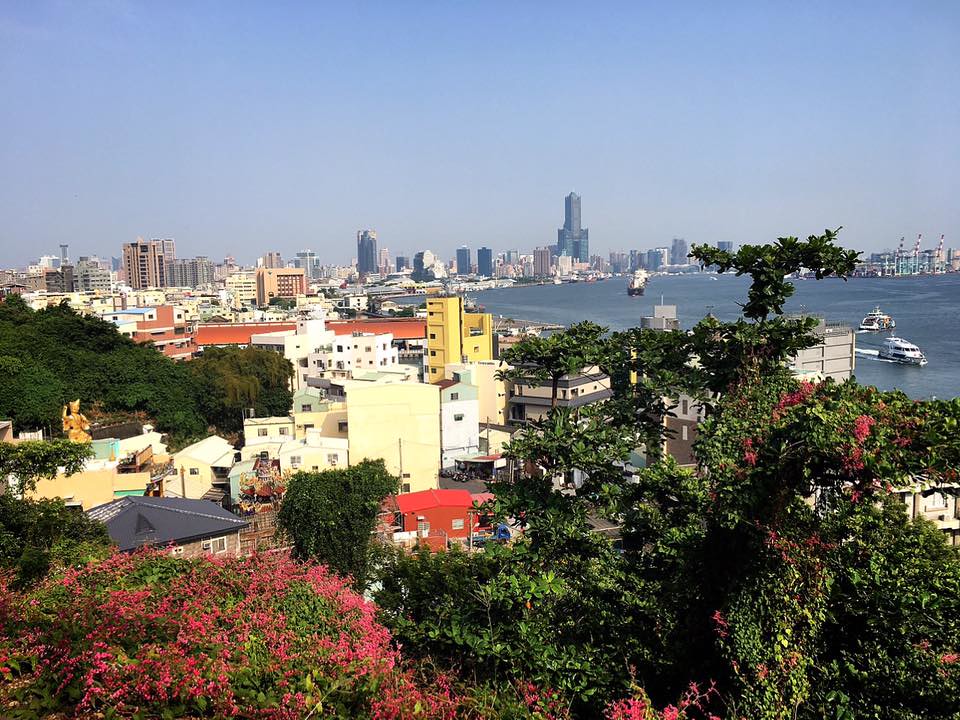 |
| The view from the British Consulate at Takao You're a pretty city, Kaohsiung, and I enjoy visiting you, but you can't justify a tourism tax |
So,
In this way, the plan is modeled on city taxes currently in place in several European cities which are also popular tourist destinations. This year alone, I paid tourism taxes in Lisbon, Porto, Rome and Siena (and may have paid one in Milan; I don't remember.) The taxes in Europe range from €1 (or less) to as much as €3 per day.
With that in mind, Kaohsiung's proposed tax would be at the high end even for major European destinations. Rome, for example, was €3/day. NT$100 is about US$3/day.
I have a few issues with this. I'm not against tourism taxes generally - the infrastructure of many major European cities has to support not only residents but visitors. Despite the adage that "if you want less of something, tax it; if you want more of something, subsidize it", the taxes are low enough that they are unlikely to deter tourists, especially those who've traveled a long way.
That said, such taxes are usually levied in places where tourism is already strong. Dirky-doo wants to 'prioritise tourism' which doesn't seem to be particularly strong in Kaohsiung (some discussion of numbers found below). The effect won't be brushed off as a minor fee, as it generally is in other places where tourism numbers are already massive. It will deter tourists, not promote them. How exactly are these two policies meant to align? Or, perhaps Big Uncle Dirk is full of crap and always has been, and it doesn't matter if his ideas make no sense jointly or severally?
It makes sense that, in addition to bolstering the economy through spending on their visit, that tourists should also contribute directly to the local government for the purpose of maintaining the infrastructure that they themselves strain. How much of this money actually goes to this, however, is not at all clear. For example, this explainer of where Penang's tourist taxes go doesn't look at all as though they do anything useful. I wouldn't want my money going to some committee organizing useless conferences and chartering flights from Wuhan. Some discussions of tourism tax have the revenue going into general government operational funds - also not a strong sell to tourists wondering why they're paying out.
But let's be honest here. It doesn't seem to me that Kaohsiung is a city whose infrastructure is unduly strained by the number of tourists who visit. If anything, tourism numbers there are...okay, but flagging, though the data is a bit outdated here. You can find some more numbers in the various tables here - they're national statistics, not Kaohsiung-specific, and relevant data is spread across several spreadsheets.
But these national numbers for Taiwan can be compared to, say, the number of tourists going to Barcelona, Spain alone (one city - not even all of Spain, let alone all of Europe). Barcelona is a good example as it's a city which is increasingly suffering from a glut of tourists it can't handle, and which locals increasingly don't want to handle. (Barcelona's tourism tax is variable based on the accommodation chosen).
I know you do get tourists, Kaohsiung. But I'm sorry, you are not Barcelona.
Kaohsiung, honey, you don't have massive infrastructure or overcrowding issues the way European cities do. Your public transit system is finally turning a profit (which I'm not even sure public transit needs to do, but isn't a bad thing.) There aren't hordes of foreigners crowding your streets or causing environmental damage. You don't need the money for the same reasons that European cities do.
What's more, I don't really think Kaohsiung has the draws that these other cities do. While its architectural heritage interests me, it's not exactly mind-blowing to your average international visitor. There's no Roman Forum, Sagrada Familia or even Jeronimos Monastery or Sao Jorge castle in Kaohsiung. The city has gotten brighter and lovelier over the years (so Big Uncle Dirk campaigning on it being a dingy old city run into the ground by the DPP is especially offensive to me in how deliberately wrong it is) but it just isn't the sort of wow-bang-sparkle destination that can justify something like a tourism tax.
In fact, it's a really quick way to convince tourists to go to other parts of Taiwan. Most international visitors to Taiwan are Asian, and they don't necessarily have the spending money that tourists to Europe do (the Asians with heaps of cash head west), or if they do, they'll save that for their trip to Rome, not their trip to Kaohsiung.
And, of course, it also leads to a few other questions.
First, how would visitors from China be treated? In the statistical links above, you can see that they are treated separately from other foreign arrivals. Yet they are the biggest group of non-domestic tourists by a very wide margin, so not taxing them would basically invalidate the whole point of the tourism tax to begin with. Dirk is an unabashed unificationist dressed in a populist's clothing and, although I'm speculating here, probably conflates "promoting tourism" with "promoting Chinese tourism", which is apparent given his desire to increase flight connections to China (ignore the dumb headline). I would not at all be surprised if he declared that visitors from China were "domestic" and therefore not subject to the fee.
Second, most other "foreign" visitors to Kaohsiung actually live in other cities in Taiwan, like me, and most visitors overall to the city are domestic (source: see Focus Taiwan link above). Although Big Uncle Dirk says domestic tourists wouldn't be included (which is not the norm in Europe, where all visitors pay as it's essentially a hotel occupancy tax). I have to wonder whether foreign residents, who are technically domestic tourists, would be similarly exempt. I know that if I found out I'd have to pay this tax because I don't look like a domestic tourist...well, see how fast I would not visit Kaohsiung, just on principle (or I'd stay with my friend in Dashe, even though that's a bit far from the city.)
Yes, tourism has a lot of indirect economic benefits; some will say that these are sufficient and it's unnecessary to add a tax on top of what tourists already spend to be in a city. However, these benefits are variable and often have deleterious costs associated with them (same link), are often not much at all if a large number of tourists are on a shoestring budget (say, gap year kids in Thailand or people on cut-rate Chinese group tours). There are also a number of disadvantages including exploitation of local labor and environmental effects, and most tourism dollars appear not to stay in the local economy (ignore the jingoistic headline). This makes sense; for example, in developing countries, labor costs are low relative to what major hotel chains charge for rooms. Most of that money likely goes to the international conglomeration that owns the hotel, not the local economy that the hotel is in, though there may be other economic benefits.
But I don't see how any of it matters for Kaohsiung, a city whose main economic driver is not tourism, and a city which doesn't experience the worst effects of tourism (aside from some slight overcrowding at Shizhiwan and Cijing Island). Why do they need a tourism tax which will drive tourists away, won't be charged to the bulk of tourists because they're domestic, may not be charged to Chinese tourists, and therefore just causes annoyance without much benefit, and arising from no great need?
Friday, December 28, 2018
Taiwan needs to figure out how to treat foreigners better
It pains me to say it, but Taiwan has some deep discrepancies between the human rights ideals it claims to espouse, and how it treats not only its own citizens, but also those who come to Taiwan to study or work.
Instances of Taiwanese universities using the New Southbound Policy as basically a vector for scamming Southeast Asian students are starting to feel not like horrifying exceptions, but the norm. It's happened now with not just Sri Lankan students (news of which broke just months ago) but Indonesian ones as well, at more than a handful of universities.
These universities take government subsidies meant to help them attract students from Southeast Asia, and then use them to pay brokers to bring students over. These students are then assigned jobs in factories, and attend class only a few days a week, if at all. These factory jobs are called "internships", but they aren't learning opportunities - they are basic blue-collar work - and they aren't even allowed for first-year students, and certainly shouldn't be taking up most of one's week, as work is limited to 20 hours/week for foreign students here.
These are scams aimed at getting free labor - or even labor that has paid to be there, as some of these students are paying tuition to do this. They are violations of human rights.
Taiwanese people would not accept this happening to their own citizens, so it disgusts me that it seems to happen so easily to foreigners.
The "university" system here isn't the only vector for abuse - how domestic workers (who are predominantly female) and fishing boat workers (predominantly male) are treated, not to mention regular factory workers, is obscene.
Taiwan is trying to take a big step forward by reducing its economic dependence on China through re-invigorating ties with Southeast Asia through the New Southbound Policy. But the high-minded ideas of the central government just aren't trickling down to those meant to actually implement it through outreach (including businesses, employers and universities).
Attempting to take advantage of a government policy aimed at improving the country to line one's own pockets is not unique to foreign residents or the New Southbound Policy (certainly this happens in the domestic sphere as well - just ask how property developers circumvent the "green space" law by giving politicians reduced-price apartments they can flip and profit from, or how some local politicians take advantage of local charities). However, I can't help but think in this case, there's an element of racism at play.
If this were happening to Taiwanese, the outcry would be swift and condemning. Instead, the government "will conduct an investigation" (hardly decisive action they need to be taking). This after it's obvious that those in government who set up the programs with universities - if they can even be called that - knew how likely it was that they would try to take advantage of both the government and the foreign students. If they weren't aware of this possibility, they wouldn't have talked to the university presidents in person and warned them off doing exactly this.
Initiatives like the New Southbound Policy aren't going to work if the people in charge of actually implementing various initiatives are using them merely to take advantage of Southeast Asian people. They're not stupid, guys. They know that there's a lot of racism against Southeast Asians here. They know that these scams exist. They know that they can't necessarily trust these programs. And neither the people nor the governments there are going to stand for it. They are already angry.
I'll say it again: if Taiwan continues to be known for treating Southeast Asians badly, and is seen as using the New Southbound Policy for their own enrichment with little concern for the effect on Southeast Asian people or economies, it's not going to work. The New Southbound Policy will fail, and we'll be stuck with a choice between China strangling our democracy or our economy - exactly the thing we seek to avoid.
One of the things that has really impressed me about Taiwan is how this country consistently pushes itself to live up to its purported ideals: democracy, freedom, human rights. It's not that other countries don't do that, but Taiwan seems (to me anyway) to make more progress more quickly than other parts of Asia, and the struggle just seems more visible here (and more accessible in terms of being connected or understanding, on a personal level, the bleeding edge of the push for social change.)
But we have to admit that Taiwan, as much as it may be a place one can love deeply and make a commitment to, is far from perfect. That's true not just in terms of how it treats its own citizens, but how it treats foreigners here. It has ideals, but as things stand right now, it simply doesn't live up to them.
Instances of Taiwanese universities using the New Southbound Policy as basically a vector for scamming Southeast Asian students are starting to feel not like horrifying exceptions, but the norm. It's happened now with not just Sri Lankan students (news of which broke just months ago) but Indonesian ones as well, at more than a handful of universities.
These universities take government subsidies meant to help them attract students from Southeast Asia, and then use them to pay brokers to bring students over. These students are then assigned jobs in factories, and attend class only a few days a week, if at all. These factory jobs are called "internships", but they aren't learning opportunities - they are basic blue-collar work - and they aren't even allowed for first-year students, and certainly shouldn't be taking up most of one's week, as work is limited to 20 hours/week for foreign students here.
These are scams aimed at getting free labor - or even labor that has paid to be there, as some of these students are paying tuition to do this. They are violations of human rights.
Taiwanese people would not accept this happening to their own citizens, so it disgusts me that it seems to happen so easily to foreigners.
The "university" system here isn't the only vector for abuse - how domestic workers (who are predominantly female) and fishing boat workers (predominantly male) are treated, not to mention regular factory workers, is obscene.
Taiwan is trying to take a big step forward by reducing its economic dependence on China through re-invigorating ties with Southeast Asia through the New Southbound Policy. But the high-minded ideas of the central government just aren't trickling down to those meant to actually implement it through outreach (including businesses, employers and universities).
Attempting to take advantage of a government policy aimed at improving the country to line one's own pockets is not unique to foreign residents or the New Southbound Policy (certainly this happens in the domestic sphere as well - just ask how property developers circumvent the "green space" law by giving politicians reduced-price apartments they can flip and profit from, or how some local politicians take advantage of local charities). However, I can't help but think in this case, there's an element of racism at play.
If this were happening to Taiwanese, the outcry would be swift and condemning. Instead, the government "will conduct an investigation" (hardly decisive action they need to be taking). This after it's obvious that those in government who set up the programs with universities - if they can even be called that - knew how likely it was that they would try to take advantage of both the government and the foreign students. If they weren't aware of this possibility, they wouldn't have talked to the university presidents in person and warned them off doing exactly this.
Initiatives like the New Southbound Policy aren't going to work if the people in charge of actually implementing various initiatives are using them merely to take advantage of Southeast Asian people. They're not stupid, guys. They know that there's a lot of racism against Southeast Asians here. They know that these scams exist. They know that they can't necessarily trust these programs. And neither the people nor the governments there are going to stand for it. They are already angry.
I'll say it again: if Taiwan continues to be known for treating Southeast Asians badly, and is seen as using the New Southbound Policy for their own enrichment with little concern for the effect on Southeast Asian people or economies, it's not going to work. The New Southbound Policy will fail, and we'll be stuck with a choice between China strangling our democracy or our economy - exactly the thing we seek to avoid.
One of the things that has really impressed me about Taiwan is how this country consistently pushes itself to live up to its purported ideals: democracy, freedom, human rights. It's not that other countries don't do that, but Taiwan seems (to me anyway) to make more progress more quickly than other parts of Asia, and the struggle just seems more visible here (and more accessible in terms of being connected or understanding, on a personal level, the bleeding edge of the push for social change.)
But we have to admit that Taiwan, as much as it may be a place one can love deeply and make a commitment to, is far from perfect. That's true not just in terms of how it treats its own citizens, but how it treats foreigners here. It has ideals, but as things stand right now, it simply doesn't live up to them.
Subscribe to:
Posts (Atom)