So, over the course of June and July, with long breaks to research and write an article on learner autonomy through note management that will be published in September, I read J. Michael Cole's Black Island: Two Years of Activism in Taiwan. This came right on the heels of Officially Unofficial, which I appreciated for its perspectives on Taiwanese society and politics that I had also witnessed in the past ten years here.
All in all, I liked Black Island more than Officially Unofficial - first of all, it was free of the ridiculously irritating "using the third person to talk about oneself" narrative employed by its predecessor. It focused more on events in recent Taiwanese history rather than the author himself, which was a boon because, although I have nothing against J. Michael Cole, I am more interested in Taiwanese political history and current affairs than I am the personal history of a journalist I happen to have read. Being lightly annotated republishings of previous work, the present tense (employed because that's what those stories used for obvious reasons) gave the narrative a sense of urgency and contemporariness rather than feeling like "history" (and, in fact, the events documented didn't happen that long ago). The present-tense tone gives one the feeling, while reading, that these events are happening as you are reading it - it makes you want to go to Dapu and protest, rail against the destruction of the Huaguang Community or surround the Legislative Yuan yet again. Then you remember, no, this is all a few years in the past. It's 2016 now, Taiwanese society has processed these ideas and is looking to the future. You, the reader, must do the same. The interesting question that Black Island leaves open - as it must - is what happens next.
Like Officially Unofficial, Black Island was a good chance to go back and review my memories of the past few years of Taiwanese politics, and pick up on threads, ideas and smaller events I'd missed. Having, as I mentioned before, been more concerned with completing my teaching degree than being fully invested and informed of Taiwanese affairs, there are things I missed. I was more intellectually present during the actual Sunflower occupation - but I think that electrified and reawakened quite a few people; I'm not unique in that regard. I hadn't had a Delta course going on at that particular time, and I actually spent a great deal of time outside the Legislative Yuan, including heading down after work and staying until the MRT was about to close for several evenings in a row. I wasn't there to report on events, however - I was there to support the students. I enjoyed going back and reading (in some cases for the second time) actual reporting on the events of those weeks.
For someone who had already read a lot of the work published in Black Island (I experienced a distinct sense of deja vu several times not only because I had been in Taiwan when those events took place but because I had in fact already read that exact same article two to four years ago), it is a fairly strong compliment to say that it held my interest upon re-reading.
Finally, this is neither a point in favor of or against the book but, as it triggers interesting thought, I think it fits in the "good" section: Cole's work mentions more than once the idea of civic nationalism over ethnic nationalism beginning to take root in Taiwan. It can hardly do differently, not only because there are "ethnic" (if the entire concept of ethnicity means anything, and depending on where you draw the lines) differences in Taiwan itself, between waishengren and Hoklo, "Chinese" and aborigine as well as Southeast Asian immigrant, that must be overcome to realize the idea of Taiwan as a nation, but also because as much as many won't admit it, Taiwan is very ethnically similar to China (again, if ethnicity means anything at all). To differentiate itself from China Taiwan simply cannot turn to an ethnic base for their desire for self-determination as an independent nation. It must turn to a civic one; there is no other reasonable path...
...but this is not the main reason why I find discussion of that concept interesting. Instead, I am invested in it primarily as an immigrant in Taiwan. I call myself an immigrant because, while I am not a citizen and retain something of an American identity, if I had a reasonable chance at citizenship (the double standard of being forced to give up one's original citizenship to attain Taiwanese nationality, while Taiwanese are under no such edict, is simply neither reasonable nor acceptable) I would be highly likely to seek it, and because I have no real plans to return to the USA. It is true that we may leave someday for professional reasons or because we face difficulties as non-citizens, but it is unlikely that the country we'd leave for would be the one we come from.
If Taiwanese identity is one of civic rather than ethnic identity, and therefore anyone who buys into, contributes to and participates in that identity can be "Taiwanese" even if they can never be ethnically Chinese, then the next logical step is to relax immigration and naturalization laws. This affects me directly, for reasons stated above. It has the potential to change on a fundamental level how I relate myself and my past to Taiwan and life in it. To legitimize, to some extent, the contributions I want to make and the participation I would like to offer. To see Taiwan as a home that genuinely wants people like me here and feels we help rather than hinder the nation's progress.
Right now I have to admit that while I feel welcome here, it is not uncommon for events in my life to give me the feeling that Taiwan wants me to come and teach their people English and wants to give me very little in return, and certainly doesn't want me to assimilate or stay permanently or have a say in political goings-on that do affect my life. A "nation of ethnic Taiwanese" is not likely to see people like me differently. A Taiwan that values civic over ethnic nationalism, however, is one that might.
This is, again, why I am disappointed that the party of young activists, who seemed to be the most likely to welcome immigrants like me, instead want to keep us on the fringes. Yes, I will say it again and I will ever, ever, ever, ever shut up about it until things change. They are the direct results of the events described in Black Island, and so far they have not been great allies to the logical conclusion of civic vs. ethnic nationalism.
Anyway. There are some things I didn't like about Black Island, but I'd say they are considerably fewer and markedly less annoying than in Officially Unofficial.
The first is that, as this is a collection of previously published journalism, as is often the case when one journalist covers related or ongoing events, there is quite a bit of repetition. Editing some of that out would have made for a stronger narrative.
My husband pointed out, and I agree, that the little interlude of pieces focusing on the fight for marriage equality felt a bit jarring in its discontinuity. I would have rather seen either the book divided not only chronologically but also by events. What I ended up doing was skipping the middle section at first, reading straight through the student activist/Sunflower narrative, and then going back and reading about marriage equality and the outsize influence of churches with evangelical ties in Taiwan. It made for a much cleaner narrative.
I would have also liked even more detail on the actual Sunflower occupation, but I suppose I can read a history textbook for that. A bit of a deeper look into the Next Media acquisition would have also been of interest to me.
Brendan also noted that if you are looking for stories about other events of that time - such as the tussle between Ma Ying-jiu and Wang Jin-ping for power within the KMT, you won't find it here. I understand why, but I actually think the story would have been strengthened by including such seemingly unrelated events. In fact, as the Sunflowers and a few political commentators understood at the time and as most people understand now, Ma Ying-jiu having both KMT chairmanship and the presidency, and using that double-barreled power to not only twist arms to get the Legislative Yuan to rubber-stamp his increasingly autocratic-seeming demands, but for the president to try to fire the speaker of an entirely separate branch of government because he wasn't falling sufficiently in line was nothing short of a constitutional crisis.
If you think this attempted ouster of Wang and the power grab that represented was not done in part with forcing passage of the CSSTA, without proper review, in mind, perhaps you are not paying attention. I wouldn't say CSSTA was the only goal of that attempted consolidation of authority, but it was certainly one of them. One directly relates to the other. The smartest activists and commentators understand this, though they don't always elaborate on it because it feels like something of a rhetorical cul-de-sac. Pointing this out would have made the book that much stronger.
Finally, I did feel that a few asides in which Cole expressed more personal views and ideas detracted from the overall narrative. For instance, his rant about cell phones on the MRT and the feeling I get that he feels he has the right to pass judgment on how people pass their commuting time or other downtime. While I agree that using one's various electronic devices to keep abreast of current events, maintain professional and social ties and engage with the wider world is preferably to using it to playing Angry Fruit Crush or whatever, it doesn't matter. We all have our vices and our stupid things we like and it's just not a great path to go down to judge that. I'm sure Cole loves some music I hate or owns a shirt I think is stupid or has a habit I find a waste of time. So what? It's not for me to judge. Besides, while at the height of stress working toward the Delta, I played game after game of iPhone solitaire (I am nothing if not an electronic game traditionalist, also, I'm an Old). Why? It helped me de-stress, gave my mind something else to concentrate on without taxing it too much, and was almost meditative in its repetitiveness. It helped mentally. Don't judge.
The multiple references to hired thugs or other "unsavory" types as "high on betel nut" or as tattooed, smoking, beer drinking betel nut chewers were also off-putting. When talking of actual hired thugs you don't really need to treat their appearance or lowbrow habits as damning evidence - treat what they actually do as evidence. I would be willing to bet just as many tattooed betel-nut chewers showed up to support the Sunflowers. What substances they imbibe or what they choose to put on their bodies is simply not the point and reeks of condescending classism. There is just no reason to do it.
Two little extra things: I agree with Brendan about the lack of translation for quotes in Chinese. We can read them (perhaps with the help of the Chinese dictionary on my - gasp! - iPhone at times) but I would gather many can't. An editor would really help with these sorts of issues. And I really didn't need to read two or more (I didn't count) references to Cole being definitely straight and not gay at all. I literally could not care less if he prefers hot dogs or hamburgers. Doesn't matter and not relevant to the story.
But, these are relatively minor complaints. The overarching narrative is interesting - and perhaps would be even more interesting to someone who hadn't read these articles when they were originally published - and would be a useful addition to the research of a political science student learning about student activism in Taiwan.

Tuesday, July 26, 2016


Monday, July 25, 2016
Indonesia: Baluran National Park
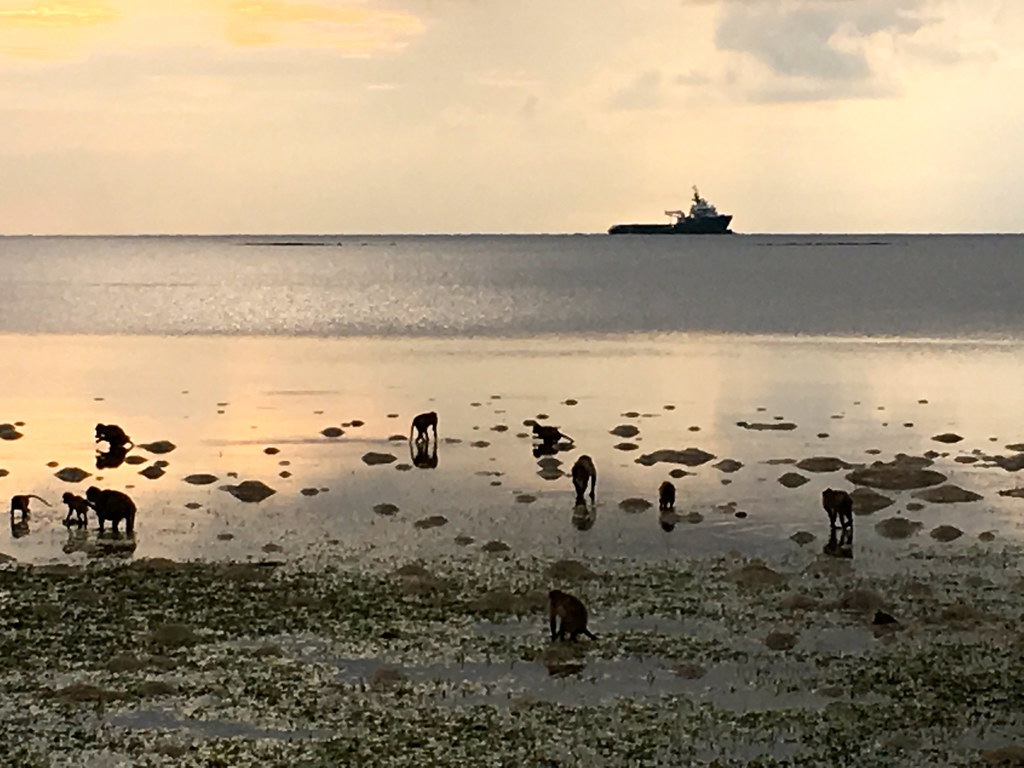
I actually rather want to finish these Indonesia posts so I can get into some traveling I've done in Taiwan recently (two trips to Tainan, one to Kaohsiung and one to Yunlin) as well as put up a few photos from our weekend in Hong Kong, so here's the last one!
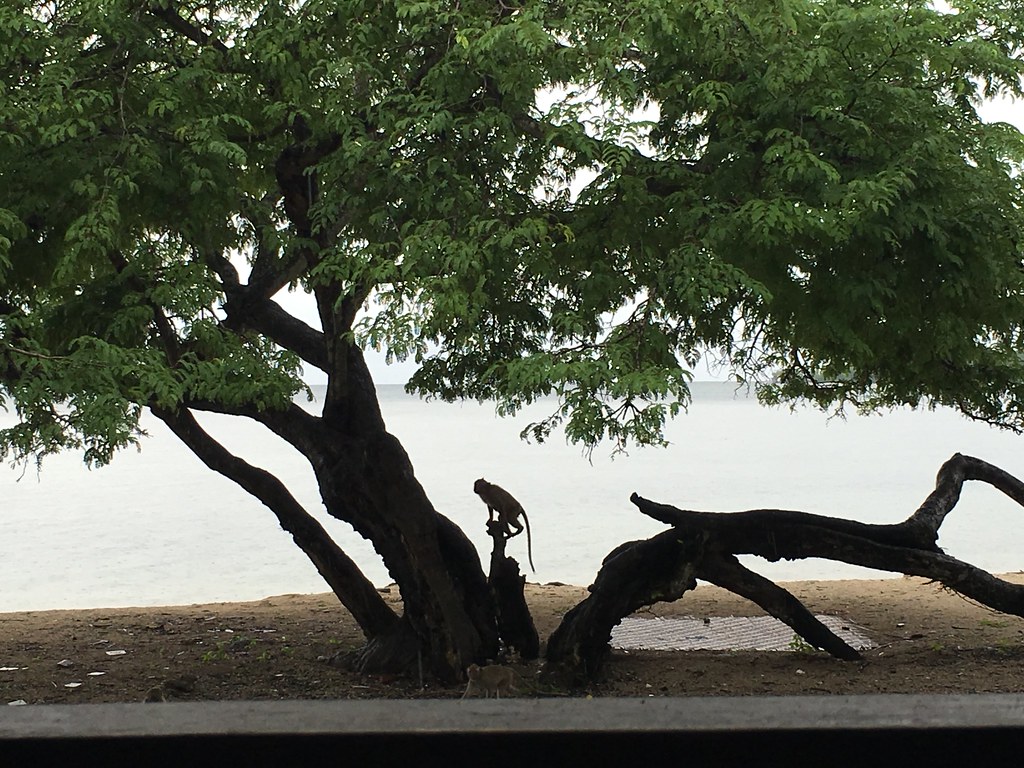
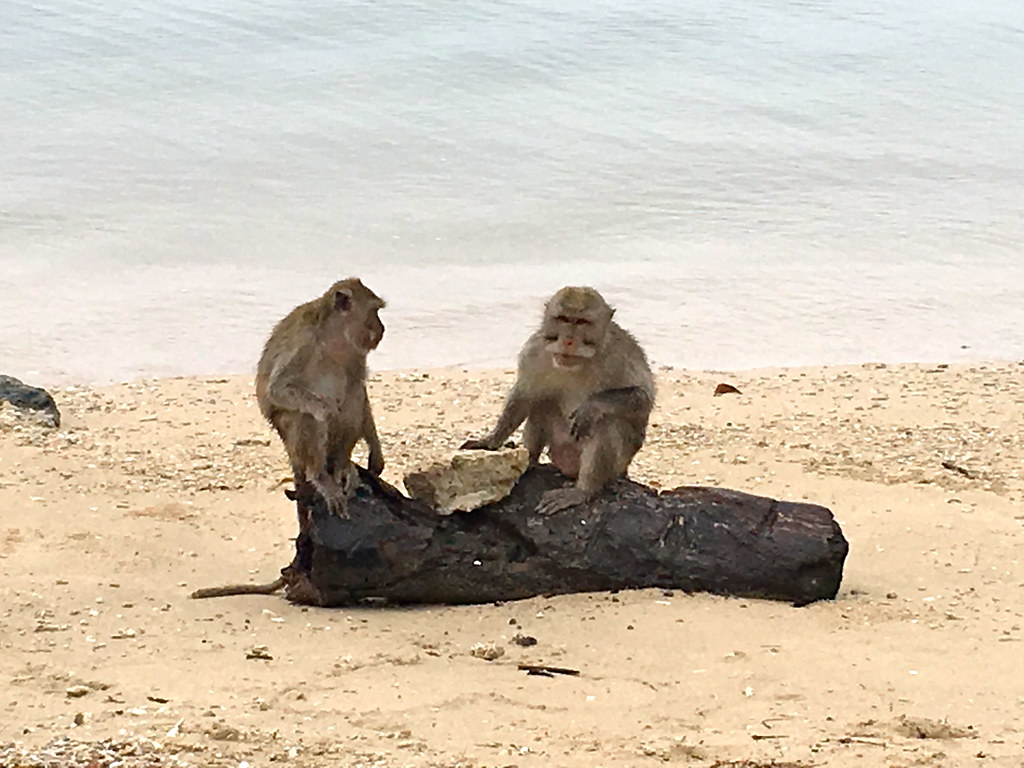
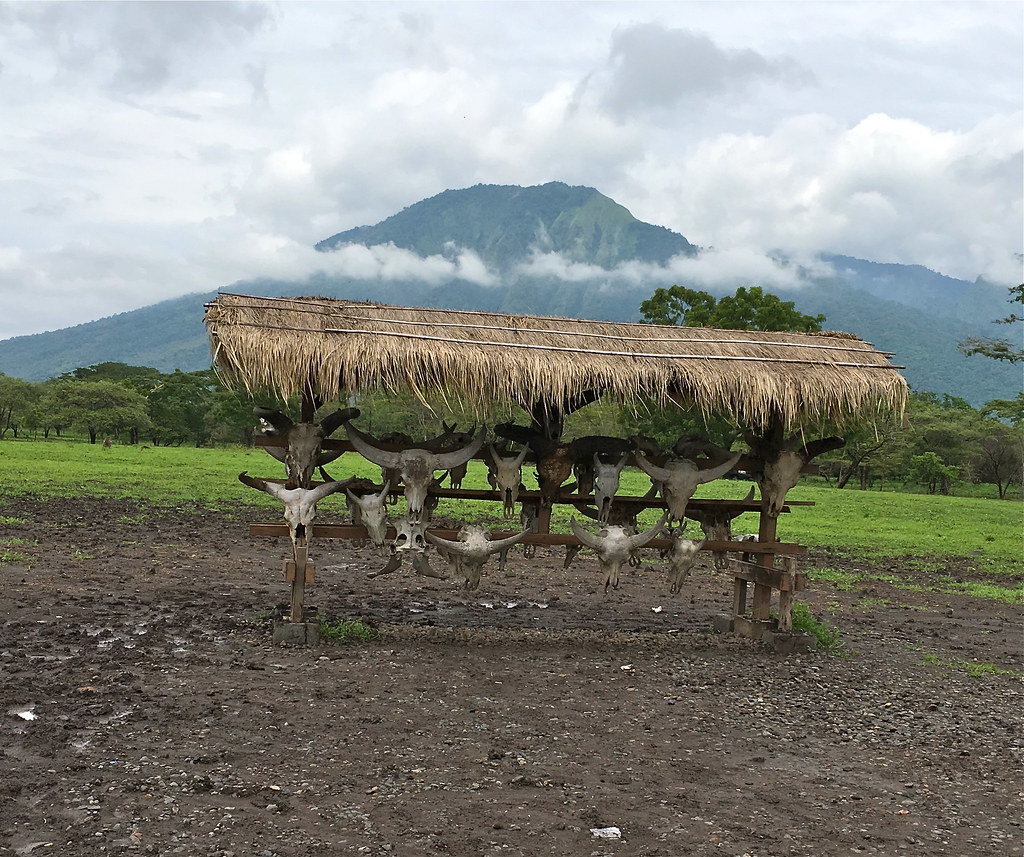
After hiring a driver to take us to the airport in Solo, we flew to Banyuwangi, which is not exactly the most hopping town, but the only way to get from Solo to Baluran is to do it this way (other options include train with transfer in Surabaya, or a very slow train service that takes a more direct route but is so exceedingly slow that it will take you a good day and a half to get there with a transfer in some no-name town about halfway. There is no bus that I know of). We wanted to get away from the usual "temple, temple, temple, shopping" tempo of the rest of our trip and thought a stop in a little-visited national park, especially one known for having a beach overrun with monkeys, would be just about right.
When we got to Banyuwangi's Blimbingsari airport, we realized two unfortunate things: first, that there is no public transit from the airport to anywhere; and second, that the airport is 9km south of town while the bus station with buses heading to the park is several km north of town. There was literally no other choice but to take a taxi, as expensive as that was (and it was - it came to over IDR400,000 which is quite a bit for Indonesia, though not that expensive by other standards).
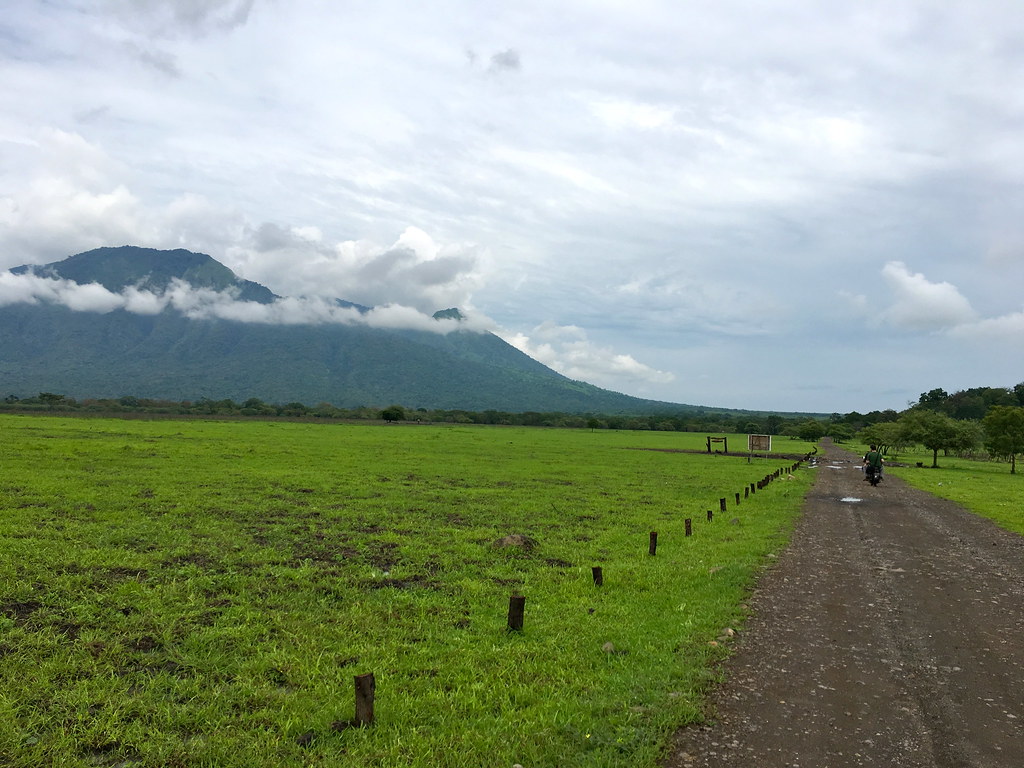
So we took a taxi to the bus station, bus (which tried to cheat us) to the national park entrance, and scooters from the entrance 12km to the coast, past some gorgeous scenery. We started at 7am and got to the beach just after sunset.
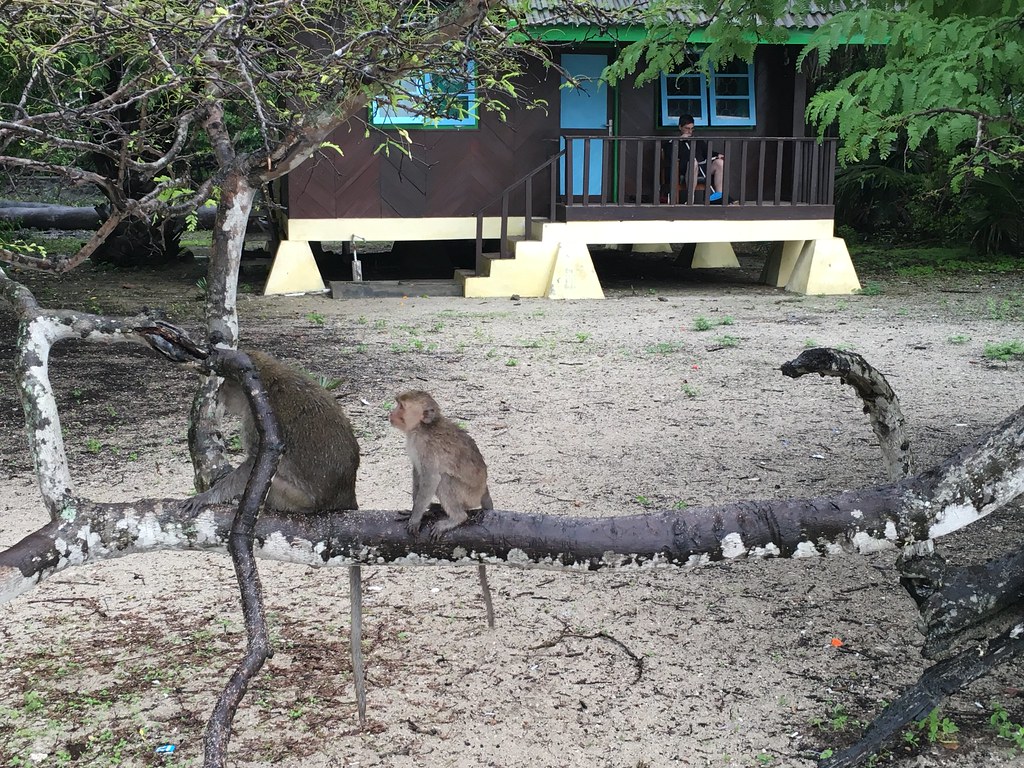
We didn't do much at the beach - the weather was grim so we didn't even really swim (we did go wading). I have a thing about not liking to swim on very overcast days unless I'm indoors. We rented the wooden bungalow farther from the hotel and canteen and immediately wished we'd rented one of the concrete cabins just because the very first thing that happened was a mouse scurrying about. We saw two mice in total and scared them off, and got the park rangers to seal off the mouseholes and spray something to repel them...we didn't see them again but also didn't sleep particularly well. This was also the only accommodation we had with a mandi (local-style bathroom), but we knew that going in so it wasn't a big deal. I prefer Western bathrooms when I can get them but I'm not averse to using something like a mandi.
Oh yes, and the canteen was closed the day we were there, so the rangers were nice enough to pick us up some food when they went to the other cabins further inland with the mountain view (where there is a general store and small restaurant more likely to be open). So we got gado-gado with rice for breakfast and ramen and local potato-chip-like snacks for the rest of the day. We'd also brought some cookies, coffee and tea. It was not fun at all keeping the food where we didn't think mice would come after it.
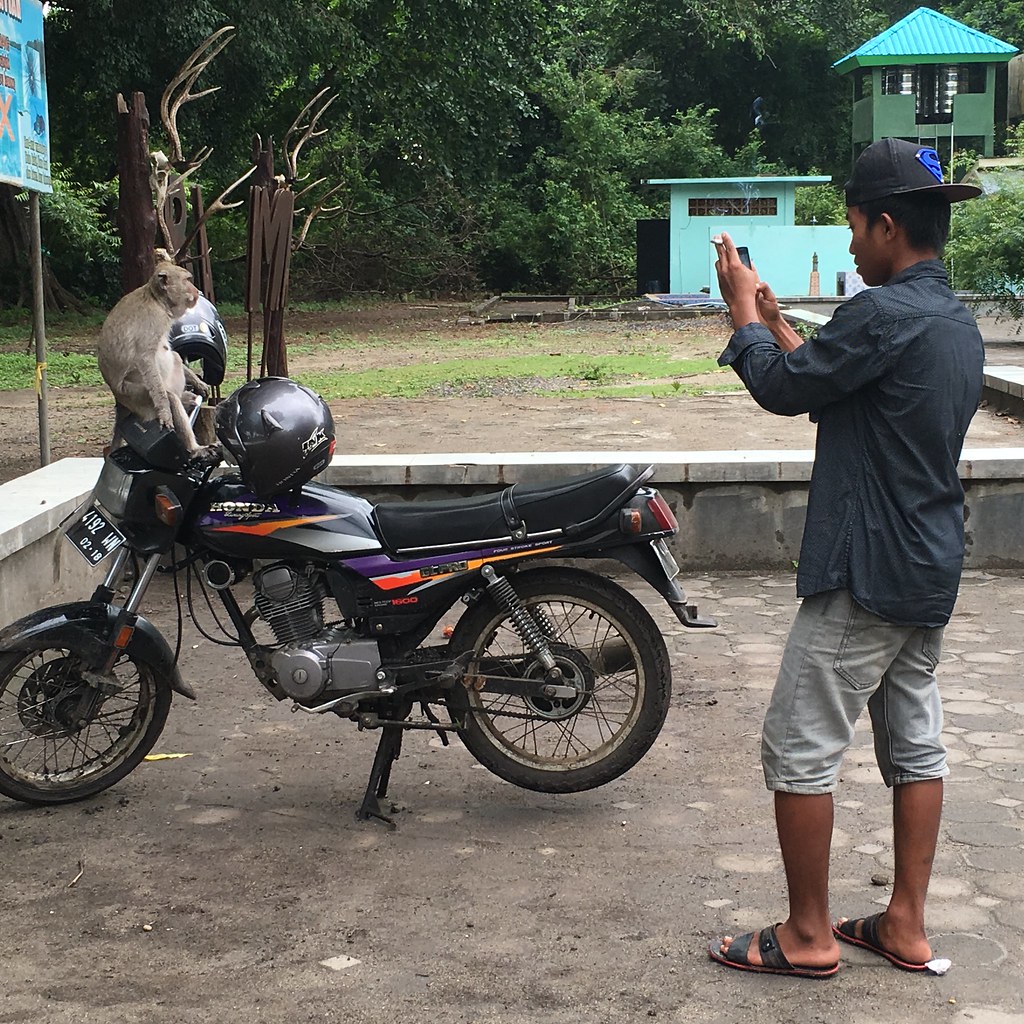
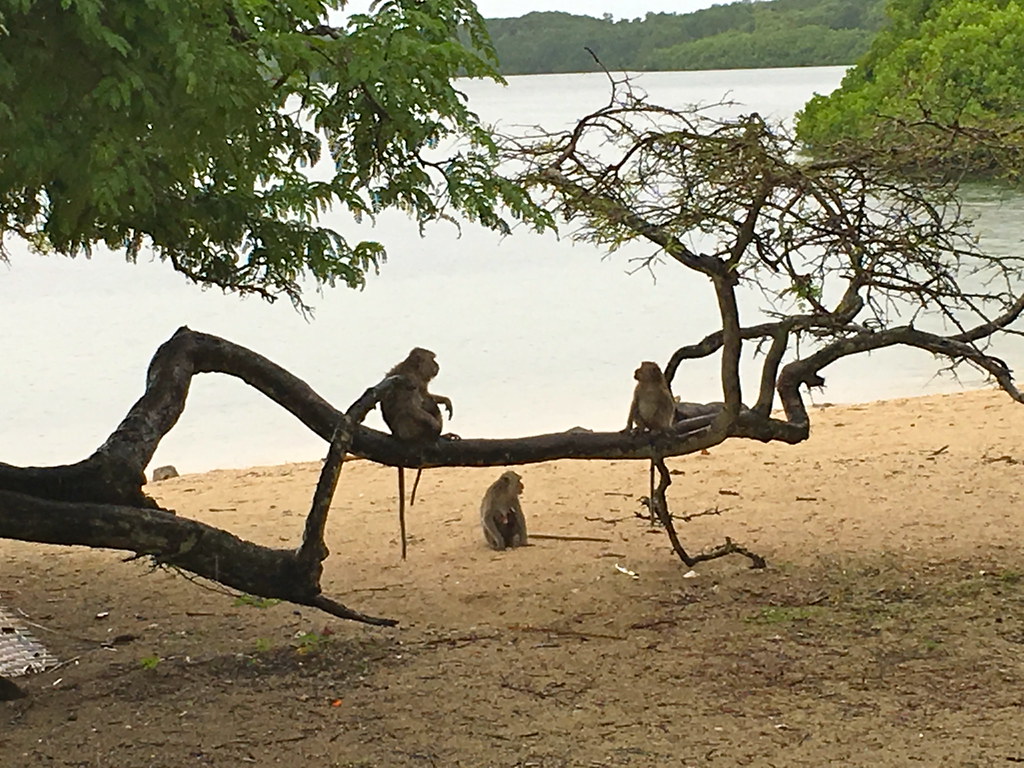
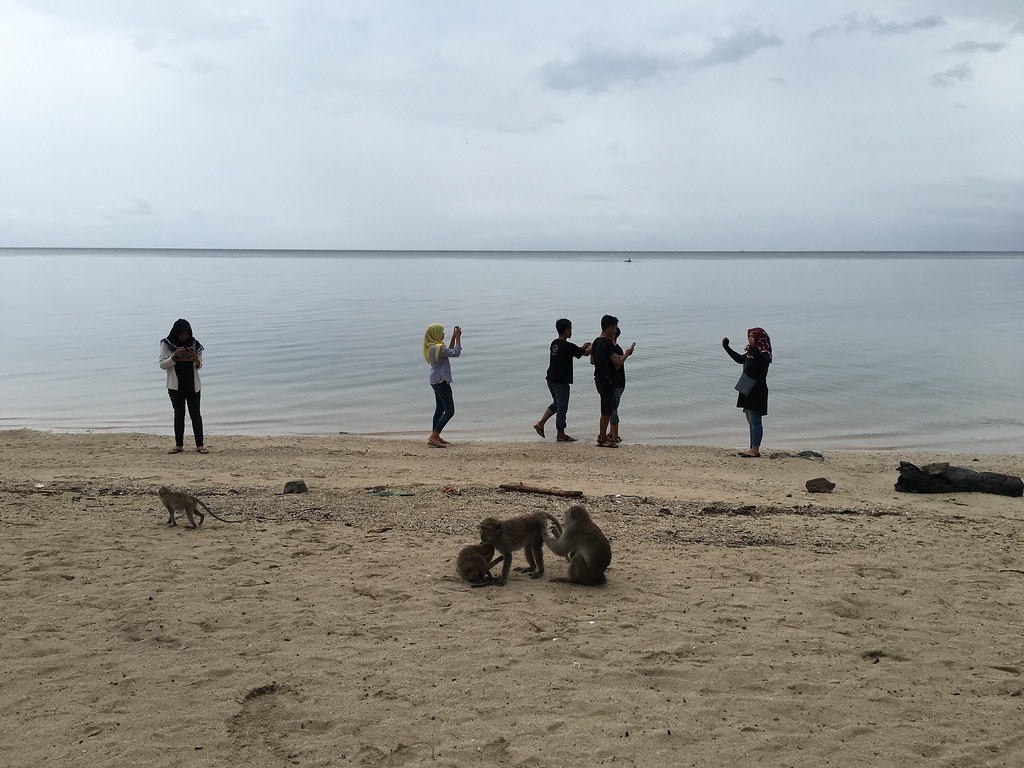
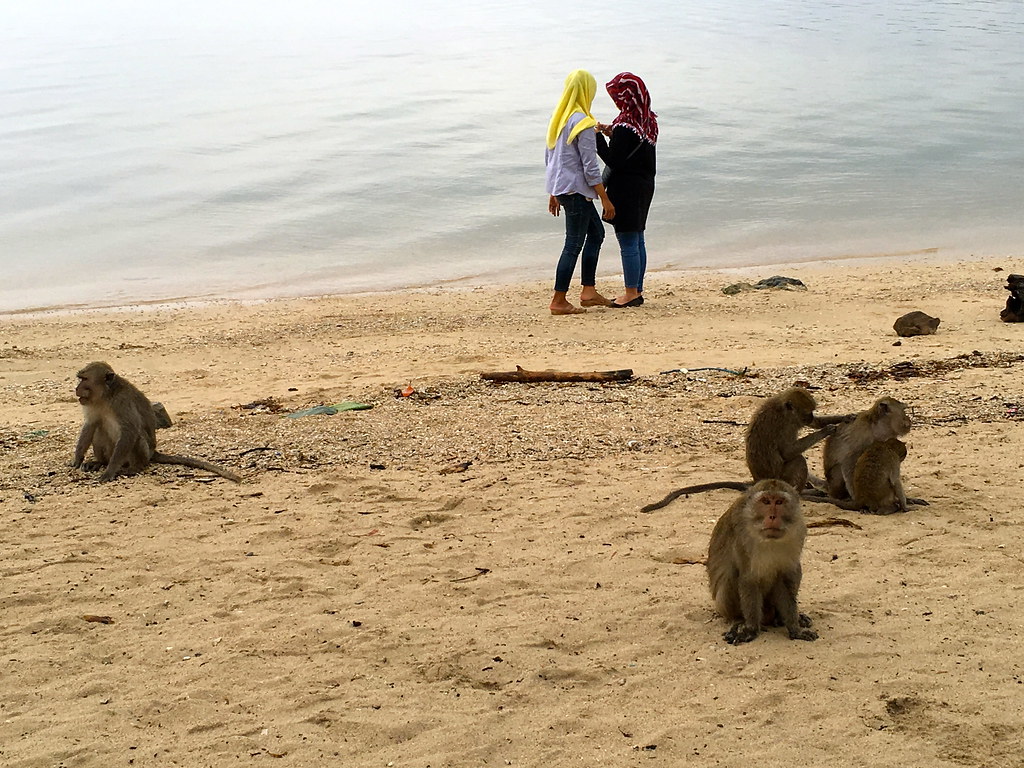
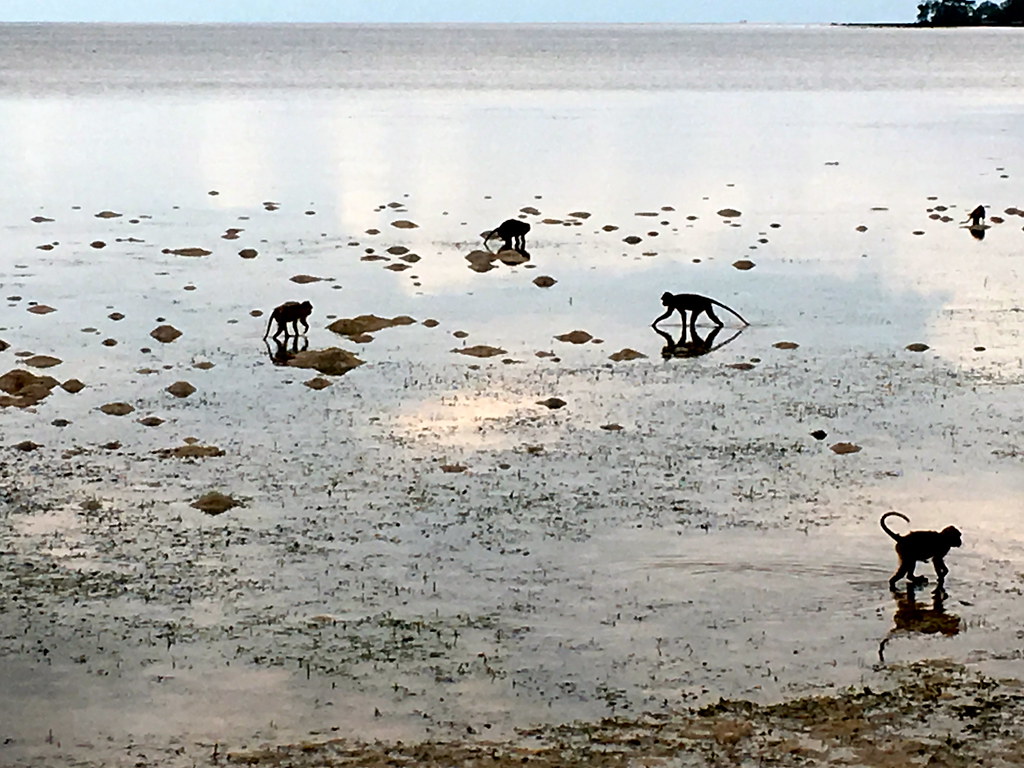
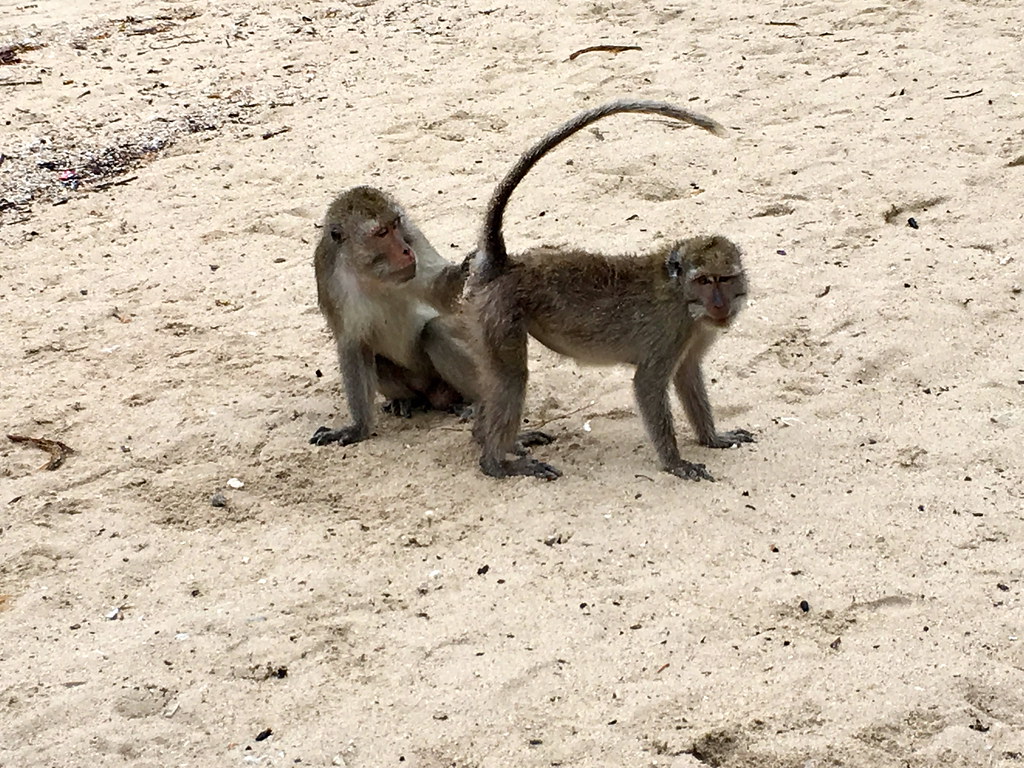
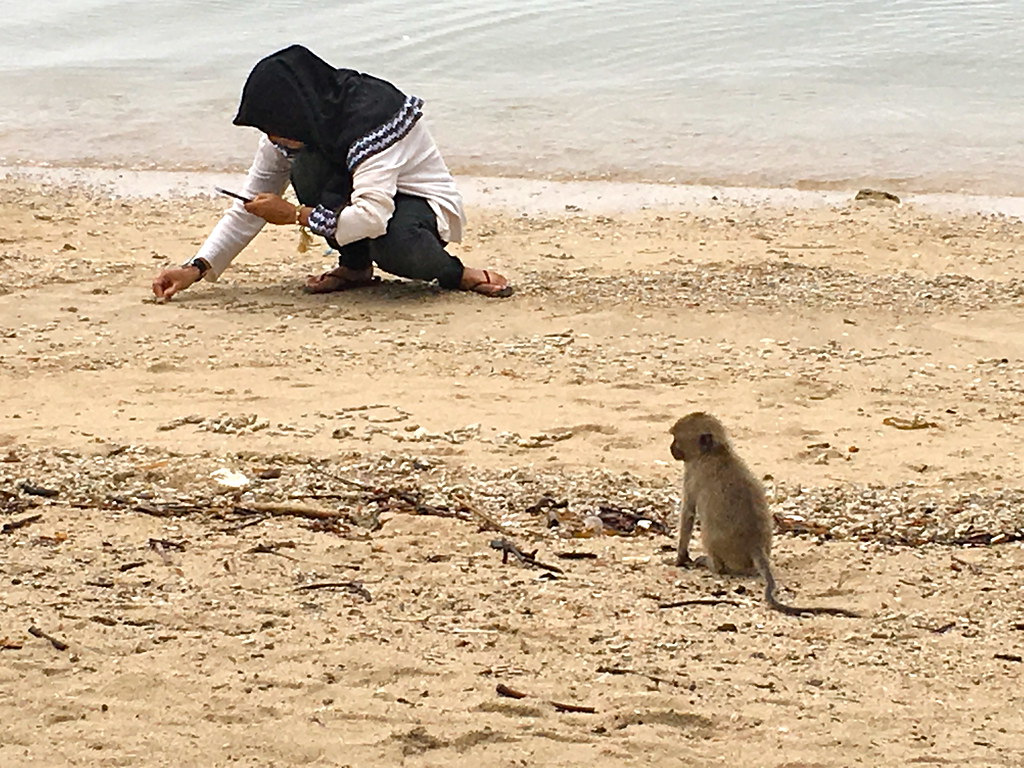
Also, we couldn't eat outside even though we had a lovely little patio overlooking the beach, because the place really was overrun with monkeys (and you do not want a troupe of monkeys to see you eat). They were literally more of a herd, a force of nature, than a group. Locals who day-tripped to the beach and weren't prepared found motorcycle helmets stolen, bags grabbed, unzipped and rifled through, snacks seized and gobbled down. They would try to come on our porch when we were reading and we'd have to wave a broom around and talk to them sternly the way we'd talk to our cats. Once, one of them figured out we were eating inside and got up on the porch, perched himself in the window and watched us eat, his little macaque face pressed against the glass as we slurped instant noodles.
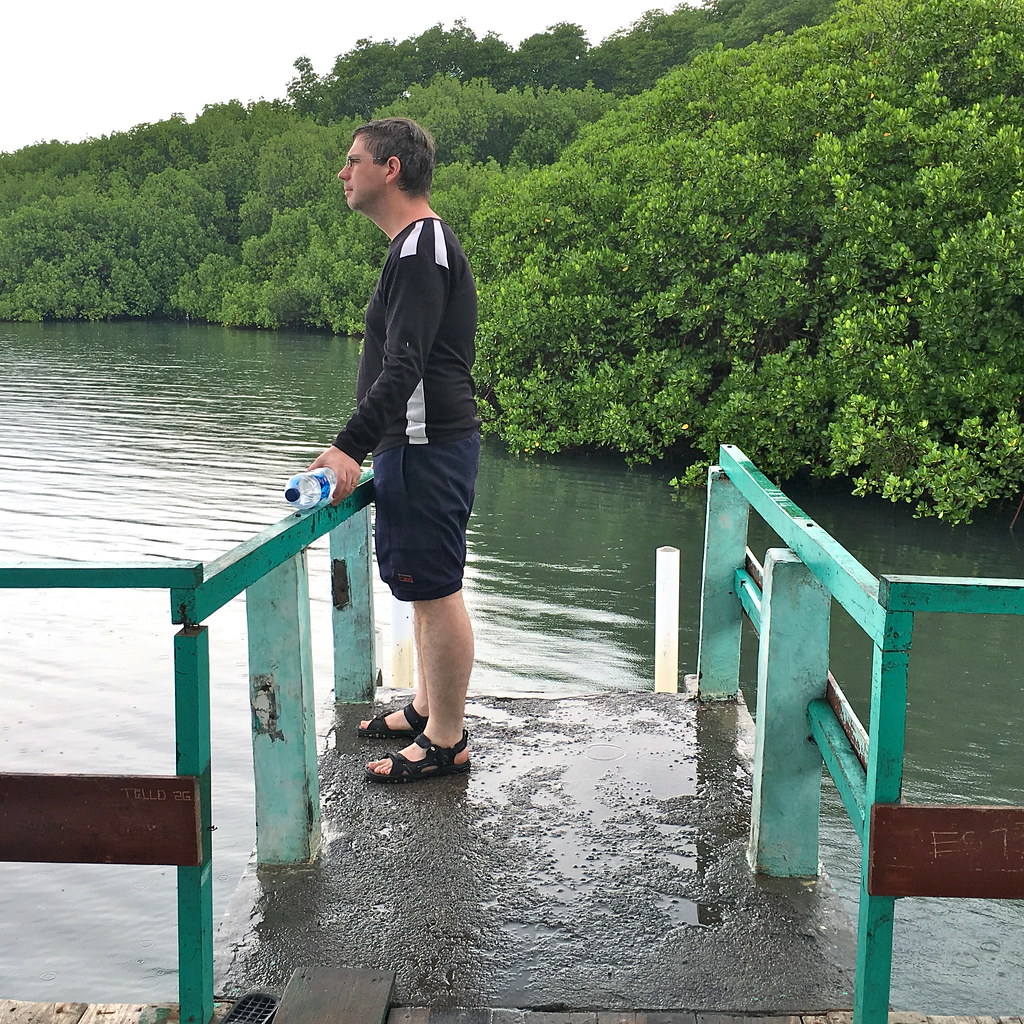
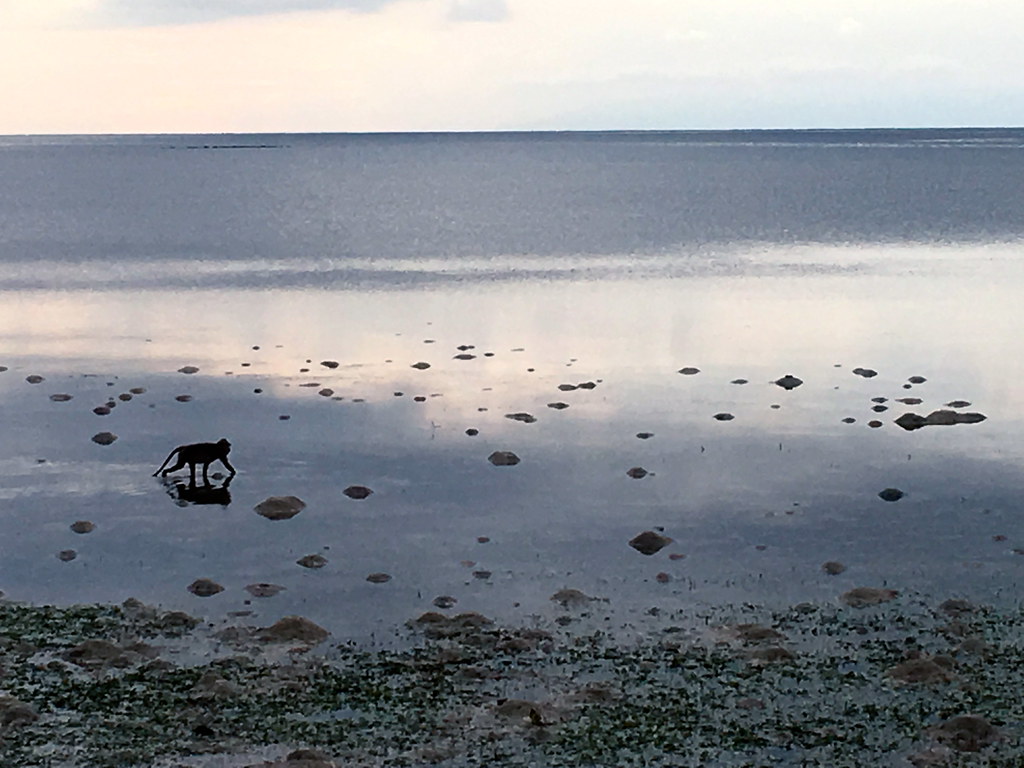
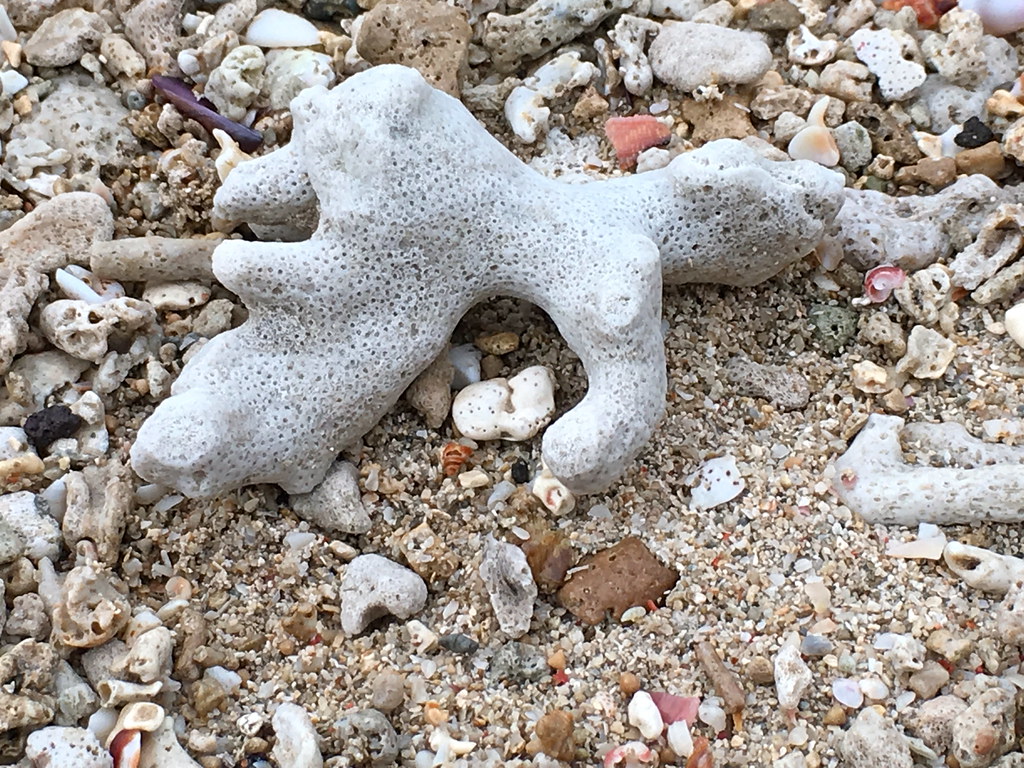
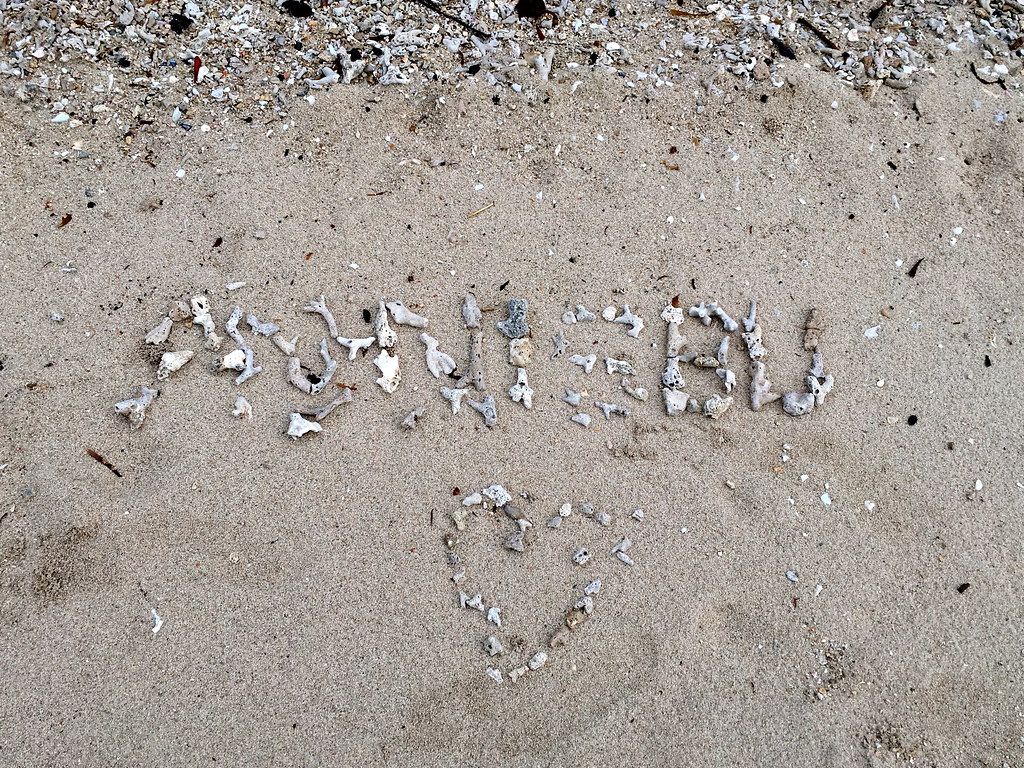
This is not to say we didn't like our very rustic stay. I loved hanging out on the porch reading books as the weather changed above us, walking to the mangrove estuary, walking in the other direction to a string of more secluded beaches where we found interesting seashells (which we did not keep) and played in the water, or just sat on the beach and talked, watching the monkeys play.
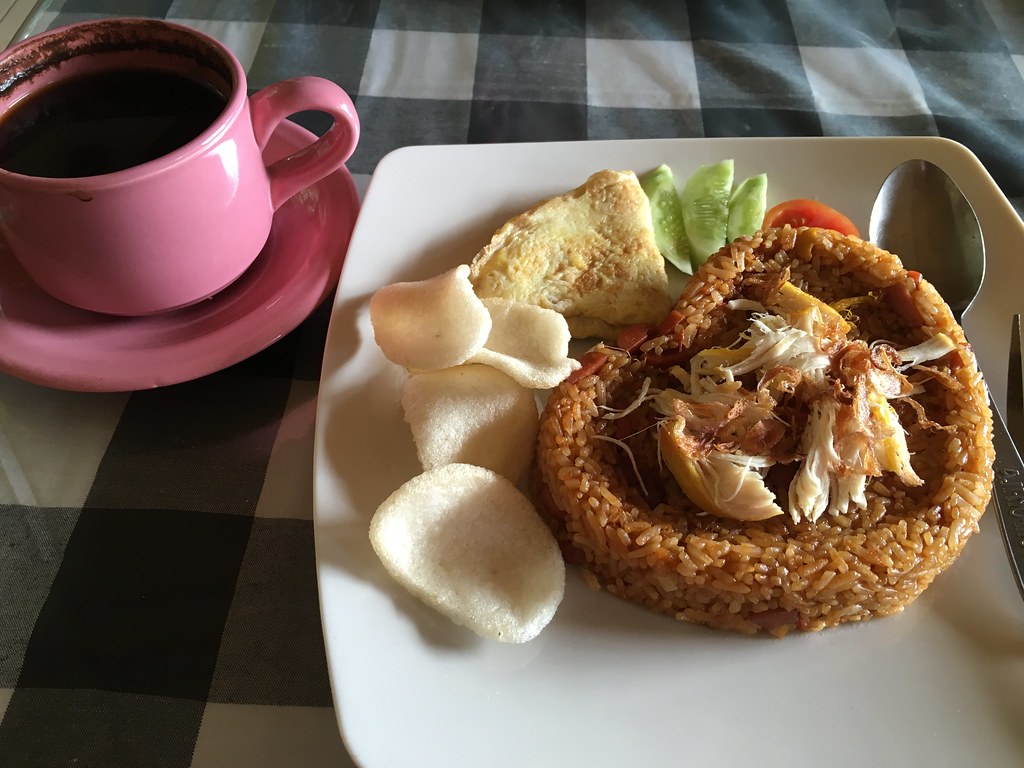
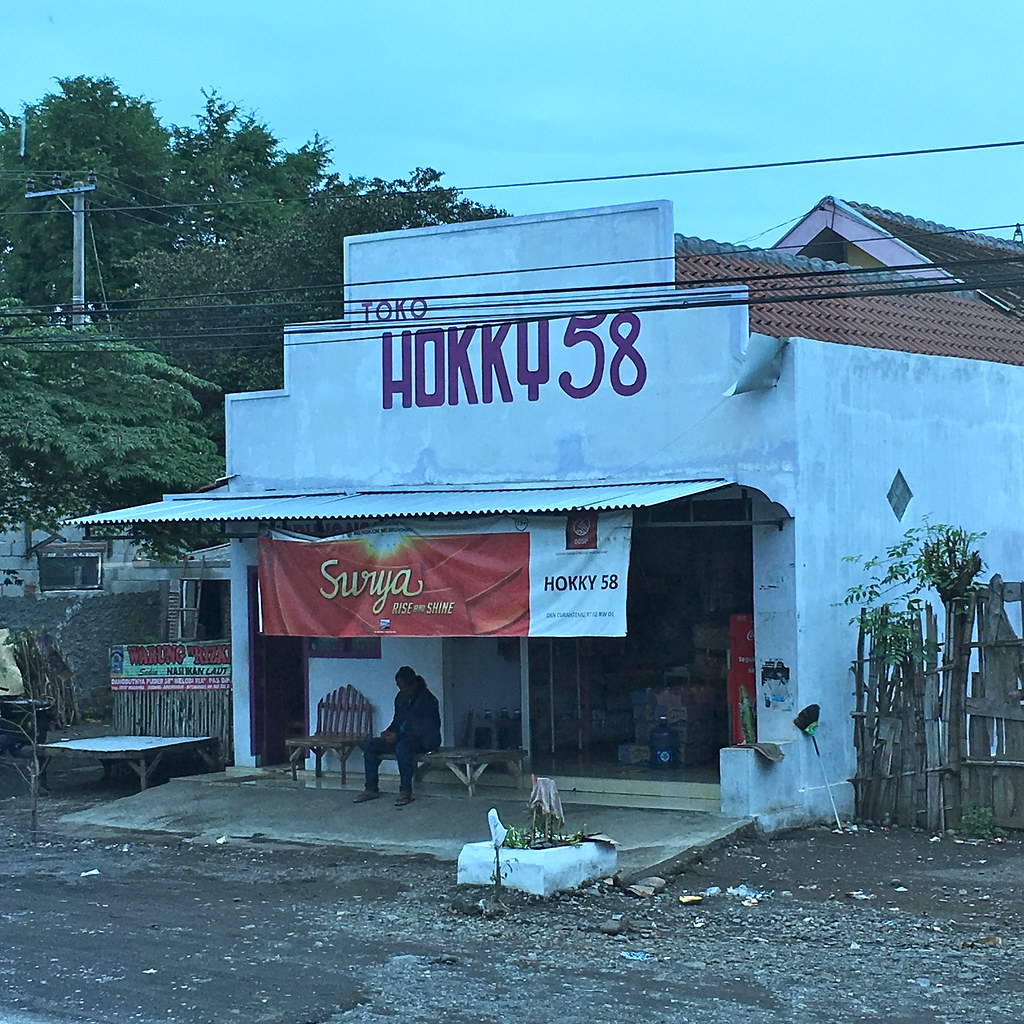
The next morning we got up, had a leisurely meal of nasi goreng and coffee, arranged scooter rides back to the main road and caught the bus to Surabaya. We had to change buses once to one that was decidedly worse, and we got caught in traffic and had to navigate the dodgiest bus terminal in perhaps the entire country, but on the bright side, I had a nice long friendly chat with a local guy who could speak English and had a refreshingly feminist worldview (and knew a lot about Taiwan as his job was gathering edible seaweed, and he sold it to a Taiwanese guy).
Unlike life in Taiwan, or my study abroad in India, or to some extent life in China, when you take these short excursions, you don't get the same chances to interact with locals and understand, a little more deeply (if not terribly deeply) the lives, experiences and perspectives of people with experiences very different from your own. So, when the chance does present itself I'm always pleasantly surprised.
Anyway, we landed up in Surabaya later than we'd have liked, had dinner at a fancy shopping mall and a few drinks at the Hotel Majapahit with our Hungarian friend in Surabaya, and flew out the next morning. We had half a day and an overnight in Singapore on the way back which I thought was great, because I'm always happy for a chance to enjoy some time there, and then it was back to Taipei and the daily grind. (Perhaps in a future post I'll throw up a few Singapore snaps).
As usual, here are the links to the other posts about this trip:
Surabaya
Borobudur
Prambanan
Solo (Surakarta)
Baluran National Park
Saturday, July 23, 2016
Indonesia: Solo (Surakarta)
 |
| Well hello there Mister Mister |
So, I have to admit, we didn't see much in Solo proper. We arrived in the evening and stayed at the wonderful Roemakhoe Heritage Hotel, a hotel situated in an Art Deco house with close attention paid to decoration and detail and tons of original elements. Also we got a room for something like $45 US/night, because Indonesia is a country where you can get great deals on accommodation (our hotel in Borobudur was even cheaper and it came with a full bathtub and was also very nice). Included at Roemakhoe is afternoon tea, and one of the best things to do on a monsoon-pouring afternoon in the whole city is to just hang out in their Indonesian Art Deco (basically Dutch colonial) restaurant and drink tea and eat the free banana-based sweets that come with it while reading novels.
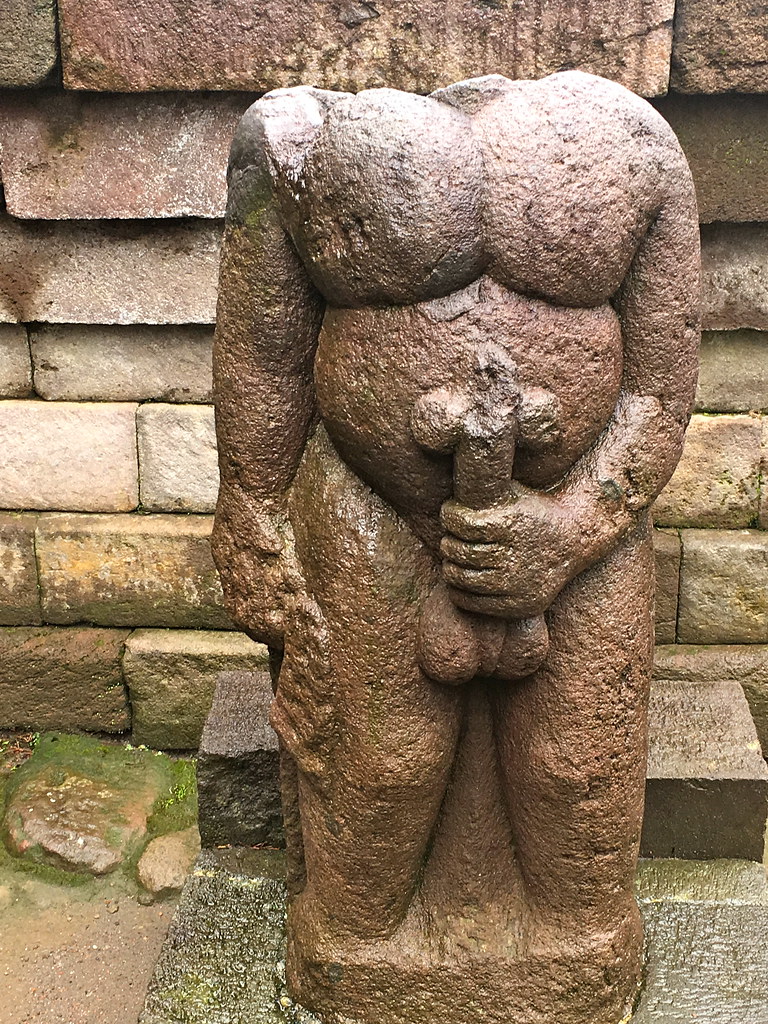
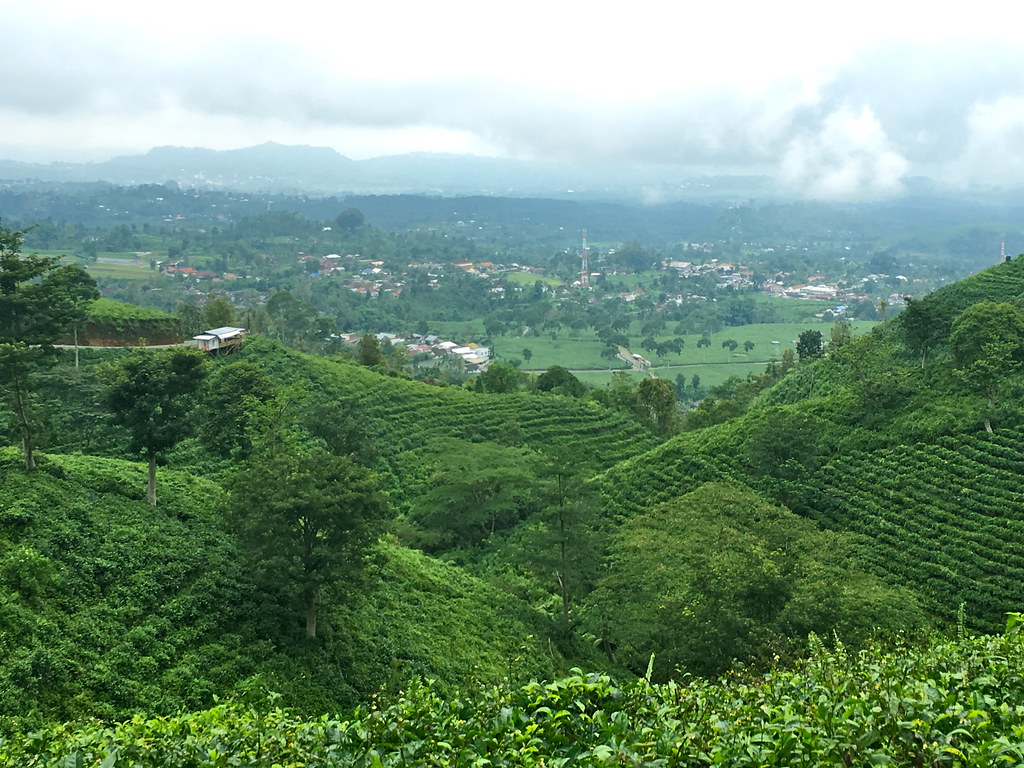
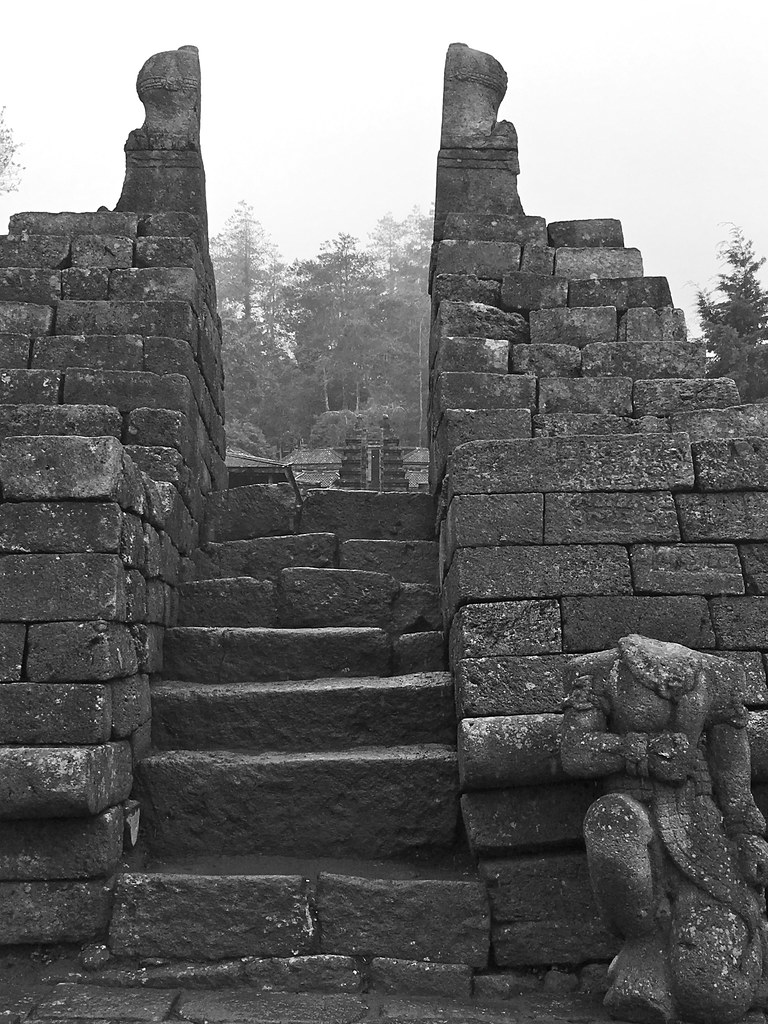
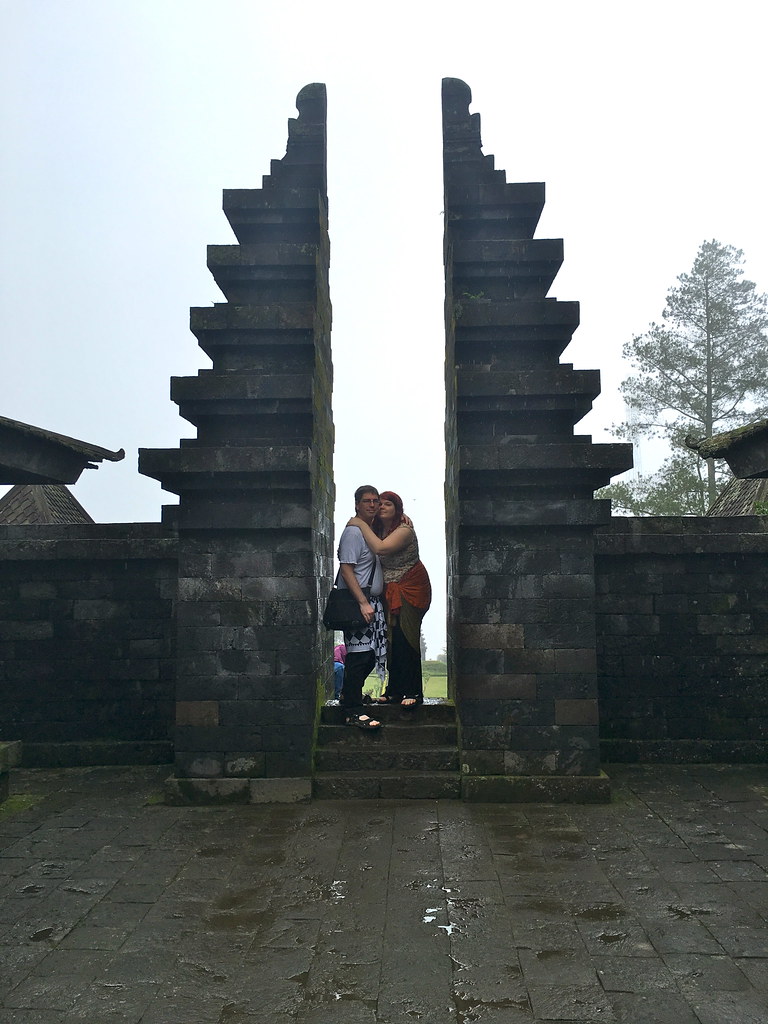
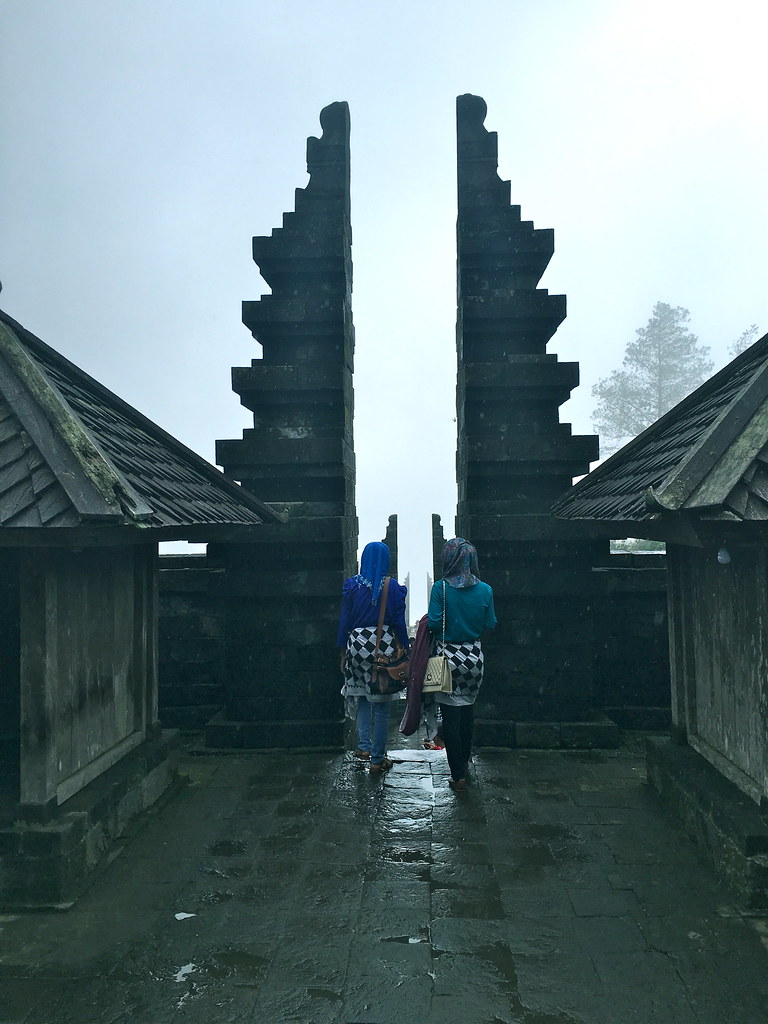
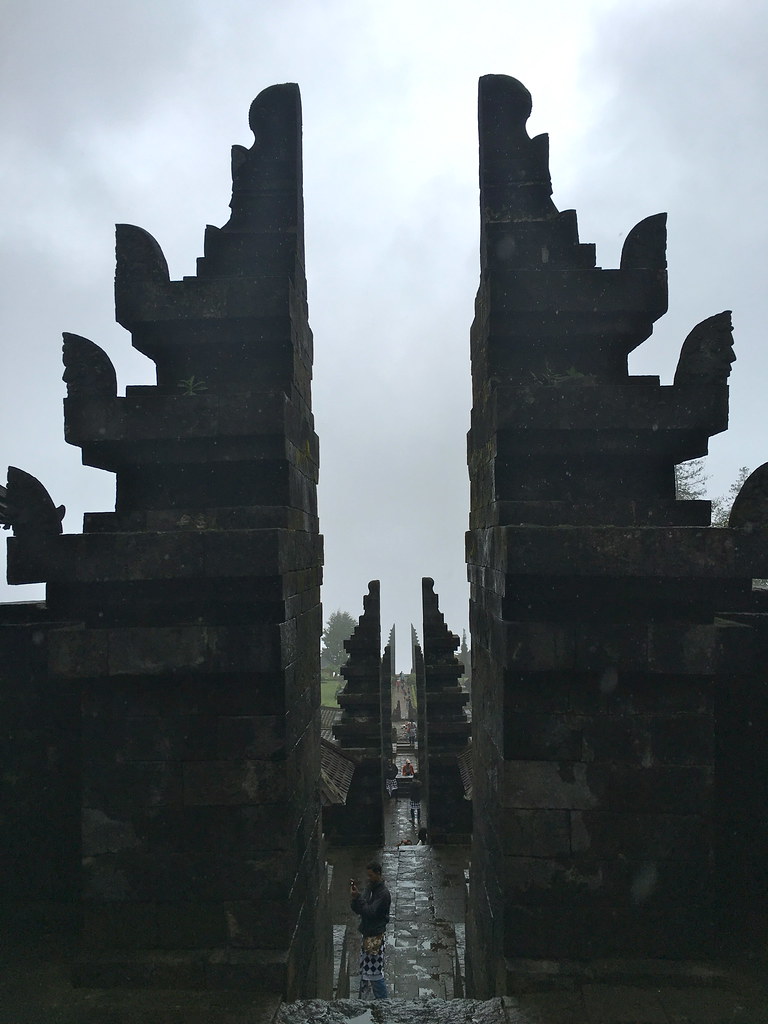
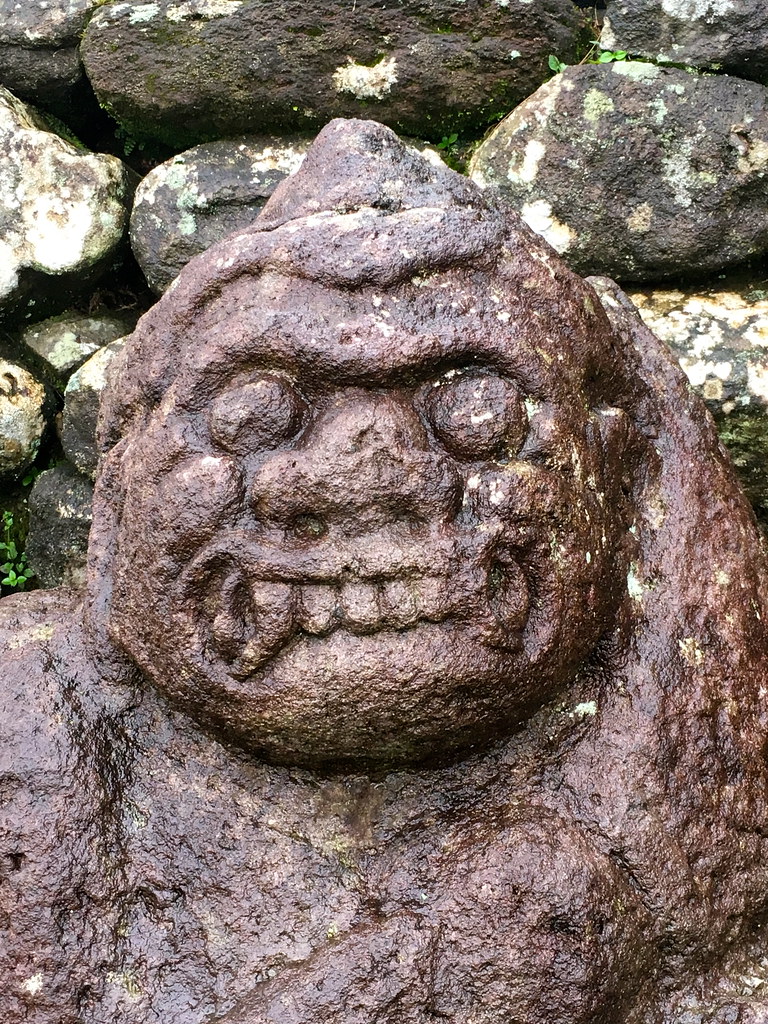
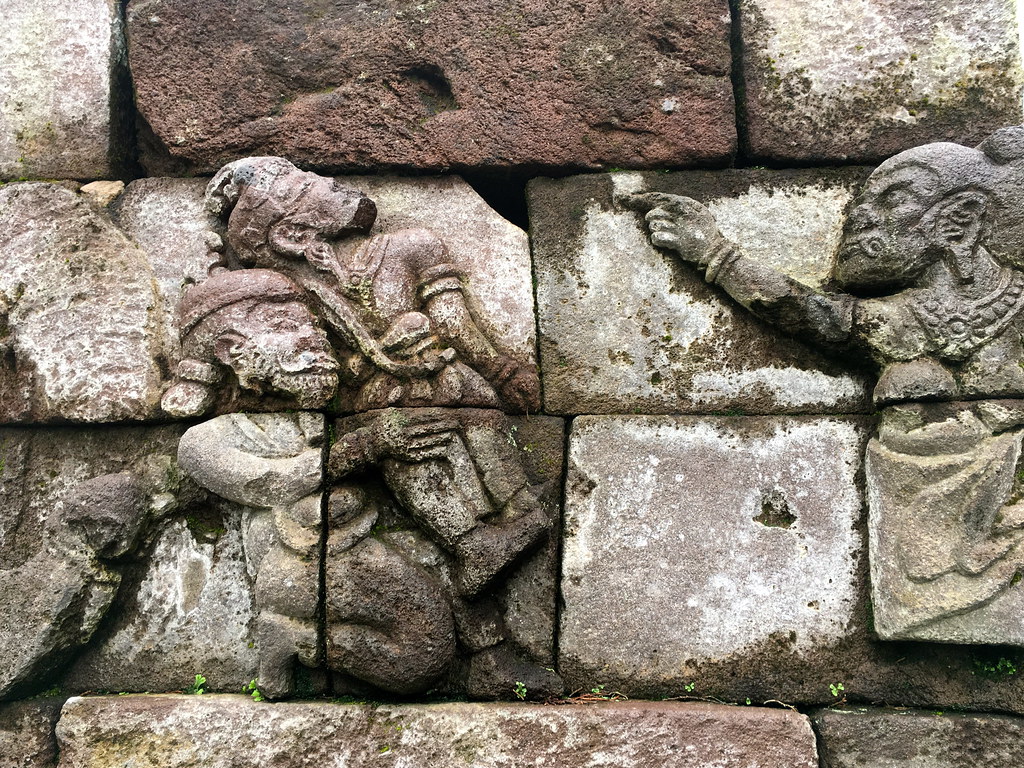
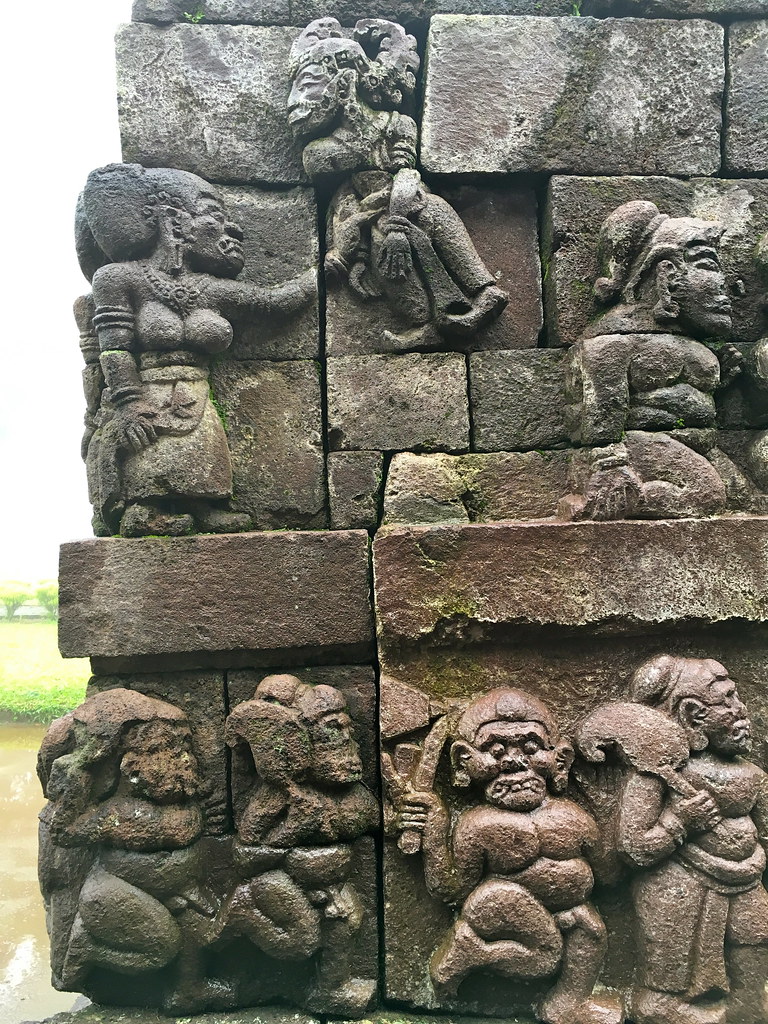
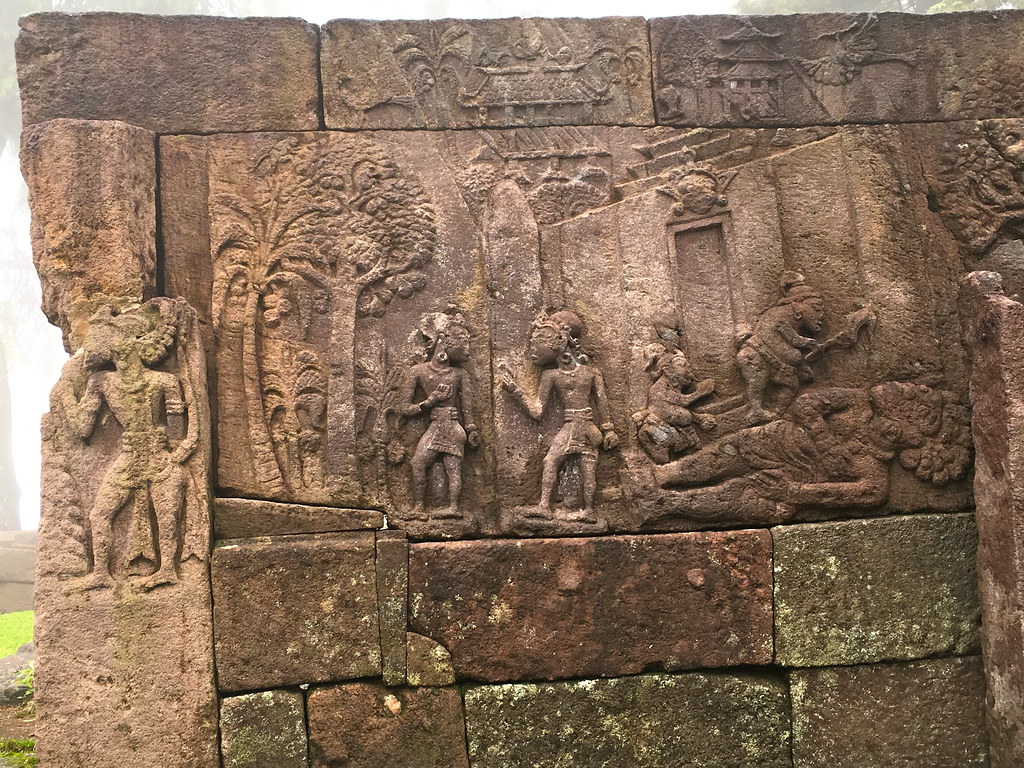
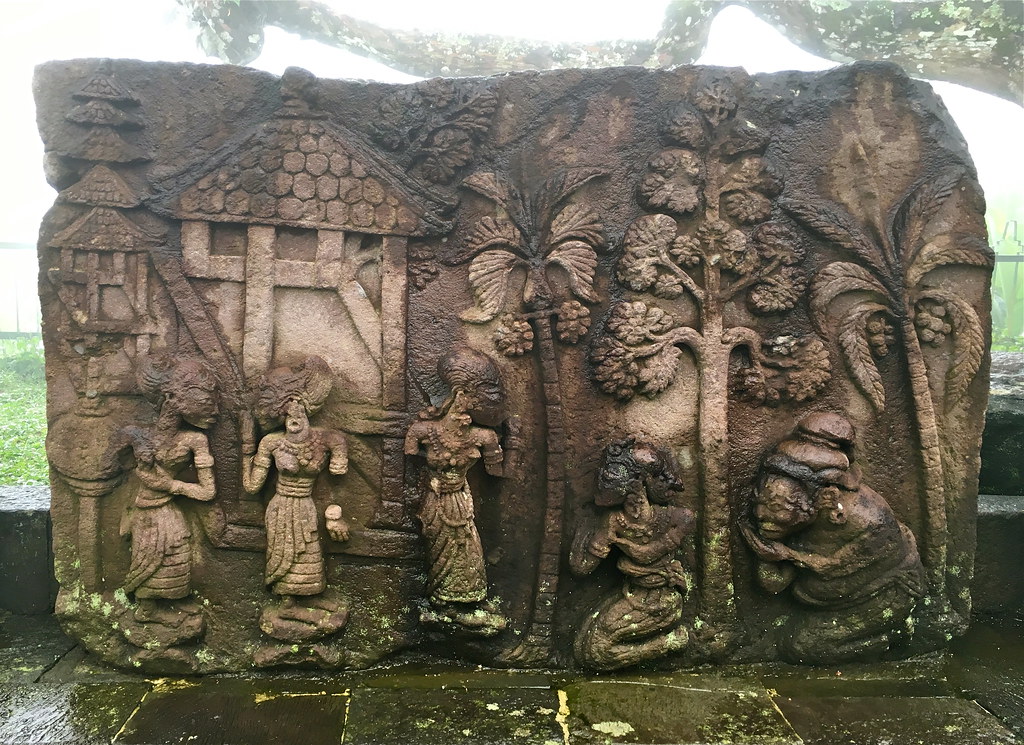
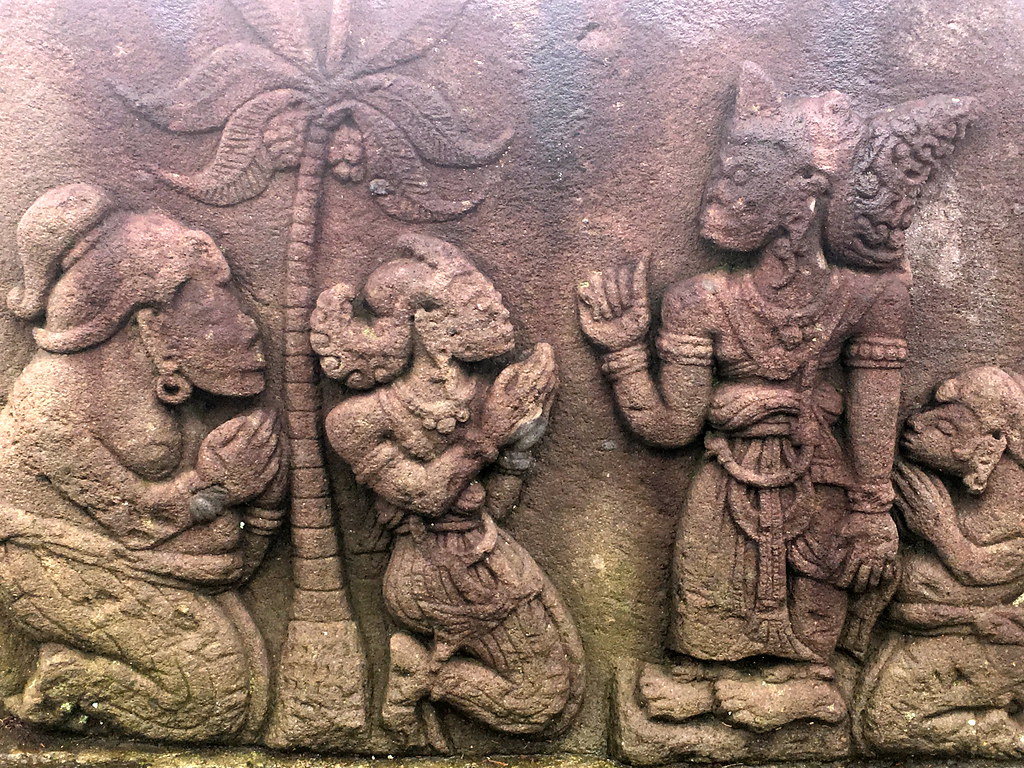
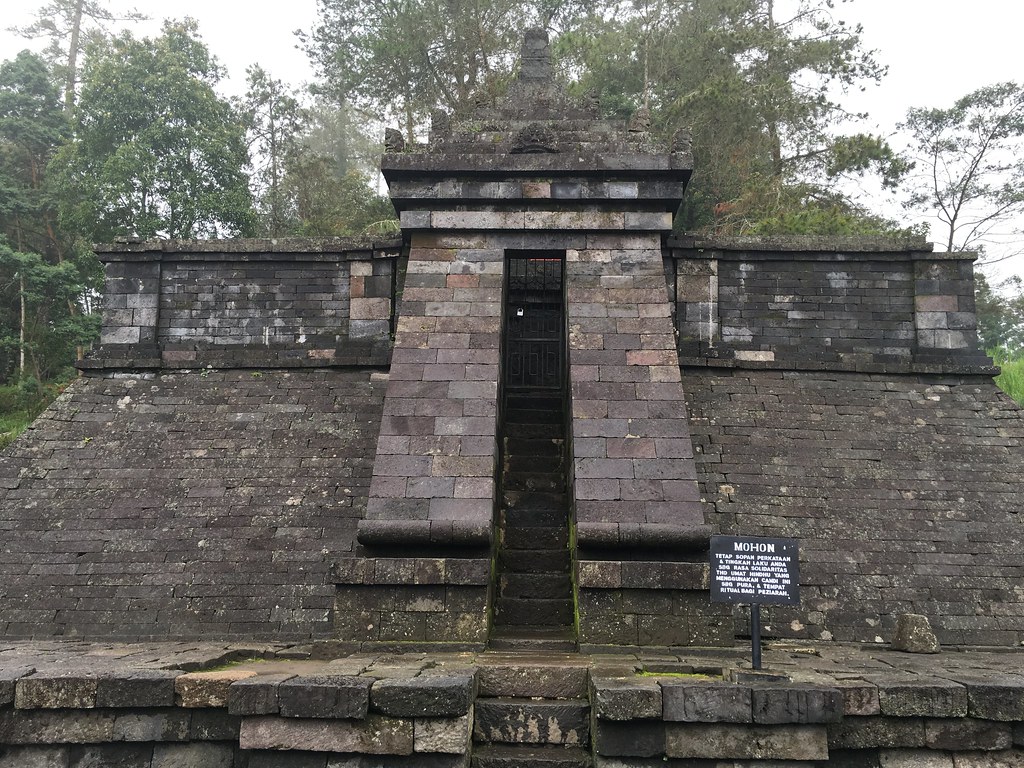
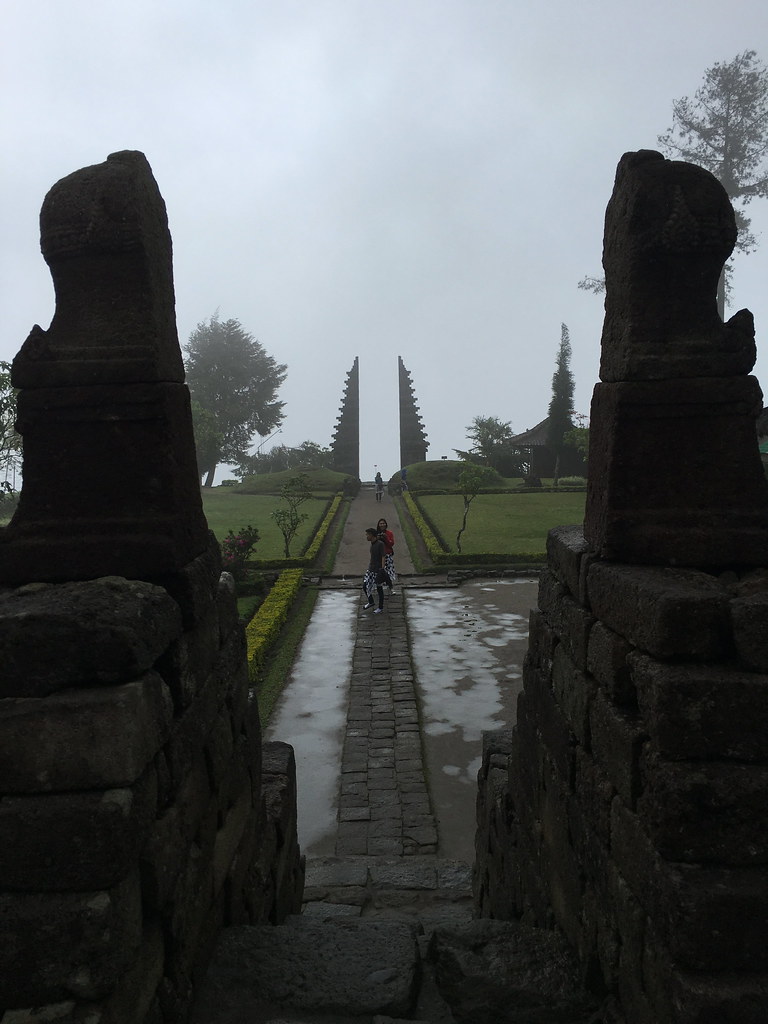
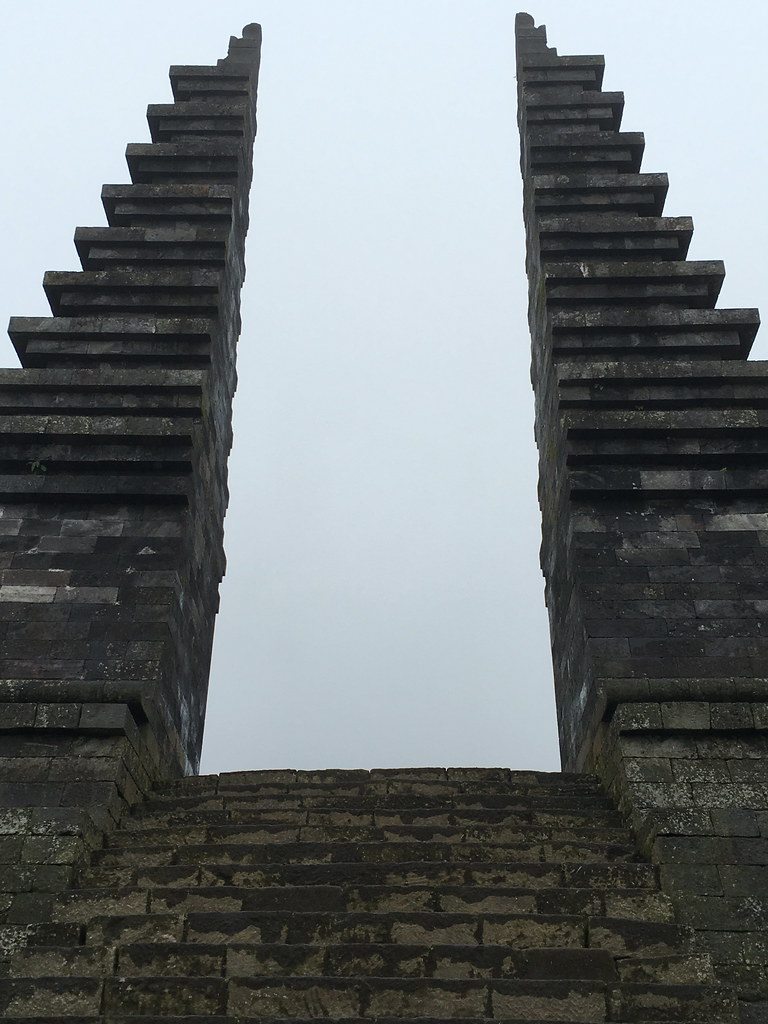
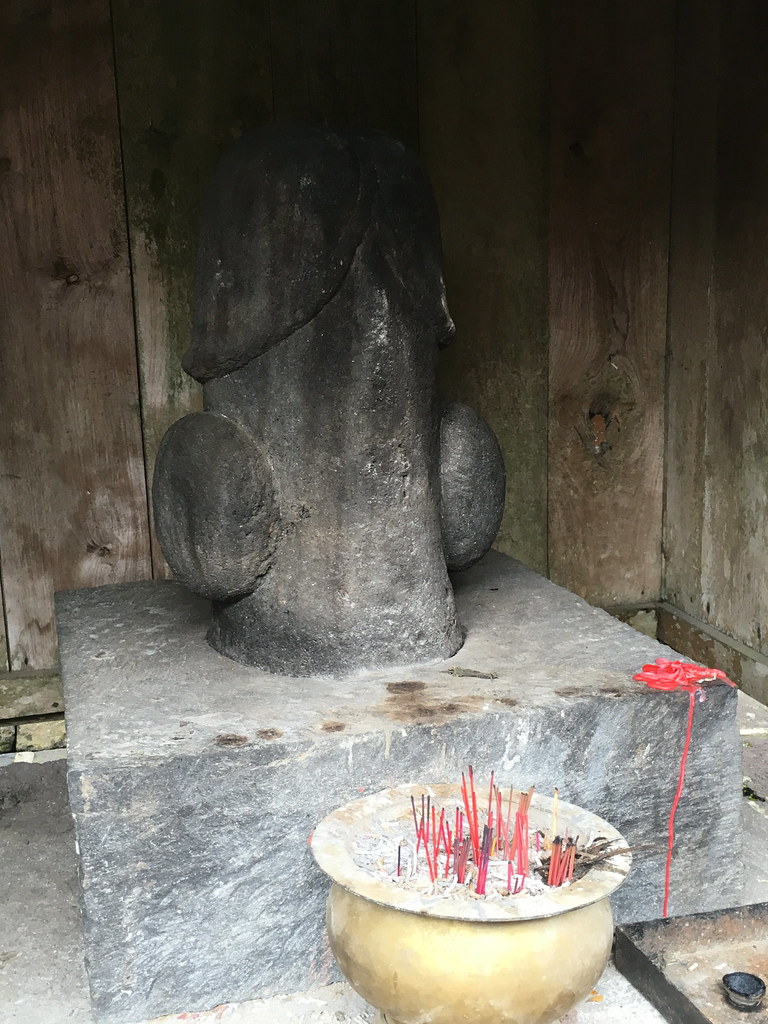
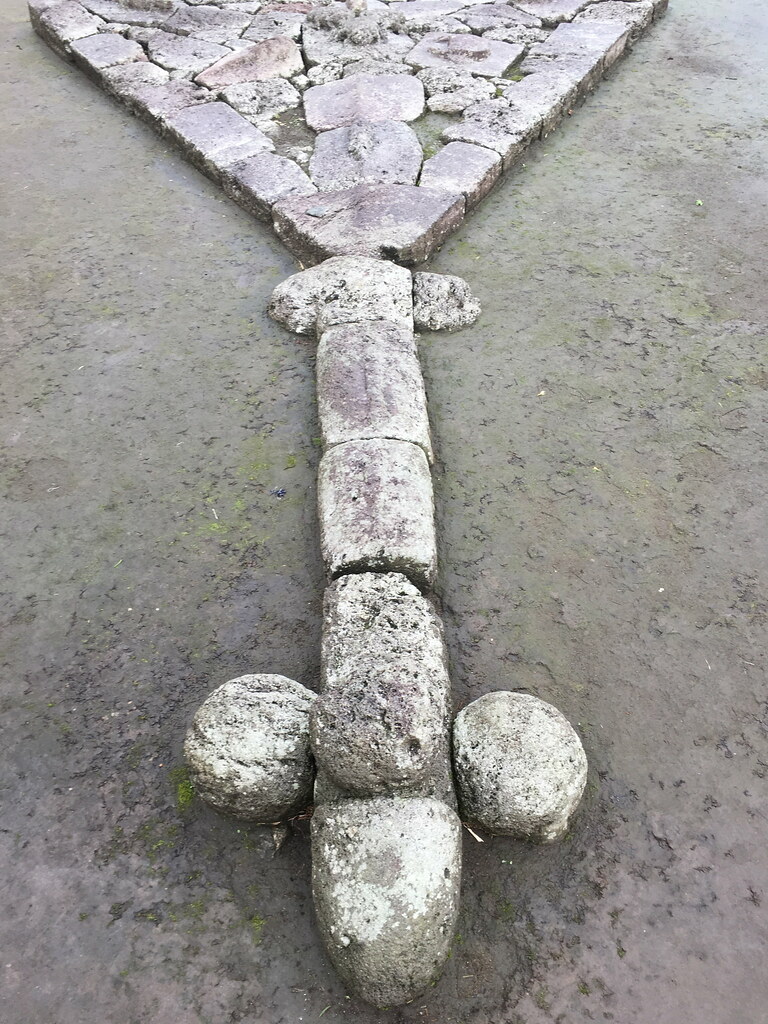
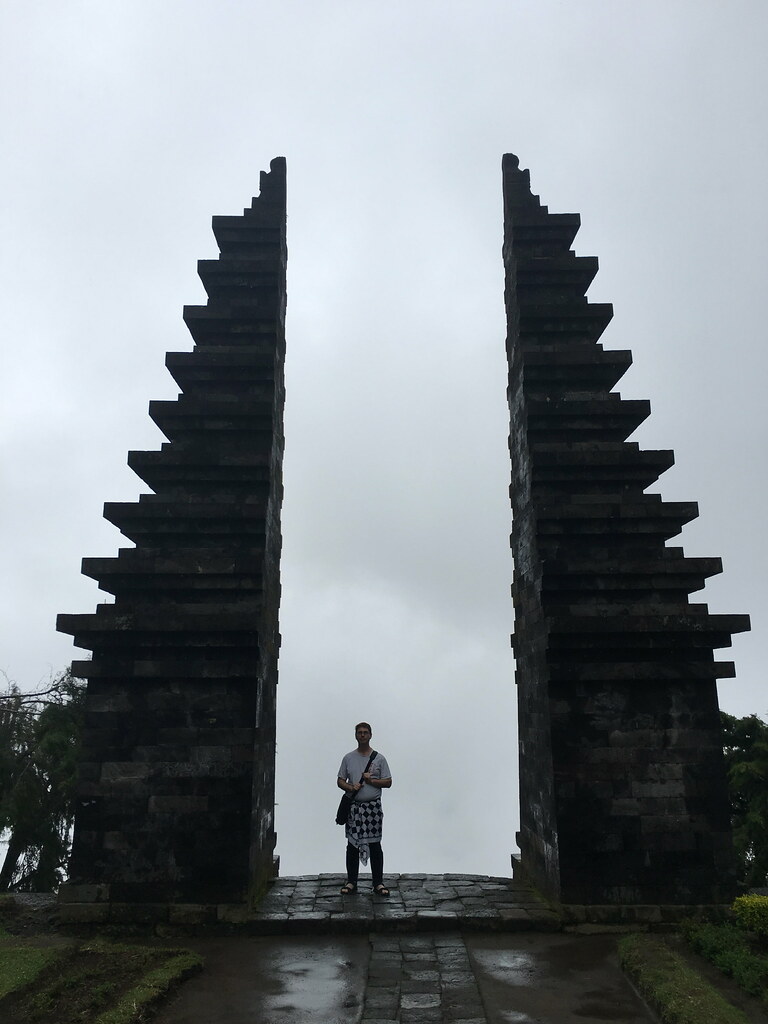
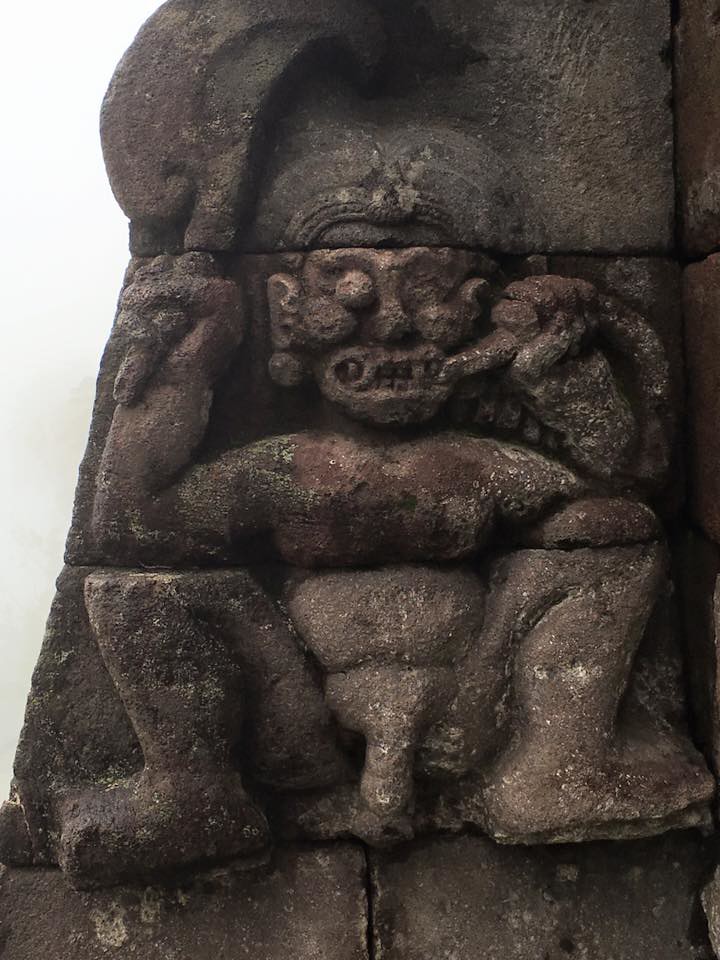
The next morning we arranged a car to take us to two temples on a nearby hillside, through gorgeous tea fields and up winding mountain roads; Candi Sukuh and Candi Cetho. These two temples are more indicative of a native Indonesian style rather than having the flavor of Indian or other Southeast Asian imports (though both are of Javanese Hindu origin from the 15th century). Other temples have stronger Buddhist or Hindu influences, these were devoid of such callbacks, having more of a Pacific Islander/Oceanic feel. Also, way more penises. WAY more. In the pictures below, Candi Cetho is the one that looks like a crazy alien dimensional portal, and Candi Sukuh is the one that looks like a pyramid imported from Mayan ruins. I don't know much more about these temples so I'll leave it there rather than try to disingenuously play the expert on Indonesian temple architecture and religion.
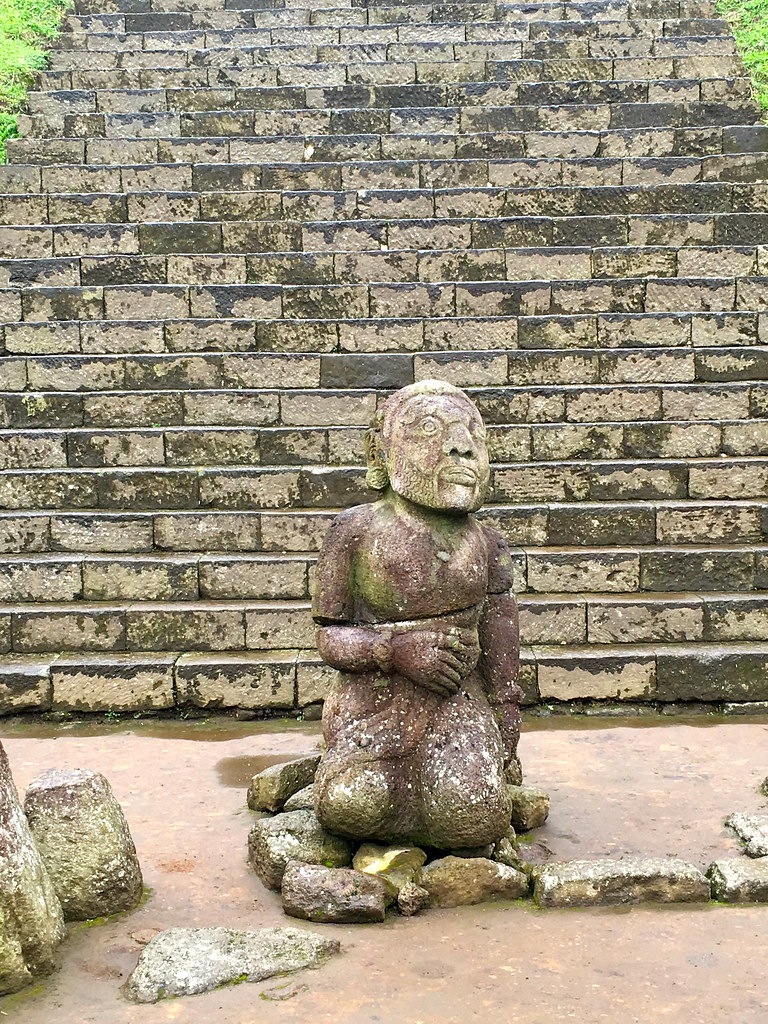
We had then planned on seeing some sights in Solo proper (we decided to head for the mountain first as the monsoon rains tend to hit in the afternoon - rather like in Taiwan - and it's easier to get around a city than a mountainside in a downpour). But, well, by the time we got to the kraton (local ruler's palace), it was closed for the day due to low tourist turnout, probably thanks to the rain. We went to the other kraton, the smaller but more beautifully decorated Mangkunegaran Palace, to find it had been closed for days in preparation for the wedding of some younger son of the family. So, we were driven in driving rain to the Danar Hadi batik museum to find that the museum itself was closed: the rains had caused part of the roof to fall in. But the store was open, so we just went shopping! Kind of a shame, I know, but frankly it was all OK. We did our shopping then returned to Roemakhoe for tea and to read away the afternoon, and left the next morning.
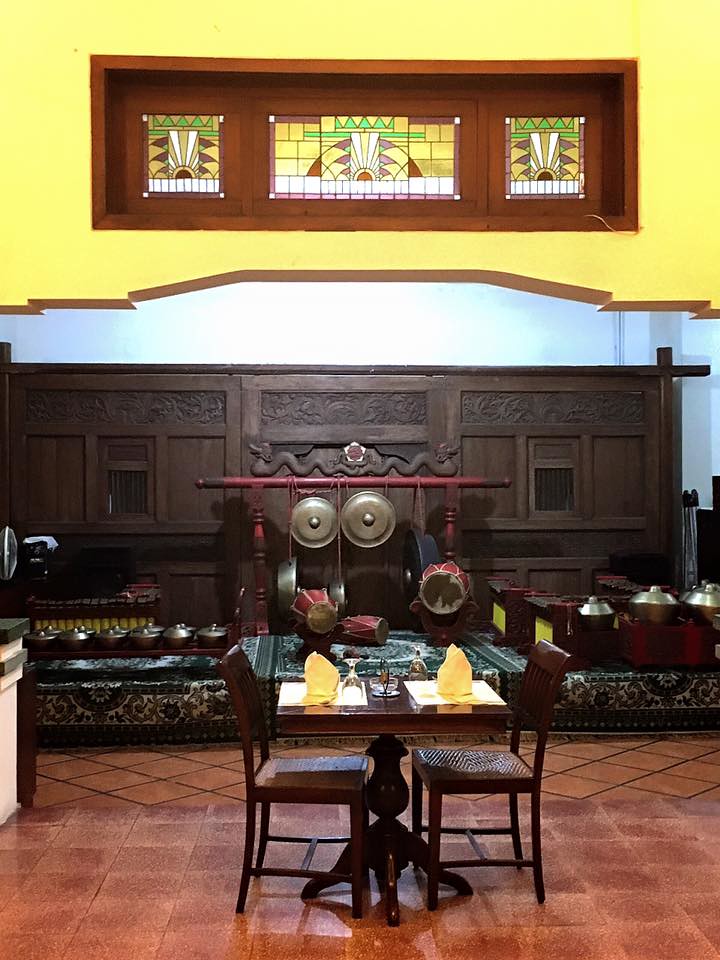 |
| Hanging out at Roemakhoe |
Note: we actually saw Candi Kalasan and Candi Sari, mentioned in the Prambanan post, on the way to the airport at some ridiculous time like 7am. They're right on the way, and we'd missed them due to rain on the way to Solo. So, our driver gamely stopped at both. I included them in the Prambanan post for ease of reading as they are geographically better categorized there, not in Solo.
Check out my other posts on Indonesia:
Surabaya
Borobudur
Prambanan
Surakarta (Solo)
Baluran National Park
Anyway, enjoy some photos!
 |
| 好吊喔! |
Subscribe to:
Posts (Atom)