Wednesday, May 9, 2018

The same "Mystic Orient/Confucian Values" nonsense that hurts Taiwan also hurts women

31936765_10156381923891202_4450871537943183360_n
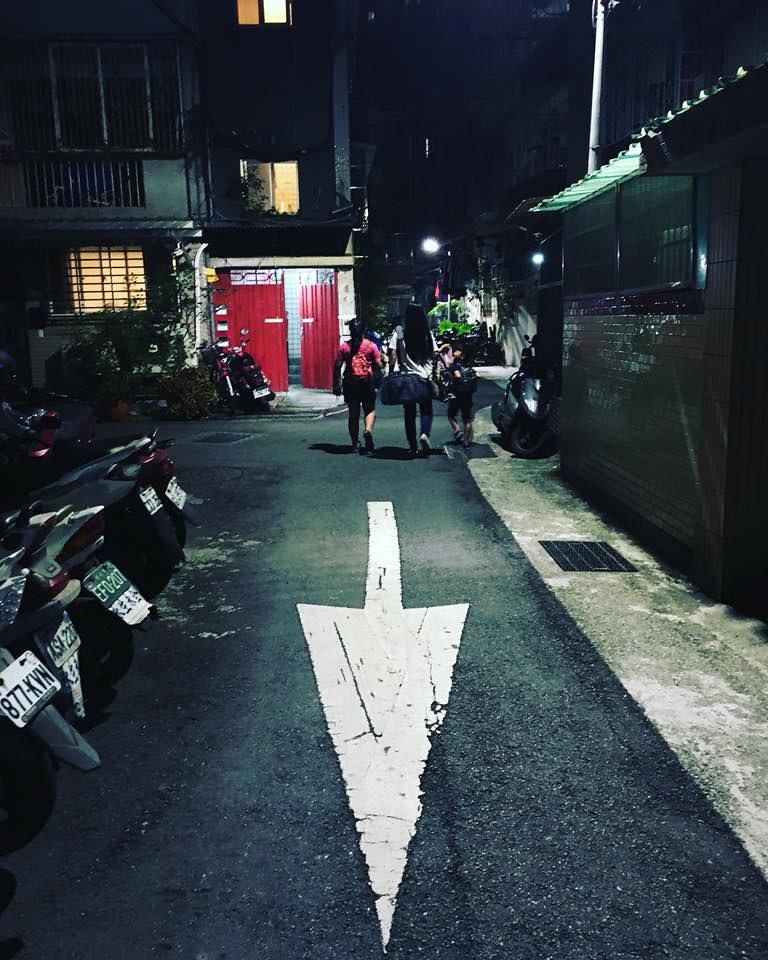
You think they're going this way, but they're going that way.


Something struck me as I read this clickbait-reconfobulated piece on women's expectations of salary, both of themselves (as mothers) and their husbands.

What jumped out at me - assuming the piece got the numbers right - was this:

Taiwan’s female workers will not consider entering marriage if their prospective husbands earn less than NT$51,872 (US$1,730)


and

Asked about the reasonable monthly salary for “mothers,” if to be paid, female respondents expected an amount of NT$53,031 (US$1,769) on average, NT$3,042 (US$101.5) higher than the 2017 figure of monthly income released by the government's Directorate-General of Budget, Accounting and Statistics, standing at NT$49,989 (US$1,668), reported CNA.


Note the discrepancy: women have higher expectations of their own salaries than they do of a prospective husband's salary.


This is awesome: women setting goals for themselves that exceed what they expect men to provide for them. Not only that, women expect to earn a bit more, as mothers, than they expect the father (traditional role: provider) to earn. That's huge! This wasn't academic research (it was a survey by a jobs website) but it indicates a fertile area for research and discussion.

There is a quote by someone from the website that did the survey talking about how women think mothers deserve higher pay, but it's impossible to really parse it, as it's never clarified if any questions are asked about women's salary expectations for themselves independent of marital/childbearing considerations. In any case, it makes little sense that women would expect a salary boost from employers when having children doesn't make them better workers (though it doesn't make them worse, either.)


Yet not only did the article get it wrong - it's not reported whether the survey included a comparison question on what women expect to earn if they are not mothers - but the headline did too:


Taiwan's female workers expect prospective husbands to earn NT$51,872 at minimum: poll


Why focus on that (except other than to create clickbait) when the aforementioned comparison is far more interesting? Why focus on the same old tropes of what women expect of their husbands when the more fruitful discussion is centered on what women expect of themselves?

These problematic and harmful stereotypes about what 'Asian values' are and what they mean, even when stated in the spirit of trying to be 'respectful' of the spectrum of Asian cultures, not only hurt Taiwan but also hurt women.
 

I've written before about how Taiwan's struggle for recognition in a world that seems determined to ignore it mirrors what women deal with as they struggle for equality and recognition in a world that seems determined to focus on male achievement. I've also talked 
about how so many Western liberals get it so completely wrong when talking about "Asian values" or their version of what it means to be a moral or cultural relativist who "respects cultural differences" and how that impacts Taiwan. This is a country that is best understood not through the lens of what Westerners believe Asians think, but through the lens of universal values: freedom, democracy, equality, human rights and self-determination. 


It's the same regarding women in Taiwan. It's easy to conclude from chaff like this that in Asia, women's expectations and ideas are focused on traditional roles or relational notions of family, role and gender when the discussion is framed specifically to make you think that. In fact, a great deal of wordage is spilled trying to make exactly this point: it's traditional. It's their culture.

This is mirrored in the way discussions on issues like Taiwan's sovereignty are framed in such a way that they often make Westerners, whom you'd think would be supportive of Taiwan's pro-liberal democracy message, see things from a pro-China perspective. China aggressively pushes and benefits from this whole 'we're Asians, we think differently, it's our culture'  worldview. Just ignore those pesky Taiwanese creating all those tensions with their determination to keep their freedom. This is Asia, don't call it dictatorship - call it 'Asian-style governance'.

Let me give you a glimpse of what is lost when we flatten the discussion this way. 


Under Japanese rule, there was a brief period when Japan tolerated some freedom of expression in Taiwan. This was also a period when a small number of elite Taiwanese women studied in Japan or China, and were exposed to feminist discourse there. Granted, many of the ideas originated in the West, but crucially, they were being discussed by Asian women in Asian contexts. They disseminated to Taiwan not from the West directly but via intellectual centers in China and Japan - Asian women talking to other Asian women. While not autochthonous, it was not impossible to conceive of Western ideas of gender equality and individualism in Asian cultural frameworks, though most of this discourse was confined to elite/wealthy social classes. Anyone familiar with the May Fourth movement already knows this.

This was eventually quashed - first by the Japanese and then by the KMT - and didn't return until the 1970s, when Taiwanese pro-democracy and pro-independence activism also experienced a rebirth (emphasis mine) and reanimating burst of activist vigor (if you think Taiwanese identity and independence rhetoric originated in the 1970s, you are wrong on that count, too.) It really took flight - just as Taiwanese activism did - in the 1990s with the democratization of Taiwan, not as a gift from geneous KMT benefactors (don't make me laugh), but at the insistence of the Taiwanese people.

So, please, let's spare each other the embarrassment of a gamut of well-meaning Westerners who flatten Asia and think by doing so, they have understood it. Let's end the implication of such discourse: that Taiwanese (or any Asian culture) are incapable of grasping concepts of equality, individuality and freedom. Of course they are. They're not stupid.

And let's stop pretending that everything in Asia - from Taiwanese identity to women's equality - can be explained, sorted and filed away under outdated assumptions of what "Asians" think. Both in terms of women's roles and beliefs, and in terms of Taiwan.

Nothing is ever that simple.


(Historical source: Chang, D.  - Women's Movements in Twentieth-Century Taiwan)

Tuesday, May 8, 2018

"It's all in your head, Taiwan"

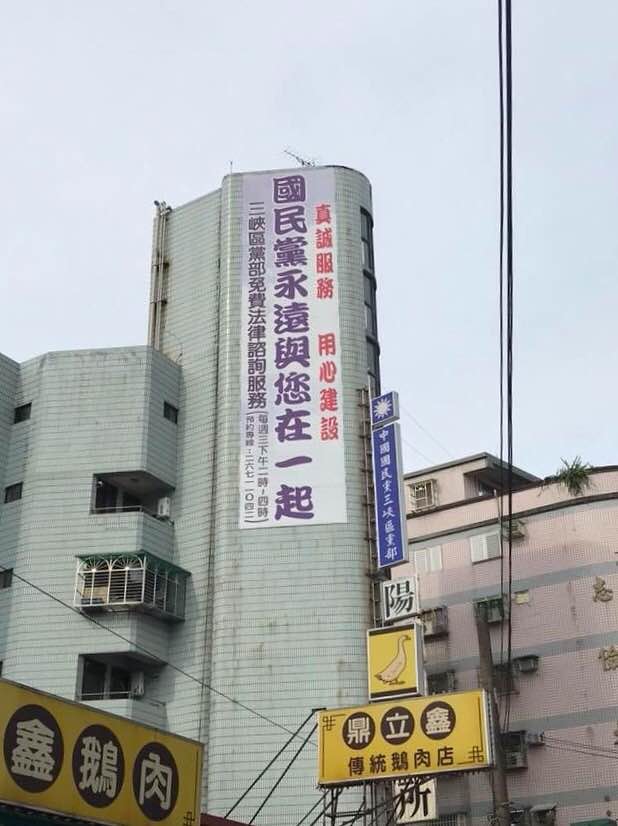
31952915_10216753400013423_4249846512776904704_n

This says: 國民黨永遠與你在一起 or "The KMT will be with you forever" (or perhaps "The KMT - forever together with you.")


What do you mean, you don't think we're right for each other? Haven't I always treated you well? What do you mean I haven't? Ugh, Taiwan, you know I care about you but I just can't deal with your craziness sometimes, you know? 

Ask anyone - ask my ex, China - yes, I know she's your cousin, but she's also my ex - even she'll tell you you're being crazy. She always says "KMT, you're right - I don't know why you stay with that crazy bitch."

What? Yes, we still talk. What's wrong with that? Are you jealous that I have friends now, too? What? You think she wants to get back together with me? Again - more craziness. Jealous and crazy. It's a wonder I even put up with you.


All the things I've had to do to make sure this relationship works, and not only are you not even grateful, you still get mad at me as though I'm the problem.

Remember the time when you went totally psycho for no reason and I had to break up this huge fight you started and even bring in soldiers to calm you down until you could be reasonable? Yeah, it took awhile but you finally realized how awful you were being. And then you demanded "more freedom" - god, you were really a bitch about that, you know? I even gave it to you, but somehow that wasn't enough.  I gave you everything and you just wanted more, more, more. No more Martial Law. Free democracy. Human rights. It was never enough. You're so high-maintenance, and you don't even know it.

I mean, ugh, I only went through your mail and took reading material out of the house that I didn't want you reading for your own good and safety, because you were being so illogical and hysterical and it wasn't good for you to be reading that stuff. 


I'm the one who got you back on your feet after World War II. You wouldn't be anywhere without me. You seem to think you did that - that your citizens built an economy from small and medium size businesses which was actually hindered by my Leninist attempts at creating a command economy that served to line my own pockets. Do you know how crazy that sounds?  It's so clear that it's just more of your histrionic fantasies - what, you think you could have gotten to where we are on your own? You? You had nothing, and I saved you.

I mean, it's not just me. Everyone thinks you're the problem. They know you've got issues - you know China thinks so. 

But it's not just China. The rest of the world, too. Why do you think they barely talk to you? Most of them pretend they don't even know you. Even the ones you work with. Don't pretend you haven't noticed. Do you think they're doing that because of me? No, it's because of you.

Leave China out of this. If you want everyone to start talking to you again, you know you have to stop being such a bitch to China. You insist she started this stupid argument, but she's been nothing but patient with you, too. You're the one causing all these tensions and everyone knows it.


What do you mean I beat you? You really are insane, you know that? I was defending myself - you were attacking me. And then you go around saying "The KMT treats me so bad", trying to ruin my reputation, but I'm the innocent one here. I mean, I know a few months ago you tried to steal money from me. I have to hide everything from you. You're unhinged. You think I took it from you? More crazy talk. I earned that money. You're still trying to get your claws on my pension but it's not going to work.

Let me tell you something, Taiwan. Nobody will love you like I do. Nobody will be patient with your insane fits like I will. You were meant to be with me. We'll be together forever.

Now calm down, Taiwan. You're being hysterical again.

Monday, May 7, 2018

Doing a part-time Master's from Taiwan

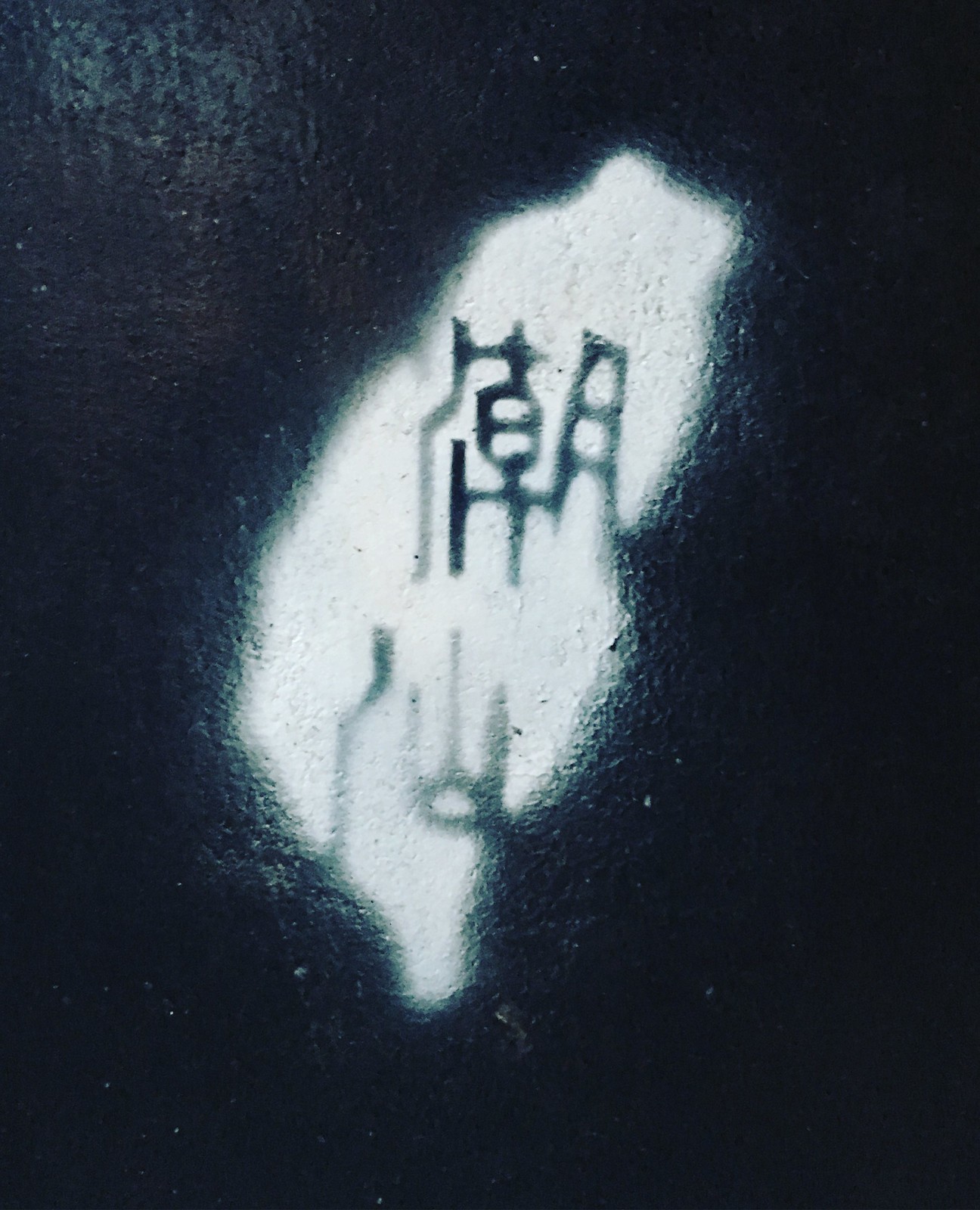
IMG_2329
I'm having trouble reading this - 朝山?潮汕?Is that a radical or a design element?


So, my first full term at Exeter is finished, grades are in, and I'll just say I'm quite happy.

It's important to me to write about professional development - after all, I'm interested in Taiwan for personal reasons, but my actual profession isn't related to Taiwan Studies, affairs, policy, any of it, and although I know there are others here who take TESOL seriously, it's hard to see that just looking online. Besides, people have asked. There aren't a lot of professional development opportunities locally, so for those who are actually serious about the profession I figure it'd be good to talk about what I've been up to.

I have less to say about this than I did about doing a CELTA (taking over a month away from Taiwan) and a modular Delta locally. I'm in the groove now - I know what I need to do and how to go about it, and there's less initial confusion and stress. So, it just feels like "life" rather than "something worth writing about".

But, there are a few things worth saying:

A bit about my program

I'm enrolled in the MEd Summer Intensive TESOL program at Exeter: it's the only highly-ranked school I could find that had a program quite like this - I've written about this issue before. It's not a "distance learning" program: you take your classes face-to-face over the summer, and then go back to wherever you live to write your papers. This is enough for it to be considered fully face-to-face.


The same program is offered full-time, and the summer program tends to be attended by people like me: working professionals in the field looking to level up (I have heard that the full-time program skews quite a bit younger.) Most of my classmates are non-native speakers, which I appreciate, and the entry requirements are stringent enough (though, to be honest, I did not fear that I'd be rejected.)

The main issue was finding relevant literature - in general:

There is just not a lot of TESOL literature available in Taiwan. Caves has a modest selection, I haven't yet figured out if I can use an interlibrary loan system here and, given that the best university doesn't offer my program, I'm not sure it would be fruitful to try. I can get most journal publications electronically, but it can be hard to access books, as many relevant titles aren't available in digital copies (when one is available, it's usually offered in a read-online format through the Exeter library).

I lucked out in terms of having access to a large library of relevant titles through a helpful classmate, but if I hadn't made that connection, I might have spent thousands more just on books.

...and relevant to my context


Because this is a Master of Education program, and not a Master of Arts, it is very much tied to one's teaching context. You can't write abstractly: you have to find real teaching situations, evaluate them, and often propose your own output or adaptations for use in these real-world contexts. I appreciate that - it's relevant, not too up-in-the-clouds - but to ground your ideas in principled pedagogy and relevant literature, you need such literature about said contexts. And there just...isn't a lot. There are TESOL and AppLing researchers publishing research from Taiwan, some of which is crap and some of which is fine - but there's just not enough of it. In the field, Taiwan simply does not represent very well.


It can be a bit lonely

I did Delta with Brendan - we had each other to talk through the hard parts, read each others' work, make each other dinner and talk each other down from stressful moments. I also had a local tutor for the most difficult module, which helped a lot.


On the Master's, although one of my classmates is Taiwanese and we've become good friends, I don't see her often as she lives in Hsinchu. Otherwise, it's just me...going it alone. I'm quite extroverted so all that time stuck in books or behind a computer screen, without other people doing the same thing, got a little lonely. I started feeling a bit like a slug - not enough exercise. I felt trapped indoors on beautiful days. Finding friends working on their own stuff to be around and choosing outdoor cafes on occasion helped, but frankly, you're sort of on your own.

There's not a lot of local support

To be blunt, Taiwan does not seem to value qualified English teachers. It can feel sometimes like nobody cares. I quit one of my (many) jobs in part over frustration with what I saw as academically-underqualified management, feeling as though, if I wasn't going to get support at work, where my degree would be immediately relevant, I would at least need time to finish my papers. My other workplaces were highly accommodating of my time needs and I'm thankful for that - those papers, man - but weren't resources in terms of discussing module content and writing.


I'd worked with highly qualified academic managers in the past, whom I would have happily gone to with questions or for advice, but that dried up. I got some very helpful support from the person I consider as a kind of mentor (thanks, yo), but he's busy with other things too.

I know there are other qualified people in Taiwan I could talk to, but I have found once you get to this level, you tend to be horribly busy (as I have been), and I feel as though there's no such thing as a truly helpful workplace in Taiwan. Not even necessarily the universities. I have to hope I'm wrong.

Yet I can't help but feel as though English teaching here suffers from the same blight as journalism: professionalism is just not valued. It's depressing. Come on, Taiwan.

The best part is the travel - the papers are...papers

Seriously - the classes are lectures, a bit long (three hours) but fun to attend. Otherwise, you are free to ramble about Exeter, although many students will spend time in the library looking through the physical collection to take notes, get ideas on what they might need, or scan relevant passages. First year students have to write a fairly simple formative essay and take study skills seminars - we'll see what it's like for second years - but otherwise, we could enjoy the town (quiet as it is). There was never a point when we were too busy to go to the pub or out for dinner, or to enjoy theater and other performances with our student discounts. In fact, people commented on my constant social media posts having fun with my classmates asking if I was actually doing any work (some).


And, of course, if you're already in England, you may as well poke about Europe...last year I went to Georgia, Armenia, Greece, Czechia, Hungary and Austria. This year I'll go to Portugal, Wales and Italy (and there is talk of a weekend trip to Spain.)

Then, the papers came. They're not easy - I mean, it's Master's level at a fairly prestigious university. I did very well but I had to work for it, and I felt like I spent most of January, February and March deep in a hole with only my computer screen for company.

There are no exams (yay!)

I always found this a bit odd about my friends' Master's programs. I thought exams were for college classes where you could assume the average to...let's say "differently motivated"... students couldn't write a decent paper (sorry if that sounds mean, but...) and if you were in a Master's program, especially in any kind of liberal arts or humanities field, you would certainly do away with the nonsense of timed exams and express your literature-grounded, principled and justified ideas in writing. Apparently - according to people I know - that's not always the case.


My program, however, has lots of paper writing but no exams. As, frankly, it should be.

Time can be an issue


I was lucky - as above, my various employers were very accommodating. I also took on a new teacher training role during this time, which I've been really getting into. It was a steep learning curve, though, so I found myself teaching my first teacher training course while finishing up my first paper, and not sleeping much at all. But, the job presented itself and I jumped on it, as I'd always wanted to do teacher training.


However, it's less clear that others doing this program would be so fortunate: I remember being dependent on an employer for a work visa, and I remember not having the power or resources to tell an employer to buzz off if they weren't accommodating. Most employers in Taiwan don't respect teachers' time - you're scheduled without being asked, pressured to work weekends or take classes you don't want, corralled into doing extra unpaid work (judging [ridiculous] speech contests, pointless paperwork, 'English corner' or whatever) and aren't even paid particularly well for the honor.

I could easily imagine someone without my resources - the experience of having done a Delta, the course exemptions from that Delta, accommodating employment, permanent residency, a persuasive resting bitch face* and a supportive husband - struggling to get all of the papers written.

Even I - a fully-resourced person - gave up my Lunar New Year to spend 6 straight days writing a paper on testing and assessment, with a cold so bad it bordered on the flu. I didn't have the time otherwise.

It's caused me to re-think similar programs in Taiwan.

Looking from the perspective of someone who had done a Delta, MA TESOL programs available in Taiwan didn't look particularly impressive. I didn't see how they actually trained one to be a good teacher (and I have been told that the MA Teaching Chinese programs tended to focus on the linguistics of Chinese rather than how to teach it).

But, I'm finding that's true with pretty much any Master's program. You get a lot of background in the field and a deeper theoretical and academic knowledge of it, but if you are looking to get better at classroom practice, they aren't going to do that. Period. No matter where you are. The academic knowledge is worthwhile, but it's best to know what you are signing up for. 


It's still absolutely worth it

Seriously, I'm lovin' it! I feel like I've found my superpower - a great hidden talent - writing academic papers that keep getting high marks. When you enter the field as an inexperienced nobody, as I did, and continue to work in it despite it being dismissed as "not a real job" by so many other expats (which I want to say is not fair, but so many "teachers" treat it as "not a real job" that I can't even blame the haters too much), there's always this desire to do something to set yourself apart as a real professional. Besides, although I don't write about it much, I do care about the field. I've toyed with starting an TEFL blog but Lao Ren Cha is enough for me, I'd rather write as a hobby and leave the work at work. Besides, it is interesting (to me) - I enjoy knowing enough about second language acquisition that I can shrug off all of the folk theories and pontificating. Leading TESOL training and developing future language teachers simultaneously really drives home that I do have a body of professional knowledge worth sharing. It's great.


I mean the papers can be torture, but also, it's great.


*no, seriously, sometimes you just gotta don the face and tell people how it's gonna be