Wednesday, May 30, 2018

Book Review: Lord of Formosa

maxresdefault


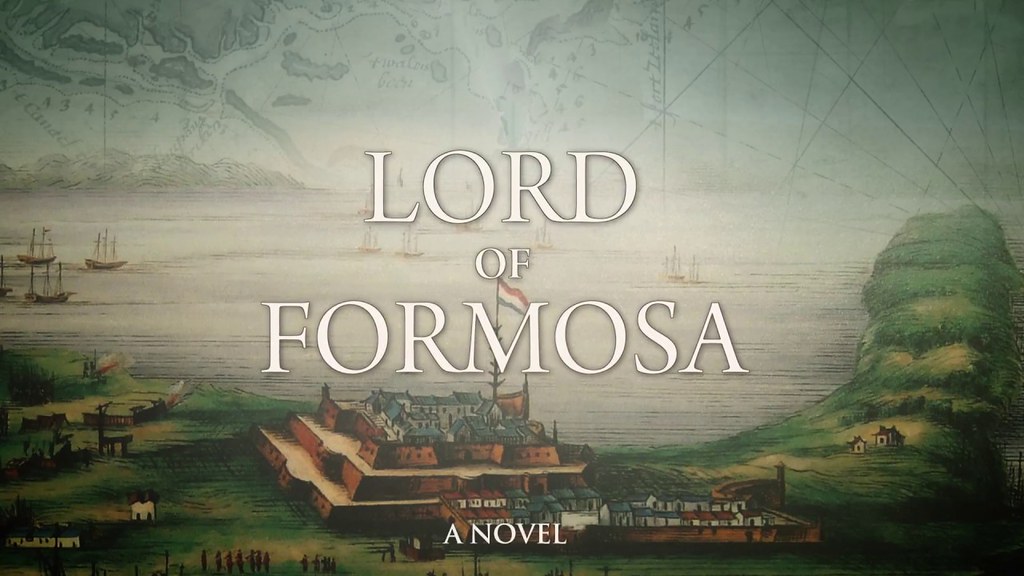
It is a pleasure for a work of historical fiction to come out on an area of history I am particularly interested in (Taiwan, obviously). It is an even greater pleasure when that work of historical fiction is not only engaging, but generally accurate. Joyce Bergvelt's Lord of Formosa has earned both of these adjectives.

Lord of Formosa is essentially a biography of Koxinga (國姓爺 or 鄭成功), the 17th-century scholar/pirate/businessman/military leader/talented crazy dude, from his early life on the Japanese island of Hirado (off Nagasaki) with his Japanese mother, Tagawa Matsu to his upbringing at his father Zheng Zhilong's (鄭芝龍) estate in Fujian, followed by his rise as one of the most talented loyalist military leaders resisting the encroaching Manchu (Qing) conquerers to his conquest of the Dutch colony on Taiwan. It's interspersed with viewpoint chapters from the Dutch colonial officers as well as Koxinga's parents.

It tells the story, in short, of a man given the Imperial Surname (國姓爺) by a dying empire, a man given the title 'Success' (成功) who was, in the end, not all that successful.

The story itself is somewhat tragic: Koxinga fulfills what the novel depicts as his 'destiny' but pays for it dearly. He has to choose between remaining loyal to the collapsing Ming dynasty or to his father, and watches the devastation of his family at the hands of the Qing.

"He literally died of a broken heart," an acquaintance of mine noted.

But no, to hear historians tell it, he probably died of syphilis.

In this way, the thick novel is cinematic in scope, at times reading like a biopic. It would make an excellent film, and I can only hope someone will pick up the rights and do just that (as long as it's not a Chinese company hoping to use it as a propaganda vehicle for their government's aggressive territorial expansionism).

From the beginning, I was interested in how accurate Lord of Formosa really was. So, just after reading it, I picked up Tonio Andrade's Lost Colony, figuring it would be a good nonfiction counterpoint. I'm partway through that book now, and am surprised more by how much is accurate than the small details which are spun with more artistic license.

However, this isn't even the highlight of the book: the best part is simply how much fun it is to read. Despite being extremely busy, I read Lord of Formosa in three days, staying up late one evening to finish it. You know a book is good when it's 3am and you know you aren't going to get enough rest that night, but you just keep going because sleep won't happen anyway.

I also appreciated how forthright Bergvelt is with her characters' flaws. Zheng Zhilong is, to be frank, a total douchehole both in terms of his defection to the Qing and his treatment of his first wife. If his son Koxinga was any kind of hero, he was a deeply flawed one: often cruel and despotic, suffering from fits of uncontrollable rage which might have been brought about by the aforementioned syphilis. Of course, the syphilis would have been brought about by all the mostly-nonconsensual sex he was having.

What I'm trying to say is that Koxinga might have been brilliant, but he was also super rapey.

His regretting it later (in the novel's telling) doesn't change that. Oh, and like father, like son.

In fact, that Bergvelt successfully created a story that includes a variety of relevant, realistic female voices - not all of them kind, pure-hearted heroic martyrs - in a story and era that is so deeply, unrepentantly penis-driven (my masts are bigger than your masts - let us do naval warfare!) is a literary feat. While she could have done more with the housekeeper, Lady Yan and Koxinga's wife Cuiying, she does enough to show that behind every story of dueling dicks, there are women who also drive the plot. And yet, she doesn't shy away from exactly how those women are treated.

The Dutch, who are portrayed not entirely unsympathetically, still come across as stupid - not really understanding Asia or the goings-on in the colonies they ruled - as well as greedy and racist. This was historically accurate: they did consider Chinese men to be 'effeminate', not a fighting force that could vanquish their (smaller) military might. That's racist. They didn't care nearly as much about the welfare of the people on Formosa, be they indigenous or Hoklo, as they did their profits. This is not only historically accurate, but also racist. 

On the other hand, Koxinga was kind of racist too - believing he had the right to take Taiwan because most residents by that time were Chinese (mostly brought over as laborers by the Dutch, who worked them like serfs) and therefore Taiwan ought to be a part of China, is just a different way to be racist. He didn't 'liberate' Taiwan from colonizers - he was just another kind of colonizer.

If I have any criticism of Lord of Formosa, it's that that point could have been made more forcefully.

Bergvelt takes a few artistic liberties. There was a fortune-teller in Japan who was more of a plot device than real character. I'm not sure how many of the Hoklo characters on Formosa were real people (though at least two - Guo Huai-yi and He [Ting]-bin certainly are). It is not clear how Tagawa Matsu died, although Bergvelt's telling of it is plausible, or even likely. Koxinga is depicted as growing less rapey over time (but still, again, super rapey) due to the effect his mother's death has on him. I'm not sure this would have played out in quite that way in real life - more likely, he was incapable of comprehending that the sex he unilaterally decided to have with women who didn't resist per se but also didn't consent is just as rapey as what Qing soldiers were doing. In other words, he didn't stop being rapey - he was just another kind of rapist.

That said, Bergvelt is a talented writer, understanding seemingly innately where to hew to historical accuracy and where to apply a bit of soft focus or streamlining. The story moves forward when it needs to (although I would have liked to have seen more of Koxinga's childhood in China) and lingers where it needs to.

Whether you are into historical fiction, want an engaging read of a period of Taiwanese history in particular, or just like a good novel, I strongly recommend it.

Monday, May 28, 2018

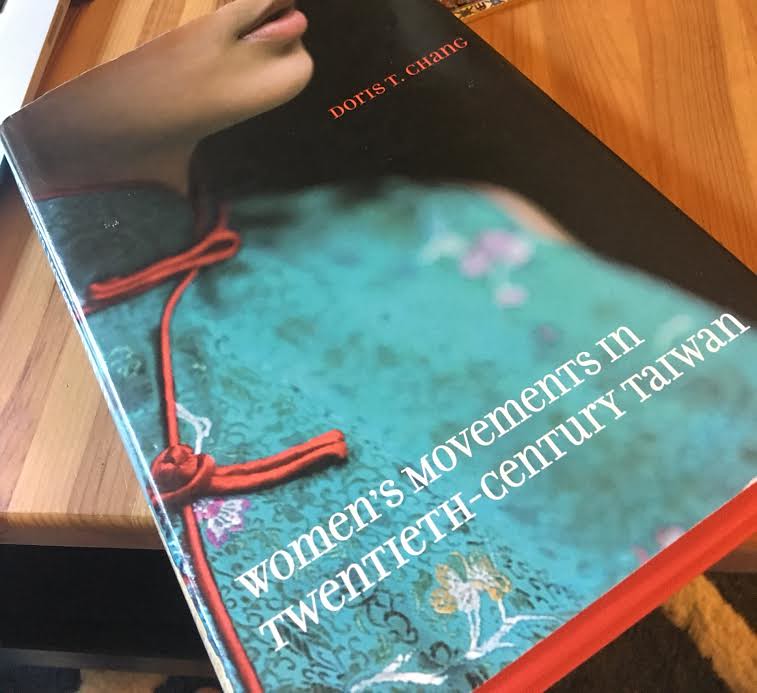
Book review: Women's Movements in Twentieth-Century Taiwan

unnamed-5


When talking about Taiwanese history, it's quite common to come across a belief that modern Taiwanese beliefs have their roots in the 1970s, and did not really exist before that. From "there was no real sense of Taiwanese identity or a Taiwanese identity movement before the 1970s/the Kaohsiung Incident" to "there is no history of feminism in Taiwan before the 1970s/before the end of the Chiang Kai-shek era" and more, it surprises me how many people truly think this is the case.

Of course, when it comes to Taiwanese identity, this is manifestly false. There are records of autonomous rule movements as early as the late 1800s, and several sources reference similar autonomous movements in the Japanese colonial era. When it comes to women's movements, the same applies. While several feminist pioneers did bring ideas of gender equality to the mainstream in the 1970s, the first stirrings of modern autonomous (that is, not connected to, supported or funded by the government) women's movements in Taiwan have their roots in the Japanese era, although there's no evidence to suggest that the 1970s feminists were directly influenced by them.

It seems to me that misrepresenting both of these movements as originating in the 1970s rather than several decades earlier is an intellectual sleight-of-hand meant to create the idea that both are new, "Western" notions that have no natural roots in Taiwanese culture or history (therefore creating a platform from which to criticize modern Taiwanese identity and feminism). In both cases, such notions are disingenuous.

This is just one of the many things I learned from Women's Movements in Twentieth-Century Taiwan, a slim volume (for an academic book) by Doris Chang. And, for an academic title, it reads surprisingly smoothly.

As an individualist feminist, I appreciated being challenged on the different notions of what feminism could be. I am not a relational feminist - I don't believe my equal place in society comes from the fulfilling of my different but complementary duties vis-a-vis a family or collective society - but as Chang makes clear, this is indeed a form of feminism, and one of two strands that continues to exist in Taiwan (and, arguably, the one that can strike the best compromise with traditional notions of role, duty and family in Taiwan). Chang further clarifies, however, that this is not the only strand of feminist thought present in Taiwan, as many would believe: radical feminism, woman-identified, X-centric and individual feminism also exist.

If I took one thing from this book, it's a reminder that Taiwanese society is not so simply categorized as traditional/collective/Confucian/whatever adjective you want to describe your idea about ~*~The Mystic East~*~. It's far more complex than that, and there is a place in public discourse for ideas that don't fit neatly into this narrative.

Chang makes other important points as well: for example, until fairly recently, the story of women's movements in Taiwan was once controlled by a China-centered narrative which began not in Taiwan, but with the founding of the Republic of China in, well, China. Taiwan only enters this narrative after 1945 (you can guess why), with women's history under Japanese rule being erased: non-existent, foreign or irrelevant to the story that the Sinicizers want to push.

Hmm, that sounds similar to Taiwanese national history as a whole, doesn't it? Not so different from teaching schoolchildren that their country was founded in 1911 (nevermind that that happened in China, and nothing important happened in Taiwan on that day) and then erasing Japanese era history in Taiwan to cover the Republic of China's Greatest Hits, Vol. 1 instead, no?

Chang also provides short histories of notable women in the early and mid-twentieth century, and devotes entire chapters to scions of the movement such as Annette Lu and Lee Yuan-chen, showing that the only reason we believe history to be full of notable male characters but few notable women is because we've constructed it that way, not because it always happened that way.

She also discusses the ways in which autonomous women's movements differed from government-affiliated ones. You won't be surprised to learn that the Japanese and ROC-affiliated women's movements promoted not feminism, but the fulfillment of traditional gender roles (shocking, I know.) She covers Soong Mei-ling's use of women's organizations mid-century to work toward national goals with very little concern for the actual issues facing middle-class and poor Taiwanese women.

I was interested to learn about the origin of those "Model Mother Awards" as well (you won't be shocked to learn they began in the worst years of the ROC dictatorship, because doling them out supported national goals), and her touching on the ways in which women's labor helped catalyze the Taiwan Miracle, although I think she could have made that point more forcefully than she did.

And, of course, she covers the ins and outs of elitism in women's movements, the relationship of women's movements to democracy/pro-Taiwan movements, Awakening and the Taipei Women's Rescue Foundation, the cooperation and rift between liberal feminists and lesbians, domestic abuse hotlines and more, finishing up with the ways in which the pioneers of the 1970s were able to really flourish (as well as separate into different groups) with the lifting of Martial Law, and the bevy of women's rights laws that were passed between the mid-1980s and the end of the 20th century.

I have one abiding criticism of Women's Movements in Twentieth-Century Taiwan, which is that it follows a bluer narrative than you would expect. That is not to say it doesn't criticize the KMT, the Republic of China or its leaders (it absolutely does, often viciously and entirely rightly), but that it includes certain problematic historical constructions that if anything are surprising. Here is just a taste (underlined emphasis points are mine):


In 1987, the Kuomintang lifted martial law and ushered in Taiwan's democratization. 

(No, the Kuomintang was forced by the Taiwanese to do that.)


The Dutch colonized the island....the government of the Qing dynasty incorporated Taiwan into the Chinese Empire.

(
You already know how I feel about this.)


With the defeat of Japan in World War II, the Allies transferred the governance of Taiwan to the Kuomintang government.

(Nope. And the KMT knew this - scroll down).


The Taiwanese duality of both sameness and with difference from mainland China has contributed to the Taiwanese people's unresolved national identity since the 1940s. 

(While identity has absolutely been a core question in Taiwan, the origin of ambiguity in Taiwan's national identity comes from colonial regimes from China - first the Qing, now the ROC - who insist on promoting a Chinese-centered national identity. If they had not pushed that point from their foreign perspectives so forcefully, Taiwanese national identity would not be in question. In fact, these days the question is mostly resolved, but the book was published in 2009 so I can forgive this.)


There are a few more examples, including many jarring uses of that horrible word "mainland", implying a territorial connection that simply isn't there - the current PRC government of China has never ruled Taiwan - but you get the point.

In any case, it was a worthwhile book if you can look beyond the odd blueness of the language used - as engaging as an academic text can be (though a bit heavy on the 'thesis statements' as though someone is grading it), full of lots of knowledge drops. Despite one or two confusing narrations of timeline (I'm still not sure when and why the New Life movement moved away from May Fourth Movement ideals and toward more traditional precepts, and the section on that did not clarify), I learned a lot and am happy I read it.

If you are not already knowledgeable about women's history in Taiwan, I recommend you do, too.

Sunday, May 27, 2018

I read a book and obsessed over Annette Lu

31632016_10156405761146202_3697605553502027776_n
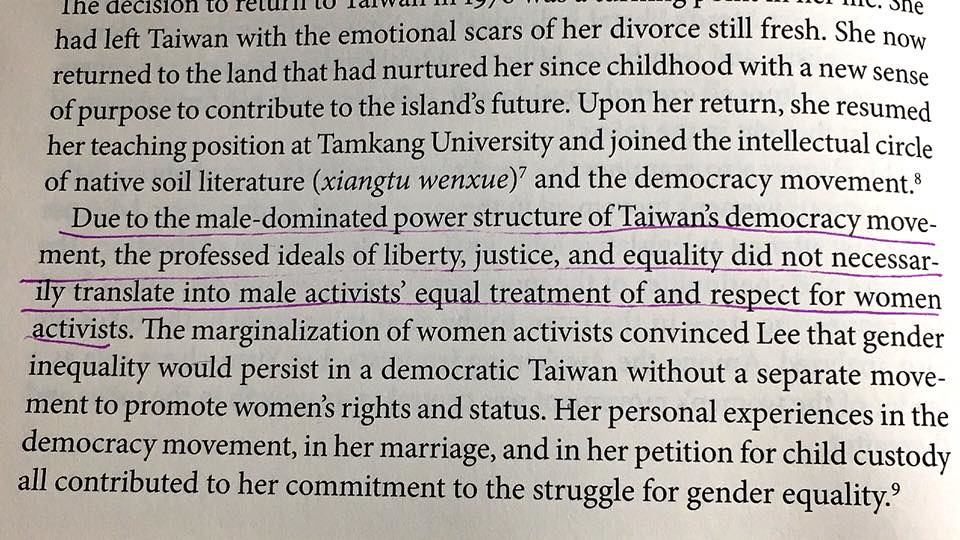
This passage is about Lee Yuan-chen, not Annette Lu, but the point applies regarding how she's been treated.


Add former Vice President Annette Lu (呂秀蓮) to the list of people who vex me. Reading more about her contributions to the feminist movement in Taiwan was the most impactful part of Doris Chang's Women's Movements in Twentieth-Century Taiwan for me, so I'd like to devote a post to talking about that before I drop a more complete review.

The book devotes a long chapter to Lu, who these days has a reputation for being both off-kilter and out-of-touch. It's not hard to see why.

When looking into what people dislike about Lu, I find stories that range from an odd trip to Indonesia as vice president (reported sympathetically in the Taipei Times) to comments on AIDS that many took as blaming gay men for the AIDS crisis as "God's punishment" (and frankly, I have to agree with that interpretation of her meaning) to a confusing proposal for Taiwan's diplomatic neutrality to completely unwarranted attacks on Mayor Ko and last year's Universiade. And, of course, announcing her intention to run for Taipei mayor when she is, frankly, not all that popular and doesn't seem to realize it. And, of course, there's her support of the ill-fated 'independence referendum' which takes so much energy that could be used to combat real threats to a more liberal future for Taiwan, and pours it into a big fat waste of time.

Then there is what I saw myself: She came to the 330 protest to support the 2014 Sunflower Movement (I don't have a link, I'm telling you this because I watched her walk by with my own eyes), despite the movement having little to do with her, and the general feeling that the DPP was trying to capitalize on the movement to build their own support when the Sunflowers themselves were not particularly interested in DPP party politics. Actions like this were a part of why many Taiwanese on the fence about the Sunflowers came to believe they were a DPP plot, when they were nothing of the sort.

Chang, on the other hand, focuses specifically on Lu's activities in the 1970s, and makes it quite clear that Taiwan would not be where it is today vis-a-vis women's equality if not for her. A thread of belief is drawn between her - the first and most prominent Taiwanese feminist of the second half of the twentieth century - and the women's groups of early-20th century Japanese Taiwan, but makes it clear that from a research/scholarship standpoint, there is no evidence that the movement Lu ignited (no, it is not an exaggeration to say so) was directly related to earlier women's rights activities in the country. I do not think it is too much of a stretch to say that perhaps the reason why Taiwan is ahead of the rest of Asia when it comes to women's issues is in large part thanks to her. She didn't do everything - there are many other notable Taiwanese feminists of the 80s and 90s - but she struck the match in the 1970s and that means something. She printed books, founded associations and opened hotlines during a time when one could be arrested or 'watched' for doing so: and she was.

Her feminism was not perfect: she was in favor of ending arranged marriage (still somewhat common in Taiwan even as late as the 1970s) and she herself chose not to marry. She spoke out in favor of women succeeding professionally, as she had done. However, she tried to build support through compromise: not attacking the (wrong) idea that women still had specific duties in the home that should not be done by male family members, with no ideas as to how to ease the 'double burden' this dual set of responsibilities - familial and professional - puts on women. She was not in favor of pre-marital sex (though advocating for not discriminating against those who chose to engage in it). She tried to marry feminism with the idea of Confucian duty, and frankly, it didn't work well for good reasons.


In fact, she came into feminism long before she became a dangwai or pro-independence activist, to the consternation of many of her less party-bound (or simply blue-leaning) feminist peers who felt that the fight for women's equality should not be bound to other political goals (many if not most did not join the dangwai as Lu did).

Her doing so anyway - and suffering for it, having been imprisoned and tortured with other pro-Taiwan activists for her role in the Kaohsiung Incident - could be said to be part of why feminism in Taiwan is now linked to some extent with pro-independence, human rights and other liberal activist movements. It's a logical progression: women's movements supported by the KMT, especially in the White Terror era, were not equality-minded at all but rather promoted the continuation of traditional gender roles and beliefs about gender and duty. It only makes sense that a different set of beliefs about equality would eventually be tied into an anti-KMT, pro-Taiwan platform. Yet without Lu, this might not have happened.

This national amnesia about her contributions to the women's movement means that her current beliefs are often presumed, perhaps unfairly. Some say she opposes marriage equality, but the only source I can find for that are interpretations of the aforementioned AIDS comments. Having been made 15 years ago, I'm not sure that's a strong enough case to interpret her feelings on the issue today. Soon after those comments, she drafted a basic human rights law that included marriage equality, which didn't pass.

Yet, people assume that one (extremely stupid and bigoted, to be true) comment about AIDS represents her entire worldview, which I feel is unfair, and it seems nobody has asked her what she thinks of marriage equality today.

This has led me to believe that perhaps she doesn't get enough credit, even as we acknowledge that she has not represented the zeitgeist for decades and regularly makes groanworthy statements today. It doesn't surprise me: scions of other liberal movements are regularly forgiven for their later missteps - Christopher Hitchens and Richard Dawkins come to mind - but women like Lu? Well, I wonder why they aren't. Why are her past contributions so easily forgotten? If her statement on AIDS, which rightly deserves all of the criticism thrown at it, is used to frame her entire belief system, why is the same not often done for so many male public figures?

I can't help but notice that, while other human rights advocates of her era such as Shih Ming-te are also rightly criticized for their out-of-touch and off-kilter (and often downright insane-sounding) pronouncements today, some are quick to point out that serving time in prison under the KMT dictatorship would drive anyone to be a bit, uh, nutty. Yet few seem to remember that Lu spent over five years as a political prisoner as well. Shih gets the background context for his behavior, Lu just gets eyerolls.


(That said, if I could vote, I would not vote for her for Taipei mayor. She's done a lot, but she would not be a good mayor, period.)

There is still more work to be done: Lu is brushed aside - sometimes rightly so, sometimes perhaps without due consideration of her important contributions to the women's movement - and the slow liberalization of Taiwan chugs along. The southern and older social conservatives who make up much of the DPP's pro-independence supporters are growing old, and will be replaced by younger, more progressive voters. In the here and now, though, these older conservatives still matter, yet we forget that there are people like Lu who began challenging them, however imperfectly, decades ago.

The younger, more liberal generation itself has work to do. As Chang notes in Women's Movements in Twentieth-Century Taiwan:


Due to the male-dominated power structure of Taiwan's democracy movement, the professed ideals of liberty, justice and equality did not necessarily translate into male activists' equal treatment of and respect for female activists. 


This was true when the book was written, and it was true in Lu's time as well. She challenged it, and made it to the vice presidency.


The problem is, it's still true today. Look at the Sunflowers, whose large-scale protest she attended. How many prominent Sunflowers are male? How many are female? How often are male NPP legislators (Freddy Lim, Huang Kuo-chang and Hsu Yung-ming) in the public eye? How often are the female legislators (Kawlo Iyun Pacidal, Hung Tzu-yung) in the public eye?

Despite a great deal of progress having been made, do we really think that today's liberal progressive youth is that much better vis-a-vis women's equality than in Lu's generation?

Because as I see it, Lu understood this before the rest of us did. Maybe she's out-of-touch now, and it is frankly time for her to retire. She is now hindering the movements she once championed. But that doesn't mean we give her enough credit or that we can ignore the ways in which the work she started still is not done.