Friday, October 12, 2018

If you think Taiwanese have no sense of humor, perhaps that's because you don't get it.

Screen Shot 2018-10-12 at 2.06.18 AM


I hear it a lot: some expat dude (it's usually, though not always, a dude) who decides to hold forth and grace us with his deep knowledge of and wisdom about Taiwan, and proffers what he feels is a gem of intercultural knowledge: that Taiwanese have no sense of humor. 


There's even a blog post out there mentioning this, but I'll do the author a favor and not link to it. Obviously, I don't agree

This is often accompanied by the oft-repeated nugget (what kind of nugget I'm not sure) that Taiwanese don't understand sarcasm. 

It seems to be a common double standard - that it's okay for us to stumble around like idiots in the local language (and it is okay, by the way, as long as you try), but if someone isn't William freakin' Shakespeare in English, it must be some issue in "their culture" or their DNA which makes them "incapable" of sarcasm, jokes, being engaging, making a clear point, saying no, or whatever. Hmm, so you don't think that maybe it's just that they, like you, aren't perfectly fluent in the foreign language they are using and so they struggle with some higher-order language competencies which they are quite capable of in their native tongue? We don't think we "lack a sense of humor" if we can't properly crack jokes in Mandarin or Hoklo, so why do we apply this standard to Taiwanese learning English?

Personally, I find some of my Taiwanese friends, acquaintances and students deeply hilarious, some darkly funny, some basically normal (not particularly funny but able to enjoy a good joke) and some cold and humorless - just like I do any other people.


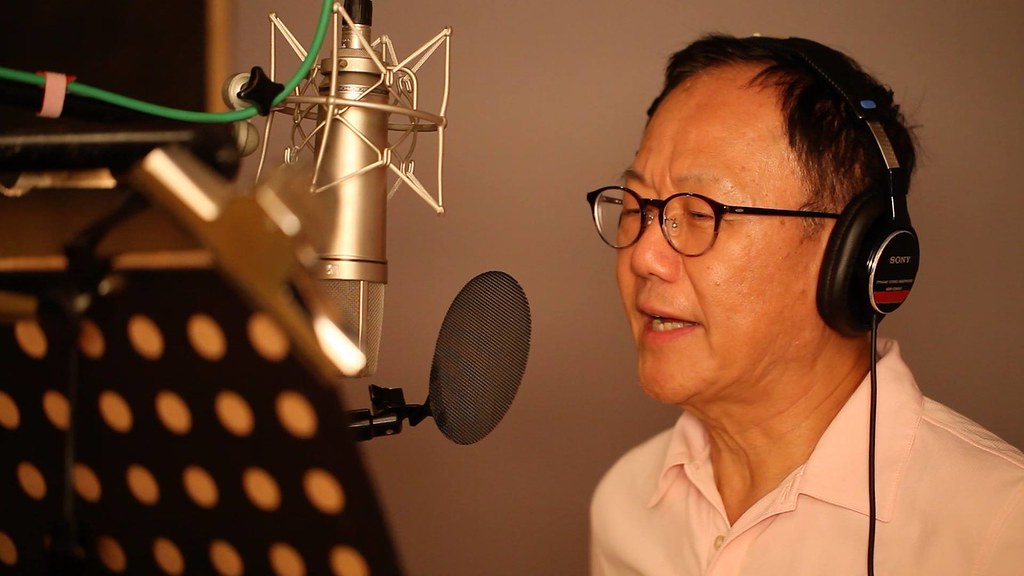
With that in mind, please enjoy this unintentionally hilarious "rap" from campaign staffers for Taipei mayoral candidate Ting Shou-jung (丁守中). I'm sure they'll get all the Kool Youngsterz to vote for them with this jammin' tune!

43286559_1843043162398253_7734620957699997696_o
台北的未來在他手中??


This isn't even the first time a KMT candidate has come out with a completely ridiculous song to try to appeal to the Cool'n'Hip Kidz, although it's more polished and overall less wholly inexplicable than this total head-scratcher from KMT chair Wu Dun-yih.

And, from a friend, there's this...um, song? From former Taichung mayor Jason Hu (胡自強).

Ting - or rather, his staffers, as I don't think Ting himself could loosen up enough even to sing this zipped-up family-friendly extended jingle - are basically singing "Taipei's future is in your hands, Taipei's future is in my hands, Taipei's future is with Ting Shou-jung! He's keeping watch for you, he's defending your dreams, Taipei's future is with Ting Shou-jung!"


Wow, inspiring.

Now, to get the taste out of your mouth, check out the wonderfully sarcastic parody rap from EyeCTV, which is well-known for its sarcastic mockery of old ROC diehards and has come out with some trenchant Daily Show-like political satire in the past. 

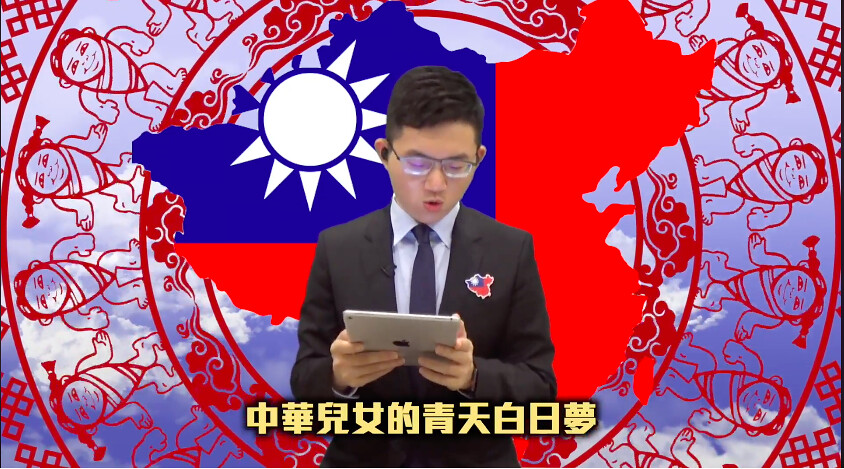
They're taking the original catchy, dorky, deeply annoying tune, stealing some of the language choices, and turning it into what sounds like another stupid rap, but actually hides a pro-ROC, pro-unification, Chinese chauvinist old-school KMT style propaganda message. Most notably, it replaces "Taipei" with "China", with an old ROC map of China in the background.

It has all the old lingo, including "counter-offensive" (反攻)which is associated with old Nationalist slogans, includes the phrase "unification is not a dream" (another common propaganda message) and then goes on to say that it - that is, unification - is the "bright, sunny dream" (青天白日夢) of all "Chinese sons and daughters" (中華兒女). "Chinese sons and daughters" is propagandistic term which calls to mind the New China Youth (a wing of creepy, New Party-affiliated/China-supported-and-paid-for astroturfing unificationists) and the words for "bright and sunny" alluding strongly to the "white sun on a blue field" of the KMT party symbol (which is also on that blasted ROC flag).

Making this sort of joke even more culturally-specific is the wordplay at the end. Remove the "bright" (青天) part of "bright, sunny dream" and you get "白日夢", another way to say a daydream. A fantasy, an illusion. Which is exactly what "unification" is to these guys, no matter how much they try to dress it up in a dweeby hip-hop song pretending to be 'fresh'. 


Of course this isn't pro-unificationist ROC claptrap, it's sarcasm - satire, after a fashion - that thing so many foreigners in Taiwan think Taiwanese lack. It mocks the "trying to be hip" and "overly earnest" vibe of the original (something no late-middle-age uptight political candidate should attempt), while laying bare the KMT's actual beliefs as per its own symbols and past rhetoric: that Taiwan is ultimately Chinese, and that their actual goal is unification with China on their terms, not an independent future for Taiwan. No catchy tune can erase that.

The Facebook post even says that the ROC map pin he's wearing was sent by fans for the "rap" and can not be bought, with a ton of "crying" emojis.

I highly doubt any of those people reacting with the "crying" face actually wanted to seriously, unironically, own that pin.

This also shows how culture-specific some humor can be. Sure, Chad, I know you think you're so hilarious that it translates across cultures, but in fact, the reason your Taiwanese students don't laugh at your jokes isn't because they don't have a sense of humor, it's because your jokes just aren't that funny in Taiwan. Similarly, you might not find this video particularly funny. That's not because it isn't (I laughed a few times), but to really get it, you have to have be familiar enough with a culture that was just starting to shake off the enforced adherence to Chinese-style propaganda that has always sounded quietly ridiculous to Taiwanese whose ancestors have been here for hundreds or thousands of years, and who never had any intention of or desire to "take back the Mainland". 


So yeah, I'd say that Taiwanese understand sarcasm just fine, and their sense of humor is doing A-OK. If you don't see that, maybe you're the one who doesn't get it. 

Wednesday, October 10, 2018

Great Britain is an inseparable part of India because of Sanskrit and chicken tikka masala

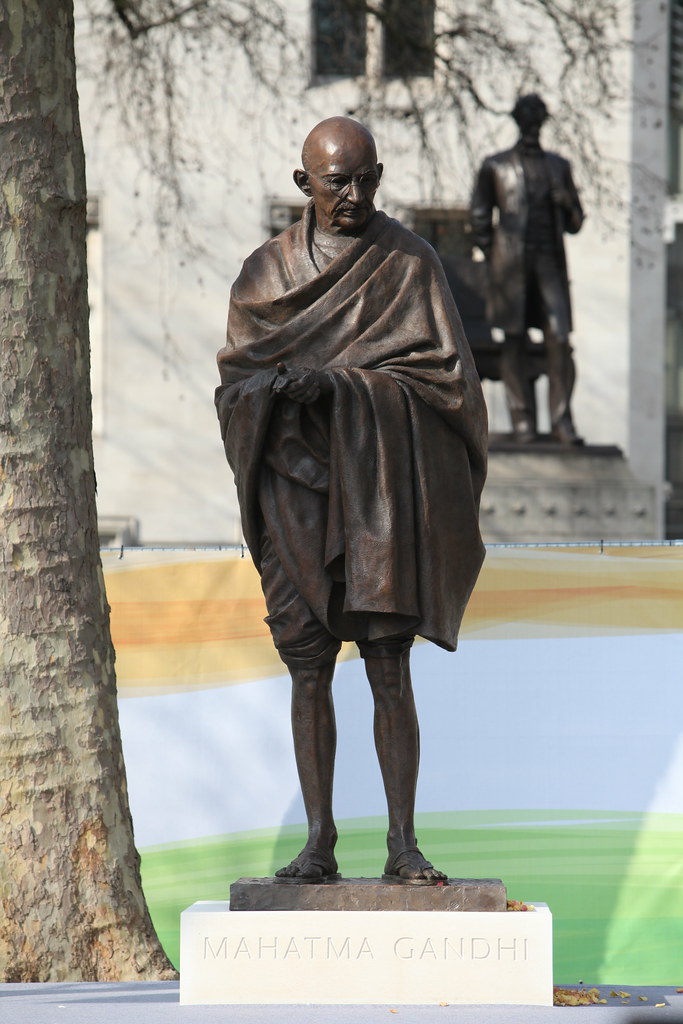
Mahatma_Gandhi_at_Parliament_Square,_London
Indo-British hero Mahatma Gandhi in London, from Wikimedia Commons


I know t
hat some splittists who don't understand 5,000 years of Indo-European culture insist that Great Britain is an independent nation with its own history and culture, but let me explain to you why they are wrong.

In fact, Britain is a renegade province of India, which will eventually be reunified with the motherland. Britain has nothing to fear from this, as Indian British don't hurt other Indian British. However, if they do not comply, this will be done by force. However, India is a peaceful power and it is Britain Province that is causing tensions because it does not agree that it is part of India.


It is a well-known fact that "Britain" and "India" actually share the same history. Both places speak Indo-European languages. Both English and Sanskrit (the ancient root of most modern Indian languages) come from the same roots! Ignorant racists who want to say they are different languages clearly have not thought through the "Indo-" part of Indo-European, and that's why they stupidly assume the languages are different. In fact, they share many of the same features, and people from the India area and the Britain area are typically able to communicate.

Furthermore, historically the India area and the Britain area of Indo-Britain have been united rather than divided. They had the same Queen since antiquity, and only have separate governments now because xenophobic ethno-nationalist splittists in Britain Province force the people to be governed separately against their will. In fact, it is the will of all Indo-British on both sides of the Indian and Atlantic Ocean to be united as it has been through history, and this is undeniable fact that cannot be denied by anyone, as it is known to all people in the world. During this time, everyone agreed that the Queen was the sovereign ruler of all of Indo-Britain and nobody disagreed. Therefore, their histories are exactly the same.

There is also the irrefutable DNA evidence, which shows that all Indo-British people are Aryan and therefore share the same ancestors, which makes them the same. This is an undebatable fact.
 

This is still the case even though some running dog splittists from Britain province want to cause tensions and destroy the world with their hatefulness by saying they are not the same as people from the India area, even though it is undeniable that they are and everyone agrees. 


Furthermore, just as many Indo-British compatriots from the Britain area moved to the India area in the 19th century, many of their compatriots from the India area have also moved to the Britain area. Clearly, Indo-British culture constitutes an unbreakable bond that separates brothers and sisters across the Indian and Atlantic Oceans. Indo-Britains from "Britain" in India built several very nice schools and cute railroads which are also useful, and Indians in "Britain", through running thriving businesses and historically providing the raw goods such as indigo, built the modern British economy we know today. All of this infrastructure and these businesses, as well as several million people, would immediately perish in great anguish if anyone were to deny that Indo-Britain is one united, un-dividable country.

This bond extends to culture in very obvious ways that nobody disagrees with. Indo-British people in both areas traditionally eat dishes such as "chicken tikka masala" and "curry sauce on chips". In both areas, it is quite common to sate ones appetite with a kebab from a local vendor and a cup of hot tea.

Some people say that modern "British" culture is too different from "Indian" culture because they have drifted too far apart to unite now. This is not true. In fact, the India area is a very heterogenous society, with many related cultures all agreeing that they are "Indian" and speaking the same "Indian" language. How can such racists say that "Britain" province cannot fit under this umbrella as well? These people clearly do not understand that Indo-British "ethnic minorities" are not only celebrated in Greater India, but they even get preferential treatment.

Those evil splittists who say "India" and "Britain" are different countries simply cannot explain why there is a statue of Indo-British hero Mahatma Gandhi outside Parliament in Great Britain, nor why there is a statue of Indo-British Queen Victoria in Bangalore, India. In fact, there are many "Indian" places of worship in "Britain, as well as many "British" places of worship and other "British"-style architectural sites and monuments in India.

Some splittists may try to convince you that there are other "historical" reasons for these similarities, but do not be brainwashed by their propaganda which hurts the feelings of all Indo-British people and denies the true fact of 5,000 years of Indo-British history. To say otherwise is a deeply offensive slap in the face of all Indo-British people, which is our culture because of the ancient teachings of Indo-British philosopher Winston Churchill, who is a cultural icon in all parts of Greater Indo-Britain. If you do not agree, you are a racist who can never understand the ancient traditional culture of all Indo-British people.

Tuesday, October 9, 2018

Sexual assault: Taiwan's great under-reported problem - my latest for Ketagalan Media

My latest piece for Ketagalan Media takes this previous post of mine as a starting point, and investigates an important issue in Taiwanese politics further. In short, it seems as though the reason why there are so few sexual assault scandals in Taiwanese politics is not because they just don't happen, but because if they do, they are likely not reported. On the other hand, in the US, women are beginning to speak out more, but the powers that be just don't care. We're not taken seriously - not even to the point of meriting a real, serious - not a joke of a circus show - investigation. 

Some numbers for you, from the piece: 


The US population in 2015 was 321 million, and reports of sexual assault in the US in 2015 totaled 431,837 (male and female). That indicates a per capita reported assault rate of 0.00134. Taiwan’s population in 2015 was 23,485,755, with 10,454 reports of sexual assault in Taiwan 2015 (gender not specified), for a per capita rate of 0.00044.

This is a massive disparity: even considering differences in population, the US still has a far higher report rate of sexual assault than Taiwan, by a factor of three.

Does it make sense that people in Taiwan are three times less likely to be sexually assaulted than in the US? It is unlikely that there is simply less sexual assault in Taiwan overall (although crime in general is on a down swing and Taiwan remains a very safe country). The picture for comparison is clearer when we look at the gap between estimated sexual assaults and the number reported for the two countries: in the US it’s estimated that about 2/3 of sexual assaults are not reported, or around 70 percent. In Taiwan, it is estimated that the number of actual sexual assaults compared to those reported is seven to ten times higher.

Estimating the actual number of cases, Taiwan’s number of actual assaults per capita is somewhere between 78% to 111% of America’s.


Sources for these numbers are linked to in the piece itself. 

And there's this, a point that cannot be made often enough: 


Having spent twelve years in Taiwan, I have encountered “cultural” excuses for gender-based violence here, generally along the same refrain of “it’s Taiwan’s traditional culture” or an appeal to outdated views of gender which are common across both Asia and the world (one need only look at many American conservative views to see how such sexism plays out in the West). There is no truth to these “cultural” excuses: Taiwan has undergone a seismic shift in how society views gender for several generations, yet culture and traditions in Taiwan, regardless of changing attitudes towards gender and sexual power relations, remains robust. The United States has been evolving in its views on gender since the 19th century, and yet I would argue culture in America remains identifiably “American.”  Cultures can embrace gender egalitarianism and still retain their essence.


Anyway, enjoy!