Asia woke up this morning to the news that several Hong Kong activists were being arrested or attacked for their alleged roles in the ongoing protest movement there. Joshua Wong, Agnes Chow Ting, Andy Chan, Jimmy Sham, Althea Suen and more (including some pro-democracy lawmakers) have been targeted in various ways - cornered and beaten, shoved into private cars and taken to police stations to face charges or arrested at the airport before a planned trip abroad. One activist was released from police custody and then attacked.
These are only the high-profile arrests. Hundreds more have been quietly arrested in previous weeks:
Just saying that it was about arrests of *high-profile* activist. Hong Kong police have already arrested more than 900 people for the protests.— Kris Cheng (@krislc) August 30, 2019
Notably, the Civil Human Rights Front march that Jimmy Sham was likely involved in organizing hasn't taken place yet.
What that means is that these activists are being targeted - arrested or beaten - in some cases for things that
I cannot stress this enough. It's full-on Minority Report, as a friend put it: arresting someone for a "crime" that has not been committed (yet, allegedly, not that a peaceful march is a crime at all.)
That's not the sort of thing well-functioning societies do; it's the sort of thing fascist states do. It's White Terror. It's pre-massacre. If that alarms you, it should.
The march has been officially canceled but I'll be very interested to see what actually happens tomorrow.
These demonstrations are officially 'leaderless', and while organizers certainly exist, it sure looks to me like the
In fact, there are serious doubts as to whether Joshua Wong had a leading role in the Wan Chai demonstration:
Literally all I remember about Joshua Wong’s involvement that day, was late at night he asked everyone to go home and everyone ignored him. He’s a good lad, respected for what he did in the past, but he’s got little to no clout with this new generation of leaderless protestors.— Hong Kong Hermit (@HongKongHermit) August 30, 2019
That this sudden crackdown on pro-democracy activists happened right before this weekend's planned march hints at
Add to this the detention in China of British Consulate employee Simon Cheng on unclear grounds (Cheng has since been released) and the disappearance of Taiwanese activist Morrison Lee after entering Shenzhen (in China) from Taiwan, and you've got yourself quite the 'crackdown' list indeed. What's more, with Cathay Pacific now stating that any employee who protests this weekend or joins the planned general strike next week may face termination, other companies are likely to follow suit. Even more than that, there are rumors of Hong Kong locking down its Internet access much in the way China does its own.
Perhaps most terrifying of all,
Such regulations grant a wide range of powers, including on arrests, detentions and deportations, the control of ports and all transport, the appropriation of property, and authorising the entry and search of premises and the censorship and suppression of publications and communications.
The ordinance also allows the chief executive to decide on the penalties for the offences drawn under the emergency regulations, with a maximum of life imprisonment.
All of this was done by the Hong Kong government officially, but we know who's really running the show. To wit:
The Chinese central government rejected Lam’s proposal to withdraw the extradition bill and ordered her not to yield to any of the protesters’ other demands at that time, three individuals with direct knowledge of the matter told Reuters....
Beijing’s rebuff of Lam’s proposal for how to resolve the crisis, detailed for the first time by Reuters, represents concrete evidence of the extent to which China is controlling the Hong Kong government’s response to the unrest.
Of course, it's unclear what China hopes to gain by escalating rather than choosing a path that would bring peace (do not think for a moment that they couldn't choose such a path; they just don't want to. Don't pretend that Beijing is not responsible for its own choices.)
Is it a trap to provoke protesters into actions that could be spun by Chinese state media as "violence" and used as justification for further crackdowns?
Which leads one to suspect that the police, assuming they're not completely stupid, are intentionally using these arrests to provoke protesters in advance of a harsher crackdown to come— Ian Rowen (@iirowen) August 30, 2019
Totally, rather than mobilize new protesters I think this will have a stronger effect on already active participants who were going to show up this weekend anyway, but now are more likely to escalate. This feels like the police are setting another trap.— Lev Nachman (@lnachman32) August 30, 2019
Or, perhaps
I don't know, and I'll be watching social media carefully this weekend just like everyone else to find out what the effects will be.
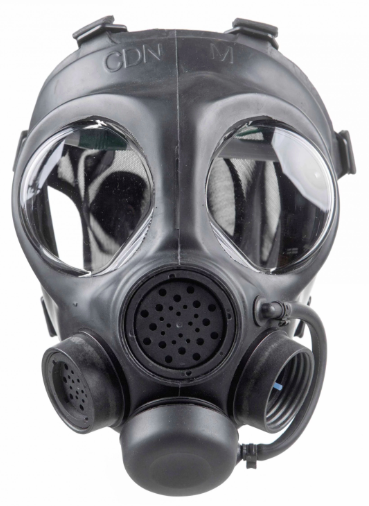
Given all of this, all I can say is - it takes guts of steel to be a democracy activist in Asia these days. Not a dilettante at a keyboard like me, but the ones in gas masks on the streets, the ones likely to be arrested, attacked or disappeared. That's true regardless of where you come from in Asia, and is especially true in Hong Kong now.
It's dangerous to travel, as you never know which countries might detain you at China's request as Thailand did with Joshua Wong. A Taiwanese activist friend of mine has said that as a result, he worries about travel to other parts of Asia. The Philippines, an ostensibly democratic nation, is turning 'death squads' on political activists. Constant threat of attack, detainment or disappearance bring both pride and anguish to their families. Taiwanese and Hong Kong activists now disappear in China regularly - Lee Ming-che, Simon Cheng, Morrison Lee - those who are banned from China got the better deal than those allowed to enter only to be thrown in a cell.
And yet, the protests must go on. The activism must continue. Having guts of steel is necessary, because giving in is not an option. They are not wrong - China is - and it's therefore on China to do the right thing. (They won't.)
For a part of the world that is relatively politically stable (well, outside China) and well-developed, it's an absolute tragedy that this is what one risks when one stands up for the basic right of self-determination, even in the Asian countries that protect such rights.
That leads me to a darker thought. During the 2016 US presidential campaign, I remember Hillary Clinton making an off-the-cuff remark (spoken, and I can't find video) about how the international affairs landscape had changed since the '90s - she said something like "we all believed it was supposed to be the End of History", admitting through her maudlin tone that it had not and would not come to pass.
I remember Clinton shrugging it off, like "oh well, guess we got that one wrong", as though that's all there was to it. A scholar wrote a thing, we believed that thing, we acted according to our belief in that thing but...haha funny story, turns out he wasn't quite right that free markets under neoliberal capitalism through globalization and wealth creation would bring about liberal democratic reforms in currently illiberal nations and that didn't actually happen lol ¯\_(ツ)_/¯ !
But sitting here in Asia watching people I follow on social media - and in a few cases have some mutual friends with - be arrested or attacked for things that either haven't been done yet or would not be crimes even if they've committed them, it makes me furious. Beliefs like that led the rest of the world to praise China's rapid (if uneven, unreliably measured and volatile) economic development while not saying much at all about continued political oppression there, their escalating nationalist and fascist rhetoric, including 'moral education', and increasingly aggressive expansionism.
And now that big, mean giant is trying to call the shots in Asia well beyond its own borders, and is actively threatening exactly the democracy activists those '90s wonks would have wanted - nay, expected - to succeed.
Basically, the West's oopsie! on believing that freer markets would lead to freer societies has instead led straight to all of the dangers - including threats to their lives - that these brave activists must now face. Believing in hackneyed political philosophy and acting on that, it turns out, has real consequences.
Most of the blame for the poor current state of freedom and human rights in Asia lies with China. Some lies with a few other nations, but none are as powerful as China. But some of it lies with us - the West. We could have figured out in 1989 - the year of both Fukuyama's essay on The End of History and the Tiananmen Square Massacre - that we couldn't just rely on China to liberalize, and that freedoms must be consistently fought for and sometimes paid for with blood. We could have done right by Hong Kong before 1997, actually giving Hong Kongers a say and a true democracy then, rather than relying on China to do the right thing when it was so very clear that it would not. We could have woken up to the need to stand by Taiwan far earlier (some still haven't woken up).
But we didn't. Oops. And Asia suffered for it.
Another bit of ‘90s era claptrap that hobbles today’s activists in Asia is the notion of ‘Asian-style democracy’ - relentlessly prompted by people like Lee Kuan-yew. This preposterous notion that it’s OK for democracy in Asia to be a bit more authoritarian and much less free ‘because of culture’ - which is what its rationale boils down to - made it that much harder for the millions in Asia, who never consented to this quasi-authoritarian model of limited democracy, to fight for the same freedoms that Westerners expect and enjoy. And it made life more dangerous for activists working for those goals, and who understand that human rights are not ‘cultural’, but universal. That they exist in large numbers and persist in their goals shows that the ‘different cultures’ argument is ultimately specious.
Asian strongmen - the ones who benefit from the normalizing of this belief - still use the ‘Asian-style democracy’ argument to justify their tactics, China uses the ‘East-West values’ argument, and some Westerners, especially lefties and liberals, lap it up. It allows them to feel good about themselves for understanding ‘cultural differences’ while offering them an excuse to sit back and do nothing without moral guilt. Meanwhile, people who share their vision in Asia fight, are injured, disappear and die, ignored.
Alongside ‘the end of history’, the troublesome persistence of the ‘Asian values’ paradigm has actively hurt democracy activism here, and continues to harm them.
Arguably the logic behind the Handover was rooted somewhat in these beliefs (they were popular notions when it was being negotiated in the ‘80s and ‘90s). And now, Hong Kongers are feeling the result. Bad beliefs aren’t just oopsies. They have consequences.
And now, thanks in some small part to us, must be very brave and willing to risk everything to fight for democracy in Asia, and we are going to need a lot of gas masks, a lot of umbrellas, and wave upon wave of courageous people.
It should bother you, then, that the people - many of them young, some even teenagers - who are fighting on the front lines of the battle for democracy against authoritarianism are not fighting just for themselves, but for you. This is the front line but if you think China's not coming to subvert your democratic norms too, you're blinkered. In some cases, they already are. It should bother you a lot that they're fighting for themselves and for you, when you helped create a world where it was necessary for them to stand up in the face of bullets, 'private cars', trumped-up arrest charges, water cannons and tear gas. It should bother you that they're risking their livelihoods and their lives to fix a problem you helped create.
And it should bother you that the rest of the world is not standing with them as much as they should. It takes courage to be a democracy activist in Asia, and even greater courage to continue to fight when the world does not necessarily have your back.
So, fellow Westerners, global middle and upper classes, and political influencers. The next time you pat yourself on the back for buying into something that sounds so very clever, think about how many Joshua Wongs are going to end up disappeared, in jail or dead if you are wrong. Think about how many people might have to be brave because you wanted to think yourself smart.