Friday, May 17, 2019

The sky is brightening: personal reflections on Taiwan recognizing same-sex marriage rights

Untitled


During the Sunflower Movement, Taiwanese rock band Fire Extinguisher sang that "the sky is brightening" (“天色漸漸光”)in their hit song "Island Sunrise".

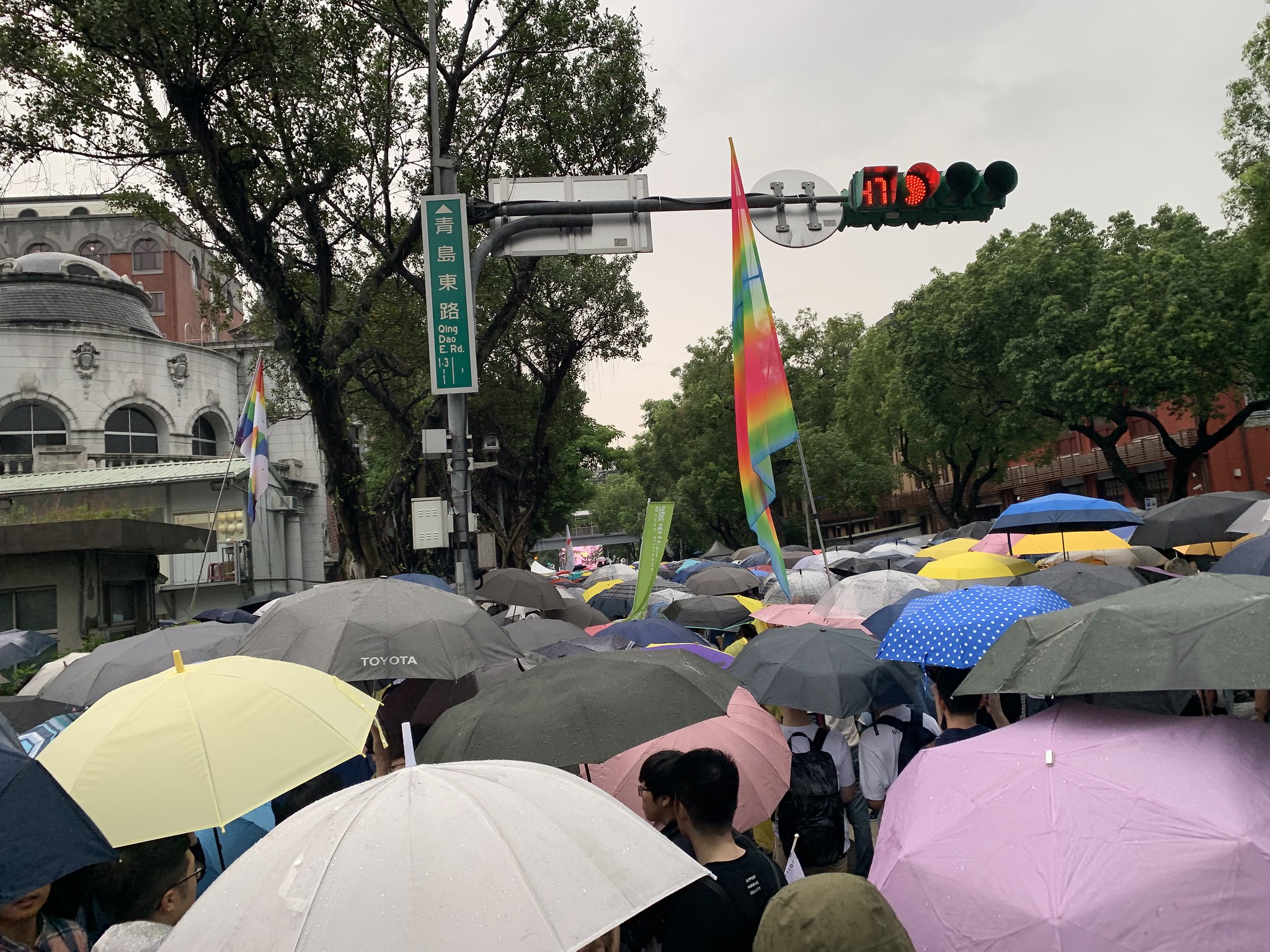
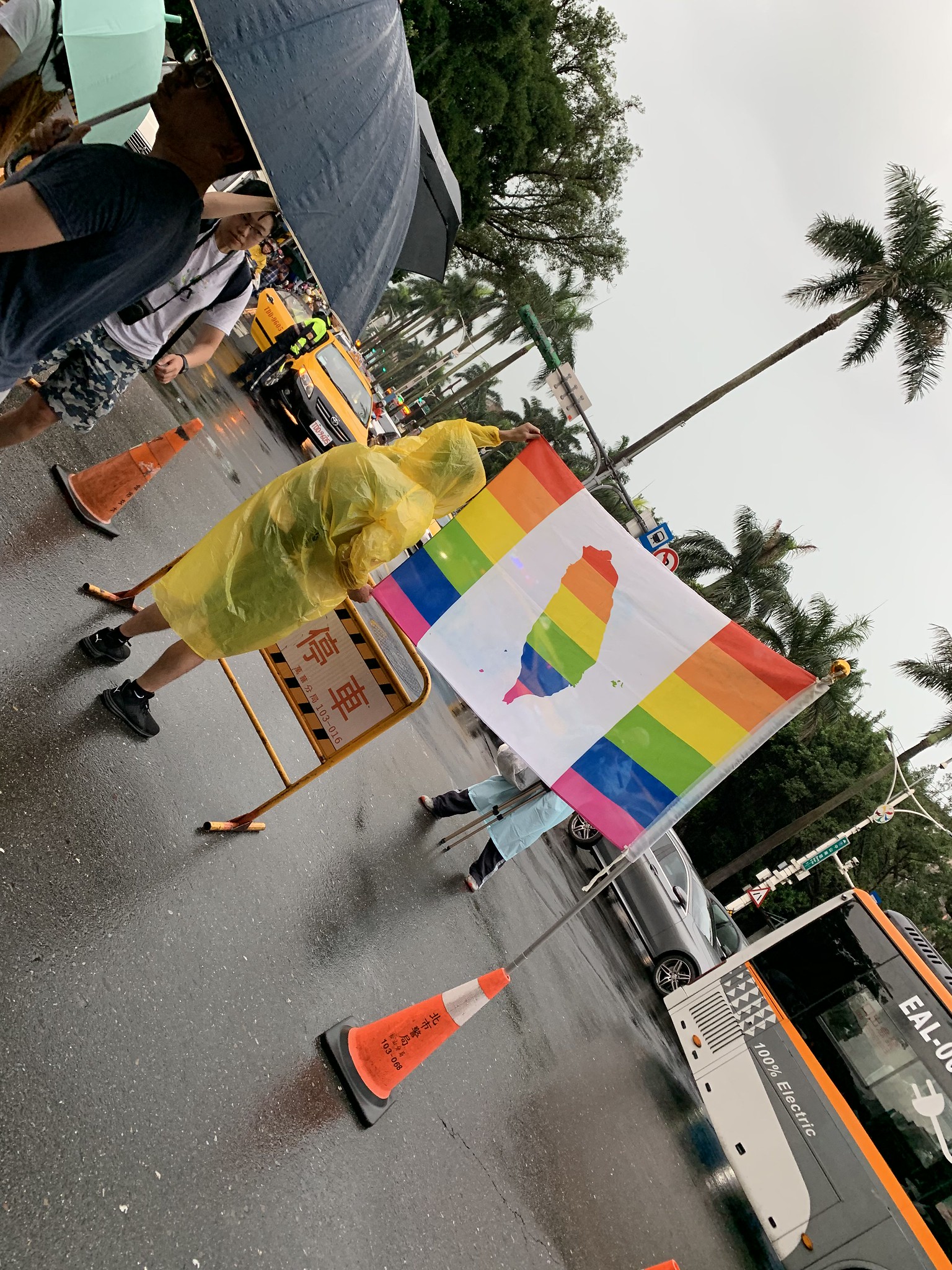
Five years later, as several thousand people or more stood outside the legislature for hours in the pouring rain, clad in damp rainbow gear under beleaguered umbrellas to watch legislative proceedings on same-sex marriage, the sky brightened again, both literally and figuratively.

First, a rundown of how the legislative proceedings went (for a summary of goings-on at the rally, check out New Bloom, and here's my summary of what's happened over the past few weeks). The morning was a bit chaotic, with proceedings kicking off late, and every legislator being given three minutes to voice their opinion, time which many (though not all) legislators took. Freddy Lim and You Mei-nu spoke particularly articulately in favor of equality, while anti-equality legislators, as usual, voiced concerns that defied logic. These "concerns" included points such as "if we pass this, then referendums have no meaning!" (when the reason why this bill creates a separate law rather than changing the civil code is due to the referendum results) and questioning whether the legislature actually had to listen to the court (...uh, yes).


Untitled


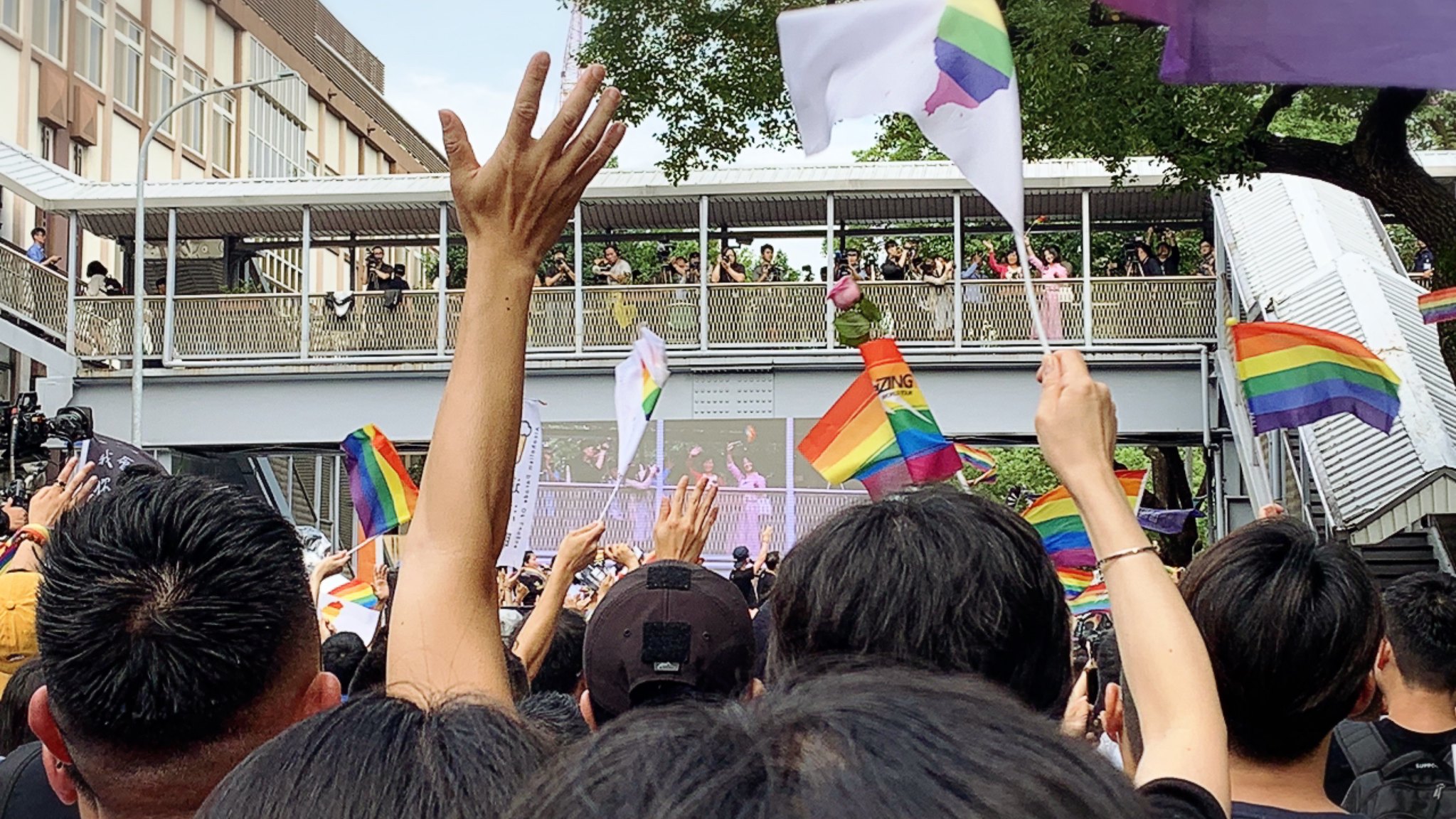
Then the Executive Yuan bill went through a line-by-line reading and passed every article in turn, with some 'controversial' amendments. The crowd cheered and proclaimed victory as Article 4, which specifically uses the term 'marriage' in relation to same-sex unions, passed with a narrow majority of 66 votes. Reviews continued into the afternoon as legislators skipped lunch. Notably, KMT legislators Jason Hsu and Chiang Wan-an voted for it, with DPP anti-gay legislator Lin Tai-hua voting against.

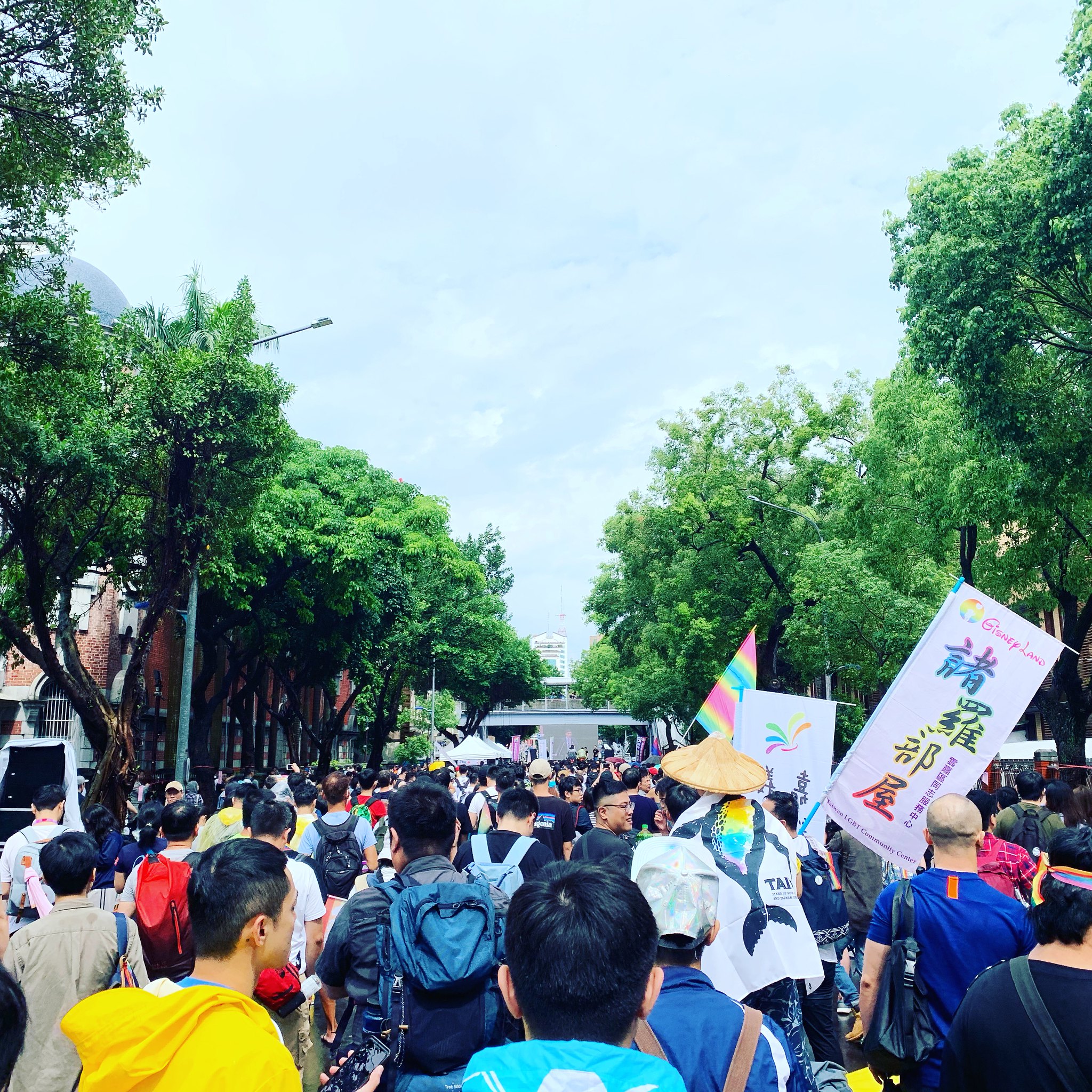
At that point, I was curled up under my rainbow umbrella with my butt perched on a rain-drenched half-wall outside an entrance to NTU Hospital. I was shunted with much of the crowd to Jinan Road, as the main rally on Qingdao Road was at capacity. Around me, scores of young Taiwanese were following live feeds on their phones of the legislative proceedings nearby (a jumbo screen on Qingdao Road had a live feed for people on that side).


Untitled


I ran into a friend and we grabbed coffee together as the review dragged. The rain continued to pummel the attendees still outside the legislature. But you know what? Most of them stayed. Hours it dragged on, and let's be honest, legislative proceedings are kind of boring. Connectivity was awful. Everyone was soaked despite having umbrellas and rain ponchos. There was nowhere to sit. But they stayed - thousands, maybe tens of thousands - to watch legislation drag on together on a screen most of them couldn't actually see.

By the time I made it back to the legislature, the rain let up. The sky brightened.


Untitled


A few more controversial things happened - a last-minute motion by the NPP to deal with the international marriage issue (so that foreign nationals from countries that don't recognize marriage equality would be able to marry their same-sex Taiwanese partners) failed, with the entire DPP voting against it...for no good reason. The clause that would allow people to adopt the biological children of their same-sex spouse, but not to jointly adopt an unrelated child, remained in place (with no changes to the lack of access to fertility treatments for same-sex couples, and no surrogacy services in Taiwan).

Untitled
\


But the sky brightened nonetheless. The proceedings dragged on. The people stayed as the rain dissipated and the sun came out, turning puddles of cool rainwater into humid vapor. I ran into another friend and we stood on the now somewhat-less crowded Qingdao Road, steaming in our clothes as the final articles passed review, and hopeful young activists clad in rainbows counted down each one.


Untitled


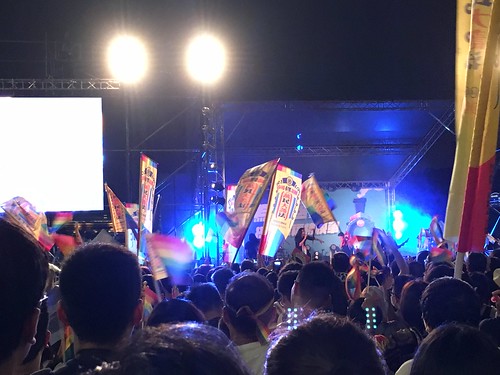
Then it was time for the final countdown - the vote on the overall bill. A flawed bill that does not grant true marriage equality, but a form of same-sex marriage (using the word "marriage") nonetheless. When it passed, the crowd erupted. Some screamed, some cried. The sun shone bright as Taiwan became the first country in Asia to give same-sex couples access to their right to marry: a massive shift in the mood and the weather from morning to afternoon.

The wait from the beginning of the session until the final vote was about 6 hours - approximately 10am to 4pm. But those activists had been standing in the metaphorical rain for far longer than that. The battle for same-sex marriage in Taiwan has been shorter than in many other countries: it wasn't  an issue being discussed widely just 5 years ago, when the sky brightened for the Sunflowers (though dedicated activists had been working on it in smaller numbers for some time prior to that). The fight, however, was as vicious and all-consuming as this morning's rain, and it's not over yet.


Untitled


All I can say is that I am just so impressed with Taiwan today. If you thought the dedication of the Sunflowers was a thing of the past, I submit humbly that it continues in a different form, through a different kind of adversity.

I don't imagine there are many countries that would end a marriage equality rally with a performance by a black metal band, as Taiwan did. I don't think there are many where 10,000 or more people would stand resolutely and unflinchingly in the soaking rain just to be physically present for an interminable legislative session. The level of civic engagement continues to impress me so much, and proves that Taiwan cannot be grouped so easily as a stereotypical 'Confucian', 'collectivist' society with wholly conservative values. It may be true that many young Taiwanese won't engage with their more conservative elders on these issues, but it's not true that they won't find other ways to oppose the old order of unfairness and inequality and a million -isms and phobia that those elders represent.

One of the arguments of the anti-gay camp is that ideas like marriage equality are 'Western' or 'foreign' and go against Taiwan's 'traditional culture' (they say 'Chinese' but I won't.) 

But of course equal rights have been a part of Taiwanese culture for some time now, and there is no incompatibility with Taiwanese culture (any incompatibility which seems to exist has been invented for political purposes). 

So it really mattered that the people in the front rows and on stage, the crowds on camera were overwhelmingly Taiwanese. This movement was started by Taiwanese, carried by Taiwanese and the success they brought about yesterday was done by Taiwanese. There was no 'Western infiltration' about it. (In fact, the anti-gay side is the one that had to look to the West to figure out how to spread its hate, bringing in foreigners like Katy Faust to speak against equality and justice.) It's important to keep repeating this, because that same opposition keeps accusing the pro-equality movement of doing the same, when it emphatically has not. 


As an American who was in Taiwan for most of the culmination of the marriage equality movement in the US and so unable to participate, it felt important to be a part of the support to make it happen in Taiwan, because it's my home. I have a place here too. And that place was being part of the crowd. Not onstage like a reverse Katy Faust, not a key part of the movement or even vital to it, but a participant who adds her physical presence to the crowd.


Untitled


And it may be true that the DPP will suffer for this in 2020, but somehow I doubt it. They may lose, but I don't think it will be because of this. That they managed to get it through despite absolutely vicious opposition might just win back the young voters who were talking about abandoning them. Besides, people talk about the 2018 KMT sweep as though it had anything to do with conservative 'family values', when it didn't. It was about local governance - and we know that because the NPP drastically expanded its electoral reach despite being wholly pro-equality. They would have suffered the way the DPP did if marriage equality were truly the wedge issue that opponents and pessimists say it is. Most likely scenario? By 2020 same-sex marriage will be normalized, and no longer an issue for the DPP. After all, something had to be done after the 2017 ruling. Best-case scenario? This will actually work in their favor as the progressives who were disenchanted with them come running back.

Besides, in every country where same-sex marriage or marriage equality has been passed, it has simply ceased to be an issue (unlike, say, abortion, which remains contentious in the US because some people hate women.) The party that passed it has generally not suffered electoral losses as a result, as people learn fairly quickly that their gay fellow citizens are indeed normal human beings who deserve equal rights and what was all the fuss about anyway? I can't imagine Taiwan wouldn't go the same way.


Untitled
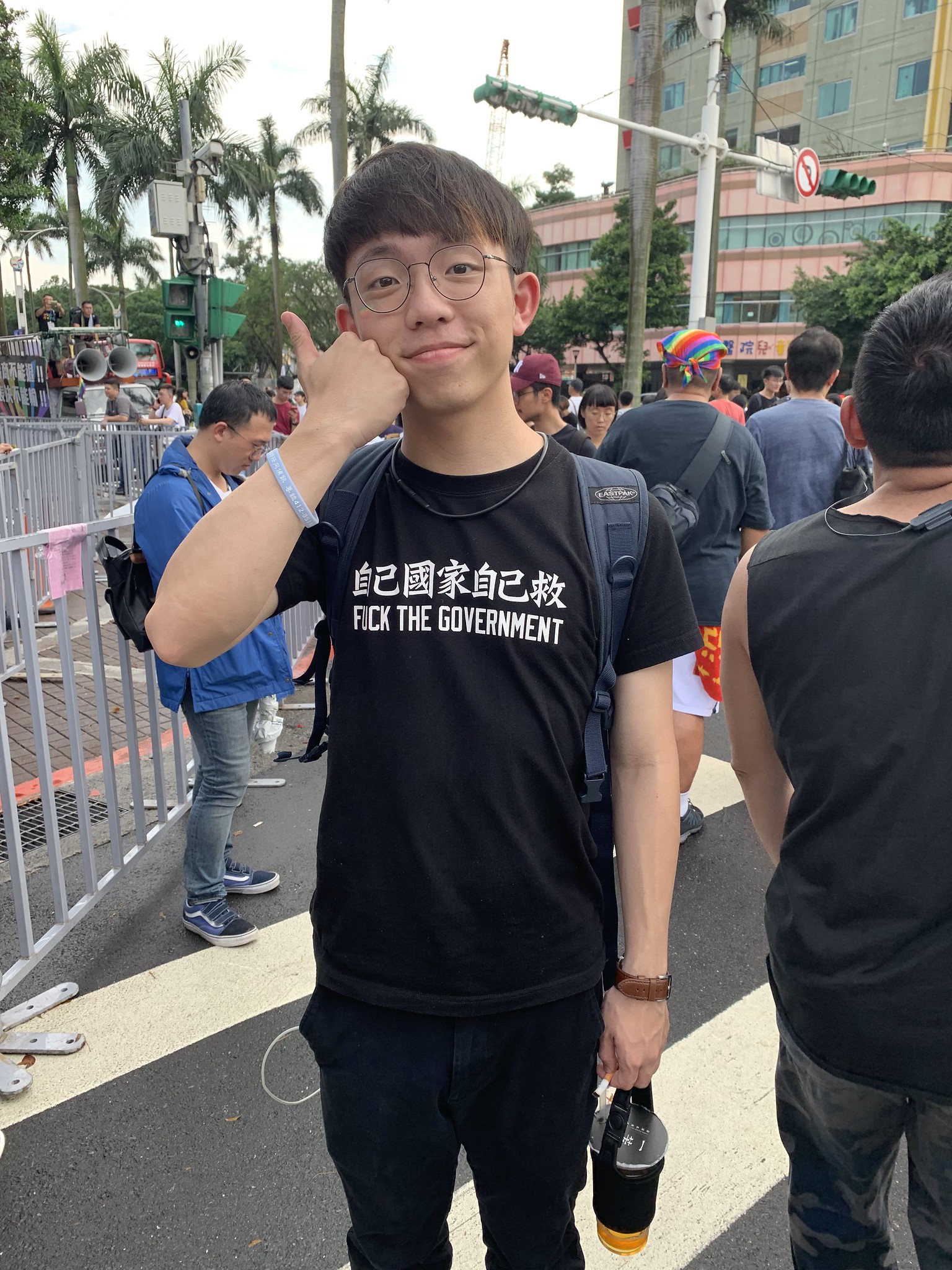
And if you think this has nothing to do with the spirit of the Sunflowers, this guy is here to tell you
that you are wrong. And he wasn't the only one. 

If they do lose in 2020 over this, then they will have stood for what was right in the face of a tyrannical, hateful majority. True liberal progressives won't forget that, and it will come back to them someday. It would be sad to see if that's the case, but the solution could never have been for them simply not to stand for what was right.

As a Facebook friend posted regarding the anti-equality referendum result last year (kept anonymous as the post is not public:

"And yet, the government went ahead with the law. Why? Well, this is what distinguishes democracy from populism. Democracy is not merely about majority voting: it is also about adhering to basic principles protecting minorities from the tyranny of the majority."

But they did, and the future leaders of Taiwan did as well. We stood in the rain for hours...for years.

The fight for full equality is not over, but the sky is brighter now, and the future is too. 


Untitled

Thursday, May 16, 2019

Rambling around Ximen, afternoon tea, flowers: what I've been up to for Taiwan Scene

So, I've got a few things out at Taiwan Scene that I thought I'd share.

First, a guide to afternoon tea in unlikely places. I ventured beyond central Taipei (where you can get a decent afternoon tea at any number of establishments) to find places for a mid-afternoon repast where you wouldn't expect it. Say goodbye to 7-11 if you missed the lunch hours of regular restaurants!

Then there's "A Day In Historic Ximen" - yes, I reviewed a bunch of places, but I also added my knowledge of historical sights in the area. Some famous, some recently-restored, some a bit less well-known.

I also wrote a few pieces on flower season in Taipei - this one focuses on day routes where you can find different flowers, and another for Taiwan Scene on flower etiquette. It's probably too late to actually do any of the flower viewing routes, but keep them in mind for next year!

Wednesday, May 15, 2019

Come support marriage equality this Friday!

Untitled


This Friday morning - that's May 17 - the Legislature will vote on the three 'same sex marriage' (not marriage equality) bills currently under consideration. People I know are saying that the Executive Yuan's bill - that is, the least bad of the three - will come up for a vote first, as it was introduced first. If it passes, the other two get thrown out. There was some attempt to 'reconcile' the three bills into one thing the Legislature could vote on, but that, uh, didn't happen, because one side keeps stating facts and making good arguments that take the needs of LGBT citizens into account, and the other side can't even get their facts straight and don't care about LGBT citizens' rights.

Although it's not great, it would be best for everyone if the Executive Yuan bill passes for a few reasons. First, it'd mean that bills which protect the rights of LGBT citizens least would not be considered, which is especially important in the case of the so-called 'compromise' bill, which would (horrifyingly) allow relatives of either member of the couple to sue to stop the marriage from being legally recognized. (Edit: this provision has been stricken from the bill.)

It would also mean that there would be a legal framework for how to implement same-sex marriage now, with a fairly clear (though legally tiring) path to actual marriage equality. If we just let the interpretation of the Civil Code take effect on May 24th, nobody really knows what will happen and very little about the actual rights of married same-sex couples will be clear. Finally, this is the bill that LGBT groups support. If we want to be good allies, we should let them lead, and support it too.


And the DPP will need all the vocal support it can get, seeing as it has handled this issue disastrously from the start.

This is the final scheduled vote before the Civil Code interpretation changes automatically, as per the ruling of the Council of Grand Justices, on May 24th. Basically...this is it.

So, there's a rally planned that starts at 8:30am outside the Legislative Yuan. Pro-equality advocates are hoping for a good turnout, even on a Friday morning. I'll be there, wandering around, taking photos, generally adding my physical presence to the crowd.

If you care about equal rights and human rights, I ask that you come too. Take time off if you have to. Tell your friends. Not just the foreigners (though it's easier for a lot of us to be free on a random morning), but your Taiwanese friends. Apply for half-day leave now.

Plus, you can be sure the anti-gay folks will be there too. We need to outnumber them just to show the legislature that equality is the only real future for Taiwan.

If the best of the three bills passes, we still won't have marriage equality, but we will have something on the road to it, and if we show up in numbers that will make an important statement going forward.

See you there.

Friday, May 10, 2019

YIKES YIKES YIKES YIKES YIKES YIKES YIKES YIKES YIKES

54432564_10157158608989626_8687544587159339008_n


I'm not a fan of just translating stuff from the Mandarin-language media and calling it a day, but this one in Liberty Times is worth it

Building on my last post about some media in Taiwan obtaining Beijing's approval before running news, it seems the collaboration is explicit, and includes Want Want Media (yeah, big surprise).

Is this not a smoking gun of sorts?

I'm not as fast or as good a translator as you might think I am, so I've only done some select chunks of text from this article, but it's all you should need to get the point.


The 4th Cross-Strait Media People Beijing Summit, hosted by Beijing Daily Newspaper Group and Want Want Media Group, held its opening ceremony in Beijing today. According to reports, nearly 70 media and related organizations on both sides of the strait and more than 200 representatives gathered in Beijing to discuss "cross-strait exchanges and media responsibility."

Wang Yang, chairman of the National Committee of the Chinese People's Political Consultation Conference (no idea if that translation of the name is accurate), met with Taiwanese media before the opening ceremony and asked Taiwanese media to promote "one country, two systems." He said, "In the past, cross-strait relations thawed, and friends in the media industry contributed greatly to that. Now, to achieve "peaceful reunification" through "one country, two systems", we still have to rely on the media community to collaborate with us." 

It's interesting to me that China isn't even trying to hide that it's trying to co-opt Taiwanese media, but there are still plenty of people in Taiwan who would deny that this is happening, or that they or Taiwan as a whole are influenced by it, or that the news they consume like candy might be streaming a pro-China view that worms its way into their heads. They'll still insist "there's no proof!" or say "not what I watch!" even as China openly says that this is their strategy.

It's the same with economic warfare - China doesn't even try to hide that it uses economic carrots and sticks to get what it wants. Or expansionism - they don't try to hide their pure greed in expanding into the South China Sea or declaring the Taiwan Strait their territory.

They don't even lie about what they are doing. So why don't people believe the CCP when they tell us who they are?


When Chen Wenfan, deputy director of the National Security Bureau, went to the Legislative Yuan to testify, he confirmed he'd heard of some media "taking China's side" (and seeking Beijing's approval before running stories.) President Tsai Ing-wen also mentioned Chinese interference strategies, including United Front work, Chinese media interference and the media accepting Chinese funding and 'fake news' at a high-level meeting of the National Security Council today. 

That's great, but this information needs to be reported in detail and made public. Which stations? What strategies? Give examples. Be clear. I don't know that it'll convince the die-hards but it probably will at least wake a few people up.

Or do we need to occupy a legislature again to get people to listen?

Wang Yang said in the meeting, "the way things currently work in Taiwan (could also be translated as 'the current Taiwanese mindset' perhaps?) makes the media advocating peaceful reunification very difficult."

He also said here that the hard work of people pushing for unification would be valued in the future when it's achieved (but translating that part was a pain in the butt, so I didn't). 


Wang Yang went on to say, "I think the Taiwan authorities may not be able to guarantee (what things will be like in Taiwan) even two years later. Considering this, we can surely say that the time is now. Of course, there is also some guarantee from the US. The United States passed the "2019 Taiwan Assurance Act," so the Americans currently stand by Taiwan. (But) the Americans regard Taiwan as a pawn. Will the Americans get involved with China over Taiwan? I don't think so."

A pretty oblique reference to the 2020 election, wouldn't you say? They fully expect their campaign of media co-opting and disinformation (as well as fake civil society/astroturfing) will be successful and a unificationist will take the presidency in 2020.

"Does the United States have the courage to fight China today? I'll say that Taiwan independence is not going to work. Taiwan independence is reliant on Americans, which makes it unreliable." 

He's not wrong. Not about it 'not working'. The only way there will be reliable, lasting peace in this part of the world is if Taiwan does get independence. The other choice is war - peaceful unification is never going to happen, and violent annexation might seem like it will be over quickly, but will create conflicts that will continue for generations.

He's right, however, that Taiwanese sovereignty as guaranteed by the USA alone is not a reliable plan for the future. Taiwan needs to convince the rest of the world that this country's continued existence is worth fighting for. Western liberals especially need to wake up and listen - everything they stand for is embodied by Taiwan's tenacious fight for continued democracy, freedom and sovereignty. It's not jingoistic nationalism, it's fighting for ideals that liberal democracie share, for the human rights we know are universal, and to maintain the sovereignty it already has. They need to understand this, and Taiwan needs to figure out how to talk to them.

And, of course, Taiwan needs to figure itself out. I strongly believe, and I think data indicate, that the populace generally favor independence and liberal democracy. That they'd rather be 'Taiwan' than 'a part of China'. That they can't be convinced that unification is a good idea.

But they sure don't show that in their voting habits sometimes, and this is influenced by media interference and disinformation campaigns. Taiwan must push back against this - it's real, literal, actual future depends on it.

And how can Taiwan ask the rest of the world for support when it can't even agree on how to project a coherent vision for its own future?

We need US support for sure, we can't afford to throw that away even if our most vocal allies are often the worst people (though not always - assurances to Taiwan keep passing unanimously!) But we need more than that too - we need to overcome the disinformation campaigns and coherently project to the world that Taiwan does not want to be a part of China.