Tuesday, September 26, 2023

A bunch of bad eggs

DSC09781

This big snake covered in money lives in a Burmese temple, but it's what I picture when I think of the KMT.


Imagine spending three weeks traveling in the US and Canada -- San Francisco, Las Vegas (for a wedding), the Grand Canyon, Portland, Seattle, Vancouver and Victoria -- complete with a break from Taiwanese current events, simply because maintaining good health requires lots of breaks. 

Then you return only to see memes and cartoons of the Minister of Agriculture on Facebook. No government job strikes you as less glamorous, but here we are, all because "a number of controversies" popped up about an egg import scheme the government enacted during the Great Egg Shortage of early 2023, and the subsequent resignation of Minister Chen Chi-chung (陳吉仲).

As a newly-minted diabetic who was diagnosed just as the Great Egg Shortage was ramping up, eggs became both a cornerstone of your diet, and also the bane of your existence; they were nearly impossible to find. 

That's where I was coming from with all this, and I still struggled to care. It had the whiff of a bogus controversy propped up by exaggerated creative storytelling. 

After looking into it, it still reads as a big fat nothing-omelet. I'd like to talk about why, with a quick caveat: I've done a lot of reading, but I'm still extraordinarily jetlagged and honestly, can't be particularly arsed. So a lot of this is just my opinion in an intentionally casual tone, with maybe some links sprinkled in if my arse decides to...arse. I'm only really writing about it because it's a good example of what happens when the important opposition function of keeping the ruling party accountable devolves into any ol' random attack. Besides, as above, I care about eggs perhaps a little bit more than most people. 

Most English-language news doesn't offer much in the way of actually describing the "various controversies", and the Mandarin-language news is breathlessly reporting all sorts of bullshit, so it took awhile to find anything meaningful.

The Taipei Times points out that a large number of the egg imports expired and had to be destroyed as domestic supply stabilized, and the subsequent waste totaled about US$6.25 million. (TaiwanPlus attributed that number to the total cost of the import project). Other eggs had to be destroyed as the wrong expiration date was printed on them, but the total number doesn't seem to be very high, and no expired eggs were sold to the public. 

Some questioned the nature of a company who got the import contract -- apparently they're new and don't have a lot of capital -- implying there was corruption afoot without actually saying so, probably due to lack of evidence. There's (frankly insane) insinuations that "maybe" there is a "money issue", again with no proof or even a hint that such proof might exist. Others are calling Chen "Tsai's Boy".

One KMT legislator accused the DPP of waiting to designate Brazil as a bird flu outbreak zone, but those familiar with the imports noted that the eggs in question left Taiwan before the outbreak began. 

None of this seems like a particularly big deal to me. US$6 million sounds like a lot, but on the scale of government budgets it's not really. Nobody bought, ate or got sick from expired eggs. 20,000 mislabeled eggs is unfortunate, but it still just...doesn't sound like a lot? Big recalls are often much, much more sweeping than that.

Even pan-green media are publishing opinion pieces admitting that the issue isn't "about the truth of the egg import turmoil", saying Chen was right to step down as an issue of "ministerial integrity". How, exactly, Chen lacks "integrity" is not explained -- and I can't see that he indeed lacks it. The writer cobbled this (non) issue together with a previous thesis plagiarism scandal by an entirely different person, but I don't see how they're related. One is actually a breach of public trust. Importing eggs and having some of them go bad isn't. 

From a political perspective, stepping down was probably the right move in an election year, but not because he did anything wrong. This is just...what happens when a furor is made -- manufactured, really -- right before an election. I don't think it's anything more complicated than that. 

And yet, it's all over the news. The public is mostly dissatisfied over the government's handling of the whole thing, but I honestly can't find anything to be that upset about. In fact, nobody seemed that dissatisfied when the imports started flowing in and eggs became available again. I, for one, was overjoyed! There are very few foods I can stomach for breakfast that won't spike my blood sugar; without eggs, I didn't really have other good options.

I know Taiwanese voters have very high expectations, resulting in satisfaction rates that seem low by any other standard, but come on.

So here's my extremely biased (but to my mind accurate) take on the whole thing. The KMT would desperately like for there to be a real scandal to take down the DPP. They'd love it if the DPP actually took a major misstep or two. There are even things they could say about Tsai's tenure that I'm not entirely happy with either. Low wages and lack of paid time off for Taiwanese workers, a failure to meaningfully address Taiwan's increasingly broken water and energy systems, lack of sufficient forward movement on migrant exploitation -- and that's just off the top of my head. Knowing they can't promise to do any better and the public likely won't be whipped up into a frenzy over them, however, the KMT leaves those alone and goes for eggs.

After all, a great way to get a lot of Taiwanese voters angry very quickly is to imply there's something dangerous about the food supply. It never fails. 

Nevermind that the DPP has pledged to subsidize improvements in hatcheries to circumvent future potential shortages, something the KMT never seems to have done after past shortages have sounded warning bells about the state of the domestic egg industry. (If I'm wrong about this and the KMT has actually tried to help farmers upgrade their equipment, let me know, but I don't recall this ever being addressed). 

When a party acts as the opposition -- something the KMT never learned how to properly do -- their chief mandate is to hold the ruling party accountable. I haven't seen the KMT actually do this. Where is the push for better energy and water supply solutions? Where is the push for stronger defense forces? Where is the push for pay, working conditions and affordable housing that will encourage people to start families, along with improved immigration procedures as Taiwan's population ages? Where is the push for an improved social safety net?

Oh yeah, right, the KMT doesn't actually care about any of that. Energy doesn't matter because they just want nuclear -- but don't care enough to build public trust that the plants are safe, or safer plants with waste storage solutions that don't infringe on Indigenous land rights. They don't care about water, because...well, I don't know why but this issue is pretty fundamental so I assume it's because they don't care about Taiwan. They don't care about birthrates because they fundamentally don't understand why people aren't having children (I've heard discussions of this on talk shows and it's always some inane bullshit about 'kids these days' -- no, idiots, people need enough money and a good place to fucking live). They don't care about defense or stopping information warfare or cybersecurity because they want Taiwan to be subjugated by China.

So they turn to eggs, and take a non-issue to stir up some fucking bullshit election "controversy", pushing a good man to step down and falsely causing their base to believe there's some sort of scary danger in the food supply when there was none. Failing that, the most famously corrupt party in Taiwan's history implies DPP corruption without proof.

Not that the DPP doesn't have corruption -- of course it does -- but probably not in this specific instance.

And now egg prices are rising again. I've also noticed fewer eggs available at grocery stores -- great. What the hell does the KMT suggest be done about it? Nothing, it seems. 

And what else was the DPP supposed to do about the egg shortage? Just let prices remain high and eggs scarce? Taiwan apparently eats 20 million eggs a day -- I can't remember which media reported that number, but it's in one of the links above. That's almost one egg per person. They're important to the Taiwanese diet, and it makes sense to import when domestic production is adversely affected.

It's like the Medigen "controversy" all over again. Imply there was some corrupt dealing around imported vaccines, with no real proof. Then imply Medigen doesn't work (it does). Then imply that vaccines, not COVID itself, are the real danger (wrong, and dangerous). Then COVID waves continue to roll in and we're not as prepared as we could be. 

All because of a few bad eggs. 

Saturday, September 23, 2023

Pear-shaped

IMG_7636

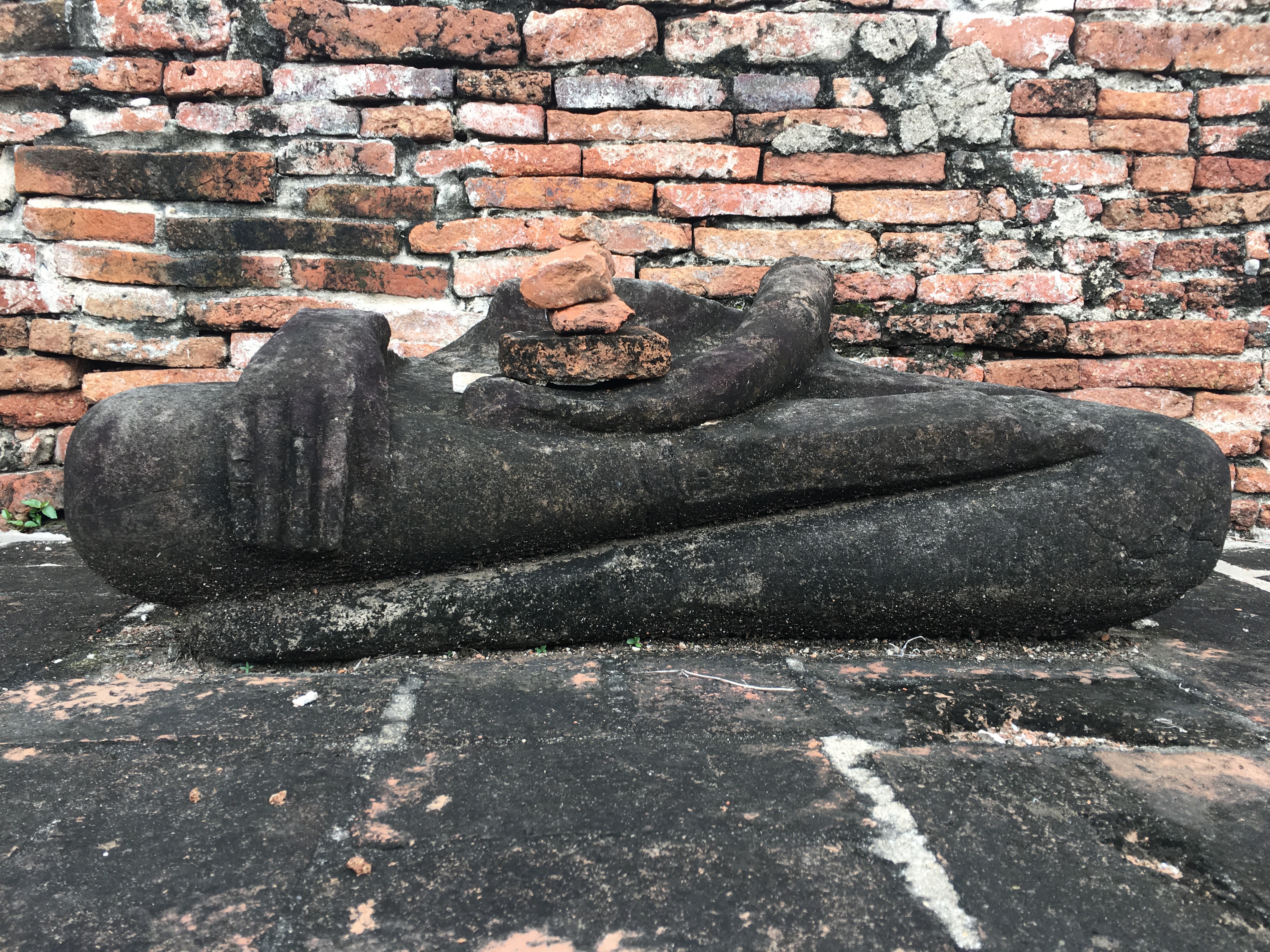
Something about this sculpture from Thailand being just a few body parts feels apropos


Content note: this post contains some descriptions of a health issue and its treatment. If such things make you uneasy, you may not want to read ahead. 


“In Taiwan this would have been resolved by now,” I huffed. “Fixed in less than a day. Ouch…ew!


Brendan mumbled in agreement but did not look; only parents of sick young children and trained medical professionals should have to witness the drama playing out on my right thumb. We were in Portland, Oregon, at the dining room table of our friend’s mother-in-law, and I was doing some very gross things with my miniature medical mis-en-place. 


During the Las Vegas segment of our Great West Coast Tour (to New Englanders like us, Vegas counts as “West Coast”) I developed what appeared to be a mild case of paronychia. An infection around the nail. By the day of my brother-in-law’s wedding it was clearly not resolving itself. I bandaged it for our trip to the Grand Canyon because it hurt to touch anything without warning. 


When we reached Portland, the side of my thumb had puffed from pink to a furious red. My basic travel medical kit didn’t have the means to deal with this; I needed antibiotics.


“I just really don’t want to deal with the American medical system,” I said, even though we had travel medical insurance. 


We flew to Portland to visit old college friends. Someone produced Epsom salts; I submerged my thumb as Brendan cut up a dinner salad, my friends and I complained about politics and we all kept an eye on the kids. 


When I lifted my thumb out of the hot Epsom mug, my thumb had puffed up to sci-fi proportions. My finger had quite literally gone pear-shaped. A little white bulb of pus had gathered under the skin next to the nail.


My friend’s recommended urgent care clinic didn’t seem to be covered by our travel insurance. I called the insurer for a recommendation and was given a code to use for another one; it didn’t work. The provider tried to help, but ultimately sent us back to the insurance company, who confirmed that it never actually works and we’d have to pay out of pocket and submit a claim. We weren’t looking at huge sums of money, but I didn’t really want to submit something after the fact when it might get rejected. We tried another in-network provider and set up an online appointment for the next day, but then once again found that they couldn’t actually locate our provider information. At that point I was desperate — I could barely type. 


The whole affair took an entire evening, just to find a provider and make an appointment.  


The online consultation was fairly straightforward: I clearly had a paronychia, and I needed antibiotics. The nurse practitioner prescribed some and recommended I either come in to have it lanced, or I do it myself at home. 


“What does it cost to come in?” I asked. 

“It starts at $99,” she said. On top of the hundred bucks I paid for the consultation. 


That’s how I found myself at a dining room table laying out alcohol wipes, cotton pads and needles on a bed of tissues. I sterilized a needle and gently lanced the white bit. It didn’t hurt, which was probably a bad sign. 

The pus came out in fat yellow drops, staining the cotton pads a freaky green color. The pharmacy wouldn’t open until 11am, giving me plenty of time to relieve as much pressure as possible on my poor pear-shaped thumb. The result felt weirdly hollow, like a drained blister, but deeper under the skin. 


With our friend’s husband working the next day, we couldn’t fit into her car with the two children’s car seats. So we took an Uber to CVS while she drove the kids to a nearby cafe with big couches, with plans to meet there once I’d procured the antibiotics. 


Total time spent: six days from when I would have seen a doctor in Taiwan to when I actually saw one in the US. As I write this, the infection has not completely cleared; I feel like I have a shrinking cystic zit under my thumb pad. 


Total money spent: $140 US dollars, including the online consultation, two Uber rides and antibiotics. That’s on top of an insurance premium for three weeks of coverage that cost four times what we pay in Taiwan each month for National Health Insurance, and their actually covering it is not yet assured. 


Here’s how it would have gone in Taiwan: the same day I realized the infection wasn’t resolving itself as expected, I would have likely seen a doctor within walking distance or a short ride away on public transportation. In a hurry, I might have taken taxis for a total of about US$10. I would have immediately been given antibiotics and the doctor likely would have done a better job lancing it than I had. 


There would have been no question of National Health Insurance covering it. That’s why it exists. The appointment and the antibiotics would have cost about US$5. 


In the US we were lucky to be staying with friends for most of our trip (which is, of course, how we could afford it). We thus had immediate access to basic medical supplies. However, there should have been no need to wait that long to decide medical attention was necessary — letting the infection get a little out of control — spend that much time finding a provider, spend that much money and then lance it myself. 


In Taiwan it would have been a non-issue.


The mundanity of all this is the point: I’m telling you this gross little story exactly because it’s so banal. My only personal experience with the American medical system in 18 years was, in fact, not terrible. I needed medical care and got it, and the cost was something I could afford. That’s frankly unusual, and I was extremely lucky. 


But here’s the thing — even a not-terrible, incredibly boring (yet pus-filled) outcome was still worse in the US than it would have been in Taiwan. It’s easy to point to medical horror stories in the US and compare them to the rest of the developed world: impossible bills, long emergency room waits, avoiding ambulances because you can’t afford them, drugs you break the bank to pay for, long appointment lead times. 


Comparing a fairly good US outcome to Taiwan and still seeing the US come up short? I think that says something. Even when the American medical system basically works, it can’t compete with a small island nation that only recently developed and democratized. You don’t need a horror story to prove this. What is so thoroughly wrong with the US that it can’t even treat a simple paronychia without undue expense and stress?


We were ultimately charged for the consultation, and now have to figure out whatever complicated procedure is required to submit a claim, which may or may not be rejected. 


This should not happen, and in Taiwan it would not happen.


The US delivered a thoroughly acceptable treatment for my messed-up hand, and it was still more expensive, time-consuming and complicated than the same thing would have been in Taiwan. Frankly, that looks really bad for the US. 

Monday, September 4, 2023

Renunciation


Squid in the air, still tied to something 


“Do you have a plan if things go sideways in Taiwan?” 

One of my oldest friends asks us this as he zips us to the BART station from his home in central Oakland. A pair of committed northeasterners settled permanently in Taipei, we’re properly visiting the West Coast for the first time as part of a trip for my brother-in-law’s wedding. 


It’s not the first time I’ve been asked this, and it will be far from the last. Most people assume we’ll leave if things get sketchy; this friend knows me well enough to know that’s not necessarily the case, and thus asks a more open-ended question. 


It’s hard to put this into words, though. I stumble around an insufficient lexicon, muttering about planning to stay — I’m not much of a fighter but I guess I could grow sweet potatoes — and reassuring him that if we were ever forced to leave, really truly forced, we have options. They're not very good options, but it remains that we have them.

It doesn’t need to be said that many in Taiwan would not. 


I slide sideways into a summary of my thought process over the past few years: you know how there are foreigners willing to fight for Ukraine? Well, Taiwan is my home, I’m willing to fight for it. Besides, if I don’t stand up for what’s right in the place I call home, can I claim to stand for anything at all? Certainly I can’t seriously talk about democracy and human rights if I won’t fight for them where I actually live. 


And yet, do I owe my life to a country that won’t give me a passport? That feels weird, too. 


There’s no end to this spirograph of questions, it just whips you around into some complicated, unending holding pattern. 


He’d asked earlier if we were citizens yet. I said no, we’re permanent residents (“like a green card, though we get privileges, not rights exactly, we can’t vote and its very hard to get approved for a mortgage or even a line of credit”). 


It’s not bad, I clarified. I didn’t want to seem ungrateful. But it still feels off — a Chinese-American whose grandparents were ROC citizens who never set foot in Taiwan and have only a tenuous relationship to Taiwanese history and none to Taiwanese culture is considered a dual national by default. We’ve invested most of our adult lives in Taiwan and are considered more foreign than that. I know, I know, not every country has birthright citizenship. I wouldn’t call it unfair exactly, except you know what? It feels unfair. 


“I actually have considered renouncing,” I say over coffee by Lake Merritt. “We don’t plan to move back, and even if we did, with my diabetes I don’t see how we could. I could not possibly afford my medication without a corporate-type job and I am deeply unsuited to exactly that.” 


The truth is, I can’t renounce. Brendan theoretically could; he was lucky enough to have been born in Canada and has that sweet sweet dual birthright citizenship. 


The reasons are simple: I’m too filial. What if my Dad needs help? My in-laws? Being allowed to visit for set periods but not work would be insufficient. I won’t give up my ability to potentially care for aging relatives; something you’d think the Taiwanese government would understand (but apparently doesn’t). 


What’s more, if China invaded and actually won, renouncers like us — well, me — would have no citizenship at all. I can’t think of much that would be as bad or worse than being a citizen of the PRC, but being stateless is quite undesirable. Even if I wanted to be a PRC citizen (I absolutely don’t), it’s doubtful I’d be allowed to do so. 


I did not say: this confluence of events has altered the course of my life in ways I could not have easily predicted. 

It's difficult to fully explain, so I avoid the discussion with anyone who seems to have overly binary thinking. 


I hadn’t known when I moved to Taiwan that I would want to stay. It certainly had not occurred to me that I’d care enough to consider fighting if China did ever start a war. But more than that, the slender exceptions that have opened for dual nationality have done nothing but throw into sharp focus how weird the whole situation is. 


Sat squarely in the middle of my thought process is this strait gait and narrow path, and how I might get on it. As an educator with an advanced degree who primarily works with Taiwanese teachers and their professional development, you’d think I’d qualify. I don’t. 


Educators not only have to be associate professors and prove some specific contribution to Taiwan, but also get their university to do the required paperwork to recommend them. Some succeed; I’ve heard stories of others who don’t simply because their university doesn’t care to support them. 


For awhile, I thought I’d just get my PhD and pursue that path. Getting accepted to a program wouldn’t be particularly hard — the director of my MEd program all but assured me I’d have a seat if I applied — but funding would be. 


Soon after, I had the opportunity to travel around Taiwan and talk to many university lecturers, professors and second language acquisition specialists. Almost all of them bore ill news: the only people doing anything remotely like what I do at the university level who also have tenure-track positions are actually professors of Linguistics or English Literature. If you have a background specifically in Education — not to mention Applied Foreign Languages — the best you’re likely to do is an annual contract, if not adjunct work. I met two exceptions; they prove the rule.


Forget that neither of those paths offer enough in terms of benefits and remuneration for the work required, or for me to give up my freelance career in which I never have to confront my deep-seated issues with authority. 


Neither of them are sufficient to qualify for dual nationality, so what exactly would be the point of doing a PhD if I want to stay in Taiwan? It wouldn’t get me the job I need to attain dual nationality, which under the current law I will never qualify for. It isn’t necessary for what I do now. I don't really want the jobs it could get me.

So why do it, putting in all that blood, sweat, toil, tears — not to mention money I don’t really have and don’t think I should have to spend? (To me, any PhD worth doing is a PhD someone else pays for.) 


I can’t think of a reason, so I haven’t applied. I likely never will. 


Who knew that deciding on Taiwan as our home would have repercussions not just regarding work and citizenship, but education? 


None of these issues has an endpoint. None of the questions has answers. It’s not quite tragic enough to merit sustained media coverage, not quite common enough to be a society-wide problem. It affects me and a small group of otherwise-privileged, mostly Western immigrants in Taiwan. It’s easy to be dismissive — you’d never have to fight, you’ll never be Taiwanese, you’re just here for your own benefit — and I won’t even say that these are entirely untrue. I wouldn’t have to fight, if I didn’t want to. I’ll never be culturally Taiwanese. As much as I want my being in Taiwan to be something good for Taiwan, living here does benefit me as well. It’s a tad specious to pretend none of it matters because a white lady like me will be alright no matter what, but it’s also not quite wrong. 

Yet wondering whether I’ll ever have access to something people with even less exposure to Taiwanese culture are entitled to, realizing that I can’t imagine a world where I ran away from Taiwan at the moment of her greatest crisis, and knowing that it will still never be enough no matter how impossible renunciation is for me? 

To stay in Taiwan, I've renounced quite a bit. Perhaps nothing tragic; can I really whine about career paths I did not take when I'm more or less happy in the one I've chosen? Who cares that I'll never be an academic simply because a reasonable version of that job, for me, does not exist here? I am salty about renouncing my chances for ever being a full citizen of the country I live in, though I'm not sure I have a right to be. Even though I couldn't really live in the US again, I did choose this. 


Whatever, y'know? All I can do is renounce the whole damn debate. I don't really care about anyone's silly opinion on whether or not I will or should fight in any potential Chinese invasion of Taiwan. It doesn't matter how I should feel, or what makes me one of the "good" immigrants, or whether I'm happy or grateful enough. I feel how I feel, I made the choices I made, I am where I am, and I don't have any answers beyond that.

Sunday, August 27, 2023

A Paucity of “Blessings”: the KMT and what it means to be “credible opposition”

Untitled

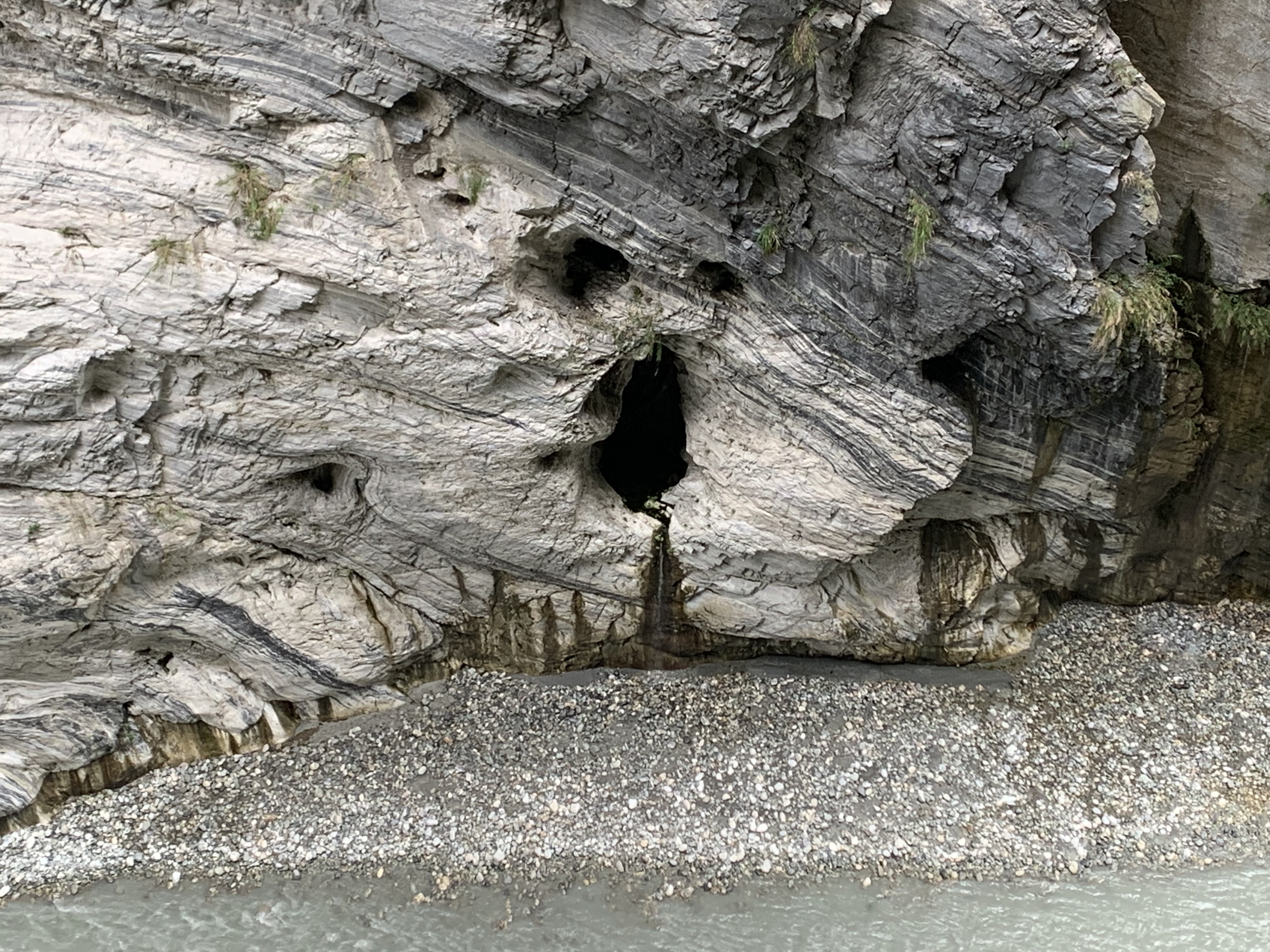
Screaming in stone?

It’s rare that I have not a single critical thing to say about the overall body of work of an expert or policy wonk focusing on Taiwan. However, a few people come close, and I’ve always admired the work of Kharis Templeman. He’s good at what he does, he’s clear and to the point, and he makes sense. I’ve never heard him say anything ridiculous about the US or Taiwan “provoking” China, among other claims I personally think are, well, deranged. He seems sensible. I’m on board.

So, I would like to begin this post by stating that all of it comes from a place of respect. I read his forthcoming “Blessings in Disguise: How Authoritarian Legacies and the China Factor Have Strengthened Democracy in Taiwan” and, well…to put it kindly, I was not entirely impressed. To be clear, most of the argumentation makes sense, and he doesn’t make any historical slips that I could find (you’d be surprised how often that happens with other scholars and researchers). 


That said, I have thoughts. I do think Taiwan needs at least two credible, stable, institutionalized parties. The DPP needs a strong rival to hold it accountable, and vice versa -- the DPP needs to hold its opposition accountable, as well. That other party is, and always has been, the KMT.

However, I see no reason why that strong opposition should necessarily continue to be the KMT. After reading Templeman's paper...

...I still don't. 


The core thesis is that the KMT is “good for Taiwanese democracy” by existing as an entrenched, institutionalized party with a core voting base and ability to govern within established systemic norms. 


This does make sense on its face: stability begets stability, and democracy is tied deeply enough to the will of the people that if there are not institutional factors at play, including disciplined, electable yet competitive parties, it’s easy for the whole thing to fall apart. It’s frightening how quickly one party might gain a stranglehold on power, or for the system to become so chaotic or unaccountable that it’s not clear what benefit ‘electing your leaders’ even has. 


Here's the thing, though: it’s just a little too close to ‘status quo for the sake of the status quo’ — what we have now is good because it’s stable, and change is to some extent inherently destabilizing. To be honest, there may be some truth to that. Not all change is good; even in the most flawed system, change can bring unfortunate consequences. 


But, as we’ve seen with Taiwan’s own democratic transition, change may be scary, chaotic and raw, and still need to happen. 


The DPP were once the outsiders, the upstarts, the ‘anti-system message’ guys. And now they’re institutionalized. 


In other words, upending the system, letting in newcomers and outsiders, destabilizing norms — these can be terrifying and have negative consequences alongside the positives. But a party may well only be an outsider or destabilizer…until it isn’t.

And a party may be a credible institutionalized rival...until it isn't


Thus, the argument that the KMT is good for Taiwan only holds for as long as they actually do have a strong voting base. It’s true only insofar as they remain competitive and can actually win every kind of election. That’s not assured: they can and do dominate at the local level, but nationally, their ability to actually win an election is, well, up for debate. At least for now. 


The second they lose their legitimacy, their base, their electability (especially at the national level), what then? Are they still “good for democracy” if they can’t provide a reasonable alternative to the DPP? I wouldn’t think so. 


Right now, the TPP, no matter how unclear their policies, seems to be presenting a credible threat to the KMT and is becoming truly competitive against the DPP. They’re “outsiders” now, but perhaps less so with an erstwhile Taipei mayoralty under their belt. They are already both in leadership and hot water in Hsinchu (corruption allegations), and Ko is giving the KMT's Hou a solid scare in the presidential race. 


What if the TPP actually makes it and becomes “institutionalized”? Will we need the KMT then? Or are they only a “blessing” for Taiwan as long as they’re credible? If the TPP actually does usurp the KMT’s competitiveness against the DPP, I wouldn’t necessarily say it’s good or bad — just different, and indicative of how far the KMT would have fallen. Certainly not a loss of any ‘blessing’ stemming from the authoritarian era. 


It makes sense that stable political parties that respect the norms of governance and remain competitive are good for democracy in general. As long as the KMT and DPP fit this bill but no other parties do, I can understand the argument. However, the moment another party becomes ‘institutionalized’ — credible, prosperous, competitive — what exactly is the benefit of the KMT in particular? Why should it be them specifically?


Templeman tries to make the argument that the KMT itself is “indispensable” as the opposition to the DPP, but this is where I found the paper weakest. 


Again, it is only ‘indispensable’ for as long as it remains stable, credible and competitive. And outsiders are only outsiders until they’re inside — like, oh, the DPP. And insiders only remain inside for as long as they can hold their place. On those fronts, Templeman seems more optimistic about the KMT’s future at the national level than I am. 


Let’s look a little deeper at the two points made here: one is that the KMT’s own disciplined party core forced the opposition, which lacked the KMT’s resources and institutional entrenchment, to also create a disciplined, organized hierarchy that (ironically, as he correctly notes) this meant that the DPP’s organizational structures mimicked the KMT, both of which are founded, basically, on Leninist norms of party structure. 


This is an accurate telling of history, but whether it’s a “blessing” depends on whether you think that particular party structure is ideal, or a good choice. I’m not an expert in Leninist party structures, so I’ll save that question for someone else, but in general I am not a fan of Leninist praxis. I do wonder if Taiwanese parties could perhaps do better than the model they were handed. 


I doubt the DPP is going anywhere, seeing as they hold both the presidency and the lead in the  upcoming election (keeping in mind that a lead this early on is not always easily kept). Furthermore, their general orientation regarding Taiwan’s sovereignty is much more in line with the general consensus. Whether or not Taiwan should — or even can — have “better relations” with Beijing is still up for debate, though I tend to think Beijing’s own attitude makes that impossible, not any specific policies of the DPP or KMT. However, on unification vs. independence and national identity, the DPP seems to be much closer to what a greater share of the electorate wants


As for the KMT? Well, would it be so bad if a party that was disciplined but had a novel party structure that didn’t follow the old China-imported Leninist paradigm usurped their position as chief competitor? Crucially, would political parties in Taiwan have been able to form disciplined institutional cores if the KMT had never come and shoved their ideology down Taiwan’s throat? 


I don’t know. Perhaps not. Assuming, however, that what happened was a ‘blessing’ sounds to me like making excuses for colonization. It’s along the lines of “the British Raj was terrible, but without them India wouldn’t have all that infrastructure, like railroads”. As though Indians would certainly not have been able to figure out railroads on their own. Perhaps geopolitical factors would have made such things harder to accomplish, but whether we’re discussing Taiwanese political parties or Indian railroads, they were by no means impossible without all the horrors that accompanied them. The horrors of the White Terror were not definitively necessary for Taiwan to blossom into the democracy it is today.


Templeman then focuses on the “China factor” — the fact that differing views on China remain the primary divide in Taiwanese politics. There’s nothing incorrect in this assessment, and the historical review was on-point. 

Well, on point with one caveat: the KMT doesn't continue to be one of the major opposition parties because of the "China factor", wherein there are two main poles to Taiwanese political affiliation, one pro-China and pro-Chinese identity and one wary of Beijing and Taiwan as part of some concept of "China". Rather, "the China Factor" exists because the KMT brought it to Taiwan. That, however, is a topic for another post.


However, the rise of the TPP in the current election cycle, ephemeral as their competitiveness may (or may not) be, was completely ignored. I’m not pro-TPP by any means, but this felt like a glaring omission when parties such as the NPP garnered mentions. The TPP doesn’t have a clear China policy, but then, neither did the KMT’s Hou You-yih until fairly recently. 


The China factor certainly matters, as much as we may wish it didn’t. However, it only matters for as long as it matters: if the electorate ever settles on a general consensus vis-a-vis China, that “divide” will suddenly boost the ability of one party to dominate. Although partisan identification shows some interesting changes, looking at fundamental support for pro-China policies vs. against them, my bet on where any such dominance might land is squarely in the pan-green camp. 


It’s not like support for unification is on the rise, and even DPP presidential candidate Lai Ching-te has said he would be open to dialogue with Beijing. The DPP openly states that Taiwan is “independent”, adding in a little “called the Republic of China” coda delivered with everything short of a wink wink, nudge nudge.


On the other side, I consistently see the KMT try to hide its more pro-China tendencies: they don’t dare openly state that they’re pro-unification, nor did they dare to speak against the 2019 Hong Kong protestors resisting the exact same government that they, the KMT, want to be closer to. They talk about the fake 92 Consensus, but can't admit that China never agreed to their interpretation that there are "differing interpretations". 


In fact, the KMT/DPP dichotomy, riven along pro/anti-China lines, has given rise to a large group of voters who simply dislike both parties. There are those disillusioned by the KMT but can’t fathom voting for the DPP, often due to a lifetime of pan-blue media inculcation that the DPP are “riffraff” and “troublemakers” — that is, they still don’t believe that the DPP are “institutionalized”. 


There are also those who are angry at the DPP’s failings, and to be sure it is not a perfect party. However, they’re adamant that Taiwan is certainly not part of China, and the thought of voting for the pro-China KMT, with its lingering scent of the authoritarian era, is an anathema to them. Basically, “the party I would typically vote for sucks, but the alternative is even worse!” 


(If that sounds a lot like some Americans pissed at both the Democrats and Republicans, well, it should.) 


If it’s a “blessing” for the two dominant parties to be the imperfect “they’re corrupt too!” DPP and the “but they murdered my uncle and insist I’m Chinese” KMT, then I’m not as optimistic for Taiwan’s future as Templeman is. I don’t think Taiwan’s democracy is in dire straits -- far from it -- but thinking of it in these terms makes it seem more troubled than I would otherwise believe, not less. 


Templeman continues by noting that the KMT is the “indispensable” foil to the DPP not only because they’ve managed to survive into the democratic era, but because they continue to have huge resources at their command. Is this actually true? As Donovan Smith recently noted, they’re still reporting funds effectively frozen by the transitional justice committee, and might actually be in danger of bankruptcy. I’ve heard multiple rumors over the past few years that they struggle to pay their own people. They have a legacy as one of the wealthiest political parties in the world, and certainly the wealthiest in Taiwan, but that may be more a memory than current fact. 


I’m deeply unconvinced by the next section: 


Commentators and academics in Taiwan, especially those sympathetic to the DPP, frequently bemoan the fact that the KMT survived into the democratic era and continues to play a leading role in politics (e.g. Baum & van der Wees, 2012; Hwang, 2016; Schafferer, 2010). In this view, the KMT’s authoritarian inheritance, including a murky collection of businesses, investment holding companies, buildings and land plots, and other assets that it acquired during the authoritarian era, have given the party an unfair advantage in contested elections; if the electoral playing field were really level, it would have faded into oblivion a long time ago. Thus, the current DPP government is justified in seeking to force the KMT to provide a full account of its finances and disgorge any ‘ill-gotten assets’ back to the state from which it acquired them. Yet the persistence of the KMT as a major electoral force, and in particular as a credible threat to retake power even after it lost control over the central government in 2000, has also had unambiguously positive consequences for the party system, and thus for democratic accountability. And if reformers push too hard to disrupt the current party system in a misguided attempt to resolve these ‘distortions’, they might end up doing more harm than good to Taiwan’s democracy in the long run. 


There’s a very obvious disconnect here: Templeman acknowledges that the KMT had (and has) “assets that it acquired during the authoritarian era, [giving] the party an unfair advantage in contested elections”, but then states that they are a legitimate party because they’re still “a credible threat to retake power”. Yes, they are — in great part because of all of those (erstwhile?) assets giving them an unfair advantage! That’s the whole point. 


It’s like saying “Yes, Brockton Squinglehopper III had some unfair advantages from his family’s massive wealth and privilege, but the fact that he is an adult now and is also massively wealthy and privileged is a sign that he earned it, and that’s positive!” How is it positive, exactly?


As for clientelism, both parties engage in it, but to me at least, it seems the KMT is the far more serious offender. Far from being held accountable, several years on they still don’t understand why preferential pension schemes for their major voting blocs had to be done away with. 


It’s not that the KMT has no true supporters: they do. But they have also had so many unfair advantages, from resources to control of the education system and media to actually being a long-term established party when Taiwan democratized, unlike the DPP. That they continued to win elections is, in part, evidence of how steeply the playing field was pitched — not an argument that it’s inconsequential.


It convinces me of two points only. First, that Taiwan needs credible opposition parties that are stable, disciplined and hold each other accountable. In the past, that has been the DPP and KMT. There is no reason, however, why it would be best for the KMT to continue to dominate over newer parties. The best I can say is that they historically have done so; I don't see a solid argument for why it would be best for that to continue, if the newer party can be just as credible, competitive and respectful of democratic norms. 


Again, a party is only “institutionalized” while it remains competitive, and it’s only an “outsider” until it’s inside. 

Certainly, the KMT cannot be forcibly done away with, and not all third-party opposition is necessarily positive. I see no problem, however, with the KMT dying a slow, natural death as its pro-China views simply fail to garner sufficient support to remain competitive, and its stolen assets are rightfully given back to the nation.


I also have a problem with the idea that both parties are equally committed to Taiwanese democracy. Templeman doesn't say this, but he seems to assume it as a prerequisite for all those "blessings". The KMT kicked out the guy who played the biggest role in democratizing Taiwan (Lee Teng-hui), and plenty of the deepest blue KMTers would happily sell Taiwan to China tomorrow. "You can't eat democracy" and all that. Are they really committed to Taiwan, by any name, as a sovereign nation not united with the PRC? Are they really committed to democracy? I remain unconvinced, because the KMT's own actions have been unconvincing.


I do not think Taiwan’s democracy is rotting away, and I don’t think the KMT should be — or needs to be — actively excised from the political system. But I do not see the authoritarian era as much of a “blessing”. And certainly, I agree that not all change is good, not all outsiders are positive forces, and political parties need credible rivals so that each side may be held accountable to good governance and institutional norms. I agree that the China divide is the primary dividing point in Taiwanese politics. 


However, the KMT’s pro-China orientation, especially the unificationism they try and fail so hard to hide, rapid loss of once-stolen resources, continuing clientelist tendencies and and inability to be accountable for their own authoritarian past all point to one thing: the DPP needs credible opposition, but there is still no reason whatsoever why that has to be the KMT. 


The KMT holds that position right now, but I see no good argument for why they should continue to do so, especially if they die a natural death at the hands of public opinion and a new credible party arises to take their place. 


Templeman's paper is an excellent argument for the historical and political forces that help explain why Taiwanese democracy is the way it is -- everything that's led the country to its present political state, and the benefits of it. It is not a strong argument for the KMT continuing to hold its current status. Even if some of the past they inflicted on Taiwan turned out to have benefits, that’s not an argument for their continued position as one of the two main parties in Taiwan. That position can only be conferred by one force: the electorate. I don’t know which way that current will carry us, but my money’s not on the KMT.