Monday, August 15, 2011

On Traveling Solo or Coupled

Abu Dhabi International Airport

I'm currently hanging out in Ab Dhabi International Airport awaiting our flight to Istanbul. The trip has begun! This means that until October, you can expect lots of pictures and travel stories from Turkey, but not a lot about Taiwan. I hope you enjoy it anyway. In late October I'll be back in Taiwan and back to blogging on my more usual topics.

For now, some thoughts on traveling alone vs. traveling with my husband.

Not to brag or anything (OK, fine, TOTALLY to brag) but in years past I did a fair amount of travel by myself. Sometimes to perfectly safe places like Prague and Hong Kong, sometimes to places where people would blink a bit when they realized that I went alone, as a woman not yet 25 years of age. Laos and Thailand (totally fine for a solo female traveler, but would still earn some double takes), India (requires a bit more precaution but still fine) and Bangladesh (which seems like a place a young white woman shouldn't go alone but actually I found it to be safe and hospitable).

My point isn't to be all "look how tough I am" but to say that when I did these trips alone, locals in those places did accord me respect. Especially in India and Bangladesh, people went out of there way to accommodate a young foreign female - friendly ticket agents booking me in train carriages with families who would look out for me on long journeys, student groups inviting me along on field trips, hotel owners keeping an eye on me to make sure nobody dodgy was on my trail. I booked my own hotels, picked up my own boarding passes, talked to people as me, alone. All things that we Western women do when we travel and don't think twice about.

And all things that I had taken for granted in Taiwan. I write a lot about women's issues there, and sometimes I may make it out to have more problems in that realm than it does. For the record, compared to the rest of Asia and much (if not almost all) of the rest of the world, Taiwan is pretty damn good when it comes to women's equality and rights. Not perfect - there are some discriminatory practices and laws I'd like to see change - but pretty good.

In Taiwan I never feel like an accoutrement - an accessory - to my husband. I feel addressed in equal measure; generally whoever we talk to will address whichever one of us speaks first. If it's clear I'm the one making the plans (which I usually am because I'm good at it) or I am the one who speaks better Chinese (which, sorry sweetie, I love you, but I do) people will talk to me. There is no underlying assumption that I am subservient to or deferential to my husband, or that he is the de fact head of the "household" to whom everyone should speak. There is no assumption that he will speak for me or make decisions for both of us.

Instead, in Taiwan I very much feel that there is an underlying acceptance that while clearly a couple, that we are two people and either of us can be addressed initially without taking away respect from the other. If the person approached is my husband, I get some eye contact or at least acknowledgement. If it's me, he gets the same.

Now, we're on the road. I've mentioned our upcoming Turkey trip and here we are, waiting for our connection to Istanbul in Abu Dhabi International Airport. When we landed in Manila for our first leg, the person who picked us up didn't even look at me. "Are you Mr. Brendan C.?" he asked my husband.
No asking who I was, no eye contact, not even a hello. He didn't even seem to notice I was there until I said hello to him and asked him to confirm that our luggage had made it through. When he answered, though, he answered my husband. I am used to, you know, having someone answer me if I ask them a question, not automatically answer my husband.

If that were a one-off deal I wouldn't be writing about it, but the truth is that the same thing happened in India in 2009: I booked hotels online and received confirmations reading "Dear Sir", and proprietors, agents and other people we interacted with once again talked to my husband, not to me. I would occasionally, but not always, get eye contact or at least an acknowledgement (I do know that eye contact between men an women in India is a cultural issue). Never an extended and unless I extended mine first (and before you go all "India is traditional, some men won't touch women they aren't related or married to!", well yes, some Indian men adhere to that but where we were in the south it's not really an issue. When traveling alone in southern India or major cities I shook plenty of hands).

I specifically remember booking some hotels through one agent - my name on the e-mails, I said hello first when we went to his office in Bangalore, and yet he looked right past me at my husband and shook his hand and asked him about our trip. My husband, bless his heart, replied "you should ask my wife, she's really the one who planned it." The agent looked surprised.

Which, you know, not to devolve too far into a feminist rant, but GAH! I'm not used to that - I'm used to equality. Especially as a woman who traveled alone for years before Brendan and I started traveling together, my "normal" is to be treated like a human being. I have stayed in Taiwan for so long because it's one place where I can live abroad and still enjoy basic equality (even though I came alone, I did not feel in China as though I was seen as equal to a man). An American background, more than five years in Taiwan, have created that expectation, although I would bet good money that a Taiwanese woman abroad with her husband would be just as taken aback.

It's quite a shock, and not one that I care to "get used to". Rather one that I politely resist without - I hope - being rude. As Rachel DeWoskin noted in Foreign Babes in Beijing (not an exact quote but a paraphrase): it's condescending to accept bad behavior in a foreign country that you'd never condone at home. I can't condone sexism, and treating me as unequal to my husband is sexism. I'd rather "be the change I want to see in the world" and politely demand more equal treatment (although I'll make allowances for men in other countries who feel that they are being disrespectful to me by looking me in the eye or shaking my hand - I do expect to be spoken to as an equal person, however).

That's not to say that traveling with Brendan is all disadvantage: it helps to have to brains, especially when one or both are cranky, exhausted and/or confused. I love being able to say "honey, I'm totally dead. We need to get from A to B - can you take care of that because I'll just get us lost?" I won't lie - traveling alone meant that I have been the victim of sexual harassment (entirely in India. Sorry India, but you kind of suck in that regard). With Brendan it has not happened and I can say with confidence that it probably won't again, or if it does it'll be the exception rather than an ongoing problem as it was on my solo sojourns in India. I don't have to worry about being the only woman in a sea of men - which doesn't bother me per se, but it is true that it can be a dangerous situation. I can try more food because we can order different things in restaurants and share. Hotel rooms are a better deal, often the same price as hostel beds for two would have been. We have in each other a companion, someone to experience things with and mull over the stories at the end of each day or over breakfast.

I would say that the good parts of traveling with a husband far outweigh the bad. It's just that this one issue looms over the whole shebang. I do hope that by the time the next generation of brave women starts to travel that they can do so alone without having to constantly be on guard against wayward hands, and they can meet wonderful life partners and travel with them - and if those life partners are male, they won't ever feel like a second-class citizen when on the road together.

Friday, August 12, 2011

Reason #24 to Love Taiwan


The Beijing Duck Truck.

That's really all there is to it. The Beijing Duck Truck ROCKS.

And you'll never see one in the USA (although as my friend J noted, food trucks are catching on in urban areas and are even a new indie wedding trend for food service). So maybe in a few years you will be able to get pretty good Beijing Duck from a truck in New York.


I mean I love the other street vendors too - I love that I can pick up a fantuan or some vegetarian sticky rice or a plastic box of Cantonese duck, a tasty and fresh roasted sweet potato, steamed dumplings, roast chicken or sausage just walking down the street. But the Beijing Duck Truck holds a special place in my heart.

Sunday, August 7, 2011

Tastes of Childhood II: Making Fish Cookies in Taipei


In my younger years, whenever I'd go to a family gathering my Aunt Rose (who has since passed on) made these cookies. They were sweet, filled with a soft walnut center and, justifying their namesake, were cut into a herringbone pattern. They were coated with a sugar syrup and were so tooth-achingly sweet that you could only eat one or two.

Aunt Rose would show up with a Tupperware in hand, or, too frugal to buy tupperware, a regular baking tin that she'd wash and bring home. Inside would be layers and layers of sticky-syruped parchment paper separating layers of buttery walnut fish cookies. She'd set them out on a side table and through the gathering people would walk by and swipe a few.

Most of my relatives didn't care for them - too sweet - but as a kid I loved them (exactly because they were so sweet)!

Having recently obtained the recipe or something along the same lines from my mom, I tried to make them today, knowing that they should keep until next week's party if refrigerated well.

Mine turned out delicious, although much softer and more crumbly than Aunt Rose's cookies (and slightly less overwhelmingly sweet - I think my aunts and uncles would like my version more, in fact).

I can't link to a website for this, so I'll give you the recipe. 

The ingredients are: 

Filling: 3 cups of walnuts, finely chopped (cups of walnuts before chopping, not after)

5-6 tablespoons of sugar

1 flat tablespoon ground cinnamon

Mix together and set aside (and walnuts are easy to chop if you can't find pre-finely-chopped ones).


 Dough: 

4 1/2 cups of flour (you could make very buttery cookies with 4, but the extra 1/2 lends them needed cohesion)

2 cups of butter (yes, you read that right)

3 tablespoons of sugar

A dusting of cinnamon powder to taste

1 cap-ful of vanilla extract (my own addition, not in the traditional recipe)

1 egg

1 cup milk (I used goat's milk)

2 teaspoons baking soda


Syrup:

3/4 cup sugar

1/2 cup water

Some lemon juice to taste (don't overdo it)

pastry brush (silicone ones are best)

Glaze:

One egg and 1/3 cup milk beaten together

                                                                                    Different pastry brush


First mix the walnut mixture and set aside.

Then mix dry dough ingredients. Mix sugar into softened butter and then beat an egg into that. Slowly add the dry ingredients and when added and well-mixed, add milk. Mix and knead longer than you usually would for cookies (usually you don't want the gluten in the flour to do that thing it does when you over-mix cookie, cake and muffin dough but for these it adds cohesion). Don't knead as long as you would for bread, though. Allow to sit in a cool place or in the refrigerator as you would sugar cookie dough.

Preheat oven to 375F, or 190C.

Now, make the cookies by rolling small balls (a little smaller than golf balls but larger than walnuts) into ovals, flattening them with your palm and sprinkling a line of walnut mixture down the middle. Then push the ends together to create a dough "packet" filled with walnuts. Like this:


Take a pastry brush and brush them generously with the egg glaze. Take a small pair of scissors, like manicure scissors, and cut thin, close herringbones across the top - pull up a bit as you go to really get the right look (as you can see I was not entirely successful - I think I'll get better with practice).


Bake for 15-20 minutes and, while baking, mix the water, sugar and lemon and boil for 5 minutes. Allow to cool and set aside.

The old recipe calls for you to use tongs and dip the cookies into the syrup while hot, but if you make them super buttery they'll fall apart easily (as with the one above). You can do just as well brushing them with syrup with a pastry brush while still hot. 

What I love about these is that the sugar in the walnut mix melts in the heat and creates a sort of sweet walnut paste filling that is just delectable and not bitter (as walnuts can be).

Allow to cook and separate with parchment paper (you do not want to be wrapping plastic wrap around these babies).

And voila! Mediterranean sweet walnut cookies! 

And while my Aunt Rose's cookies always looked spectacular, not all falling apart like mine, I'd say that mine taste pretty damn good.

Saturday, August 6, 2011

Food!

Just thought I'd post this for fun. The full and confirmed menu of what I'll be cooking next week to share the food of my homeland (Armenian Musa Dagh) with my friends. All I can say is: yum yum yum!


lahmacun - a flavorful "pizza" topped with ground lamb mixed with onion, tomato, mint, parsley and other delicious things, topped with raw onion, tomato slices, parsley and lemon juice

stuffed grape leaves - assuming I can get grape leaves from Yi Wei foods in time. My grape leaves are stuffed with white rice mashed a bit with ground pine nuts, salt, black pepper, lemon juice, garlic, olive oil and a touch of black pepper (I also cook the rice with some of the tattered grape leaves to imbue a full flavor).

If I can't get the grape leaves I'll make something else - possibly yoghurt kofta (meatballs in yoghurt sauce), possibly something with phyllo, maybe stuffed tomato dolma

muhammara - a zesty red pepper walnut dip

hummus - chick peas ground to a fine dip with sesame paste, garlic (both raw and roasted), cumin, paprika, lemon juice, olive oil salt and pepper and topped with a dusting of fiery cayenne powder

babaghanoush - the same, except with roasted eggplant instead of chick peas

All of the above served with baguette rounds (cheaper and tastier than imported pita in Taipei, my relatives would appprove of the change considering that pita sold here tends to be stale) and assorted vegetables

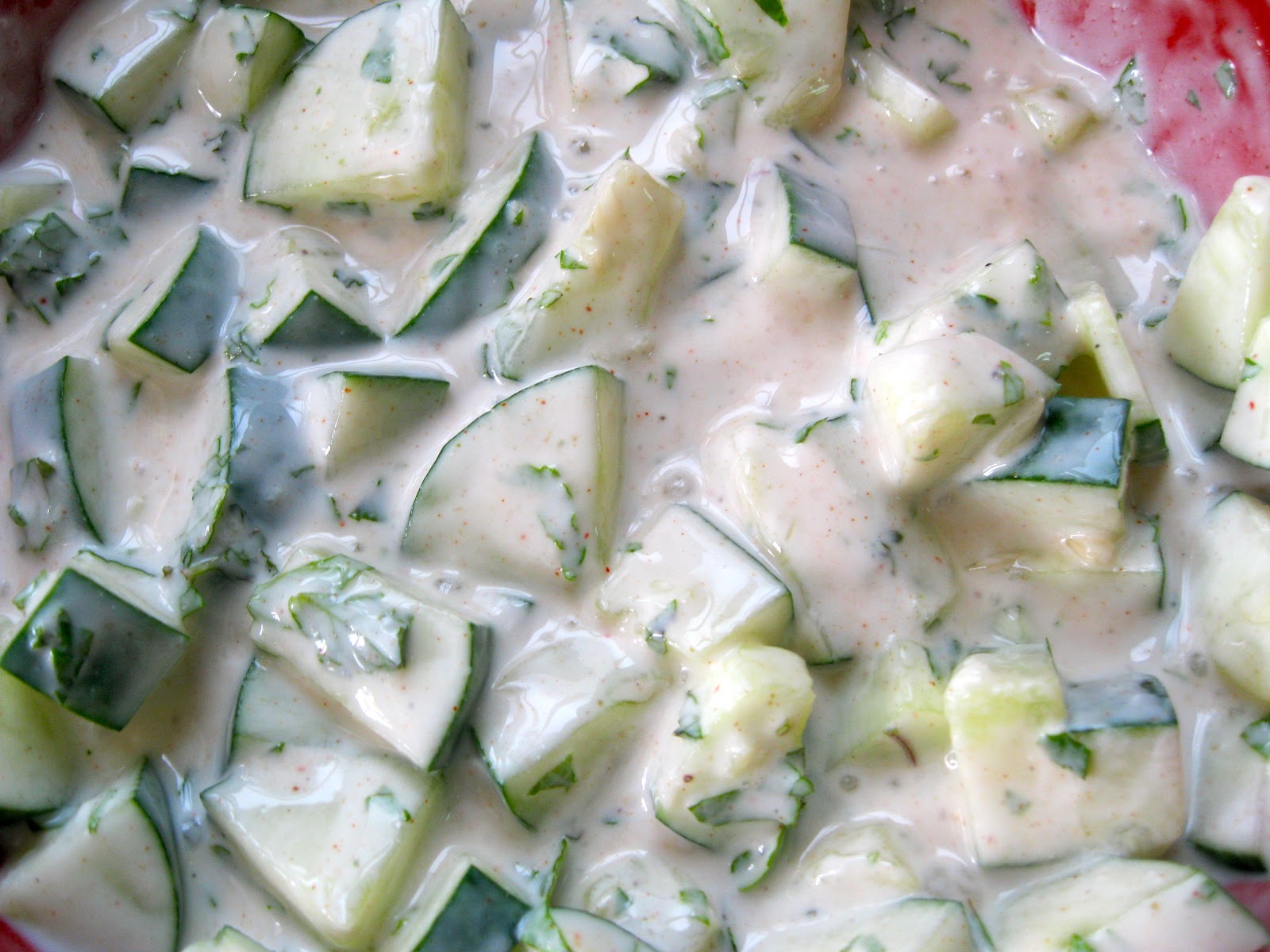
cucumber mint yoghurt salad - just what you think it is, with some raw garlic and spices to give it a punch

tabbouleh - bulgur salad with mint, parsley, bell pepper, cucumber, onion and tomato among other seasonings

pilaf - rice cooked with fried pasta in butter and chicken broth with a few spices

fish cookies - named for their herringbone design, these syrup-dipped butter cookies are filled with a walnut-cinnamon sugar mixture

Some Thoughts on Having Children in Taiwanese Culture

Thought #1 - the preference for male children is going to end within one generation.

I recently had a conversation with someone who is recently married and about to try to start having a baby - and one of the things we talked about caused me to do some thinking.

She said that because she wants to have only one child - although she admits she might change her mind after having that child - that she would prefer it to be a boy.

Oh no, I thought, so this whole 'preference for sons' thing is still alive even in the younger generations? (I realize it's culturally motivated but I don't care - a preference for sons is something I will not condone. You can get rid of a societal preference for male children and not destroy the culture).

She clarified - she wants a boy because her mother-in-law wants a grandson* to carry on the family name and lineage. It's OK if she has a daughter, but the mother-in-law will then pressure her to have a second baby and try for a boy. If she has one baby and it's a boy, she won't get the pressure because the male lineage would have been assured.

[sarcasm] Of course, it is clearly unthinkable that a granddaughter might carry on the family heritage. Everyone knows women can't do that. [/sarcasm].

I want to say that my first thought was uuuuggggghhhhhhh but that I tempered it: in some ways, this is actually a good thing. The person I was talking to - a member of the current parent-aged generation - doesn't personally care if she has a son or daughter. When she has a child of any gender, she won't care if that child has a son or daughter (I didn't ask what she'd think of a child who wanted to children of his or her own).

It's a member of the older generation that cares, and that makes all the difference. It sucks for my acquaintance, who has to deal with that pressure, but the fact is that the older generation is done procreating and their influence can really only stretch into the current generation (maybe - maybe - the next one if they try to pressure their grandchildren, but given the later ages to which couples are delaying parenthood, I suspect most Taiwanese grandparents won't be around to see their great-grandchildren. I'd add that my grandparents' expectations of me never changed my life plan one jot, although I love and respect all of them, but then neither did my parents'...and Taiwan has a different family culture. My reactions to family expectations don't apply).

That means that if this is a trend, and I believe it is even though I'm only illustrating it with one example, that the whole 'preference for sons' thing is going to die out with the next generation and we will hopefully see a more egalitarian, sexism-free take on procreation. I don't mean that all preference will be eradicated, but that preferences will be individual and will include parents who want girls, not just the social mandate to prefer boys. I'm seeing a lot of "we don't mind either way" or "actually, I want a girl" and "my mother wants me to have a son but I don't care personally" in the current generation of parents, and very little "I want a boy who will take care of me in my old age/carry on the family name". This is a good thing.

We then had a great discussion on how one handles parents and in-laws post-marriage, when you become your own family unit. I had little to say because these aren't problems I have (my in-laws thankfully don't do this, and while my parents do, we are close enough that I can tell them to shove off - in those words - without any loss of love, because that's the kind of relationship we have). I shared how I handle pretty much anyone who gets in my space who is not my husband, by at first deflecting and then, if it persists, telling them that really that's a personal issue. If that doesn't work, flat out saying that I'll do as I please and my decisions are not theirs to make, and their opinions are their own but I don't want to hear them. I'll end with an unapologetic "I'm sorry you feel that way" and do as I please anyway, without explaining myself, because why should I have to?

She admired the approach but admitted she couldn't practice it - it's my mother in law! I can't say that!


(Sure you can, maybe more politely but you can. But yes, I do understand that there are cultural issues at play).

Which might all lead to another post on dealing with family in Taiwan once you are married - when I have more time I'd like to expand on that.

*note to my mother-in-law - thank you so much for not being like that!


Thought #2 - I'd really like to see the demise of the assumption that it's best to want kids, but it's not going to.

Heck, it hasn't gone away in the USA. I still have family who pressures me about this. But here...well, this may be TMI but it's a women's issue in Taiwan so I think it's worth sharing. I was visiting my doctor and discussing various options and she said "So you can take this for a year or so, and then when you have a baby..."

"I'm not planning to have a baby."

"Really?! But...why? You really don't want to have a baby?!"

Because for this particular doctor it is kinda, sorta her business when she's dealing with my health, instead of telling her to shove off I said "Yes. I really don't."

In the USA I would have dumped her right away and gotten a new doctor, but this is Taiwan and I can't expect the same attitude here. I did see a different doctor only because it was more convenient to work, and got a similar reaction. I get the feeling that I'd get that reaction no matter who I saw - because I also get it from taxi drivers, new acquaintances, random people, the old ladies in the lane, you name it. I don't tell them my plans mostly, because it's not their business, but I get that shocked expression when I tell them I'm 30, married and yet do not have a child (I'm not sure why - the Taiwanese are marrying later and later and also delaying childbirth, if they have children at all. "DINK" is actually a word here, too). They are shocked when I say I have no immediate plans for a child (something I wouldn't divulge in the USA but the boundaries for personal questions here are different - if I had not been influenced by the culture here I wouldn't even be blogging about this). I don't tell them that I don't have any plans, because that's just not a conversation I want to have with perfect strangers.

I don't see this going away anytime soon. It's a shame - people (especially doctors) really should respect others' decisions to have or not have children. Unlike a preference for sons, however, I think the expectation that having children is the best route, the correct path, is not going to die out within a generation. Too bad.

Thursday, August 4, 2011

My Beautiful Island: Snoozefest Edition


Some thoughts on this film, which is making a bit of a splash across the Intertubes (it's appeared a few times in my Facebook and Google+ feeds accompanied by discussion of the promotional video's merits).

I have to say, overall I don't care for it. As one person said, it's got smashing production values and is visually stunning, but as a video to promote tourism it fails (not my words, but I agree wholly). I am not sure what the viewer is supposed to take away from this about Taiwan. I liked the idea of four different journeys, which represent four different kinds of tourists (the Japanese tourists who shop and sightsee, the backpacker on some sort of 'see the world, change myself' journey, the Asian-American family that seemed to be on a 'show the kids their roots' trip, the old folks), but I felt that those journeys could have happened anywhere in Asia. The tea fields, the lake with the lantern-bedecked pier, the bus going down the country road. All 'stereotypical Asia', not Taiwan.


I'm not saying they should have just shown touristy places, although they should have added a few (just 101, Taroko Gorge and maybe Chihkan Towers or another historic building would have sufficed), but they should have shown scenes that felt more like...Taiwan. I felt the more arty, cloudy, overcast feeling of the film lacked spirit, verve and love for the country. I felt it sacrificed spirit in the name of, I dunno, art?

I feel that...well, first of all, what's up with the first five minutes of the film being nothing but Taoyuan Airport, a bus station, the HSR, a hotel, an escalator? Other than possibly the HSR (which would have been better depicted as it was actually racing across the countryside with the happy pensioners riding inside), none of that is even remotely interesting. Five minutes of Taoyuan Airport and Ubus is four and a half minutes too many. A good filmmaker could have gotten some dialogue in there while showing more scenes of actual, you know, Taiwan.

The music when they're getting their passports stamped was also a poor choice - it was horror movie "something terrible will happen to them in Taiwan" music, not music that makes you want to actually go to Taiwan. The scene where the Japanese girls go shopping - really, why close up only on their faces and one pair of ugly shoes? Why not show the Xinyi district at night, all lit up, a more sweeping view of where they were, and then close up? Or move out? Why not show Taipei 101 (a cheesy addition for this too-arty film, but I think an important one for tourism)? Why not show them out at a club or bar after shopping, seeing as they spent another valuable chunk of film time putting on makeup, which we really didn't need to see? When they were at the night market, why not show more than very close-up shots of the one food stall? Night markets are so full of visual stimulation and are so very Taiwanese in feel that I can't fathom why they didn't show more of it.

The tea fields were visually engrossing, but the dialogue was so stilted. Seriously, "your hand in mine, as we were in our younger days?" Excuse me, but what the hell is that? What hack wrote that? Couldn't they get someone to write some actual, realistic dialogue?

For the backpacker, I thought the idea was cool, but one could have shown him venturing into more interesting places (the part in the mountains at the end was cool, and the aboriginal-music party was cool too, I'll say that). Why not have him be totally blown away by a colorful temple fair, as I was the first time I saw one pass by, all banging and crackling? That was a formative Taiwan experience for me - cultural things like that really deserve more screen time. They got none.

Instead of showing the older folks drinking tea in a restaurant, why not have them on Maokong, learning how to brew 老人 茶, or invited into a local's home for tea in the traditional style?

Anyway.

I can nitpick all night (and would love to - I'm in a truly foul mood these days for completely unrelated reasons that I won't divulge here) but really, at the end, it's this.

The movie had no soul. No heart, no verve, no spirit. It was like a European art film on sleeping pills. It was like Terrence Malick doing a parody of a Terrence Malick film (if you couldn't tell, I didn't care for The Tree of Life one bit, and my husband assures me that The Thin Red Line is as bad or worse in that style). Nothing - not one thing - about it screams yes! This is the Taiwan we know and love! YES! This is the Taiwan I want my family and friends to see!

It screams generic arty film about Asia that lacks a pulse.

And for that, despite all its visual beauty, I give it a FAIL.

Some suggestions, in bullet form:

- pick up the pace
- intersperse the tight camerawork with some more sweeping views
- lose the depressing, at times horror-movie like music, or use it more sparingly
- show more of Taiwan - not necessarily focusing on typical tourist stuff but interview some tourists and expats and ask them to visualize a scene that for them would be "Taiwan". For me it would be either driving the Central Cross Island Highway (seriously, Hehuan Mountain has to have some of the most gorgeous views in the country and nobody uses it in films or commercials? WHY?) or a temple fair, or brewing old man's tea on a mountain or in a picturesque teahouse, or hanging out in a lane in an urban area with old ladies fanning themselves and gossiping. Other people would have different ideas. Incorporate these visions, because that's where you'll find the things about Taiwan that really grab travelers and give them a unique experience.
- rewrite the awkward dialogue. None of this "I think it was fate that brought me here" business. Gag.
- show more interaction with locals - other than that A-do character and a night market vendor the travelers seemed to be off in their own worlds
- infuse the whole thing with more, I dunno, vibrancy. Pick a director with boundless love for Taiwan who can really show that through his or her work.

Also, it would have been better if they'd called it "My Beautiful Country" (I realize Ilha Formosa means "beautiful island" and that there are political issues involved), but of course that would have never happened. That would be too good to be true. Goodness forbid that foreigners actually realize that Taiwan is a country.

Monday, August 1, 2011

Ugh.

So, my hard drive died on the weekend and we had to get it fixed, and I tried to find the White Roses protest mentioned in the Taipei Times but it didn't seem to happen (seriously there was nothing there and I spent awhile in the area walking around and looking), and I wasn't feeling well for most of the weekend and we have a lot to do before we leave for Turkey, so despite all of my grand blogging plans it hasn't happened.

Hopefully before we leave for Turkey I'd like to post on a few topics - celebrating some of my favorite Taipei architecture, another look at views on weight loss in Taiwan, some observations on mothers-in-law and having sons from a student, a post on "fish cookies" (named for their herringbone pattern) that I'll make for our party on 8/13, and a few complaints I have about the new Taiwan tourism mini-film (seriously, did they hire Terrence Malick to direct it or something?) and more.

Not sure when I'll have the time to do this, though. We'll see.

Saturday, July 30, 2011

Tastes of Childhood: Making Lahmacun in Taipei

OH YUMMY

I've mentioned before that my mom's side of the family is Armenian from Musa Dagh, Turkey and that this is one of the reasons why we chose Turkey as our next travel destination: to seek out my homeland (or rather, one of my homelands - I'm also Polish, Swiss and generic British/Irish). Of all my many threads of ancestry, my Armenian heritage has always been the most vibrant and the biggest part of my life - I do believe that's because that side of the family came to the USA the most recently, and also because that branch of the family has been the most tenacious in terms of keeping heritage and memories alive. That tends to happen when your family lives through a genocide. When one's great grandfather (in my case, Mehran Renjilian) was a freedom fighter (the Turks would say "terrorist" but they're wrong) in the Armenian resistance...later turned minister. When one's family arrives in the USA after being forced to leave not one, but two countries - the second being Greece as the Nazis closed in.

So, after many years of regaling friends with homecooked Indian food, various appetizers and organizing outings to restaurants, I decided that on the eve of the trip that will mark my generation's first return to Musa Dagh, that I will cook some of the best-loved and most familiar dishes of my childhood.

The party will be in two weeks. I can make some of these dishes in my sleep, quite literally: I've had dreams where I have made hummus from scratch and upon waking up realized that even in my dream I followed exactly the right recipe. I have to admit, though, that there are others that I've eaten plenty of but never attempted to make (such as "fish cookies" which are flavored not with fish but with honey, and derive their name from the herringbone pattern cut across the top), and still others that I've attempted once before, failed at miserably, and never tried again...such as lahmacun.

The last time I made lahmacun, or tried to, I was too scared to attempt the dough, being terrified of trying something that included yeast. Instead I put the tasty topping on soft pita. The pita burned. I took the smoking mess of charred bread and raw meat laid out in a glass casserole out of the oven and plopped it on the counter, where the glass instantly shattered.

You can imagine my trepidation at deciding to not only attempt lahmacun again, but to do so with my tiny electric oven and with real dough made with actual yeast (I'm a great baker of cakes, muffins and such but not so experienced with bread products).

So this weekend was the test run.

My beloved husband helps out in the kitchen as I prepare the lahmacun dough.

I mostly followed this recipe, with a few changes to reflect the flavors I remember from childhood. I would never use ground beef - only lamb will do. Beef is a cop-out. I also added extra garlic, black pepper and allspice to the recipe. The "Armenian spice" I grew up with is made of cumin, paprika, cayenne pepper, black pepper and allspice and that's the combination I created and added.

Ground allspice in my tiny marble mortar&pestle.
 Fortunately, I have a wonderful husband who, while not exactly a kitchen god in his own right, is very good at helping out in the kitchen - chopping, grinding, peeling, mixing, stirring - whatever I may need when my two hands and one brain just aren't enough.

Lahmacun is not just flavored with dry spices and lamb - it also includes the pungent flavors of onion, parsley, mint, tomato, lemon and garlic (and, of course, salt).

Mint and lemon - yum!
 My mom once wrote a short story of her experiences making lahmacun, lamenting that Nana - her grandmother - could always turn out perfect dough circles but hers were eternally lumpy and lopsided.

I have to say that I take after my mother, but it doesn't matter: I care about taste, not looks.


Sorry, Nana. I hope as you look down on me from heaven (despite my not being religious) I hope you will forgive my horrifically uneven dough rounds).
Creating this dish in Taipei was - and will be, when I make it again in two weeks - a collision of memories. My life in Taipei with our assortment of friends here, our decrepit apartment that we'll soon be moving out of for better digs, our insane cat, Chinese class, evenings enjoying Belgian beer at various Da'an cafes or going out for some of the best food I've ever had from around China and the world... and commingled with childhood holidays where we'd serve typical American food - turkey or ham, gratin potatoes, green beans, tossed salad, apple pie - alongside hummus, Armenian string cheese, cheoreg (my mom wrote that recipe!), babaghanoush, pilaf, fish cookies, olives and lahmacun. We'd eat scrambled eggs with string cheese, bacon and cheoreg the next morning sitting around Grandma and Grandpa's kitchen table in their suburban house that is so typically American that I once saw their living room in a TV commercial (except it wasn't theirs - it just happened to be the same pre-fab living room). Running around the backyard with my cousins, all much younger than myself and helping Grandma make deviled eggs - it took years for her to realize that I was, in fact, capable of cooking much more than that.


Those flavors - mahlab (a spice made from the ground pits of a certain cherry), tahini, aromatic lamb, tangy lemon, earthy cumin, pungent mint and parsley, fiery cayenne - are the sensory receptacles of my childhood and going back from there, of my heritage. Despite sweating in a kitchen in Taiwan over a plastic table covered in parchment paper, whereas my great grandmother would have done this first on a rough kitchen counter in rural Turkey and later in Athens, and later still in Troy, New York, I did feel a connection to the feisty woman who passed away when I was 9 and who never did quite become fluent in English. It was also meaningful to me to share this first batch of lahmacun - the food of my childhood - with my ever-amazing husband:


...who, you know, certainly appreciates good food. We ate it as I always have, topped with fresh vegetables (onion, cucumber, tomato, bell pepper, all will do) and a squeeze of lemon.

And it means a lot to me to be able to share this food with my friends in Taipei in just a few short weeks, before we say goodbye until October.

Oh yes, and I made a cucumber yoghurt mint salad, too!


Thursday, July 28, 2011

STOP THE PRESSES

For once I agree with a KMT politician!

Wu Dunyi (Den-yih, whatever) did the obvious - but no less right - thing and has rejected in very strong terms the references made by Anders Behring Breivik (I assume I don't need to tell you who he is) to Taiwan as a good model for "monocultural" society.

Although Wu's remarks were said in a very blue way ("Chinese culture with Taiwanese characteristics"? Seriously?), nonetheless I'm with him on the fundamentals. Whatever that Norwegian psycho believes about Taiwan and "monoculturalism" is false, because Taiwan is not monocultural. Anyone who's been here for any length of time can tell you that - and if they can't, they aren't paying attention.

If anything I would say that Taiwan is far more diverse than Japan and Korea, other countries mentioned in Breivik's creepy tirade - not more diverse than China, but then the Chinese like to pretend they aren't diverse - a cultural tic I have not observed in Taiwan except among a very few individuals. Layers of culture of various aboriginal tribes, Hoklo culture that has evolved in Taiwan over hundreds of years, strong Japanese influence, a big wave of Chinese influence, a huge chunk of Westernization that I do not see in Japan or South Korea - I find the Taiwanese to be more progressive in so many ways - and skeins of influence from Southeast Asia (if you don't believe me go hang out in Donggang for a few days, and tell me you don't feel the Indonesian and Filipino influence).

I find Taiwan friendlier to cultural change - and yet amazingly flexible enough to retain many traditional elements - and friendlier to foreigners than I ever felt in Japan or Korea. Mind you I've only visited and not lived in those countries, but that's the impression I got. I find Taiwan to be a great destination for female expats in Asia in terms of equality, respect and rights - something that was not originally a characteristic of the culture here (remember just two generations ago baby girls were given away if the family lacked money, while boys were revered). I find the Taiwanese more open to other cultures and more willing to admit their admiration of other cultures while still taking pride in their own.

I don't see where a "strict immigration policy" comes into it, either. Sure, it's hard to gain Taiwanese citizenship but it's certainly not hard to live here - granted I say that as a privileged Westerner and not a domestic worker or foreign laborer from Southeast Asia, or a bride from China.

So, uh, in short, Wu's right.

Fake Steve Jobs

I just want to make sure everybody sees this. Awesome!

Fake Steve Jobs Shills Bottled Tea

I just wonder who the guy is (clearly it's not Steve Jobs). My guess: some indigent kids' cram school teacher doing at job at age 45 that really better suits a 21-year-old, who was happy to get the $3000 they paid him to model.

Was that mean?

Sorry. I guess I'm feeling mean today.

Tuesday, July 26, 2011

Book Review - Foreign Babes in Beijing


Foreign Babes in Beijing has been around for awhile, but I've only just gotten around to reading it. As an American living in Asia, I'm always interested in the narratives of other expat women, particularly those in Asia and super particularly those in the Chinese-speaking world. If there was a book written by a female expat in Taiwan (is there? If so, please enlighten me. I do intend to pick up Among the Headhunters of Formosa next, but that's not really the kind of expat narrative I'm talking about) I'd happily review that, too.

Foreign Babes tells the story of Rachel DeWoskin's five years in Beijing in the mid-90s. It focuses on her time filming the campy Chinese serial of the same name - 洋妞在北京- and her role as Jiexi, the foreign temptress who seduces and eventually marries the already-married Li Tianming. While she's doing this, she's also working at a PR firm despite a dearth of experience, meeting new people and settling in.

It's tightly-written with attention to clear prose and contains realistic dialogue - the kind where you hear the speakers' voices in your head rather than being thunked back to the page by a clunky, unrealistic or overly whimsical turn of phrase. She's neither positive nor negative, just pragmatic and grounded. She does touch on issues surrounding being a female expat, but that's not the main thrust of the book. Considering the difficulties facing foreign women in China (and the difficulties facing Chinese women in China, but that's a different tome), I'd like to see someone explore such issues in more depth.

I did find the first few chapters to be a bit jumpy and hard to follow despite long scrolls of clarity and insight - first she's at the PR firm, then she makes a friend, then she's at the Beiying studio, then she's not going to take the part, then she takes the part, and here's this other friend, and now some more talk about the PR office, back to the studio...huh? - although this could be partly my fault, as I covered the first half in 1/2 hour chunks on the Taiwan High Speed Rail to Hsinchu and back. I never did get a clear idea of when she and her Chinese-American boyfriend got together and when they broke up. I never was clear on whether she really was a vegetarian or whether that was a made-up issue to avoid eating fatty meat lunch boxes every day.

It settles, though, into an entertaining and incisive account of what life is (was?) like for foreigners in Beijing at that time. I moved to Guizhou not long after DeWoskin left Beijing, and I can say that my experience was 100% 180-degrees flip-me-on-my-head, what-the-hell-is-this different, but I lived in the countryside. No weird nightclubs, expat bar strips, dangerously sexy Chinese boyfriends, expats (there were three of us kind-of-normals and one perpetually drunk pervert from Los Angeles, that's it), illegal apartments (school took care of that), office towers or Chinese celebrities. We had beer by the river, one kitschy bar, ugly skinny smoking local guys who wore white athletic socks with ill-fitting black dress pants whom you'd never ever date, a pachinko parlor shaped like the Sphinx (I'm not joking) and nights drinking hawberry liquor with locally made lemon lime soda that will probably be the cause of our stomach cancer someday. We had rampant sexism, roaches and pneumonia. We had some great adventures, too.

In short, I lived in China, but I have never lived in DeWoskin's China. That doesn't mean she's wrong, it just means that Beijing is nothing like Guizhou!

Something I want to note that I really loved about this book: it managed to strike a non-political tone while discussing some deeply sensitive political issues, and while it didn't get overly opinionated about the China-Taiwan issue, she pulled no punches over describing her Taiwanese colleague as a fellow "foreigner", albeit a foreigner who doesn't look the part. She never once implies that Taiwan is anything other than a country, although she doesn't say so outright. She uses no pandering language - you won't reading piddling words such as "territory" here. I appreciate that. Rachel, if you ever read this review, as a foreigner who deeply loves Taiwan and supports Taiwanese sovereignty, I want to personally thank you for that. So many authors get all wimpy-knuckled over this issue, and you didn't. You gave your former coworker Gary and Taiwan the respect they deserve. Good job.

There are other parts that I liked - describing what it was like to be called to film at 1am, not going and calling one's parents instead. Descriptions of other foreigners and her interactions with them, and what it feels like to be a part of the expat community (not a feeling I've ever had, mind you, but interesting to read about). Weird nightclubs. Being told that reporters are afraid it will be hard to communicate with you, so they write your views themselves, attach your byline and that you should consider this a compliment.

It also struck me while reading that my life in Taipei is so different - so very, very different - from DeWoskin's life in China that it was a worthy read just to explore and consider the contrasts. It reminded me that in so many ways life here is Easy Street, and why I chose Taipei over Beijing. Beijing has this ring of exoticism and fantasy in the minds of people back home - but I can honestly say that Taipei, despite not being as internationally noted as Beijing, is a better city. I've been to Beijing. I've seen the six lane boulevards with no crosswalks and walls on each side, hacked through the pollution and dealt with the locals who either don't care about you or want to sell you something (and after they sell it to you, they don't care about you unless they think they can sell you more). DeWoskin's portrayal of Beijing is more sympathetic, and yet it still reminded me: yes, sorry, Taipei is better. 

I do strongly recommend this book for any woman moving abroad, especially to Asia and super-especially to China. It's also worthwhile for those moving to Taiwan, mostly for the expat insights which are true in almost any foreign country as well as the counterpoint to what life in Taiwan is like.

Sometimes, the stereotypes are true...or true enough.

Note: Yes, this post is intended to be tongue-in-cheek. Or tongue-in-chicken-rectum. Or whatever. I bang on about not generalizing, not stereotyping etc. and sometimes it's fun to let off a little steam. That's all it is.

Anyway.

As much as I try to practice what I preach in terms of taking Taiwanese culture as it comes and not forming any silly stereotypes based on it, or viewing it through the lens of stereotypes one might have heard about Taiwan (or Asia) back home, I have to say.

Sometimes, just sometimes - and bear with me here - Asia manages to live up to a stereotype in all sorts of hilarious ways. Don't judge me too hard for saying that. America does the same thing:

Australian friend: Damn...Americans and their guns! What a violent country! (or something like that)
Me: That's not true! You don't know...most Americans don't have guns. They're not as common as you think. It's a sad stereotype that Americans are gun-totin' crazies.
Same Australian friend staying at my family's home: Where should I put my bag?
Me: Upstairs, by the guns*.

*hunting guns, like skeet shooting rifles. We're not talking sawed-offs and semiautomatics here. My dad hunts pheasant and shoots skeet.

So...a few things I've noticed that play right into American stereotypes of Asia:

1.) Weird Ass Drinks

From to asparagus juice to tomato-sour plum "fruit juice" to those terrifying health drinks (one says "Chicken Extract" on the bottle), to this lovely concoction:

 YUM!

I have to say that the old '90s website Crazy Asian Drinks was really ahead of its time. It is absolutely true that they drink some weird stuff over here. Of course, weird to me. Not weird to them. To them its perfectly normal. I'm sure I drink something that many Taiwanese people would think is weird, too.

2.) Old Ladies Who Are All Up In Yo' Bidness


Don't let her fool you. She is going to ask you your age, if you're married, if not why not and if so whether you have kids, if not she'll want to know why not and she'll top it off with a question about your salary and an observation that you are too fat, have a zit or need to do something about your nose.

Then she's going to tell all the other old ladies in your neighborhood.

Yes, she is.


3.) Weird Ass Foods

Literally, sometimes. I mean we've all heard the horror stories of cod sperm sushi and, I dunno, cat meatballs and monkey brains and rat-on-a-stick and fried roaches. Some of that stuff is real (cod sperm sushi, rat-on-a-stick, fried roaches - I can vouch personally for the last one but I did not eat them) and some of it is probably the stuff of urban legend.

But let's talk about butt.

It would not be out of the ordinary at all in Korea to go out to a bar with your Korean students or colleagues, order a bunch of beers and watch as a bowl of snacks that the Koreans ordered appear on the table.

You innocently ask "what is that?"
Your new friend replies: "chicken anuses."

And you just got served. You got served a delicious bowl of anus, to be exact.

Recently I had a discussion with a friend about foods I do and don't eat as a relatively adventurous foreigner (not too adventurous - I draw the line at duck tongues and I tried to eat blood but just don't like it).

Friend: You know what is really good?
Me: What?
Him: Chicken...you know...雞皮鼓
Me: Chicken ass? Really?
Him: So you really call it chicken ass?
Me: Or chicken butt. Still. Why?!
Him: Because it's a super match with beer!
Me: No, my friend, Sichuanese food is a super match with beer. Chicken ass...you do realize that it is in fact the ass of a chicken?
Him: Yes.
Me: Like, with the anus?
Him: Yes.
Me: And so you know what chickens do with that?
Him: Yes.
Me: And what comes out of it?
Him: Ues!
Me: And you still like it?
Him: Yes!
Me: OK...

Point is, it's actually quite a true notion that a lot of what gets eaten in Asia would make many a Westerner's stomach turn. That doesn't mean the stuff is objectively weird (OK, honestly I do think eating chicken anuses, on a bowl or on a stick or whatever...that is weird to me. But it's not weird to my friend. It's not objectively weird as much as I wish it were).

Yes, you can go to one of those 'stuff on sticks' vendors and be all "and this is uterus, and this is pancreas, and this is blood cake, and this is rectum, and this is..." - and that's kind of beautiful, in a way.


3.) Blatant Copyright Infringement and Trademark Theft

I'm no fan of Donald Trump (the Golden Helmeted Noise Warrior) but somehow I doubt he gave his name to this organization:


And yes, I once saw but did not have the money to buy a North Farce jacket in Beijing (I was a starving backpacker) and I used to own a Datong fake iPod Nano (at least it wasn't called an iPod Nanoo or something).

4.) Whatever this photo says about ethnicity and privilege:


Actually I just wanted to post this photo because it's adorable. I don't have that much of a reason otherwise. The look on the kid's face is priceless.

 But...it has caused a few quizzical looks as students have asked about my weekend and I've shown them this photo. I've shown it to a few people and made jokes - sometimes gentle, like "oh yeah, they adopted a foreign baby" to something more sarcastic like "every year thousands of underprivileged American children are adopted by loving Asian parents who give them the chances in life that they never would have had in their home country" for people who will get it and laugh.

The truth: these are friends of mine, the kid is the child of other friends of mine and they thought it would be a fun picture.

But, you know, it's kind of true - we do sort of build up these tropes and life stories, or have them built up for us, and in the West it can be hard to admit that sometimes - sometimes (NOT ALWAYS, I want to make that clear) these trajectories have more to do with ethnicity and race than we'd like to believe. You don't see Asian parents with a cute blue-eyed adopted baby - you see white parents with a cute Asian adopted baby.

Yes, you do see white woman/Asian guy couples (I have a friend in one such marriage) but it's so much more common to see the Asian woman and the white guy (which, you know, it's not a bad thing unless you dive into the creepy end of that pool. I'll acknowledge the creepy end but don't want to leave out the two-people-in-love-who-cares-what-race-they-are side, as well).

We do have the foreign English teachers who make more than the Taiwanese teachers who speak flawless English. We do have foreigners who speak excellent Chinese who might well have to battle prejudice for jobs teaching and translating Chinese simply due to their race. We have that taxi driver I blogged about who said that I should be a "boss" because I'm "American", and we have the factory dormitory vs. the W Hotel when it comes to business trips.

We get non-Asians like me who speak pretty good Chinese, and plenty of locals who assume we don't speak it (but to be fair there are plenty who happily accept that many of us do), and Asian-Americans who locals expect to speak Chinese like a native based solely on how they look.

I'm not sure where it puts us, but it does tell me this: if you believe before you come to Asia that it's a place where you will often get pigeonholed because of your race...well, you're kind of right.

I didn't mean to end that on such a serious note.

5.) Weird costumes and cartoons as marketing ploys:


This guy is promoting "cherry" sports drink which I swear to goodness tastes like tomatoes. I actually thought it was tomato sports drink until someone got me to read the Chinese. "Cherry" or not, I'm sorry, this stuff tastes like tomatoes. Also, guy in a giant drink outfit dancing at a major intersection in Taipei. Yeeeeaaaah.


And this guy - I think he's supposed to be a bacteria or virus of some kind, but he's asking if you've prepared your New Year's gifts well enough yet. So really, I have no idea what the deal is with him.


6.) Really Bad English


Enjoy!

Sunday, July 24, 2011

All Our Base Will Never Belong To You


"You will never understand Taiwan."
I haven’t heard this recently…but I have heard it. Heck, someone left it as a comment on this blog once. I’ve also heard it said about or to expats in China, Korea, Japan, India and plenty of other countries.
It used to offend me – who is this person to place limits on what I do or don’t understand? Why does this person think that my range and ability to understand a place is limited in ways they can arbitrarily set, despite the fact that they barely know me? What makes them think I’ll never really get it? Do they think that I’m that dull, that thick, that unadaptable?
Now, though, I have to say, it doesn’t really bug me so much. In fact, I think there’s some truth to it (but not that it’s 100% true). I believe this for several reasons:
1.) Think of first-generation immigrants to your own country – in my case, the USA. It’s a fairly well established trope: the immigrant parents who live their lives in the USA but never really quite ‘get’ America, and their American kids who still have ties to the Old Country but who do get the country they were born in – the country they are therefore from – and who often cringe at their parents’ hijinks. Don’t pretend you don’t know what I’m talking about: it’s the basis for most of Russell Peter’s jokes, approximately 90% of all “immigrant to a new land” and “child of immigrants to a new land” literature (think Jhumpa Lahiri, Amy Tan, Khalid Hosseini and so many others) and plenty of movies (My Big Fat Greek Wedding, The Joy Luck Club, The Namesake).
We tend to be fairly forgiving of those immigrants – the occasional brain deficient yokel who shouts “learn English!” notwithstanding. We understand that it is hard to get all the subconscious, learned-from-childhood, ingrained-in-culture cues if you didn’t grow up in that culture and your intuition comes from an entirely different set of social rules. So why do we get all defensive when it’s laid bare that we, also as foreigners (some of us travelers, some of us expats, some of us immigrants) in a foreign land, irrefutably face the same issues? That we are not and cannot be any more culturally fluent than those who settle in our home countries?
Of course there are different levels and adaptations regarding cultural fluency – some people who move to a new place do adapt at astonishing speeds and to a great depth and some never stop splashing in the shallow end. I would say even those swimming at the other end of the pool still aren’t totally culturally fluent – just more so than others.
2.) To the person who says “you will never understand Taiwan” (or China, or Japan, or wherever), well, that phrase likely means something different to them than what it means to you. You might hear it as “you will never understand anything about Taiwan”, but honestly, I think it’s meant more as “you will never understand every little thing about Taiwan”. There’s a great gulf of difference in those two phrases.
Sure, occasionally you get some vindictive idiot who does mean to imply that as much as you learn you’ll always be a stupid outsider, but I find that most people around the world are good, and most don’t mean it that way at all, even if it comes across as rude. I used to hear “you’ll never understand _______________” (fill in at your leisure, I’ve been to a lot of countries) and hear an implication that I do not and cannot understand anything about that country. That is not necessarily what the speaker intended – you can understand a lot, you can understand a surprising amount, you can understand in some depth, without understanding everything. As much of an Old China Hand or Old Taiwan Hand or whatever that you are, there will still probably be social cues you miss, culture gaps you can’t bridge, and cultural tics you will always find unfathomable. That doesn’t mean you don’t understand anything, just that you don’t understand totally. There’s nothing wrong with that, nothing to be ashamed of. It’s not the culture you grew up in, so how could you grasp it on the same level as someone who did grow up in it?
3.) You don’t have to listen to people who imply that because you aren’t Taiwanese (or whatever) and so you can’t intuitively grasp the nuances of Taiwanese (or whichever) culture and therefore shouldn’t make any observations regarding it – that basically you have no right to speak. This is 100% wrong. It may be true that you are not totally culturally fluent, but that does not mean you have no right to make observations, give opinions or offer advice based on what you do know. As I said above, you might know quite a lot, and if you’re running your mouth, I would hope you know enough at least to support what you’re saying (I hope…so many people don’t, but I have faith in my readers that you’re not like that)! You don’t need to have been raised in a culture since childhood to
4.) Heck, sometimes I don’t understand my own culture. Or if I have a culture. I don’t mean this as “America has no culture” – it does. It’s just that America is a big place with a lot of different regions, groups and cultures and while there are threads connecting them, I would not say that someone from, say, New Orleans and someone from New York have the “same culture” because they’re “American”. Similarities exist, sure, but you can’t ignore the differences. The same is true in China and in India – both huge countries, neither of which can honestly say that every part of their territory and the people in it falls under an identical cultural rubric (I mean, the Chinese government and many Chinese people try to say that but they’re wrong).
So firstly, as a foreigner I might come to understand fairly deeply the culture of the region I’m living in, but that’s no guarantee if I live in a fairly large nation that I’ll understand the nuances of another region’s culture. I lived in Guizhou for a year – does that make me an expert on Tibet or Xinjiang? Hell no. It doesn’t even make me an expert on Guizhou, Yunnan or Sichuan, although I have far more street cred in those areas. I studied in Madurai, India. I know a lot about Tamil culture. I don’t claim to be an expert, but what I really cannot do is claim that this makes me somehow knowledgeable about Punjabi, Bengali or Gujarati culture. It doesn’t (although I have been to Bengal and Punjab, but only briefly).
Secondly, really, I don’t understand every little thing about American culture (who does?) - and it’s my homeland.  I really don’t get why Americans are so often happy to drive gas guzzling cars everywhere and yet complain about the price of gas and long commutes. DUHHHH. I don’t get why people are so opposed to decent public transportation. I don’t get the widespread – yet fortunately fading – fear of homosexuality. I really don’t get the puritanical ideas that Americans have about drugs like marijuana and alcohol (disclosure: I was allowed to drink at home well before I turned 21. At 13 I was permitted wine and beer and by the end of high school my parents felt they could trust me). I do not understand why the right to own a firearm is so damned important to some people. I don’t understand a lot of political beliefs (don’t even get me started on health care reform and the idiots who think the system we have now actually works). I do not understand big box stores. I do not understand McDonald’s.  I do not understand a lot of American cultural tics regarding personal space, topics deemed interesting and appropriate for conversation or…well, or many other things. I don’t understand why tipping is still a ‘done thing’ (although I do tip, and generously).
If there are things, people, groups, ideas and cultural issues I don’t understand in my own country, how can I claim to understand all the variety and complexity of views, thoughts and actions in another?
In the end I think that in some ways, it’s a strength. There’s an old Chinese idiom floating around that I can’t find now, but it goes something like: the chess game is clearer to the observers than the players. I have heard it used to describe romance, where two people who feel like everything is unclear are blindly feeling their way through whereas everyone around them knows what the deal is, but it works here too. I’m not saying that Taiwanese culture is clearer to me as an observer than it is to a player, but I do have a different viewpoint, and surely some things that are unclear to a local would be quite clear to me.  In fact, it’s happened when I’ve observed some social phenomenon and a friend or student has responded: I never thought about that before, but yes! That’s true!
So, you know, those people are right…sort of. I will never understand Taiwan – or at least, I will never fully understand it. I will never understand it in the way that someone who was born here understands it. That’s OK. As long as nobody tries to say that I don’t understand it at all, I am OK with the idea that I do not and cannot understand it in totality.

Friday, July 22, 2011

The Taiwanese Are...

Awhile back my husband said something interesting on his blog:

Lurking within the psyches of Western expats in Asia is the dark figure of the local who has absolutely no clue how to deal with the fact that there are foreigners living in their country. Most often this takes the form of a local who is absolutely determined not to understand anything a foreigner says, even if the foreigner does an excellent job speaking the local's native language. Rather like the running gag in the movieAnchorman, where Will Ferrell's character can't understand Hispanic people speaking English, because he 'doesn't speak Spanish'.


I don't deny that such people exist, although I do suspect they are rather less common in real life than they are in expats' imaginations.


Here is my plea:


Let those people be batty, illogical individuals. Don't smear their individuality all over the culture they came from. Don't use some variation on 'Oh well. People in this country haven't had much contact with foreigners.' Everybody has a right to have foibles.


I like this – not only because my husband wrote it (BOOYAH!) but because it indirectly makes a point that’s been on my mind recently. It’s been on my mind because it’s been lobbed at me recently, both as an expat and as a woman: generalizing vs. stereotyping.

It’s not really important how it has affected me recently, as those events were merely the catalyst for my thinking about the issue, but suffice it to say I’d heard enough of comments along the lines of “Well that’s because women are/do X”, and on another front, a student who made a comment about foreigners that, while it might be true of many foreigners, was certainly not true of all of them. A well-meaning (Asian, if it matters) Facebook friend made a comment about how Asian women accept second-class status and don’t stand up for themselves, which I countered with something along the lines of it’s true that many women don’t and that it’s a problem especially in Asia, but I know plenty of Taiwanese women who kick ass and demand what they’re worth.

I firmly believe that generalizing has a time, a place and a use: making a broad observational statement about a noticed trend is nothing to be ashamed of or avoid, as long as it’s consciously done as such and not used to implicate individuals. Using anecdotes and snippets of conversations with people you know fairly well – something I do frequently on this blog – to make points about Taiwan as a whole – is a useful tool as well.

One thing that makes this more palatable is to acknowledge or clarify that the statement being made may be true on a general level but cannot be applied to individuals, or that the anecdotal evidence is just that: your observations based on experiences that don’t begin to constitute “data”. Words like “many” or “on a general level” or “I’ve noticed” or “my experience has been that…” or “often” help, as well.
The point is that I hear this constantly in expat circles in Taiwan – and in other countries – regarding locals (and from locals regarding foreigners, to be fair) and it really pisses me off.

I’ve heard statements along the lines of “but the Taiwanese don’t care about X” or “The Taiwanese don’t understand their own language” or “The Taiwanese don’t want to be friends with foreigners” or “The Taiwanese are shy” or The Taiwanese X or they Y or they Z.

I get the feeling that some of these beliefs are picked up while socializing with other expats – they hear enough opinions from enough expats (and at the risk of stereotyping I’m going to say that many times those expats are limited to people their own age, male, with Taiwanese girlfriends and not a lot of variation) that they start to believe them despite having no similar direct experience, and from taking a few isolated incidents and using them to project a massive – and often wrong – generalization-turned-stereotype on the Taiwanese themselves.

One such example was a recent letter in the Taipei Times. Kevin Larson – who clearly stewed angrily for several years over a minor incident in which a Taiwanese woman who treated him rudely – took an anecdote about one rude woman:

A few moments later, I ran out of my own supply so I went back to the young boy and asked him if he could give me a small handful of the feed for my son. The boy’s mother saw this and was quick to admonish me, hysterical body language and all.


She yelled at me, saying: “Go buy your own.”
However, when I tried to explain that it was I who bought the feed — expecting an apology — she only grabbed her child by the arm and, in a huff, took him away. She had lost face and did not know how to deal with it.

…and turned it into a truth he believes about all Taiwanese people:

Criticism, and mine was merely a factual observation, turned her plain ugly. However, do not blame the Taiwanese, blame the Taiwanese education system….


How, exactly, did he go from “this woman was so rude” to “blame the Taiwanese educational system”?

He went from “this woman was rude” to “this woman lost face” to “this woman is Taiwanese” to “Taiwanese become rude when they lose face”.

Which I have found not to be true, by the way: I’ve noticed that in Taiwanese culture the tendency is to become reticent, even silent, and beat a hasty retreat or become quite distant when face is lost, after a slapdash effort to preserve some sense of harmony on the surface even when all parties involved know there’s roiling waters beneath.

I have an anecdote that makes my point: I was given insufficient, confusing and incorrect information at work, I screwed up a work-related thing as a result, I lost my temper over it, this caused the boss to lose face, but in the end we pretended to ‘see where the other was coming from’ and shook hands, knowing that the other was still angry and neither of us did in fact see the other’s point at all. I hesitate to flesh that story out, though, because it might seem contrary to my point that such an anecdote cannot be inflated to include All Taiwanese and Their Sense of Face. My boss is just my boss, and yes, I do believe that his actions were indicative of a broader trend or cultural norm, but that still doesn't make my boss any less of an individual and his actions do not speak for all Taiwanese.

I will say one thing in Larson’s defense: it’s true that he used several good modifiers in the beginning – “seems to me” and “many Taiwanese” among them. Only later on does he take one crazy woman and extrapolate her actions to cover All Taiwanese.

When, really, my husband is right. Doing this takes away individuality. It creates a tendency to refuse to see people from other cultures as individual people who are capable of being rude just because they are rude, not because All Taiwanese are rude, or crazy just because they’re crazy, not because All Taiwanese are crazy. It takes away their right, as independent entities, to be kind, caring, insane, temperamental, sexist, wrong, stupid, shy, hardworking, lazy, illogical, straight-laced, inexperienced, promiscuous or any of the myriad of adjectives one might use in a drunken rant about All [X People].

It’s no more OK than “my ex-wife was a bitch so all women are bitches” – err, no, maybe it was just your ex-wife. Or “all New Yorkers are rude because this guy was rude to me” – maybe that guy was just a douche. People are individuals, and they are not any less individuals just because they belong to a cultural or ethnic group different from your own.

Which, as I’ve said, I do this to some degree and I have thought about the limits of how much or whether it’s acceptable: I frequently tell stories and give anecdotes about my social encounters in Taiwan here, and I often do spin thoughts and ideas about Taiwanese culture from them, like cotton candy around a paper tube. I do have to remind myself occasionally not to fall into the trap of “my friend is this way, so all Taiwanese are this way” and that between the slender filaments of my observations is a heck of a lot of air and quite a lot of potential stickiness.

I have to keep in mind the difference between an interesting anecdote and a story that indicates a trend, and be careful to note that neither can be used too bluntly. To stop doing so completely would take away a tool I value in cultural observation, plus, hey, I like to tell stories.

Related but from another angle, there’s generalizing about an entire people and then applying it to individuals (which happens a lot to women – “all women love shopping so you must love shopping!” style) – something else I see in the expat community here. I mostly see it regarding Taiwanese women – Taiwanese girls are sweeter or more accommodating than Western ones so expat so-and-so is going to go off and find himself a Taiwanese girlfriend because presumably she’ll be that way, too. Ugh. Or that Taiwanese bosses are manipulative, dishonest and money-grubbing so I’m going to go into this job assuming that my boss is that way. Or Taiwanese are shy so I am going to assume that this person is shy (and if you think all Taiwanese are shy, come meet my friends Lilian, Sasha or Cathy someday).

Catherine of Shu Flies not long ago said it best: in the comments of this post she noted that she “prefer[s] to avoid making statements that begin with "the Taiwanese are" because it veers too close to crossing the line from cultural analysis to cultural stereotyping for [her] comfort.”


And that’s the crux of it right there. I hope both expats and locals stop doing this regarding each other. It hinders individual friendships and real exchange. Maybe that's too much to ask for, though.

Book Review - Expat: Women's True Tales of Life Abroad


I've decided that I'll very occasionally review books that I feel would be of use to women living abroad or traveling long-term, even if the books themselves are not directly related to Taiwan. I do believe this aids my goal of writing not just about Taiwan and women's issues here but female expat issues generally. All unasked-for and unpaid, simply because I feel the books I write about will be useful to female expats in Taiwan and worldwide.

Expat: Women's True Tales of Life Abroad is a collection of short nonfiction by - you guessed it - female expats in a panoply of countries, there for a variety of situations and experiencing life abroad in myriad ways. I do strongly recommend it for any woman about to move abroad or who has already made the move - there isn't a lot of "advice" in this book as there was in my last review (Expat Women: Confessions) but there are a lot of different experiences and perspectives to draw on. It makes for a good coffeeshop read, especially if you are feeling a little lonely or homesick or just want to feel connected to women who have traveled the expat road as you have, because as we all know, it can sometimes be hard to meet female expats in person.

Some stories that resonated with me: Emmeline Chang's Beautiful New World, Leza Lowitz's Thirteen Ways of Looking at a Blackboard, Angeli Primlani's When The Skinheads Start to Grow Hair, It's Time to Leave Town, Deryn P. Verity's The Long Conversation and Sadie Ackerman's Growing Season. I single these stories out, but really all of them were well-written and interesting, thoughtful and worth reading.

I especially recommend Beautiful New World to any female expats in Taiwan, as it is written from the perspective of an American-born Taiwanese (Emmeline) who returns to Taipei and wrangles with dueling cultural loyalties as she figures out her life here. Growing Season is a good one to read for anyone who has experienced or is experiencing reverse culture shock - captured beautifully in this post on Kath's blog, and When Skinheads Start to Grow Hair... for anyone who is not white, but who is Western, and living abroad (Angeli describes how she was harassed and often mistaken for a gypsy in Prague, despite her being an American of South Asian origin).

All in all a fine book. Not a handbook, but very much a worthwhile read and a book that I feel, in mnay of the stories and in many respects, captures my own feelings about life abroad. It might help another female traveler or expat out there who is feeling down about life rediscover her sense of adventure or get in touch with her own feelings about being abroad, choosing a life of travel, dealing with life as a woman in a country that doesn't necessarily accord women the respect she's accustomed to at home, or who is just plain sick of the cringeworthy, mostly male expat scene that - despite all I say about not buying into stereotypes, is sometimes too packed with stereotypes for its own good.

Which, unrelated but it reminds me. I was joking with a student about those stereotypes and said "you know, people say that when a white guy gets off the plane in Asia he's basically handed a government-issued Asian Girlfriend at the airport.

Student (a Taiwanese man): "WOW! So cool." Me: "Really?" (laughing, because I know he's a good guy and doesn't seriously agree with chauvinist attitudes and it's just joking around). Him: "Yeah! You can imagine it. You get off the plane - 'oh, here is your girlfriend. You don't like her? Here, we give you another one!' I wish I could do like that!"

I think that's a fine place to end my post, so enjoy!