To my great regret, I was unable to make it to the marriage equality rally today, to support the referral of the bill that would amend the civil code to the Legislative Yuan from committee. I had a class at exactly the wrong time - although I could have shown up on the early side if I had known the meeting was likely to end that quickly - and by the time I was able to go downtown, everything was over. I'm not unwilling to sacrifice work time for this cause - I consider it a donation to the fight for justice. I have very understanding employers who know this issue is important to Taiwan and to me, so I'm able to do so from time to time (I am not unaware that this is a great blessing for someone who is civically active - a lot of employers would not be so flexible). But, I've already done a great deal of that already and at some point I actually do have to show up and do my job.
In any case, there seems to be good news and bad news (and if I've got any of this wrong, please do correct me in the comments. I have never claimed to be an expert in Taiwan's legislative process, and frankly I'm a bit confused by their being three or four bills, which ones are progressing, or all of them, and why).
The good news is that the bill has left committee, which is a small step forward.
The bad news is that it won't go straight to the full legislature, it will go through caucus consultations first. If I understand how that works, it means each party will consult on the bill (I had thought it was with all of their legislators, but apparently not, and the consultations are cross-party). Whether or not there is enough support for the bill to continue might be determined, and at this point either side might introduce changes to the draft.
The good news is that these caucus consultations are live streamed now, so we can pay attention to who's being a jerk and hold them accountable. This makes it less likely legislators will jerk around, I hope.
The bad news is that people who know these things predict that the KMT is likely to "butcher" the bill in caucus consultations. If a change is agreed on, it goes to the legislature as such, if not, that deliberation happens in the full legislature.
Another touch of bad news (if you can read the Chinese, I got this info here) is that this is perhaps not the great bill that activists had hoped for - it amends the code, but waters down the language and basically adds another category of marriage rather than changing the language referring to gender in the original law.
On the good side, however, the legislature finally seems to be aware (I hope?) that support for marriage equality is strong and more than superficial (if it were surface-level support for a 'trendy' cause, 250,000 people would not have shown up on December 10th, and 30,000 or so people would not have shown up today), and the Ministry of Justice will not be drafting its own bill for civil partnerships (which would likely not confer equal rights, would be akin to segregation - separate is not equal after all, and civil partnerships are not considered 'marriage' - and would not result in a change in the civil code).
I note all of this because there seems to be a lot of confusion as to when this is finally going to be voted on, if it ever is, and what today stood for. People are celebrating, which I can understand to some degree - the bill being finally out of committee is undoubtedly a step forward and we ought to recognize that. I, however, will be saving my celebration for when the path forward is clearer than it is now. I am not at all confident that it will get through caucus consultations unscathed.
On the other side of the debate, there are a lot of images circulating on Facebook noting that the pro-equality demonstrators are peaceful and friendly, whereas the anti-equality ones, perhaps knowing they're on the losing side, perhaps just being judgmental tight-asses in general, have gotten angry and rowdy. There were reports of smoke bombs going off, and several were arrested.
On one hand, it is a credit to the pro-equality side that they present a better image and are advocating peacefully and intelligently for their goals. On the other, how peaceful demonstrations are is not necessarily an indicator of how 'right' the goal of the demonstrators is. Remember scenes of the student movement participants that became the Sunflowers shouting at police, being dragged down the street and - at least as it was reported by J. Michael Cole - egging and spray painting a government building. They occasionally got rowdy, they blocked access, they climbed walls. They were, however, absolutely correct in their convictions. I appreciate that the pro-equality crowd is peaceful but let's not make this distinction too simplistic, shall we? It could come back to bite us later.
Along those lines, the anti-equality crowd, when they were arrested for trying to climb the walls surrounding the Legislative Yuan and many of them were promptly handcuffed with zipper ties, were said to shout "how come the Sunflowers did this and were not restrained?" (not an exact quote).
Honestly, if they think the reason why they were handcuffed and the Sunflowers were not had anything to do with ideology, they have not been paying attention. I happen to think they know this is not a valid comparison, and are being disingenuous, but I digress.
The police were not on the side of the Sunflowers, they didn't "let" them get away with it because of the ideology driving the students. They got away with it because nobody - including I would gather many of the Sunflowers themselves - saw it coming (at least that's how I've heard it told). Nobody expected the occupation would happen that quickly, it caught everyone off-guard.
Now, there's a precedent, and police are ready. Should a group of strong-willed students try to occupy the Legislative Yuan again, you can be sure they would be similarly arrested, if not had worse things done to them. You can also be sure the students are aware of this.
It just so happens that the Sunflowers were right and the anti-equality demonstrators are wrong, but that has nothing to do with who was arrested and who wasn't. Remember as well that, while the Executive Yuan case against the Sunflowers was dropped, as far as I am aware, prosecution for the Legislative Yuan occupation is ongoing. (Please correct me if I am wrong or have missed something).
It's a bit of a logical fallacy, and also painfully reductive its, to equate either 'passionate civil disobedience' with being right, or 'we were peaceful, so we must be the good guys' with being right. The rightness or wrongness of your stance is not determined by whether you demonstrate peacefully or make a scene, and it could come back to bite those who pretend it is. The Sunflowers were right, but not because they happened to occupy. The anti-equality crowd is wrong, but not because they grew rowdy. The pro-equality demonstrators are right, but not because they are peaceful (though it does make them look good). As long as your tactics don't result in the injury or death of innocent parties (I take a more liberal approach to property destruction but it probably doesn't help anyone's cause to engage in it), how laudable your goals are should not be tied to how you fight for them.
This seems to be another fundamental misunderstanding of the legacy of the Sunflowers - like the KMT who still can't understand that such civic actions are not necessarily orchestrated by an opposing party and who try to pull off unsuccessful imitations, the anti-equality demonstrators do not seem to understand that their legacy is not "if you are right, you must occupy". It was, and always has been to fight for what you believe in through non-violent but also non-passive means, physically if you must, and ethics, logic and the progress of society will determine whether you are right or wrong.
On a more personal note, I've noticed recently that I have kind of been hankering to be a part of something like this, well, for awhile. At least since my own country went to hell and I vowed to engage more in the civic realm, but in Taiwan which is my home, rather than America, which is not. My absence today was not a problem, I surely was not missed. Enough people showed up that that one extra body did not matter. However, I personally wanted to be there to physically support a cause I care about, and regret that I missed the chance. I understand that today was not entirely safe, and there was the chance of an altercation, however, if anything such a risk just makes me more committed. I don't want to start anything or get involved in such a confrontation, but I am not afraid of one, and will not be intimidated.
Apparently some anti-equality protesters shouted to a 'foreign' journalist to 'go back to his country'. I would have responded in that situation that I am in my country, that Taiwan is my home.
Next time, then, I will be there.

Monday, December 26, 2016


Saturday, December 24, 2016
One of those stupid year-in-review posts (#8 will shock you!)
I mean, I generally don't like these and I am not sure I have ever done one. But I feel like doing one for 2016 because the general consensus seems to be that it was a shit year and we're thankful it's over. And on a societal level, that's true.
However, there's something I really can't deny - in fact, on a personal level, I had a pretty good 2016. I did! My shit year was Dec 2014-Dec 2015, for reasons you know if you know me.
So, this isn't to gloat, it's to point out that a bad year on a sociocultural level doesn't necessarily equate to a bad year in total. I am sure good and bad things happened to us all despite the fact that the world is in a political shambles and we're probably all going to die.
A look back:
1.) Taiwan elected its first female president and, for the first time in its history, is not controlled by the (awful) KMT (not that I particularly love the DPP) - I know this isn't personal but it's worth mentioning. A few of these are not personal, but I think good enough to include
2.) My cousin spent several months in Taiwan
3.) I published my first ever journal article
4.) I passed the final module for, and received the full diploma for, the Cambridge Delta
5.) I was accepted into grad school
6.) I visited the US twice
7.) American women had the chance to vote for the first ever female presidential candidate (no, she was not a perfect candidate, and yeah, that turned out kinda bad, but I refuse to give up on that milestone in political history)
8.) I accomplished what I feel is my greatest achievement to date
9.) The Taiwanese legislature got the wheels rolling on marriage equality
10.) Hong Kong elected a slate of pro-democracy, pro-localization candidates (that, again, didn't turn out well thanks to Stupid China, but it still meant something)
11.) I made a fair number of interesting new friends
12.) I went to the Grand Pasta'ai
13.) I went to Vietnam for the first time (post forthcoming) and Indonesia for the second
14.) I traveled a fair bit around Taiwan, visiting Tainan three times, Kaohsiung, Yunlin, Xinpu (again, post forthcoming), and probably more that I can't recall exactly as I try to leave Taipei frequently to keep in touch with the rest of the country
15.) My closest and oldest friend in Taiwan got married
16.) I went to Hong Kong for the first time in five years (again, post forthcoming)
17.) Taiwan actually made the international news (kind of a mixed blessing though)
18.) I was invited to observe a session of the Legislative Yuan - watch my video here!
I would call that a pretty good 2016, wouldn't you? At least, it offers a chance to see the good parts, or find a few gems among the burnt rubble of the political and social sphere. Don't get me wrong, things were bad. The whole world with the possible exception of Taiwan is trending towards reactionary politics and fascism. The climate is, well, getting worse and it will probably be a massive problem very soon. A horrific mass murder and total destruction of a once-great city took place very close to my ancestral home, and the West did nothing. We elected quite literally the worst person in the world to be the leader of the "free world", a thing (I don't mean the event, I mean the "person") I can never accept as my president. As a result, I no longer consider myself American in anything but name and have no loyalty whatsoever to the USA. There is no forgiveness for this.
So yeah, things are bad globally. But personally, I have a few gems.
However, there's something I really can't deny - in fact, on a personal level, I had a pretty good 2016. I did! My shit year was Dec 2014-Dec 2015, for reasons you know if you know me.
So, this isn't to gloat, it's to point out that a bad year on a sociocultural level doesn't necessarily equate to a bad year in total. I am sure good and bad things happened to us all despite the fact that the world is in a political shambles and we're probably all going to die.
A look back:
1.) Taiwan elected its first female president and, for the first time in its history, is not controlled by the (awful) KMT (not that I particularly love the DPP) - I know this isn't personal but it's worth mentioning. A few of these are not personal, but I think good enough to include
2.) My cousin spent several months in Taiwan
3.) I published my first ever journal article
4.) I passed the final module for, and received the full diploma for, the Cambridge Delta
5.) I was accepted into grad school
6.) I visited the US twice
7.) American women had the chance to vote for the first ever female presidential candidate (no, she was not a perfect candidate, and yeah, that turned out kinda bad, but I refuse to give up on that milestone in political history)
8.) I accomplished what I feel is my greatest achievement to date
9.) The Taiwanese legislature got the wheels rolling on marriage equality
10.) Hong Kong elected a slate of pro-democracy, pro-localization candidates (that, again, didn't turn out well thanks to Stupid China, but it still meant something)
11.) I made a fair number of interesting new friends
12.) I went to the Grand Pasta'ai
13.) I went to Vietnam for the first time (post forthcoming) and Indonesia for the second
14.) I traveled a fair bit around Taiwan, visiting Tainan three times, Kaohsiung, Yunlin, Xinpu (again, post forthcoming), and probably more that I can't recall exactly as I try to leave Taipei frequently to keep in touch with the rest of the country
15.) My closest and oldest friend in Taiwan got married
16.) I went to Hong Kong for the first time in five years (again, post forthcoming)
17.) Taiwan actually made the international news (kind of a mixed blessing though)
18.) I was invited to observe a session of the Legislative Yuan - watch my video here!
I would call that a pretty good 2016, wouldn't you? At least, it offers a chance to see the good parts, or find a few gems among the burnt rubble of the political and social sphere. Don't get me wrong, things were bad. The whole world with the possible exception of Taiwan is trending towards reactionary politics and fascism. The climate is, well, getting worse and it will probably be a massive problem very soon. A horrific mass murder and total destruction of a once-great city took place very close to my ancestral home, and the West did nothing. We elected quite literally the worst person in the world to be the leader of the "free world", a thing (I don't mean the event, I mean the "person") I can never accept as my president. As a result, I no longer consider myself American in anything but name and have no loyalty whatsoever to the USA. There is no forgiveness for this.
So yeah, things are bad globally. But personally, I have a few gems.
Friday, December 23, 2016
Let's Get Physical
 |
| That guy in Tainan? He gets me. |
Every once in awhile a constellation of events helps throw an issue one has been mulling over in foggier terms into sharp relief.
On Wednesday, a friend says to me in a message: "You can occupy Donald Trump's office" when discussing occupations in Taiwan.
Something about that bothers me, but I can't put my finger on what. I am not afraid of physical protest or confrontation. I am not naturally an occupier, but it is not outside the realm of possibility. It also strikes me that in the US such an occupation would be unlikely, and not only for security reasons.
On Saturday morning, I get into a taxi in Tainan and as the HSR station employee, or the taxi company employee - it's hard to tell - shuts the door for me after a brief chat, he says "You're the New Taiwanese" (his actual words are "妳是台灣的第二代").
I am touched.
On Monday, I am out looking for a book I'd seen for sale in Tainan but didn't want to cart back to Taipei. I am chatting with someone who asks me "when are you moving back to America?"
I normally don't think too hard about such micro-aggressions - I have better things to do with my time - but it is such a stark contrast to what the person in Tainan said that it bothers me. Why would she assume I am ever moving back?
I live here. My body is here. Why would my mind and heart be elsewhere?
On Wednesday, I am having lunch with a friend (not the same friend I was chatting with on the previous Wednesday). She asks me if China were to invade, would America send planes to evacuate citizens, and would I be able to escape? (Don't ask me how we got onto that topic).
I am reminded of Facebook conversations about how people like me who claim to love Taiwan so much are just full of so much wind, because if everything really went to hell, we wouldn't stay and fight. We'd get the hell out, like plenty of Taiwanese would be trying to do.
And it is like jumping into an ice cold pool.
Would I stay and fight, or would I get on that plane?
My friend's comment about occupying the White House bothers me because I don't feel any loyalty to the US. It's almost like a foreign affair, something foreigners do, those weird Americans with their big lawns and houses with white siding. Why would I occupy a government office of a country I no longer call home? If I am going to occupy something - though I am not likely to - it will be in Taiwan, because Taiwan is my home. Why would he assume the change I want to fight for is in America, where I do not live?
The man in Tainan seems to accept my reality, though he has missed a crucial point: I can't be New Taiwanese because I am not a citizen and may never be. However, he shows more willingness to take at face value the idea that Taiwan is my home. In contrast, the woman in Taipei sees my face and makes an assumption about where I belong. She does not accept my reality. She sees me as a temporary fixture, a visitor who will eventually go "home". Taiwan cannot be my home, or the thing I call home. I don't look the part.
In fact, she goes on to ask me where my home is.
"Taiwan."
But where is your family?
"Taiwan." (This is true: both my husband and sister live here).
But where are you from?
The USA, but why does it matter?
Is Taiwan my home? Would I stay and fight? Is it okay if I say no, because I know many Taiwanese won't either (and those that do will have to - those that don't have to are more likely to run)? Does their turning tail not take away their Taiwaneseness (obviously, it does not, that's a rhetorical question), but mine does? Is there anything wrong with choosing to survive?
Could I even stay and fight - should I - when I am not a citizen? Is it not completely insane to dig in and put my physical body, rather than just the amorphous feelings of my mind and heart, on the line, for a country that won't even give me citizenship under reasonable conditions? Do I need to show loyalty for a country whose own government assumes I will eventually go "home", not that I am already home?
I come from fighters. Despite being generally a lazy, unpatriotic, establishment-loathing couch-hogger who hates fighting and is terrified of death, it is not inconceivable that, if everything truly went down the tubes, that something would break inside me and I'd dig in to do the right thing and put my physical self on the line for Taiwan (that said, it is not entirely conceivable that I would do this either).
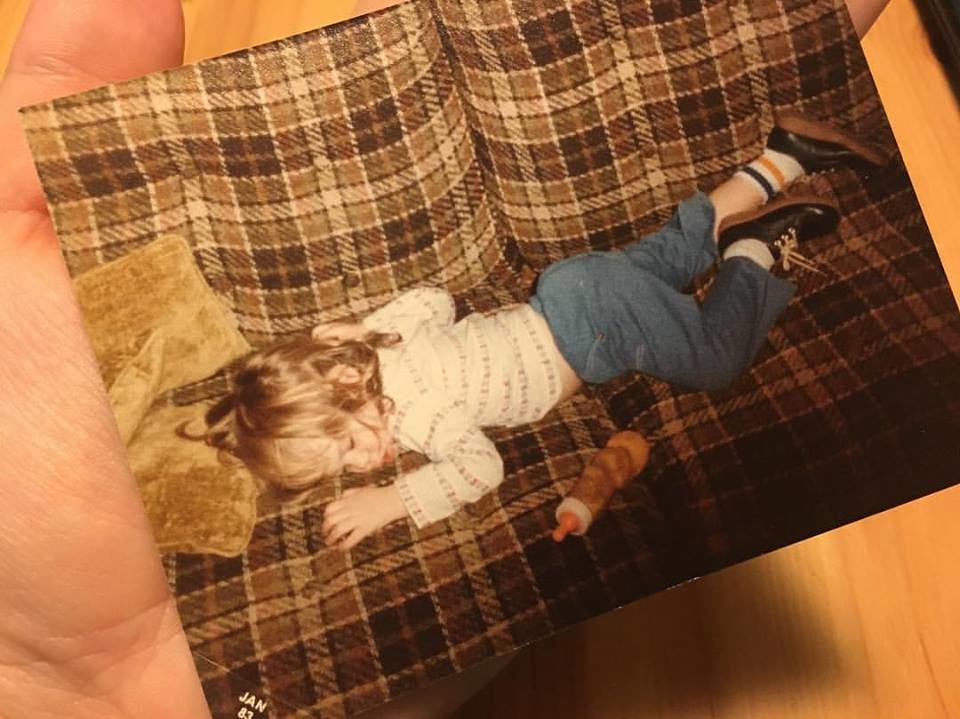 |
| I was going to share a bad-ass picture of my great grandfather posing with an Ottoman moustache and a gun, but instead you can look at how deeply I have always loved couches. |
In any case, that leads me straight back to last Wednesday. My lack of loyalty to the US, or the fact that White House security would never allow an occupation, is not what strikes me as I consider how much of my physical self I am willing to put on the line for the country I call home, as compared to the country that is no longer my home.
I think at first that Americans aren't very physical in their resistance. Then I consider that I may be wrong, and the truth is that Americans in my demographic (white, well-off on a global scale if not on every scale) are the ones who are not very physical. I consider Wisconsin's Capitol occupation in 2011, Black Lives Matter and Standing Rock (agree or disagree, it is a physical resistance). However, I can't shake the feeling that we Americans just don't throw ourselves into civic action very much, or at least not anymore.
You would think we would be more physically resistant, what with our guns and our bar fights and the general lack of safety of women on the street, but we're not. We didn't occupy Wall Street, we occupied a park near it. We have a few marches - I went to a tepid one against the World Bank when I was in college (wasn't that into it, wouldn't you know), and marched with a bunch of other idealistic but otherwise dishwater demonstrators against the 2nd Iraq War in New York. They were about as effective as those DPP or Citizen 1984-organized protests in the Ma era.
I have a great deal of respect for the exceptions, but they feel like exceptions: good, but not enough to stem the general impression in my lifetime that we like to write thinkpieces and generally grouse about the state of things, but we don't seem to show up physically all that often. Those that do have more to lose, the rest of us can go back to our little boxes on the hillside made of ticky-tacky. We join Facebook groups, act supportive, use it as a place to vent or post motivational memes or share our personal stories - not really useful themselves, either, I've come to think - and then watch those groups get monetized. We focus on no concrete action, no policy change, no taking down the patriarchy. We do not take to the streets, or at least not often and not angrily enough. We do not effectively occupy. We could, perhaps, learn a lot from how the Taiwanese do it.
I don't think the White House will ever be occupied, because I don't think Americans are necessarily occupiers at this moment in our history. I have to hope a robust civil movement will grow to counter the tragedy that is a Trump "Presidency", but I haven't really seen it yet.
In my time in Taiwan, though, and looking back through Taiwanese history, it feels as though there is more of a tradition of physical resistance. From fighting the incoming Japanese to 228 to the Kaohsiung Incident to Nylon Cheng, the White Lilies and up through the Sunflowers and now marriage equality, people have had specific things to fight for, and have gone out and done it. With their bodies, not just angry words. Perhaps it's because it was the only option in a brutal dictatorship, perhaps it is a part of the national character. I am, however, continually impressed by the willingness of Taiwanese to physically show up and sit their bodies in the street or in a building to fight for something. There seems to be a physicality about social movements that, at least in my lifetime, feels sorely lacking in much of the US.
I love this. I don't want to share stories in lieu of action, although I realize that I began this post by doing exactly that. There is only so much action I can take in Taiwan (I'm not a citizen, I can't organize, and I speak Chinese but not perfectly enough to be as involved as I'd like to be). At least, I want to be a part of a country where the citizens take action rather than, I dunno, post pictures of flowers with insipid feel-good self-improvement quotes or whatever, or turn everything into a PR stunt.
It's what gives me hope for Taiwan, though I am not quite sure why.
It also may be a part of why, against all logic, despite the fact that I am stronger with words than physical actions, I have so much respect for being willing to fight for what one believes in with more than just words, but with deeds and with one's own body.
What does that have to do with Taiwan being my home, other than the fact that I am physically here? It means - and this is where the icy water comes in - a good hard think about the possibility of the unthinkable happening, and about what that means for me.
In any case, today someone asks me if I am going home for Christmas.
"I am already home for Christmas," I reply.
Subscribe to:
Posts (Atom)