Thursday, February 16, 2017

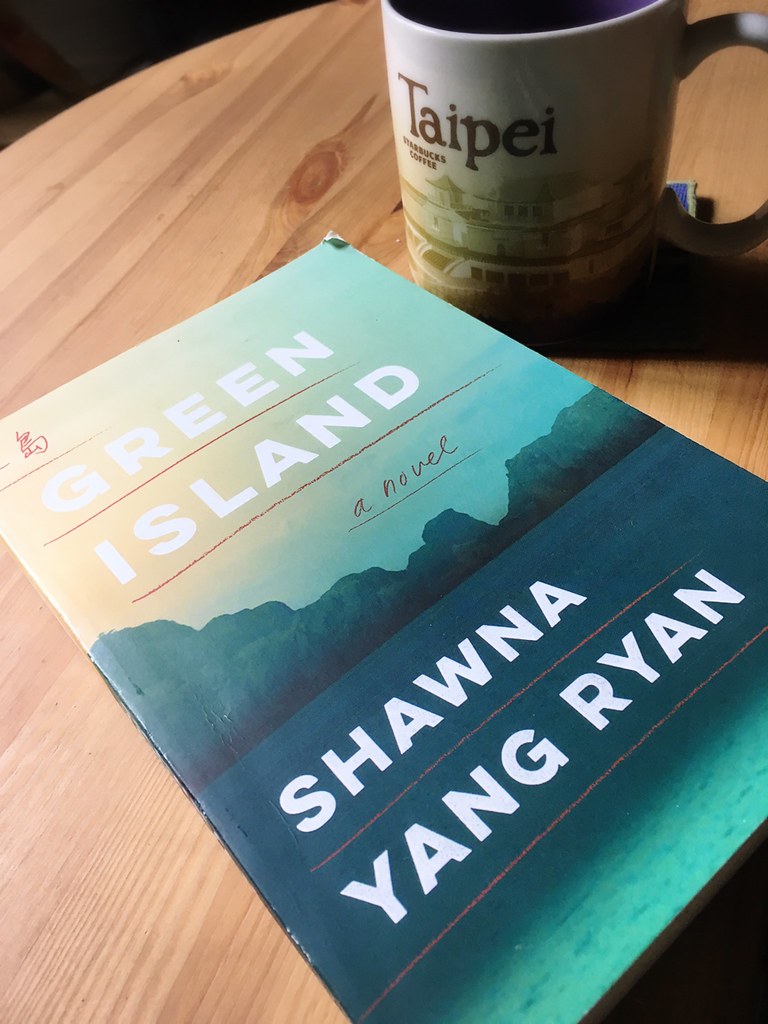
The country is broken, but the mountains and rivers remain: a review of Green Island

IMG_8947

 I don't do book reviews often, but as I have recently taken an interest in expanding - and doing a better job of reading - my Taiwan-related book collection, writing more about what I've been reading is pertinent. It's rare that what seems like the entire expat community in Taiwan starts talking about the same book at the same time, but I picked up Green Island quite some time ago because that is exactly what happened. I couldn't not read what everyone else was talking about.

I'm happy - no, grateful - that I did.

Historical fiction is often more fiction than it is historical: I would not recommend that anyone get a feel for, say, Tudor history by reading Philippa Gregory. Green Island is a bold exception - the history, to my eyes, is more or less accurate, and the ways that the various (fictional) characters engage with it are often enrapturing. It is not a true story, but it may as well be - and in fact, a few peripheral characters are clearly composites of real Taiwanese historical figures. With the exception of a few overly florid language choices that can be distracting, a reader might imagine any one of them as somebody's real friend or relative living through real historical events. It felt more like a good friend narrating true family history than a novel.

The unnamed narrator is born on 2-28 (February 28, 1947), a cultural and historical flashpoint burned into the collective memory of Taiwan. I appreciated (and hope I correctly sussed out) the subtle reference to Midnight's Children, where the protagonist is likewise born at exactly the moment that India gains independence. Her father, as a result of actions we all take for granted as basic human rights, finds himself imprisoned on Green Island, where many political prisoners were held through the White Terror era following 2-28. The reverberations of that - an action that the brutal, authoritarian government does not acknowledge let alone apologize for - affect the family deeply. You might say they never fully recovered. Again, this will be a feeling quite familiar to many Taiwanese. For expats, remember that any given local friend might well be affected by a similar family background.

You will learn from this, then, not just the historical events as dates and descriptions marching across the page of a textbook, but the feelings and memories they created and how they affect the national and cultural psyche of Taiwan.

On a personal note, I am no stranger to historical events coloring, like a dollop of red dropped into a bowl of white paint, the history, relationships and outlook of a family. My own family's story takes place a generation before the events of 2-28 and has nothing to do with Taiwan, nevertheless it does allow a particularly personal platform for empathy, not that I need one to feel it. My grandfather's parents escaped from the Armenian genocide in Turkey, my great-grandmother after untold trauma and my great-grandfather after spending some time as a freedom fighter. My grandfather grew up in pre-war Greece, coming to America with his family in his primary school years. I never personally experienced any of this, yet from the food we ate to the language of the hymns in my grandparents' church in Troy, New York (Armenian) to the language my older relatives spoke with each other to common topics of conversation as well as the basis for the anti-Muslim sentiment of that generation - and my generation's subsequent pushing back against that while still being empathetic to what my ancestors lived through - everything up to 2017 carries the tinge, lighter and lighter but still there, of what happened in 1915.

As I told a friend recently, perhaps this is why I care so much about Taiwanese history. It's not my history, but in terms of the broad strokes of the effects of events like the White Terror or the Armenian genocide, it's not that different.

Back to the book. As a long-term expat, reading the descriptions of life in Taiwan at that time felt photo-realistic. Anyone who has spent time here and engages with the cultural geography of Taiwan will practically hear the Taiwanese pop music - you know, the stuff taxi drivers like to play - running through their head as they read. The slightly cloudy jars of local candies and sweets? Yeah, they're still around. The house with the banyan tree that the family lived in? Many of those remain, and I could imagine exploring one that's open the public on my trips outside (or perhaps even within) Taipei. The bicycles, the beer, the books, the typhoon, the outdoor parties, locally called ban dou? The story may be set in mid-century Taiwan but every last one of these things calls forth a host of sense-memories in the early 21st.

If you have a strong grasp of Taiwanese history, you will cry. I did, and I'm not a crier. You may have to put it down at times - it can get raw and painful. As you read it, you might feel you are engaging not with a book but with the agonizing history of a nation that has, at every turn, been beaten down and treated unfairly.

Green Island has been criticized, mildly, for its florid descriptive language. I can't fault it too much for this: the Taiwanese landscape almost begs for it, and I appreciate the intricate descriptions of emotions. All too often the stereotype of people from Asian cultures is that they are staid, reserved, perhaps even emotionless. It might be easy for someone who isn't exposed to it much - even one who lives here but doesn't engage much locally - to assume that this comparative lack of outer expression, at least as seen through a Western lens, corresponds to a lack of inner emotion. In truth, I have heard people make preposterous claims like "Asians don't get angry!" (Wait, what? How is that even...what?) In places perhaps the language is overwrought, but it provides a strong counterpoint to this ridiculous stereotype by giving, and then lovingly describing, the full range of inner workings of some characters, and implying the emotional state of others.

I also appreciated that the book, while clearly written from a local Taiwanese perspective in terms of the characters whose lives it chronicles, is quite fair to the Nationalist refugees and soldiers who came to Taiwan in the 1940s and whose government was responsible for the tragedy visited on Taiwan during and after that time. There are marriages between "locals" and those who fled China, and, without giving away too much detail, there are betrayals from unexpected places. In the end, Green Island respects the humanity of every character, even ones you might not expect to be sympathetic.

That said, the book's perspective is laid bare towards the end, with a flashback to how the narrator's father and mother met. It references the connection of the Taiwanese people to the land, and how that has remained constant no matter how badly the country is broken: the people are the mountains and the rivers. Green Island prods you not to forget this.

Wednesday, February 15, 2017

Let's acknowledge what is already true

So, last week I wrote a letter to the Wall Street Journal replying to an Op-Ed and follow-up letter on US foreign policy on Taiwan. I had to cut it down from the original 1000-or-so words to 300 or so, and was led to believe it would likely be published this week. It hasn't appeared yet, and may never: between then and now the Michael Flynn scandal exploded, and perhaps it got canned in favor of giving that issue more coverage.

I did not include some of my thoughts, such as the fact that Metzger appears to be a typical Dr. Some White Guy Who Is An Expert On China, pontificating on Taiwan despite not knowing enough about it - or rather, having what he knows about it filtered through the lens of being a "China expert", not a "Taiwan expert" - to be commenting credibly. In this sense I do not feel bad about telling a Stanford professor that he is dead wrong.

Nor did I include my thoughts on misconceptions in the media on Taiwan, I plan to do a mythbusting post soon so I can just direct people to that rather than repeating the same tired points.

However, I do want people to hear what I have to say, so I've copied the original longer letter here. I'll let you know if the shorter, edited version ever makes it into the paper. In the meantime, enjoy.

* * *

I read with great interest the recent opinions of John Bolton and Thomas Metzger  (both behind a paywall) on the best direction for the US’s future Taiwan policy. It is quite clear that there are some basic truths about Taiwan that Mr. Metzger is ignoring, which ought to be clarified.

First of all, the current framework between Beijing and Taipei is far from “peaceful”. Beijing has a large number of missiles aimed at Taiwan: some estimates put it at over 1,000. Beijing has been quite clear that it is gearing up for an eventual invasion of Taiwan, and has made it clear that the only possible peaceful solution is capitulation. This is not peace: it is a threat.

A situation that fragile, where one side has everything to lose and the other comparatively little, cannot be called a successful framework.

This is especially true given that most Taiwanese citizens do not identify primarily as Chinese. Unification of any kind is not acceptable to the majority of citizens, and likely never will be. What their government claims on paper – a claim made by the former dictatorship, nothing the Taiwanese people ever agreed to democratically – is immaterial. It does not affect their views.

It is true that the Republic of China, which is the current government of Taiwan, claims to be the sole government of all of China. Again, this claim does not reflect the views of the Taiwanese people. The claim cannot be formally retracted, nor the name of the country changed: from Beijing’s perspective, any of these actions would constitute a declaration of formal independence, which would precipitate an immediate war. To insist that as long as the Republic of China exists that Taiwan is a part of China, and yet to scold Taiwan for provoking China in any way, admonishing them instead to pursue peaceful relations, is to essentially trap Taiwan in a Catch-22.  To do so at best makes one a 'useful idiot' of China.

This change has been brewing since full democratization in the 1990s, and has only grown since the upheavals in Taiwanese civil society in 2014. Metzger fails again, then, to understand the reception that former President Ma’s meeting with Chinese President Xi received in Taiwan: when it did not elicit eyerolls, it was ignored more or less completely in civil society despite a great deal of media coverage. The Ma-Xi meeting was a footnote to a failed presidency, the last gasp of an administration whose views were no longer in sync with the electorate: few in Taiwan would say that Ma’s China strategy was successful, and few would agree that it is the best framework for the future.

In short, the Ma-Xi meeting was not “momentous” as Metzger claims; it was a desperate grasp for historical relevance by a leader on his way out. By all measures, it failed. One need only look at the outcome of the 2016 elections in Taiwan, as well as the continued relevance of the 2014 student movements there, to see it.

A final, crucial misunderstanding taken as fact by Mr. Metzger is his characterizing Taiwan-China relations as “respecting both the autonomy of the Taipei regime and its existence as one part of China.” First of all, the connotation of “regime” is that of an authoritarian government. That describes China, not Taiwan, which is a vibrant and thriving democracy. Secondly, few in Taiwan agree that Taiwan is “one part of China” is deeply disrespectful to the Taiwanese people. It is not possible to respect Taiwan if you, in the same breath, label it as a part of another country rather than a sovereign state in its own right.

International law supports the possibility of Taiwanese independence: under different interpretations of international law, Taiwan is either an independent nation, or its status is undetermined. There is no accurate interpretation that determines Taiwan to be a Chinese territory.

Even US policy on Taiwan follows this convention – the US does not, and has never, agreed that Taiwan is a part of China. Bolton is entirely correct that it merely acknowledges Beijing’s claim to Taiwan, nothing more. This, at least, is clear in a confusing array of papers, positions, assurances and communiqués that were created to be deliberately vague. 

The US’s Taiwan policy, at its heart, calls for a peaceful resolution of the issue, and allows for any given resolution agreed on by both sides. This leaves room not only for the US to communicate with Taiwanese leaders, but also for American support of eventual Taiwanese independence (though not as the government of China) or the normalization of relations with Taiwan. It does not in any way shackle the US to China’s forceful demands.

There does not need, then, to be a change in US policy on Taiwan. All we need to do is acknowledge what is already true. 

Wednesday, February 8, 2017

Taiwan's Catch-22

Some Shower Thoughts - yes, this is what I think about in the shower. I've been traveling in Vietnam and, having returned to Taiwan on a red-eye after an overnight bus ride, am light on sleep. Hopefully this doesn't mean the post below is incoherent or overly repetitive. I'm sure someone has written about this before, but hey, I like to share Shower Thoughts so here goes.

Anyway...

I hear a lot - in media, in real life, in comments - that the US need not change its "One China Policy" because "Taiwan" doesn't exist as a national entity and the "Republic of China" still technically considers itself the rightful and only government of China. That, barring a formal change in the constitution of the ROC (and one would assume a name change as well) making this claim, there is no need to re-examine US policy because people "on both sides of the Strait" still officially believe that there is "One China".

Putting aside the already-debunked notion of the US's "One China Policy" (there isn't one, not really - acknowledging someone else'sposition does not constitute a position of one's own, and everything else isdeliberately vague), I have a few problems with this idea that Taiwan would have to formally make this change before the US would be obligated to take any policy changes into consideration, and because they have not done so, clearly they (the government, but, it is implies, also the Taiwanese people), they don't want to.

No no no no no this is wrong no.

This is one of those things where a perspective that is reasonable on its face actually hides much more sinister motives, even if unintentionally so, though I often doubt that they are unintentional.
What this particular argument is doing, by appearing to simply defend official norms, is playing straight into Chinese propaganda, if not China’s outright strategy to marginalize Taiwan. 

Those who say this must know perfectly well that Taiwan can’t change its official stance, no matter how much it may want to (and polls consistently show that thepeople want to). Doing so would, in Chinese eyes, constitute a move towards formal independence (which is what the Taiwanese likely actually want), which China has consistently said would cause them to immediately declare war. While Taiwanese do favor independence and do consider themselves, by and large, Taiwanese rather than Chinese, pretty much nobody in Taiwan wants to go to war because they quite rightly realize that war, well, sucks.

Taiwan, therefore, regardless of what the people want, is locked into making this claim that they are officially the government of China – a claim they pretty much try to ignore because its existence is just as inconvenient and unwanted as it is necessary – because the other option is to watch the country they have built get demolished by the PLA.

Consider the double standard: you insist Taiwan must change their claim if they don’t want to be considered Chinese, and to continue to have a government that considers itself “China” can only mean that the people are, or think of themselves as, Chinese. Yet you also insist that they not do so: to “provoke” China in such a way would be problematic, would cause war, would make Taiwan a “troublemaker”. Taiwan doesn’t want to make trouble, does it? No, little Taiwan, just sit tight, don’t make Big China angry. Don’t start a war. You don’t want to be a troublemaker, do you?

Oh, but if you don’t make trouble and instead choose not to make any official changes, you must therefore think of yourselves as Chinese, because you didn’t make any official changes. If you want us to think of you as Taiwanese...

...oh but don’t do that because you wouldn’t want to be provocateurs, would you?

How is this not a painfully, nakedly obvious Catch-22 for Taiwan?

Consider as well that the only reason the ROC – and therefore its vision of China - exists in Taiwan is because the Nationalists decided to claim Taiwan, then flee to it, and then proceed to set up a government that nobody in Taiwan said they wanted. They weren’t invited, they invaded. That constitution claiming to be the sole government of China, even the name “Republic of China” or even calling themselves Chinese, are not things that the people of Taiwan ever decided, together, through self-determination, that they wanted to claim or do. They were ideas forced on Taiwan by a government that was never invited to govern and has since democratized, under a name that can't be gotten rid of so easily.

Consider, then, what you are really saying when you say “the last time I checked ‘Taiwan’ was officially the ‘Republic of China’ and therefore considers itself a part of China, too”: you are saying that any sort of indication of what the people of Taiwan want doesn’t matter, all that matters is a position decided by a regime that came from China uninvited and decided unilaterally for the people already living here what their government stood for, that now cannot be changed because the country they fled has threatened war if they do so.

What you are saying is that you do not believe in self-determination. What you are saying is that you think modern-day colonialism is okay, not only that, but that a provision in a document that can’t be removed under threat of war is a perfectly fine barometer by which to determine the will of a people. That they literally must risk getting pummeled by China in order to change a few words on a piece of paper before you will take them seriously. You know it is impossible; you know that what was claimed by the ROC back when the ROC was a dictatorship does not reflect the will of the Taiwanese people, but you demand the impossible anyway. Why?

Let’s say a dictator claimed to speak for you, and then years after dismantling that dictatorship you could not officially, on a government level, disavow that dictator’s words without watching your city get blown up, but on a personal level were quite clear that you never bought into the original rhetoric. How would you feel if everyone else in the world stuck their fingers in their ears and shouted “la la la we can’t hear you, you must think that because your former dictator said so and you don’t want to die, la la la”?

How would you feel if your country underwent a massive upheaval in civil society, bringing it from a nation unwilling to speak truth to power about its identity to one willing to own its nationhood unapologetically, and the rest of the world collectively ignored it, pretending you all still felt the way you seemed to before it all happened? Because that's basically how Taiwan has been treated since the Sunflower Movement.

Does that make any sense at all? And if it does, is it really so easy to tune out the cognitive dissonance of claiming to care about freedom and democracy around the world? Can you really claim to be anti-war if you think that a nation must risk war – a war it will lose - to express its true desires? Can you really claim to be pro-democracy if you think the ideas of a former dictator speak for the will of a democratic people? Is that really the price an already-sovereign nation must pay to be taken seriously when there are other valid ways of knowing how the people of that nation feel?

Consider this as well: this is exactly what China wants you to think. They want you to set an impossible standard for taking Taiwan seriously: either they are “troublemakers” provoking a “war” or they “clearly still think of themselves as Chinese because their government officially says so”. There is no path forward for Taiwan to claim its sovereignty and identity on an official level. You’ve blocked out in your mind the notion that a people might have a different will and vision for their future than what they are forced to claim by a hostile power. Or perhaps you are claiming that the position they are forced to hold, literally at missile-point, is a sincere one when you know full fucking well it’s not.

And you’ve done this because this has been China’s propaganda campaign all along. They want you to mentally block Taiwan off into two alternatives: either they are a troublemaker and warmonger disturbing peace in Asia, or they think they are Chinese. The more impossible you make Taiwan’s position by refusing to consider data that shows the true will of the Taiwanese people, the easier you make China’s goal of annexing Taiwan and then pretending it’s not a hostile takeover of a sovereign state.

In short, i
f you insist that Taiwan has to disavow the positions of the ROC (which were forced on it) in order to be taken seriously as a sovereign nation with a national identity, but then say that any provocation of China makes Taiwan a "troublemaker", then you've set Taiwan up for a Catch-22. Either you know that and you're a jerk, or you don't and you're a useful idiot.