Tuesday, October 23, 2018

Yes, Ko Wen-je said a sexist thing again

Untitled
The ladies of Taipei according to Ko Wen-je


So, it's time we all just admitted frankly that Ko Wen-je is a sexist jackass.

This time, it's over comments that "Japanese women make themselves up more beautifully" than Taiwanese women, with Taiwanese women not wearing makeup "go directly outside and terrify people", and that being aesthetically pleasing not only shows dedication but is a responsibility (presumably, of women).

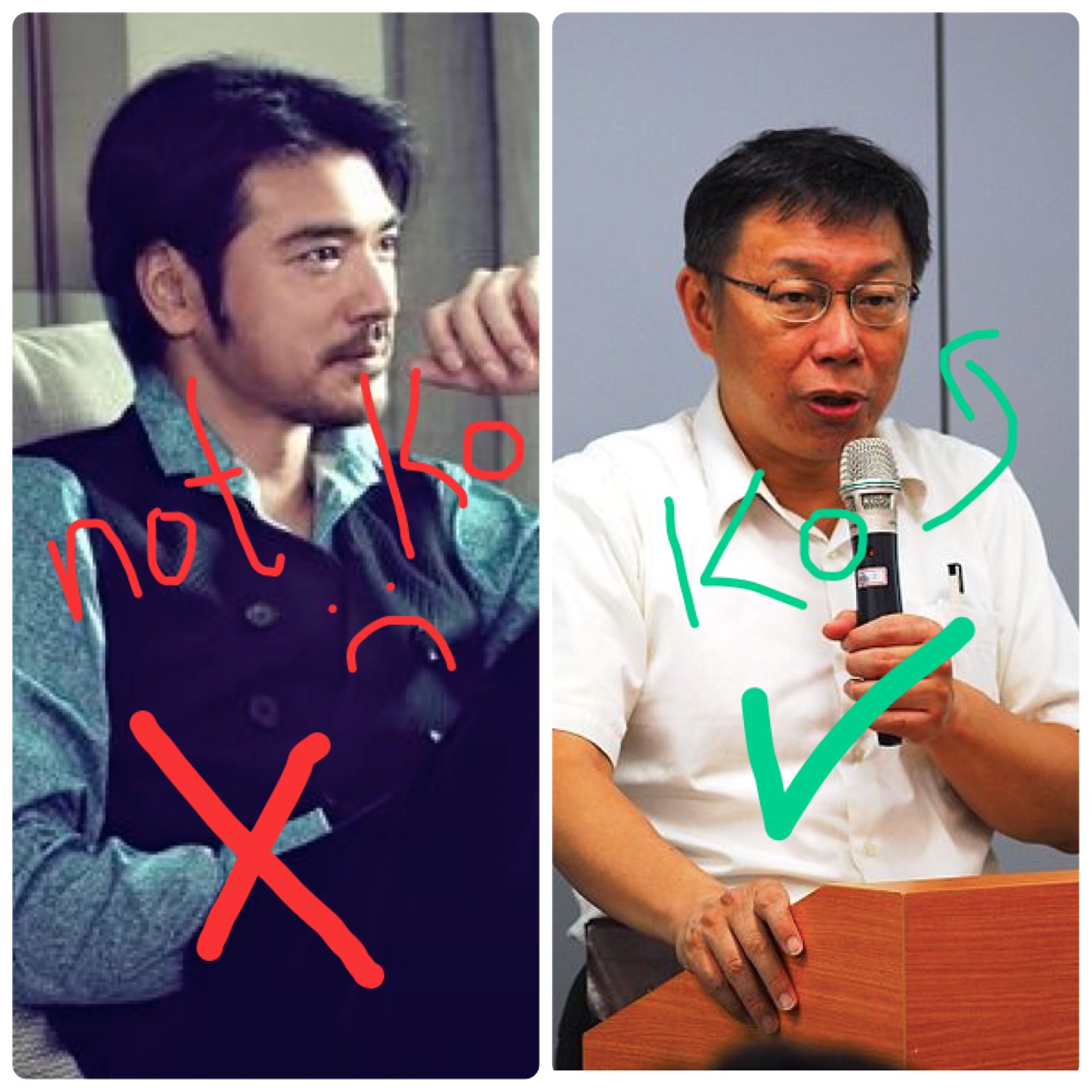
I mean, I totally understand. What with Ko Wen-je being such a well-manicured hottie, he sure takes great care of his 'aesthetics' and women can't help swooning over him, I mean, just look at that carefully-maintained visage that makes ladies' hearts go a-flutte - -

Untitled
Oh yeah THAT guy really has standing to talk about how women need to make themselves prettier. 


Oh, wait, that's not him. Sorry. The other guy is Ko. Hmm. Gotcha.

Do you like gardening, Mayor Ko? Because that is one massive glass house ya got there.

Obviously, it bothers me that the mayor of the city I live in, who is likely to be re-elected, is a sexist jerk.

It bothers me that he remains popular despite being a sexist jerk (if he'd committed actual sexual harassment he'd probably be a goner politically, but apparently stupid, sexist comments aren't enough), and that the media seem to cover for him.

I mean, there's no excuse for his recent comments, but please enjoy some smokescreens for sexist comments in the past:

Ko "clarifies" that both unmarried women and men over 30 are a "national security risk" (note verb choice)

"Gaffe-prone" Ko says he's "still learning to be a politician", which sounds like apologia for comments that are shitty even when non-politicians make them - note the way the prominence of Ko's "explanation" and the use of "gaffe" downplay the nature of what he actually said. And not just one thing - this is over two separate comments, both of which were horrible!

It also implies, from Ko's perspective, that everyday men say these things and that's OK (men I know have assured me they and other men typically don't, even in all-male company), but politicians shouldn't. No, dude. You shouldn't make comments that a woman is "so pretty" that she's not fit to be mayor but that she should instead "be a receptionist or model for tourism promotion materials", or "I didn't become a OB-GYN because I'd have to make a living between women's legs" even if you are not a politician. So there's nothing to "learn" to not say about women in order to be mayor. You're just an asshole.

You really think after these sorts of comments that the women of Taipei think you can do a good job as their elected representative? What woman would want to be governed by you?


So, this time around, let's not do that, okay? Let's call it what it is. Ko Wen-je definitely has his distinct personality and so he makes off-color remarks. Fine. I do that too! I live for off-color things (as long as they're not mean to the wrong people). But can we just admit that off-color sexist remarks belie sexist beliefs no matter your personality? Thanks.

But what bothers me more is that he's the best choice we've got in the upcoming election.

I don't care about one stupid comment, not really. I care that he keeps making them and yet there's no other solid choice to vote for.


I'm not writing this stuff because I want to trash Mayor Ko for no reason, and I'm not writing it because I want him to lose the upcoming election (what I say here won't matter in that regard anyway). I'm aware that the other two choices are worse: Ting Shou-jung is a China-loving, anti-independence sack of empty slogans and Pasuya Yao...I mean, lol.

If anything, that's the problem: Ko is a jackass - a smart, hardworking jackass, but a jackass nonetheless - yet we don't have a better choice. We finally get the first non-KMT mayor since Chen Shui-bian and he's...a jackass. It burns.

Monday, October 22, 2018

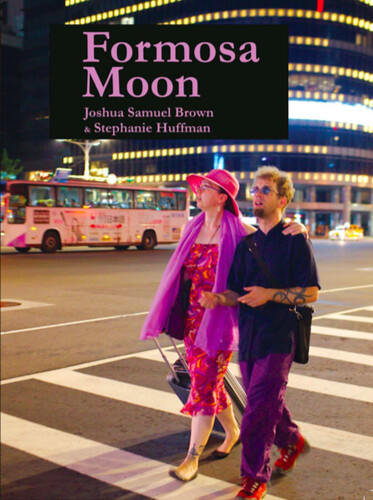
You don't adopt Taiwan, Taiwan adopts you: a book review of Formosa Moon

Screen Shot 2018-10-22 at 1.42.16 AM


I used to believe that I’d adopted Taiwan, but the truth is, Taiwan adopted me, taking me in when I was in my early twenties and giving me a series of increasingly interesting reasons to stick around....Six months ago, I brought the love of my life to Taiwan. The idea was ostensibly to convince her to love Taiwan much in the way that I did. In this I believe I’ve met with some success.

- Joshua Samuel Brown, Formosa Moon 
(by Joshua Samuel Brown and Stephanie Huffman, ThingsAsian Press, 2018 - buy it here - and if you're in Taipei, there's a launch party this weekend)


I've heard people say that the best travel writing to read is about places you've never been: places foreign and "exotic" (how I hate that word) that you know next to nothing about, but come to understand in some small way through a guided journey by the author. If I'd ever quite bought into that, Formosa Moon cured me of it, reminding me that there is an earthier satisfaction in reading other peoples' experiences in places you know well.

Although none of the places mentioned in Formosa Moon were new to me (well, some of the hotels and restaurants mentioned were, such as the Dive Cube hotel), there's a certain beauty in reading about a place you're so familiar with that you can smell the air, see the details of the parks and unkempt sidewalks, picture the mountains, know intimately what kind of trees are growing all around and what it's like to live your life in a series of tiled buildings.

A section of the book takes place at Sun Moon Lake. Been there, didn't love it. Another one describes National Chengchi University. My sister studied there for a year. The Dome of Light? I was there two weeks ago. Tainan? I go every time I get the chance. Jiaoxi? Several visits, soaked in the public hot spring too. Huwei? I'm one of the few foreigners who went to Yunlin for fun over a Dragon Boat weekend just to see what it was like.

But there's something deeper about Formosa Moon that I just get. I think pretty much everyone who's made a life here - that is to say, many if not most of my closest friends at this point - understand as well. Taiwan is like a cat: you don't adopt a cat. A cat adopts you.

You might come here thinking you're going to just "go abroad for a few years" and do that privileged First World thing by teaching English to fund your time in Asia (you're probably not an actual English teacher). You might stay for 1, 2, 3 years: most of the cram school crowd seems to turn over in roughly those increments. Some of you won't get it: the traffic - there are traffic laws, I swear - the pollution, the ugly buildings (you will almost certainly live in one of these), the humidity, the long or weird working hours and greatly reduced career options, the crowds will all collude to gently push you out. Or maybe none of them will, and you'll enjoy your time here just fine, but when the clock is up it's up, and you were always going to return to the place you know is home anyway. Taiwan didn't adopt you. That's OK.

Some of you will fall in love here, or find your groove, or take an interest in Taiwan's unique history, or build a community. Or it'll be the damp hills, the palm trees, the local aunties, the 7-11s, the traditional markets. Or you'll watch a major social movement unfold up close and realize Taiwan is a place and a cause worth fighting for. Something about life here will speak to something inside you, and you'll stay. You probably didn't consciously choose to. You were adopted.

In this way, I found it appropriate that Formosa Moon heavily featured cats, though they popped up in the narrative for no particular reason, and certainly not in any planned thematic way. It just did. From the cats of Houtong (another place I know well, and have started hikes from) to the painted cats (among other fantastic creatures) of Rainbow Grandpa to Joshua's friend's cats which provided a cozy sense of home to Stephanie - the other writer of the book - I found the unexpected feline leitmotif to fit. Taiwan not only adopts you like a cat (or it doesn't), but it can be as cool, beguiling or mercurial as a cat, or as winsome and homey as one too. You know your cat loves you, but you're never quite sure how much.

Or, to put it another way:


Taiwan is kind, to its native born, adopted children, and short-term guests alike. But Taiwan doesn’t change its tempo for you. Instead, you must change your tempo to adapt to Taiwan. And this will make all the difference.


Of course, you get to wax lyrical about all of this because you chose to come for reasons other than making a basic living. Supporting yourself may have had something to do with it, but you could have done that where you'd come from. You're aware that exponentially larger numbers of foreign residents in Taiwan had no such privilege. (You are aware of that, yes?)

All this is not to say that only those who know Taiwan should read Formosa Moon. I'll certainly recommend - if not outright purchase as gifts - copies of the book for loved ones back home who perhaps don't get it, most of whom because they've never visited. It describes the country well, and even the pictures (which are very "homey", not glossy professional shots, which I see as a plus) show in accurate detail what life in Taiwan is like.

As the book itself points out, cities like Kyoto (or Shanghai or Singapore or these days, Seoul) beckon to the Western traveler who is planning their first trip to Asia. Most travelers don't think of "Asia" and immediately think "Taipei". So they don't come, and therefore, they don't know. Formosa Moon, I hope, might tempt some of them into finally visiting to see for themselves why I've chosen to stay for most of my adult life.

And not only that, I'll recommend it for its unique perspective. Every other piece of Taiwan-focused travel writing on my bookshelf is by a white guy. I haven't cracked them all yet, but will. I'm sure they'll be fantastic; people whose opinions I trust have told me so. But, so much travel writing is done by white guys hitting the trail alone, and other narrative voices enrich the genre. I don't think I've seen a travelogue written by two partners in a relationship before, each with views that play off or add depth to the other.

As someone who also moved to Taiwan and then six months later convinced the love of my life to move here too, that appeals to me - as a woman and a person in a committed relationship. Ours took a slightly different route: he didn't know he was the love of my life when he moved here (I kind of did, but didn't tell him so right off), and our relationship evolved here, not in the US. I didn't "love Taiwan" when he moved here: my first six months here weren't that great, to be honest. I am sure I have had success, however, in convincing him to love this country as much as I do. We show it in different ways, but I know.

More poignantly, Formosa Moon captures what it's like to be both in a relationship with a person, and with a country. We never had to face the challenge of Brendan liking Taiwan; he did immediately, on his first visit here. I wasn't sure then how much I liked Taiwan: I didn't decide to make the commitment until three years later. That was when I'd been planning to decide if I'd stay or go; it also happened to be the year we got married. I suppose our somewhat weirdly polyamorous love grew together.

Of course there's a bittersweetness to every love story. You know how they say that in a relationship, someone always loves more, and the other less? And the one who loves less has all the power?

Although I know I can never truly be "a local" (forget not looking the part: it's just not my native culture), I want to stay and advocate for Taiwan, and gain legal rights - not just privileges accorded me out of courtesy as a permanent resident, which can be revoked. I don't expect a perfect life here. It would be nice, however, if in my relationship with Taiwan I didn't always feel like I was the one who loved more. I like to think that by opening myself up to Taiwan, that Taiwan has opened to me a little. I'll never know how much, though.

I'll end, then, on a particular salient quote from co-Stephanie Huffman:


Taiwan and I were certainly friends but had we really progressed to a love state? I didn’t know even know how Taiwan felt about me and I certainly wanted some indication of her feelings before I made any commitments.


Yup. Except I did that thing that relationship advice columnists say never to do: I made the commitment without knowing quite how she felt about me.

Still here though. You see, I was adopted. 


Saturday, October 20, 2018

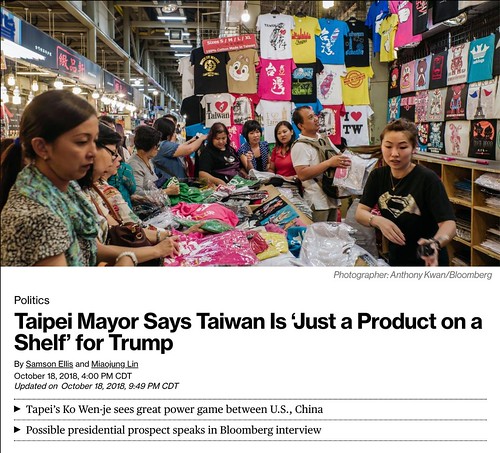
Why is everyone so upset that Ko said Taiwan is a "product on a shelf"?

44378478_986461788204459_3214075326409736192_o
The screenshot that launched a million words


Because I'm gonna say it: he's right. 


Taiwan must focus on making itself more valuable to President Donald Trump and accept its status as a pawn in the great power game between the U.S. and China, Taipei Mayor Ko Wen-je said.


Nobody likes to hear that they "must accept their status as a pawn" - but that doesn't make it untrue. We absolutely should not overestimate the US's willingness to defend Taiwan.

And he's not only right about Donald Trump, who is absolutely not a reliable ally to anyone and sees everything as an opportunity that can bolster his own self-image or worth or a threat to be eradicated (or at least shouted at incoherently), he's also right about the US in general. Not only that, it's been true for awhile.

This doesn't mean Taiwan shouldn't deal with the US, or should refuse its help, but that's not what Ko said: he said we needed a strategy to deal with this reality. That's just a correct statement.

But it seemed as though nobody wanted to hear it. What struck me was the swiftness and absolute horror of the reaction from Taiwanese activists, commentators, friends and other people involved in the struggle for a better Taiwan. The general feeling seemed to be, essentially "how could he say such a thing?"

I was a bit curious about that so I asked around, paid attention to various comment threads (like this one) on the topic, and generally just tried to get a sense of what was so terrible about essentially making an accurate, if damning, statement about the US's commitment to Taiwan.

The main point of anger doesn't seem to be the idea that Taiwan is a "pawn", but that the Ko has not equally addressed the fact that if Taiwan is a poker chip to the US, then it's also one to China. Essentially, he's speaking out about how the US sees Taiwan, but is seen by the public as worryingly - and oddly - growing closer to China.

There's a sense among many Taiwanese that Ko has questionable motives, from using China's language on two sides of the strait being "one family" to gaining Chinese state television endorsements to rumors that China is encouraging Taishang (Taiwanese businesspeople in China) to return to vote for Ko and is supporting him for a 2020 presidential run on the assumption that the KMT can't win, with Ko himself not doing much to dispel these notions. I've even heard rumors about some deeply weird cross-party alliances that...well, I won't even go there.


44426256_911279235743800_1094803265582792704_n
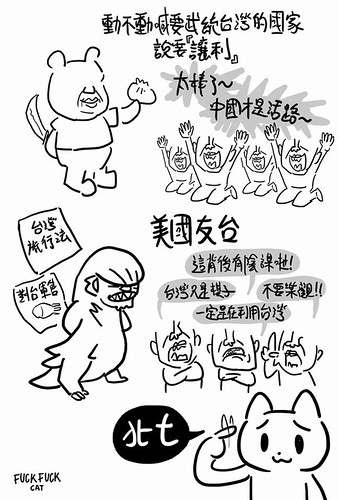
From 幹幹貓: probably one of the most common things I read to improve my colloquial Chinese. It's all in Mandarin but you should check it out!

There's also the general sentiment - captured in the Fuck Fuck Cat cartoon above - that so many Taiwanese voters and politicians are willing to bend over for China at a few sweet words promising economic incentives, ignoring China's stated and obvious intentions. These (often same) people will blast the US-Taiwan relationship as something they can't trust, despite all sorts of actually good things the US has done, from the Taiwan Travel Act to arms sales, without anything close to the ill intent of China.

So it makes sense from their perspective to worry that he'd be so dismissive of Taiwan as a commodity of the US, but silent on how China views Taiwan.

I get that too - here he basically says there is no such thing as "cross-strait relations": one could charitably parse that as "China is a foreign country like any other", but I can see how someone might hear it as "cross-strait relations don't exist because we're all the same" given some of his language choices in the past.

He goes on, however, to basically speak truth to power: saying that Trump has repeated "America First!" ad nauseam, and it's foolish to not believe him. When one reporter said "but some are insisting that you really shouldn't say 'Taiwan is just a product'", he replied, basically, "I dunno, what else am I supposed to say?"

Which...yeah.

I'm sure there are people under Trump who care about Taiwan as more than a 'product', and they've had enough say in the US's recent Taiwan policy that we've seen some real benefits. But an entire book could be written on how past administrations have seen Taiwan as a poker chip - from Bush speaking out against Taiwan independence in 2003 to Obama "selling so few arms to Taiwan that he came close to violating the Taiwan Relations Act", as a friend once put it.

The Bloomberg piece that created this poopfest goes on to say:


The outspoken former surgeon and potential presidential contender told Bloomberg News that Taiwan shouldn’t overestimate the U.S.’s willingness to defend the island from an attack by its much bigger neighbor. Ko, 59, said Taiwan needed to boost its worth to America by strengthening shared values, such as democracy and economic transparency (emphasis mine).


Again, yeah. What reasonable person would argue with that?

I could argue that playing up values like 'shared democracy' wouldn't matter - the US has a history of ignoring human rights abuses, or responding flaccidly to them, when economic benefits might be at stake (including the US's response to Tiananmen Square after 1989). That doesn't mean we shouldn't make this a selling point for Taiwan, however.


But, this is apparently not good enough: there are all sorts of rumors about his having a role in organ harvesting (getting discounts on organs from China? Something like that. I'm not too clear), on the nature of his previous visits to China and other things I won't bother with.

I'm not saying I believe all of this - I'm just pointing out that this is what is being said.

Some of the above are clearly election season character-smearing trash or at best should be taken with a Tainan Salt Museum mountain of salt, yet a lot of the comments I've been seeing slamming Ko for calling Taiwan a "product on the shelf" for the US reference the above rumors as though they are fact, and therefore prove that Ko wants to move away from a stronger relationship with the US and towards a friendlier one with China. Of course, they prove no such thing.

I don't know. I see their point vis-a-vis China - I too have been disappointed with Ko's rhetoric in this area (though much more worried about his only serious opponent's even stronger pro-China talking points). I find it odd that he'd be so quick to abandon the base that voted him in, of not-quite-DPP pro-Taiwan voters and Sunflower-energized youth to start talking like a weird old unificationist, and yet, I remain agnostic on the notion that he actually is a unificationist. I also remain agnostic on the idea that he has some deep-level "four-dimensional chess" strategy going on to deal with China: the evidence doesn't support that, either.

And I've been deeply disappointed with some in the Taiwanese electorate who are willing to believe any and all claptrap from China, who really is our enemy, and then are so quick to turn around and criticize the US.

Anyway, I get it. We big-noses are talking about how Ko is "telling it like it is" because we're just thinking about his comments vis-a-vis the US, without looking at how they stack up to his comments about China. Removed from that context, we're right. Put back in context, however, I see why this angers a certain subset of Taiwanese.

Finally, there's a sentiment among some as well that Ko supporters are becoming overly rabid themselves - acting like extremists or fundamentalists, balking at the slightest criticism (I've seen this in action, by the way - it is, in some cases, a thing). Among Ko supporters, there's a sentiment that everyone knows the guy speaks bluntly and undiplomatically, and we all say we want politicians who say what they mean, so are you really going to crucify him every time he does exactly that?

And yet, I can't repeat it enough: when you strip all that away and look at US-Taiwan relations specifically, and ignore the rumors dogging Ko in other areas, you have to admit: he's absolutely right. Trump keeps repeating "America First" - and when people tell you who they are, believe them.