Monday, May 20, 2019

Despite some unfortunate headlines, media coverage of Taiwan recognizing same-sex marriage is exactly what we needed

Untitled


Pro-equality activists have been talking about the tangential benefits of same-sex marriage (or better yet, marriage equality) in Taiwan for years, most notably that it would be a massive boost to Taiwan's international visibility. Just imagine the international media coverage, all focused on Taiwan, especially if we're the first in Asia, we've been saying since...forever.

Last Friday it happened. We laughed, we (happy) cried, it was the feel-good legislation of the year.  And just like we said, the rainbow explosion wasn't limited to Taiwan. Every major media outlet around the world - not just the ones in Western nations - carried the news.

Let's put that into perspective. After 2014, when I mentioned "the Sunflowers" to my friends in the US, I was met with blank stares. I may as well have been talking about actual sunflowers that you can grow in a garden. This time, I don't think I have a friend or relative in the world who hasn't heard the news. Taiwan did something huge, and it mattered to the news cycle that it was the first country in Asia to strike a blow for equality.

Wait, what was that I just said? First country?

Reading most English-language media, unfortunately, that word has been avoided with the most, um, ductile of language choices (please enjoy some links to examples). First place in Asia. The island's parliament. Taiwan's parliament...in historic first for Asia. First in Asia.

 First what in Asia? It seems nobody is willing to clarify. Or if they are, it's a 'state' (how is that different from a country?) or a 'self-ruled island'.

Of course, a few incompetent dipclowns (like the World Economic Forum) kind of soured it by calling this country "Taiwan, China", The Guardian called Taiwan a country on Instagram then issued a correction that it was a 'state', and now seems to have taken the post down (I can't find it to link it), and of course the Chinese media gonna Chinese media and whatever.

I propose, however, that the good reporting on this issue (and reporting that is good for Taiwan) has far outstripped the few geographically-challenged dumbos.

First, plenty of media did call Taiwan a country. USA Today called Taiwan a "country" via the Associated Press. The Chicago Tribune used it in their headline too, as did QuartzThe New York Times didn't use that word in their title, but they managed to find a quote to help them slip it in, and CNN did too. Bloomberg managed to stick it into three separate quotes the day before the vote (good job!), and a Bloomberg-affiliated video on Youtube uses the word "country" and so did DW. ANI (from South Asia) called Taiwan a "nation", Bustle called it a "country". Here is The Economist using it in their first paragraph and The Washington Post using "nation" towards the top of the article. There are surely more - there are only so many articles on the same topic that I can read.
Untitled

That's a lot of major media calling Taiwan a 'country' or a 'nation' and a lot of readers who will now understand that Taiwan is indeed a country. Nothing at all to sniff at.

Look beyond the English-language media, and it gets even better. On Twitter, Pierre Baubry noted that most French media called Taiwan a country:


...and that lines up with my admittedly shallow research (the sub-headline in Le Monde called Taiwan a 'country'). It's the same in Spanish. No really. There seem to be very few outliers, and even this one references the word "country" within the first paragraph.

But you know what? That's not even the best part.

The best part is that almost every single one of these stories, whether they called Taiwan a 'country', 'nation', 'place', 'state', 'island' or nothing at all ('first in Asia!'), focused on Taiwan itself. 

Not its relationship to China. Not what China thinks about Taiwan. Not China's reaction. Taiwan. The deliberations of Taiwan's legislature. What Taiwanese voters and demonstrators think. What President Tsai did. Taiwan's domestic political situation. China was a non-entity, as it should be, seeing as it's a totally different country. I mean, our buddy Ralph "I hate Taiwan but still write about it" Jennings framed his piece in relation to China but...well. Who cares - at least this time - if one guy buried the lede?

What I mean is, for once, the international media mostly reported on Taiwan the way they should have been all along.

When China was mentioned, it was either in passing without any of that 1949 claptrap, or it was to compare Taiwan favorably to China. Yay!

From the Washington Post:


In neighboring China — which asserts sovereignty over Taiwan — popular LGBT microblogs were censored online in the wake of Taiwan’s 2017 high-court ruling. The social media platform Weibo was criticized last month for restricting LGBT hashtags. 
Taiwan has shown that “traditional culture is not against LGBT culture,” said Jennifer Lu, coordinator of the rights group Marriage Equality Coalition Taiwan. “That’s the message we want to send to the world.”

Another great thing? All of the amazing soundbites from Taiwan being reported around the world, which focus specifically on the progressive conversation happening here. From the Washington Post:

Tsai, the president, voiced her support of the legislation in a Twitter post, saying that Friday marked “a chance to make history and show the world that progressive values can take root in an Asian society.”

And another one from WaPo correctly pointing out that this has long been an issue in Taiwan, correctly delineating Taiwanese activist history as continuous and robust:


Chi Chia-wei, a gay rights activist for more than 30 years, said he was “very, very happy” to see Taiwan legalize same-sex marriage, calling the process “a strong demonstration of our democratic spirit.” 

From the New York Times:

“Taiwan has become the first country in Asia to legalize same-sex marriage,” it said, “successfully striding toward a new page of history!” 
Human rights activists said they hoped Taiwan’s vote could influence other places in Asia to approve same-sex marriage.

From The Guardian:


“What we have achieved is not easy,” said Victoria Hsu, the founder and executive director of the Taiwan Alliance to Promote Civil Partnership Rights. “The law will not be 100% perfect, but this is a good start and this is a major step to end discrimination based on sexual orientation. Now the law says everyone should be treated equally no matter who you are, who you love.”

In another Washington Post piece, properly situating Taiwan as a progressive leader in Asia:


The vote in Taiwan helps “signal it’s not an East-West thing or global North global South thing,” Knight said. Officials in Brunei will have a hard time defending such harsh anti-homosexuality legislation, he said, “when the map of the Asian region is moving clearly in the opposite direction."

From The Economist:


In Asia, Taiwan has long stood out as a bastion of gay rights. The annual gay pride parade in Taipei, the capital, draws tens of thousands, many from overseas.

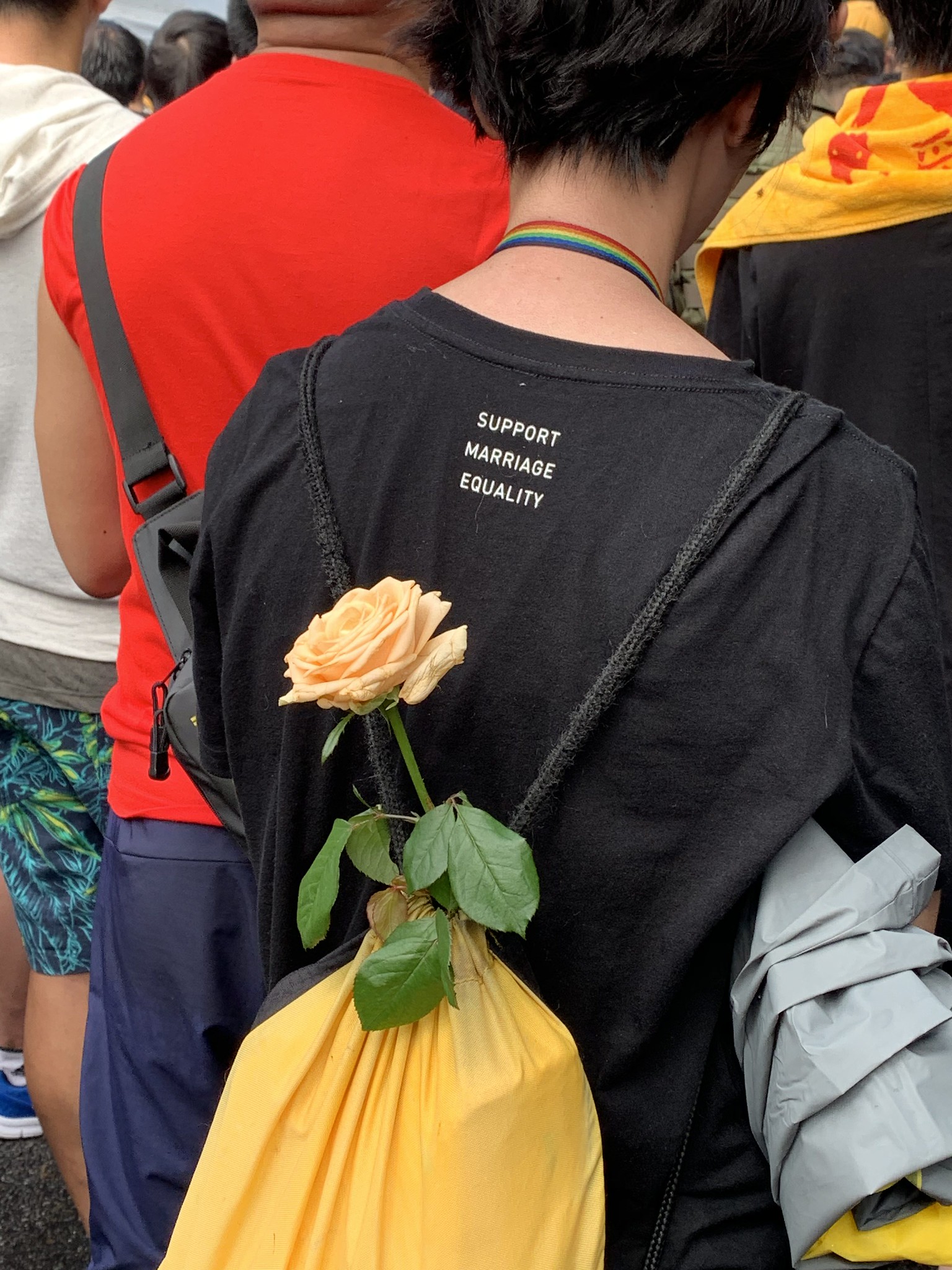
You guys, this is the kind of reporting that gets the world to wake up and notice Taiwan. This is how we show everyone not only that human rights are not an east-west issue (or a Global South/Global North one, though I would not say Taiwan is in the Global South developmentally), but that Taiwan is a bastion and a leader in Asia. This is how we show them how vibrant Taiwan's democracy really is, and that in fact a lot of interesting things take place here that they probably had no idea about, because the media never bothered to report on it.


Untitled


For that, I'm willing to overlook a few weaklings who wouldn't dare to just write "country" (and a few purposeful jerks like the World Economic Forum).

Overall, this is a win for Taiwan. Taiwan the country, Taiwan the regional leader, Taiwan the bastion of progressivism (at least by Asian standards).

Now, how do we get all those journalists to keep it up?


Saturday, May 18, 2019

What it meant to be an ally when Taiwan became the first Asian country to legalize same-sex marriage

Untitled

I wrote a longer reflection yesterday in which I wandered through many thoughts and emotions on yesterday's historic legislation. For this post, I want to highlight one thing that I think is important when you support an issue or social movement, but aren't a part of the group that that movement affects most deeply. That is, I want to talk about what it meant to be an ally standing in the crowd yesterday (yes, there is a little repetition between the two posts). Let's start here:

The level of civic engagement continues to impress me so much, and proves that Taiwan cannot be grouped so easily as a stereotypical 'Confucian', 'collectivist' society with wholly conservative values. It may be true that many young Taiwanese won't engage with their more conservative elders on these issues, but it's not true that they won't find other ways to oppose the old order of unfairness and inequality and a million -isms and phobia that those elders represent.


One of the arguments of the anti-gay camp is that ideas like marriage equality are 'Western' or 'foreign' and go against Taiwan's 'traditional culture' (they say 'Chinese' but I won't.) You know, all that Confucianism and collectivism and filial piety and what not. It's not that those aren't real facets of the culture, it's just that the whole culture cannot be reduced to them, nor can the actions or beliefs of any individual be explained wholly through them. People are not slaves to whatever aspect of their culture someone has decided explains their motives, and culture isn't static anyhow. 20 years ago you could have said the same thing about American culture. 

Of course equal rights have been a part of Taiwanese culture for some time now, and there is no incompatibility with Taiwanese culture (any incompatibility which seems to exist has been invented for political purposes).

So it really mattered that the people in the front rows and on stage, the crowds on camera were overwhelmingly Taiwanese. If 'marriage equality' is not compatible with 'Taiwanese culture', what were all those people who are Taiwanese and exist within a Taiwanese cultural milieu doing there?

Or as President of Taiwan and my current crush Tsai Ing-wen put it:


This movement was started by Taiwanese, carried by Taiwanese and the success they brought about yesterday was done by Taiwanese. There was no 'Western infiltration' about it. (In fact, the anti-gay side is the one that had to look to the West to figure out how to spread its hate, bringing in foreigners like Katy Faust to speak against equality and justice.)

It's important to keep repeating this, because that same opposition keeps accusing the pro-equality movement of doing the same, when it emphatically has not. The side that stands for equality has allies who stand with them. The side that stands against equality has foreign actors trying to help manipulate a certain outcome in Taiwan. And they are the ones who invented that 'goes against traditional Taiwanese culture' nonsense.

Marriage has meant many things in Taiwan over the centuries, including plural marriage, family-alliance marriage (that is, not love marriage) and marriage to ghosts. In China, there is a clear cultural tradition of homosexuality (at least among the upper classes).

It's actually a reductive neo-essentialist perspective - which is inherently Western - which turns so-called 'traditional values' into culturally static and immutable obstacles, a view one tends to take of cultural facets viewed from afar without full understanding. That almost every young person in Taiwan is pro-equality and yet still just as Taiwanese as their grandparents, however, shows that this outsider essentialist view of Taiwan is wrong. 


As an American who was in Taiwan for most of the culmination of the marriage equality movement in the US and so unable to participate (again as an ally - I'm straight and cis), it felt important to be a part of the support to make it happen in Taiwan, because it's my home. I have a place here too. What happens in Taiwan affects me.

And that place was being part of the crowd. Not onstage like a reverse Katy Faust, not a key part of the movement or even vital to it, but a participant who adds her physical presence to the movement. Foreigners were there lending their support too, but it's Taiwanese who led this, Taiwanese who made up the majority of that crowd, and Taiwanese who won. We just stood by them, and that was a meaningful place to be.


As an ally, I've reconsidered my own feelings on the Executive Yuan bill which passed yesterday - after being initially upset and disappointed, it became clear that Taiwanese LGBT groups and the local LGBT community were supporting it, and to be a good ally, I should follow their lead.

Let's stop telling Taiwan what its culture is, while we're at it. Let's quit it with the "but Taiwan is like this" or "Taiwan can't do that, because culture and reasons" or "but Taiwan is so Confucian and collectivist". Pish. Instead, let's be allies and let them tell us. 


It's a humbling, meaningful and impactful place to be. I recommend trying it. 

Friday, May 17, 2019

The sky is brightening: personal reflections on Taiwan recognizing same-sex marriage rights

Untitled


During the Sunflower Movement, Taiwanese rock band Fire Extinguisher sang that "the sky is brightening" (“天色漸漸光”)in their hit song "Island Sunrise".

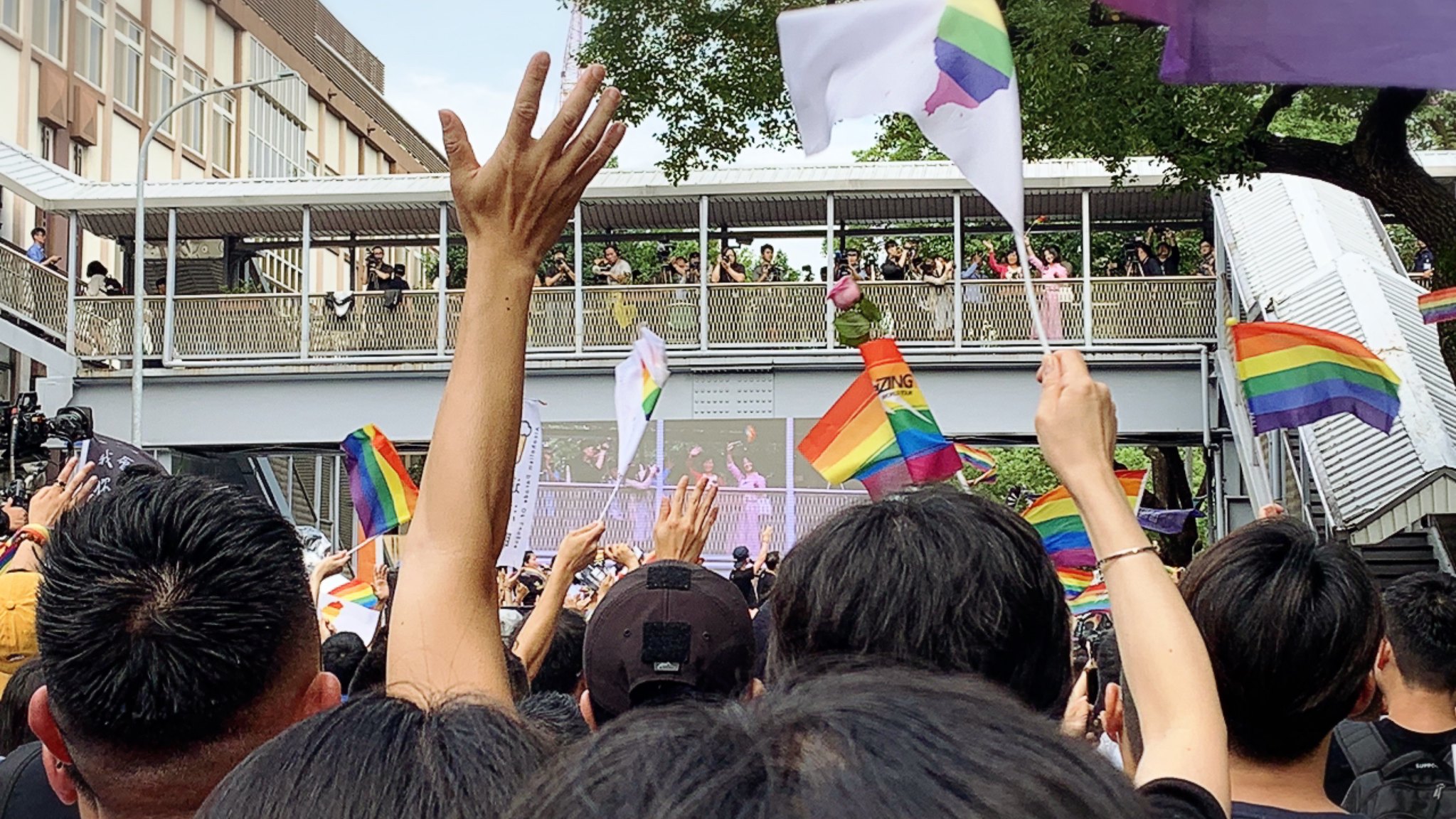
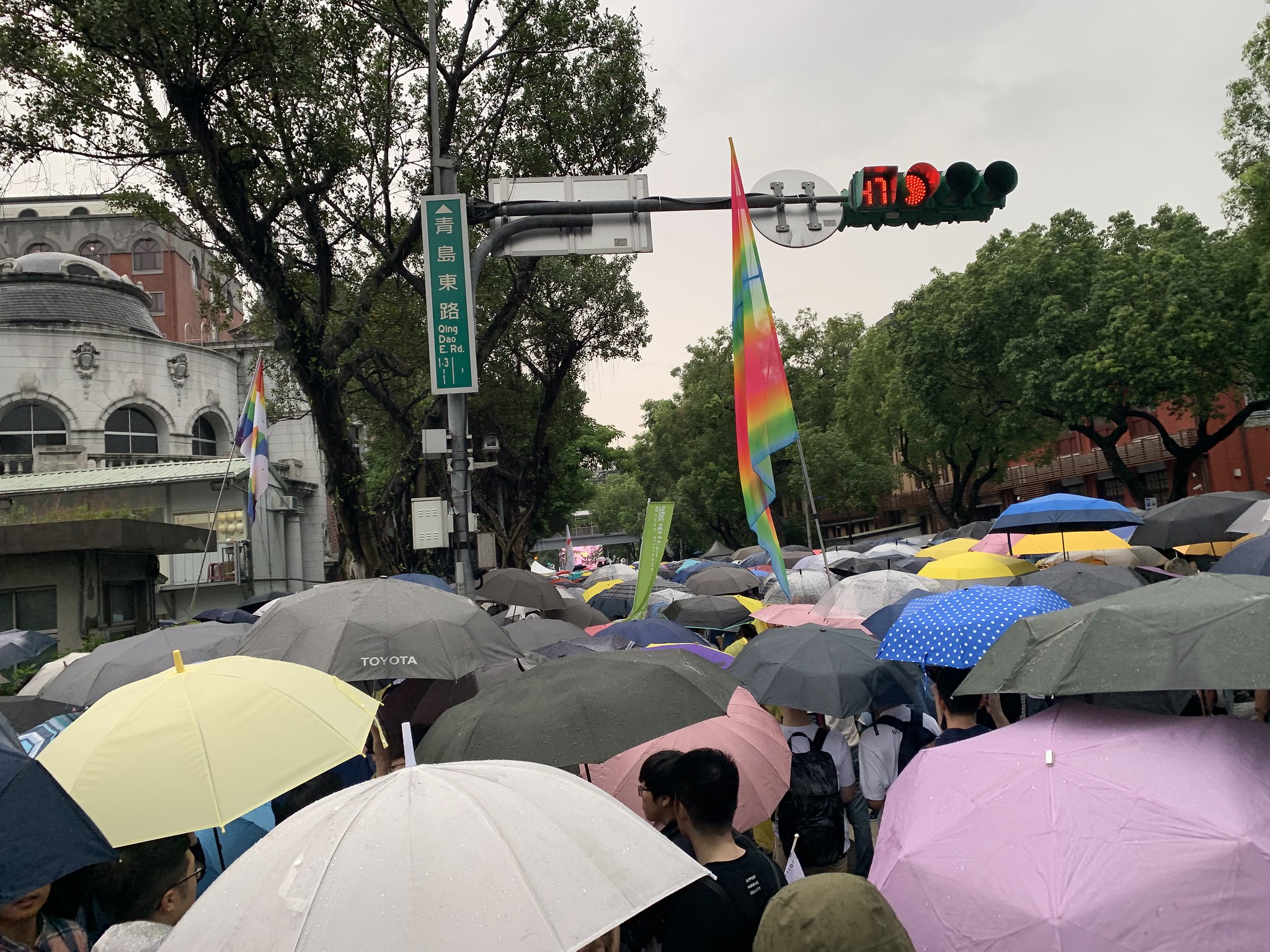
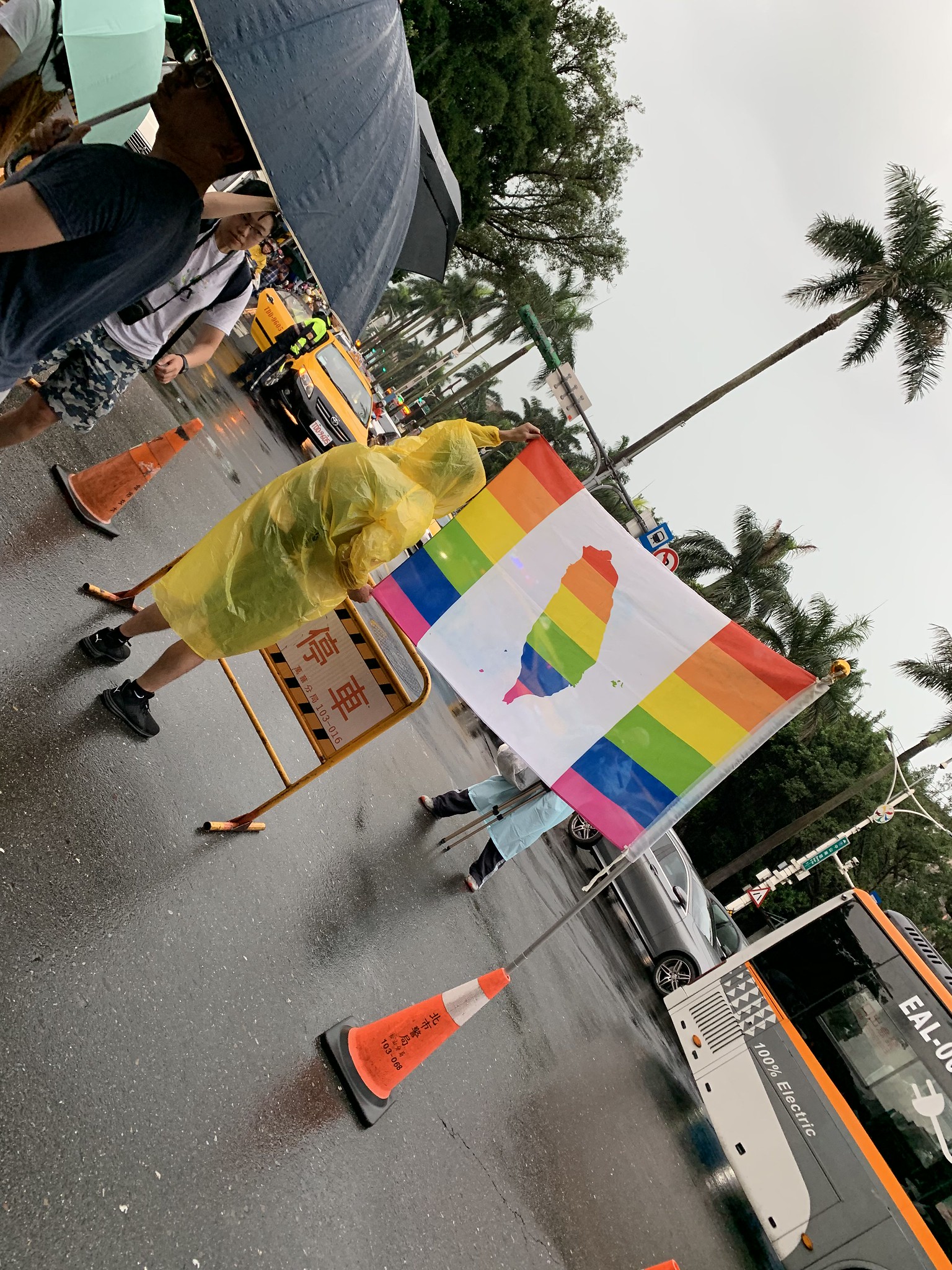
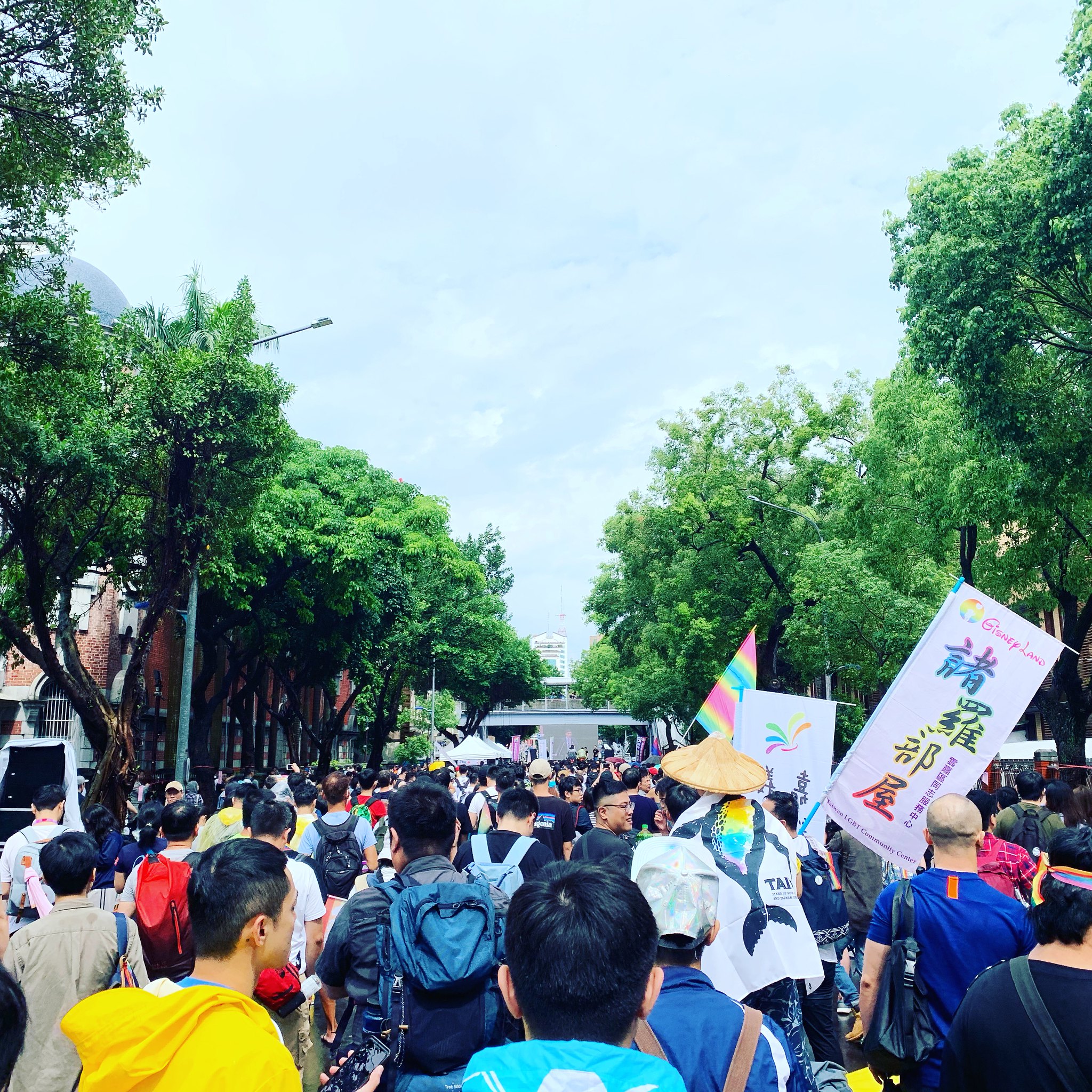
Five years later, as several thousand people or more stood outside the legislature for hours in the pouring rain, clad in damp rainbow gear under beleaguered umbrellas to watch legislative proceedings on same-sex marriage, the sky brightened again, both literally and figuratively.

First, a rundown of how the legislative proceedings went (for a summary of goings-on at the rally, check out New Bloom, and here's my summary of what's happened over the past few weeks). The morning was a bit chaotic, with proceedings kicking off late, and every legislator being given three minutes to voice their opinion, time which many (though not all) legislators took. Freddy Lim and You Mei-nu spoke particularly articulately in favor of equality, while anti-equality legislators, as usual, voiced concerns that defied logic. These "concerns" included points such as "if we pass this, then referendums have no meaning!" (when the reason why this bill creates a separate law rather than changing the civil code is due to the referendum results) and questioning whether the legislature actually had to listen to the court (...uh, yes).


Untitled


Then the Executive Yuan bill went through a line-by-line reading and passed every article in turn, with some 'controversial' amendments. The crowd cheered and proclaimed victory as Article 4, which specifically uses the term 'marriage' in relation to same-sex unions, passed with a narrow majority of 66 votes. Reviews continued into the afternoon as legislators skipped lunch. Notably, KMT legislators Jason Hsu and Chiang Wan-an voted for it, with DPP anti-gay legislator Lin Tai-hua voting against.

At that point, I was curled up under my rainbow umbrella with my butt perched on a rain-drenched half-wall outside an entrance to NTU Hospital. I was shunted with much of the crowd to Jinan Road, as the main rally on Qingdao Road was at capacity. Around me, scores of young Taiwanese were following live feeds on their phones of the legislative proceedings nearby (a jumbo screen on Qingdao Road had a live feed for people on that side).


Untitled


I ran into a friend and we grabbed coffee together as the review dragged. The rain continued to pummel the attendees still outside the legislature. But you know what? Most of them stayed. Hours it dragged on, and let's be honest, legislative proceedings are kind of boring. Connectivity was awful. Everyone was soaked despite having umbrellas and rain ponchos. There was nowhere to sit. But they stayed - thousands, maybe tens of thousands - to watch legislation drag on together on a screen most of them couldn't actually see.

By the time I made it back to the legislature, the rain let up. The sky brightened.


Untitled


A few more controversial things happened - a last-minute motion by the NPP to deal with the international marriage issue (so that foreign nationals from countries that don't recognize marriage equality would be able to marry their same-sex Taiwanese partners) failed, with the entire DPP voting against it...for no good reason. The clause that would allow people to adopt the biological children of their same-sex spouse, but not to jointly adopt an unrelated child, remained in place (with no changes to the lack of access to fertility treatments for same-sex couples, and no surrogacy services in Taiwan).


Untitled
\


But the sky brightened nonetheless. The proceedings dragged on. The people stayed as the rain dissipated and the sun came out, turning puddles of cool rainwater into humid vapor. I ran into another friend and we stood on the now somewhat-less crowded Qingdao Road, steaming in our clothes as the final articles passed review, and hopeful young activists clad in rainbows counted down each one.


Untitled


Then it was time for the final countdown - the vote on the overall bill. A flawed bill that does not grant true marriage equality, but a form of same-sex marriage (using the word "marriage") nonetheless. When it passed, the crowd erupted. Some screamed, some cried. The sun shone bright as Taiwan became the first country in Asia to give same-sex couples access to their right to marry: a massive shift in the mood and the weather from morning to afternoon.

The wait from the beginning of the session until the final vote was about 6 hours - approximately 10am to 4pm. But those activists had been standing in the metaphorical rain for far longer than that. The battle for same-sex marriage in Taiwan has been shorter than in many other countries: it wasn't  an issue being discussed widely just 5 years ago, when the sky brightened for the Sunflowers (though dedicated activists had been working on it in smaller numbers for some time prior to that). The fight, however, was as vicious and all-consuming as this morning's rain, and it's not over yet.


Untitled


All I can say is that I am just so impressed with Taiwan today. If you thought the dedication of the Sunflowers was a thing of the past, I submit humbly that it continues in a different form, through a different kind of adversity.

I don't imagine there are many countries that would end a marriage equality rally with a performance by a black metal band, as Taiwan did. I don't think there are many where 10,000 or more people would stand resolutely and unflinchingly in the soaking rain just to be physically present for an interminable legislative session. The level of civic engagement continues to impress me so much, and proves that Taiwan cannot be grouped so easily as a stereotypical 'Confucian', 'collectivist' society with wholly conservative values. It may be true that many young Taiwanese won't engage with their more conservative elders on these issues, but it's not true that they won't find other ways to oppose the old order of unfairness and inequality and a million -isms and phobia that those elders represent.

One of the arguments of the anti-gay camp is that ideas like marriage equality are 'Western' or 'foreign' and go against Taiwan's 'traditional culture' (they say 'Chinese' but I won't.) 

But of course equal rights have been a part of Taiwanese culture for some time now, and there is no incompatibility with Taiwanese culture (any incompatibility which seems to exist has been invented for political purposes). 

So it really mattered that the people in the front rows and on stage, the crowds on camera were overwhelmingly Taiwanese. This movement was started by Taiwanese, carried by Taiwanese and the success they brought about yesterday was done by Taiwanese. There was no 'Western infiltration' about it. (In fact, the anti-gay side is the one that had to look to the West to figure out how to spread its hate, bringing in foreigners like Katy Faust to speak against equality and justice.) It's important to keep repeating this, because that same opposition keeps accusing the pro-equality movement of doing the same, when it emphatically has not. 


As an American who was in Taiwan for most of the culmination of the marriage equality movement in the US and so unable to participate, it felt important to be a part of the support to make it happen in Taiwan, because it's my home. I have a place here too. And that place was being part of the crowd. Not onstage like a reverse Katy Faust, not a key part of the movement or even vital to it, but a participant who adds her physical presence to the crowd.


Untitled


And it may be true that the DPP will suffer for this in 2020, but somehow I doubt it. They may lose, but I don't think it will be because of this. That they managed to get it through despite absolutely vicious opposition might just win back the young voters who were talking about abandoning them. Besides, people talk about the 2018 KMT sweep as though it had anything to do with conservative 'family values', when it didn't. It was about local governance - and we know that because the NPP drastically expanded its electoral reach despite being wholly pro-equality. They would have suffered the way the DPP did if marriage equality were truly the wedge issue that opponents and pessimists say it is. Most likely scenario? By 2020 same-sex marriage will be normalized, and no longer an issue for the DPP. After all, something had to be done after the 2017 ruling. Best-case scenario? This will actually work in their favor as the progressives who were disenchanted with them come running back.

Besides, in every country where same-sex marriage or marriage equality has been passed, it has simply ceased to be an issue (unlike, say, abortion, which remains contentious in the US because some people hate women.) The party that passed it has generally not suffered electoral losses as a result, as people learn fairly quickly that their gay fellow citizens are indeed normal human beings who deserve equal rights and what was all the fuss about anyway? I can't imagine Taiwan wouldn't go the same way.


Untitled
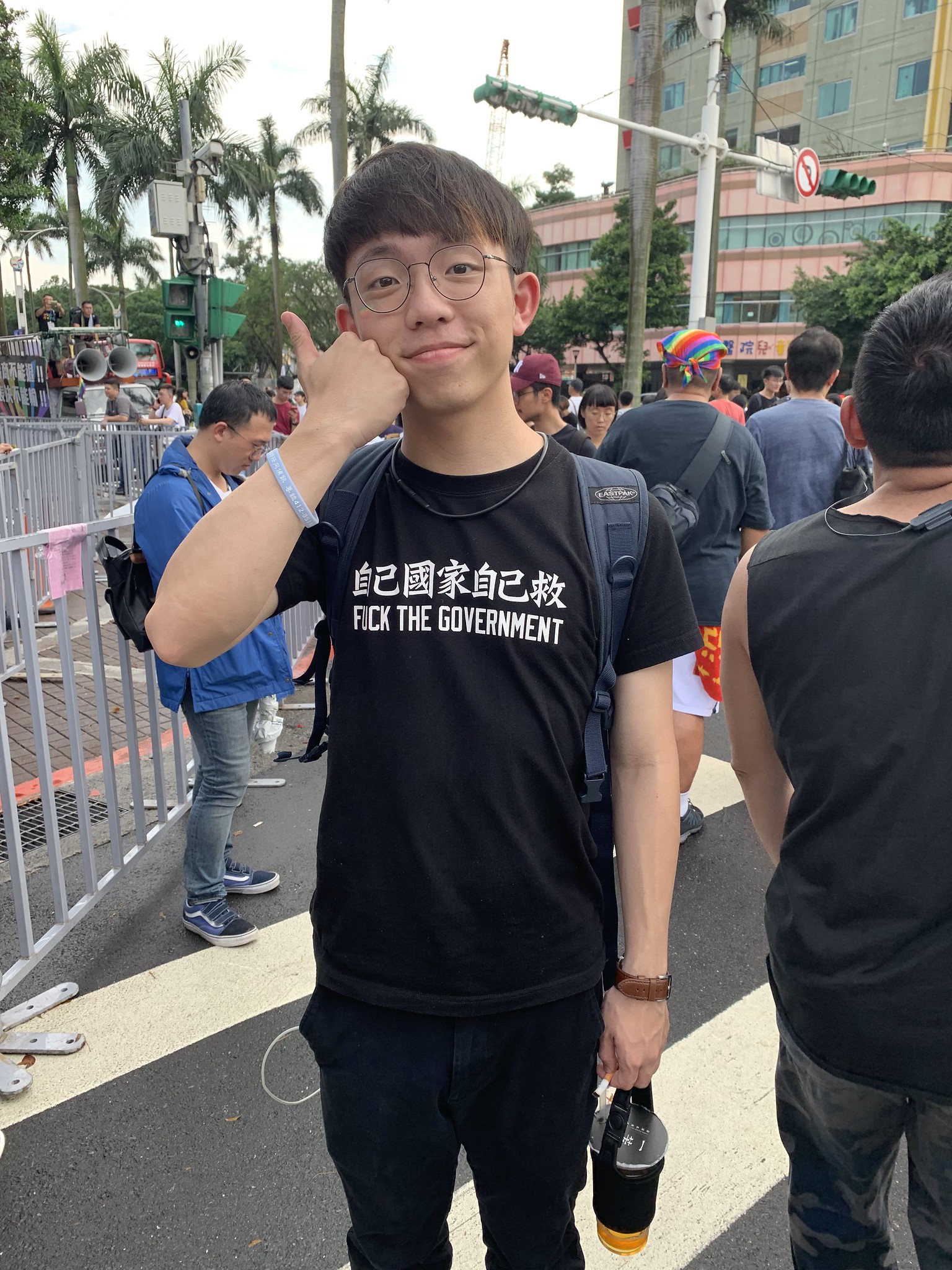
And if you think this has nothing to do with the spirit of the Sunflowers, this guy is here to tell you
that you are wrong. And he wasn't the only one. 

If they do lose in 2020 over this, then they will have stood for what was right in the face of a tyrannical, hateful majority. True liberal progressives won't forget that, and it will come back to them someday. It would be sad to see if that's the case, but the solution could never have been for them simply not to stand for what was right.

As a Facebook friend posted regarding the anti-equality referendum result last year (kept anonymous as the post is not public:

"And yet, the government went ahead with the law. Why? Well, this is what distinguishes democracy from populism. Democracy is not merely about majority voting: it is also about adhering to basic principles protecting minorities from the tyranny of the majority."

But they did, and the future leaders of Taiwan did as well. We stood in the rain for hours...for years.

The fight for full equality is not over, but the sky is brighter now, and the future is too. 


Untitled