Monday, October 1, 2018

Two roads diverged over wood

Bagildere Love Valley Cappadocia 1510927 8 9 Compressor HDR lvl Nevit
From Wikimedia

Since my last post about men behaving badly and the woman-haters who defend them, I've been thinking about Taiwan's specific situation vis-a-vis politics and sexual assault.

Perhaps it is too simplistic to say "America sucks, but in Taiwan, if there is even a whiff of sexual misconduct your political career is finished!" More accurately, one might say that in the US, only in recent decades are people beginning to fully understand what sexual assault means, and are slowly gaining the courage to point fingers at powerful men (the assailants are almost always male).

In Taiwan, however, it is simply less likely that sexual assault will be reported. I did a little back-of-the-envelope number crunching for 2015 (I have statistics for Taiwan 2017, but had trouble finding specific information on sexual assaults in Taiwan for 2016, the last year that data seems to be available in the US. So, 2015 it is.)

US population in 2015: 321 million
Reports of sexual assault in the US in 2015: 431,837 (male and female)
Per capita: .00134

Taiwan population in 2015: 23,485,755
Reports of sexual assault in Taiwan 2015 (gender not specified so I assume both): 10,454
Per capita: .00044

That's a huge difference - considering differences in population, the US still has a higher report rate of sexual assault than Taiwan.

I highly doubt that there is just less sexual assault in Taiwan, and that's why there are so many fewer reports. In the US it's estimated that about 2/3 of sexual assaults are not reported, or 70-some-odd percent. In Taiwan, it is estimated that the number of actual sexual assaults c.f. those reported is seven to ten times higher. We also know that domestic abuse is a massive problem in Taiwan, and dare I conjecture that domestic violence and sexual assault share enough characteristics (they are both about power and control, they both disproportionately affect women, they both generally stem from misogyny or a sense of entitlement over women's bodies) that where there's a lot of one, there is probably a fair amount of the other? I do dare - and low report rates of both likely have some connection to the way the Taiwanese judicial system is likely to treat women who report, not to mention cultural stigma surrounding reporting gender-based violence and the "defamation" lawsuits women who make allegations but don't wish to press charges may face.

Taking that further, it's hard to imagine that Taiwanese politicians somehow commit sexual assault at a lower rate than the general population (a rate that is much higher than statistics would lead one to believe), especially given the relationship between violence - including sexual assault - and power. I suppose once in office, some of them might realize that committing such a crime would ruin their career irreparably, but it would be silly to think that such selfish (because such a realization is not really about respect for women) reflection would extend back to their youth.

Considering that Lien Chan is widely believed to have committed domestic abuse (frankly, I find it more than likely that the allegations are true), and the penchant of Taiwanese politicians - or pretty much all Taiwanese men in positions of power - to visit 酒店 or hostess bars, it just seems unlikely that Taiwan's public figures have clean histories regarding women.

Rather, it seems a lot more obvious to me that sexual assault by Taiwanese public figures before or after they take office go unreported - or are shut down before fingers are publicly pointed at identifiable people - rather than that they don't happen.

What this means is that Taiwan may not, in fact, be much better than the United States in this regard. In the US, women feel increasingly willing to hold powerful men to account, publicly, for their misdeeds. The vast majority of the time, these women are telling the truth - research shows that, to the best of our knowledge, only 2-6% of sexual violence accusations are false. Culture is changing in the US, both in ways that can be felt (certainly, as a child of the 1980s, I can say that this culture shift is real), in ways that can be researched, and in ways we can document. Even looking at the Wikipedia entry for sex scandals of federal elected politicians, there has been an uptick as the years go on - almost certainly because women are more likely to step forward now.

Taiwan doesn't seem to have gone through that transformation yet. It's not that sexual assault is considered acceptable here - it's certainly not - it's that ideas of what constitutes sexual assault here sometimes (not always, but sometimes) feel like they're straight out of the 1980s, and the stigma surrounding reporting seeming more like what my mother and grandmother might have faced, rather than me. I mean, this is a country where raping a domestic employee once doesn't bar you from hiring another one after a period of time.

But, there's an entrenched feeling that those in power still just don't care. In the US, Dr. Blasey Ford's testimony against a screaming, weeping Brett Kavanaugh is considered by experts - and basically every woman who has had something like this happen to her, which is a huge number of us - to be credible, there's a fair chance he'll still make it to the Supreme Court. The same thing happened in 1991 with Anita Hill. We know that the President of the United States is unfaithful to his wife, and there are 22 sexual assault allegations against him as of today (20 as of when this was written - included here as it's a better source). Yet, he gets to be president, and his supporters either defend him, or are willing to believe that that many women are lying. (I, personally, think it's so obvious that Trump is a sexual abuser and possibly a rapist that I find it astounding someone might think otherwise.) Every few years, it's a massive battle to reauthorize the Violence Against Women Act.

So, great, we can speak out now and someone might actually listen, but it still has ruinous effects on the women - hurting careers, exposing them to more trauma and harassment - and hasn't made much of an impact on the political machine, or sexual assault rates in general.

In Taiwan, if you manage to publicly accuse a political figure of sexual assault - overcoming all of the pressure not to do so and knowing you'll likely be torn apart in the gossip rags and forums full of angry young dudes (have you seen PTT? Jesus) - and people actually listen to you, great, his career will be over.

But good luck getting to that point.

Alright then - two roads diverged, but they're really worn about equally the same.

Friday, September 28, 2018

Taiwan has issues with sexism, but we don't put known attempted rapists in office

0-1
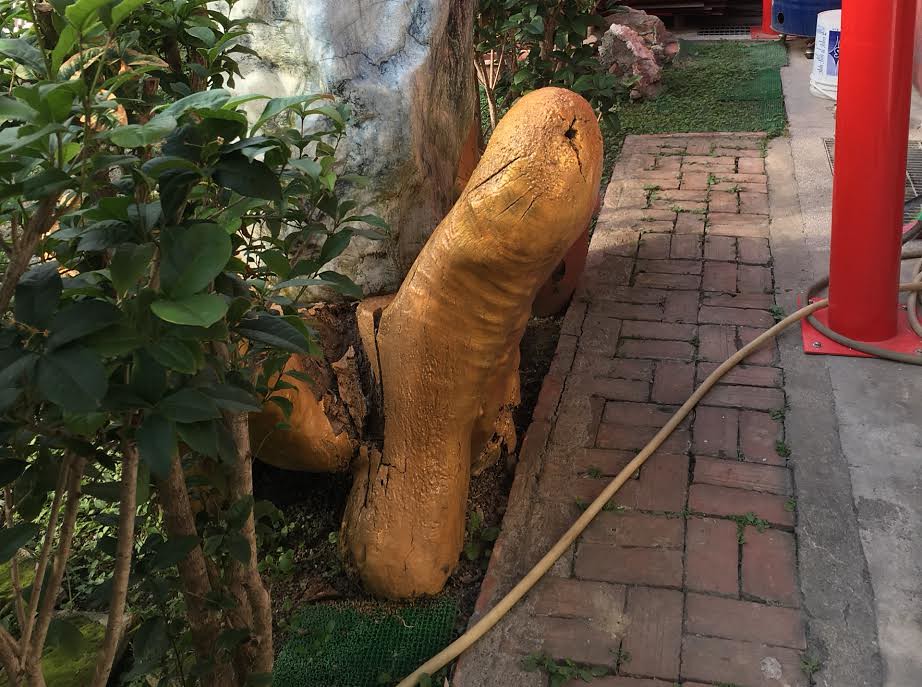
An innocent golden piece of wood from the Grand Matsu Temple in Tainan


All I can say about the Blasey Ford / Kavanaugh hearings is that at this point, in 2018, if you still support the Republican Party, then you hate women and think sexual assault is okay.

I don't care if you want to identify as a 'conservative'. I don't know what that is supposed to mean anymore, but whatever. Fine. We don't all have to have the exact same values and there is room to disagree or have differing perspectives on quite a lot.  I'm talking about specifically supporting these monsters. And I mean it: at this point, doing so would lead me to seriously question your character. I can tolerate disagreement on many issues, but I cannot tolerate woman-hating attempted rape-excusers.

Yes, attempted rape. If you hold a woman down against her will and try to tear off her clothes as you stop her from screaming, you're not horsing around or copping a feel, you are attempting rape.

Of course, I could have said I felt this way after the election, when the country elected a known sexual assailant. Hell, if I had been old enough, I could have said it in 1991. I could have asked then why it was acceptable for these men to be elected or confirmed to office when no decent person would tolerate that sort of behavior - including talk - from their own sons, brothers, husbands or fathers. But I was a kid in 1991, and Trump exerted a hypnotic pull on the dumber half of the country that turned them into something more like cult members than actual rational voters.

Now, however, it is clear. We know what they do and we know what they will accept. We know they are either sex predators, or they think being a sex predator is acceptable (if you are a straight, white male). If you support that or even just accept it, there is no longer any excuse for you.

Contrast this to Taiwan. Taiwan is far from a paradise of equality - I have female students who tell me openly that they want to go abroad because their families treat them unfairly because they are daughters. More than one adult female student has told me that she won't marry because she has no intention of taking on the expected duties of a wife, and hasn't yet met a man who truly understands that. The same goes for women who have decided not to have children. There is a lot of particularly heinous crime against women by men (although the overall crime rate is dropping, including "non-negligent manslaughter" and what the government weirdly calls "forcible" rape), and the media covers it in the most sexist way possible. Domestic violence is still an issue and there's still a pay gap. I have my own stories of sexism at former jobs.

But as far as I know - and please correct me if I'm wrong - Taiwan has never knowingly elected or allowed the confirmation of someone like Kavanaugh, or Clarence Thomas, or Trump - to a position in the government.

Taiwanese politicians may often be horrible people, but if there's even a whiff of sexual predation about you, your political career is finished. In this country, if you so much as touch a boob without consent (which is also not okay, by the way), as far as any sort of public office is concerned, you're done.

That's just about how it should be: as I see it, if someone has something like that in their past, they demonstrate remorse and do attempt to be a better person, an acceptable consequence is that they may never be fit for political office. As a person, however - again, if demonstrate remorse and personal growth are demonstrated - a second chance may be warranted.

Seriously - Taiwan hasn't yet figured out how media should report on crimes against women, how to treat its wives and daughters fairly or how to close its own pay gap. But it has figured out that sexual misconduct of any kind is an immediate disqualification for political office.

Supposedly one of the most "egalitarian", "meritocratic" societies on Earth, where may credit the modern feminist movement with gaining steam, can't even figure that out. They can't wrap their heads around what a geographically small, often (though not always) parochial nation often described as "conservative", "Confucian" and "passive" (though I don't agree fully) has already figured out.

Good job, America, at demonstrating to the world what you actually think of women. Remind me to laugh in the face of the next person who tries to tell me that the US is so much 'better' when it comes to women's equality.

Monday, September 24, 2018

We may have bipartisan support, but it's still hard to vote for friends of Taiwan


IMG_7566


Like any good Snowflake SJW Avocado Toast Millenial*, I'm excited that Beto O'Rourke - a liberal described as "the next Obama"  - is actually a realistic challenger to Ted Cruz in Texas. Texas! Where "no democrat has held state-wide office since 1994"! In a midterm election year that is not only seen as a referendum on Trump's two years of terrorizing from his perch in the White House, but also the only realistic chance we as a nation have of curbing him, to see this kind of progressive stand a chance in Texas of all places is huge.

This is especially exciting as he stands to unseat Ted Cruz, who ran for Human President in 2016 and who hates women and the LGBT community which is odd as I'm not sure his species has 'genders' or 'biological sex' in the way we understand them. In any case, pretty much nobody likes him.

So he could be gone! Yay!

...right?

Oh, wait, you support Taiwan and want to vote for representatives in the US government who are friends of Taiwan.

Then, not yay.

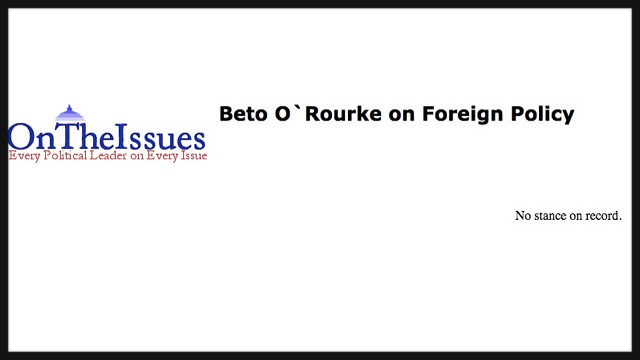
I have no idea what Beto O'Rourke thinks about Taiwan, or about foreign policy in general, and it seems neither does anyone else. His own website has no guidance whatsoever as to what, as a senator, his foreign policy would be.

But, as 'the next Obama' I can make some educated guesses. Obama was not a great friend to Taiwan.  See here on arms sales (Taiwan advocates didn't seem terribly impressed and neither was I), "reducing tensions on both sides of the strait" (as though the source of the tensions weren't entirely one-sided), his advisors totally missing the point of Taiwan independence, ceding the high ground (and insistence on standing up for what's right) to McCain, and seeming to care more for Beijing's tender baby feelings than actually doing the right thing. Then there's support for the milquetoast, only-because-of-politics status quo ("a high degree of self-determination?" Screw you, buddy. Total self-determination like any other democratic nation or GTFO). Perhaps necessary, but harmful to Taiwan.

Long and short of it? Lots of talk about doing what's right on the American left, but then they turn around and play politics just like everyone else. I don't imagine an Obama-style liberal like O'Rourke will be a great ally of Taiwan.

Who knows? He might surprise me. But I doubt it.

Ted Cruz? He met with Tsai Ing-wen. Ted Cruz (Ted Cruz!) said this:


Another champion of Taiwan and supporter of the travel bill, is Sen. Ted Cruz (R-Tex.), who met with Tsai in Houston on Jan. 8, 2017 despite Beijing’s strong objections.

In an interview, Cruz slammed as “absurd” a December threat by Chinese diplomat Li Kexin during an event at Beijing’s embassy in Washington. Li told colleagues that he had warned U.S. officials against docking American warships in Taiwan.


“The day that a U.S. Navy vessel arrives in Kaohsiung is the day that our People’s Liberation Army unifies Taiwan with military force,” Li said, according to Chinese media reports cited by Reuters.


“The threat from a low-level Chinese diplomat of a military invasion of Taiwan was absurd, unduly provocative and should be met with laughter and derision,” Cruz said.


Cruz also denounced China for “vigorously” lobbying to kill strong ports-of-call language for Taiwan that he wanted included in the 2018 defense authorization bill, Cruz said.


I'd cream my damn pants if Obama said something like that.

I know, I know, a senator can say things a president can't, but remember, Cruz wanted to be
president.

But wait, there's more!

"Texas stands with Taiwan," Ted Cruz also said.

While I'm not sure why Cruz is such a strong Taiwan supporter - general wisdom has it that most pro-Taiwan Republicans support this country because they oppose "Communist China", that is, they're still stuck in Cold War thinking - I'm definitely of the school of Taiwan advocate that feels Taiwan should take the help it can get. I'm not inclined to say we don't want his support because he's awful in just about every other respect.

But, as a liberal pro-Taiwan voter, I'm damn glad I'm not a Texan.

Sure, we have bipartisan support and I am glad of that. I won't pretend this is a war of Dems against Reps for the future of Taiwan or anything like that.

But, what's a girl who supports Taiwan, enjoys bodily autonomy and wants her gay friends to have equal rights to do, when the guy she would vote for is very likely not going to be the Taiwan ally she wants to see in office, and the champion of Taiwan he stands to defeat pretty much hates her on account of her having a vagina?

If the only issue she cared about were Taiwan, the choice would be obvious (and very self-harming, if not masochistic.) But when every other platform of the friend of Taiwan she wants to see in office is so odious that she feels she must vote against him, only to worry that that strong bipartisan support for Taiwan in congress might well waver - maybe just a ripple - by voting out a Taiwan ally and voting in someone who doesn't appear to have a foreign policy at all, let alone any sense of the importance of Taiwan.

All I can say is, if this issue were to ever face me as a voter in the northeast, I would honestly spin myself in circles with anxiety. It quite literally feels like it comes down to "Taiwan, which is what is right", and "everything else that's right".

I want a tried-and-true friend of Taiwan in office, but I also want O'Rourke to win for literally every other reason.


So yeah, bipartisan support or not, it's really difficult to use our votes as Americans to support Taiwan.


*not really a Millenial but let's pretend

Saturday, September 22, 2018

Tricked Into Divorce (no, not me)

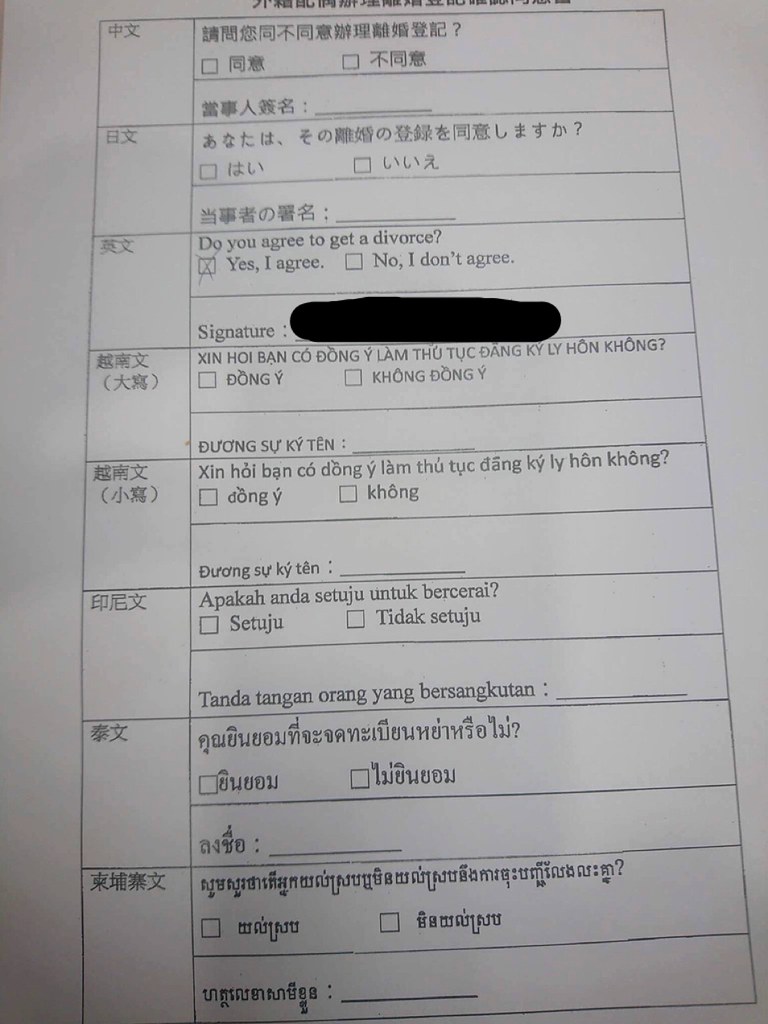
A friend sent me this the other day: it's a document translated in Chinese, Japanese, English and several Southeast Asian languages asking foreign spouses at the registration office filling out divorce paperwork if they agree to get a divorce.


IMG_7454


Apparently, the police require this for all foreign divorces in Taiwan now, as it is too common for a Taiwanese spouse (usually male) who wants to divorce (usually a Southeast Asian woman who can't read Chinese) to take her to the local housing registration office saying they have to "fill out some paperwork", perhaps saying it's about some unrelated thing, and then divorcing her without her knowledge.

While it's not so easy in Taiwan for someone to divorce their spouse if that spouse doesn't agree, these 'trick' divorces made it look like the wife agreed - after all, she signed the paperwork without complaint. If both spouses agree, the process of legal divorce takes less than half an hour (in terms of splitting assets, I have no idea).

Once the divorce is final, the foreign spouse - again, usually a woman who doesn't speak or read Chinese - has 48 hours to leave the country. No time to demand access to assets or other support. Possibly no time to even go to the bank, if she has a bank account in her own name, which she likely doesn't. No realistic way to take any children with her. She's out, she gets nothing, quite possibly returning to a life of miserable poverty, and he gets a clean break and to keep everything. It is extremely difficult if not impossible to fight for a fair division of assets once out of the country, and as far as I know there is no legal way to apply to stay on such short notice (though I'm not sure about that, and if there were, it's not clear that someone who can't read Chinese and might not even have her own transport would be able to access it.)

This is absolutely evil, that goes without saying. It is wrong. It cannot be tolerated.

The good news is that the Taiwanese government got its act together (that happens sometimes!) and put together this form, which is now standard with foreign divorces. Unless the spouse is illiterate - in which case I suppose an interpreter would be necessary and locating one on short notice would pose other problems - it clarifies for the soon-to-be-erstwhile foreign spouse what is happening. 

If in fact she is being tricked, she can then refuse to sign the divorce papers, which buys her time and therefore better access to legal services to fight for assets and custody. She's not left penniless on a plane back to her country of birth without so much as the chance to give family there (if she has any) advance notification to expect her.

This doesn't solve every problem with the rules surrounding foreign spouses: if you knowingly divorce or your spouse dies and you were unable to obtain an APRC (or just had not done so) - keeping in mind that the men who marry Southeast Asian women may not meet the required income threshold for her to get an APRC, if she even knows that's an option - you also have few options for staying in Taiwan, and that's not right.  However, it deals with a massive issue many of us had no idea existed. It materially improves an issue facing foreigners - especially foreign women - in Taiwan.


One thing that helps with this is that the document itself is very simple - one easy-to-understand question and very simple choices of answer (so if there is some ability to read but overall literacy level is not high, it should still be comprehensible), which shows sensitivity to the situation of these women. It might seem to us that any foreigner who comes to Taiwan would be literate in their own language, but when it comes to women brokered through the marriage industry (and it is very much an industry) here, that's not guaranteed to be true. 


I don't often say this, but good job, Taiwanese government. You did the right thing.