Thursday, September 19, 2019

For the love of our good Lord and Savior, Jesus M.F. Christ in Heaven, please stop saying "Mainland" like it is a neutral term

Untitled
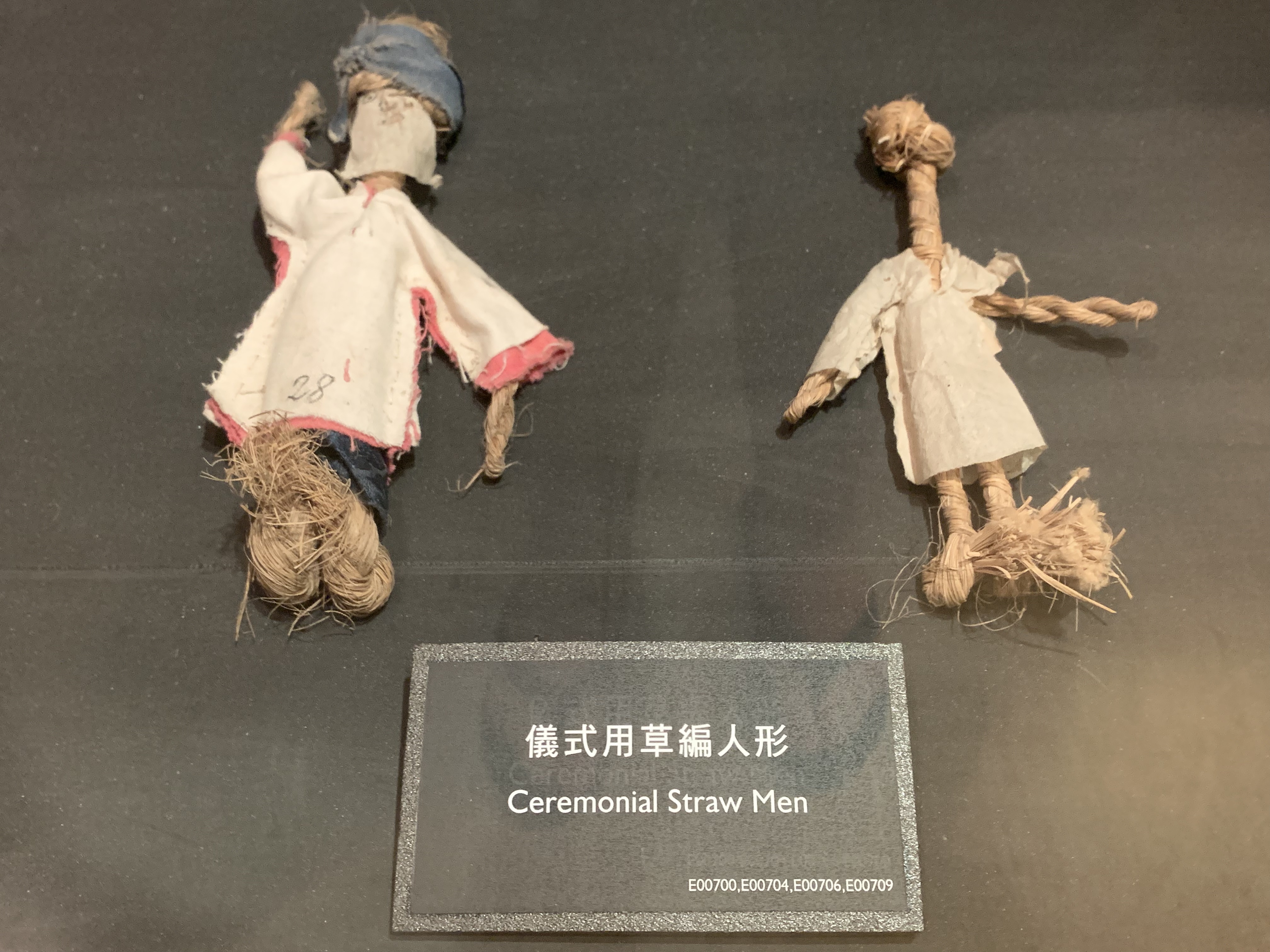
This is what I'd like to do to the hands of everyone who types the word "mainland" - I mean metaphorically...of course

So, I don't feel like writing about Terry Gou deciding not to run for president because reasons. I want to write about how the international media have taken Hong Kong off the front pages just as the Hong Kong government and their brutalizing thugs "police force" intended, but I'm waiting on that to see how it plays out. I could write about the Solomon Isl----yeah no.

Instead, I want to write about a thing someone messaged me about recently - hadn't I written something once about the use of the word "Mainland"? I thought I had, but other than a section in this piece, I can't find it. So - great. Let's do that now.

I'm going to take what I wrote there and expand it here.

Let me begin this first part by saying that I am not an expert on Cyprus. But, if one day I opened up the New York Times and saw an article about Cyprus with a sentence like "Cyprus just [did a thing that any normal sovereign nation would do], which drew a strong reaction from Mainland Turkey", my eyebrows might get stuck to the ceiling. The paper would almost certainly receive a flood of angry mail from indignant Cypriots and those who sympathize with them, and would probably be compelled to chastise the reporter or editor as well as issue a correction briefly explaining the true situation.

Or imagine if someone wrote about "Okinawa" and "Mainland China" (after all, China does claim Okinawa) - the reaction would be stunned, at best. In fact, Japan took the Ryukyus not long before it took Taiwan, there is some ancient history between the Ryukyus and China (not that it should matter), the US occupied the islands for decades after WWII and only gave them to Japan in the 1970s, and there is an independence movement there. And yet you'd never say "Okinawa and Mainland China" just because China might want you to.

So why is it so acceptable to use "Mainland" when referring to China in relation to Taiwan? Why do people think they can use that term apolitically? It is clearly not a neutral word.

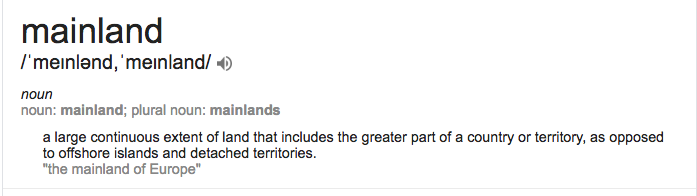
Here is what it means, specifically: 

Screen Shot 2019-03-01 at 2.45.50 AMScreen Shot 2019-03-01 at 2.46.01 AM


The clear connotation of “mainland” is that it is the main/continental part of a territory, and that outlying islands which are referred to in relation to it are also part of said territory.

By that metric, the only reason to use the phrase “Mainland China” in relation to Taiwan is if you want to imply that China and Taiwan have some sort of territorial relationship, or that Taiwan is a part of some larger concept of China. If you believe they are two sovereign or at least self-ruled entities, it makes no sense at all. In that sense, Taiwan does not have a mainland, unless you want to refer to “mainland Asia” (as Taiwan is a part of Asia, but not a part of the People's Republic of China).

Why then do people keep saying it? Partly it is force of habit. Pro-China types insist on it, and the media often follows. It is unclear how people came to believe the word was neutral or apolitical. It is not. It implies that there not only is but also should be a territorial relationship.

Even if you want to claim that, because the ROC officially calls itself 'China', it's acceptable to call the PRC "mainland China", I'd still challenge you on that. The ROC came to Taiwan from China and occupied it at the behest of the Allies in 1945 (there is no binding treaty that definitively cedes Taiwan to any government of "China"). Regardless, that government was not invited here by the Taiwanese people. They were never asked whether they wanted to be a part of the ROC, most don't identify primarily as Chinese now, and most don't support any sort of unification. If it could be done without any threat of 'retaliation' from China, the ROC would quite likely - though not definitely - be on its way out by now, if not entirely gone in favor of a Republic of Taiwan. Most Taiwanese refer to their home and country as Taiwan, not "the ROC".

If you refer to the island that people who don't identify as Chinese as something off the coast of "mainland China" (implying a territorial relationship they never agreed to), is that much different from telling people how they must identify? Are you not telling them "you think of these islands as your home country, but it's actually a piece of territory connected to a larger 'mainland', whether you like it or not"?

Some might say that omitting the word "mainland" and just using "China" and "Taiwan" is overtly nationalistic. But it isn't - it's just stating the truth as it is now. Taiwan exists, and it's not part of the country commonly referred to as "China", which as of right now is the People's Republic. It's the name of an island, and it's also what almost 24 million people call their country. It's not nationalistic to refer to a place people consider a country as a country, and a different place that they don't consider part of their country without any qualifying markers implying that it might be otherwise. 
Right now, there's a country called "China", and there's an island, which you can also call a country, called "Taiwan" with a different government than the one in "China". How is it 'nationalistic' to just say so? How is it not nationalistic to draw specific kind of connection between Taiwan and China by calling one the "mainland" of the other?

Simply using "China" and "Taiwan" is also the most open way to refer to these two places without closing off any future possibilities. "Mainland" implies that there ought to be some kind of future relationship in which the two places are connected. "China" and "Taiwan" are two existing places whose statuses may change in the future - referring to them as such doesn't cut off any potential outcomes. "Taiwan" and "Mainland China", however, does: it neuters the notion of Taiwanese independence in the present, by giving Taiwan a "mainland" that the Taiwanese never asked for. 


How political is “mainland”? It is required as a corresponding term to “Taiwan” in Xinhua’s style guide, a reflection of Chinese government policy. When you use it, you are quite literally referring to Taiwan-China relations exactly as the CCP wants you to. If you want to talk about Taiwan exactly the way the Chinese government prefers, by all means use “mainland”. But why would you?

Think of it this way: you may not necessarily default to Taiwanese independence as the only possible future for Taiwan. You may think the ROC is legitimate. I don't agree with you, but fine. These are valid (if flawed) opinions. Great news! You can still believe those things while calling China "China" and calling Taiwan "Taiwan", because a place exists called China, and another place exists called Taiwan! That terminology has room for your views while also making room for opinions which disagree with yours, whereas "Mainland China" does not. 

I know what you're thinking. But acktchuelly, you want to say, Taiwan's situation is diffrennnt than Cyprus or Okinawa! Yeah, sure, it is. Taiwan is in a unique position. But I do think they are comparable enough for this purpose: saying Turkey is the "mainland" of Cyprus makes a political statement about who you think should ultimately govern Cyprus: and unlike the PRC in Taiwan, Turkey actually already occupies part of that island. Saying "Taiwan and mainland China" similarly makes a political statement, implying that some government of China which includes the current China would be a more legitimate government than an autonomous, mainland-free Taiwan.

And sure, nobody reasonable disputes that Okinawa is, at least currently, Japanese territory. But then nobody reasonably thinks that Taiwan should be a part of the PRC, and nobody reasonably thinks that the ROC is going to "defeat the communists and take back the mainland". And the PRC has about as much right to claim Taiwan as it does to claim Okinawa - and they try to use historical arguments to justify both, even though the current government of China has never controlled either. And as far as I'm aware, just like the Taiwanese, neither the Cypriots nor the Okinawans want to be a part of Turkey or China, respectively.

So why would we all instinctively consider the use of "mainland" to be offensive in those situations or at least to be making political judgement calls we have no right to make, but not in the case of Taiwan? Is it a good idea to keep using the exact terminology that China wants us to use? Do we really want to keep being useful idiots?

Monday, September 9, 2019

"This movement has a large youth following? Let's use sex to discredit them again!"

Untitled


A tale as old as time: a social movement with broad support that is either youth-led or has lots of youth visibility breaks out, challenging the power structures that seek to actively move some part of Asia towards illiberalism or outright authoritarianism.

Then, the conservative underpinning of that power structure - and it is always conservative, whether that's due to age, money, religion or some combination of these - realizes it can't make a convincing case to the broader public that the protesters are wrong and the status quo is better. So it appeals to the base conservative instincts many still hold through a massive straw man: discrediting the youth vanguard of these movements by accusing them of doing lots of very bad very wrong immoral dirty sexy sex.

And a legitimate fight for social and political change, this thinking goes, can't come from young people and their raging hormones because their movement has now been tainted by evil, bad sex and therefore can't actually be about social and political change, because sex! Therefore, they must be wrong. QED.


The rubber mallet is thus applied to the public's knee and the inherently conservative among them jump to attention just as they're expected to. Moral degeneracy!

They did it during the Sunflowers, and they're doing it again in Hong Kong


It's truly an ancient story: people in power are challenged by people with better ideas but less power, the powerful folks know they can't win by attacking the better ideas, so they do a ceremonial dance around those ideas to find some totally random thing to criticize about their challengers that will get the dullards who support the status quo all riled up. It's misogynist and supremacist - it reeks of patriarchy.

I could go look up the old gossip rag news from 2014, but I won't bother. We all know that it was full of stories of activists hooking up, or just joining the Sunflowers "for the sex". I don't know how much of it actually went on, and to be frank, I don't care. The sexual harassment/assault allegations against Chen Wei-ting are the most serious thing I've heard about (though I don't hear everything), and nothing reported on all this sex going on in the Legislative Yuan made it sound as though any of it was non-consensual. So who cares? People are free to do what they want with their bodies as long as everybody involved agrees, and it doesn't make their cause any less legitimate.

Of course, more recently, the same sort of (generally allied) people tried to do the same thing to fight marriage equality in Taiwan: realizing that denying the basic humanity of LGBT people wasn't working, they turned to a combination of "but all the gay sex! Diseases! And won't someone think of the children?" I'm not sure it occurred to them that all the gay sex was going to happen whether or not the people having it could get married.

And now, with Hong Kong, we have 'blue ribbon' uptight Dolores Umbridge Fanny Law decrying the "free sex" being "offered" to protesters as though this - if true - delegitimizes what the protesters are fighting for (it doesn't).

First, she provides no source for her claim (I'm sorry, this is not a 'source'). "I think we have confirmed that this is a true case" is something anyone can say. Where's the proof, Aunt Fanny?

Second, even if it is true, she's taking on the guise of a concerned advocate for these women while actually peddling misogynist sexual norms: the idea that these women can't possibly have decided to have sex in a way you wouldn't approve of on their own, with full mental faculties intact. No, because this is the "wrong" kind of sex, apparently, they must have been "misled" by these big, bad protester men. It's almost the opposite of a healthy attitude towards sexuality: whether both parties consent doesn't seem to matter, if it's the "wrong kind" of sex, she is essentially calling the men involved rapists (and the women involved incapable of making independent decisions)! That is offensive and makes it harder for women to speak up about actual rape or sexual assault they may have experienced.

Third, "young girls"? So, Aunt Fanny, are they underaged girls which is a truly serious issue and must be investigated, or are you calling women of legal age "young girls" in order to infantilize them? If it's the former, then you are implying that statutory rape is happening, which seems tonally inconsistent with your throwaway comment. What are these "confirmed cases"? What proof can we use to investigate this?

Let's say there is a bunch of free (assumed consensual) sex happening while, I dunno, tear gas billows overhead. I think it would be hard to get in the mood with those masks on and people running down the street while police brutalize them indiscriminately, but okay.

So what? Even if that is "moral degeneracy" (it's not), it doesn't take away from the validity of their cause - it didn't for the Sunflowers and it doesn't in Hong Kong now.

Of course, the conservative power structure knows that the cause is ultimately just, and will win over quite a few of their own support base if the message gets spread too widely, so they go after the evil bad immoral sex that Grandma would not approve of and peddle regressive gender politics and morality instead. Those always have some takers.

So of course Aunt Fanny has to paint this as dissolute immoral men and vapid unthinking "girls" because she, like many conservatives, doesn't understand consent. To her, whether sex is "the right kind" or "the wrong kind" has more to do with the social roles in which it takes place (in the confines of a married monogamous relationship = the right kind; everything else = the wrong kind) than whether the people involved actively agree to engage (consensual sex between people with no outstanding commitments = the right kind; non-consensual sex regardless of social role or relationship = the wrong kind).

So of course "free sex" - if this is even a thing, which it probably isn't - would be seen as "the wrong kind" of sex to her, but the power structure she resides within allows police to sexually assault female protesters without punishment (so far), dallied until 2002 before making marital rape illegal (marital rape is still legal in China - you know, that country that intends to fully absorb Taiwan by 2047) and allows a real domestic violence problem to fester. Those are all non-priorities to someone like her, but young men and women gettin' jiggy during protests? Oh no! The sky is falling! 


And so it goes.

If you think there isn't a direct thread between her talk about "young girls being misled into free sex" and illiberal, pro-authoritarian moralmongering, she couches that assertion in a long-winded interview in which she decries "violence" among the youth (ignoring the fact that it's the police who are instigating the violence and the youth who are pushing back against it) and calls for "civility" (as the protesters have not been violent and are fighting for values that are vital to a healthy civilization, this must mean "shut up and do what you're told, fighting back in any way is 'uncivil'"). She basically makes it sound like Hong Kong is going to hell not because a powerful, anti-democracy, anti-human rights behemoth who treats the city like a colonial possession is tightening the screws, but because a few kids weren't spanked enough by their parents so now they're running around throwin' bombs and havin' sex. What those kids stand for doesn't matter to her.

It's just another way for the power structure to try to hold on to that power: by telling us what we can say and how we can say it, where we can go, what we can wear, what we should think, what we should learn, and now, how and were we can fuck. Sex - like food, money and speech - is just another way to control us. In fact, a huge chunk of the history of the world is just people with power trying to control how other people have sex, as a way of controlling the rest of their lives as well.

When the next youth-led movement in Taiwan rises - and there will probably be one, as the threats we face have not receded - you can expect more shrieks and howls about all that terrible, dirty sex those terrible young children are having. Mark my words.

Wednesday, September 4, 2019

If the Hong Kong government delegitimizes protests now, what happens in 2047?

Untitled
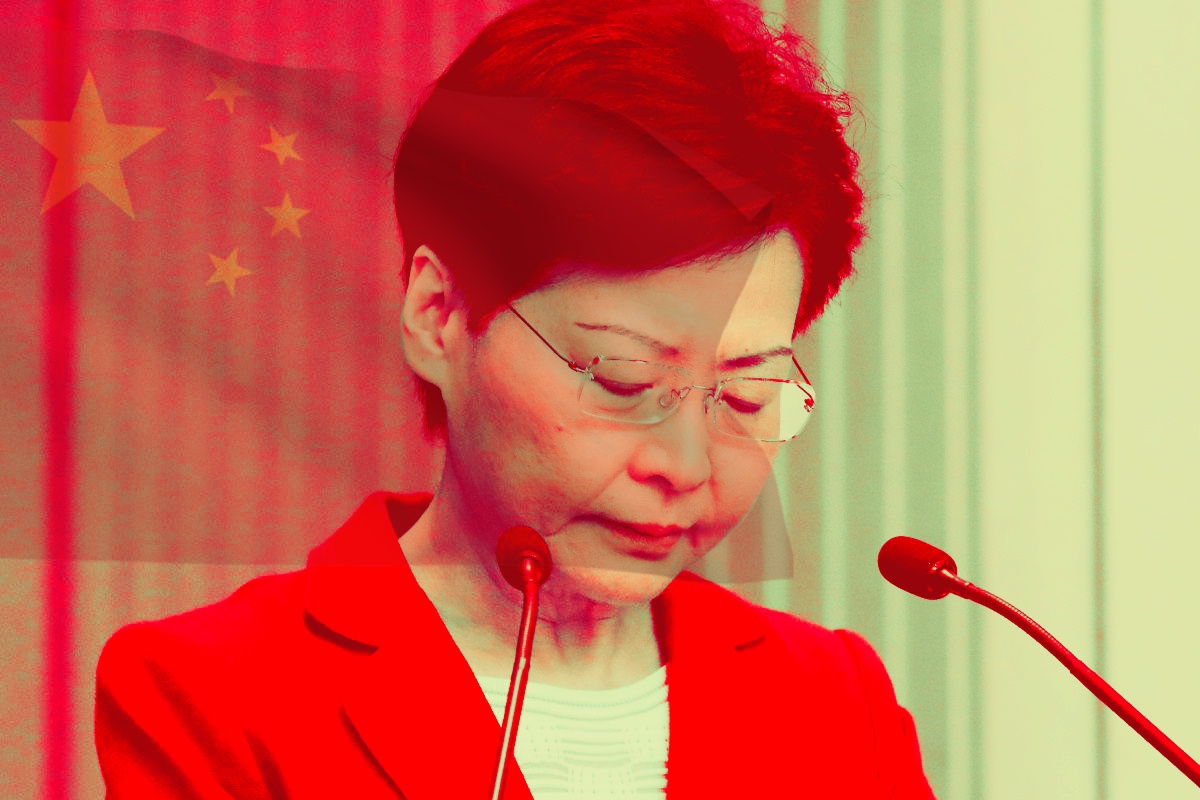
I try to take a break for a day then Carrie "Lizard Woman" Lam makes me work. Damn it, Carrie. 

News broke today that Carrie Lam has announced the full withdrawal of the controversial bill that would have allowed extraditions of suspected criminals in Hong Kong to China, which has a deeply flawed justice system (China has a conviction rate of 99+% and lacks an independent judiciary). As the bill was already essentially dead, it's being called a symbolic gesture of conciliation to the Hong Kong protesters in an attempt to quell rising unrest in the city.

So...great. Right?

The thing is, this solves nothing. The extradition bill was the match set to dry kindling. Saying "the match has been put out" can't stop the fire it's started. 


First, this is likely the easiest move for the government to make vis-a-vis the protesters' demands, and is likely a maneuver to delegitimize further protest in the eyes of the greater Hong Kong public and the world community. Many will see it as a "victory" for the protesters, and wonder, if they've "won", why they're still on the streets (if the demonstrations continue)? They'll start to question the purpose of mass gatherings that have routinely ground crucial city infrastructure to a halt. More conservative locals will consider the protesters an inconvenience - many already do. The huge turnouts we've been seeing will turn to a trickle, without a clear rallying cry, and those who are left will be labeled as "radicals".

This is exactly the intent of the government: give them the thing that is already a fait accompli, so that further demonstrations can be delegitimized.

Much of the international media will probably play along, because they don't know how to narrate the truth of the matter: that Hong Kong may be legally part of China but that 'legality' is a form of barely-disguised colonialism, and China is not and can never be an appropriate steward for Hong Kong.

Meanwhile, the arrests will quietly continue, and those targeted will start to slowly disappear. Sentences will be harsh, because the government won't have retracted the term "rioters" to describe them. Police who have engaged in unconscionable brutality and violence will keep their jobs; there will be no full inquiry if the government can help it.

If the government retracts the term "riot", that entails forcing them to admit that this sort of large scale social movement and civil disobedience is acceptable, not just to the Hong Kong government, but also their masters in Beijing. And if there's one thing Beijing wants to make it clear is unacceptable to them, it's exactly this. Plus, they'd have no grounds to execute (perhaps literally) their plan above to begin arresting and disappearing protesters.

What's more, they'd have less justification for taking those same actions later, as the end of the 50-year "One Country Two Systems" draws closer and creates more unrest. They know perfectly well they're going to have to deal with escalating protests, and they want to ensure that there's precedent to label the protesters 'separatists'
, 'radicals' and 'rioters' so as to more easily punish them.

Remember how they didn't outlaw freedom of speech in Hong Kong but slowly went after journalists and publishers through abduction, stabbing, threats and other, subtler means? In such a way that it could never be definitively linked back to the government?

Yeah, like that. That's also their plan for Taiwan, by the way.

If the government opens a full inquiry into police violence, that amounts to admitting that the police engaged in unreasonable violence: opening such an inquiry and then concluding that inquiry with "well, we didn't find any instances of police violence! They used reasonable force!" will just spark more protests. It also would require scores of police officers to lose their jobs, which would look bad for the government.

When the protesters - dissidents, really - rightly claim that trust between the police and the public has broken down, the government will gaslight them, and portray them to more conservative Hong Kongers and the world as unreasonable and hotheaded.

Think of it this way: why would a government that fully intends to become authoritarian within the next 30 years admit that the police were violent and the protesters were right? They're going to need those police officers to beat up more protesters over the next few decades, and those officers need to know that acts of brutality against pro-democracy demonstrators will go unpunished. There's no other way for a planned authoritarian state to prepare for what's to come.

Much better to try to wrest back the narrative from the protests now, so that they lose local and international support. There's already a far-too-loud contingent of tankies who are shouting that this is all a CIA plot, or that the protesters are Western imperialism-loving neoliberal scum (or whatever), and they should just shut up and learn to love living under an unfree dictatorship because 'if the West is bad, China must be good'. 


Nevermind that all the protesters are asking for are the same rights and freedoms that Westerners enjoy - only the evil West can "do imperialism", and I guess human rights are just for white people or something (barf).

Those voices will gain more traction. This is what China wants. 


The whole time, both the government and the protesters will know that the movement has in fact failed, and the government will have successfully taken away the ability of the protesters to garner international support.

You know how people who know about the Sunflower Movement often consider it a success because the trade bill that sparked the occupation was essentially killed? And how the Sunflowers themselves have been known to refer to it as a failure, because it brought about no lasting change in Taiwanese politics? Yeah, like that.

Because, of course, the ultimate desire of the Sunflowers was to reshape the way we approach political dialogue and Taiwanese identity vis-a-vis China. The ultimate goal of the Hong Kong is even clearer: true democracy. It was never wholly about extradition to China, not even when this began.

Which leads me to the last part - universal suffrage and 2047.

Seriously, if the protests hadn't broken out now, what did you expect was going to happen 28 years from now?

The Hong Kong China government was never going to offer true universal suffrage or true democracy. It wasn't willing to do that in 2014, and it's not willing to do that now. It has never intended for Hong Kong to move towards universal suffrage; the intent was always to veer away from that, and towards authoritarian rule. The plan is still on for China and Hong Kong to fully integrate in 2047, and the essential problem remains that Hong Kongers simply do not want to live under a fully Chinese political system. They don't want it now, and they'll never want it.

Even scarier, if China did offer Hong Kong more democratic reforms, ultimately they'd try to control that democracy through subtler means - the same way they've been interfering in Taiwanese elections despite having no authority in Taiwan. 


That's a problem that has no solution - there is no middle ground. Even if there were, the CCP is not a trustworthy negotiating partner. As I've said before, there's no emulsifying ingredient for compromise between China's oil and Hong Kong's water. What China plans in the long term is wholly unacceptable to Hong Kong, and what Hong Kong demands is wholly unacceptable to China. Period, hard stop, brick wall, what now?

So while Hong Kong China tries to stave off current protests, the larger problem still looms: what exactly are we going to do as we approach 2047? 


I've said it before and I'll say it again - we all know how this ends. Even if the protests die out tomorrow, in the long run it either ends in a broken Hong Kong, or it ends in a bent-and-cowed China that allows true democracy to flourish within its borders.

Which do you honestly think is more likely?