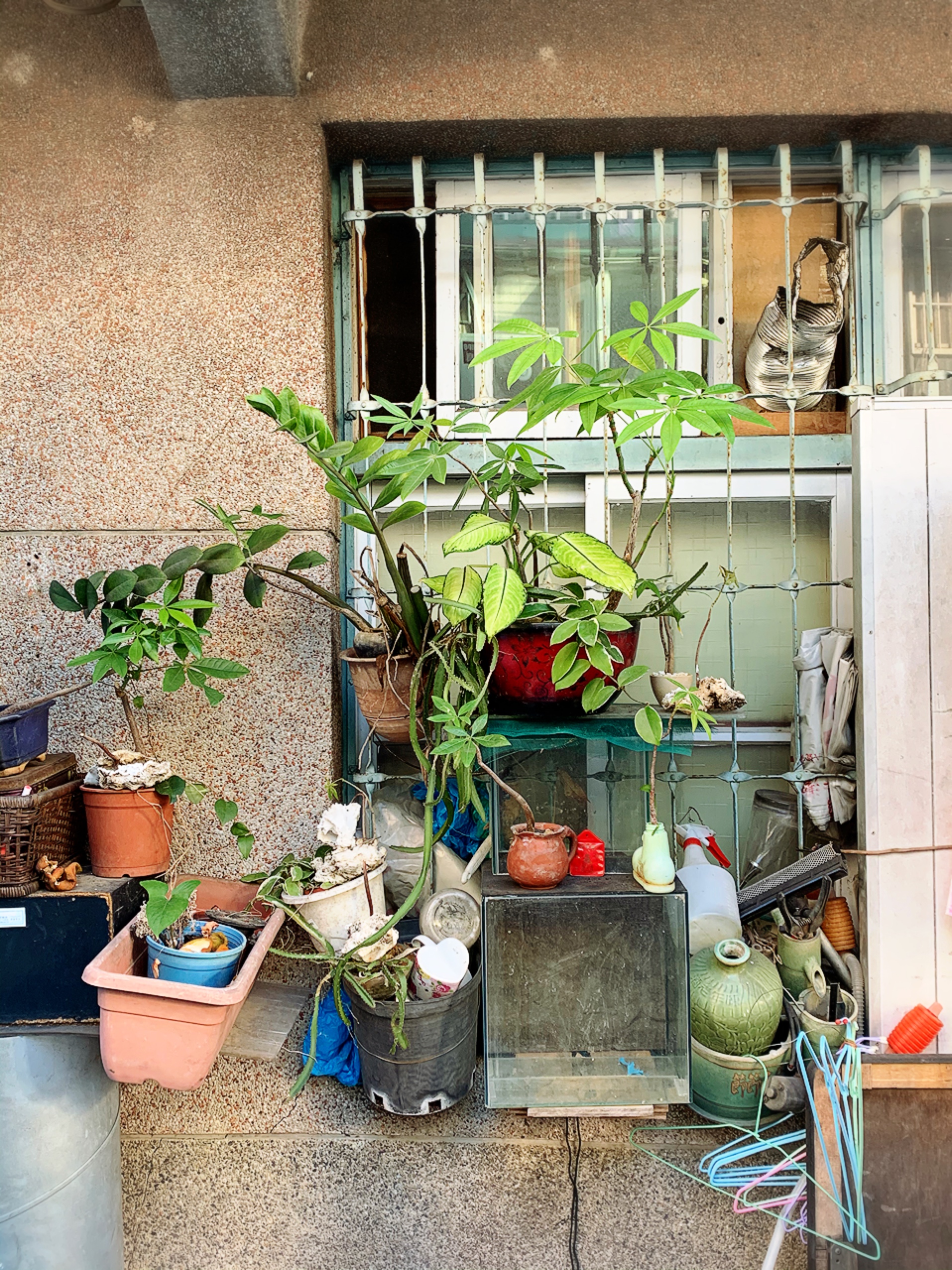
At some point in the past few weeks, I ended up with something called a "Bakers cyst" (discovered by a guy named Baker), which is a fluid cyst that develops when there's too much strain on the knee. Whether it was my trip to Europe - and all the stairs and cobblestones - or going to the gym too much, I have no idea.
In any case, that means minimal stairs, lots of rest and no hiking for awhile. Instead, to get a little easy exercise and enjoy the beautiful weather this weekend, a friend and I headed up to Beitou to check out some of its older architecture. Not Xinbeitou with its glorious Japanese-era pavilions, temples and buildings, but the flat area of Beitou which has no hills that could pose a challenge to my knee.
Beitou doesn't have a wealth of exciting old buildings to see, but its backstreets are pleasantly old-school in a way that reminds me of the quieter parts of Tainan city. There are, however, a few things worth taking a look at if you're in the neighborhood.
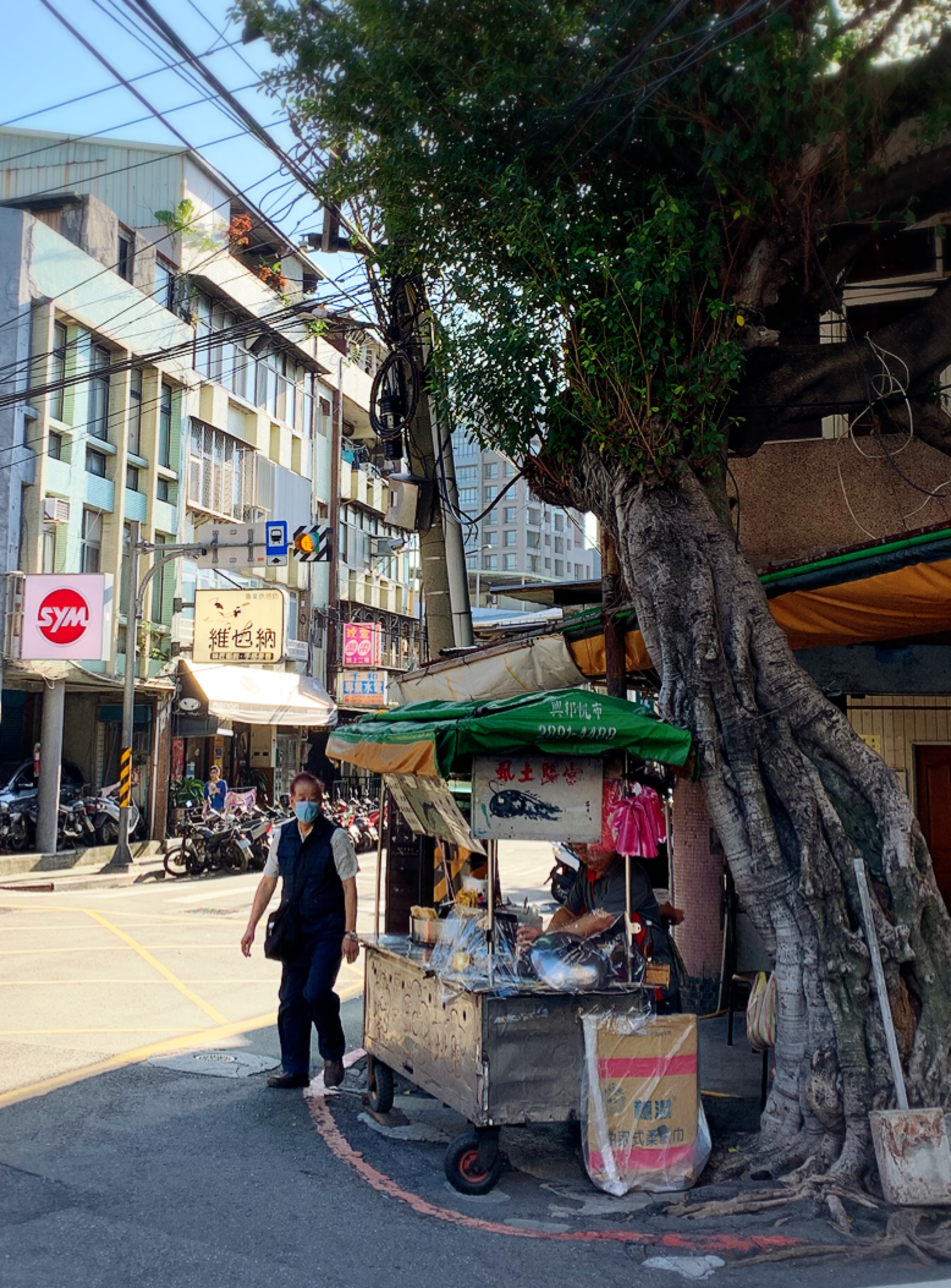
We started out walking towards the Lady Zhou memorial arch, built in the 19th century by local officials to honor Lady Zhou, whose husband died young and who apparently "kept her chastity intact" while taking care of her late husband's parents and raising their children. While I'm not on board with this particular kind of morality, the arch itself is interesting an in an atmospheric little lane next to a quirky temple.
Lady Zhou Memorial Gate (周氏節孝坊) is easy to find on Google Maps.

The lane is pleasant enough that you might feel inclined to relax on one of the stone pylons meant to stop cars from driving under the arch, or sit on the inviting benches of the temple. The temple itself is small and features a variety of scenes from folk stories painted on the bathroom-tile walls.


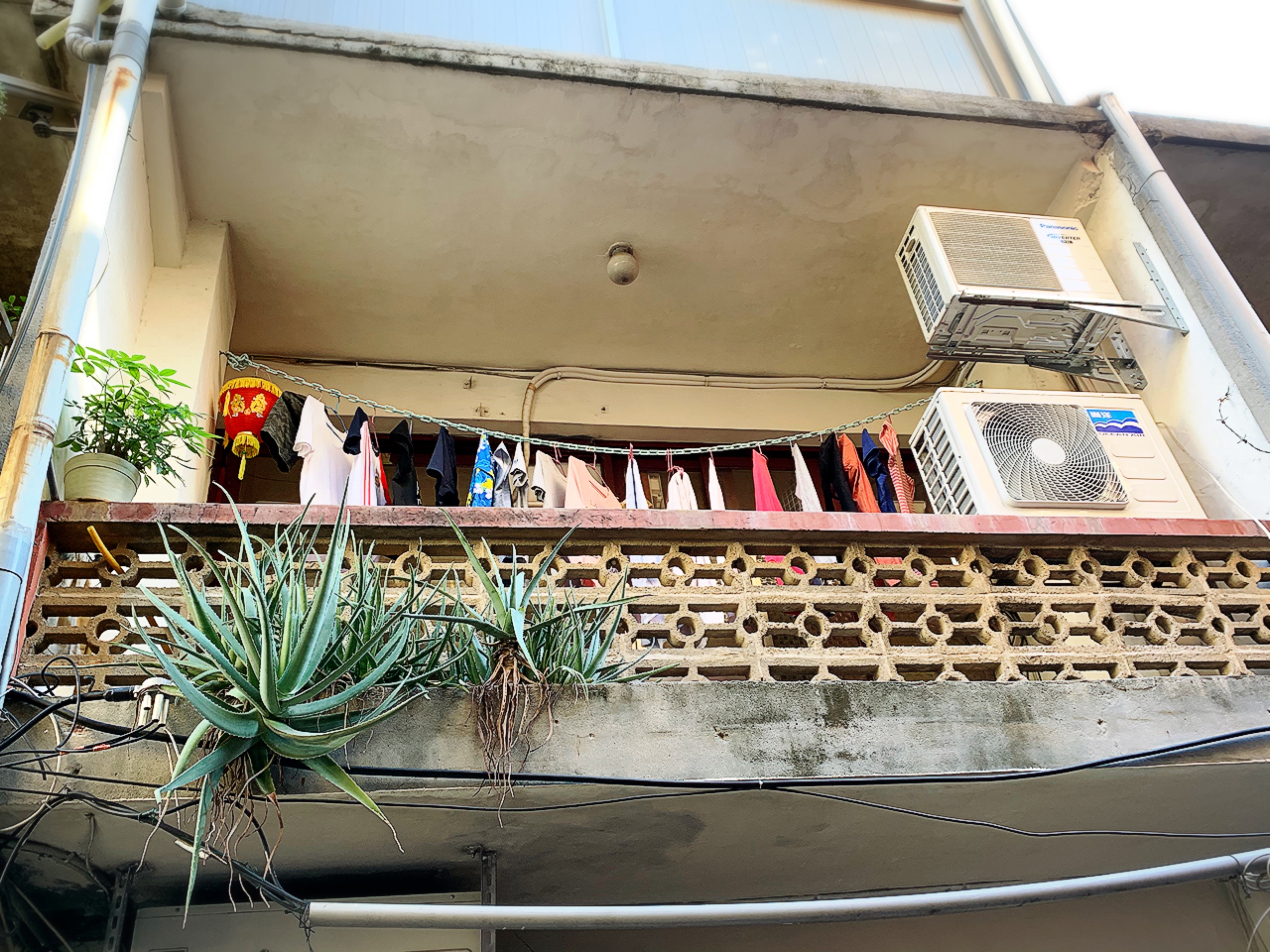
The houses in this lane are worth your notice as well, although they are not as immediately eye-catching as the baroque shophouses on Taiwan's old streets. Lovely details such as attractively painted window screens, unique bannisters on balconies, plants that give the lane some leafy atmosphere and generally just a quiet neighborhood feel make this area very pleasant. Being extremely close to the MRT, this is the sort of place I'd love to buy someday and renovate with original features intact. Sadly, though these sorts of homes look normal, they're extremely expensive now, well out of my budget (especially considering the sorts of renovations I'd want to do to make the home modern and comfortable but period-appropriate).

Then we went looking for a few more old houses that were said to still exist on Datong Street nearby. What we found instead was a kind of neighborhood junkyard, and the locals there informed us that the buildings had been torn down some time ago. There was one left in bad condition off to the side, but was basically just a backdrop to heaps of junk at that point. It's a shame, as Beitou could probably bring in more visitors - the kind who are actually interested in local history - if it kept and maintained these sorts of buildings.
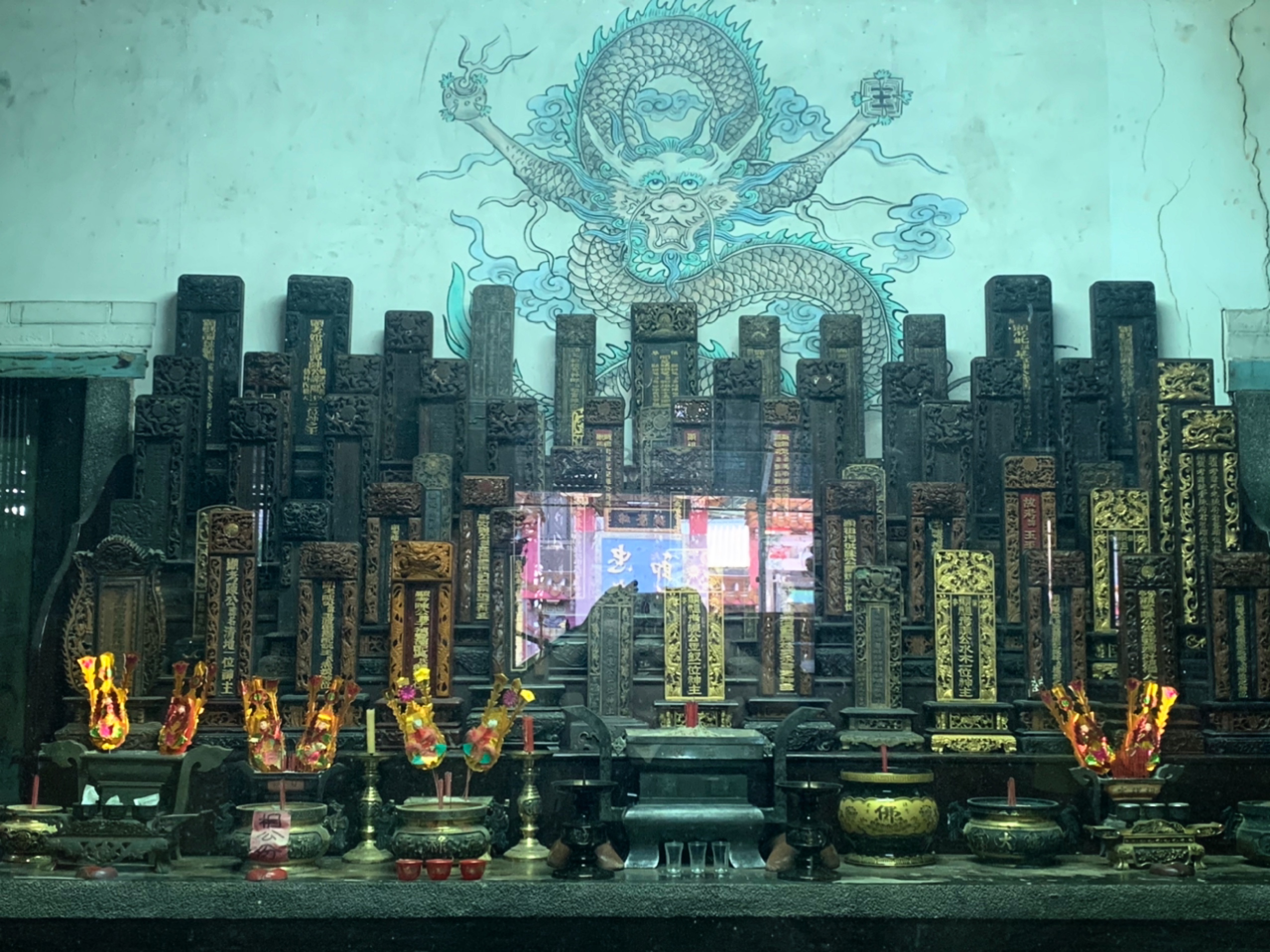
Next door, we came across an old temple not on our list, the Chen Family Ancestral Hall (陳氏祠堂, also findable on Google Maps), across the street from the adorable-looking Slipper Cafe. The hall itself is fronted by an attractive old gate, but then you have to pass through a shaded car park. The ancestral worship areas are at the back, behind a locked gate which is surrounded by piles of junk, and near the car park is a place to eat that has a sign extolling the importance of protecting the environment.
Someone from the Chen family, or perhaps just a local uncle hanging out, let us in. The tablets themselves are backed by a pretty cool hand-painted dragon - yes, we asked permission before photographing it.
There are also some lovely old paintings on wooden sideboards and an atmospherically neglected shrine to the right.
It's not a place to go out of your way to visit by any means, but it makes for a pleasant stop on a relaxed city walking day if you happen to pass by. Which, to be honest, is the case with most temples, shrines and ancestral halls.


We then walked up to Beitou Market, which is a bit loud and disorganized but has a few places to eat and at least one tea vendor selling lemon pineapple tea with chunks of pineapple (which was far too sweet but also delicious). There's also a guy selling Oreo and Rocher wheel cakes. Near the market, on Guangming Road very close to the MRT (you can see the station down the road) you'll also pass a few old shophouses from what I guess was once the main market street, which have been taken over by a Cosmed.
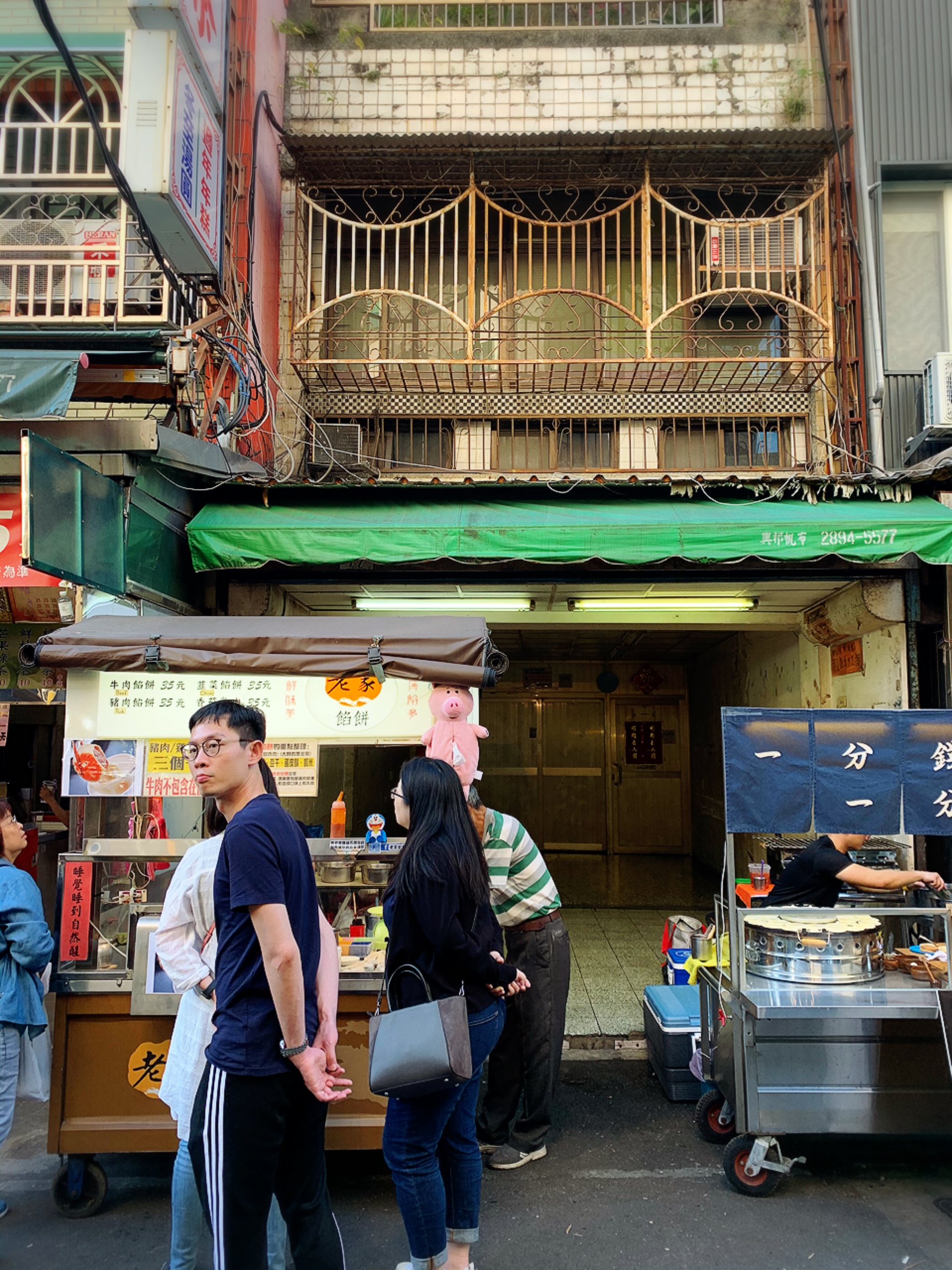
On one hand, I'm happy that these old structures are continuing to be used (and not necessarily turned into yet another tacky tourist shop, not that tourists come to this part of Beitou, as they usually head up the mountain instead). On the other, that is one hell of an ugly sign.
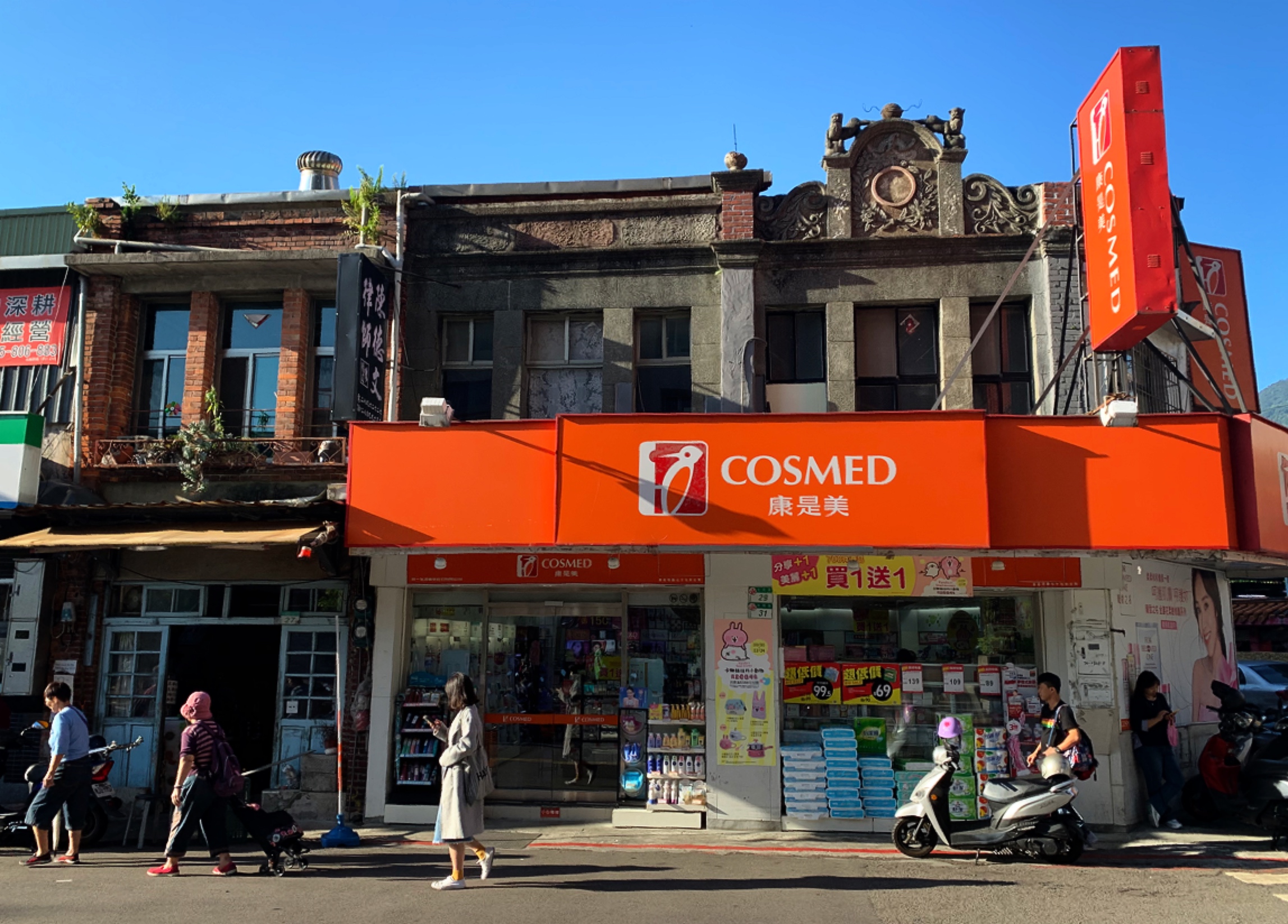
Near Beitou Market is the Beitou Presbyterian Church (長老教會北投教堂), built in 1912 and designed by William Gauld. It's the only surviving 20th-century church designed by Gauld, and its congregation was initially mostly local plains indigenous. It has brick and cement buttresses to protect against earthquakes, but there's no easy way to get in if it's closed (the gate, however, seems to be left open most of the time so you can walk right up to it).
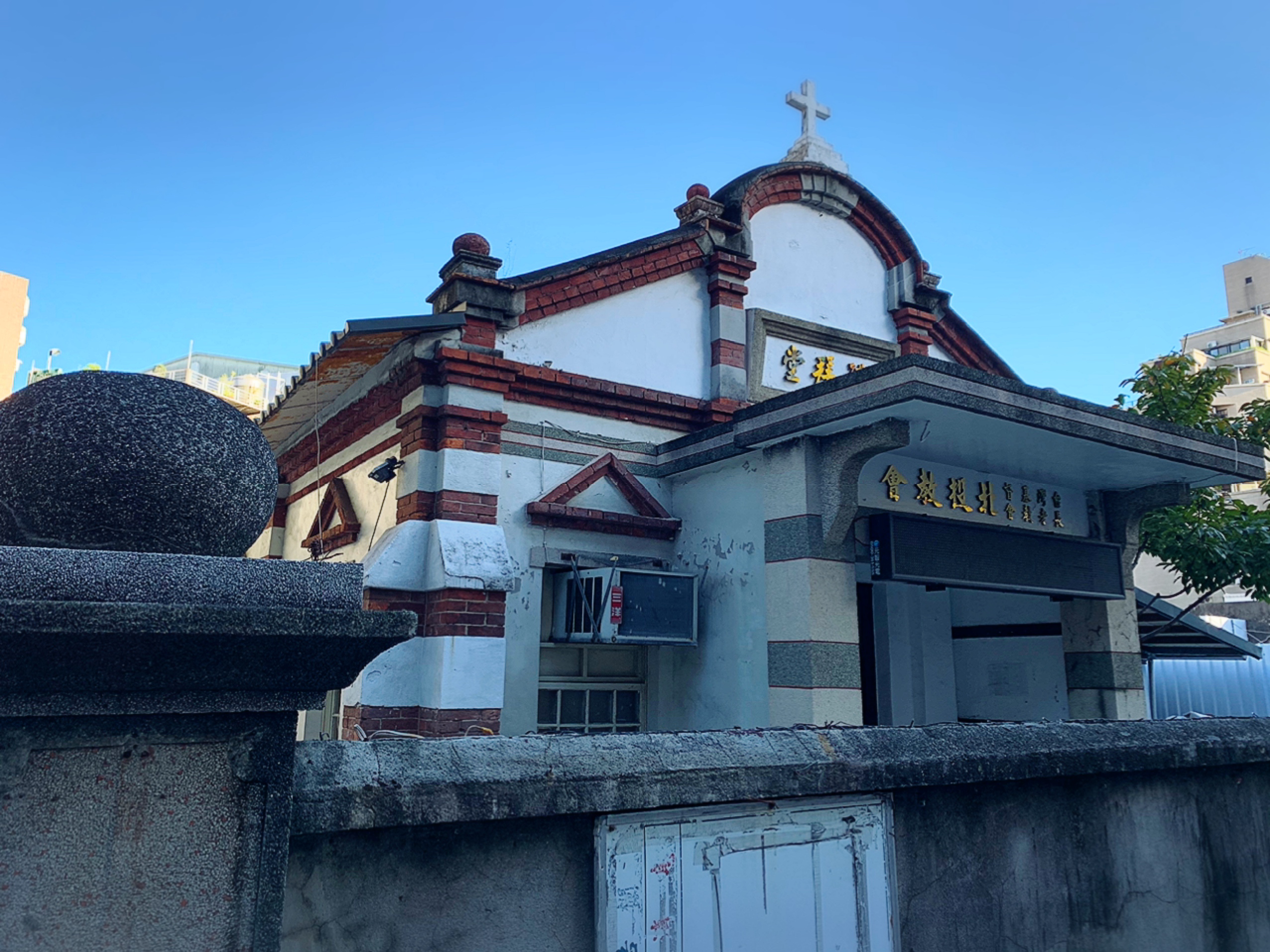
One thing we missed was the old Beitou Granary on Datong Street, not far from the Chen Family Ancestral Hall, simply because I hadn't known it was there until I researched our route a little bit after our walk. Built in the 1930s, it was (as you might guess) a grain distribution center during the Japanese era. Apparently the original wooden roof and the old rice mill are still extant. I guess I'll have to return to check it out.
We then set out for one of the last remaining two-story traditional houses in Taipei, which is down a lane off Qingjiang Road (I believe Lane 113).
The lanes in this area are highly atmospheric and worth a walk on their own, before you get to a dirt path through a small urban farm, past a few old brick houses - some in very poor condition - and one that is still lived in. The main road itself is a bit more hectic but I did appreciate the creepy mannequins in one store.

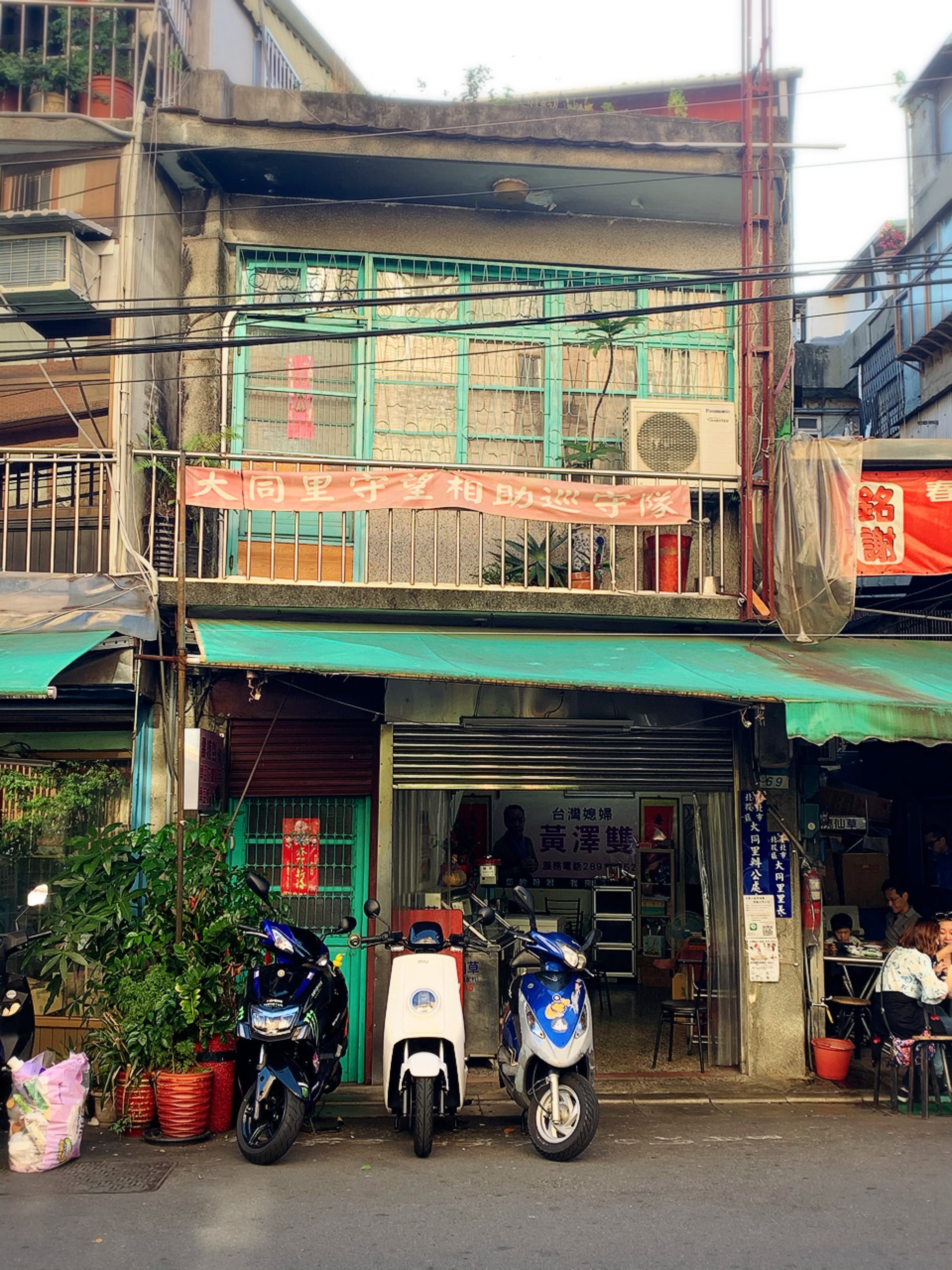
In this area you can see a lot of structures that were clearly once Japanese-era shophouses but which have been tiled over. While the tile is ugly, I'm happy the structures have survived. I do hope someday the aesthetic trend of removing tiles and refurbishing original exteriors will become more popular (the equivalent of tearing up '80s shag carpet to find hardwood floors underneath).
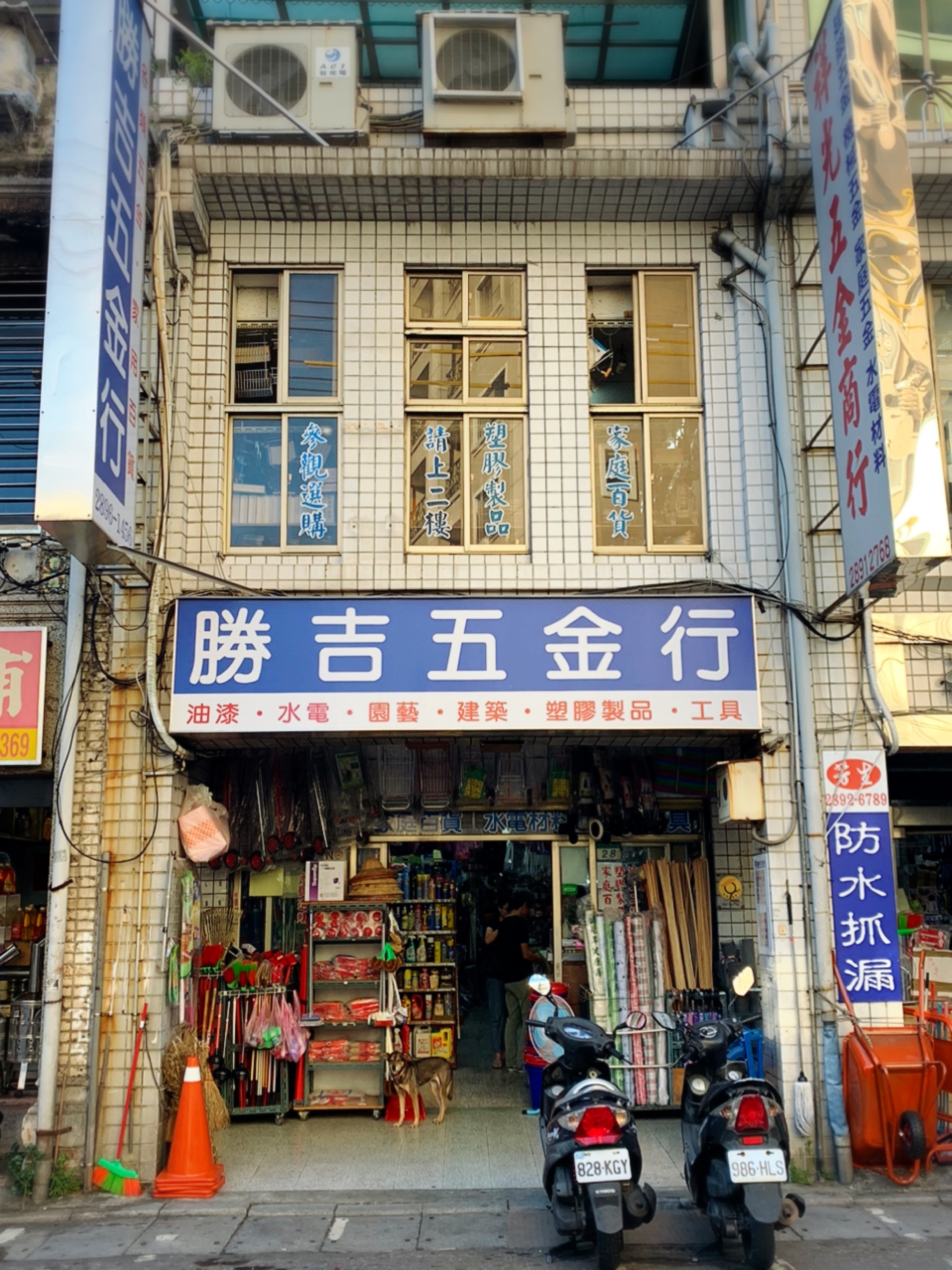
They do have a cute dog though.
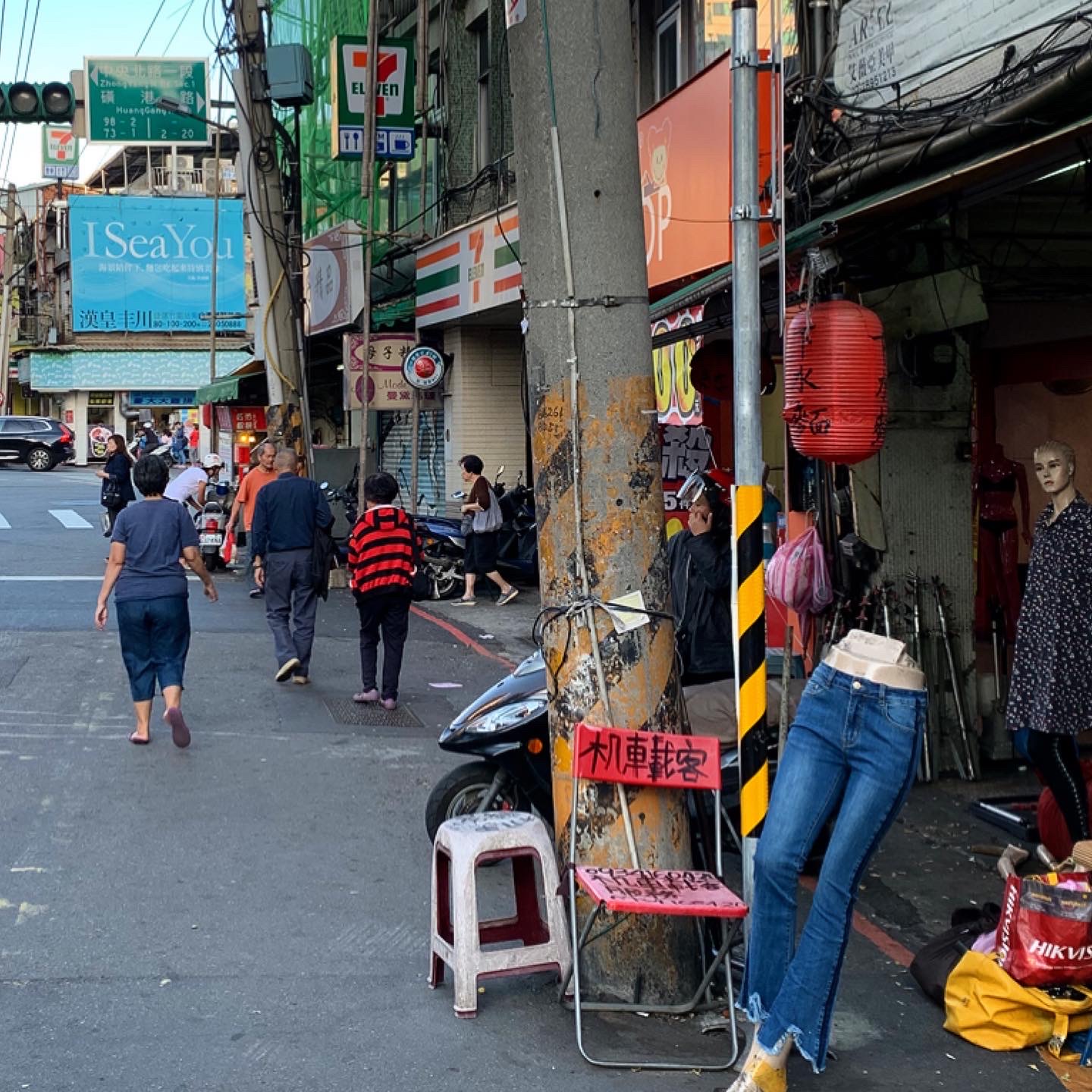


Unfortunately, the house itself was not accessible. There was no clear way in, and the path was blocked by another old house with a guardrail around it that was clearly intended to keep trespassers off. This is a section of wall from the outside. At least the slightly overgrown garden area made the whole place very atmospheric in the late afternoon.

As with many traditional Taiwanese houses, it's hard to see what the main house looks like from the road. We're clearly not the first wanderers who've tried to get in, but this person was obviously more successful. Here's what we missed:
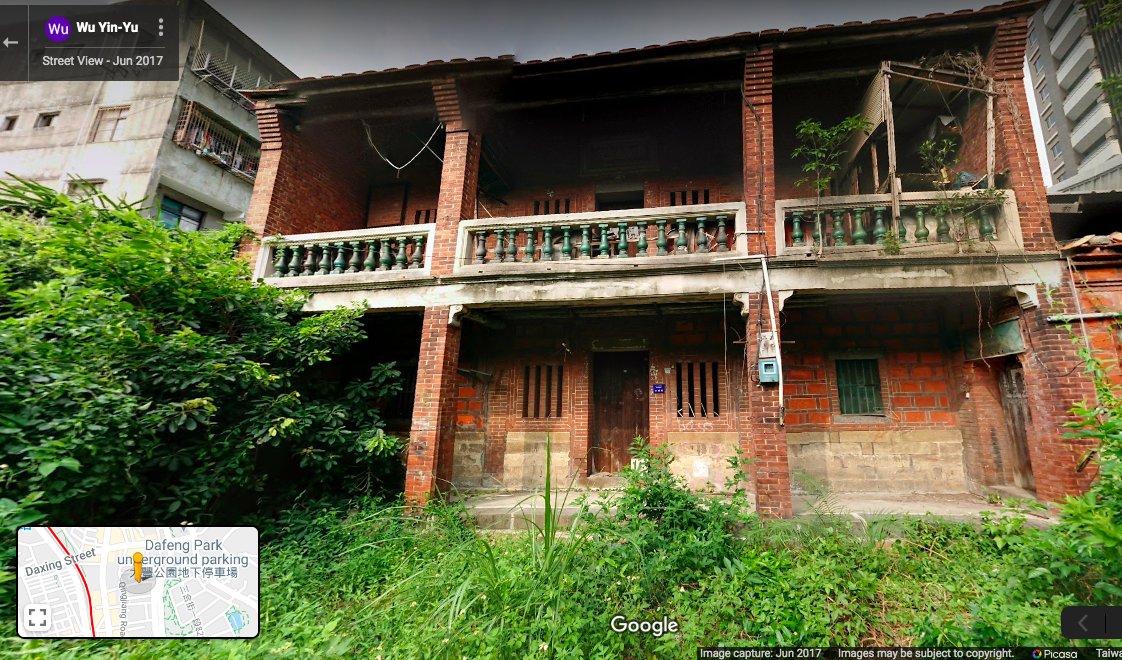
To be honest, after finding this house, we got a little lost, though we never went too far from the MRT. I couldn't really tell you where I took these photos, except to say that they're so close to the MRT that you could hear the signals of the train doors closing, and there's at least one place (closed when we came by) that appears to be a cafe/bookstore/place where hipsters hang out.
Don't worry though, that whole area is atmospheric and if you wander enough, you're sure to come across it.
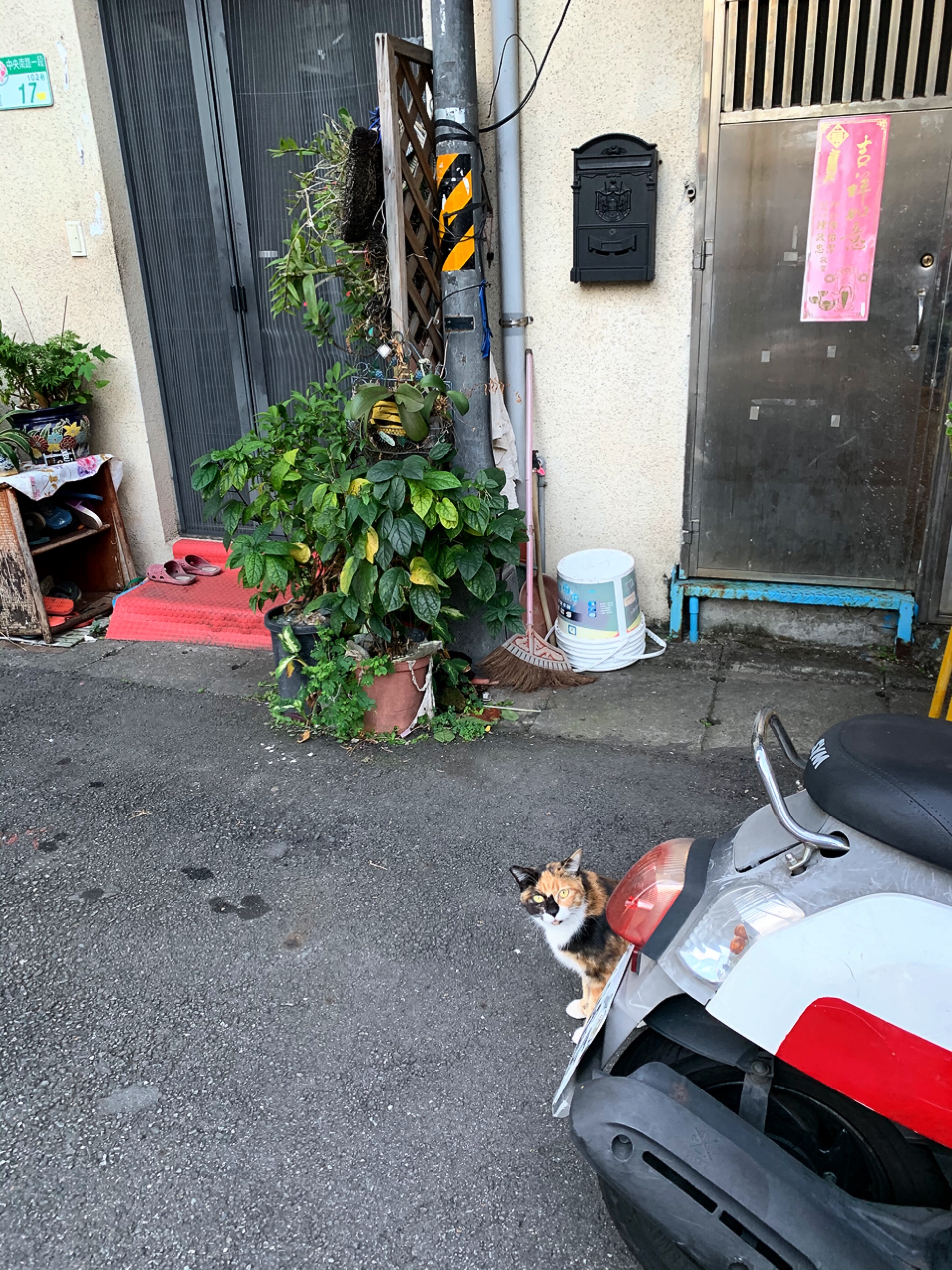
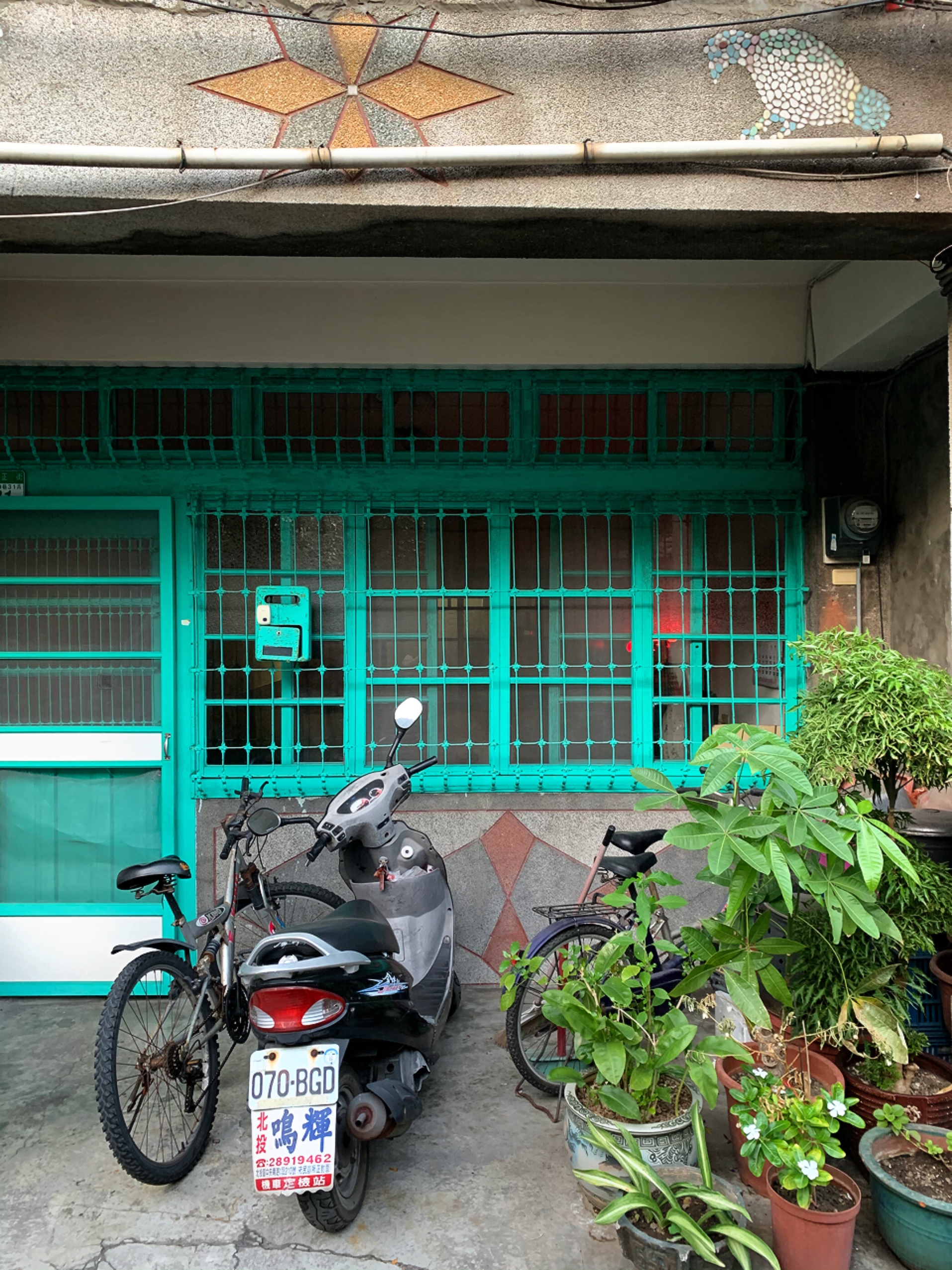
I especially enjoyed running into the cat, and the mosaic bird detail on some random person's adorable house.
Again, totally the sort of house I'd like to buy and renovate to keep touches like that intact while turning it into a comfortable living space. I have small dreams - I never wanted a mansion - but in my generation, to even do this one needs to be loaded, and it's still a shame that I'm not rich.

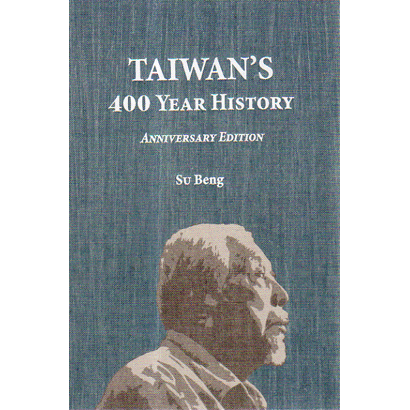
I bought the anniversary edition of Taiwan's 400-Year History at Su Beng's 100th birthday celebration on Ketagalan Boulevard a few years ago, but having already read up on Taiwanese history, I hadn't actually read it. I knew Su Beng's life story - the whole Taiwan-Japan-China-Taiwan-Japan-Taiwan saga of it. I knew that he was not only beloved almost universally among active supporters of Taiwanese independence, but that he'd been much 'redder' in his youth (that is, Marxist/leftist, not pro-CCP).
So, of course I knew the story of the writing of this book: penning it after work in his Tokyo noodle shop, with the sense that Taiwanese should know their history. They should have access to a historical narrative that the KMT was trying to eradicate in Taiwan itself. I was aware copies were banned in Taiwan itself, and it had to be smuggled in (I had not known, however, that Nylon Deng had been the one to do the smuggling, according to one of the prefaces of the book).
When he died earlier this year, I regretted not reading it earlier, and picked it up as a tribute to one of the greats. The English edition is heavily abridged from the Chinese - one slim volume instead of several fat ones - so it didn't take long.
Having finished it, I'm not sure what to say exactly. I guess I'd say this: this may be a history book, but these days, you don't read it to learn history. You read it to understand Su Beng's perspective on Taiwan's history.
That wasn't always true: when the text first became available to Taiwanese, it was so different from the China-centric narratives peddled by the KMT that it must have felt like after years of gaslighting, Taiwan was finally charged with electricity.
For those who felt no connection to China and had been bored in school learning about "other provinces", learning about their national history as one of colonialism - including calling the current regime "colonizers" - I cannot imagine how empowering and enlightening it must have been. Even though 'Taiwanese history' is more broadly accessible now and covered from a range of perspectives, we still read it now to understand more deeply what that initial rush of Aha! This is who we are! would have been like.
A few things stand out in this book: the first is that Su Beng structures his narrative not strictly linearly (though the sections are ordered in a broadly linear way), but rather telling history as a way to make points about class warfare: the KMT and other colonial oppressors such as Japan, the Qing, the Zhengs and the Dutch and the wealthy Taiwanese who backed them, and the oppressed. That is, the proletariat, or working Taiwanese, with a focus on Hoklo Taiwanese. Although indigenous people are mentioned and, to put it charitably, Hakka people are not 'excluded' so much as not differentiated from Hoklo. Hey, I told you he'd been more Marxist in his youth.
That's why you read it, to be honest. Using words like "vile" and "evil" to describe the oppressors (and I agree, they were oppressors and in many cases still are), and "hardworking" and "from their blood and sweat" to describe the indigenous and working-class Taiwanese farmers, you aren't reading straight history so much as an extended editorial on Su Beng's particular perspective on it.
Is that such a bad thing, though? While it's perhaps not ideal for the first 'history of Taiwan' that Taiwanese might read to 'know their own history' to be so ideological, is anything non-ideological? Would a straight history, without emotionality and strongly connotative adjectives, have been as engaging as Su Beng's editorial style? Would a text that aimed to be more objective have simply hidden its ideological bias better? At least Su Beng didn't pretend to believe anything other than what he truly believed in order to seem 'neutral'. That sort of honest critical perspective is actually kind of refreshing.
The second, to me, is a bigger problem: the English edition is so abridged as to make you wonder what was left out. This is exacerbated by the fact that several parts are highly repetitive. Thanks to the semi-non-linear structure, sometimes that repetition occurs across chapters. I understand that this is a stylistic feature of Mandarin and was surely present in the Mandarin edition (I think the Japanese edition, however, was the original), but for an abridged English edition, it might have been smart to cut it in favor of more content.
Here's an example. Towards the beginning, the chapter on Dutch colonialism in Taiwan includes several paragraphs that state, in different ways, that the wealth the Dutch extracted from Taiwan was created by the hard work of Taiwanese laborers. That theme is repeated - with the same wording - in the chapter on Qing colonialism, when discussing how it was hard-working Taiwanese farmers who opened the land to agriculture. Then, later in the book, there's a throwaway line about how Lin Shaomao "gave his life for his nation", with absolutely no backstory. Now, I know who Lin Shaomao was, but someone who didn't wouldn't learn his story from this book.
In several places, this or that specific person, or group, is accused of being evil, thieving, bourgeois...whatever. Some names were familiar to me; others I had to look up. They probably were, and I love that Su Beng pointed fingers and named names, but no background is provided. No buttressing of the argument. No support. They're evil, these other people are good, and that's it. I don't know if those details are present in the longer original, but the academic in me wants to scream at its absence in English.
Of course, early Taiwanese readers would probably already know who those people were, and reading the names of people who had probably been portrayed as wealthy community leaders and scions of industry being called thieving compradore collaborators and oppressors must have felt like the surge of a new zeitgeist.
This makes me wonder - why was it cut down so much? Was the original so repetitive that you basically get the point from the abridged English edition, or do they think foreigners don't care and don't need the details? I'm not sure. It doesn't help that the English has several typos and at least one wrong fact (saying Magellan died in Manila, when in fact he died in Cebu) that I hope are corrected in a future edition.
This leads to the deepest problem of all: sometimes Su Beng's ideology gets in the way of good history. I'm sorry, you old hero, but it's true (and I think Su Beng as an older man who was more pink than red might actually have agreed).
Towards the beginning, though the theme also echoes later in the book, Su Beng characterizes the class struggle as indigenous Taiwanese and Hoklo (and Hakka) farmers and laborers as 'the oppressed', who struggled against consecutive foreign governments and wealthy local 'oppressors'. Without using these words explicitly, he implied strongly that these oppressed groups made common cause in fighting against their aristocratic and bourgeois oppressors.
And I'm sorry, Su Beng, I don't care how 'Marxist' or 'revolutionary' such a reading of history sounds. It's just not true. Hoklo farmers and laborers treated indigenous Taiwanese just as badly as the wealthy ruling classes and landlords. They were just as oppressive and, frankly, racist. What those wealthy oppressors said about indigenous people, laboring Hoklo bought and upheld. They weren't very kind to the Hakka either.
It does no favors to anyone to pretend that wasn't the case.
Later in the book, he goes so far as to say that wealthy Taiwanese 'compradore' families could not be considered 'Taiwanese', as they were in the pockets of the wealthy KMT diaspora. While the latter is true, the accusation of not being Taiwanese reeks of a 'No True Scotsman' fallacy. If you decide that Taiwanese bad guys aren't Taiwanese, implying that all Taiwanese are noble-hearted and support a certain vision of Taiwanese identity, you take away the chance for Taiwan to reckon with the fact that as a nation and society, it has assholes just like everywhere else. And if you don't reckon with it, you can't do anything about it.
That's not to say that the book is a total failure. I appreciated that unlike Ong Iok-tek in Taiwan: A History of Agonies, Su Beng never uses derogatory language to describe indigenous people. Understanding the mid-life thinking of one of the greatest Taiwan independence activists is a worthwhile activity, and it does help one understand how Taiwanese identity has such a strong leftist/Marxist component (when you'd think those who support a free and independent Taiwan would be wary of anything that had even a whiff of Communism about it). The prefaces and postscripts are interesting as well.
In other words, do read it. But don't think you're reading it to "learn history" - anyone who has a general concept of Taiwanese history already isn't going to learn anything new from it, and in any case it's not so much a history as a very long op-ed. As a narrative of the past 400 years, it leaves a lot to be desired, and yet it was a powerful touchstone at the time - a piece of literature more than an academic work. As a cultural artifact, it's fascinating.
Read it so you can get a sense, even if it's hard to recapture in 2019, that sense of the first lamps of Taiwanese consciousness being lit.
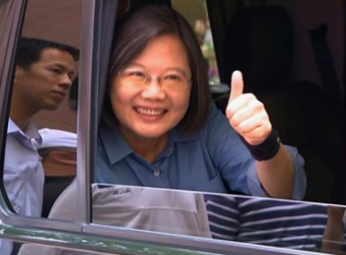
Of course it's silly to say that the events in Hong Kong haven't played any role in Tsai's popularity resurgence. They've obviously had an effect, though I'd still disagree that they are "singlehandedly" responsible for reasons I discussed on Sunday. Tsai's improved marketing, Lai's primary loss, Han acting like more and more of a racist idiot who doesn't do his job, the passage of same-sex marriage and other domestic events have also played a role.
The bigger point is this, however. Election results in Taiwan aren't the best way to measure how open Taiwan is to unification. Polls of Tsai or Han's popularity aren't either.
Despite this, people looking for some sort of 'in' to say that China is 'hurting its chances' of winning over Taiwan, which implies China had a chance to begin with, tend to look at electoral politics to support their arguments. That's exactly what happened in the Bloomberg piece that annoyed me so much on Sunday.
The way to measure whether China has a chance of 'convincing' Taiwan is to look at more stable long-term data regarding how Taiwanese view themselves and their country.
That is, Taiwanese identity and Taiwanese independence (de facto or status quo, regardless of name). Regardless of who they vote for, if a sense of Taiwanese identity and nationhood is strong, you can be sure that China could hire all the free candy vans in the world, and Taiwan would not budge.
And that's exactly what we've seen. Sure, pro-unification half-burnt department store mannequin former president Ma Ying-jeou won in 2008 and 2012, but Taiwanese identity only grew, and attempts at pushing Taiwan closer to China were met with massive protests that destroyed his legacy. Even when Taiwanese are open to closer economic cooperation, thinking it's not a big threat, they're still not interested in unification.
Similarly, Tsai's popularity could be in the gutter and it wouldn't change the fact that Taiwanese identity recovered quickly from its hiccup, starting in around 2018. Even when that number began to dip, it never came close to being overtaken by "Chinese" (or even "both Taiwanese and Chinese").
In fact, Han could win in 2020, and it still wouldn't change that. It makes the landscape more dangerous, as he and his CCP/KMT handlers would probably take that as a mandate to head in that direction. But there's no reason to believe that Taiwanese identity will take a hit any more than it did either time Ma won, which means there's no reason to believe that China's 'chances' of convincing Taiwan to move toward unification will improve either.
It's just deeply simplistic to think of Taiwanese politics as two boxes voters can tick: "the KMT/unification/Chinese identity" on one side, and "the DPP/independence/Taiwanese identity" on the other. There are strong correlations, with China being the biggest cleavage (heheh, cleavage), but to assume that a vote for the DPP is a vote for independence and a vote for the KMT is a vote for unification is such a jejune way of looking at it.
So why do people believe otherwise? I have no idea, but I suspect they think it just makes for a clickable lede.
Anyway, there are lots of reasons why who wins in 2020 isn't a good measure of support for independence or unification, so please allow me to opinionate in your general direction about them.
The first is that not every independence supporter sees China as the biggest threat to Taiwan's sovereignty, as Frozen Garlic so insightfully pointed out. I won't summarize his post as it's not that long - go read it. I'd characterize the voters I'm about to describe a little differently, though. While his 'fundamentalists' might feel angry at the DPP for promising nationhood and failing to deliver, there's a subset that is willing to vote for the KMT if they are convinced unification is off the table. During the Ma years, I knew a few of these: generally green, had voted for and grown disappointed with Chen, and then voted for Ma to 'punish' the DPP while at the same time assuming that, as Ma was the US's preferred candidate, that the US would have Taiwan's back.
And yet, these voters clearly don't see the KMT or the ROC military as potent symbols of the old regime, being more like the pragmatists Frozen Garlic describes. A part of why they were willing to vote for Ma was that they saw the KMT as a viable political party that had evolved with democratization.
I am hopeful, at least, that most of this "I'm green but Ma is acceptable" crowd is not going to vote for Han this time around.
Then there are the true fundamentalists - the "Never Tsai" people who do see the KMT and the ROC colonial structure as the biggest threats to Taiwanese statehood and would never vote for them - these are the folks drawn in by people like Annette Lu (so that's like, four people) or William Lai, who don't like Tsai's lack of nationalist hot air. Their refusal to vote (or voting for some last-minute third party candidate - I think James Soong is running for the 456th time) is also a factor.
But then there's another group, the ones who could potentially swing the election to Han, if it can be swung. Those are the born-and-raised deep blues who still think that Taiwan is not a part of China, or at least not the PRC. The old-school KMTers before the KMT turned red, and those who are smart enough to see Taiwan's reality clearly, but not willing to break from the party identity they inherited from their parents.
Don't laugh. I know one of these guys. The older son of a father born in China, he grew up in a military village in Taiwan. He was raised with an "ROC" identity and a sense that the KMT was an above-board political party, but his observations of life in Taiwan made him realize that Taiwan was truly a different place from China. He calls himself Taiwanese. He thinks "retaking the Mainland" is a pipe dream, and supports independence. Although he's 華獨 (a supporter of independence keeping the Republic of China framework), if a peaceful de jure independence were offered with the condition that Taiwan must be "Taiwan" rather than the "Republic of China", he would consider it "a difficult decision" but indicates a willingness to sincerely consider it as a far lesser evil than unifying with the PRC. He supports marriage equality and somewhat begrudgingly concedes that Tsai is handling China well - in fact, he has plenty of views more at home with the DPP than the KMT. He hated Chen's overt Hoklo nationalism.
And yet he intends to vote for Han. Identity is a powerful thing.
The point is, people like him may vote as though they're pro-China, but they're not. They're anti-unification and anti-PRC (as opposed to "pro-Taiwan"), with views often constructed during their formative years in which the KMT was emphatically not "the natural ally of Beijing" (as Richard McGregor put it in Bloomberg) the way it is today.
In other words, the sort of people who can swing an election in Taiwan and put a KMT president in power are not necessarily people who will support steps toward unification.
Looking at it that way, there is no meaningful support for unification in Taiwan and there hasn't been in some decades, regardless of who wins elections. If that's the case, then events in Hong Kong have not, in fact, "ruined China's chances" with Taiwan, because those chances never existed in the first place.
To finish this off, that's why things like this piss me off so hard:
What if Han wins the general election and calls for “peaceful reunification” of the two Chinas [sic sic sic], based on “one country, two systems”? Solve for the equilibrium! I see the following options:
1. They go ahead with the deal, and voila, one China!
2. The system as a whole knows in advance if this is going to happen, and if it will another candidate runs in the general election, splitting the KMT-friendly vote, and Han never wins.
2b. Han just doesn’t win anyway, even though his margin in the primary was considerable and larger than expected.
3. The current president Tsai Ing-wen learns from Taiwanese intelligence that there are Chinese agents in the KMT and she suspends the general election and calls a kind of lukewarm martial law.
4. Han calls for reunification [sic] and is deposed by his own military, or a civil war within the government ensues.
5. Han foresees 2-4 and never calls for reunification [sic] in the first place.
What bugs me about this (other than the absolute howler that is #3, lol) is that none of these options includes the most obvious one.
It allows for government intervention, party intervention and current administration intervention (again, lol) but not the actual intervention likely to occur.
In fact, here's the most likely outcome of that scenario:
Han wins, calls for unification, and faces protests so massive that they make the Sunflowers look like a school trip to learn about government.
If Han wins and attempts #1, this is almost certainly what will happen, because a vote for Han is not a vote for unification, just as a vote for Ma wasn't one, either. Forget the legislature as the seat of all the action - entire government ministries are occupied. Traffic at a standstill. Marches every weekend. Graffiti everywhere.
And because this hypothetical President Han is Beijing's toy, and would be quite serious in his attempts to allow a "peaceful" annexation, those protests grow so massive and so angry that in order to assert control (and carry out his Chinese masters' orders) Han very well might tacitly permit more police violence than Taiwanese find palatable, which is any police violence. Remember that a whole song - the other one, not the super famous "Island Sunrise" - was inspired by a few water cannons on a single night in 2014. They fight back, as Hong Kongers have done, and bam. That tsunami I warned about in my last post? That's what it is.
I don't have a conclusion. I just want you to sit there and roll that around in your mind for a bit.
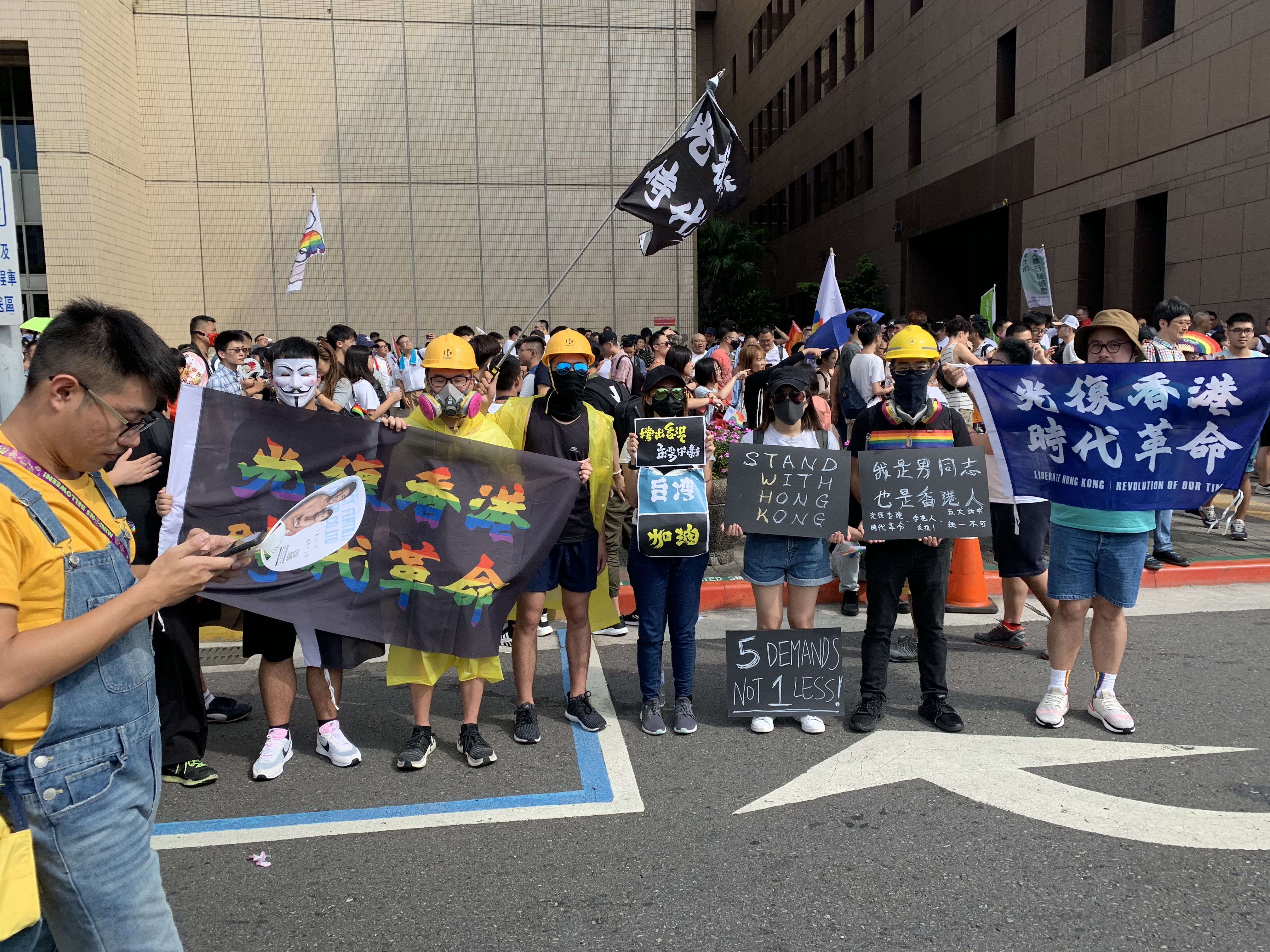
This is about us against them.
After yesterday’s horrifying events in Hong Kong, I spent a fair amount of time on my couch bawling. The day before, police had terrorized shopping malls, beating people up randomly - some of whom were just shopping. Yesterday, the police ramped up their campaign of brutality by shooting at unarmed protesters (including hitting one in the abdomen with a live round), trying to mow protesters down on a motorbike and thanking protesters for coming out “so they could shoot at them” and laid siege to the CUHK campus for no discernible reason.
In addition, protesters themselves had set on fire a man who was arguing with them after an extended dispute. From the video, which you absolutely should not watch, they were not defending themselves as it was one man against several of them. The man is in critical condition (as was the teenager who was shot in the chest by police).
I cried not only for Hong Kong, but because earlier that day I had walked through my neighborhood in the late afternoon. It was balmy and breezy. Young lovers canoodled on an old bench in my courtyard. Retirees and their care workers and dogs loitered at picnic tables under the broad umbrellas. Outside my complex, a woman helped her elderly father walk slowly down the footpath, under the hanging vines from an old tree in a sidewalk planting patch. Two construction workers joked on break.
A group of pedestrians tapped their smartphones waiting for the light to change, a decorative cement compass showing the four cardinal directions was embedded in the footpath behind them. An MRT train whizzed by on the tracks overhead.
And all I could think was "these streets could be on fire in just a few months”.
Listening to BBC World Service that evening, the reporter interviewed both activist leader Joshua Wong as well as an anti-protest legislator.
Wong, as with everyone I’ve heard comment on this tragic event (with one unfortunate counter-example) emphasized that neither he nor other activists and organizers approved of what was done to the man who argued with demonstrators. They not only refused to condone such actions, they actively condemned them. And they are right to do so - it was a stupid, useless move that will cost them local and international sympathy and make people question how ‘peaceful’ these protesters really are. There is no benefit in it - it was something done out of pure rage. The rage itself is justified, but the actions taken as a result are not.
Even as Wong decried police actions yesterday and in previous weeks and months, he was very clear about this. That the man was ‘wrong’ doesn’t matter - it shouldn't have to be said that never acceptable to set someone on fire.
The thing is, I haven’t really heard anyone on the protesters’ side defend what those individuals did. This is one of the very few times that the protesters attacked without needing to, rather than fighting in self-defense or going after the police who are going after them (which at this point I think might be justified given the widespread police brutality). In each case where this has happened - protesters and their allies have engaged in long public discussions of whether such actions were right or wrong, and even apologized publicly in one case.
Looking at the other side, they don’t extend the same courtesy. Following Joshua Wong, the pro-China legislator - I didn’t catch her name - spent her entire interview time ranting about the violent, radical “rioters” and really hammered home that they’d set a man on fire. Her criticism is justified, but she refused to do the simple, humane thing that Joshua Wong had done and admit that her ‘side’ had committed numerous brutal acts as well - including being implicated in the death of protester Chan Tsz-lok among the crimes named above. To her, all police action was justifiable; none of it consisted of mindless brutalization.
Wong acknowledged the humanity of the man attacked by protesters and condemned such treatment of the movement’s opponents. The lawmaker would not do the same - they’re all just mindless rioters and they have what’s coming to them so we can “keep the peace”. One imagines she thinks that Beijing’s oppressive peace is not only preferable to today’s Hong Kong, but that it’s desirable in its own right as well. She cannot see that - or why - so many of her fellow Hong Kongers disagree.
Carrie Lam’s press conference followed a similar rationale: the protesters are violent, their demands have gone beyond a call for democracy (except they haven’t, because democracy has not been promised), they are the “enemy of the people" and will be “stopped”. Stopped for what? I have to ask. Stopped so Hong Kong can lose what really matters - its freedom? They will destroy this city, she said - as though allowing China to swallow it whole isn't another form of destruction.
And that is the difference between us and them.
We make mistakes. We have overly-aggressive and radical elements. We’re not even close to perfect. But we step back, we acknowledge our wrongs, we engage in discussion of our motives and actions, we’re willing to criticize and even condemn our own (which, by the way, is why it's also so hard to organize our own. It’s not that we’re wrong; that’s just the nature of the double-edged sword of self-criticism.) We evaluate our means vis-a-vis our ends. The difference isn’t that we’re angels and they’re demons - it’s that we’re all flawed, but at least our flaws are not systematic and planned, and we admit it and try to do better.
Them? They engage not in one-off mistakes, but systematic brutalization and murder. Their goal is to deny Hong Kong the rights and freedoms they currently have, let alone any hope for democracy. You can’t look at those videos of police actions and see otherwise, so they must be aware of this, but they won’t admit it. They don't discuss it, and they certainly don’t apologize for it.
And that’s a big part of why they are wrong and we are right. Period. There are not two sides here. There never have been.
These events hold some important lessons for Taiwan, too.
This wave is coming for us. Don’t pretend it isn’t - China is hell-bent on annexation, and while they may not succeed, they will attempt it in some form. It may not be full-scale invasion, but then Hong Kong didn't experience that either and look where they are. There is no such thing as peaceful unification, which means there will be protests. Those protests may turn violent, especially if we have elected a government that is more likely to excuse police violence.
We need to prepare and organize now.
We need to clarify our means and our ends now, too. It's imperative to make a commitment to peaceful protest, with fighting in self-defense only. Hong Kong balks at the notion of violent protest; non-participatory Taiwanese are likely to react similarly, if not more conservatively because the fight will seem at a greater distance, with China across the water holding no official sovereignty over Taiwan. Culturally, I also suspect Taiwan is in a place in its history that doesn’t look kindly on violent protests, even though it has a history of rebellions, many of which were violent. As the tsunami rolls in, we need to figuratively seek higher ground.
It's also important to remember that despite our best efforts, such things may occur. We need to be ready to condemn them even as we stand together. We need to be ready for the ‘other side’ to condemn us even as they refuse to admit their own brutality, even if it is more systemic, more widespread, more hateful, and in the service of a totalitarian, anti-liberty goal.
Finally, as we accept that this is coming for us, we need to make some hard personal calculations. Do we stay or go? If we stay, do we join the fight? A lot of people are going to have to decide to risk their lives to stay and fight if we have any chance of weathering this. A lot of us are going to have to risk our lives only to be maligned by ‘them’ as ‘violent rioters’.
We're already at us vs. them, though I’m not always sure who will fall on what side. Hong Kong is learning what makes a side the right one, and what the risks really are. It's learning what it means to dig in and fight.
Taiwan's going to have to learn that too, and soon.


