Monday, December 28, 2020

Taiwan needs to change its abortion laws, but will it?

IMG_9640

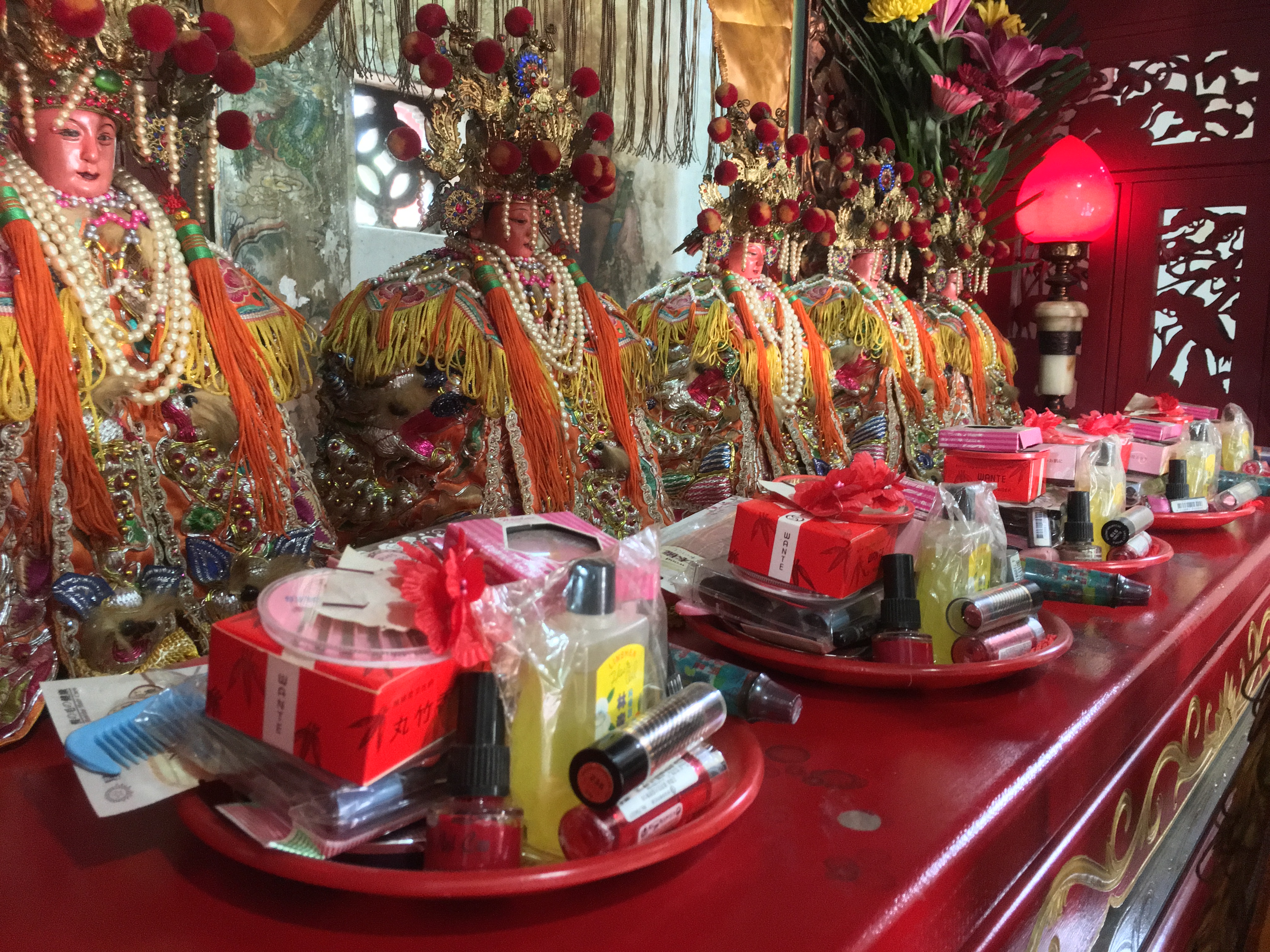
As usual I don't have a great header image, but I thought a memorial temple to five women who were screwed over by the patriarchy in Taiwan's distant history was fitting enough (from Tainan's Five Concubines Temple)


News broke early in December that Taiwan's the Health Promotion Administration is planning to propose changes to Taiwan's abortion laws. Specifically, they hope to eliminate the requirement that married women seeking an abortion require the consent of their spouse, as this infringes on a woman's bodily autonomy and reproductive freedom, is discriminatory towards women. The proposal also includes changing the title and some of the language in the law (problematically called the "Genetic Health Act", yikes) for being discriminatory.

I didn’t write about this when it happened partly because I was simply too busy, but also partly because I wasn’t sure I had much to say about it. Of course the law should be changed; that's obvious. But it rattled around in my head long enough to come out in written form, so here we are. 

I think it's a good entry point to revisit the debate over liberalism and conservatism in Taiwanese society, which I will do in a subsequent post, but it deserves its own investigation first.

To my mind, the double standard that unmarried women can exercise reproductive rights fairly easily (anyone can claim that carrying a pregnancy to term would harm their 'mental health' or 'family life') but married ones are subject to the approval of a spouse seems to be built on several assumptions. First, that a husband -- this law was enacted when same-sex marriage and trans rights were not even under consideration -- has the right to make decisions about his wife's body without her agreement. Second, that a woman needs to give a 'reason' for terminating a pregnancy. Third, that a single woman has rights which they lose when they get married,  meaning that married women are still seen in a sense as property. Finally, that children in households with married spouses were usually desirable to society but unmarried pregnant women were not. In fact, if you read the law carefully, the "[if the pregnancy will] affect family life" provision makes it fairly easy for a married man's affair partner to get an abortion, but not his wife.

Read between the lines: it was never about giving single women a way out while respecting the "partnership" of marriage, and those who say it is are full of crap. It was always about protecting men who got women pregnant out of wedlock, but valuing a married woman's children and her male partner's right to them over the woman herself. While some architects of the law might have hoped it would ultimately improve women's rights, it was never fully about that: it was always about which pregnancies were desirable -- to society, not the women carrying them -- and which weren't. There's a reason why some people translate the Genetic Health Act as the "Eugenics Act". That's basically what it is. Just look at one of the very first phrases in the act, which references the "upgrade" of "population quality". 

It's worth discussing abuse of the law's marital status loophole by some clinics: I've heard stories from multiple sources -- which I'm keeping confidential for obvious reasons -- that there are clinics that ask for "the father's" approval to those seeking an abortion, even if the patient is not married. I have mostly heard of this happening to foreign women who may not know the law, but also of Taiwanese women being treated this way. (I don't know whether it actually happens less often to them as they're more likely to know the law, or being a foreigner here, I hear fewer of those stories).

Focus Taiwan points out that the past 20 years were marked with attempts to change the language, in 2006 and again in 2013. That places the initial attempt to amend the law near the end of Chen Shui-bian’s presidency. The 2012-2013 attempt (when the Executive Yuan ordered the HPA to amend the law, which never happened) would have been just before the Ma Ying-jeou presidency caved in on itself. The legislative change that allowed abortions was promulgated under KMT dictatorship, but had also been illegal under that same dictatorship for decades as they promoted traditional gender roles. This means that such initiatives could be proposed and pass or fail regardless of the party in power.  

I'm not sure that will hold up, however. The KMT seems to be swinging toward social conservatism and appears to be unable to attract young supporters despite some members' warnings. The DPP seems to be swinging away from it, with the future of the party looking to new generations as older members, well, storm off in huffs that few pay attention to. 

Will the law ultimately be amended? I think so; though some are trying to bring the Culture Wars to Taiwan and the KMT appears to be receptive, they haven't been quite as successful as their counterparts in the US or elsewhere. The government that passed same-sex marriage and appointed the first openly trans woman to a highly public position is likely to also welcome changes that broaden access to reproductive rights. The court that made same-sex marriage an issue of immediate legislative importance and ended the criminalization of adultery is fairly likely to keep up the trend, if it goes to the courts. Public opinion doesn't seem to favor these changes, but neither do people seem eager to re-hash previous battles. Changes happen, culture adapts, and society moves on.

However, opposition to improving access to abortion rights is likely to ramp up in coming months, led by the same people who screeched about marriage equality. As these groups not only appear to study US Republican strategies for inducing outrage but in some cases work openly with the American right wing, you'll probably hear a lot of the same facetious arguments you hear in the US. 

There will surely be some who scream that it's not in Taiwanese (or Chinese) traditional 'culture' to allow this, because of a cultural emphasis on 'family values'. Of course, name one culture whose 'traditions' are not said to 'emphasize family', and I will buy you a beer. 

This argument will conveniently forget that most laws propagated in Taiwan until the 1990s were created under foreign dictatorship, so it's not clear how Taiwanese laws actually relate to Taiwanese culture. If you want to make the "Chinese culture" argument, please go talk to the People's Republic of China where abortion has been easily accessible for quite some time, and in many cases was actually forced on pregnant people

This is all likely to come to a screaming, frothing head, with the KMT most likely playing a role. There will be protests, those who already hate President Tsai are going to use this as another reason to attack her (even though it's not directly her doing, I would imagine she supports it), and public opinion polls will once again show that Taiwan is in many ways a more conservative society than some factors indicate, but also more liberal than the world often believes. Then it will pass, and things will go quiet-ish until the next round of battles.

All of that leads us to the ultimate question: given Taiwan's recent achievements and changes to abortion access likely, is Taiwan a 'liberal' or 'conservative' society?

Of course, as with any debate that attempts to posit a clear dichotomy, the answer is 'both' and 'neither' -- a discussion for the near future.

Edit: here it is!

Tuesday, December 22, 2020

Taiwan is -- and should be -- angry about its first local coronavirus transmission since April


This was the look on my face when I heard the news. Yeesh.


Just a few quick thoughts on today's news of the first domestic transmission in over 200 days.

First, I never thought I'd see the day when Taiwanese were royally pissed at Kiwis, but here we are. Or at least, they're pissed at one selfish prat from New Zealand who didn't want to wear a mask or cooperate fully with contact tracers. There are rumors about why he was "not truthful", but nothing confirmed. At least, EVA is mulling firing the man. Good. If he had acted in good faith, told the contact tracers all the details he certainly did remember and worn a mask, that would be one thing. But he didn't; he's endangered lives and the company image. I'd say it's fair to let him go.

Second, anyone thinking the previous streak was "too good to be true" and thought the government was probably lying about something are proven wrong. The second a local transmission was confirmed, they announced it. They have been wonderfully transparent and there's no reason to doubt that.

One commentator said there was "introspection" in Taiwan today, but why should there be? Taiwanese did everything right. It was this one selfish git who isn't Taiwanese and as far as I'm aware doesn't live in Taiwan, though I suppose he probably visits (well, visited) often as part of his job. I think anger or at least frustration is the most justified response and wouldn't judge anyone for feeling that way.

What we can expect now: more enforced mask-wearing rules, people staying home more, a bit more worry and a bit less of the "eh, they say we have to wear a mask but I can lower it because we all know there's no COVID in Taiwan" that I've noticed since the new mask rules went into effect at the beginning of December. On one hand, that everyone's frustrated at one local case shows just how well Taiwan has done. As Brendan said, "I heard the US had at least one new case today. I think the UK did too!" We can get through this, we just need to redouble our efforts for a bit. On the other hand, I will admit to being slightly worried about anti-foreigner discrimination rising again. After an initial spate of hotels, restaurants and nightlife spots implementing policies deeply unfair to foreign residents earlier this year, things calmed down after Taiwan's Hardworking Dad Chen Shih-chung asked everyone, in his very Dad-like way, to quit it because this issue affects us all (there's more to the story of why he said that when he did than I am letting on, but suffice it to say he said it; that's what matters.) Now that it's clear that foreigners with permission to be out and about in Taiwan might be a possible vector, we're going to have to wait and see if we'll start being turned away from restaurants and hotels again. We'll also have to keep an eye on whether calls to stop the entry of newly-recruited foreign blue-collar workers re-commences (honestly, they've been ongoing for awhile now but fortunately mostly ineffective). I hope not: I travel frequently for work now and it would be a real problem if I couldn't book hotels with every confidence that I'd actually be allowed to stay there. With at least one case of a hotel calling someone while en route to check in to say that they were not welcome, this could severely impact my work if it becomes a trend again.

There's really only one thing left to say: masks up, readers.


Saturday, December 19, 2020

Pound for pound of what, exactly?


I don’t have a good cover photo so enjoy these amateur door gods. 


I admit I haven’t been blogging as much lately, partly because I’m busy with work, and partly because spending a lot of time with a research topic has made me less inclined to opine on issues I don’t know as well. I’ve been asking myself what value the opinionations of outsiders and non-experts really has, at least after a certain point. (That’s not to say I think there is none; it’s just not where I’ve found the most meaning in my life and Taiwan advocacy recently.) I’ve found more meaning in using all this training and experience I’ve been accruing in the past decades to figure out how to help voices more worth listening to than mine get where they want and need to be to express their ideas in a foreign language. 


With that said, please allow me to opinionate on Ruchir Sharma’s recent op-ed in the New York Times. For a Business Guy, focused entirely on business rather than matters of justice and right and wrong, it was pretty good. That is, if you ignore some of the more questionable assertions about Taiwan lifting itself out of poverty post-WWII. For example, conveniently forgetting that pre-WWII it was one of the most prosperous places in Asia due to a “competent government” (lol) that focused on “small business” (sure, after the US forced them to and then kept Taiwan afloat with aid while the KMT spent almost all the government revenue on the military). And calling Taiwan a “small” island of “just” 24 million— would Sharma call Australia small? Probably not? Well, their populations are similar.


In any case, focusing on how Taiwan — often shunted aside as less important in the face of China’s massive market — is actually far more important due to the vital industries it houses is one way to make the case for caring about this country, in a way that some people will hear. He speaks their language, and that’s great. Those of us who care about Taiwan simply because it’s the right thing to do, don’t speak that language very well, and that case needs to be made to anyone who’ll hear it, in any form they’re likely to buy it. 


But something else was missing from Sharma’s essay that has been nagging at me — what it actually took to get Taiwan to where it is. First and foremost, it’s important to discuss the way foreign workers, who do most of the fab-and-factory-floor level grind work, are treated. Taiwan’s economic miracle is in fact ongoing, although it may not seem that way. Certainly growth seems, and is, slower than those heady days of repressive “competent” leadership. It has grown, however, even in the face of a bully neighbor who has tried to throttle its progress. Not even coronavirus has been able to stop Taiwan. 


But the gains it has made even in the years I’ve lived here have been largely due to a supply of foreign labor that is underpaid, overworked and treated abhorrently. (I’m not the first person to point this out, either.) 


At the other end, while Taiwan does have some very well-paid (and also overworked) engineers and experts, it’s worth pointing out that the majority of Taiwanese workers are underpaid and overworked, though not to the same degree as the foreign blue-collar workers. They also tend to face stifling, bureaucratic work environments, which I can speak to anecdotally after years of focusing on business English.


All that “value” Sharma speaks of has been made possible by these two groups. Profit margins either remain razor thin or don’t trickle down to worker salaries and benefits (such as, say, hiring enough people so that no single worker is doing a job 2-3 people should be doing, and taking real vacations is possible.) If I were into toxic positivity, I’d call them superheroes. 


So while I’m grateful for this Business Guy making the Business Guy case for Taiwan to other Business Guys — a case I cannot personally make — I do feel like the tone of the op-ed places profits above working conditions and human costs. 


In other words, sure, pound for pound Taiwan is the most important place on earth. But pounds of what? Because hearing about factory dorm fires and coronavirus cases and seeing my students looking constantly exhausted, rarely taking vacations and — before the CCP virus — eyeing better-paid jobs abroad with better benefits, I’m starting to think he means pounds of flesh.