
Friday, April 20, 2018
Fading Rainbows: my latest for Ketagalan Media
I am super tired with two crazy weeks of teacher training and no weekend break. So, here's a link without fanfare (because I don't have time to create it) to my latest for Ketagalan Media, all about the current state of marriage equality in Taiwan and where we need to go from here.


Tuesday, April 17, 2018
Eldritch Memes: the (clear-cut) case for US support of Taiwan
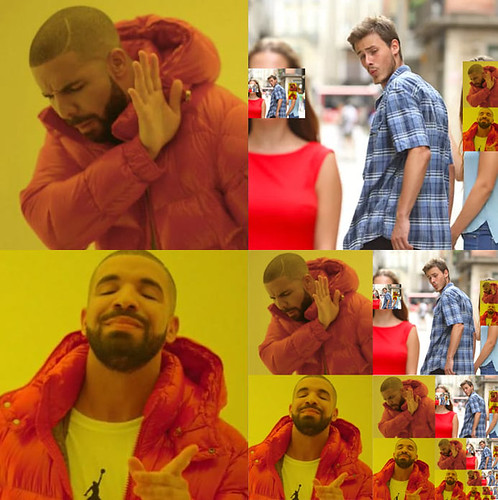 |
| Memes inside memes inside memes inside memes. A fractal of zombie memes. |
Some issues are difficult and complicated, and have no clear "good" answers. Others are clear-cut. Syria may be complex and difficult, but Taiwan? On that, the path forward is clear.
In recent weeks, talk of further intervention in Syria, punctuated by the recent airstrikes, has inspired countless memes - because you know that's totally an intellectually engaged way of communicating - which now march, seemingly of their own volition, across my Facebook feed. Of course these memes are not really self-propelled: they are shambling digital corpses animated by the clicks and likes of real people. They put on a show of being whole thoughts, but are not.
Because I'm a liberal who hangs around liberals, most of these half-formed wights express disagreement with any sort of intervention in Syria.
Of course, what worries me about these sans-serif haunted-meat memes about Syria isn't so much the question of intervening in Syria. My opinion that is something of a Newtonian liquid: hardening at times but subject to fluidity. I don't know enough about Syria to have a firmer opinion on it. Naw, what scares me is how easily I could see the same memes - possibly with the same pictures and text but "Syria" scratched out and "China" inserted - deployed in the event of US assistance to Taiwan, should it come under Chinese attack. What scares me more is that many of them will originate with the 50-cent troll army, but be animated and marched across Facebook by people like my friends. Good people spreading zombie memes opposing US assistance to Taiwan.
Of course, I won't see these eldritch memes for long, because I'll be dead.
More broadly, they express disagreement with the idea that the US should intervene in any international crisis, ever (though to their credit I can generally assume the people sharing these buzzing demi-thoughts do support strong refugee acceptance and settlement programs). They are isolationists - that's not a criticism, I'm just calling that perspective what it is - usually driven by two key worldviews:
1.) That the US cannot be trusted to do any good, and cannot be supported in any attempt to intervene in any international conflict, given our history of being unable to use our military might for good (at least since World War II), instead using it mostly to advance corporate/money-driven or power-driven interests. The US will never intervene for any other reason than to spread its selfish, people-killing empire.
2.) Intervening in any international conflict would create another quagmire the US cannot afford and will not be able to escape from, and will destroy the country in question in the same way that Afghanistan, Iraq and Vietnam were left in shambles, to name a few examples.
I won't deal with the first here - I agree with the sentiment to a great degree, yet not when it comes to Taiwan, and that deserves its own write-up. I'll tackle it later. Today, I'm focused on the second.
Even just a cursory brainstorming makes it clear to me that the "it will be a quagmire! We'll never get out! It will destroy the country!" line of thinking is simply incorrect when it comes to Taiwan. It is often true in other circumstances, and my support for Taiwan does not extend to support for what we did in Iraq.
Here are a few reasons why:
There’s a clear good guy and bad guy. China is the obvious aggressor, a dictatorship claiming a self-ruled, sovereign liberal democracy as its own on specious "historical" grounds and a frankly racist call to ethnicity (they might say "cultural and historical roots" but they really mean that they think Taiwan and China should be the same country because they are ethnically the same). In many other conflicts, there are no clear 'good guys' - look at Syria. There are good people around the world and in Syria who genuinely want something better for their country, but the only players in the war whom we might back, who might be installed as a government, are frankly awful. In Taiwan that's not the case. Our side is very clearly in the right. China wants to not just take Taiwan but delete its freedoms. This isn't "Assad or the rebels, who are also terrible?" This is more like "Europe vs. the Nazis". (The CCP aren't exactly Nazis but the comparison is warranted given their rampant human rights abuses, fascist Big Brother system and straight-up massacres, the comparison is warranted. And who doesn't love punching Nazis?)
What I'm saying is, this is a clear-cut case of dictatorship vs. democracy, self-ruled successful nation vs. expansionist aggressor.
In other conflicts, there was no clear government or path forward after US intervention. Taiwan is a developed democracy (unlike other countries which were turned into a quagmire upon deposing a dictator or junta) with an imperfect but basically successful government. There are clear institutions which, while imperfect, are not horrible and can rebuild. There is no need to replace it - there is no leadership crater left behind. It would be more like Europe rebuilding after WWII than the morass of Iraq.
Unlike in other conflicts, Taiwan actually wants the support. In fact, it's not fair to call it "intervention" - it would be assistance. They can already provide a good amount of military support themselves. Not only does the Taiwanese government want the assurance of assistance, the general consensus in Taiwan is that the people do, too. This isn't Iraq where nobody asked us for help but we barged in anyway, with no real plan. If you are asked for help, you aren't barging in. You aren't intervening. You are supporting and assisting. That's what it means to be an ally.
Taiwan is an important ally, and this isn't about oil. We're one of the US's top trading partners (not as big as China but still essential). We are a bastion of liberal democracy in Asia. We are one of the freest, if not the freest, country in Asia. We are geostrategically important. We are a key global supply chain player, and a lot of global technology runs through us (ever heard of TSMC? Foxconn?). We are ranked the 22nd biggest economy in the world by GDP by the IMF (other organizations don't keep data on Taiwan because China is a jerk about it.) We are developed. We are successful. We have a population similar to Australia's. We do matter. The US economy will take a hit if we go down, not least because we make the chips that run your smartphones. You don't think you'll feel it, but you will, far more than the results of any other conflict.
The US is doing one thing right already. They aren’t just showing up with bombs in Taiwan, nor should they. They are wisely stepping back (well...there’s an interesting discussion to be had here) while peace is maintained. There would only be a question of stepping in if China invaded. Not before. We aren't starting this war, we're stepping in to help an ally if and only if an aggressor attacks. Again, this is the right way to go about being a world leader.
It's actually the right thing to do. Yes, this makes me worried that the US won't do it. We never seem to do the right thing, at least not in my lifetime and not really in my parents' lifetimes either. But for once, we're on the right side! That's amazing and we shouldn't mess it up just because we've done wrong things before. If you get in a bar fight, feel bad about that and swear off fighting - dude, you still step in if you see someone about to get raped, even if it means a fight. "But I swore off fighting" doesn't put you in the right.
Destruction will happen whether we support Taiwan or not (so will casualties). That destruction will come from China, but it will still be destruction. Staying out of the conflict will not stop Taiwan from being destroyed (and if they want to use nuclear weapons - though I doubt they will - they'll do that regardless of whether the US gets involved). Yes, people will die, but people will die in the event of a CCP invasion, and will die under CCP dictatorship. Do you really think Taiwanese people will sit down, shut up and be force-fed a total lack of political freedom and human rights? 400,000 of us went downtown because we didn't like the way the government passed a trade pact. Take away our actual rights? And expect us to accept this? LOL, no. But if you fight the CCP you die or rot in jail.
Destruction is not the worst possible outcome. Destruction can be rebuilt from. CCP oppression is forever. Think of it more like “do we help Europe kick the Nazis out?” - the non-negotiable is kicking out Nazis, not peace and not preserving infrastructure. Destruction is an acceptable sacrifice. Ask most Taiwanese, and they'd rather have to rebuild roads and bridges than be ruled by the CCP.
Taiwan is better-equipped to rebuild. We are a developed, successful nation. We will need aid for a time, but it will be far more limited. We are not a black hole. We have resources and means. This isn't Iraq, Afghanistan or anywhere else that has turned into a horror story. Look at what Taiwan did, in the midst of Martial Law, coming off a massive decline from relative pre-war prosperity. We went from "economic basket case" to "Asian Tiger", and under a horrible dictator at that. It won't be fun, but we have the wherewithal to rebuild.
Taiwan wants peace. We give up a lot, not least our dignity, for peace already. The US assisting in the event of a Chinese invasion is an extreme worst-case scenario which Taiwan also doesn’t want. We're the ones who stand to suffer and sacrifice the most, and obviously we want to minimize the pain. It’s not a country of various groups hell-bent on destruction - we have strong democratic norms in place already. Given that the people and government do want peace and can rebuild, intervention could be limited and short. Nobody here wants war, and so we want that war to end. It won't be an eternal horror show of rebels and gangs driving around shooting things up.
The main goal (and the US is actually right this time) is not war but deterrence. What I - and Taiwan - really want is to avoid this whole scenario by convincing China that Taiwan isn’t worth a fight. But we only get that if we can actually make it look like a fight. We only get THAT by allies that pose a real threat voicing a commitment to assisting Taiwan. It’s a fine line but we’ve done it so far. China cannot be negotiated with on this. This is all the CCP understands when it comes to Taiwan.
This is a real situation, not an abstraction. I am not joking when I say I personally could die. It demands real solutions. Nobody here actually wants this to happen but we need to consider what is available to us, not what we’d like. I doubt many Taiwanese actually want to rely on the US for assistance, and many - including many pro-independence and Third Force thought leaders - are just as disgusted by the horrors and excesses of US global hegemony as I am, and my Western liberal friends are. But if China invades and no better option exists, we must take the best one available to us, imperfect as it is. At that point there is no time for ideology or soapboxing: the non-negotiable isn't "but the US is horrible", it's "we are going to die and if the CCP wins it's literally game over." There is no "but we'll protest!" - no, you'll die. There is no "we'll keep fighting" - you will, because that's what Taiwanese do when they want something better - but you will lose and also die. "We'll refuse to be ruled by them!" Yup - I guess the CCP can't rule you if you are dead. "We'll occupy" - and die. If you don't believe me, ask people from Tiananmen - - oh wait, you can't, because they are dead.
(OK they're not all dead, but enough of them are to make my point.)
This is real life, and in real life there is a time for ideology, and a time to look at your real choices and decide what your non-negotiables are. If your non-negotiable is that the CCP can't win - and it really should be - you have to take options you don't like. If your non-negotiable is not accepting aid from an evil hegemon, then congratulations, you're about to be ruled (or just killed) by an even more evil hegemon.
It doesn't have to take away from benefits to US citizens. Really! Our military spending, just from a quick Google, is upwards of $600 billion. China's is estimated to be maybe half that, upwards of $200 billion (not that we actually know anything about China, so this is an educated guess). I am not a military or defense analyst, so I won't belabor this point, but there are a lot of numbers between $200 and $600 billion where we'd still have the best-funded military in the world and still be capable of a stronger military than China. We could cut our budget in half and still have better funding. (If any actual analysts think I'm wrong, please weigh in).
Monday, April 16, 2018
Crystal Boys (孽子): A Review
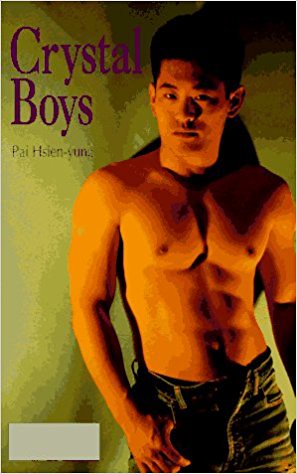 |
| The gray square is covering the words "First modern Asian gay novel". I don't know why the square is there. |
I continue to be vexed by Pai Hsien-yung.
Crystal Boys (孽子 or "Sinners" in Chinese), to be sure, was an easier read than Wandering in a Garden, Waking from a Dream for someone who cares about Taiwan directly and viscerally, in ways that affect her life, and cares about China only in that fuzzy abstract way that one might be interested in foreign affairs. The sensitivity with which Pai writes about these characters is commendable - really the bottom rung of society, if not lower - mostly boys from families who were at the bottom to begin with, who have then been turned out by those families when their sexuality was discovered. Pai manages to both portray them sympathetically and not shy away from the daily indignities not only of their lives, but (in the case of protagonist A-Qing's family) the lives of the families who have kicked them out.
Other than police raids on "New Park" (now 228 Memorial Park) where the young, gay characters spent their nights, there is nothing overtly political in Crystal Boys, and what was there can be said to be more cultural than political. The protagonist characters were more sympathethic - although the Taipei that Pai describes is not the Taipei of today - the capital of the country on the cusp of being the first in Asia to legalize marriage equality - I can see its echoes in the Taiwan I know.
When I first moved to Taiwan over a decade ago, it was still common to use "228 Park" as shorthand for "hunting for gay hookups", with very little sympathy for those who may have gone there for that reason. I now recognize how homophobic such talk was, but I won't deny it was common (I haven't heard that particular reference in at least 5 years, however). The open-air gay bar culture around Ximen feels like an institution now, but it wasn't always there - I mean, Ximen's been a center of LGBT Taipei for some time, but I remember when it wasn't so out in the open. I don't know anyone who has been disowned or chased out of their home by their parents when their sexual orientation was discovered, but I do know people who have struggled when coming out to their families, or who still feel they cannot do so.
I just found myself feeling a bit put out that, with all the empathy Pai can convey when talking about the night kingdom of the 'glass community' (whose citizens were called 'glass boys' or 'crystal boys', hence the English title of the book), he doesn't seem to be able to extend this ability to write empathetically about Taiwan as Taiwan. All of the younger characters were born in Taiwan, but few of them had Taiwanese ancestral roots: to read this book, you would think that almost everyone in Taiwan who mattered either came from China or had parents who did. This...vexes me. Taiwan is more than the sum of people who came from China, but you wouldn't know that to read this otherwise exquisite book.
Pai focuses most of the story on the denizens of "New Park" - homeless or nearly-homeless men and boys who, while not the "hustlers" of Three Rivers Street (as Pai calls them), are essentially prostitutes. If one reads it without knowing Taipei or a sense of what it may be like to live as a gay man - and I specifically mean gay man because there are no Ls, Bs or Ts in this story, only Gs - one might get the impression that all gay men in Taipei are sex workers, which of course is not the case. A few of the characters are not sex workers, but they are involved in the sex trade, e.g. acting as patrons to the boys (or, to use baser term, as sugar daddies). Only through glimpses - cracks in the storyline really - do we see a Gay Taipei that is not centered on prostitution: the college students who timidly come to the park seeking their own, the patrons of the Cozy Nest bar. That's not a criticism of the book so much as a description, but there is a criticism to be made: I could well see someone recommending this book thinking it will open the mind of a potential ally who's on the fence, and having it backfire, because the reader finishes it with the (unfair and inaccurate) impression that "gay = prostitute". This isn't helped by the implication that all of the boys who are 'out', whether they want to be or not, are so because they were discovered in flagrante delicto with another man - which probably is how most closeted gay men were discovered at that time, but still, upon reading Crystal Boys, an unfair stereotype might be confirmed in the mind of the non-discerning reader that gay men are highly sexually promiscuous.
That said, there isn't as much of a plot, per se, as a typical Western reader might expect. It's more of a series of moody set-pieces in which the characters do move forward with their lives, but not a lot...happens really. Yes, (spoiler alerts) a bar gets opened, then closed. One characterachieves his dream of going to Japan. There's a penultimate reckoning between young gay man and stand-in father figure (not his actual father). There's a long-ago New Park love story that ended in tragedy which gets hashed out. But if you're looking for an action-packed storyline, you won't find it. Personally, I'm fine with the slower, more contemplative pace. I appreciated the deep exploration of the loyalties the Crystal Boys had to each other - they formed their own family and community among a society that had kicked them aside.
Otherwise, there are both personal and political threads running through Crystal Boys - although I could find no direct reference to Pai himself being gay, it seems to be generally known that he is, and the scene where Wang Kuilong (the "Dragon Prince") has an angry - and yet sincere and caring - discussion with Papa Fu, retired ROC military officer and benefactor of the boys of New Park and whose own son committed suicide after his homosexuality was revealed - can't be read as anything other than Pai's literary rendering of a real or imagined confrontation with his own father, in which he attempts to see things from his father's perspective. Of course, the perspective can only be read with any degree of sympathy in its own era: the idea that there is any merit to feeling shame because you have a gay son only works if you buy into 'product of his time'-ism. Reading it now, it comes across as trying to defend or find sympathy for, say, a father who is so ashamed that he turns his son out on the street for the crime of being a bit short or maybe a redhead. Pai does explore the ways in which society is kinder to orphans and people born with disabilities or bodily deformities than to gay men, implying that it's unfair to feel charitably towards the former but not the latter, but never quite comes around to making it clear that sexuality is not something you choose.
Politically, Crystal Boys has been read as an allegory of Taiwan as fatherless and adrift at sea - turned out by its father (China) and now skulking about in the twilight of international affairs - a 'sinner', 'monster' or 'bastard son' as the Chinese title implies. Even A-Qing's father comes into this: losing the war, leaving China, being kicked out of the military for having been taken prisoner, he sits in stasis in Taiwan, growing old and rotted: a similar metaphor for the ROC on Taiwan as was employed in Wandering from a Garden, Waking from a Dream. Taiwan (the ROC to Pai) as a 'sinner' adrift in a world that's turned it out on the street is even more notable given that it was published in the early 1980s, when the sting of shifting recognition to the People's Republic of China was still biting. Before Taiwan woke up and realized it didn't actually want to be recognized as 'the true China', but rather simply for what it was: Taiwan.
Some try to find both local (e.g. Taiwanese) and international (e.g. ROC vs. the world) strains of political ideas in it - I have to say, I don't really see that. I do see how Wang Kuilong's and Little Jade's different experiences abroad: one cynical and tragic, the other optimistic and bright, relates to the future (from the book's perspective) of gay life and LGBT activism in Taiwan, and how that was impacted by international cultural forces. However, I do see a surface-level exploration of Taiwan's cultural love affair with former colonial master Japan in Little Jade's quest to go there and find his birth father - Little Jade being the smooth-talking 'bastard' son of an overseas Chinese with a Japanese name, life and family. It's hard not to see colonial allegories in that sub-plot.
But Pai's exploration of this always turns its gaze back to China - Taiwan, the bastard son of China, an international pariah (another way one might translate 孽子). Never just Taiwan as Taiwan, its own mother and father, its own identity and its own family. The Crystal Boys form their own little kingdom and support each other just as the Chinese diaspora in Taiwan did (and does) - but this story of pain, shiftlessness and support is a metaphor with its sights locked firmly on China, not Taiwan.
So - I loved it, but reader, I am vexed.
Subscribe to:
Posts (Atom)