Monday, May 14, 2018

The Contortions of a Dove in Hawk's Clothing

unnamed-3
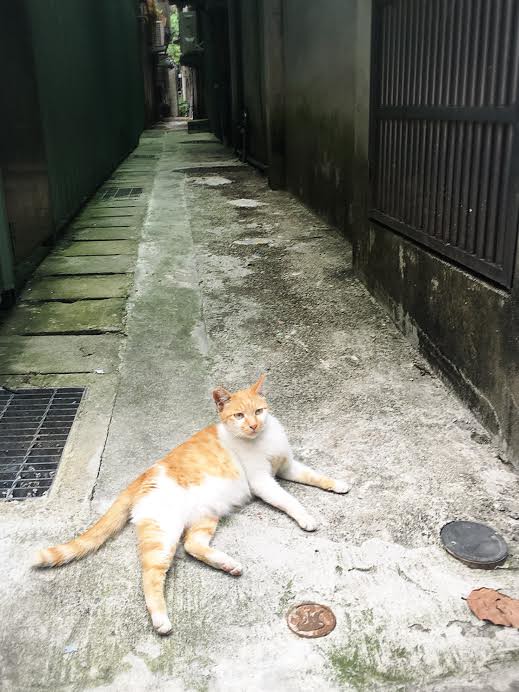
Guard the alley, cat. 


Taiwan makes me contort myself in weird ways.

I don't mean living here, I'm pretty used to that. I mean in figuring out how the hell to reconcile my international political beliefs.

Because I'm not an expert in IR (having majored in it in undergrad 16 years ago doesn't count) I'm not going to try to analyze anything. I'm just going to say - so many people seem to think all of these  Korea-focused summits between Moon, Kim, Trump, Xi in various permutations are fantastic, and I too would love to be on the side of discussion, negotiation and diplomacy carrying the day toward peace and nuclear non-proliferation. I'm a liberal, right? We're foreign policy doves, are we not?
This is better than troops stationed for decades in foreign countries, nuclear tests, threat of war and ever-increasing military spending, is it not?

I'm not so sure of either.

The dove in me would love to see fewer American troops stationed abroad. The realist in me knows that Kim wants this, Trump is already talking about it, Xi definitely wants it, but it would be terrible for Taiwan. Mostly, I'm afraid that this is Xi's game: fewer US troops in the region that could potentially be deployed quickly is a clear strategic advantage for China and its designs on Taiwan. To continue the strongest possible deterrent to Chinese attack on Taiwan, I have to be in favor of continuing to station (and pay for) US troops in South Korea. I have to set myself against de-escalation and for the (heavily militarized) status quo.

I don't like that one bit. It goes against everything I believe in otherwise. But I also believe in Taiwan and have no doubt that deterring Chinese designs on Taiwan is not only the right thing to do, it's essential.

It is clear to me that the person who benefits from Trump looking like he's doing some good is Xi. He knows Trump is a paper tiger in most respects who can't be controlled but can be played, whose saber-rattling only makes China look like a victim when it isn't one (he is probably more worried about Trump's pro-Taiwan advisors, but also knows Trump people can and do get fired all the time).

The person who benefits from a US troop withdrawal in South Korea, in terms of regional influence? Xi. (I'd say "China" but it's all run by Xi anyway). The person who benefits from a denuclearized North Korea (if that actually happens, which I doubt - North Korea wouldn't be willing to talk if it didn't think it already had a deterrent to US attack, has broken promises after negotiating concessions), and from it seeming as though the region is peaceful and therefore there is no reason to maintain US influence at current levels? Xi. The person who benefits if the rest of the world decides Taiwan is not geostrategically important enough because Asia is quiet? Xi. Who keeps meeting with Kim with timings so fortuitous that they're practically announcing who is directing the "North Korea is suddenly playing nice" train? Xi.

Who is Taiwan's greatest enemy? Xi. Not the CCP (though they're pretty bad), not China. Xi. He’s not the next Mao Zedong. Mao had (messed up) ideals. He’s the next Chiang Kai-shek: ruthless, amoral, immoral, power-hungry, and weirdly obsessed with Taiwan.

It terrifies me that the small country that always breaks promises is being directed - and I do believe they are - by a big country that always breaks promises, which has designs on the country I live in and love. It terrifies me that so many people think peace always benefits everyone and that all players are honest and well-intentioned, when they are not, and the peace these people broker now could well lead to a war for Taiwan's continued freedom later.

But winning the hearts and minds of my fellow Western doves means convincing them that US military presence in Asia has more pros than cons and what looks on the surface like ‘peace’ actually isn’t. Good luck with that.

Granted, I don't think a troop drawdown in Korea is the only thing standing between Taiwan and China. We have troops elsewhere too and influence can mean as much as military might. It's more that every drop of US defensive capability that disappears from Asia is one drop less that China might have to contend with if it invades Taiwan (and it knows it). Every bit less of US influence in Asia is a bit more influence that China wins. Besides, troop drawdowns in S. Korea also affect Japan - this won't be good for Japan either if what I think is going on actually is.

I know this sounds a lot like wanting to keep letting the US run the show around the world rather than letting Asia (and Asians) manage their own affairs - and that too makes me as uncomfortable as doing a crazy yoga position. I don't particularly like US global hegemony, it was created to serve US interests, not the interests of the world as a whole.

But peace isn't always what it appears to be - you can bet Xi wants increasing power (and territory) in Asia to look "peaceful" so the West will stay away. Destruction can be rebuilt from - avoiding it is not always the top priority. CCP oppression is forever.


And so I'm stuck being a hawk even though I really, really don't want to be.

Saturday, May 12, 2018

The Republic of Tayovan

unnamed-2
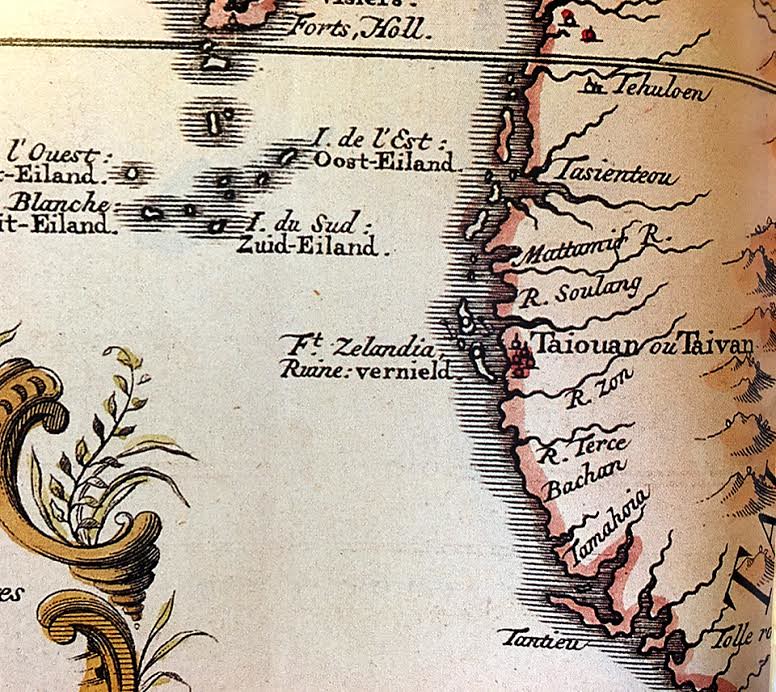
From Jerome Keating's book, The Mapping of Taiwan. p. 76-77.
I have seen (reprints of) maps that spell it as "Tayovan" but I don't have access to them right now. 

Let's say you have a beautiful island. It's so beautiful that some random Europeans sailing by one day named it "The Beautiful Island".

Let's say that since that time, your island has never quite been free of colonialism.

First, the Dutch came. They called your island Formosa, just as the Portuguese named it. They imported immigrants from China to work for them, who called it "Tai'ouan", a Hokkien rejiggering of the indigenous - Siraya - name for bit of land near present-day Tainan, which was established as the capital. This can also be written as 臺員, and I've seen it written as 代員. This is the foundation for the modern name "Taiwan". That name was "Tayovan", and it can be seen on maps from that era.

Taiwan has been known by a number of names. There's Tungning (東寧), Tungtu (東都), Taiwan, The Republic of Taiwan (also sometimes called the Republic of Formosa), Ryukyu, Takasago (高砂), Taiwan Prefecture, Taiwan Province, The Republic of China - not in that order. In all cases, Taiwan was treated as a colony: Koxinga, the Qing, the Japanese, the ROC. Every last one is a colonizing power, in that they came from a foreign land and claimed ownership of Taiwan, without the consent of the locals. It's not common to call the Qing or the ROC colonizers, at least not in English - some sort of deference to ethnic chauvinism there maybe - but they most certainly are.

Now, there is an ongoing social discussion of what to call Taiwan. Die-hard blues with roots in China cling to "the Republic of China", but nobody who is even nominally forward-thinking takes this idea seriously. One of the main points of this discussion is that Taiwan is not a part of China, and deserves its own name.

Taiwan? I know someone who refuses to use the word, and insists on being referred to as "Formosan", because "Taiwan" is a "Chinese" name and he is not Chinese. (Of course, the name is an indigenous borrowing, it's not originally Chinese...but, that's cool.) In any case, he's not wrong that China would love for everyone to call this island "Taiwan", as in "Taiwan, Province of China".

He is not young, but a lot of young politically-minded Taiwanese have also landed on "Formosa" as the ideal name for Taiwan. It seems like a nice choice - it was a name given by Portuguese explorers, and Portugal never colonized Taiwan. It's a compliment, a reminder that while Taiwanese cities are not particularly attractive, the island as a whole is very beautiful indeed.

But I'd like to make the case for "Tayovan" (or "Taivan", but "Tayovan" makes it clearer that this is a departure from "Taiwan"). The Republic of Tayovan. Has a nice ring to it, no?

First, although it was originally a name for only a small bit of land around Tainan, it was the basis for which "Taiwan" came to be.

Second, this idea is not unheard-of in Mandarin and Taiwanese language discourse. I searched and can't find any links, but I know I've heard it discussed. I don't hear anyone talking about it in English, though.

Next, it has indigenous roots. No colonization involved. No other name has that pedigree - the Portuguese never colonized Taiwan, but they did brutally colonize other parts of the world. They were not Taiwanese - it's still a name bestowed on this island by Europeans (just as 'Taiwan' was bestowed on this island by Chinese).

There are a number of indigenous tribes in Taiwan (don't let the 'officially recognized' number fool you), all with their unique history, language and culture. All might wish to be the group honored in the hypothetical choosing of a new name for the country in recognition of its first inhabitants. However, because this is the specific name that came to be used for the whole island, it makes the most sense. It also comes from a language that is no longer spoken natively, so it's harder to accuse the government of giving preferential treatment to a currently-used language.

Finally, wouldn't be a big change - just switch your pronunciation, a little adjustment to spelling, maybe change the characters - and honors a deeper history that is uniquely Taiwanese. The waves of colonizers - the Dutch, the Zhengs, the Qing, the Japanese, the ROC - cannot lay claim to this. It doesn't speak to their history, it speaks to the history of this island. It recalls an Austronesian history that is so often overlooked.

And, y'know, it just sounds super cool.

Somehow I doubt I'm going to convince the entire nation to get on board. But, if I'm ever allowed to cast a vote on this, count me in for Republic of Tayovan.

Come on guys - Tayovan!

Friday, May 11, 2018

The Real Taiwan Miracle

unnamed-1
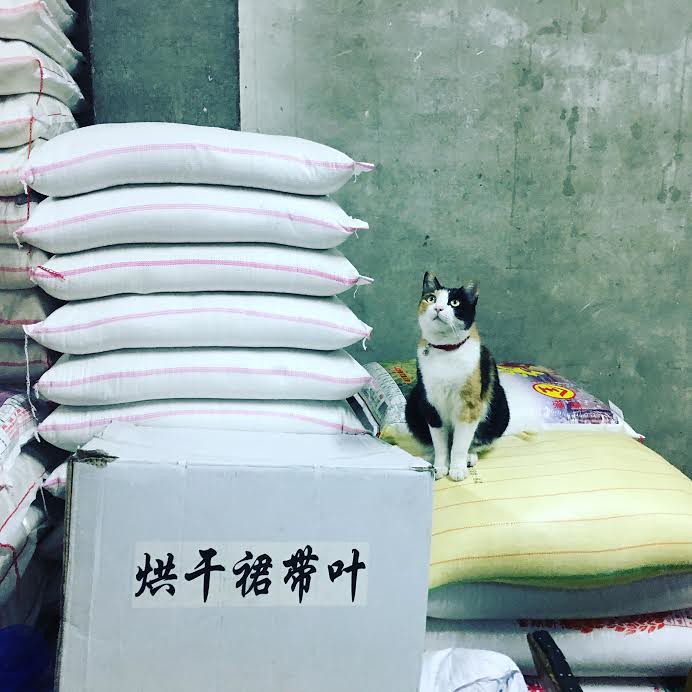
Look to the heavens, girl. You own half the sky or more.


I'll try to keep this short (for me) and sweet.

In my last post, I wrote about how hewing to outdated notions of women in Taiwan - "this is how it works in Asia", that sort of thing - leads to overgeneralizing about how gender roles really play out here.

In the days since, I've been mulling over the historical contexts behind the evolution of gender roles in East Asia. And I realized that what Taiwan has pulled off vis-a-vis women is nothing short of a miracle, if you look at it in a certain light. Asia is not a bastion of women's equality, but of all countries of Asia, I still contend that despite its problems, Taiwan is the best place on the continent to be a woman. How is it that Taiwan managed this, given its history?

For most of the 19th century, Taiwan was an underdeveloped and mostly ignored backwater, a far-flung defensive outpost. It would not be remiss to call it a colony of the Qing. Whatever liberal or revolutionary ideas might have been discussed among intellectuals - and I'm not sure much was before 1895 though I'd surmise that liberal ideas were not unheard-of - they didn't seem to have made it to Taiwan in any meaningful sense. (If I'm wrong about this, please correct me.)

As I noted in my previous post, the ideas that drove the feminist discourse of autonomous women's groups in Taiwan during the brief period when freedom of expression was tolerated under the Japanese came mostly from elite Taiwanese women studying in China and Japan. Therefore, feminist discourse clearly existed there.

However, Japan attempted to keep Taiwan under-educated: universities here preferred to admit Japanese students, and for much of the Japanese era, most Taiwanese never moved beyond a junior high school education, if not less. Some Taiwanese intellectuals did break this mold, but Japan remained a scholarly epicenter.

(That said, Japan did make an effort to establish schools teaching literacy and numeracy to Taiwanese, so despite the relatively low level of education in Taiwan as compared to Japan, it was still one of the more literate parts of Asia. Yet, to quote Jonathan Manthorpe in Forbidden Nation, the Japanese certainly did not want Taiwanese to "cultivate ideas of their own". This is what I mean by 'under-educated'.)

At the end of World War II, Japan would leave Taiwan and go on to rebuild a developed economy as well as a new era of liberal democracy following Western models. In China, this would be a time when Communism's emphasis on equality - including gender equality - would usher in a (temporarily) more egalitarian society for women.

What was happening in Taiwan? Brutal dictatorship. Autonomous women's groups, like all other social activist groups, were not allowed to form. Government-affiliated women's groups espoused traditional gender roles (though not necessarily condemning women working outside the home, these groups viewed women's income as secondary to her family duties and her husband's role as provider), headed by sexist-in-chief, Madame Chiang Kai-shek. Taiwan had neither the Communist egalitarian ideals nor the boost of liberal democracy to guide it toward greater gender equality.

Taiwan did develop - thanks to the hard work of its small-and-medium-size business owners (not KMT prescience, as some would have you believe). Of course, much of that work was done by women, who worked in 'home factories', did other jobs or helped run the family business. However, these women have gone mostly unthanked for their role in Taiwan's economic miracle.

So, of these three countries - China, Japan and Taiwan - you would expect that China and Japan would be years ahead of Taiwan when it comes to women in society. Taiwan just didn't have the same indicators.

And yet, what do we have today? Various strains of feminism exist in China and Japan, but neither can compare to the relatively better status of women in Taiwan. Taiwan is not perfect; it's rife with problems pertaining to gender and society, just like any other country. However, it doesn't have to contend with problems as bad as this (though the gender ratio in Taiwan still raises questionsthisthisthisthisthis, or this (for that last one, while it would not shock me to learn that 'maternity harassment' happens occasionally in Taiwan, I have not heard of it being the norm.) Nobody is talking about how Tsainomics or Manomics "failed women", how Taiwan is "the worst of all developed countries for women", or recruitment ads for tech companies where female employees pole dance to entice men to apply. When talking about marital statistics, the issue isn't a gender ratio imbalance so much as women choosing not to marry.

That's the real Taiwan miracle - ignored, underdeveloped, at times barred from seeking higher education, brutally oppressed, sexist "traditional Chinese" thought piggybacking on KMT campaigns to Sinicize (and subjugate) the island, diplomatically isolated, seen as a backwater for much of its history (though not now). And yet, Taiwan has managed to do better by women than either China or Japan, which had much better odds.

I might explore some reasons for this in a future post, but for now, I just want y'all to ruminate on that.