Monday, December 24, 2018

"Naturally independent" doesn't mean what it should

Screen Shot 2018-12-24 at 6.58.14 AM


So, I'm meant to be on vacation after a long slog to finish a huge paper - that's why Lao Ren Cha has been quiet for most of November and December - but I really just feel like writing this.

Much of this idea has been bouncing around in my head for awhile, although it really came together through a conversation over mediocre stir-fry and all you can drink beer with Frozen Garlic. So I'm not sure where my thoughts end and his begin, but then, that's also the beauty of political discussion.

When I heard the occasional cry of "the Sunflower Movement is dead!" after the election last month, at first I felt annoyed. Was it really? Perhaps the massive groundswell of broad support that progressive causes seemed to suddenly be capable of garnering was ephemeral, but the movement itself, to me, lived on. Although the Sunflowers embodied a strong anti-KMT sentiment, one can't really judge the staying power of the Sunflower ethos by whether or not DPP wins elections. The Sunflower Movement may have been an anti-KMT movement, but it wasn't a pro-DPP one.

In any case, a lot of other progressive causes whose mainstream debate blossomed post-2014 have also been pushed forward, though perhaps not as far as we'd hoped. In fact, I noted a number of "Fuck The Government" and other Sunflower-inspired sartorial choices among the marriage equality crowds, creating a tangible visual connection between the two movements.


But...I'm beginning to see the ways it might be true that the 2014 light is dimming, and the shadows of Taiwan's pre-2014 problems growing longer once again, and I know there is some sentiment in activist circles that their efforts have not borne fruit as they'd wished.

Probably one of the key shifts in 2014 was an uptick in the prominence of a "naturally independent" mindset (which the Sunflowers themselves certainly embodied, but it runs deeper than them). That is, the generation of Taiwanese youth, some now well into adulthood, who grew up in the post-authoritarian era and who perceive Taiwanese independence to be so obvious that it is not even a matter of debate.

That hasn't changed; "naturally independent" sentiments remain strong in 2018. But it seemed clear in 2014 that such a mindset included the understanding that if Taiwan was going to be independent, that it would have to reckon not with the relationship it wished it had with China, but with the one it actually had. ECFA and CSSTA were both predicated on the assumption of a safe, fair, unthreatening relationship with a large neighbor state that bore no ill will, and could therefore be negotiated with. It took the Sunflowers to wake the rest of the country up to how untrue these assumptions were, and how threatening China really was. They taught us that the only way to win a game with China is not to play (whether it be word games or economic agreements).

I - and many others, including the friend I had this conversation with - had hoped that people would continue to consider all possible dealings with China through this lens, and wisely choose not to play their game. As I've written, for a brief glimmer of a moment, society at large seemed to understand this.

Sadly, that time seems to have passed. Instead, "naturally independent" seems to once again mean that, because Taiwan is obviously independent, that it can have a relationship with China on its terms. That as it is a normal sovereign state, it can negotiate with China as one.

To take that further, this mindset that China's designs on Taiwan don't matter often translates into a belief that political parties also don't matter because "they're both pretty bad" so "we may as well choose the one who says they can kickstart the economy".

Nevermind that the latter party advocates playing China's game, and sees Taiwan's ultimate fate as being Chinese. That's not important apparently, because "that will never happen, of course Taiwan is independent, we just need to do something about the economy"...I guess? It is so clear to this group of "naturally independent" people that either sliding into an economically dependent death spiral (which is China's real plan) or violent forcible annexation (that'd be China's back-up plan if the death spiral thing doesn't pan out) are unthinkable and therefore...there is no need to think about them. Sadly, they are wrong.


When you slide back into that sort of complacency, electing mayors who openly support (and believe in the existence of) the so-called 1992 Consensus, who are eager to set up cross-strait inter-city ties in defiance of the national government's more restrained China policy, who claim they will "do deals even with North Korea!" like Big Uncle Dirk Han Kuo-yu, to basically think that the KMT's pro-China policy isn't worth considering because it doesn't matter...that's an easy slide further into playing China's game again. That we will never win this game seems to be viewed as irrelevant.

On the other end of the spectrum, there are also the "naturally independent" folks who are so pro-Taiwan that they are also abandoning the DPP, because they see any party that doesn't make a beeline for immediate de jure independence and promise to quickly dismantle the ROC on Taiwan in favor of a new Republic of Taiwan as a party that is "just as bad" as the KMT. While I'm sympathetic to this line of thinking - the ROC sucks! Mere de facto independence sucks too! Immediate Glorious Revolution would feel so good! - I don't think it's the best way to actually meet our goals in the long run, so I find this line of thinking dangerous. Like, "this is how you get President Trump" dangerous.
No matter what, these delusions about China spell trouble. A smart "naturally independent" mindset would acknowledge that Taiwan is very clearly a sovereign state, but also wisely understand that China is big and mean and nasty, and that it doesn't see Taiwan that way. That it's designs on Taiwan are evil, and its traps sticky. And that we have to negotiate with China as things are, not as we wish they were. Such a mindset would understand that there is no moral equivalence between the two parties: that just because one won't immediately flip the table on history, it doesn't mean they are no better than the other, which seeks eventual unification (with the former president even saying so).

Unfortunately, I worry that we're going to need another bloom of social activism in the vein of the White Lilies, the Wild Strawberries or the Sunflowers to get people to understand this again. Maybe the Sweet Osmanthus Movement, the Tung Blossom Movement, or the Betel Flower Movement or whatever floral movement comes next will finally push us to a lasting realization of what it means for Taiwan to truly pursue independence.

Sunday, December 23, 2018

Chthonic performance in Hong Kong cancelled, showing again that authoritarians have bad taste in music

Untitled
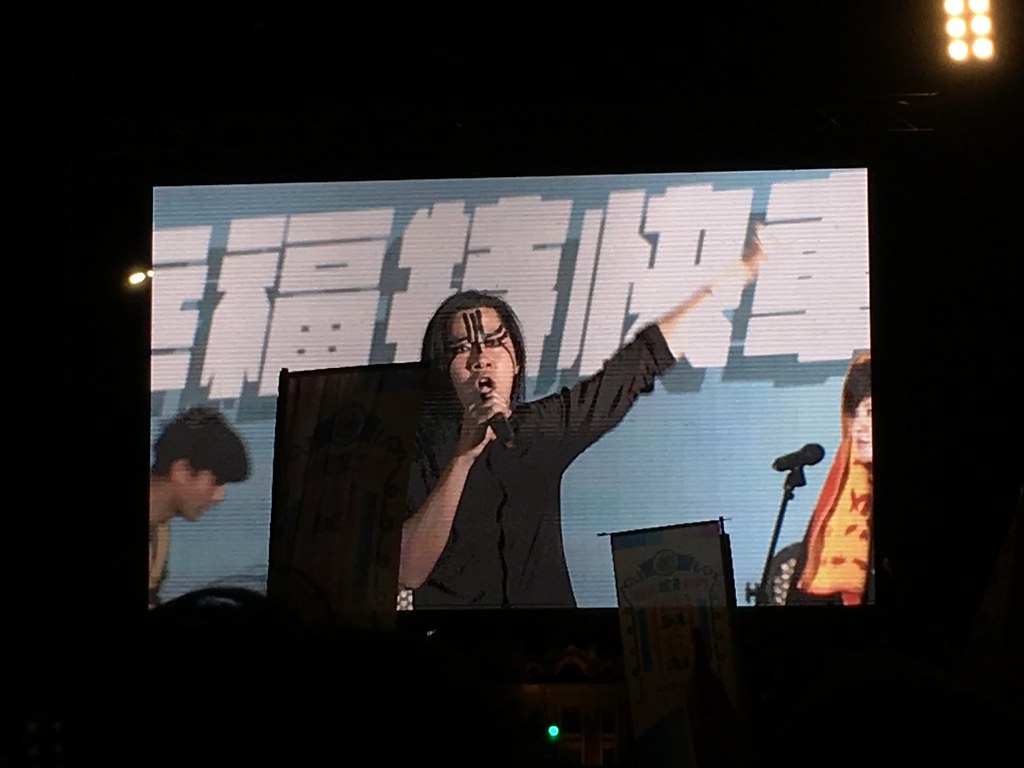
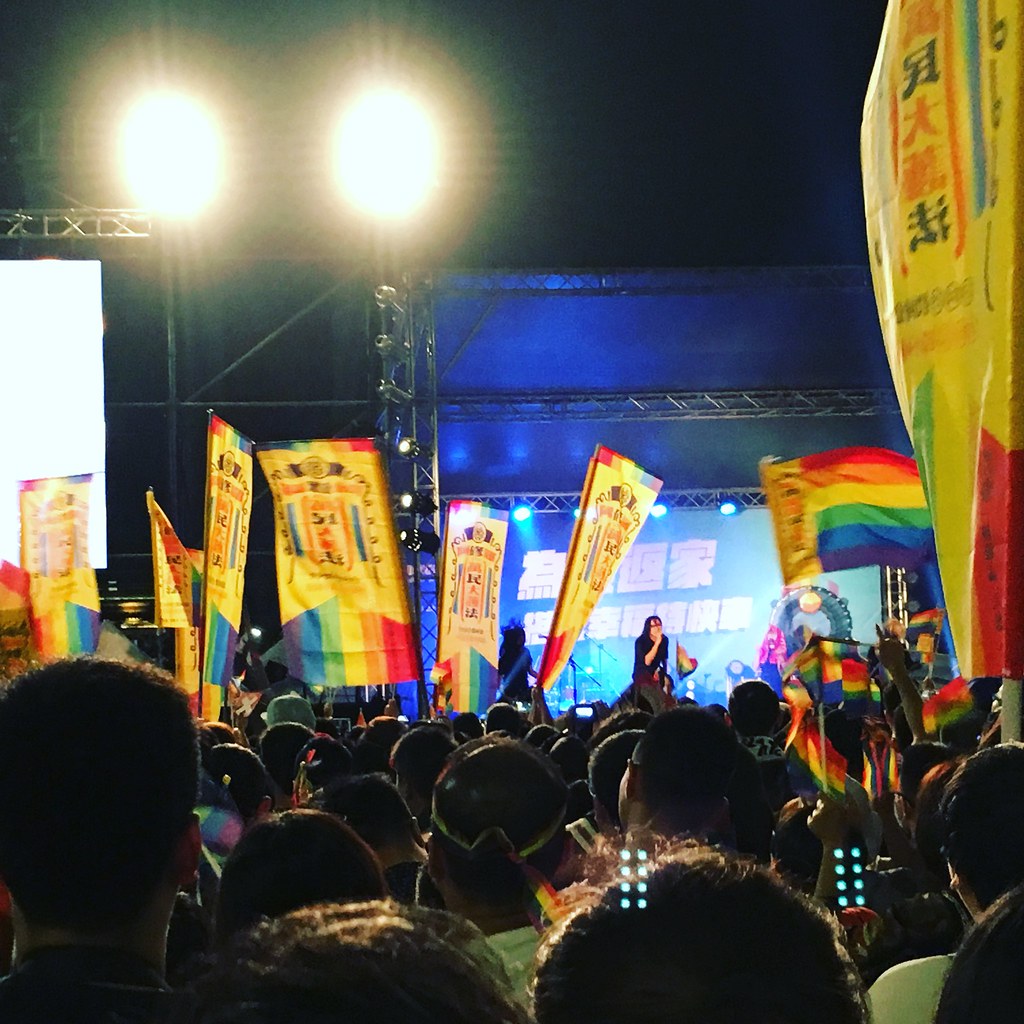
Sexy Legislator and Chthonic frontman Freddy Lim, performing at the Taipei pro-marriage equality rally on December 18th in support of three pro-LGBT referendums 


Hong Kong continues its unwilling slide into authoritarianism at the hands of China with the cancellation of a performance by Taiwanese black metal band and all-around great musical act Chthonic. There had been talk on Facebook by the band that it might perform without its frontman/vocalist, Freddy Lim, but even that plan seems to have been cancelled.

Update: apparently Freddy's visa was denied because he lacks "special skills" that are "not available in HKSAR". Freddy responded by saying he was "practicing cartwheels and backflips" (to be better qualified to work in Hong Kong).


This is obviously nonsense. Chthonic has performed in Hong Kong before; being denied now points to growing CCP influence there, not any 'lack of special skills'. I personally remember Hong Kong as being far more open just a few years ago. Since then, political parties not aligned with China have been targeted and banned, with activists and elected legislators from those parties jailed. While technically freedom of speech remains a right that Hong Kongers may enjoy, in practice that's no longer the case: remember all those bookstores that sold reading material banned in China, specifically books critical of the CCP and its top officials? Those are gone now (though you can still buy the books from street vendors).

It also points to the growing political clout of Chthonic frontman and sexy legislator Freddy Lim, who (according to the article above) was denied a visa to Hong Kong after becoming an elected member of the legislature through the New Power Party. Lim had been to Hong Kong before, as well.

And that brings me to my main point: authoritarians have crap taste in music. I'm sorry, they just do. Chthonic was denied because of what they stand for: they are very pro-independence, and their music is steeped in Taiwanese history and folklore. They don't even sing in Mandarin, and they stand for a number of progressive causes including marriage equality. This scares the CCP - no music that makes any sort of real political statement (Communist propaganda music...doesn't count as music) is terrifying to them.


Untitled

But music - good music at least - is fundamentally political. It makes a statement, or at least stands for something. Good bands stand for something, even though that might not be evident in individual songs (for example, what Ani DiFranco stands for infuses all of her music, even her love songs which don't have anything directly to do with politics. You could say the same for Joni Mitchell or even groups not immediately identified with political music like The Talking Heads.)

Music under authoritarian regimes, however, can't ever stand for anything. Only - as a friend put it - "Canto-pop and Mando-slush" are acceptable in China. Context-free gunk about only the few topics that can be rendered apolitical - mostly love songs, and a few others including absolute nonsense music - can be allowed. They all sound kind of the same and they're so lightweight, they'd blow away in a light breeze. They tend to be earworms (that's how they hide their lyrical empty calories) but are also interchangeable and, to be frank, forgettable.

So, you wonder why "Mando-slush" all sounds kind of the same, with lyrics you could literally change out for anything because they just don't matter, it's not because people in Mandarin-speaking societies aren't good at creating music or are somehow culturally uncreative. I've heard that before and it's simply not true and frankly kind of racist. It's because in China, they risk their actual lives by being truly creative and writing songs that actually mean something. Outside of China, if they want to be allowed into the lucrative Chinese market, they have to churn out the same kind of tripe. Music with meaning will simply not be allowed in.

To be fair, people tell me that China, and especially Beijing, has a thriving underground hip-hop scene, and I guess I believe them? Maybe? But unless these underground artists are actively risking being 'disappeared' by the government, I can't imagine that what they sing stands for anything, either.

As such, I've noticed that the Taiwanese music I like tends to be banned in China, by artists who don't care if their music is allowed in the market there. They make music to make music, not primarily to make money. All the Taiwanese music I don't like - the love ballad gurgling, the motivational "you can do it!" crap that thinks it's edgy because there's an electric guitar played by a guy with spiky hair, the K-pop imitators, Jay Chou - is allowed in China, and hugely popular there. And it is, to be frank, terrible. All of it. (Yes, I know other people like that stuff. I don't care.)

To sum up, if an authoritarian government finds some music acceptable, that music is probably bad. At the very least, it's the tasteless, sugary white cake of music: unsatisfying, lacking basic nutrition, and will make you metaphorically corpulent and complacent if you consume too much of it.

So, it's no wonder that of all the music in a Chinese language which is popular internationally, Chthonic is one of the best-known outside Asia, for a niche market anyway.

News reports keep calling Chthonic a well-known band "in Asia", but I'd like to point out that, in the international black metal scene, they're quite well-known outside of Asia as well. Pretty much every black metal fan I know, even if they have no connection to Taiwan, knows Chthonic. All of them say the music is top-notch, and they transcend being a 'local act' by a very wide margin. They release English versions of all of their Taiwanese-language songs, Lim has held 'ask me anything'-style live interactive videos in English.

This is because Chthonic stands for something, and they put out genuinely good music because of it. Creativity and meaning are intertwined, and cannot be separated. Without meaning, art has no weight (which might just be why so much public art is forgettable, if not terrible - when you seek not to offend anyone, you inspire no-one). And that's why the same old love ballad recycled a hundred times with lyrics that you could just make up mockingly as you go along, with the parody indistinguishable from the original, will never find as much international acclaim.

Sunday, December 9, 2018

A new hair stylist recommendation in Taipei

In part because Lao Ren Cha's initial goal was to write about life as a female foreign resident in Taiwan, and in part because I just can't face another political post right now (it really hurts, you guys), I'd like to update my recommendations for where foreign women can get their hair done in Taipei.

I recently decided to switch stylists - my old stylist did a good job with my haircuts (at least once he stopped giving me short bangs), but I wanted to go in a new color direction and, frankly, a change in price points. Around NT$6000 seems reasonable to me for a cut and all-over permanent color with Olaplex, and that's usually about what I pay in US dollars or British pounds when I get it done abroad, if not slightly less (my last cut and color in the US was $170, in the UK I paid £125), so that was what I was looking to start paying.

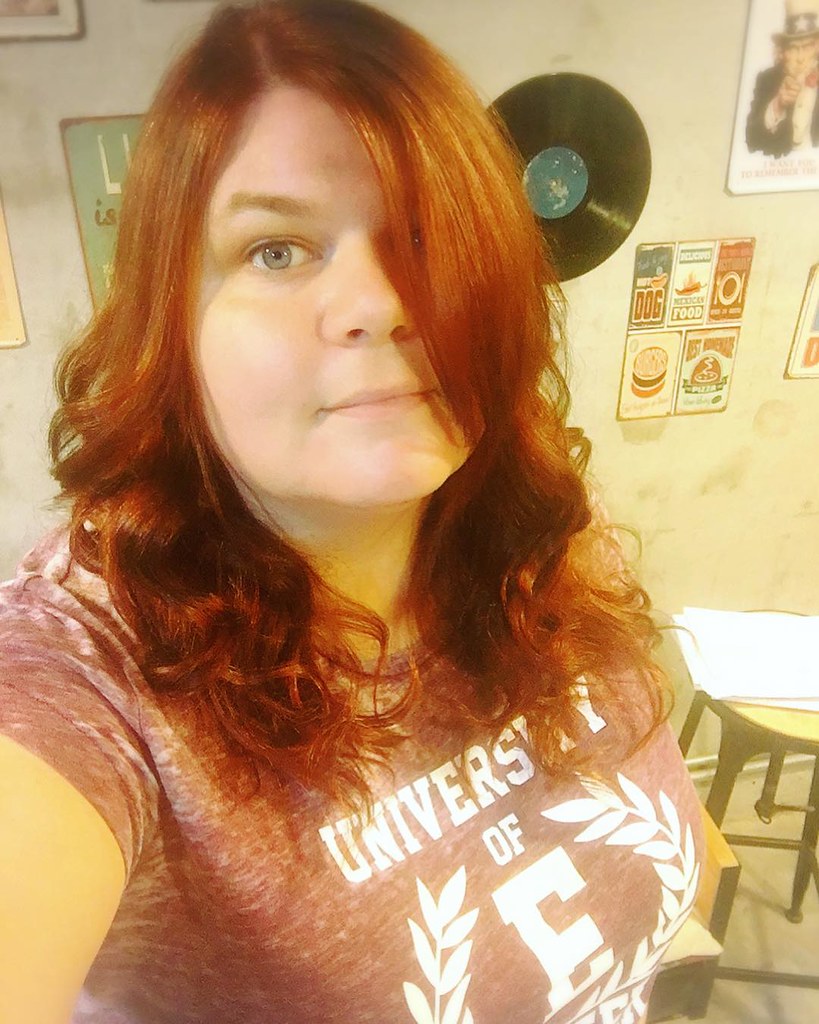
So after gathering recommendations from friends, I went with Yves Yu Tsui (find her on Facebook as StarletLaDiva - she's very responsive to Facebook messages), who gave me this lovely, current style in my preferred length:


46725838_10156902558281202_5655464600087298048_o


I'd been looking for a color specifically that was bright, but not the very deep violet-toned red I'd been using. It had started to look fake in a bad way (I'd previously liked it because it was bright, and looked fake but in a cool, hip way, like I wasn't trying for natural hair). I wanted a more natural red with coppery, fiery undertones, but which also covered my encroaching gray. 

Yves gave me that - a red that hewed toward flame without being orangey - with a bit of base color to ensure the grays got covered. She also put Olaplex into the dye which lessened the time I had to spend in the chair and lowered the price point.

In the past, I'd often have to have my hair gone over twice with dye, because it wasn't left in long enough so it streaked, or was very obviously different on my roots (which I tend to let grow long, though that will have to stop now that I'm really graying because I'm ancient) than my pre-dyed hair. I knew that leaving it in longer helped create a more even color on my difficult hair, and wanted that to consistently be how it was done.

Yves was super great about it, and left the color in my hair almost up to the upper recommendation on the product. The result was that I only had to go through the dye process once, which was like a revelation!

Although it came out slightly darker than I'd wanted, I know hair color is not a perfect science. In any case, I appreciated that Yves warned me in advance that before the first wash it would be on the darker side because of the base color used to cover my gray, but it would turn into the color I wanted shortly. And it did!

I also appreciated that she did the whole thing herself. Generally I find stylists do listen to clients (I don't have a horror story to tell) but I have to say I felt especially listened to by Yves.

The whole thing took less than three hours (I was used to being at the salon longer, but had chalked it up to my difficult-to-dye hair; it turns out that it didn't have to be that way) and cost right around my price point - slightly less, if I remember correctly, which made me amenable to tipping. And the prices are set - there's no awkwardness around being charged more for "extremely long hair" (my hair is merely long, but I'd been charged for "extremely long hair" before) or what hair lengths mean exactly. The price is the price. I like that.

Yves also doesn't try to sell product at the end of the visit. I don't particularly mind being offered a product at the end as sometimes I do want or need them and saying 'no' doesn't make me uncomfortable, but I know a lot of people don't like it when stylists do that, so I figured I'd mention it.

Anyway, go to Yves. You won't regret it!