So, if you're like and don't have a TV, so can't necessarily watch something when it's on TV, you may be disappointed in the 4 minutes or so of footage across two videos of President Tsai's CNN interview on CNN's official feed.
The good news is that an awesome guy I don't know is here to help! You can watch the full video here.
Apparently two well-known analysts in Taiwan went in on ICRT about the interview (one thinking positively of it, the other negatively), though I haven't listened to the whole thing yet.
I have a few thoughts myself. Tsai herself, in my opinion, performed admirably. To a Western audience - the people this is actually aimed at - she came across as reasonable, pragmatic, even-keeled and intelligent (all things she truly is). She made a very strong case for Taiwan as a beacon of democracy and freedom, and was very clear on the threat from China and why it should matter to the world, without any 'troublemaking' rhetoric. More time could have been spent on marriage equality - as far as I can tell, it wasn't mentioned - though I may have just missed it - to really hammer home the idea of Taiwan as 'liberal beacon in Asia' (it's not that liberal by Western standards but by Asian standards, it kind of is). She also makes a strong case for closer communication and stronger relations with Taiwan, without seeming desperate or begging.
She makes it clear that Taiwan does have its own military capability and can withstand a first wave of attacks. This is essential - we need to show the world that Taiwan does take its defense seriously and would not simply beg the world to defend it as it stood by, helpless and unwilling to stand up for itself.
"If it's Taiwan today, people should ask, 'who's next'?" - I truly don't think one can make a stronger case, and it was delivered succinctly and clearly.
Her point that Taiwan is the only democracy in the Chinese-speaking world, and it produced a female leader, so we need to quit it with thinking women are limited in what they can do is a strong one. By going meta with the 'questions about being a female leader of a country' trope and acknowledging it, with her basically saying 'what I think about such questions don't matter, I have an obligation to answer them until female leaders are totally normalized' (paraphrased), she shows that she always considers her role carefully as a leader rather than giving in to her personal feelings. To Americans who may be sick of seeing the puerile, vengeful, personal spewings of their own president, this is likely to play well.
She showed that she does speak fluent English, but wisely moved back to Mandarin for the more complex questions. This will also play well to a Western audience.
Tsai is quite good at this kind of interview, where she almost certainly prepares careful responses to known topics in advance, and where a questioner prompts her on various topics so she doesn't get too bogged down in technocratic wonkery.
I'll admit that by giving careful answers that kind of evade the meat of the questions asked - on whether Taiwan counts on US support in the face of a Chinese invasion, on whether Trump is an unreliable ally - she does come across as just another 'politician' to some extent. She doesn't really answer these questions, and I would have liked a stronger stance on Taiwanese not favoring unification, now or ever. That said, I think any half-intelligent viewer will understand that her country is in a precarious position. In a situation where a single misplaced word can infuriate China, her 'careful' approach is simply necessary.
All that said, the average Westerner interested enough to watch this interview would, in my estimation, be persuaded that Taiwan is worth taking seriously and its leader is not an 'extremist', an 'ethnic nationalist/separatist' or a hotheaded despot, but the pragmatic, serious, hard-headed and slightly nerdy (okay, very nerdy - that karaoke comment about reading while her friends sang...wow) democratically elected leader of a proud, free society.
That doesn't mean I feel so positive about the whole interview. While I am very pleased with how Tsai presents herself, I'm less of a fan of the historical interludes about the Taiwan-China situation, and some of the language that the interviewer used (namely the terms "reunification" and "mainland").
No one thing the presenter said was wrong, regarding what happened in 1949, the change in diplomatic ties, that Taiwan's official name is the Republic of China, or who the US recognizes as 'the sole China' now and why. No one fact was off-base.
But taken together, it presents an image of Taiwanese history that I can't endorse as accurate: there are several lies of omission that seem like minor details but are in fact pivotal to an accurate telling of Taiwan's story. If included, such details would change the overall narrative of Taiwanese history to such a great degree that leaving them out feels false.
Imagine if, instead of the usual "1949", "two Chinas", "the Republic of China still claims" narrative without any key details, the presenter had said something like this:
"Taiwan had been a Japanese colony until the end of World War II, when the Allied Powers allowed the Republic of China to accept Japan's surrender on their behalf and govern Taiwan, amid some controversy. The Nationalists and their leader, Chiang Kai-shek, who controlled Republic of China, were then defeated by the Communists under Mao Zedong, who founded the People's Republic of China. The Nationalists fled to Taiwan, claiming to be the 'sole' government of the 'true' China. Both leaders of these "two Chinas" were military dictatorships marked by oppression and mass murder. The United States recognized the Republic of China on Taiwan, under Chiang Kai-shek, until the late 1970s, when it switched recognition to the PRC in Beijing. Since then, China has continued on a trajectory of dictatorship while Taiwan has democratized and liberalized, with many Taiwanese no longer identifying as 'Chinese'. Polls in Taiwan show consistent support for a separate Taiwanese national and cultural identity. Some in Washington say that in light of this, it's time to re-assess US policy in the region, which..."
Same basic facts, but with pertinent details centered in the narrative, it tells quite a different story, doesn't it?
But, hey.
We can't get everything we want, so I can only hope that during the 'historical' interludes, American viewers went to the kitchen to get more chips.
In the end, it doesn't matter as much as Tsai comporting herself well, which she clearly did. Taiwan needs to present a clear case to the world that it is worth taking seriously and aiding if necessary. I never thought I'd say Tsai Ing-wen was the public speaker who could accomplish much of anything (she's not a great speaker), but...I could be wrong. She's exactly the face Taiwan needs to show to the West.

Monday, February 25, 2019


Thursday, February 21, 2019
Government Proposes Marriage Inequality
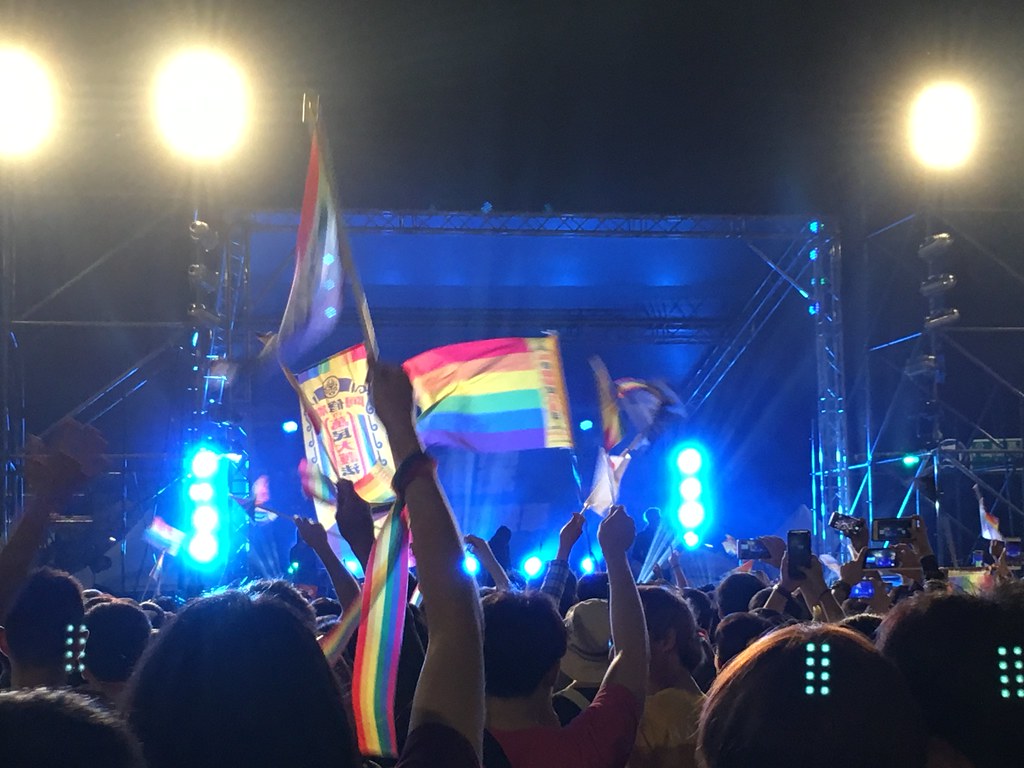
While everyone is celebrating the draft same-sex partnership law that has been announced and will move to the legislature for debate, here I am - as always - sucking vinegar and taking names.
That's not to say there's nothing good about the draft law - just that it isn't marriage equality and we can't rightfully call it that. And I wouldn't say I oppose the law, but you won't find me shouting my support from the rooftops either. I hope it passes, but if you want my enthusiasm, well, sorry to disappoint.
Therefore, while we can say that Taiwan will be the first country to offer some kind of same-sex "marriage", and they even call it "marriage" in the draft, it's not equal, period.
There are some positives: next-of-kin rights (medical visitation, making medical decisions, inheritances) seem to be included, so previous real-life situations in which someone was in the hospital and their same-sex partner could not visit or make decisions for them, or when someone died and their estate went to their blood family and not the person who was their spouse in all but legal name will be averted. That's a very important big win. We can also assume that this will include the ability to buy insurance together, be on the same medical insurance plans etc. - not as big a deal in Taiwan given the NHI system, but still important.
And, of course, the proposal specifically uses the word "marriage", which does matter. Words mean things; they imply a definition of truth. The Executive Yuan didn't have to use that word - they could have called it something more like "union" or "partnership" but didn't, which sends a strong message. Good.
It is not, however, equal marriage.
At the risk of angering some people (though I'm not at all sorry), some other aspects of this draft law are some big fat Jim Crow bullshit.
Same-sex couples will not gain the right of co-adoption; one spouse may adopt only the biological offspring of the other. That means no adopting orphaned children, and it also creates some very difficult barriers.
Fertility treatments and surrogacy are not easily obtainable by single people in Taiwan; often the treatments are only available to married couples at any price (it's not an issue of these treatments not being covered by NHI; unmarried people are simply banned from accessing them). From the Storm Media piece, the "special law" says that giving these treatments to same sex couples will be "at the competent authorities' discretion", whatever that means. So it may be quite difficult for same-sex couples to even have biological children, if they are denied access by these "competent authorities".
The issue of international marriage is not mentioned in the law, and appears for now to therefore not be covered. Storm Media's link above implies that it will that it will only be possible to marry a same-sex foreigner if that foreigner's country of citizenship also recognizes same-sex marriage. That's not quite the case, necessarily: it would be quite possible to overrule the prohibition on marrying in this case, citing it as a disruptor of 'public order' in Taiwan. My lawyer friend says he hopes that this is how such cases are interpreted going forward.
The "religious freedom" clause, which specifically says this marriage bill will not interfere with anyone's right to practice their religion as they wish, is unclear. I'm not opposed to it on its face; if someone wants to believe in some gay-hating sky friend, I think that's kind of dumb and bigoted but I don't think they must be legally mandated to change their (dumb and bigoted) religious beliefs. Freedom of religion is a basic right after all. But, it's unclear whether that will extend to allowing employers to discriminate against LGBT employees, or businesses to discriminate against LGBT customers, on the basis of religion. This needs to be clarified.
There is also a minor difference in the legal age of marriage, but it's more likely that the actual marriage law (rather than this unequal "special law") will be amended so that the age of consent to marry is the same across genders.
And, finally, this "special law" doesn't establish an official "in-law" relationship. I'm not quite sure what that means in practice, but it is a difference.
For all of these reasons, I simply cannot say that Taiwan is on the cusp of marriage equality. There will be some form of marriage with this law - which has not passed yet, by the way, it's just about to reach the legislature now and needs to be debated and voted on - but the fight isn't over.
The good news is that the unequal aspects of this law can be challenged in court, and I have to believe they were designed to be easily toppled. The Council of Grand Justices ruling in May 2017 specifically said that, as all citizens must have access to equal rights, that the right to marry must therefore be equal.
This does not confer equality, and therefore does not quite adhere to the constitutional interpretation ruling, and so is subject to legal challenge on those grounds. I am sure it will be challenged, and there's a strong foundation for making that happen relatively expediently while ensuring that the most egregious withholding of rights (next-of-kin issues) are handled.
It's a step, but I have to admit I grow tired of these half-steps. It happened with dual nationality too (allowing some special magic foreigners to qualify for dual nationality and relegating the rest of us to Garbage Foreigner status).
I know it's hard to convince more conservative factions of society that sweeping change is necessary, but real lives are impacted in the meantime, and it's tiring to be expected to compromise with Granny Bigot (age shouldn't be a factor but public opinion polls show that there is a strong age correlation) while waiting for access to rights (like marriage) and privileges (like dual nationality) that meaningfully change our lives. I get that there are political strategies to consider, but I personally am fine with letting Granny Bigot be upset.
I also don't feel all "rah rah hooray" when I know that this 'special law' is essentially an encouragement to keep fighting, not a summative victory.
The good news is that this is really angering conservative groups in Taiwan. Awesome! I hope all of their kids are gay. (That's not a punishment, it'll make Taiwan more awesome, but it'll also make them mad and make them think they're suffering...and that's great.)
So what can we do in the meantime?
To ensure that Taiwan moves toward actual marriage equality, we can donate to any number of pro-equality groups so that they have the funds to mount legal challenges, for starters. Here's a good place to start.
We can talk to relatives who disagree. Rallies are nice and stickers are great, and so are banners in hipster cafes, but the real change will happen when we start talking to the people in our lives about what equality means and why it matters for Taiwan (and everywhere). That if Taiwan stands for freedom and human rights, this is an essential part of it.
And while I won't tell others they can't celebrate, I'm holding off on my party. I will neither relax nor celebrate until we get actual marriage equality in Taiwan.
Taiwan does a tiny hop over a very low bar to be the most gender-equal country in Asia
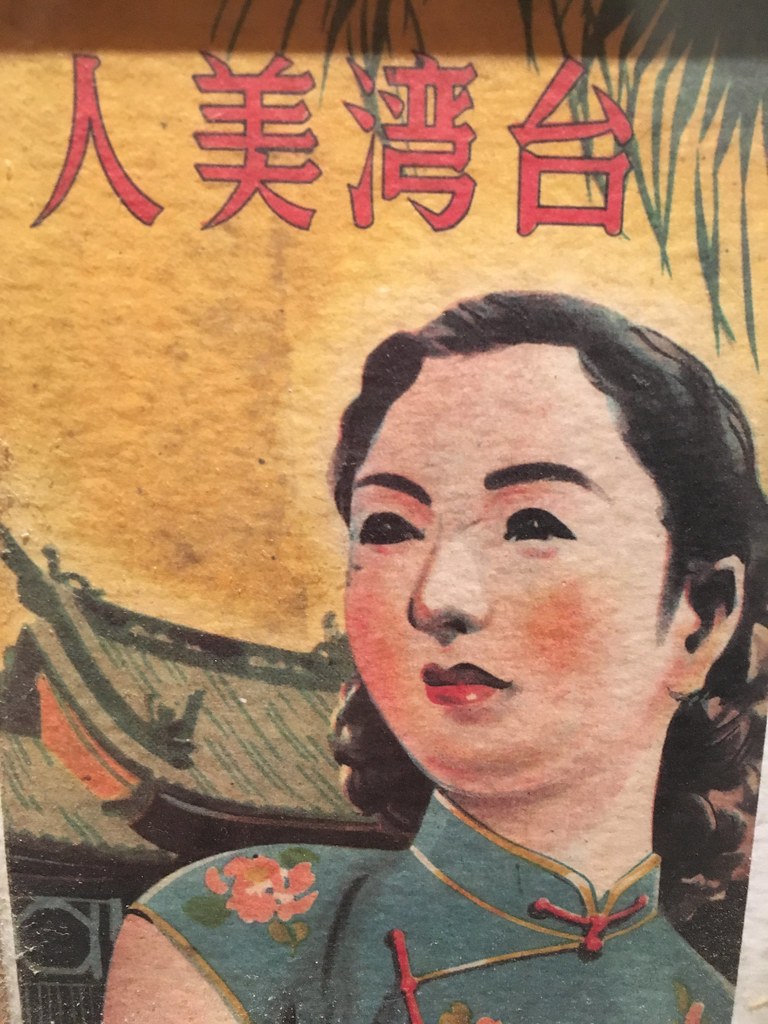
I've said a zillion times before - though Google isn't giving me my old post on this - that Taiwan has the best gender equality in Asia, and is easily the best country in Asia to be a woman (either foreign or local).
And apparently my view on this has been corroborated by statistics!
But, I've also been quite clear in the past that Asia isn't exactly a region known for having a fantastic record on gender equality, so saying that Taiwan is "the best" in the region doesn't mean much. I mean, this ranking from a different source rated the Philippines as the 'most gender equal country in Asia' in 2018, and...um. It's a country where one can't get divorced (divorce being a right that helps all genders and is necessary in any country working towards gender equality) and can't get an abortion (an essential right of women to control their own bodies). It is not possible to say with a straight face that a country has gender equality when basic rights such as divorce and abortion are not permitted.
The rest of the list is just as much of a joke. None of these countries are places where women, generally, are treated equally or where women have the same opportunities as men.
So, for Taiwan topping the rankings - as determined by an outside body as Taiwan is not in the UN, meaning that no UN statistics where Taiwan would rank significantly are accurate - is nice, but it's not so much clearing a hurdle as doing a little skip in a hopscotch game.
Sure - Taiwan has a high rate of female political representation, higher than many Western countries. The gender discrimination laws for the workplace are quite clear, and when enforceable they actually seem to mean something. Abortion is legal and so is divorce (though the divorce laws are not exactly fully modern). The government is trying to push gender equality. Anecdotally, women seem to have a stronger presence in accounting and finance here than in Western countries. There is a pay gap, but it's less than other Asian countries.
The streets are generally safe for women. Being pressured into an arranged marriage would be exceedingly rare, and resources do exist for abused women. It's not even that odd now for women to choose to remain single or not have children. And, of course, we have a female president - something the US has never had. And she's unapologetically single and wore pants at her inauguration: something I'm not sure many Americans would accept, even in 2019.
But.
Domestic violence is a real problem. We have no idea what actual rape statistics are, because most women don't report when they are raped. It's difficult to speak out about sexual violence without pressing charges thanks to Taiwan's insane libel laws. There is a gender wage gap and nobody is really sure how big it is (and it's uneven across different industries). Many women can't afford birth control because it's not covered by national health insurance (even for treatment of other medical issues - not that that should matter!). Unmarried women can't receive fertility treatment, there are some ridiculous laws surrounding abortion (e.g. needing the husband's consent) and divorce (it's difficult to get one if both parties don't agree, with the party who wants the divorce often having to prove their partner did something to justify their ending the marriage).
Even when serving in some of the nation's highest offices, one might be subjected to utterly preposterous sexist remarks. Women's issues are used by both ends of the political spectrum to score points, without any real desire to see through justice for said women. Important gender equality reforms are often ignored. There is no rape shield law, at least since the last time I researched that issue. Adultery laws are a straight-up horrorshow. Religious practices often include ingrained sexist beliefs.
And those are just the obvious issues.
So yeah. Great. Okay. We're the most gender equal country in Asia. Woohoo!
But Asia is a pretty gender-unequal place. Female infanticide, the gender pay gap, the employment gap, education gaps, domestic violence, lack of access to basic health and reproductive care: these are all endemic issues in Asia. So, that distinction doesn't exactly mean that Taiwan is killing it in terms of treating women well.
It just means we're treating women a little less badly than other places.
All I can say is that, to be fair, the entire world is a pretty gender-unequal place: women's political participation, for example, is lower in Germany, the US and the UK than it is in Taiwan.
So we treat women a little less badly than most of the rest of the world.
That's good, but we still need to do better.
Subscribe to:
Posts (Atom)