Sunday, December 30, 2018

Sorry Kaohsiung, but Barcelona you ain't

43228420_10156781733876202_5300141998638891008_n
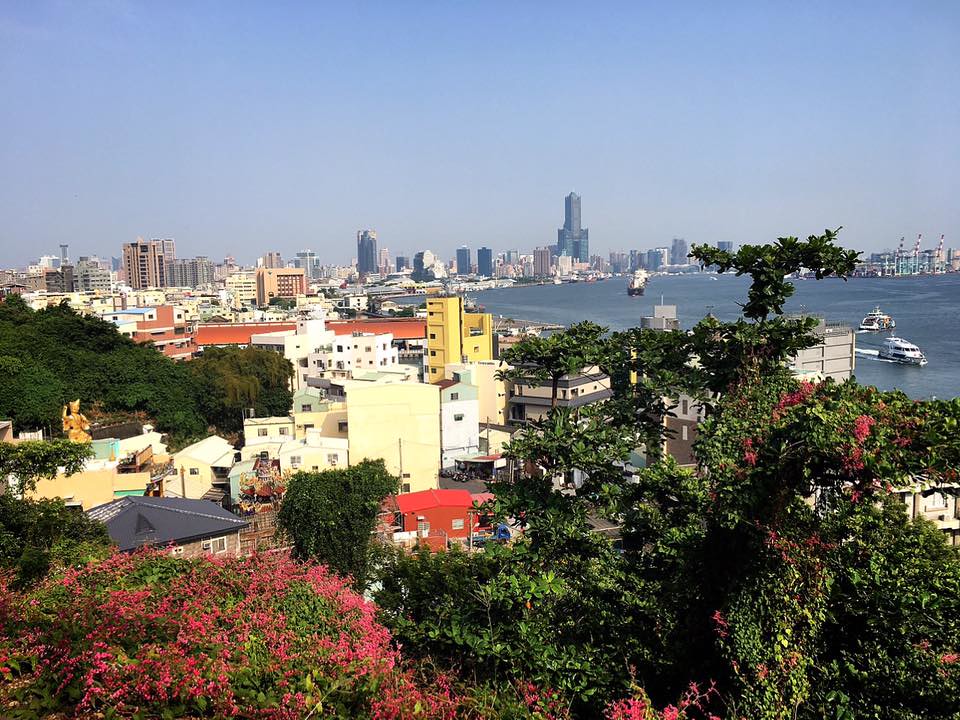
The view from the British Consulate at Takao
You're a pretty city, Kaohsiung, and I enjoy visiting you, but you can't justify a tourism tax


So, Big Uncle Dirk Han Kuo-yu is talking about introducing a foreign tourism tax in Kaohsiung. As Taiwan News reported (yes, Taiwan News does report things), the tax would be aimed at foreign tourists, not domestic ones, charging (for example) NT$100/day, typically payable at hotels.

In this way, the plan is modeled on city taxes currently in place in several European cities which are also popular tourist destinations. This year alone, I paid tourism taxes in Lisbon, Porto, Rome and Siena (and may have paid one in Milan; I don't remember.) The taxes in Europe range from €1 (or less) to as much as €3 per day.

With that in mind, Kaohsiung's proposed tax would be at the high end even for major European destinations. Rome, for example, was €3/day. NT$100 is about US$3/day.

I have a few issues with this. I'm not against tourism taxes generally - the infrastructure of many major European cities has to support not only residents but visitors. Despite the adage that "if you want less of something, tax it; if you want more of something, subsidize it", the taxes are low enough that they are unlikely to deter tourists, especially those who've traveled a long way.

That said, such taxes are usually levied in places where tourism is already strong. Dirky-doo wants to 'prioritise tourism' which doesn't seem to be particularly strong in Kaohsiung (some discussion of numbers found below). The effect won't be brushed off as a minor fee, as it generally is in other places where tourism numbers are already massive. It will deter tourists, not promote them. How exactly are these two policies meant to align? Or, perhaps Big Uncle Dirk is full of crap and always has been, and it doesn't matter if his ideas make no sense jointly or severally?

It makes sense that, in addition to bolstering the economy through spending on their visit, that tourists should also contribute directly to the local government for the purpose of maintaining the infrastructure that they themselves strain. How much of this money actually goes to this, however, is not at all clear. For example, this explainer of where Penang's tourist taxes go doesn't look at all as though they do anything useful. I wouldn't want my money going to some committee organizing useless conferences and chartering flights from Wuhan. Some discussions of tourism tax have the revenue going into general government operational funds - also not a strong sell to tourists wondering why they're paying out.

But let's be honest here. It doesn't seem to me that Kaohsiung is a city whose infrastructure is unduly strained by the number of tourists who visit. If anything, tourism numbers there are...okay, but flagging, though the data is a bit outdated here. You can find some more numbers in the various tables here - they're national statistics, not Kaohsiung-specific, and relevant data is spread across several spreadsheets.

But these national numbers for Taiwan can be compared to, say, the number of tourists going to Barcelona, Spain alone (one city - not even all of Spain, let alone all of Europe). Barcelona is a good example as it's a city which is increasingly suffering from a glut of tourists it can't handle, and which locals increasingly don't want to handle. (Barcelona's tourism tax is variable based on the accommodation chosen).

I know you do get tourists, Kaohsiung. But I'm sorry, you are not Barcelona.

Kaohsiung, honey, you don't have massive infrastructure or overcrowding issues the way European cities do. Your public transit system is finally turning a profit (which I'm not even sure public transit needs to do, but isn't a bad thing.) There aren't hordes of foreigners crowding your streets or causing environmental damage. You don't need the money for the same reasons that European cities do.

What's more, I don't really think Kaohsiung has the draws that these other cities do. While its architectural heritage interests me, it's not exactly mind-blowing to your average international visitor. There's no Roman Forum, Sagrada Familia or even Jeronimos Monastery or Sao Jorge castle in Kaohsiung. The city has gotten brighter and lovelier over the years (so Big Uncle Dirk campaigning on it being a dingy old city run into the ground by the DPP is especially offensive to me in how deliberately wrong it is) but it just isn't the sort of wow-bang-sparkle destination that can justify something like a tourism tax.

In fact, it's a really quick way to convince tourists to go to other parts of Taiwan. Most international visitors to Taiwan are Asian, and they don't necessarily have the spending money that tourists to Europe do (the Asians with heaps of cash head west), or if they do, they'll save that for their trip to Rome, not their trip to Kaohsiung.

And, of course, it also leads to a few other questions.

First, how would visitors from China be treated? In the statistical links above, you can see that they are treated separately from other foreign arrivals. Yet they are the biggest group of non-domestic tourists by a very wide margin, so not taxing them would basically invalidate the whole point of the tourism tax to begin with. Dirk is an unabashed unificationist dressed in a populist's clothing and, although I'm speculating here, probably conflates "promoting tourism" with "promoting Chinese tourism", which is apparent given his desire to increase flight connections to China (ignore the dumb headline). I would not at all be surprised if he declared that visitors from China were "domestic" and therefore not subject to the fee.

Second, most other "foreign" visitors to Kaohsiung actually live in other cities in Taiwan, like me, and most visitors overall to the city are domestic (source: see Focus Taiwan link above). Although Big Uncle Dirk says domestic tourists wouldn't be included (which is not the norm in Europe, where all visitors pay as it's essentially a hotel occupancy tax). I have to wonder whether foreign residents, who are technically domestic tourists, would be similarly exempt. I know that if I found out I'd have to pay this tax because I don't look like a domestic tourist...well, see how fast I would not visit Kaohsiung, just on principle (or I'd stay with my friend in Dashe, even though that's a bit far from the city.)

Yes, tourism has a lot of indirect economic benefits; some will say that these are sufficient and it's unnecessary to add a tax on top of what tourists already spend to be in a city. However, these benefits are variable and often have deleterious costs associated with them (same link), are often not much at all if a large number of tourists are on a shoestring budget (say, gap year kids in Thailand or people on cut-rate Chinese group tours). There are also a number of disadvantages including exploitation of local labor and environmental effects, and most tourism dollars appear not to stay in the local economy (ignore the jingoistic headline). This makes sense; for example, in developing countries, labor costs are low relative to what major hotel chains charge for rooms. Most of that money likely goes to the international conglomeration that owns the hotel, not the local economy that the hotel is in, though there may be other economic benefits.

But I don't see how any of it matters for Kaohsiung, a city whose main economic driver is not tourism, and a city which doesn't experience the worst effects of tourism (aside from some slight overcrowding at Shizhiwan and Cijing Island). Why do they need a tourism tax which will drive tourists away, won't be charged to the bulk of tourists because they're domestic, may not be charged to Chinese tourists, and therefore just causes annoyance without much benefit, and arising from no great need?

Friday, December 28, 2018

Taiwan needs to figure out how to treat foreigners better

It pains me to say it, but Taiwan has some deep discrepancies between the human rights ideals it claims to espouse, and how it treats not only its own citizens, but also those who come to Taiwan to study or work.

Instances of Taiwanese universities using the New Southbound Policy as basically a vector for scamming Southeast Asian students are starting to feel not like horrifying exceptions, but the norm. It's happened now with not just Sri Lankan students (news of which broke just months ago) but Indonesian ones as well, at more than a handful of universities.

These universities take government subsidies meant to help them attract students from Southeast Asia, and then use them to pay brokers to bring students over. These students are then assigned jobs in factories, and attend class only a few days a week, if at all. These factory jobs are called "internships", but they aren't learning opportunities - they are basic blue-collar work - and they aren't even allowed for first-year students, and certainly shouldn't be taking up most of one's week, as work is limited to 20 hours/week for foreign students here.

These are scams aimed at getting free labor - or even labor that has paid to be there, as some of these students are paying tuition to do this. They are violations of human rights.

Taiwanese people would not accept this happening to their own citizens, so it disgusts me that it seems to happen so easily to foreigners.

The "university" system here isn't the only vector for abuse - how domestic workers (who are predominantly female) and fishing boat workers (predominantly male) are treated, not to mention regular factory workers, is obscene. 

Taiwan is trying to take a big step forward by reducing its economic dependence on China through re-invigorating ties with Southeast Asia through the New Southbound Policy. But the high-minded ideas of the central government just aren't trickling down to those meant to actually implement it through outreach (including businesses, employers and universities).

Attempting to take advantage of a government policy aimed at improving the country to line one's own pockets is not unique to foreign residents or the New Southbound Policy (certainly this happens in the domestic sphere as well - just ask how property developers circumvent the "green space" law by giving politicians reduced-price apartments they can flip and profit from, or how some local politicians take advantage of local charities). However, I can't help but think in this case, there's an element of racism at play.

If this were happening to Taiwanese, the outcry would be swift and condemning. Instead, the government "will conduct an investigation" (hardly decisive action they need to be taking). This after it's obvious that those in government who set up the programs with universities - if they can even be called that - knew how likely it was that they would try to take advantage of both the government and the foreign students. If they weren't aware of this possibility, they wouldn't have talked to the university presidents in person and warned them off doing exactly this. 


Initiatives like the New Southbound Policy aren't going to work if the people in charge of actually implementing various initiatives are using them merely to take advantage of Southeast Asian people. They're not stupid, guys. They know that there's a lot of racism against Southeast Asians here. They know that these scams exist. They know that they can't necessarily trust these programs. And neither the people nor the governments there are going to stand for it. They are already angry.

I'll say it again: if Taiwan continues to be known for treating Southeast Asians badly, and is seen as using the New Southbound Policy for their own enrichment with little concern for the effect on Southeast Asian people or economies, it's not going to work. The New Southbound Policy will fail, and we'll be stuck with a choice between China strangling our democracy or our economy - exactly the thing we seek to avoid. 


One of the things that has really impressed me about Taiwan is how this country consistently pushes itself to live up to its purported ideals: democracy, freedom, human rights. It's not that other countries don't do that, but Taiwan seems (to me anyway) to make more progress more quickly than other parts of Asia, and the struggle just seems more visible here (and more accessible in terms of being connected or understanding, on a personal level, the bleeding edge of the push for social change.)

But we have to admit that Taiwan, as much as it may be a place one can love deeply and make a commitment to, is far from perfect. That's true not just in terms of how it treats its own citizens, but how it treats foreigners here. It has ideals, but as things stand right now, it simply doesn't live up to them. 

Monday, December 24, 2018

"Naturally independent" doesn't mean what it should

Screen Shot 2018-12-24 at 6.58.14 AM


So, I'm meant to be on vacation after a long slog to finish a huge paper - that's why Lao Ren Cha has been quiet for most of November and December - but I really just feel like writing this.

Much of this idea has been bouncing around in my head for awhile, although it really came together through a conversation over mediocre stir-fry and all you can drink beer with Frozen Garlic. So I'm not sure where my thoughts end and his begin, but then, that's also the beauty of political discussion.

When I heard the occasional cry of "the Sunflower Movement is dead!" after the election last month, at first I felt annoyed. Was it really? Perhaps the massive groundswell of broad support that progressive causes seemed to suddenly be capable of garnering was ephemeral, but the movement itself, to me, lived on. Although the Sunflowers embodied a strong anti-KMT sentiment, one can't really judge the staying power of the Sunflower ethos by whether or not DPP wins elections. The Sunflower Movement may have been an anti-KMT movement, but it wasn't a pro-DPP one.

In any case, a lot of other progressive causes whose mainstream debate blossomed post-2014 have also been pushed forward, though perhaps not as far as we'd hoped. In fact, I noted a number of "Fuck The Government" and other Sunflower-inspired sartorial choices among the marriage equality crowds, creating a tangible visual connection between the two movements.


But...I'm beginning to see the ways it might be true that the 2014 light is dimming, and the shadows of Taiwan's pre-2014 problems growing longer once again, and I know there is some sentiment in activist circles that their efforts have not borne fruit as they'd wished.

Probably one of the key shifts in 2014 was an uptick in the prominence of a "naturally independent" mindset (which the Sunflowers themselves certainly embodied, but it runs deeper than them). That is, the generation of Taiwanese youth, some now well into adulthood, who grew up in the post-authoritarian era and who perceive Taiwanese independence to be so obvious that it is not even a matter of debate.

That hasn't changed; "naturally independent" sentiments remain strong in 2018. But it seemed clear in 2014 that such a mindset included the understanding that if Taiwan was going to be independent, that it would have to reckon not with the relationship it wished it had with China, but with the one it actually had. ECFA and CSSTA were both predicated on the assumption of a safe, fair, unthreatening relationship with a large neighbor state that bore no ill will, and could therefore be negotiated with. It took the Sunflowers to wake the rest of the country up to how untrue these assumptions were, and how threatening China really was. They taught us that the only way to win a game with China is not to play (whether it be word games or economic agreements).

I - and many others, including the friend I had this conversation with - had hoped that people would continue to consider all possible dealings with China through this lens, and wisely choose not to play their game. As I've written, for a brief glimmer of a moment, society at large seemed to understand this.

Sadly, that time seems to have passed. Instead, "naturally independent" seems to once again mean that, because Taiwan is obviously independent, that it can have a relationship with China on its terms. That as it is a normal sovereign state, it can negotiate with China as one.

To take that further, this mindset that China's designs on Taiwan don't matter often translates into a belief that political parties also don't matter because "they're both pretty bad" so "we may as well choose the one who says they can kickstart the economy".

Nevermind that the latter party advocates playing China's game, and sees Taiwan's ultimate fate as being Chinese. That's not important apparently, because "that will never happen, of course Taiwan is independent, we just need to do something about the economy"...I guess? It is so clear to this group of "naturally independent" people that either sliding into an economically dependent death spiral (which is China's real plan) or violent forcible annexation (that'd be China's back-up plan if the death spiral thing doesn't pan out) are unthinkable and therefore...there is no need to think about them. Sadly, they are wrong.


When you slide back into that sort of complacency, electing mayors who openly support (and believe in the existence of) the so-called 1992 Consensus, who are eager to set up cross-strait inter-city ties in defiance of the national government's more restrained China policy, who claim they will "do deals even with North Korea!" like Big Uncle Dirk Han Kuo-yu, to basically think that the KMT's pro-China policy isn't worth considering because it doesn't matter...that's an easy slide further into playing China's game again. That we will never win this game seems to be viewed as irrelevant.

On the other end of the spectrum, there are also the "naturally independent" folks who are so pro-Taiwan that they are also abandoning the DPP, because they see any party that doesn't make a beeline for immediate de jure independence and promise to quickly dismantle the ROC on Taiwan in favor of a new Republic of Taiwan as a party that is "just as bad" as the KMT. While I'm sympathetic to this line of thinking - the ROC sucks! Mere de facto independence sucks too! Immediate Glorious Revolution would feel so good! - I don't think it's the best way to actually meet our goals in the long run, so I find this line of thinking dangerous. Like, "this is how you get President Trump" dangerous.
No matter what, these delusions about China spell trouble. A smart "naturally independent" mindset would acknowledge that Taiwan is very clearly a sovereign state, but also wisely understand that China is big and mean and nasty, and that it doesn't see Taiwan that way. That it's designs on Taiwan are evil, and its traps sticky. And that we have to negotiate with China as things are, not as we wish they were. Such a mindset would understand that there is no moral equivalence between the two parties: that just because one won't immediately flip the table on history, it doesn't mean they are no better than the other, which seeks eventual unification (with the former president even saying so).

Unfortunately, I worry that we're going to need another bloom of social activism in the vein of the White Lilies, the Wild Strawberries or the Sunflowers to get people to understand this again. Maybe the Sweet Osmanthus Movement, the Tung Blossom Movement, or the Betel Flower Movement or whatever floral movement comes next will finally push us to a lasting realization of what it means for Taiwan to truly pursue independence.

Sunday, December 23, 2018

Chthonic performance in Hong Kong cancelled, showing again that authoritarians have bad taste in music

Untitled
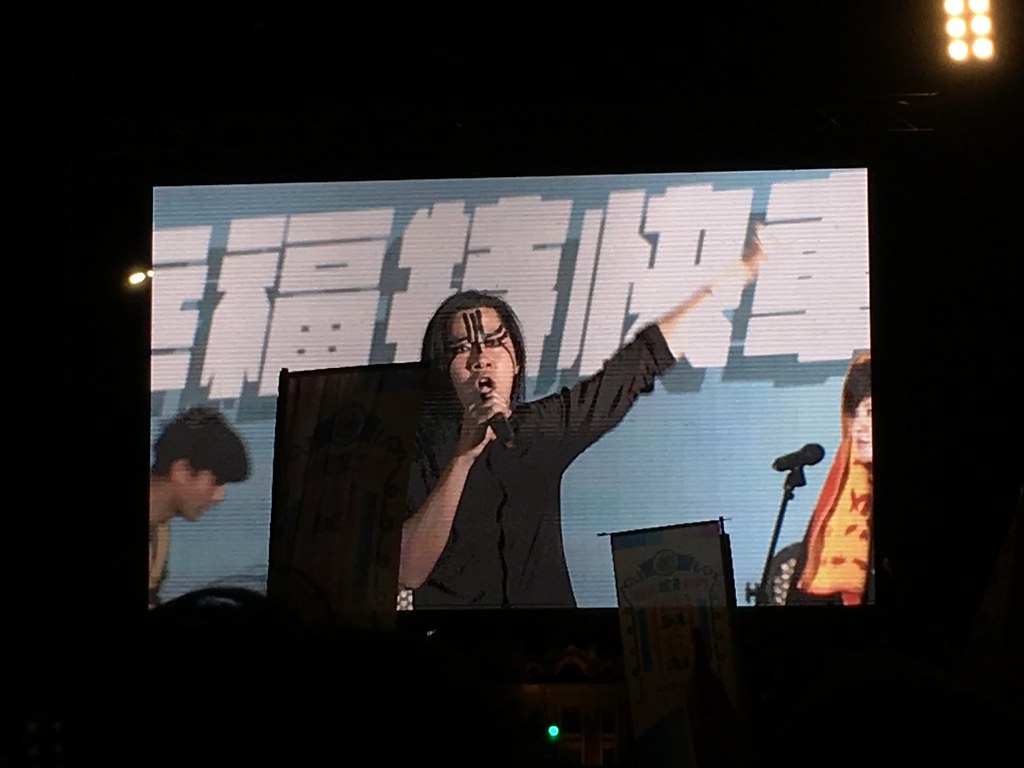
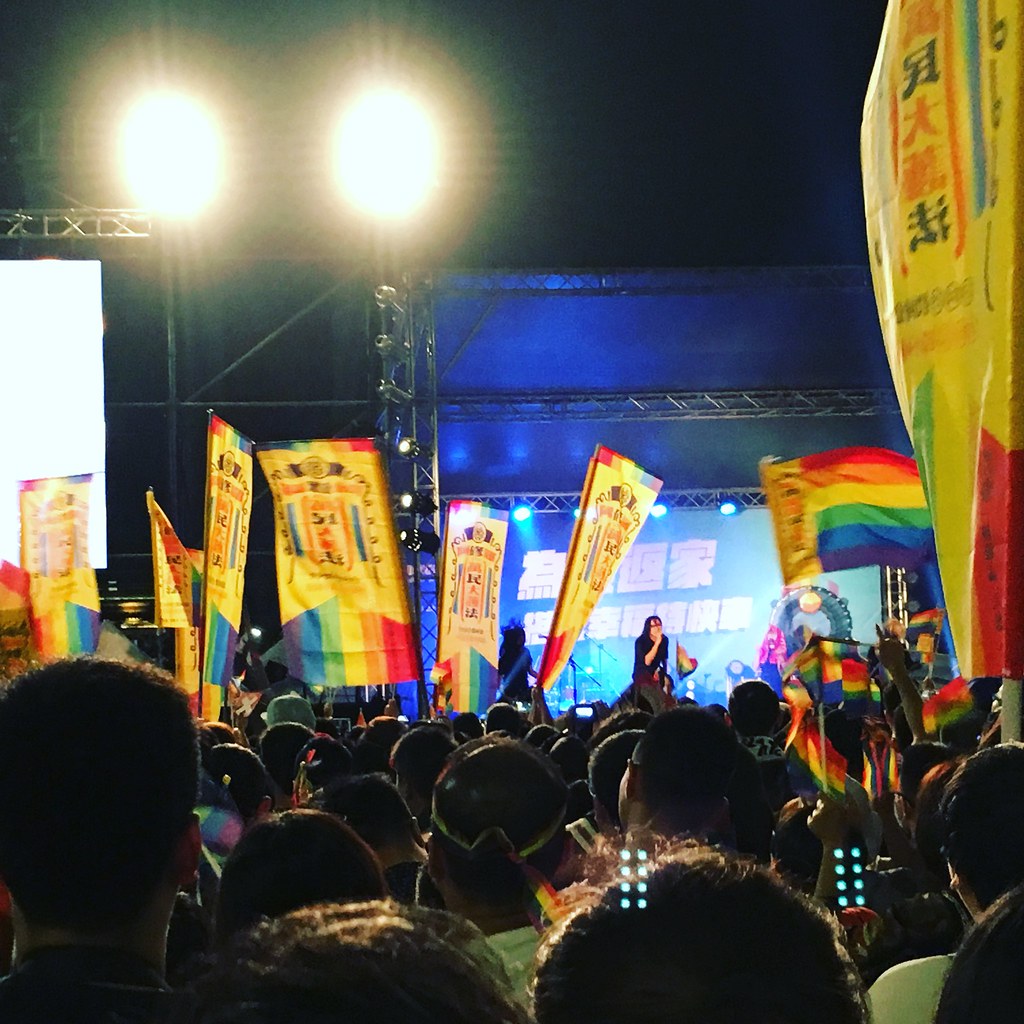
Sexy Legislator and Chthonic frontman Freddy Lim, performing at the Taipei pro-marriage equality rally on December 18th in support of three pro-LGBT referendums 


Hong Kong continues its unwilling slide into authoritarianism at the hands of China with the cancellation of a performance by Taiwanese black metal band and all-around great musical act Chthonic. There had been talk on Facebook by the band that it might perform without its frontman/vocalist, Freddy Lim, but even that plan seems to have been cancelled.

Update: apparently Freddy's visa was denied because he lacks "special skills" that are "not available in HKSAR". Freddy responded by saying he was "practicing cartwheels and backflips" (to be better qualified to work in Hong Kong).


This is obviously nonsense. Chthonic has performed in Hong Kong before; being denied now points to growing CCP influence there, not any 'lack of special skills'. I personally remember Hong Kong as being far more open just a few years ago. Since then, political parties not aligned with China have been targeted and banned, with activists and elected legislators from those parties jailed. While technically freedom of speech remains a right that Hong Kongers may enjoy, in practice that's no longer the case: remember all those bookstores that sold reading material banned in China, specifically books critical of the CCP and its top officials? Those are gone now (though you can still buy the books from street vendors).

It also points to the growing political clout of Chthonic frontman and sexy legislator Freddy Lim, who (according to the article above) was denied a visa to Hong Kong after becoming an elected member of the legislature through the New Power Party. Lim had been to Hong Kong before, as well.

And that brings me to my main point: authoritarians have crap taste in music. I'm sorry, they just do. Chthonic was denied because of what they stand for: they are very pro-independence, and their music is steeped in Taiwanese history and folklore. They don't even sing in Mandarin, and they stand for a number of progressive causes including marriage equality. This scares the CCP - no music that makes any sort of real political statement (Communist propaganda music...doesn't count as music) is terrifying to them.


Untitled

But music - good music at least - is fundamentally political. It makes a statement, or at least stands for something. Good bands stand for something, even though that might not be evident in individual songs (for example, what Ani DiFranco stands for infuses all of her music, even her love songs which don't have anything directly to do with politics. You could say the same for Joni Mitchell or even groups not immediately identified with political music like The Talking Heads.)

Music under authoritarian regimes, however, can't ever stand for anything. Only - as a friend put it - "Canto-pop and Mando-slush" are acceptable in China. Context-free gunk about only the few topics that can be rendered apolitical - mostly love songs, and a few others including absolute nonsense music - can be allowed. They all sound kind of the same and they're so lightweight, they'd blow away in a light breeze. They tend to be earworms (that's how they hide their lyrical empty calories) but are also interchangeable and, to be frank, forgettable.

So, you wonder why "Mando-slush" all sounds kind of the same, with lyrics you could literally change out for anything because they just don't matter, it's not because people in Mandarin-speaking societies aren't good at creating music or are somehow culturally uncreative. I've heard that before and it's simply not true and frankly kind of racist. It's because in China, they risk their actual lives by being truly creative and writing songs that actually mean something. Outside of China, if they want to be allowed into the lucrative Chinese market, they have to churn out the same kind of tripe. Music with meaning will simply not be allowed in.

To be fair, people tell me that China, and especially Beijing, has a thriving underground hip-hop scene, and I guess I believe them? Maybe? But unless these underground artists are actively risking being 'disappeared' by the government, I can't imagine that what they sing stands for anything, either.

As such, I've noticed that the Taiwanese music I like tends to be banned in China, by artists who don't care if their music is allowed in the market there. They make music to make music, not primarily to make money. All the Taiwanese music I don't like - the love ballad gurgling, the motivational "you can do it!" crap that thinks it's edgy because there's an electric guitar played by a guy with spiky hair, the K-pop imitators, Jay Chou - is allowed in China, and hugely popular there. And it is, to be frank, terrible. All of it. (Yes, I know other people like that stuff. I don't care.)

To sum up, if an authoritarian government finds some music acceptable, that music is probably bad. At the very least, it's the tasteless, sugary white cake of music: unsatisfying, lacking basic nutrition, and will make you metaphorically corpulent and complacent if you consume too much of it.

So, it's no wonder that of all the music in a Chinese language which is popular internationally, Chthonic is one of the best-known outside Asia, for a niche market anyway.

News reports keep calling Chthonic a well-known band "in Asia", but I'd like to point out that, in the international black metal scene, they're quite well-known outside of Asia as well. Pretty much every black metal fan I know, even if they have no connection to Taiwan, knows Chthonic. All of them say the music is top-notch, and they transcend being a 'local act' by a very wide margin. They release English versions of all of their Taiwanese-language songs, Lim has held 'ask me anything'-style live interactive videos in English.

This is because Chthonic stands for something, and they put out genuinely good music because of it. Creativity and meaning are intertwined, and cannot be separated. Without meaning, art has no weight (which might just be why so much public art is forgettable, if not terrible - when you seek not to offend anyone, you inspire no-one). And that's why the same old love ballad recycled a hundred times with lyrics that you could just make up mockingly as you go along, with the parody indistinguishable from the original, will never find as much international acclaim.