Monday, March 15, 2021

Sovereignty is the Dream: A book review of “Forbidden Nation”

This is a good time to announce that Brendan and I have been slowly working through a project: we’ve each been reading a selection of the various history books on Taiwan with an eye to creating a collaborative post discussing all of them, both on their own merits and in relation to each other.  Look for that to be coming out sooner than you’d think. 


In the meantime, here’s a review of one of the seminal texts in general Taiwan history: Jonathan Manthorpe’s Forbidden Nation. 


When you open this book, two things are immediately apparent: first, that Forbidden Nation is not quite chronological. Rather, it frames the middle chapters with the saga of Chen Shui-bian’s re-election in 2004. It opens with Two Shots on Jinhua Road, which tells the story of Chen’s attempted assassination while campaigning with a flair that some might find overly dramatic, but which does engage the reader. The text then re-sets to pre-colonial Taiwan, working its way through the Dutch, Koxinga, the Qing, the Republic of Formosa, the Japanese, the KMT dictatorship and democratization, ending once again with Chen. 


Second, while parts of the narrative do a good job of looking at an issue from multiple perspectives, others read like a straight op-ed. Manthorpe is unapologetically pro-Taiwan and pro-independence, to the point that the very first sentence of the preface reads: "Taiwan is entering an era when the four-hundred-year-old dream of the islands 23 million people to be internationally recognized as sovereign masters of their own house will be won or lost."


I’m willing to accept this, but not because his editorial line reflects my own. Rather, after considering multiple factors, he comes to consistently pro-Taiwan conclusions that I agree are the most accurate depiction of reality. In what ways did the KMT screw up — you’ll be shocked to learn that it was most of them — and where were they successful? Was the Republic of Formosa an expression of Taiwanese identity or not? Did the Japanese treat Taiwan well or not? 


I don’t always agree with him; for example, I’m not sure that their land reform program was as unambiguously successful as he depicts it. But doesn’t give false neutrality or weak-kneed both-sidesism even a single second, and I appreciate that. 


Indeed, in the years since Forbidden Nation was published, Manthorpe was proven to be right. Sovereignty is indeed the greatest dream of Taiwan and now we have the numbers to prove it.


However, it’s far from a perfect text. Brendan noted in his review that the narrative centers non-Taiwanese: you learn more about Robert Swinhoe than Nylon Deng, who doesn’t appear at all. More about Koxinga than Lee Teng-hui (although Lee does get fairly in-depth treatment). More about Soong Mei-ling than Annette Lu. Chen Chu, as far as I remember, is absent completely whereas KMTers, mostly from China, get plenty of attention. There is a lot of discussion of how rebellions were put down, but not much on why the rebellions happened or the internal mechanics of the more notable ones. 


All in all, the narrative is more about the colonizers than the colonized, as though Taiwan is a place that has things done to it (which is indeed part of the historical narrative) and far less a nation that Taiwanese themselves built. Some threads aren’t carried through clearly; your average neophyte reader would never make the connection that Chen Shui-bian had ties to the Kaohsiung Incident, for example. I haven’t done a deeper textual analysis to find actual numbers, but there also aren’t many women mentioned, despite the ways that the women’s rights movement in Taiwan has converged and diverged with the Tangwai and Taiwan independence activism. There’s discussion of how long Taiwanese identity and the home-rule, democracy and independence movements have existed, but nothing on their internal mechanics. The White Lilies are erased entirely. 


The narrative is also very much a “Great Men” view of history. You get a lot of movers, shakers and leaders — most of them not Taiwanese — but no clear sense of how all of this affected everyday people, or how they lived. Indigenous Taiwan is especially short-changed: Manthorpe spends roughly 20 pages on pre-colonial Taiwan, not entirely focused on Indigenous people. Some of the chapter titles are questionable (I think Barbarian Territory is meant to be ironic, and I'm not sure what I think of Pirate Haven), and much of this section focuses on how outsiders -- more Great Men -- viewed Taiwan rather than what life was like here centuries ago. Manthorpe doesn't meaningfully engage with Indigenous perspectives later in the narrative, either.

This is both more than a lot of writers do and less than is necessary. 400 Years of Taiwan History and Taiwan: A Political History gloss over this period as quickly as possible, with the former stating provably incorrect points, such as the idea that struggling Hoklo and Indigenous worked together to fight the elites (nope). A History of Agonies is openly offensive toward Indigenous Taiwanese. A New Illustrated History of Taiwan offers a bit more, covering pre-Dutch Taiwan in about 50 pages. And yet a huge chunk of Forbidden Nation (about 50 pages out of that 250) is dedicated to Koxinga and his descendants. While interesting, I don’t think it merits cutting more modern and possibly more relevant figures from the narrative.


Despite these imperfections, Forbidden Nation does get some things right. Unlike some of the aforementioned texts, which are interesting in situ for the insight they share on a certain kind of outdated pro-independence thought process, Forbidden Nation can be recommended as something closer to a straight history, if that can be said of any text. It’s fairly short — about 250 pages, a length that isn’t too intimidating for anyone first approaching Taiwanese history. Both Taiwan: A New History and A New Illustrated History of Taiwan is that it’s fairly long, and that can be intimidating. The writing style is reasonably engaging, which elevates it above A Political History and A New History, both of which are fairly dry. 


It also hits a lot of the right “beats” — the crucial turning points and notions from Taiwan’s history that underpin its identity. If you want a newcomer to understand a few basic things about Taiwanese history which explain why and how Taiwan became what it is today, this book will provide that. A lot of the arguments those who advocate for Taiwan keep rehashing to people who have opinions not in line with robust historical interpretation (that’s a fancy way to say “anti-Taiwan trolls whose opinions are wrong”) originate in Manthorpe’s text. 


Let’s take a look at some of those “beats”. If I could create a bullet list of things I want people beginning to learn about Taiwan to understand, it would look roughly like this:


1.) China’s claim to Taiwan as an inalienable part of its territory “since antiquity” is entirely false; they cared not at all for it and didn’t even want to keep it initially. 


2.) There is a strong argument for considering Qing control of Taiwan to be colonial. Labeling all rulers of Taiwan except those that come from China as “colonizers” but China as somehow not that plays into the ruse that Taiwan is essentially Chinese. 


3.) The Qing didn’t control all of Taiwan for most of their time here, and certainly didn’t do much to develop it.


4.) The 1895 Republic was a flawed endeavor at best, and not a clear expression of early pro-independence sentiment. However, the rebellions that took place throughout Qing rule indicate that Taiwanese identity and the desire for sovereignty had at least some pre-1947 roots. 


5.) The Japanese colonial era was not a halcyon era. It’s everything that came after it that causes older people to look back with nostalgia - how awful did the KMT have to be that Taiwanese would look back on the way Japan treated them and see that it was comparatively better?


6.) Taiwan was comparatively developed before the KMT showed up, and a lot of the “development” the KMT engaged in was really just cleaning up a mess they themselves made. 


7.) Chiang Kai-shek absolutely knew about 228 and was perfectly aware that his underlings were committing a massacre. He approved of it. 


8.) There were other post-war options for Taiwan; being absorbed by the ROC was rendered likely by the non-binding Cairo Declaration but not inevitable. 


9.) If you actually look at the series of treaties, communiques, assurances etc. both post-war and as the US was switching diplomatic recognition, you’ll see that there’s no basis to claim that Taiwan is legally a part of some inevitable “one China”.


10.) Taiwan was built by Taiwanese. However, if you want to credit outside assistance (the KMT counts as “outside”), then US protection (due to Korean War-related strategic interests) and US aid did more for Taiwan than anyone else.


11.) Taiwan’s path to democracy was painful. They’re not going to give it up and change such a fundamental aspect of their culture just because China wishes it so. It is quite simply never going to happen. (Manthorpe doesn’t say this explicitly but that’s what his narrative builds to). 


12.) And yes, the KMT can also be considered a colonial power in Taiwan. They have treated this country and its identity as just as disposable as the Qing.


...and that’s the thing. Forbidden Nation touches on all of this. It gives you what you need to understand that Taiwanese independence is not a radical notion, it’s a natural outgrowth of the country’s own history. It allows readers to realize that instead of asking how Taiwan could possibly avoid unification with China, we should be asking how it could ever possibly unify peacefully. It’s quite clear that it simply cannot, and will not. 


My final thought: Forbidden Nation is not for people who already have a deep knowledge of Taiwanese history. I learned a few new things, but generally speaking I knew all of the skeins of historical trends and events that, when uncoiled to their full length and woven together, create a picture of Taiwan which simply can’t be denied. If anything, I would have preferred if the parts covering modern Taiwanese history were fleshed out more, with notable local activists and marginalized groups (including women) given more space in the story. 


However, if a newcomer to Taiwan or someone interested in learning more about this country asks for a book recommendation, this will give them the fundamentals and will help defeat those “but isn’t the culture Chinese?” questions before they come up. Because I’m not a fan of the lens through which it tells Taiwan’s story — it can’t all be about Notable Men who usually aren’t Taiwanese! — I’d recommend that potential readers start with Forbidden Nation, but pick up A New Illustrated History of Taiwan afterwards. One for the historical “beats”, and the other to hear all the voices Manthorpe left out and get a clearer idea of what life was actually like in Taiwan throughout history. 


Sunday, March 14, 2021

Despite gains in international visibility, fighting Taiwan’s erasure is a Sisyphean effort (Part 2)


This post is old news tacked on to recent news, but I’m still in the thick of this project, and it’s likely to be at least another week until I have real free time again. It’s also piggybacking on my last post, which explored areas where Taiwan continues to be erased on the international stage. 

Two days ago, UN Women posted a graphic about women in politics, giving Taiwan the same status as China — not listing Taiwan as having a female head of state, and coloring Taiwan red because China is, implying that Taiwan has the same percentage of female parliament members as China. Of course, China’s numbers are fairly low (24.9% female representation — not that I think it matters much in a country where no one makes it to government without being appointed as a loyalist to an ultimately patriarchal regime). Taiwan’s numbers are much higher: 41.59% of Taiwanese legislators are female — that’s 47 out of 113 — and of course, Taiwan has a female head of state. Representation in government ministries is unfortunately far lower. 

What struck me about this wasn’t that a UN organization treated Taiwan this way; they do it all the time. UN Women alone has been the subject of backlash every year for at least the past few years due to its exclusion of Taiwan in its data, or listing Taiwan as a “Province of China”. It wasn’t that this map has included Taiwanese data in previous iterations and is excluding it this year: China has been ramping up its efforts to corner and threaten governments as well as public and private concerns to toe their line on Taiwan. 

I noticed instead that despite all of Taiwan’s gains, this keeps happening. UN Women is just one example. Taiwan becomes an LGBT rights leader in Asia, gets some favorable coverage, and then has its identity erased, labeled as “China”. The protests are so strong that UN Women removes the infographic; notably, they don’t fix it. Then the next year, they pull the same crap again, having learned no lessons. Taiwan elects its first female head of state, one of the first in Asia who isn’t following in the footsteps of a close male relative. 

As unrelated as these issues might seem, I was reminded me of a Bloomberg analysis late last year that ranked Taiwan’s pandemic response the third-best in the world, after New Zealand and Japan. Despite never having lockdowns and suffering far fewer deaths, the ranking was justified due to Taiwan having less access to vaccines and universal health care. Bloomberg creates these “resilience rankings” every month, and the most recent number-crunch placed Taiwan even lower, again primarily due to vaccine access.

This is deeply unfair (although I know they also employ Taiwan allies, and some of their own people have criticized the ranking). The world excluded Taiwan from international organizations and discussions, which surely slowed Taiwan’s ability to acquire vaccines. It even came out later that China was allegedly bullying vaccine purveyors in negotiations with Taiwan. In response, Taiwan began pursuing a domestically-developed vaccine, which is likely to be available as early as this summer, and citizens settled in for a few more months of epidemic prevention measures, showing remarkable resilience in the face of adversity entirely fabricated by its biggest bully. This is all information that Bloomberg could easily obtain, but chooses to ignore. That resilience, apparently, doesn’t count. 

Some analyses and opinions ignored Taiwan entirely, even when calling attention to the way the international media sidelines strong pandemic responses in Asia to center Western examples. When the West does acknowledge Asia, including Taiwan, it’s usually in some “Confucians love to follow orders!” narrative that smacks of orientalism. But instead I’m left asking why this praise of Asia’s crisis handling completely ignores the Asian country who handled it the best. 

To put it another way, the world allowed China to make it difficult for Taiwan to obtain vaccines, and then some walnuts at Bloomberg had the absolute gall to ding Taiwan for being slow to obtain vaccines. 

A more recent Lowy Institute study at least includes metrics countries have more control over, such as how widespread testing is. Taiwan still ranks third, which I still question. The CECCs explanation that the number of false positives that widespread testing would create when there is no evidence of local transmission — and the low death rate backing that up — makes more sense to me than saying a response isn’t as robust because widespread testing isn’t done. It isn’t being done because it’s not necessary! However, this study is overall far better, so I don’t want to distract from my main point by going on about it. 

What am I trying to say here? That there seems to be a pattern — Taiwan makes headlines for doing amazing things. Being a leader in Asia on marriage rights, electing its first female leader, a sterling pandemic response. Then some walnuts somewhere do their absolute best to erase that, either because they are overtly in China’s pocket, or because they’re just not very good at looking at confounding factors in their data. 

So time and time again, Taiwan gets perhaps some favorable coverage, but eventually gets the shaft. People speak up, and perhaps there’s some improvement, perhaps not. Perhaps it makes the news, perhaps not. And then it happens again. It’s a continual process of erasure, and having to fight that erasure. A never ending process of speaking up and insisting on legitimization, a seat at the table. 

For any other country, this wouldn’t be such a problem. Countries are in and out of the news all the time. But nobody questions that those countries are indeed countries. Nobody calls them provinces of other countries. Their membership in international organizations is safe. So issues of exposure and being ‘seen’ are perhaps more urgent for Taiwan, when communicating with a world that more often than not finds its very existence inconvenient. 

It’s so tiring. In the past, the response to UN Women was righteous indignation; angry pro-Taiwan responses forced their hand. This time, there aren’t even 20 comments (as of time of writing) on their Facebook post linking to the offending image. It’s unlikely to get deleted. The last Bloomberg study elicited some furious responses; their new, worse study made fewer waves. Not every slight or micro-aggression will draw Taiwanese Internet ire, but on top of that, it must be so exhausting to have to fight these battles over and over again. They’re not even new battles: it’s the same old unceasing bullshit. And they’re not even with new people: it’s the same organizations again and again. They rarely respond or engage, and despite the hard work of some great allies, they never seem to truly learn. 

Imagine that same political argument you always have with your most annoying relative, but on a global scale, with various governments and media outlets. Now imagine that you have to be on your best behavior with your annoying relatives for those hundreds of arguments on that constantly repeat themselves; losing your temper could create an excuse for your worst bully to set your house on fire. 

I want to end on an optimistic note: coverage of Taiwan has gotten better. Those journalists who are allies are truly allies, and they’ve done so much good. Taiwan has done a lot to gain soft-power wins over the past few years; the efforts of the Tsai administration in this regard should be credited. For any other country, the issues I’m citing here wouldn’t matter. If Bloomberg had ranked Taiwan first and New Zealand third in their study, it wouldn’t remotely hurt New Zealand: chances are they’d be happy with the results. But for Taiwan, acknowledgement is an existential issue. Micro-aggressions have the potential to become macro-issues, and combating them thus requires a lot of energy, quite likely more than any other country’s citizens must expend just to speak up for basic recognition. 

When praising the gains Taiwan has made and the ways in which it has bolstered its presence in the international media, at the very least we should also acknowledge this Sisyphean effort. 


Saturday, March 6, 2021

The Freedom Pineapples have helped, but Taiwan still gets erased in international media

Untitled

Pineapples aren't actually at their best this time of year, but it's been a good week for wearing this necklace I picked up awhile ago.


First, a quick explanation for why my blogging has trickled off in the past few weeks: I've taken on a project as one very busy cog in a massive research project. If (hopefully when) the results are published, I'll talk about them more. For now, I'll just say that there's a relationship to some of the topics that come up in this episode of Taiwan Context, where I talk at with Donovan Smith about issues in English language education. Perhaps my Facebook friends have seen that I've been hopping around the country -- multiple trips to Tainan and Hsinchu, I'm writing this from Kaohsiung, and I'll be skipping through Taoyuan next week. It's all related, and I'll be excited to share more when I can.

However, this means I spend a lot of time in front of a computer, even when traveling. It's tiring to the eyes and can cause throbbing headaches if I overdo it. After all those hours of writing up long research notes and checking transcripts, I just don't have the eyeball stamina to blog. I'm sorry, and I do expect the pace will pick up soon. 

That aside, let's talk about the good and the bad in the international media regarding Taiwan, starting with the bad so we can savor the good as a sweet, tart dessert. 

After dinner with a friend, I flopped down on the couch in my Kaohsiung hotel to drink tea and channel surf as I don't have a television at home. Not finding anything satisfyingly dumb like one of those wedding dress shows, I settled on DW after flipping past several monks, costume dramas and shopping networks. I let it play in the background as I loafed around, and then promptly sat up and turned it off when I heard this

China was the ONLY major economy to see growth last year.

DW made a similarly clumsy mistake in October, with this:

China is the only industrialized economy that has seen growth in 2020.


That second segment isn't entirely bad, as one commenter calls Taiwan a "country" later on. The point stands, however, that the statements above are simply wrong. 

Assuming one can believe any statistics from China -- and that's a gamble I don't make as a rule -- Taiwan's economy still grew more than China's in 2020 and the country is experiencing a tsunami of demand for semiconductors that frankly, only Taiwan has the technology to make well and fast enough. 

Taiwan is an industrialized country, moreso than China. China's economy highly uneven across every metric I can think of, and while I'm no economist, being a massive economy (#2 in nominal GDP) with mediocre per capita rankings (#71, #79 and #66 in nominal GDP per capita, PPP per capita and GNI per capita respectively) doesn't look great. Taiwan can't beat China on GDP, but on every per capita ranking it comes out better: nominal GDP per capita at #36, GNI per capita at #33, PPP per capita at #20. 

It's just not accurate to say that China was the "only" industrialized country to see growth in 2020. Taiwan's economy not only grew, it beat China for the first time in decades. 

As for being the only "major" economy to grow, it's true that China's economy is bigger than Taiwan's, and China is in the G20 while Taiwan is not (SCMP at least got this right). But being in the G20 is not the final call on what counts as a "major" economy. Can we really say that Country #20 (that would be Turkey or Switzerland, depending on whom you ask) is "big", but Countries #21, #22  and #23 (which is just about where Taiwan falls) is definitively not? 

If you're going to use a general term like "major" -- as opposed to a specific one like "G20 member" -- then it's erasure of Taiwan to ignore the fact that the 22nd largest economy in the world experienced more growth than the one that keeps making the news for growing. (Notably, several developing countries also experienced economic growth, including Guyana, Ethiopia, Egypt, South Sudan, Rwanda and Turkmenistan. The presence of countries on that list which are also facing devastating famine or generally not considered well-governed should demonstrate that growth isn't the only marker that matters). 

China helped COVID19 spread due to its initial cover-ups, yet its economy grew. Taiwan did an excellent job of handling COVID19, and its economy grew more than China's. But China gets the DW shout-out and Taiwan doesn't? This shows we have a long way to go to press for better international media coverage of Taiwan. 

By the way, If you're wondering why I'm crapping on DW and not any of these other news outlets that published the same garbage, it's because I saw it on DW first. But they are just as culpable for bad reporting that erases Taiwan on the global stage. 

In fact, it feels even more sinister than that: if you want to write a story that showcases China's 2020 economic growth and makes it sound like it's the only country to accomplish this, you need to add a modifier in order to do so with even a shred of plausible deniability. So you choose an imperfect one -- "industrialized" or "major" -- allowing you to safely ignore Taiwan and a group of mostly-African developing countries. But you got your nice headline that showcases China, a narrative which I suppose gets more eyeballs and clicks than a dive into why some countries' economies grew in 2020 but others didn't. 

In any case, your priority isn't thoughtful reporting, it's creating a narrative that will get views. It's pushing a "China" story for the sake of pushing a China story more than it's an objective look at what's going on with global economic growth.

That feels manipulative: it leaves readers and viewers with a sense that China is somehow special and unique, when it's not. It denies viewers the chance to learn about and from the African experience with COVID19 and allows you to go right back to ignoring Taiwan, which the international media would usually prefer to do, given the choice.

And now for the dessert

It's not all doom and gloom, however. Bloomberg, SCMP and Nikkei were smart to point out that Taiwan actually outpaced China in 2020, although that's a small number of international media that got it right while outlets like CNN, the Wall Street Journal and BBC mucked it up. 

What did garner more attention? Freedom Pineapples! And to a similar extent, the fact that the whole world seems to be finally realizing that they need Taiwan's semiconductors, so Taiwan has mattered all along. 

As uncreative people around the world throw up their arms and say "well we have to give in to China's demands because we absolutely must trade with them", Taiwan got hit with an import ban on pineapples for some pretty dodgy reasons, and fought back through a government-encouraged campaign for Taiwanese to buy their own pineapples, to the point that domestic pineapple sales have closed the gap in just a few days. 

Riding on Australia's Freedom Wine campaign, Taiwan is helping to show the world that it doesn't need to just lie down and take China's weaponizing of trade. Of course, in 2018 Palau was already pointing us in the right direction. 

Just a few years ago, Taiwan would have freaked out at China suddenly shutting down imports of any given product. The DPP would have yelled about it, and the KMT would have used it to stump their "reasonable" platform that we have to be "friendly" with China so they won't pull these sorts of moves, which is about as likely to be successful as shining the school bully's shoes so he won't shove you in a locker. Now, the DPP says "okay, we'll buy our own damn pineapples", and the KMT has no choice but to get on board. 

At this point, China might want to meditate over how and why pineapples are what definitively proved that Taiwan is neither going to allow itself to be bullied nor annexed.

I don't know that the "let's buy it ourselves" model would work on a large scale, but at least it shows the world what it really means to be on the front line of democracy standing up against authoritarianism -- that and all the jet scrambling. It shows that there are avenues for fighting what looks like an impossible foe, and it's possible to simply refuse to be bullied. It shows that China's strategies can be made to backfire spectacularly, simply by refusing to play their game. And when it comes to those aforementioned semiconductors, it shows that a bullied country like Taiwan, erased internationally and treated like crap by international organizations, can still build a stupendously successful industry. 

But even better for Taiwan, if the country can't get the international media attention it deserves on things like, oh, handling both COVID19 and the economy better than China, then at least it can show the world how to effectively stand up against a bully, while reminding itself that it doesn't need to shine China's shoes. 

It's not enough to counter the damage done by all of the bad journalism cited above, but it's something, and if Taiwan keeps finding creative ways to bolster its own identity while telling China to buzz off, perhaps more people will start to take notice. 

Monday, February 15, 2021

The reasons for Taiwan’s low birth rate remain simple

Untitled


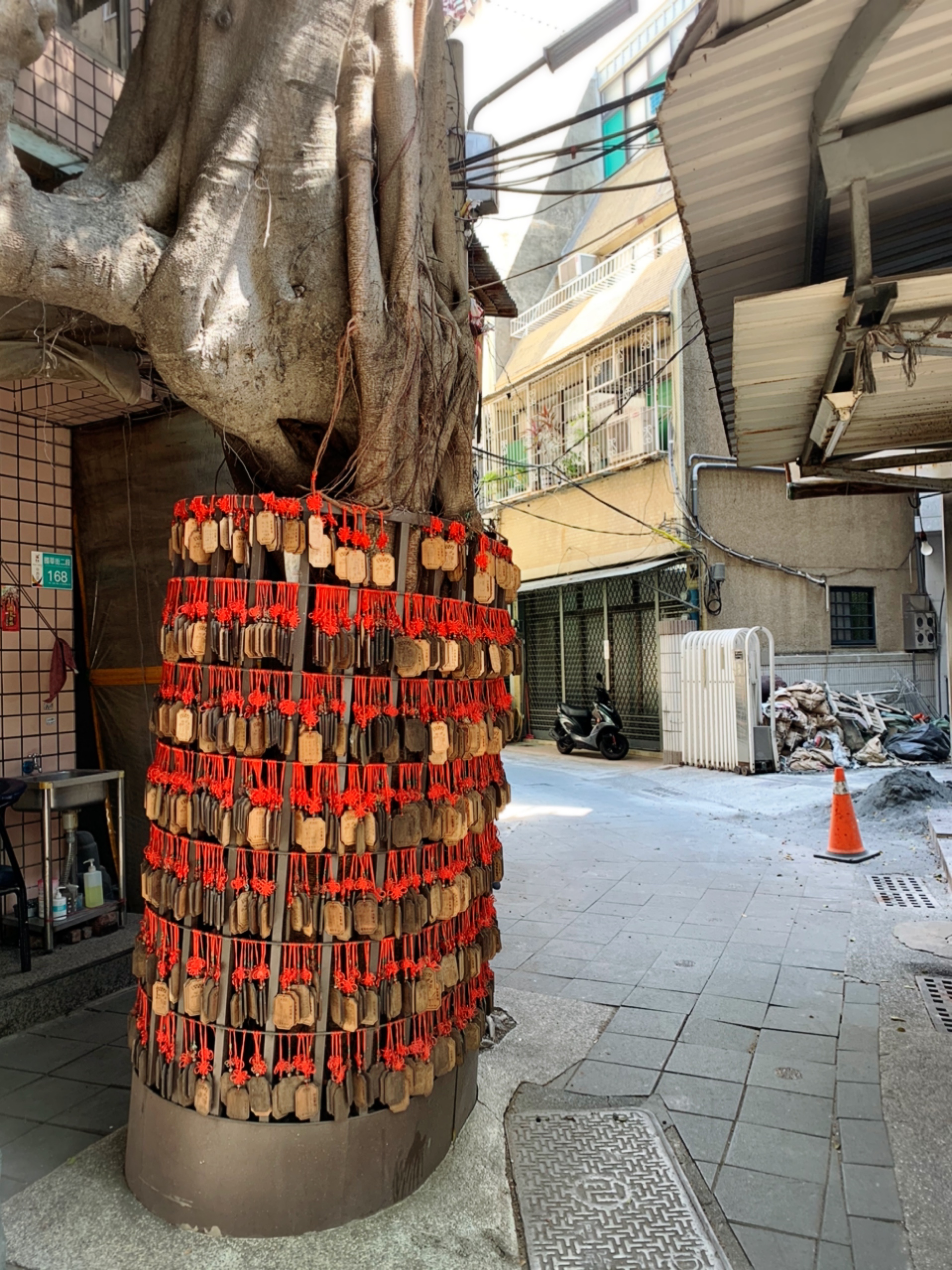
I was in Tainan over the weekend — I have no specific post about it because I didn’t do anything out of the ordinary, but I’ll share a few pictures. A lot of the temples there have those wooden plaques you can write a wish on, pray, and then hang your wish on a board or tree. If you actually stop to read other people’s wishes (and I do), you’ll notice that one of the most common is to “marry and have kids” or “have a little treasure as soon as possible”. Health, peace, love, family and career/financial success are also popular, for obvious reasons. 


But it struck me — for a country with a population that the news keeps saying doesn’t want to procreate, a lot of people sure do want to procreate. 


In fact, recent statistics show that Taiwan’s birthrate has continued to fall, remaining at or near the bottom of global fertility rankings. There’s some variation, with numbers being higher in Changhua, the outlying islands, Taoyuan and to a lesser extent, Hsinchu.


I wrote about this a very long time ago. The article probably sucks and I don't feel like going back to read it again, but I think it’s time to take another look. Mostly, I want to point out that people do want to have children. The question isn’t how to change people's attitudes; it’s how to make what most people already want possible. Shaming them simply won't work, as this Taipei Times article rightly points out.


Untitled


Tricky Taipei has already published a good piece focusing on the availability of fertility treatments to unmarried people and same-sex couples, so I won’t cover that here. (I also hit this topic in 2016, so there's no need to repeat). The gist: anyone can freeze their eggs, but one must be legally married to a person of the opposite sex to pursue treatments like IVF. That’s not right and it really must change.


Untitled


For those who aren’t seeking fertility treatments, however, the reasons why the fertility rate is low should be pretty obvious. Here's a brief recap:


1.) Salaries are too low


When you think about the cost of having children compared to Taiwan’s famously stagnant salaries, would you want to constantly worry that you can’t pay bills or raise them the way you want? 


2.) Housing costs are too high


It’s not unusual to want to own your own home before starting a family, or be close to that goal. Although it feels like new apartment complexes are going up constantly, they’re often half-empty, with many units acting as tax shelters or investment properties, not living spaces. Everyday people can’t afford enough space to raise a family comfortably close enough to work and school, so they delay having children. 


3.) Working hours are too long


In other words, when you’re grinding yourself to a pulp a hundred hours a week for some crappy boss, you just don’t have the energy to bone down.


In addition, if you're a double income household but don’t have family who can help, but both parents work, childcare is expensive. This is probably why so many parents pay for cram schools: most of the time, it feels like fancy daycare because that’s exactly what it is. 


4.) Straight-up sexism

Adding to this, a lot of Taiwanese women describe the country’s pretty strong maternity leave policies as “看得到但是吃不到” — we can see it, but we can’t eat it. In theory it's guaranteed, but we can’t access it. I work with a lot of career-minded professionals and over and over, the women tell me that they absolutely face passive-aggressive (or just plain aggressive) repercussions at work for taking their full allotted maternity leave, or are discriminated against in hiring because employers fear they’ll have children soon. 

And, of course, the gender wage and work gaps don't help. Taiwanese women still earn less than men and typically 'female' jobs tend to be lower-to-middle white collar. Women who feel satisfied with their pay and career trajectory are probably more likely to feel ready to have children. 


Untitled


5.) People are marrying later


Single parenthood is fairly rare in Taiwan, although of course it happens. The government actively discourages it -- the abortion laws are intentionally eugenicist, not egalitarian.

With people mostly intending to have children after marriage, getting married later means fewer years to have children. That's a good thing. Personally, I don’t think my sense of self was fully settled until I was over 25, and I was closer to 30 before I felt mature enough to actually make a marriage work. There's even research backing this up, so it's probably true for a lot of people. In the past this could be papered over somewhat with traditional gender and family expectations, though I would bet just as many marriages were what we’d now call ‘failed’ in the past, even if divorce was not accessible.


6.) Lifestyles are changing


This isn’t a bad thing. It’s not wrong to want to live in a desirable area near work and school, with enough space, near but not with family, as Taiwanese youth are coming to realize the benefits of some privacy. It’s not wrong to want some of the trappings of a good life for your family — everything from travel to new clothes when you need them to not stressing about bills to sending your kids to good schools. Stagnant salaries mean fewer children, period.


Untitled


7.) Gender roles are changing


Women have known for awhile that having more children means more work for them, if their husbands don’t step up. This is especially true if your support network can't step up to help. Some women have the desire and ability to be stay-at-home mothers, but even for families who can afford it, not every woman wants to give up her career, even if the hours are punishing. Can you blame them for not wanting to take on more in a society with this kind of work culture, where men still do far less housework than women?


This is also why people are marrying later: in the past perhaps one didn’t get as much of a say over what their married life would look like, because expectations were so set. Men earned money, and women could work (often running the most important parts of the family business) but had to do all of the traditional ‘women’s’ work, too. Even the Taiwanese feminist movement of the 1970s accepted this. Now, people want to marry a partner, not a role.


An interesting aside: the birth rate doesn't seem to be affected that much by educational attainment. There's a  drop-off in bearing children between female Master's and PhD holders, and a dip for women with Master's degrees in their twenties, but otherwise, the birth rate for women with Master's degrees in their 30s and 40s exceeds those with college degrees. This is likely because they delayed having those children, so the uptick in births appears in higher age categories.


Untitled


This explains a lot


This is probably why Changhua and the outlying islands and, to a lesser extent, Taoyuan and Hsinchu, have higher fertility rates. I can't prove this, but in my experience the outlying islands are more conservative generally, so expectations of gender roles and family life may not have changed as much. Plus, young people who stay instead of moving to Taiwan likely live near family.

Changhua has some good things going for it, and the Taichung job market isn’t far away. And, again, if you’ve decided to raise a family in Changhua, it’s likely because you want to be near your own family support network. Hsinchu has comparably lower housing costs relative to higher science park salaries, and Taoyuan is commutable to both Hsinchu and Taipei, as well as being its own logistics hub due to the airport.


So what can we do?


Personally, I’m not sure constantly growing the population is the best way forward. Taiwan has limited space, and it’s already densely packed. Other solutions to deal with a super-aged society until population can level off would probably be better, but I don’t have any to offer beyond increased assistance to seniors. 


And of course, the statistics could be improved immediately if we just created a path for dual nationality for all immigrants, including the majority who are workers from Southeast Asia. 


But let’s say we do want more babies in Taiwan. How do we get people to have them?


Family subsidies are an acceptable start, but they are insufficient and don't seem to be working well. Measures to promote increased wages and lower work hours — yes, both of these, at the same time — would have a stronger impact, but it's hard to say what would achieve this and how enforceable it would be. Crappy bosses wouldn't like it because they would have to hire the number of people actually needed to get the work done and pay them fairly, but the goal would also be to reduce the number of bosses who can get away with being crappy. 


Untitled


Affordable housing is something that can be addressed immediately. Instead of big infrastructure projects (I’m looking at you, F***ing Taipei Dome and every unnecessary new "Aerotropolis" and science park plan) while greenlighting housing  nobody can afford to live in, why not focus on affordable housing, renovate unoccupied urban structures and incentivize (not force) private construction companies to build human shelter, not tax shelter? At the same time, create or expand a mortgage or deposit subsidy for people with dependent children that can help them buy a first or larger home. 


Affordable childcare would help too. France has a subsidized “crèche” system; why can’t Taiwan? While we're at it, increase the availability of low-cost or free public pre-school, and create more engaging after-school programs for children that don't involve sitting at a desk for a few more hours memorizing facts to regurgitate on tests.


Finally, the government can and must listen to gender equality thought leaders. With progressive laws that don’t stigmatize or render inaccessible single or same-sex couple parenthood, enforcing gender equality laws and a strong “step it up, men (and bosses)” message, chances are we can make Taiwan a society where having more children is once again an appealing choice for women. 


Some of these changes would be complex and difficult, but others would be relatively straightforward. Some do require an outlay of political capital: reasonable work hours and pay will anger employers used to exploiting workers, and some of those companies skate by on razor-thin margins. Homeowners and development companies won't want to see the value of their properties decrease as housing becomes more affordable.

While I do understand the reasons behind such push-back, the changes that would actually solve the birth rate problem will also result in greater socioeconomic and gender equality. A robust middle class creates appealing conditions for people to grow their families. Funny how that works, eh? I'm not particularly sympathetic to those who resist because they thrive on inequality, keeping salaries low and housing prices high.

The government has a choice here: either take the necessary steps to actually address the low birth rate and face the inevitable resistance head-on, or don't -- but then don't whine that young people aren't having children because the financial and housing security they need is out of reach.

Most people do want children. There is no problem with young people’s attitudes and even if there were, they’re not going to change so all we can do is work with them. So we need to look at society for what it is and create targeted solutions that actually address the underlying issues that cause people to decide against having more children.