Thursday, October 14, 2021

A long ramble, from Harvard's decision to the earnest roots of bad opinions

Untitled

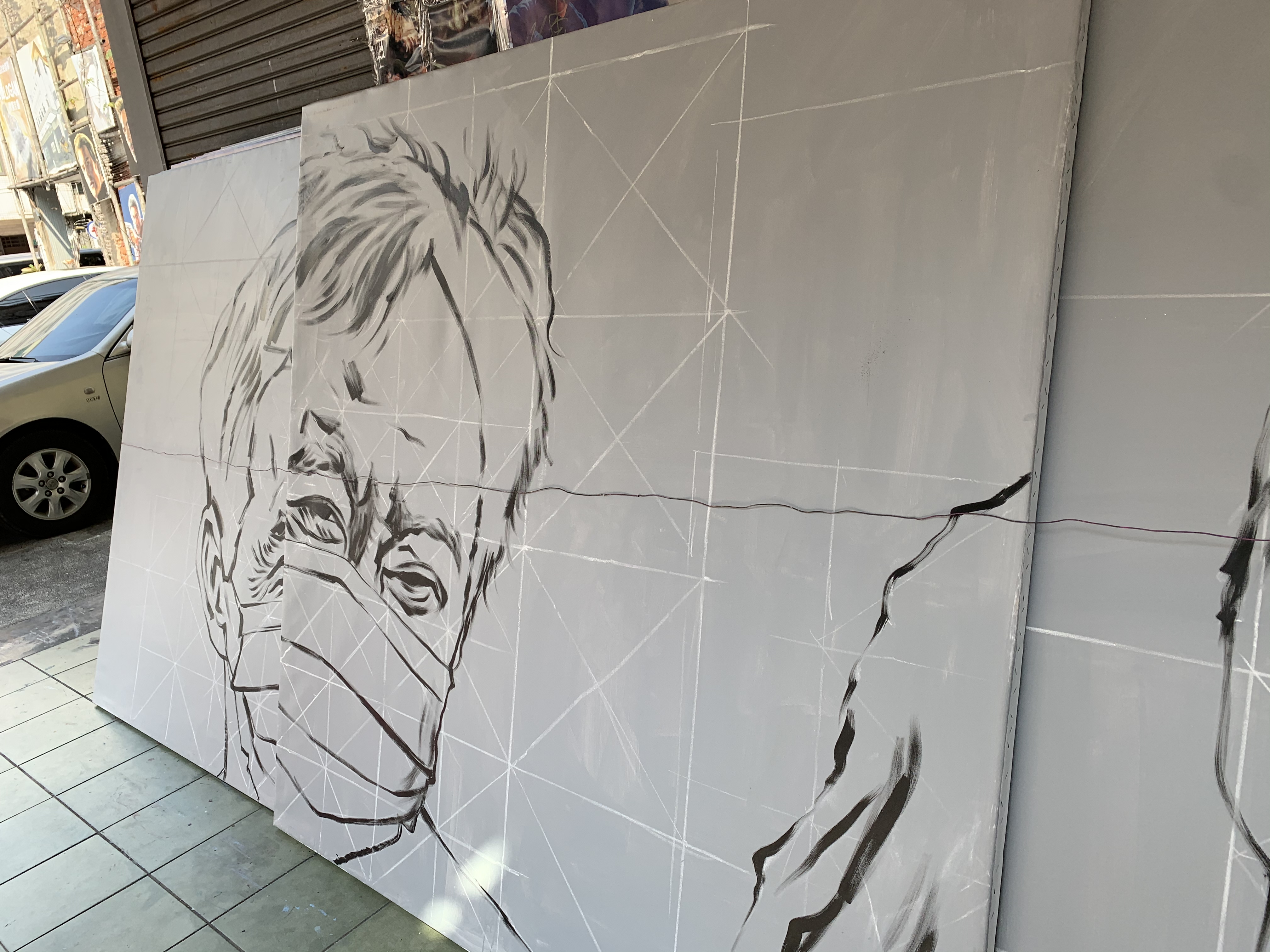
I usually choose photos for metaphorical reasons -- I don't have a clear reason why I selected this one but I think it works. Draw your own conclusions.


Anyone reading this has surely heard by now that a popular summer language program that Harvard University held in China until recently is now being moved to Taiwan. The program director cited a chilly attitude from the Beijing host university as well as logistical factors -- for instance, separating the students into two dorms of quite different quality -- for the decision. 

The program offered not just language study but chances to travel around the country and learn about Chinese culture and history. Now, all of that will be happening in Taiwan, which means traveling around this country and learning about its own unique culture and history.

From the New York Times:

The program’s director, Jennifer L. Liu, told The Harvard Crimson that the move had been driven by a perceived lack of friendliness on the part of the Chinese host institution, the Beijing Language and Culture University. Harry J. Pierre, a Harvard spokesman, said, “The planned move of this program from Beijing to Taiwan has been considered for some time and reflects a wide array of operational factors.”


Other people contacted for comment said it was a purely logistical move and that Harvard was not looking to cut its ties in China. That could just be the opinion of one professor, or it could be a band-aid statement. But if it was truly just a logistical move, why say this?

“It is hoped that in the free academic atmosphere of National Taiwan University, we can lay a solid Mandarin foundation for the excellent students of Harvard,” the university said in a statement.

Frankly, however, I don't care what the actual reasons are for the switch. It doesn't really matter. This is going to be a fantastic chance for students interested in the 'Sinophone' world and studying Mandarin to be exposed to Taiwan. Perhaps this is one of the few times that having Mandarin as a main language in Taiwan is actually helpful for the country, rather than just more evidence of KMT-imported cultural and linguistic imperialism. 

This is a no-brainer, but I feel like it's worth spelling out: these sorts of positive experiences and interactions are the backbone of connections to the international community for Taiwan, and they also foster general goodwill among people who might go on to careers or positions of influence where being well-disposed towards Taiwan will be to Taiwan's benefit.

When one encounters something in a positive way and have good experiences with it, whatever values are transmitted or embedded in that experience (intentionally or not) are going to be more likely to influence that person. These can be toward a greater good, or they can be detrimental.

I'm going to go off-topic here to try and make a larger point: a good friend of mine described the negative end of this perfectly once, when discussing the more unfortunate side of how this works. 

Imagine you're this Western guy, you come to Taiwan and you meet a really wonderful woman. She's smart, beautiful, fun, cool -- and you even like her family. They're so welcoming and friendly. You date and maybe marry this woman. And she, along with her whole family, are these deep-blue KMT supporters. You don't speak much Mandarin (maybe you learn it, maybe not, most likely not all that well) so as far as you can tell, whatever they're saying about society must be right, because they're so great, and they're from here. They must know, they're Taiwanese! And they can be trusted because you know they're good people, right? And you don't really understand what TVBS is blathering on about in the background, or if you do you're so used to it that you don't register that they're about as reliable as Fox News. 

So then you go online, or to a social event, and you come across people discussing Taiwanese politics in English. Some are Westerners, some not. And they seem to just really hate all the people your wonderful wife and friendly in-laws like. Perhaps they're even saying KMT voters are terrible -- but they're literally your family! In fact, they don't seem to understand Taiwan at all, because what they're saying sounds so different from the pro-KMT narrative you've picked up from this really positive experience. 

Of course, you defend your wife's and in-laws' views, which you've come to see as reasonable and correct, and you're surprised that all that anger gets spewed at you now. And you're confused about why. Your pan-blue local fam is so nice, and these online haters are so mean, of course you're just going to dig in. 

And poof, you have the odd pro-KMT Westerner who doesn't get why their views on Taiwan are not cool at all, and actually deeply misrepresent Taiwanese history. 

(I use a heterosexual male example here but it's certainly not limited to them. It just seems to be mostly them.)

Now, think of that in terms of China.

You're a college student. You got into Harvard so you're either very smart or very rich (perhaps both, but probably not). You take an interest in Chinese, and sign up for this awesome study abroad program in China. You're aware that China is authoritarian, but you either don't care (if you're rich), or you earnestly don't want to judge people based on their government (if you're smart). 

You go, and you have this amazing time. The Great Wall is stunning! Your Chinese classmates are so friendly! Beijing is so historic! You're learning so much and seeing the world. You take various culture-related classes and fall in love with Chinese culture. You're impressed by the sheer history of it. And all your new friends in China -- who are welcoming and friendly -- also seem to think their government is fine, or at least they don't say it's not. And they're Chinese so they must be right! So your interest in China only deepens based on this amazing experience you've had.  

Then you return to the US and hear all this criticism of China, sometimes by people who've never been to China. You've never been to Taiwan, so you don't have any emotional attachment to it, and anyway in China it was just treated as part of China so you passively absorb that. You think this is ridiculous -- you've been there, it was such an amazing experience, and the portrayal of this "genocidal" and "totalitarian" "surveillance" state doesn't at all match your experience. After all, the government never seemed to be watching you stumble back to your dorm drunk at 4am.

(They probably were, but that's beside the point.)

Of course you feel angry, even speak up. No, we should be deepening our connections with this beautiful country I was so fortunate to visit. We should be engaging them! It's really not so bad! All those critics are so awful, and my Chinese friends are great. So if the critics say there's a genocide but in China I saw no evidence of that, those critics must be wrong or at least it's debatable, right? And Tiananmen was a long time ago, the square looks peaceful now, it's really not a big deal. And look how many people they lifted out of poverty! Does it really matter if it's not a democracy?

And since it's really not so bad, why are people so opposed to Taiwan being governed by China? It's a great country! And Taiwanese speak Mandarin and have the same culture and history, I mean for most of history it was China, right? We really don't need to move to the brink of war over this, do we? And I heard a lot of those "pro-democracy" protesters liked Trump!

I can't say this happens to everyone who studies Mandarin in China, but it's certainly a contributing factor. They go there, have a good experience, and then come back and wonder why everyone's so critical of this "evil" government in a place where they've just had a great time. 

Some might go on to be influential people. Others might go into "Sinology" (hate that word), continue to study Mandarin, or at least retain their connection to China. 

And boom, you get a whole bunch of China experts who are weirdly accommodating and defensive of the absolutely horrific, genocidal Chinese government.

Not all, to be sure. There are those who love the language, cultures and history but not the government, but I've come across enough 'China experts' who will go to bat for the CCP (or at least favor engaging with genocidal dictators) to know it's a thing. 

I'm willing to bet most of them think that their overall pro-China view is part of a larger pro-Asia view, or an integral part of advocacy for Asia. They probably don't realize that China isn't very well-liked in Asia, and standing with other Asian countries is better for the region than being friendly with the CCP.


I also know this because of how close I came to being like that. I didn't formally study Mandarin in China, I just taught English there for a year (whoopty-doo, I know). But I was interested in the country and might've come away feeling more accommodative toward the government if my time there had gone differently. I did have an interesting time, but I wouldn't say it was great. 

I did notice, for example, that I was indeed being monitored to some degree and that made me uneasy.  I got sick a lot, and the pollution was a factor. I made local friends, but I had foreign ones too, and we weren't being shepherded around on a study program. So if one of us felt something was a bit dodgy -- like, oh, realizing that our employer seemed to have far too much knowledge about where we were when not working -- we could touch base and see that we were not imagining things. 

Though I don't talk about it much, I also had a particular experience there that will never leave me. At my going-away party, the younger brother of the school owner got way too drunk and told all the foreigners about how he'd watched his best friend get shot in the head at Tiananmen Square. He'd been there. I'll never know why he told us exactly, but very drunk and these foreigners aren't going to blab and I am subconsciously looking for a way to express this trauma were probably factors.

And I came with an inoculation that so few Americans get from their education system: a Social Studies teacher who actually talked about Taiwan, even though it hadn't been in the curriculum. He'd fought in the Korean War and apparently spent some time here, and kept up with what was going on in the country. So by the time I went to China, I already knew that Taiwan was democratic, that a lot of Taiwanese did not want "unification", that both Chiang and Mao were horrible men who did horrible things, but Mao was worse (or at least, he did horrible things on a grander scale).

So when friendly Chinese people I met would speak of how great their government is, or just treat Taiwan as though it were obviously and irreversibly Chinese, I already knew to smile while inwardly rolling my eyes.

But I could have very easily cultivated a totally different attitude, and be preaching "engaging with China" and "deepening ties" as a Shanghai-based blogger if those cards had not fallen as they did. 

And you'd all hate me. You'd be really mean on social media -- I know I'm mean to the tankies -- and I'd obviously fall back on my amazing experience in China and dismiss you all as haters. My politics lean left and I've worked through a lot of frustration with the slowness of the democratic process, so I might have truly ended up a communist or even a tankie. I hope good sense and a moral compass would've prevented that, but most of us think we have good sense and a moral compass, even those of us who don't. 

Anyway, point is, all that goodwill toward China that program likely fostered among eager Harvarders Harvodians Harvardites Harveoles Harvardi Crimsonosi Cantibrigians (I looked it up) is now going to be fostered toward free, democratic, amazing Taiwan.

And because we can talk about things like Tiananmen Square, Taiwanese identity, Tibet, the Uyghur genocide and more, they'll not only learn the (better, prettier) Traditional characters but also get a more accurate picture of what the rest of Asia really thinks of Chinese aggression.

At the very least, they'll be exposed to a world where the pro-China view is not the default pro-Asia view.

Yay! 

Sunday, October 10, 2021

Xi's speech is a nothingburger, but watch out for the media

Untitled

I wish the rest of the world would treat the wishes of Taiwan as seriously as they do Xi Jinping's blathering


So, yesterday Xi Jinping gave this big "Taiwan speech" that had been announced well in advance. As my husband pointed out, these speeches are hardly worth paying attention to unless you're seeking confirmation of what you already know, but they're always guaranteed to make headlines. 

What could he possibly say, however, that would be new? He wasn't going to say "the bombing of Taiwan will begin in one hour", nor was he going to say "actually I've decided this whole 'Taiwan' thing is silly and we're just going to let them live in peace". So the only possible roads this thing could take would be a.) moving closer to threatening use of force or b.) moving away from threatening use of force. That's it. 

And that's exactly what happened. It was the same old rhetoric: there must be "reunification", it can take place under "one country two systems" as it has with Hong Kong -- nevermind that Hong Kong is a massive failure that Taiwan should avoid emulating at all costs -- that this is an "internal matter", and that it would be best if it were done by "peaceful means". 

Reading between the lines, Xi is basically saying that they're going to keep up the status quo of shaking a stick at Taiwan and calling it a carrot (as though they think the Taiwanese are not smart enough to tell the difference), they'll keep buzzing Taiwan's ADIZ and they'll keep fuming at international support for Taiwan, but they're not likely to actually start a war right now. I suppose that counts as "good news" these days.

Xi knows that this is how it'll play out, because he's perfectly aware that Taiwanese aren't interested in any kind of unification. They want to avoid a war, and will go to great lengths to maintain peace -- including maintaining the fiction of a 'status quo', when the truth is that Taiwan is already independent -- but actually becoming part of China is off the table. Frankly, it always will be. Once a group of people who have governed themselves competently in a unified territory for a long time have decided they have an identity, a history and a set of more-or-less shared civic values, they are essentially a nation. That's not the sort of thing that regresses back towards submission to some other identity they simply do not hold, under a government they can never accept.

So, he can talk about 'peaceful' unification, but he knows it's not going to happen. This speech was basically an "ok, we won't bomb you...yet". In other words, it was nothing.

The media has emphasized Xi's use of the word "peaceful", but note that he did not exactly renounce the use of force so much as not call upon it. He didn't say China would never use force, but that they'd prefer not to. So, again -- nothing.

None of this is particularly interesting, but it does give me the opportunity to point out that the media is doing what the media always does: ascribe "tensions" to anything but China. Tensions can be raised by Taiwan, or they can pop out of thin air, but as far as the international media is concerned, they never originate from China. 

Here are a few clips. From the BBC:

Despite the recent heightened tensions, relations between China and Taiwan have not deteriorated to levels last seen in 1996 when China tried to disrupt presidential elections with missile tests and the US dispatched aircraft carriers to the region to dissuade them.


Where do the 'heightened tensions' come from, BBC? Tell us!

The BBC also offered us this gem:

Taiwan considers itself a sovereign state, while China views it as a breakaway province.


Please forgive your less-informed readers for not knowing who actually runs Taiwan after reading this, because you certainly both-sidesify this into abstract confusion. 

To be clear: Taiwanese already run Taiwan, they commonly call their country Taiwan (only the KMT beats the "Republic of China" drum and they're neither popular nor in power), they identify as Taiwanese and their government is sovereign. It doesn't consider itself a sovereign state. It is a sovereign state, and in pretending there's a "status quo" issue or something still "undetermined" about that is simply Taiwanese being super conciliatory because they don't want war. "Okay if it stops you from bombing us we'll pretend the issue is not already resolved on our end", when it actually has been for awhile now.

That's it.


From CNN:

The speech comes amid rising military tensions in the Taiwan Strait. Over four days in early October, the Chinese military flew almost 150 fighter jets, nuclear-capable bombers, anti-submarine aircraft and airborne early warning and control planes into Taiwan's Air Defense Identification Zone, according to the island's Defense Ministry.

"Amid rising military tensions"? Who is raising those tensions, CNN? You say it in the next sentence: the Chinese military. Chinese fighter jets. Chinese incursons. Why can't you just say that the tensions are caused by China?

CNN's take is actually worse than the BBC's:


Speaking in the Great Hall of the People to commemorate the 110th anniversary of the revolution that ended the country's last imperial dynasty, Xi said the biggest obstacle to the reunification of China was the "Taiwan independence" force.


Note that in the headline, "reunification" is at least in quotes (acceptable), but here it's presented as-is. Why? Taiwan and the PRC have never been unified. What's this "re-" business?

And who is this "'Taiwan independence' force"? Reading this, you'd think it was a small group of separatists when in fact it's the consensus view of most Taiwanese that they are not a part of China, they are not Chinese in the sense China demands, and they don't wish to be.

From The Guardian:

China’s president, Xi Jinping, has vowed to realise “reunification” with Taiwan by peaceful means, after a week of heightened tensions in the Taiwan strait.

Who is raising the tensions, The Guardian? China. Do your readers a service and just say so.


Tensions across the Taiwan strait have been running high in recent weeks. In the first four days of October, for example, China’s People’s Liberation Army (PLA) sent nearly 150 planes into Taiwan’s air defence identification (ADIZ) zone.

Once again, why do you not ascribe these tensions to China, before immediately describing a series of actions undertaken only by China? Please just call these tensions what they are.

Meanwhile, according to the Wall Street Journal on Thursday, about two dozen US special forces soldiers and an unspecified number of marines have been training Taiwanese forces, in the latest indication of the extent of US involvement in the tensions in the area.


From the Taiwanese side there are no tensions. Taiwan is preparing because China is creating tensions. The US is standing by an important strategic partner under threat from an unreliable, authoritarian, genocidal bully. So say that.

At least The Guardian includes a Taiwanese perspective at the very end, where Premier Su rightly notes that all of these tensions come from China:

Speaking shortly before Xi, Taiwan’s premier, Su Tseng-chang, noted that China had been “flexing its muscles” and causing regional tensions.

But it does feel like they sort of 'tacked on' an alternative viewpoint rather than noting that Su's statement is simply accurate.

Anyone who watches these issues knows that the tensions do, in fact, originate entirely with China. Taiwan wants peace, period. As a friend noted, it would be helpful if China could provide us with a Tension-o-Meter which could tell us the exact level of tensions at any given time, and that meter would be accurate as China is the one who determines the tension level.

It starts and ends with them. Taiwan has done all it can to maintain peace without abrogating its freedom or dignity. Although the international media has done a slightly better job of including the Taiwanese response, and (usually) putting "reunification" in quotes, I'm still waiting for them to report this accurately.

Here, as a little dessert, have some memes:


Wednesday, October 6, 2021

Pictures at a Closed Exhibition


Untitled

On a personal note, if it seems I haven't been giving Lao Ren Cha as much attention as before -- that is correct. I'm consumed with a couple of bigger projects that take a lot of time and attention, but I'm not willing to talk about those now. And when it comes to current affairs, Nathan Batto and Donovan Smith have covered the KMT chair election and incoherent protesting (the signs literally say "Protesting!") sufficiently; I have nothing to add. I don't even want to touch the head-scratching "Taiwan Agreement", which of course does not exist. 

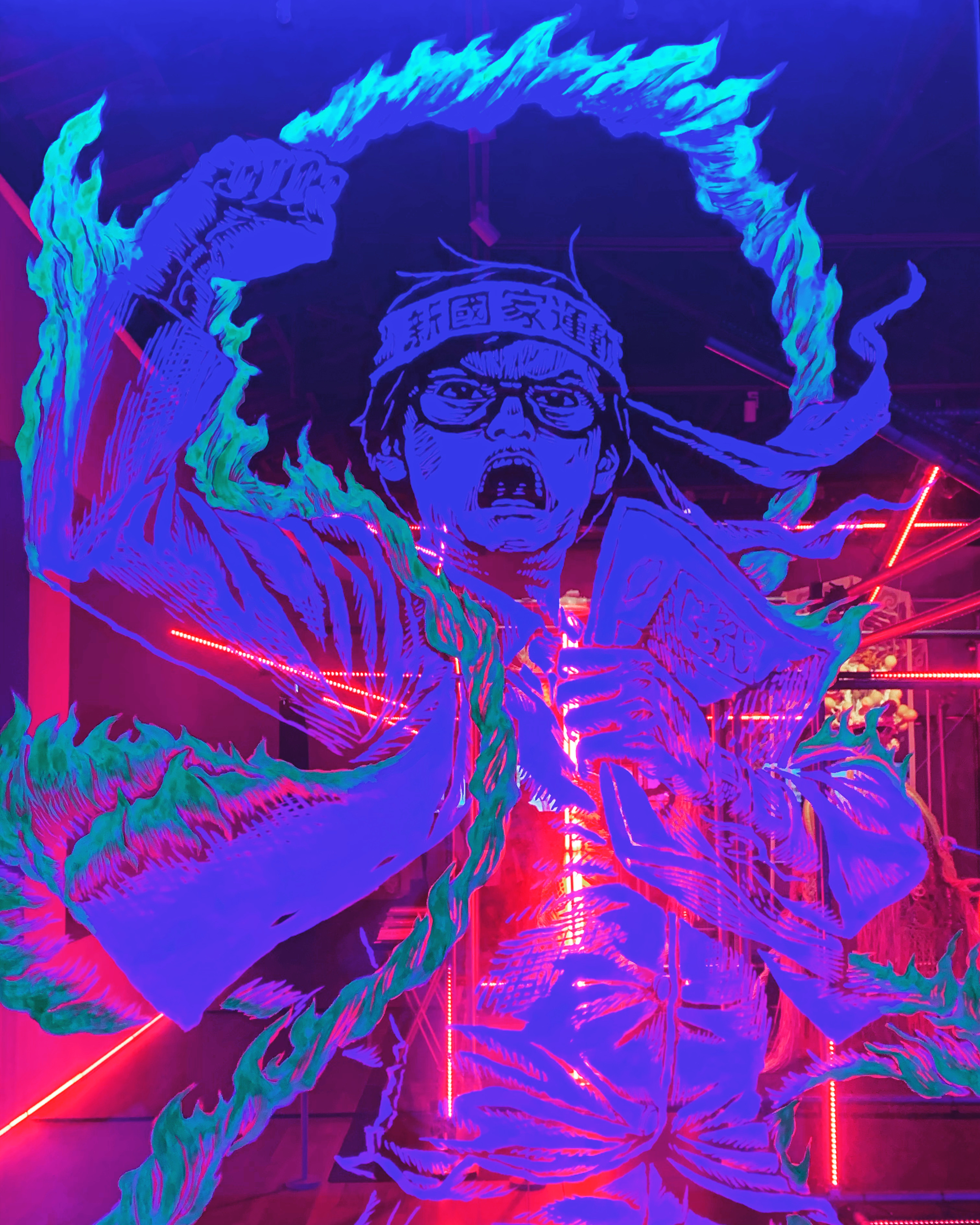
Instead, I want to talk about culture. Specifically, share some photographs from a now-closed exhibition at the Tainan Fine Arts Museum, which has two buildings: the Art Deco police station across the street from the Confucius Temple, and a modern, angular building just to the east of it. For visitors, the shop is in Building 2 (the new one) and a cafe which includes outdoor seating in the courtyard in Building 1 (the police station).

That the Japanese colonial era police station (itself a work of architectural beauty) later used by the KMT colonial dictatorship and their jackboot thugs, is now an art space dedicated to Taiwanese artistic expression and history is itself a type of art, I must say. To then take that space and fill it with Taiwanese temple art the same way European museums are chock full o' Jesus is another subversive and anti-colonial act: no colonial power, from the Qing to the Japanese to the KMT, has considered Taiwanese temple art, well, art.


Untitled

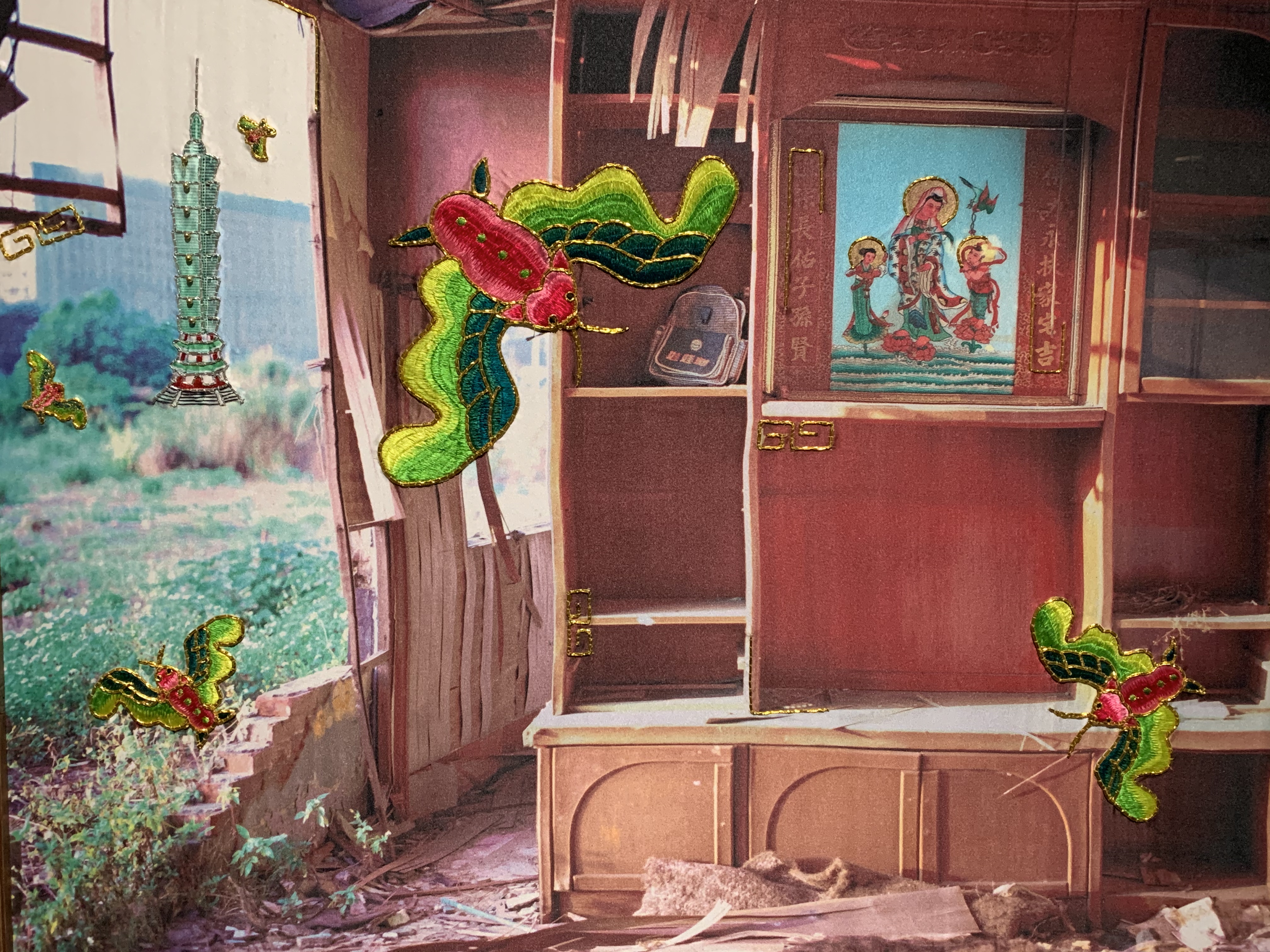
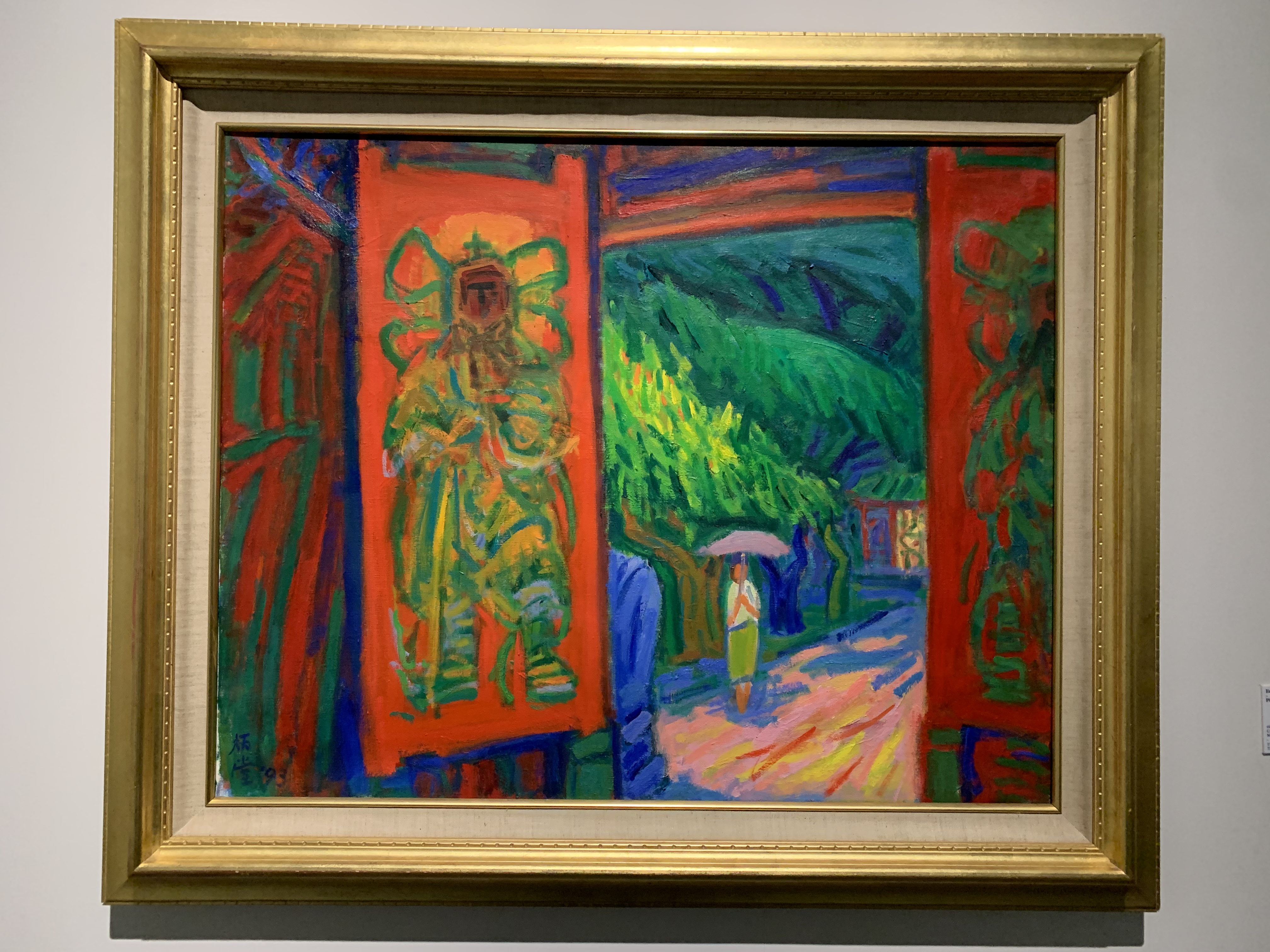
Paying Tribute to the Gods: The Art of Folk Belief closed months ago, but its core purpose continues to influence my thinking -- the exhibit explored the intersections of traditional religious art in Taiwan with modern society, and where design meant to facilitate worship or prayer intersects with art and design. 

The exhibition book makes some interesting points: that in Taiwan art museums shy away from including obliquely religious art from Taiwan, because that's for temples, not museums: but why should they be? In Europe the museums are packed -- packed -- with religious art. Why should the notion that religious art can still be art apply to Europe but not Taiwan? It also notes that as Taiwan was not a center of 'high culture' during either the Qing or Japanese colonial eras, and neither sought to make it so. Although artists still emerged as one might expect, many artistically inclined people expressed themselves through trade or craft training, and many of these found opportunities to offer these expressions through temple art

Which, when you think about it, isn't all that different from pre-modern Europe.


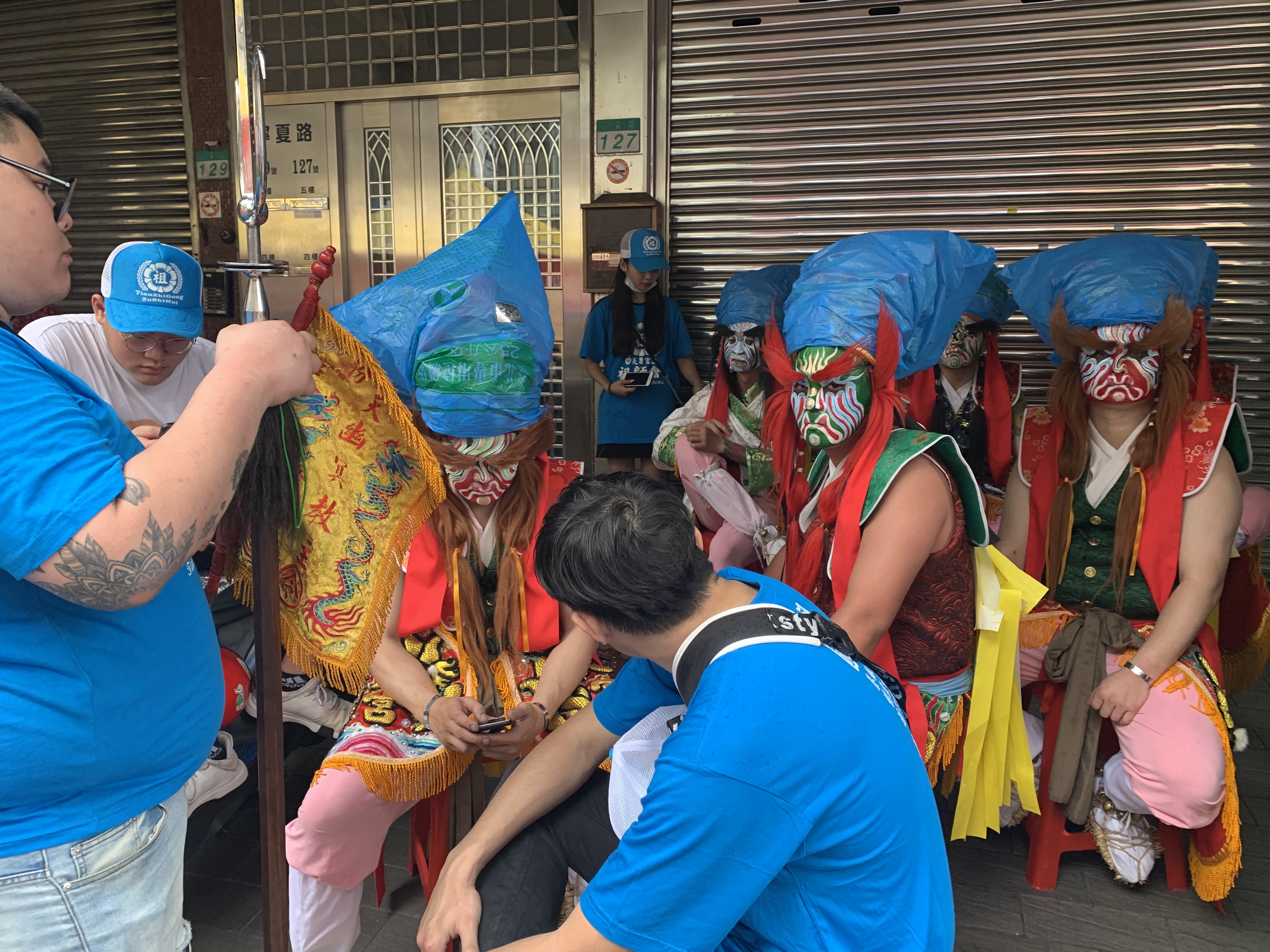
Finally, the exhibition notes point out that temple festivals and parades produced art themselves, through flags, banners, palanquins, paper talismans and performances (the Eight Generals, tall gods), which rendered this 'temple art' into a normal part of people's daily lives, and which offered opportunities to incorporate creative design ideas.

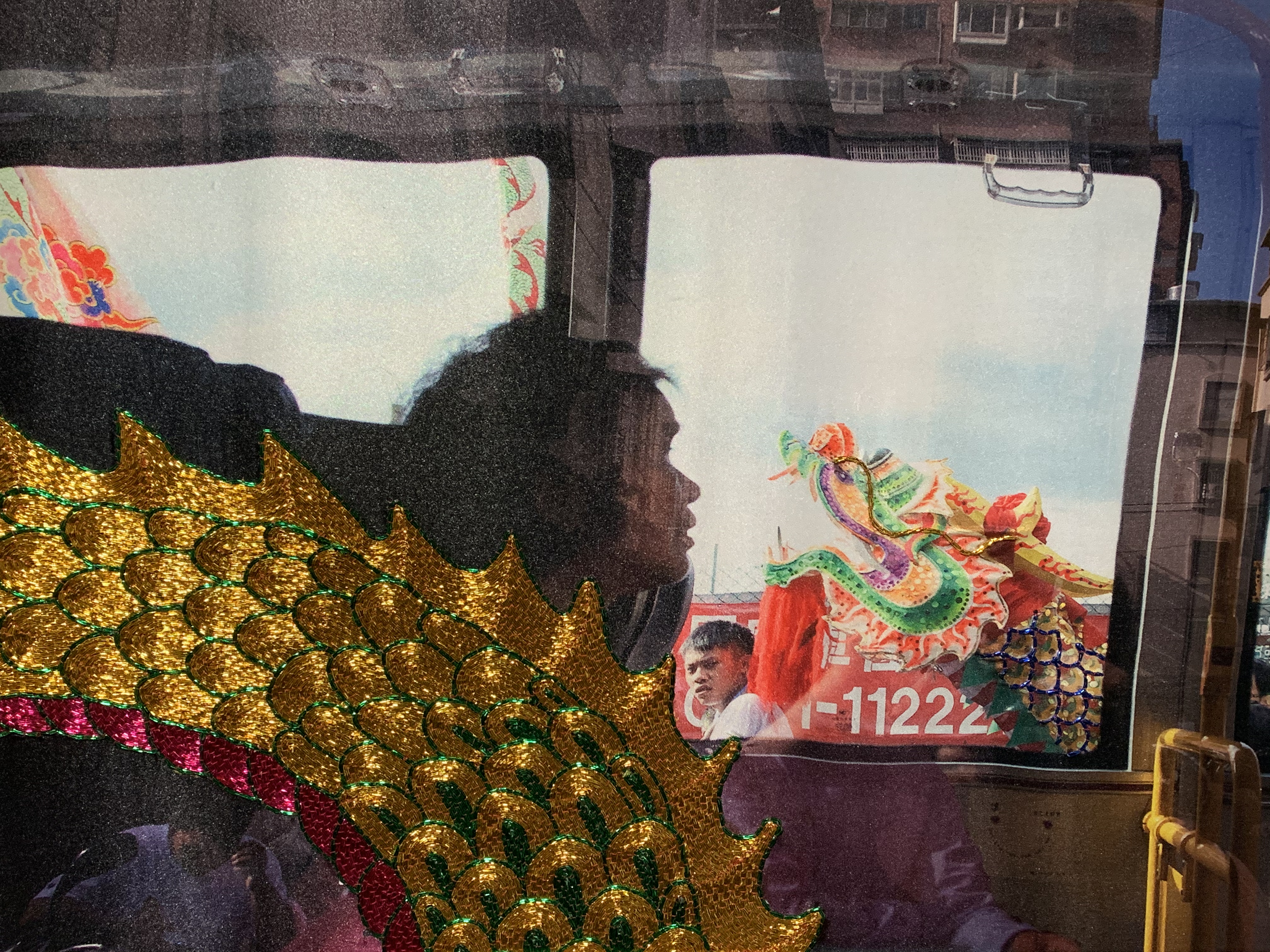
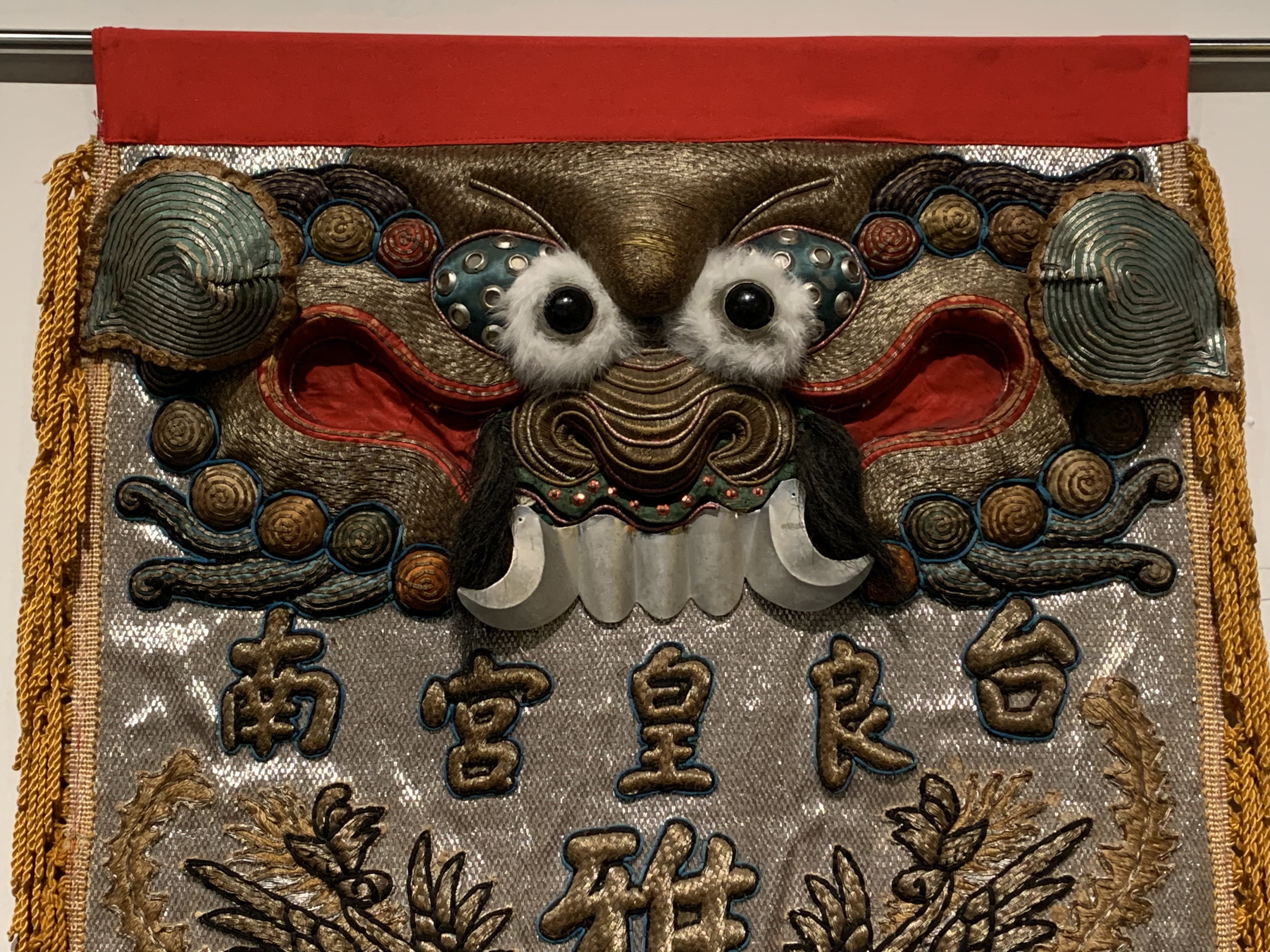
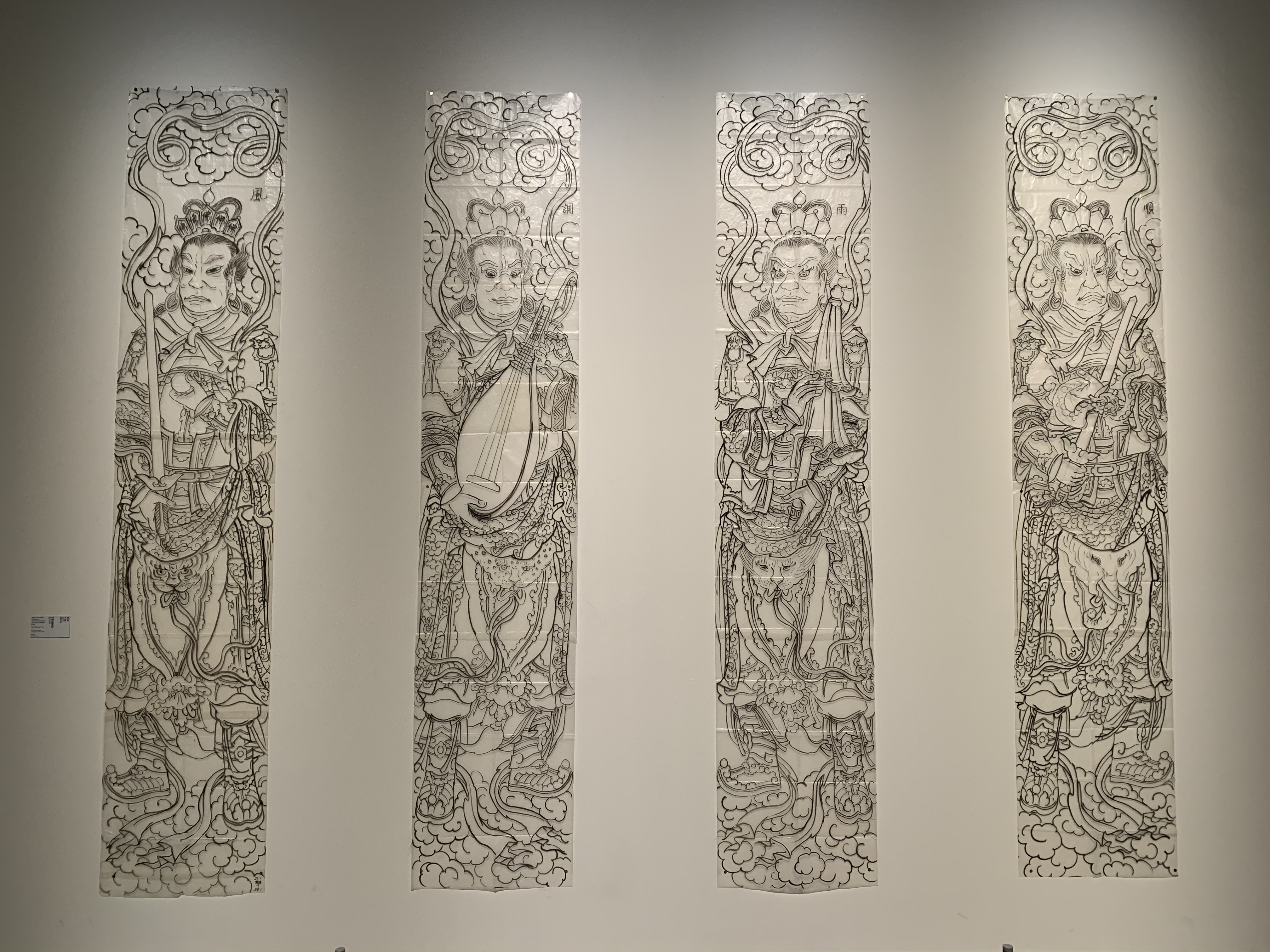
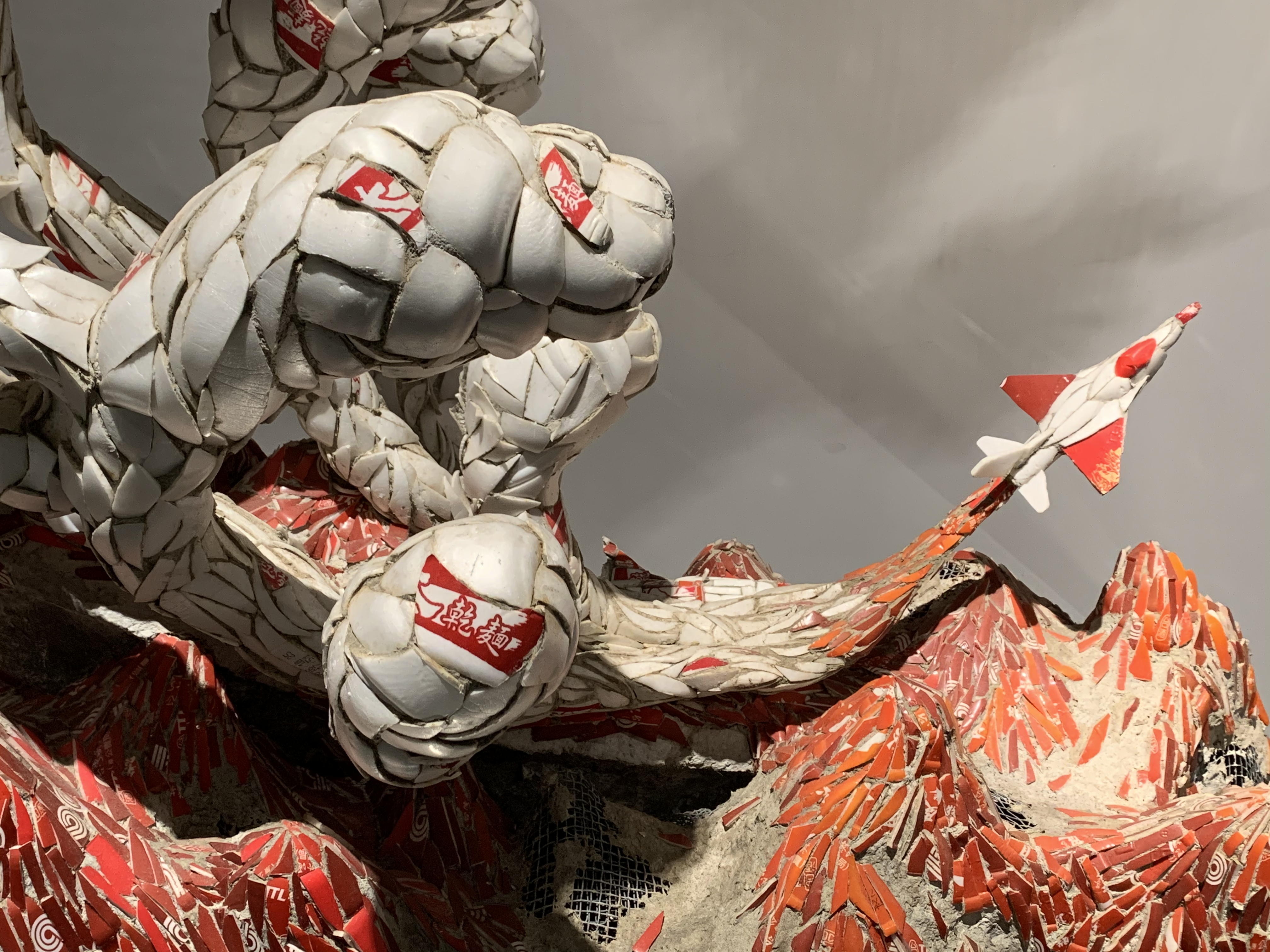
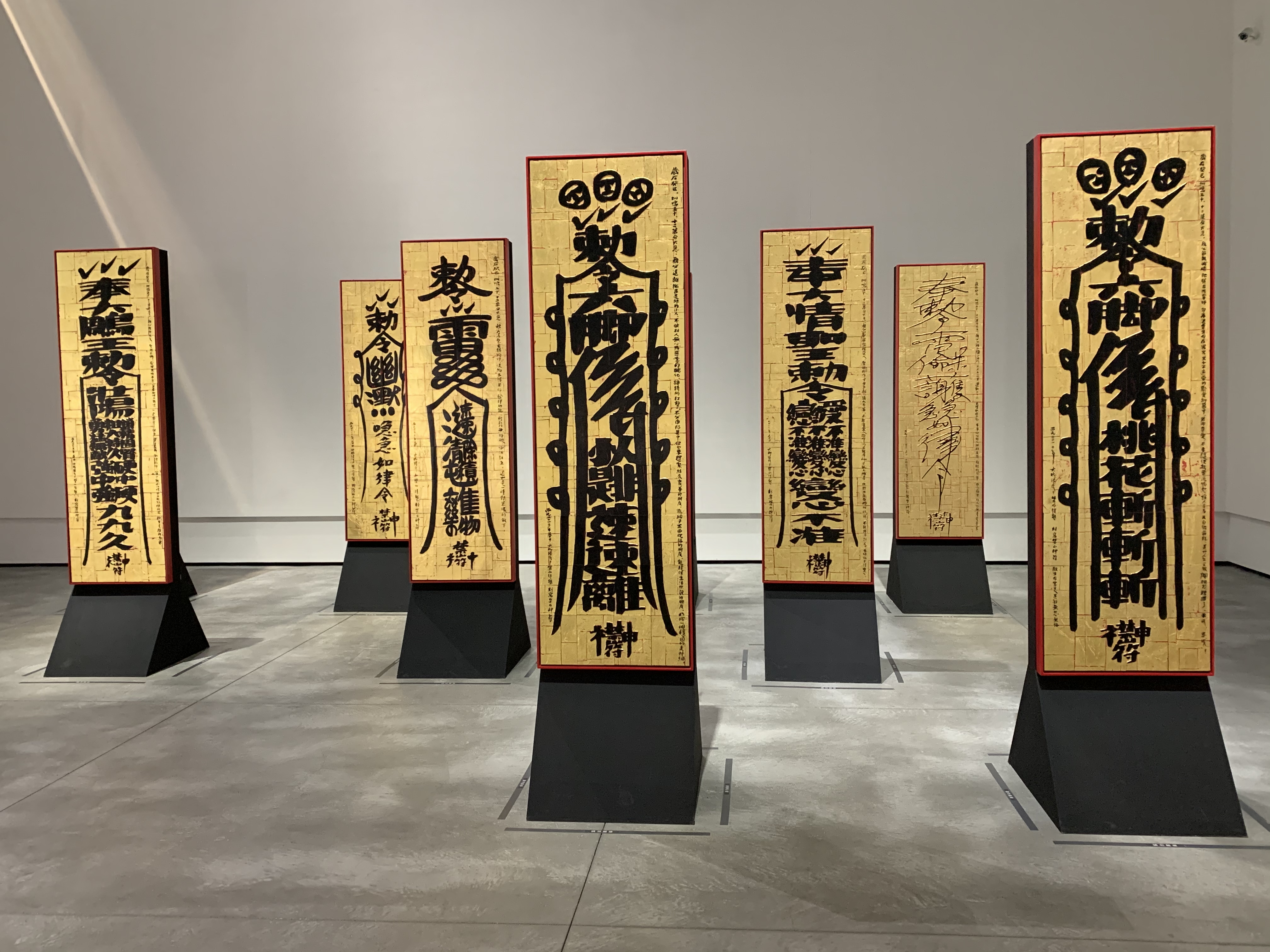
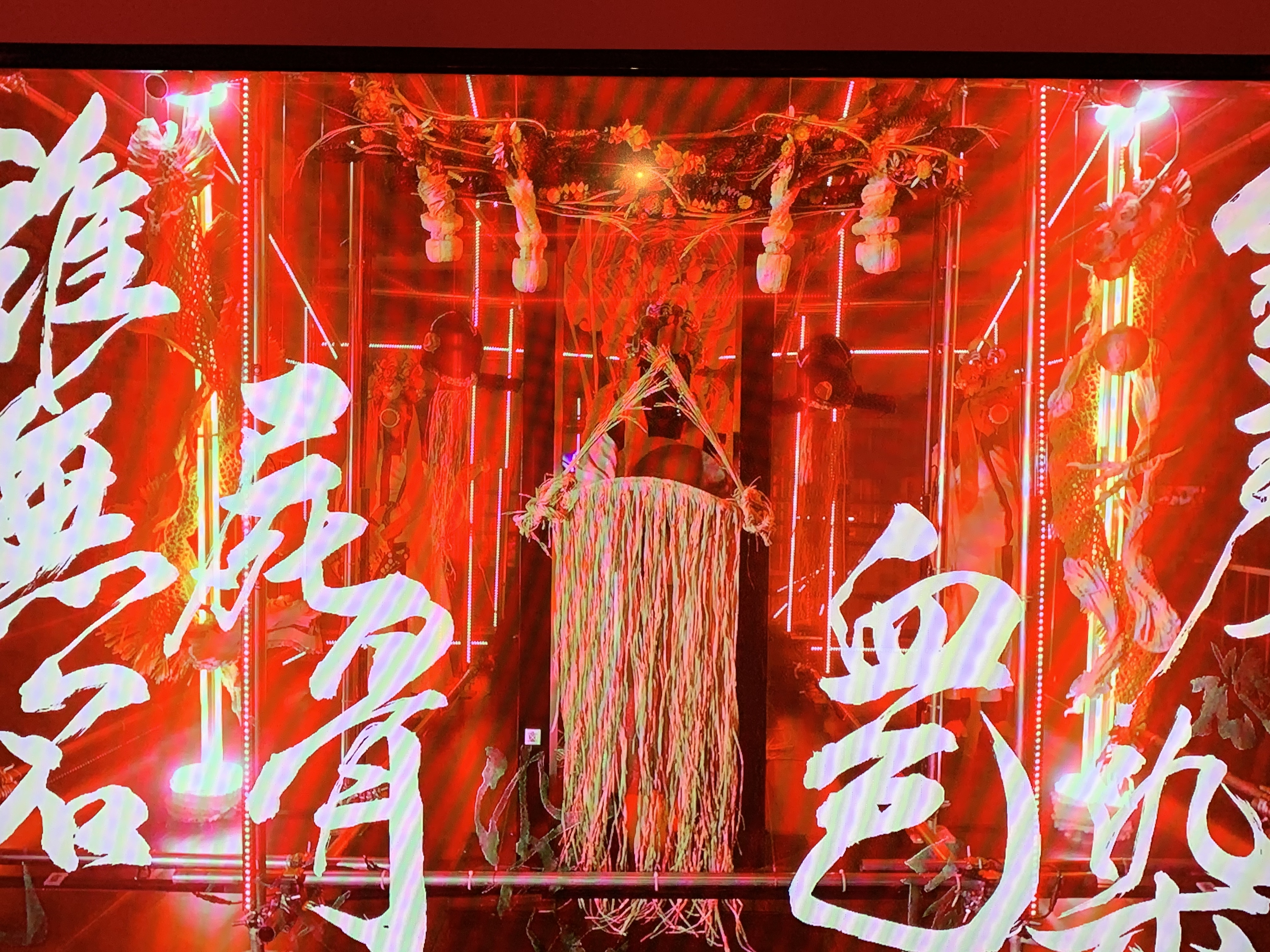
The exhibit aimed to express this by showing traditional art -- antique painted door gods, three-dimensional gold embroidered banners, old talismans -- with modern interpretations of it. These include paintings and multimedia canvases from different eras, a light, film and text installation, sculpture works and more.


I won't bother trying to describe them to you, rather, take a look at the pictures below and enjoy these works on your own terms. If you'd like to know the creator of any given work, let me know in the comments and I'll try to look it up in the exhibition book. 

This also got me thinking about Taiwanese vs. Chinese culture in general. I still hear the refrain that Taiwan and China "have the same culture", "largely share a culture" or "have the same language" and "cultural touchstones". It's difficult to say there's no truth whatsoever in this, but it's a deliberate and problematic oversimplification.

It's problematic in that it serves the purpose of tying Taiwan closer to China, perhaps closer than it rightfully ought to be. This argument is rarely, if ever, stated as a neutral observation. The intention is almost always to push the idea that Taiwan is connected to China and cannot escape that, which then opens the door to preposterous arguments that Taiwanese should entertain China's opinion about their country as having the same validity (or almost the same) as their own.


There are easy defenses to this: Taiwanese whose families came over from China hundreds of years ago did bring their traditions with them, but they've evolved so much that they're now unique to Taiwan. But those traditions came from a specific part of Fujian, they didn't represent China as a whole. Good examples of this include the Green Lion and the Eight Generals: both cultural touchstones specific to the part of Fujian that most settlers came from which are now common in Taiwan, but non-existent in China.


          Untitled

To call them generally "Chinese" is to construct an idea of what it means to be "Chinese" to serve your own opinion (usually, with these types, that Taiwan is some part of China). Cultures are non-static, they all evolve. Taiwan has not meaningfully been a part of China since the 19th century, and even then China's control of Taiwan was incomplete and -- dare I say it -- half-assed. But even if it hadn't been, think of any country and imagine how its culture has changed since 1895. 

And, of course, Taiwan has been influenced by Indigenous, Japanese, Western and KMT diaspora cultures in ways that China has not, while developing its own history and identity. All the while, China was changing in an entirely different direction. 


Untitled


But most importantly, in my mind, is that how one relates to their cultural touchstones is a big part of defining 'culture'. This isn't an original idea of course, but it bears a note here. Yes, China has temples just like Taiwan. Not as many, but they're there. But the way Taiwanese people relate to their temples, and how they express that through art, is an expression of culture as well. This isn't just true with religion, but everything. This is a somewhat ineffable concept, so I'll just say that every time I come across something that appears culturally 'Chinese' or 'Japanese' in Taiwan, I do find that the way people relate to it and incorporate it into their overall worldview is still uniquely Taiwanese. 


I attempted an example of this difficult-to-express observation, but it turned into something that could be its own post, so maybe I'll write about it another day. The short of it is that no, beyond some old links (much as the US, Canada and Australia have with Europe) and some aesthetics, I do not at all think that Taiwan and China have "the same culture". I've lived in both countries and honestly, it has been exactly that: the experience of living in two different cultures.

In fact, the exhibit itself is an example. China has temples too. Some are still open, some have been restored, at varying levels of quality ranging from "good" to "bathroom tiles". You can visit them, though they're no longer sites of community gathering. 

Would anyone, anywhere in China be allowed to take over an old police station to showcase works of art that offer modern interpretations of and relationships to traditional cultural and religious belief, in a blatant artistic act of anti-authoritarianism -- literally deconstructing authority -- that centers local narratives?

Doubt it. 

That, not dragons or temples or banners, is Taiwanese culture. 

So for now, enjoy some pictures.


Untitled


Untitled


Untitled


Untitled


Untitled


Untitled

Untitled


Untitled


Untitled


Untitled


Untitled


Untitled

Untitled


Untitled


Tuesday, September 28, 2021

Taiwanese education is not particularly "Confucian"

Untitled

It sure looks traditional but they've also got bags on their heads.


Happy Teachers' Day! I happen to be off today for reasons completely unrelated to the holiday. So I wanted to circle back to a topic I've hit on before, but bears repeating for emphasis: 

There's a cliche popular in Taiwan that Taiwanese education is "Confucian" or based on the philosophy of Confucianism.

This is used as praise where it succeeds: high standards, high societal respect for education, universal secondary school and near-universal tertiary education, educating some of the world's best engineers, inventors and medical researchers. It's also used as a criticism for the system's failures: an over-emphasis on testing and lack of critical thinking or creativity, uninspiring lecture-style teaching, slavish devotion to scores, sticking students in classrooms for hours longer each day than their Western counterparts, sometimes seven days a week, a dearth of chances to simply ask questions. 

It is, however, false. It's straight-up historically inaccurate. In addition to having little historical basis, "Confucianism" as the fundamental belief behind Taiwanese education doesn't even accurately describe the system that exists.

So why does this myth persist? Partly because it's been around so long, and educators themselves like to trot it out. It's made its way into writing about Taiwanese education, which then gets cited as historical and sociological fact, and repeated yet again. For years it was an easy way for the old KMT dictatorship to obscure what they were really doing with education in Taiwan: turning it into a system to churn out competent workers who didn't ask too many questions, and as a locus of Sinocentric indoctrination. Even they knew that sounded bad, but "Confucian" sounds good -- wholesome, traditional, local, back-to-basics. 

By repeating it, you're only helping that myth persist. 

What are the roots of Taiwanese education, then? Mostly, they're Japanese. 

Under the Qing, there was no centralized or universal education system in Taiwan. The wealthy sent their sons to Confucian academies; some of the buildings these were housed in still exist, but the schools themselves have been gone for over a century. Girls were either educated at home, if the family was wealthy and inclined to think it was "worth" educating them, or not at all. These young, rich men formed a base of Taiwanese literati, but there weren't very many of them. The Qing themselves did nothing at all to develop education (or much of anything) in Taiwan. 

How do we know this? Because at its worst, "Confucian education" is reduced to memorization and regurgitation in order to pass imperial civil service exams. And how many Taiwanese actually took these exams in the Qing era? According to Manthorpe (Forbidden Nation), in all those centuries the total was 251. Of those, only 11 made it to the third-level examination in Beijing. Of those, only one or two -- I'm not exactly sure, but fewer than 5 -- ever qualified to become a Qing official. No Taiwanese ever served as Qing officials in Taiwan.

In Chou and Ching's Taiwan Education at the Crossroad, a historical overview of education in Taiwan completely skips the Qing era. It simply was not emphasized at that time.

That's not to say that Confucian education has to be bad. At its best, it does in fact prioritize questioning, the teacher-student learning relationship, and application. As I've said before, while I won't defend Koxinga as a person, he was a very good military tactician: this was not because he'd memorized and regurgitated the classics. It was because he was able to apply the teachings of the classics to real-world military situations. 

If you're thinking hmm, okay, but that doesn't sound like Taiwanese education, you're correct. Because Taiwanese education is not particularly Confucian.

To what extent Confucian education existed in Taiwan a century or two ago, it was only for a very few wealthy boys.  Of course, that changed -- what did Japan do differently?

Taiwanese education under the Japanese was based on Meiji-era education in Japan itself. Meiji education in Japan was conceived as bell-shaped: basic literacy and numeracy for the masses, perhaps some secondary education or further vocational training for emerging middle classes, and high-level education for the elites. This was based both on Western and Japanese notions of universal education: roughly put, some level of universality from the former, study of classics and moral codes from the latter.

This isn't a perfect way of putting it, of course: in the 19th century not all Western societies had embarked on projects of universal education -- it might be said that Japan beat them to it. Now, the West tends to look at universal education as a foundation of liberal democracy, but it seems more likely that leaders in these societies felt that a better-educated population would increase the supply of competent labor, leading to greater economic prosperity (and thus more money for the elites who employed them). The connection to Western thought in Meiji education, however, is quite direct, and well-documented.

This was the system that the Japanese colonial authorities slowly imported to Taiwan.

It is true that traditional Japanese notions of education, including the more scholarly pursuits of the samurai class, did influence the system as well. The moral codes embedded within these do have connections to Confucian thought. But to take that connection and say that Taiwanese education is therefore Confucian is like saying the Taiwanese language is influenced by English because the word for truck is turaku -- which came from the Japanese adoption of the English word "truck". Technically correct, but a rather long chain of connections to base a belief on.

This isn't what most people mean when they say "Taiwanese education is Confucian", though. What they're usually trying to imply is that Taiwanese society is inherently culturally and historically Chinese, and therefore the foundational orientation of education is, too. They're (often unintentionally) trying to push the historical narrative away from Japanese influence and toward Chinese. This is also exactly what the KMT sought to do when Taiwan was in its jaws.

Japanese education in Taiwan started out by enrolling elites, with very few schools opening in the early years. Then it rolled out to universal elementary education. Junior high school followed. By the early 20th century, girls' schools had opened, and some young Taiwanese women from wealthy families were going to Japan to study, or at least aspiring to it. Higher education gradually became available to a few elites, although it was difficult to gain entry as Taiwanese. In fact, many would-be teachers and doctors opted to study in Japan instead, as admission requirements were easier and such study would certainly lead to good jobs back in Taiwan.

The goal of this system was, again, to give everyone a nominal education in order to produce good workers for the empire. It most certainly was not to teach them to inquire, think critically, question their place or consider themselves equal to their Japanese leaders, though some members of the elite did indeed gain a more critical political consciousness. 

Because Taiwanese were not Japanese and most had no emotional attachment to Japan, another goal was included: a civic education intended to acculturate Taiwanese into Japanese norms and instill (blind) patriotism for the Japanese empire. In other words, political and cultural indoctrination.

It did employ some of the morality of Confucianism, however, this was intentionally divorced from any sort of Chinese cultural context, and only encouraged where it served the Japanese rulers. That is, it was implemented for political reasons only. From Tsurumi's Japanese Colonial Education in Taiwan

But because Chinese classical studies had been associated with Taiwan's past under Chinese rule, many Japanese regarded them with suspicion. Great care was taken to lift Confucian morality from its historical context. Where the classical tradition urged loyalty and obedience to one's superiors it was to be strengthened; where it encouraged identification with China it was to be forbidden. Confucian principles, colonial educators thought, could be taught through all-important Japanese language studies, which would emphasize loyalty to Japan as they improved communication between ruled and ruler....(p. 12)

Loyalty, filial piety, obedience to legitimate authority -- all found within the Chinese Confucian tradition -- were emphasized with this end [keeping rural Taiwanese in the same occupations as their parents] in view. At the same time, great efforts were made to instill a very non-Confucian idea in Taiwanese schoolchildren. This was that manual labor was a dignified and honorable pastime for a scholar as well as for anyone else. Again and again, educational authorities urged teachers to show that the man who worked with his head also worked with his hands. Children were taught to clean and tidy their schoolrooms and work in their school vegetable patches. (p. 214)


This did not change meaningfully when the KMT took over Taiwan. 

In fact, where Japanese rule had improved Taiwan, the new government simply kept what was working. In some cases, they retained the Japanese -- often engineers -- who had worked on these projects for some time, until they had the expertise to run these systems themselves. All they really did was re-brand and take over. 

With education, this worked by keeping the fundamental system in place, but re-orienting the national education/taught patriotism towards Chinese culture rather than Japanese. The language switched to Mandarin, and lectures on the importance of loving one's country now focused on the Republic of China's vision of China, complete with Sun Yat-sen's philosophies and chanting slogans while raising the new national flag. 

As far as I can tell, no re-introduction of Confucianism took place, and certainly Confucian styles of education did not replace the system that was already there. Why would it? What they had already suited their purposes, just as it had the Japanese: just enough education to create good workers who wouldn't ask questions, with a hefty dose of authoritarian indoctrination. All they really needed to do was teach obedience to legitimate authority, and then lecture endlessly about how and why their own authority was legitimate.

The only thing that had changed was the colonizer doing it.

There were some relevant shifts. One might charitably say that the old Confucian morality that the Japanese used to their own ends was re-attached to its cultural context. I take a more critical view, however: the KMT simply took the Confucian morals that the Japanese had worked so hard to engineer for their own purposes, and simply applied them to KMT dogma instead. Because the KMT came from China, they could claim that this morality was in fact Chinese culture, and such a claim would have a very surface-level plausibility. Even the punitive and traumatizing bevy of exams, both national exams and those given at the individual school level, could be said to be "Confucian", but as discussed above, this is Confucian thought only in its worst, most dogmatic, most base form. 

As an example of how thin this veneer is: in Chou and Ching's Taiwan Education at the Crossroads, they mention Confucianism in Taiwanese education five times. Each time, they tie it back to "the mainland", although to their credit, they don't pretend the first several decades of the Republic of China on Taiwan wasn't authoritarian. However, at no point do they dive into exactly what is so "Confucian" about this system, or how the Japanese structure was tied in with "Confucianism" in the 20th century. They state it was the case, but provide little or no evidence.

It suits the government to continue to cite Confucianism in relation to Taiwanese education, and so there hasn't been much effort to change these stale narratives. It makes it easier for the bureaucrats currently in charge to either not enact change, or do it so achingly slowly that it seems to have little effect. It makes it easier to leave the traumatizing, soul-destroying testing system in place because of "culture" rather than actually do something about it -- which would be harder.

Some people in the Ministry of Education do have more progressive views. However, they face a deeply entrenched bureaucracy as well as critics who think an orientation towards education appropriate for a democracy (that is, one that teaches you to actually think) and learning about Taiwan is the same as the old KMT authoritarian indoctrination, even though they are not at all equivalent.

For the pan-blue camp, it makes it easier to put a soft-focus lens on history. "A system designed to quash independent thought, create good workers and legitimize authoritarian leadership" isn't a good look. "Confucian!" is much better branding. It plays into their bottom line: that Taiwanese culture is Chinese, and diverts attention away from their 20th century dictatorial brutality in Taiwan.

For teachers, it makes it easier to square the cognitive dissonance of how they were trained -- through fairly modern methods that do help them understand the ideals of education -- with how they must teach in a system that badly needs reform. "We know this doesn't work but it's very difficult to change, and we have little power to do so" is depressing. "Well, Taiwanese education is Confucian and therefore it's traditional" is a little easier to live with.

That does not, however, mean it is accurate.