Monday, December 6, 2021

From all sides, the treatment of Kao Chia-yu has been deplorable

Untitled

I don't have an appropriate cover photo so here's a picture.


"I was married before," she told me once. 

What followed was one of the most horrible stories to cross anyone's lips. I try not to tell too much of anyone else's story here, but this past week an old account hit the memory stratosphere, burning on re-entry.

Her boyfriend had been abusive while they were still dating, and threatened to kill her if she wouldn't agree to marry him. She didn't want to, and went to her father for advice. 

"Then you should marry him," he said, "because that must mean he really loves you."

She did. 

Of course it escalated. One day she simply had to leave. They divorced, and the whole town gave her the cold shoulder. She couldn't get a job or rent an apartment because she was a divorcée. Her family barely helped -- they didn't like the stigma, either. Even people who didn't know her would find out soon enough, she said, and it was usually the same:

"A man doesn't beat a good woman. What did you do to make him so violent?"

She didn't have the connections to legally change her household registration and set up a new life in a new town, and didn't want to try her luck as a domestic migrant worker without many legal rights.

Looking for any way out of her situation, she married my coworker, a foreigner who didn't care about her past. Or much of anything at all, it turns out: he'd crow proudly that she'd never leave him no matter how often he cheated on her (which was often -- he was well-known at the teahouses and barbershops). He'd announce his intentions to do just that and wander off while we (the only other foreigners in town, and we barely filled a four-top) stayed put at the riverside bar like respectable drunks. 

I told his wife what was up. She sighed and said she knew.

This happened in China -- a different country -- twenty years ago. I shouldn't have expected similar details to pop up in a story from the past week: Taiwan is a more progressive country than the one where this took place, and it is 2021. We know better. 

Why did I remember this story from so long ago?

Last week, legislator and former city councilor Kao Chia-yu 高嘉瑜 told the public her (presumably ex) boyfriend, public figure Raphael Lin 林秉樞, had subjected her to unconscionable abuse.

I won't recap Kao's account in this post. You can read about it here and here. There are a few things the English-language media mostly missed, however -- only the Taipei Times seems to have picked up some of it. First, that Lin made a concerted effort to silence Kao, saying "you know, I know and God knows, so...it doesn't exist" and threatening to derail her political career, using his network of business and political giants willing to "vouch for him". 

When it became clear she would not be silenced, he called up one of the political talk show hosts who frequently had him on the air, saying that people will forgive a person who apologizes and shows contrition, but won't forgive a "scumbag". Kao is not the first woman Lin has threatened.

That's not the only reason I remember this story, however. Another public figure in Taiwan had the audacity to say this:


The person saying it? KMT Central Committee member Huang Jinwei 黃覲偉. His more complete remarks can be found here (in Mandarin). Here's a screenshot from FTV:


My translation: "a woman who makes a man so angry he physically beats her really is such an ignorant person [this is also slang for a deliberate troll, troublemaker or drama-stirrer, especially online]. Especially her cheeks [slang for an irritating person]. But a woman named Tsai [that's President Tsai] who has never been hit by a man, isn't qualified to support her. A woman that no man wants is disgusting enough."

Of course, Huang was roundly criticized for his remarks. No emotionally healthy person could think they were anything other than deeply unacceptable as well as a sign that Huang is, bluntly, a misogynist.

How did he respond? By saying that she "deserved to be beaten".

This all happened about a week ago. Lin has been taken into custody. The KMT has come out to denounce Huang's remarks and insist that disciplinary action will take place. Huang himself has "apologized", saying his remarks were inappropriate and fully his responsibility and not in keeping with "the current state of gender relations" in Taiwan. He neither mentioned his misogynist treatment of Kao or Tsai specifically nor clarify what was unacceptable in his remarks. Nor did he express any sort of deeper understanding of why he was wrong. Essentially, it was an apology only in the most literal sense of the term (in which he issued a statement that contained vague language of regret and took personal responsibility, likely because he'd been ordered to do so). 

I couldn't help but think back to that time in the early 2000s when I met another woman who was told by an entire town that women get beaten only if they "deserve it". It was inappropriate then as now, and in the decades before. People knew that. 

This isn't a recent social revolution or some great change. It's not a culture difference either. In the mid-20th century, domestic abuse wasn't considered a crime so much as a "family matter" or even "therapeutic" (not joking) in the US, and presumably in Taiwan and China as well. The women it happened to generally knew it was wrong. 

Most people know it is wrong, and they have for awhile. There's nothing "current' about these fundamental social evolutions, in all countries. (I also note that Huang mentioned that "the two genders" should get along, but I don't exactly expect this sort of person to have a more enlightened view of gender identity). 

If the person I knew who suffered similar backlash from a less progressive society twenty years ago knew it was wrong then, then Huang should have known before he opened his big jerk mouth that it's wrong in Taiwan now. And it always was.

There is no apology that can erase that. There's nothing that makes it okay. It shows a fundamental problem with how he sees the world and specifically his attitudes towards women.

The only possible outcome is that Huang be dismissed. There's no forgiveness here: his remarks reveal a belief system totally out of sync with Taiwanese society and certainly not in tune with what his party needs to even begin to rehabilitate their image. I've been keeping my eye on the local news, and so far I've seen no evidence that any disciplinary actions have taken place. Promises, yes. Sent to the disciplinary committee? Sure. Action? Nothing yet. That man should not be on the central committee of any political party. I know one must be patient, but that man should already be gone.

What's worse, it seems the KMT's promise that such remarks do not reflect the party's own stance and are wholly Huang's responsibility don't mean much to other members of the KMT. 

As reported by FTV, KMT Youth League director and member of the Central Standing Committee of the KMT Tian Fang-lun 田方倫 asked "whether the case could be considered domestic violence if the couple is not married" and implied that a cohabiting intimate relationship was somehow different in terms of what and was not abuse.

Tian Fang-lun brands himself on Facebook as a "different kind of youth", which I guess is true in a sense.

City Councilor and all-around superwoman Miao Po-ya 苗博雅 shot back with something to the effect of "if you don't know what you're talking about maybe just shut up" (she said it a bit more diplomatically), and that these sort of "sloppy" comments actually target the victim even more, which perpetrates verbal abuse. 

I am extremely happy that Miao is one of the councilors from my district.

What I want to know, however, is why both Huang and Tian still appear to have jobs. It's unlikely that Huang will face any serious repercussions, as the KMT central committee is sending the case to the party's examination committee.

It's heartening that their comments have been met with near-universal condemnation. Taiwan is not a country where the social consensus is that domestic abuse is acceptable or a mere 'family matter' (although it does happen, at a rate higher than you'd likely expect from a country that seems so otherwise safe). 

But the fact that they could make those comments and -- despite promised disciplinary action -- drop out of the news cycle while perhaps getting a finger-wag from some buddy in their own party, shows there's a lot more progress to be made. 

I'm also somewhat pleased -- and a little surprised -- to see that most of the local media I've read on Kao's ordeal has reported it fairly straight, by local media standards. Including commentary that points out the way people like Huang and Tian engaged in victim-blaming and further harm to Kao is frankly kinder than I've seen the media be to her in some time, although I certainly won't be calling for any journalism awards.

The Internet commentariat, on the other hand, has been an entirely different beast. Yes, the worst offenders such as Huang were slapped down, but there's an entire board on PTT dedicated to treating Kao like garbage. I don't know whether that falls under 'free speech' or not, but despite most Taiwanese believing domestic violence is a problem in their country, that such ideas still fester in its underbelly (much as they do in the US) is its own problem.

In the past, they spent a lot of time dallying on really unimportant aspects of her political career, which Donovan Smith of Taiwan Report covers in more detail here (it starts after the pig innard extravaganza, about 2/3 of the way through) and here. She's also been one of the people targeted with deepfake porn. I'd like to say more about media and personal representation of Taiwanese women in politics here, but I think that's fodder for another post.

This past week has been perhaps a little better in terms of responsible media coverage, but that's quite a low bar to hop over. Nobody is vaulting.

Kao deserves better, the voters deserve better, the media can do better, and Taiwan knows better. 

Sunday, November 28, 2021

What interpretations of "status quo" polls get wrong

Untitled

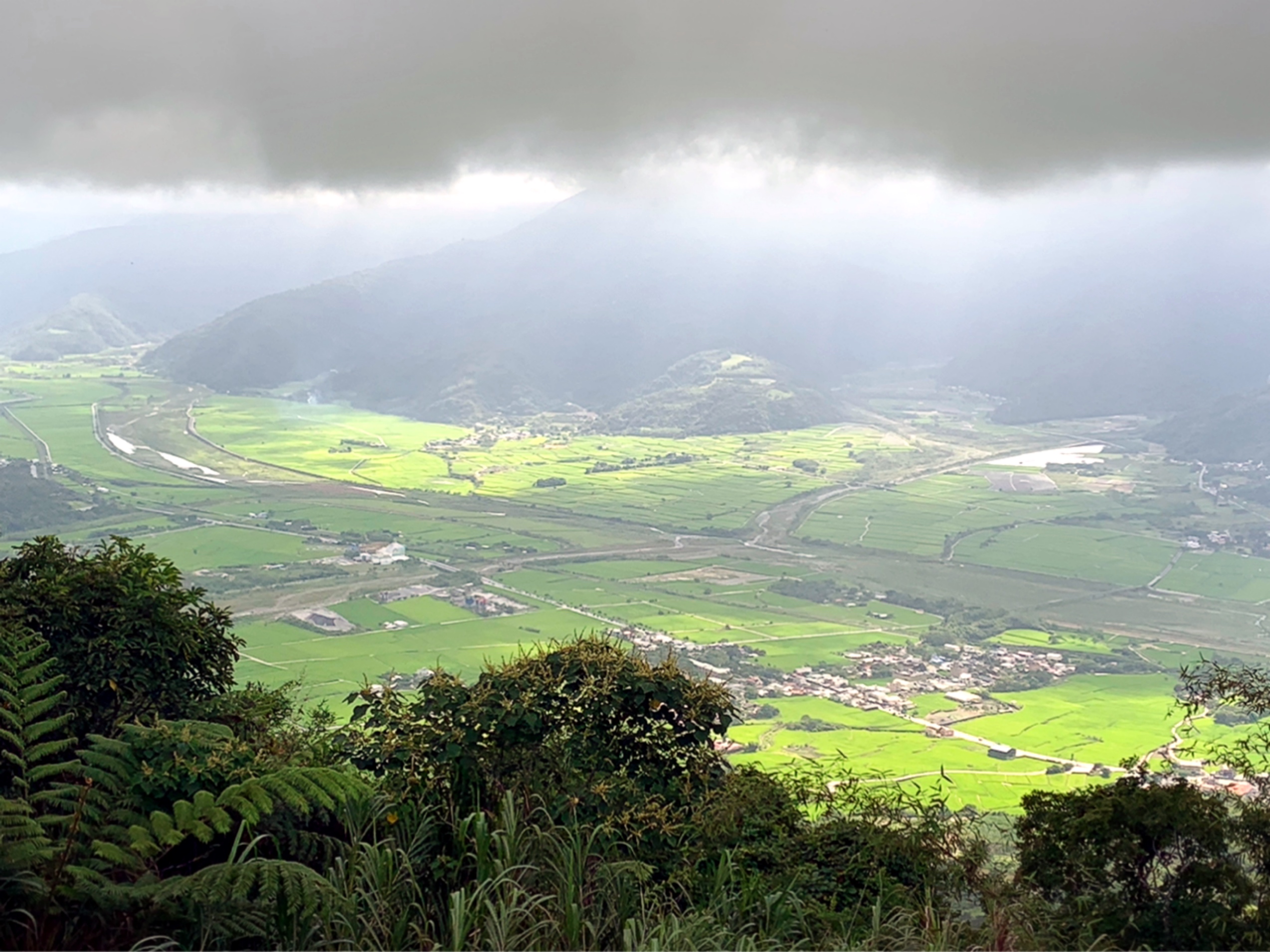
Peer under the clouds and the valley is clear


I'm sure others will write on this in the coming days, but something's been on my mind and I have to unload it in long form. 

You know those polls asking Taiwanese citizens what they think about maintaining the status quo, independence or unification? A couple of them have come out recently, one from NCCU, commissioned by the Mainland Affairs Council and one from the World United Formosans for Independence (WUFI)

And I am here to tell you that while the data may be fine, interpretations of that data are almost always wrong. 

Interestingly, reporting of the MAC/NCCU poll doesn't seem to distinguish between maintaining the status quo and moving toward independence, deciding at a later date, or moving towards unification. The poll itself does so (look at Question 4). So what's up with the media? The MAC itself, the Taipei Times and Focus Taiwan all report "84.9%" of Taiwanese "support maintaining the status quo" with no further details offered. MOFA bumped that number up to "nearly 90%". I'm honestly not sure why, but my guess is that that's the line MAC wanted to put out there and the media reporting on it just followed their press release.

Previous NCCU polls differentiate as well. As of June this year, if you combine everyone who wants to maintain the status quo: indefinitely, with a decision at a later time, moving toward independence and moving toward unification, you get 83%, just slightly below this poll's results.

Those are very disparate views however: someone who wants to maintain the status quo but move toward independence (25.8% in the June poll) might agree on the "status quo" but their beliefs differ significantly in most other ways from someone who wants to move toward unification (an unimpressive 5.7%). "Move toward independence" is highly competitive with "maintain indefinitely" and "decide later", whereas "move toward unification" is down in the sewer. 

You simply cannot credibly combine those into the same set of beliefs, unless your bias and your goal are to push for maintaining the status quo and to mask what Taiwanese really think beyond that.

Despite not clarifying this, media reports do shed some light on the fact that for most Taiwanese, "the status quo" is a stand-in for we want peace, not war, and to maintain the sovereignty we already have. You can see this in the high agreement with Tsai's statements -- not perfect stand-ins for what Taiwanese actually, ideally want for their country but better than a lumpen status quo potato salad.

Most (77.1%) agree that neither China nor Taiwan have a claim on the others' territory, Taiwanese alone should get to decide Taiwan's future, Chinese annexation should be resisted, Taiwan's democracy maintained and Beijing's attitude toward Taipei was unfriendly. 85.6% don't support "one country two systems". 

Combined with the fact that most Taiwanese identify as solely Taiwanese, and those who identify as both Taiwanese and Chinese prioritize Taiwanese identity, does this sound like a country that is actively choosing the status quo because it doesn't know what it wants, or a country that does know what it wants, but is deferring discussions on formal independence because de facto independence is sufficient given the threat from Beijing?

If this is a country that does know what it wants -- and it does -- why is there a continued insistence on forcing very disparate beliefs into one lumpen mess and claiming it as the "center" position? 

The actual center position is that Taiwan is already sovereign. In other words, unification (that is, annexation) is an extreme or fringe position, but trying to both-sides Taiwanese independence is straight-up wrong.

Taiwanese independence is a mainstream position. It is not remotely extreme. 

That's not my opinion. That's what the numbers say if you read them without blinders.

At first glance, the WUFI poll had somewhat different numbers. Moving toward independence and indefinite maintenance of the status quo were both near 40%. Independence as soon as possible was more popular than fast unification, at 7% and 1.8% respectively, and only 7% want to move towards unification. Most support using Taiwan as the name of the country despite threats from China, and most are in favor of diplomatic relations with the US. The only number that indicates much disagreement is the question of "just Taiwan" or "Taiwan and the Republic of China", which came in at about 40.5% and 30.9% respectively. It's not close, but the latter isn't swimming in the gutter alongside support for unification. 

What that means is that Tsai's re-imagining of what independence means is indeed the center position: that Taiwan doesn't need to declare independence because it's already independent, and its name is the Republic of China (the last bit of that being a current statement of fact, used to bridge the two perspectives). It certainly shows her "consensuses" in line with what Taiwanese actually think than the fabricated 1992 Consensus.

Back to the status quo: if you do the irresponsible thing and combine the numbers that all indicate some maintenance of the status quo -- despite their deeper ideological differences which should not be papered over -- you get approximately 87%, which isn't far off from the MAC/NCCU poll.

So okay, blah blah blah, lots of numbers. What's wrong with that?

Nothing, on the surface. The numbers are real. The desire to keep things as they are is real. However, they are often used to advance a line of thinking that simply doesn't match up with what all the other data tell us. 

I'm thinking not only of all those other questions that indicate a strong preference for maintaining sovereignty and resisting Chinese annexation, a general feeling that Beijing is unfriendly to Taiwan (which it is), a strong lean towards Taiwanese identity and using the name 'Taiwan' internationally.

It's also a question of what "the status quo" means, and under what conditions those questions are answered. 

An argument could be made that the questions themselves were constructed to push people toward answering "I prefer [some form of] the status quo" and then encourage the media to report that line. I know others will make that argument, so I won't as they can do it better. Besides, while it would be fairly easy to say that the Mainland Affairs Council is perhaps questionable, I doubt WUFI would intentionally construct questions that push for a specific kind of answer. And NCCU? As an institution they may lean blue but they've dutifully reported on the ascendance of Taiwanese identity for decades; I can't say they are intentionally engaging in academic chicanery.

In other words, I used to think the polls perhaps lacked basic construct validity. Maybe they do, but I'm going to back off that for now.

I feel quite comfortable, however, in calling out all the extraordinarily wrong interpretations of the data.  

There's the obvious question of what the status quo means to Taiwanese: as a friend pointed out, who could possibly look at the current situation -- the status quo -- and not consider it to be de facto independence? It's an answer that says "yes, I would like to maintain Taiwan's democratic government, institutions, borders, currency, military and society." In other words, a form of independence. As Tsai herself says: Taiwan doesn't need to declare independence because it is already independent.

The real news here is Taiwan wants to keep the sovereignty it already has. Does that not make for a sexy enough headline or something? Why is it always reported as "Taiwanese don't know", when that sort of data massage could get you a job in a Wanhua teahouse?

That should be clear from which "status quo" sub-sets have more respondents: almost nobody thinks the current situation is a holding pattern for possible unification. That's not my opinion, that's most Taiwanese saying -- in these numbers -- they don't want to move toward unification, now or ever. It's not an "undecided" and arguably, since democratization, it never was.

So why do people keep writing about it as though it's a big question mark, as though Taiwan is less decided on its desired outcome than it actually is? Even if the data are solid, why this off-the-wall interpretation of it?

I keep asking because I genuinely want to know why. 

We must also consider the conditions under which the questions are answered. With China insisting it will start a war if any move is made toward independence, and most people understandably not wanting a war, some version of "the status quo" makes sense, when the status quo offers both peace (of a sort -- our lives go on as usual but I'm not liking those warplanes either) and independence. It's an answer given under duress. Not by the pollsters, but the general atmosphere of Beijing's credible threats. 

It tells you a great deal about what Taiwanese want with a gun to their head, but nothing at all about what they ideally want for their country, if they could choose it without war clouds looming.

So why do people interpret it as some sort of freely-made final decision, not influenced by the threat of violent subjugation?

As one person commented, if you're asked whether you want to stay in jail or go free, most people will choose to go free. If told, "well, okay, but if you walk out the guard will take his best aim and probably kill you", your answer might differ considerably. The prisoner is no longer being asked what they want in an ideal situation.

One might say it doesn't matter: the Beijing war drums aren't slowing down, so there's no point in asking what Taiwanese would ideally want if they didn't have to contend with that. I disagree: it may be a hypothetical question, but it would get a lot closer to answering what Taiwan really wants for itself -- not just how the people react to a real external threat. 

Right now, people are interpreting the current results as exactly that -- what Taiwan really wants for itself -- when that is simply not what they indicate. It's just not. So stop showing your whole ass on this, please. All of you.

It's interesting, at least, that nobody seems to have asked this question that I know of, though the polls cited by Michael Turton comes pretty close. Like NCCU, the pollsters have their own ideological bias.

However, it does matter that when offered an ideal situation, most Taiwanese choose peaceful independence.

The closest we seem to get everywhere else are answers about how Taiwanese identify, how they want to participate in the international community, what they see as the name of the country, what they think of Chinese annexationism, and the differential between those who want to move towards independence vs. unification. None of these are a perfect stand-in, but they at least approach the question: is there a consensus on an ideal outcome for Taiwan?


And looking at those numbers, the answer is yes. And that ideal outcome is peace, with eventual independence. 

Repeat after me: 

Taiwan independence is a mainstream position.

Interpretations that say Taiwanese just don't know are harmful, unserious, ignorant and miss the point. 
Some intentionally so: there's a lot of institutional support for toeing the line at we want to maintain the status quo, please do not ask further questions thank you and good night. Some of it is well-meaning, an attempt to seem "nuanced" -- not in the good way, but in the both-sidesy fake-neutral way that the most pusillanimous analysts seem to adopt as a standard.

Consistently ignoring the contextual factors around these 'status quo' polls, applying odd assumptions to the questions actually asked and lumping together data that say far more when separated out is problematic.

It not only allows one to misconstrue what Taiwanese are accepting under duress as they actually want, it allows one to believe two very untrue things: that the KMT's position on China might be popular again given enough time, and that any talk of de jure sovereignty "angers" and "raises tensions" with Beijing, when Beijing is the antagonist -- not Taiwan. 

Neither of these things will ever be true, but if you believe Taiwanese don't know what they want and the only credible "center" position is an "undecided" despite all available data indicating otherwise, then believing those falsehoods becomes possible.

The dartboard is right there in the pub, most people in the pub are telling them exactly where the bullseye is, but their darts keep landing in the road outside.

I still want to know why.

Sunday, November 21, 2021

Taiwan’s COVID response: let’s stop assuming “imperfect” is the same as “terrible”


Just a warning: I wrote this after an extremely busy work week and after taking the anxiety meds that help me sleep. If that shows in the writing style or other weirdnesses, I’ll go back and improve on the post later.


“This is probably going to be my last year in Taiwan,” someone told me recently. This was partly for personal reasons, but partly because “I’m just not very happy with Taiwan’s COVID response.” Not enough vaccines, not rolling them out fast enough, the interminable quarantine — they simply weren’t impressed. 

“It’s really shocking how the government hasn’t made any effort to import more vaccines,” said another friend, though they admitted that view mostly came from their parents and the pan-blue news they watched. 


Still other friends are upset about the lack of information about what quarantine rules apply to foreigners — do we get subsidies? Do we qualify for the 7+7 program? Is it legal to charge foreign residents more than citizens for quarantine? There’s also a lack of consideration for foreign residents who want to reunite with family members, and extremely unclear guidelines regarding how to sign up for first or second shots.


I don’t agree with the negativity of most of these takes, but they’ve come from people I respect. They pushed me to think about the ways we all decide what evidence we choose to consider when forming an opinion, especially if you’re looking to justify what you’ve already decided you want to believe. Nobody is safe from confirmation bias.


My own perspective: Taiwan’s COVID response remains fantastic, and the evidence for this is simple. It’s one of the only COVID-free countries in the world. As far as I know, the only one with a comparable population and density. Despite considerable odds — Beijing’s attempts to block vaccines from reaching Taiwan, exclusion from the WHO and proximity and connectedness with China — Taiwan has crushed each COVID surge. What other country went from an extensive outbreak to zero COVID in 7 months, without (in my view) unduly impinging on guaranteed rights and freedoms. The vaccine rollout indeed began slowly, but it’s scaled up impressively since. I meet very few Taiwanese anti-vaxxers or anti-maskers: the vast majority of those jackasses seem to be foreign residents -- with some exceptions, of course.


(If you are one of those, I want nothing to do with you. I am not interested in your “opinion.”)


I empathize with the frustration, however. I support keeping the mandatory quarantine as long as experts deem it necessary, but the fact is, it’s made it impossible for us to visit family. At the same time, I’ve watched those family members travel while I am effectively stuck in Taiwan. I don’t miss leisure travel as much as I thought I would, but I do miss my family. I accepted that I’d miss Christmas 2020 and two weddings — the last family wedding before these two was my own 11 years ago, so they mattered to me — but I never imagined I’d have to give up Christmas 2021, too. 


Of any country to get stuck in, however, I am indeed grateful that it is Taiwan, with its zero domestic cases.


I watch friends and family in the US getting boosters, while my friends in Taiwan are still getting their second shots. I wonder how long it will be before I can get an mRNA booster, especially as both of my doses are AZ. I’m grateful that I was able to get the vaccine at all, but that booster? It’ll probably be awhile. Until then, international travel is indeed a bit more dangerous for me.


Even dismissing the exaggerations and truth-twisting of Taiwanese TV news (especially pan-blue news), it’s easy to see COVID-era Taiwan two ways: 


The half-empty glass: the delay in ordering vaccines caused the delays in receiving them. The quarantine is keeping Taiwan closed off while the rest of the world opens. The vaccines many of us were able to get aren’t the best, and aren’t necessarily going to make it easier to travel in the future. Guidelines have been vague and unclear, and foreign residents have been ignored entirely, treated as though we don’t exist. The government grew complacent in learning about the latest treatments and approaches because the country was COVID-free for so long, which led to higher mortality when an outbreak did occur. A surprising number of pilots (though still a tiny minority) didn’t follow the quarantine rules tailor-made for them. Businesses, especially those which typically served tourists, have closed. Taiwan is being left behind, and it’s starting to show.


The half-full glass: dude. We’re living in a COVID-free country. How many people can say that? How can you say a response that resulted in zero COVID isn’t working or isn’t impressive? This is despite having to fight just to be recognized on the international stage. Nobody has turned the wisdom of masking or vaccinating into a major political battle, even when they criticize the government. Taiwanese are masking and vaccinating and that’s more than you can say for a lot of belligerent ultracrepidarians in the US.


Perhaps the government could have jumped on orders faster, but the fact is that Beijing’s attempted (and somewhat successful) sabotage was real, and is not Taiwan’s fault. There have been outbreaks, and we’ve crushed them. There has been confusion and poor communication, and certainly missteps as well. What country can’t say that though? What government has handled the pandemic perfectly? What government has handled it better than Taiwan’s? The only real contender is New Zealand, and I’m not even sure that case is strong. We’ve all made sacrifices, and compared to what people in other countries have lived through, they’re mostly bearable (my heart goes out to anyone still waiting to bring a spouse to Taiwan with no timeline as to when it might be possible. That’s cruel.) 


My family in the US spent upwards of a year mostly locked indoors, away from others. I’m (de facto) being asked to wait about a year longer than I’d like to make that long-desired trip to see my family.


At the end of the day, however, we are living in a COVID-free country. What more do you really need in your glass?


To come to that more positive outlook, I pushed myself to think through the glass-half-empty view of Taiwan’s COVID response. Indeed, I found a lot to criticize: their views didn’t entirely lack logic or a point. Every day I don’t book a plane ticket to the US, that becomes clear. Every day I wonder when I’ll be able to get better protection than AZ for the Delta variant, I get it. 


The lesson: every country has made mistakes. Some more than others — the US’s strategy seemed to be ¯\_(ツ)_/¯, followed by a pretty decent effort, followed by a bunch of bellicose Dr. YouTube graduates who act like they’ve swallowed not-smart drugs ruining everything. No mistake Taiwan has made was worse than that of any other government, let alone so much worse that they deserve to be singled out for a poor response.


I’ve noticed a tendency of some — especially foreigners in Taiwan who’ve had a rough day — to assume every good strategy is simply obvious and doesn’t merit any praise for the Taiwanese COVID response, but every bad strategy is an indictment of the country.


That is, if it’s not absolutely perfect, they say it’s terrible. And they call it terrible with a level of dismissiveness and frankly condescension that they would most likely not aim at any other countries. COVID cases are surging in Europe, but do you see them going after that? No — Taiwan is a disaster to them because a few mistakes were made, but Europe? “Oh that’s worrisome”. That’s it. Oh, in Rotterdam they’re rioting against masks — that’s fine. But a pilot didn’t follow the rules in Taiwan? The problem must be the rules, not the individual pilot!


This leads to polarized viewpoints where Taiwan’s excellent-but-imperfect response is viewed as either unassailably amazing, or unforgivably terrible. 


The “unassailably amazing” people are in fact willing to be assailed, if you offer good evidence. 


The “anything less than a perfect response is a disaster!” people— a standard they would be unlikely to apply to any other country — are harder to reach. It’s hard to change someone’s mind if they want to dwell in negativity.


Fortunately, the middle ground is not devoid of people. There are also reasonable voices who posit that a generally excellent response was marred by a few missteps, but that the bad odds Taiwan has faced thanks to China merit quite a bit of grace towards Taiwan. Some of those missteps, however, do need to be addressed. 


This would best describe my viewpoint. But I had to come to it from an excessively positive one, genuinely consider the negative takes and incorporate what made sense while sloughing off everything that didn’t make sense when compared against the bigger picture (that is, the response of the rest of the world). 


If I can beg everyone reading this to one thing, it’s this: reconsider. Go through your baseline opinion on Taiwan’s COVID response and examine each of your assumptions, beliefs and areas of especially strong pride, anger or defensiveness. By all means, ignore the anti-science junk which is truly not worth your time.


Then, check them against your previous opinion. If this process causes your bright & sunny views to moderate a bit, then that’s a new level of nuance. It doesn’t mean your overall perspective is not a positive one.


If it causes you to question your previous negativity, great. 


If not, that’s your right, but we’re not going to agree. 


Perhaps consider that process for any opinion. Are you dumping on Taiwan because it doesn’t meet impossible standards of perfection that you wouldn’t apply to your home country? Stop, maybe. 


Are you looking at Taiwan through rose-colored glasses that you haven’t tried to remove? Your issue is the less severe one, but there might still be something to be learned here. 

Monday, November 15, 2021

How the Tainan Museum of Archaeology challenged my approach to criticism

Untitled

As you approach the Museum of Archaeology in Tainan Science Park, you might not notice its dark exterior of stacked bricks.  This unassumingly natural edifice almost seems to rise out of the grasses, bushes and flowers around it, as though they are part of it and it of them. Even the paved areas have different textures of stone, with the main entrance at the end of a long outdoor passage that cuts open at various intervals, as though giving you a glimpse of the world here, and here, and there.  Throughout the exterior, more modern elements in metal and glass bring the building into the future. 

The easy symbolism here is "melding the ancient and modern", but I think that's too simplistic. The dark, low stacked stone of the exterior recalls Rukai Indigenous stacked-slate housebuilding techniques. The cuts in the entrance hall remind you that we only view moments in history as a cutting-in, and must use our imaginations to fill in the details. 

Once inside, natural wood benches and a large atrium allow families to keep children occupied while someone stands in line for tickets. As you ascend the escalators, an interior side of the facade comes into view: the Rukai slate-house colors are still there, but now they're designed as geological layers, complete with replica fossils that come into view as you rise. 

Untitled

The Archaeology Museum took quite awhile to build, having been first conceived when priceless finds were discovered when developing the science park, from Indigenous settlements dating back thousands of years. (There are some shards of modern pottery and even "figurines of foreigners" from the Dutch era, too). 

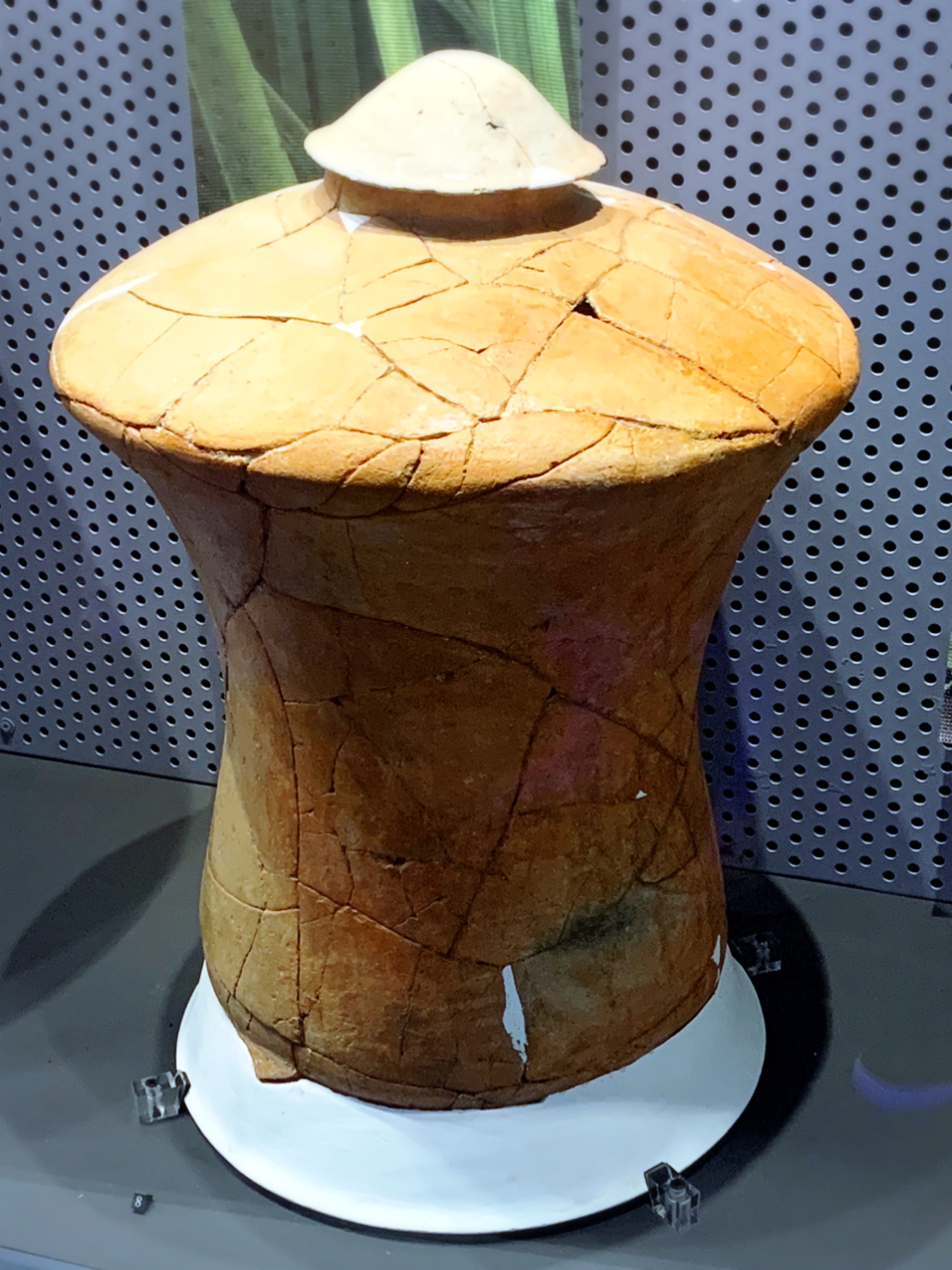
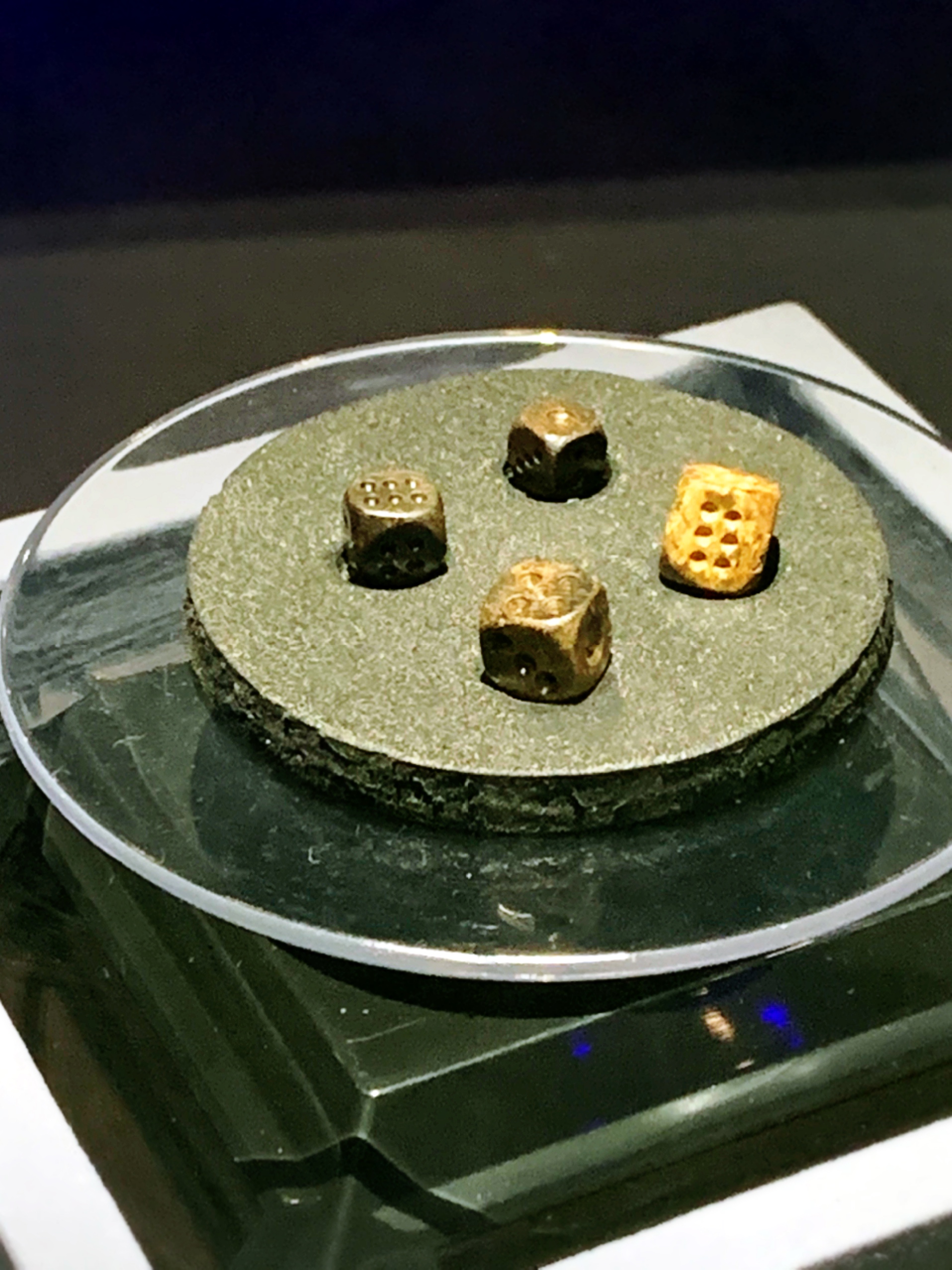
Tainan has built on its reputation as a historical and cultural capital with its Taiwan-focused museums: the Tainan Fine Art Museum, housed in two buildings, one vintage and one modern; the National Museum of Taiwan History which offers a bracing definition of "who is Taiwanese" alongside a building-size timeline of the country's history with (mostly replica) artifacts; and the Museum of Archaeology, understated and elegant, displaying the real deal -- including treasures like a carved deer antler knife handle, centuries-old dice, and millenia-old pottery, tools and jewelry. 

There is more to love about this museum, despite its distance from the city center -- there's probably a bus, but I recommend a car to get there. We went with a local friend. But first, I want to talk about a particular effect it had on me.

Untitled

It's no secret that I'm not a big fan of the National Palace Museum. Sometimes when subjugationists sneer that if Taiwan wants to be independent so much, why doesn't it just give back all the treasures they carted over from China?

I usually retort: "Sure, you can have your junk back. Guaranteed freedom matter more."

I don't really mean this -- well, I would be in favor of sending most of it back across the strait, but I don't get a say. Regardless, that was never a serious proposition. Rather, I know perfectly well that it's not "junk". It's a museum in an ugly building full of priceless foreign artifacts, displayed in the most unengaging manner possible -- bland rooms of vases and scrolls, with very little context offered to tell you why each one matters in its own way. You are supposed to gape at it and agree that it matters, without getting a real feel for anything. (Some items, like the carved ivory or the colorful porcelains of the Empress Dowager Cixi do indeed stand out on their own). 

I tell visitors that it's worth going if you are specifically interested in Chinese history, but you won't learn much about Taiwan beyond a better understanding of all the loot the retreating ROC hauled over here. 

Otherwise, though, it's just kind of there, in its ugly building, expecting your admiration and thinking it owes you not one jot of engagement that you don't bring to the visit yourself. A shrine to a foreign country, a lost war, an enforced identity that couldn't even be enforced very well once Taiwanese people were actually given a say.

In other words, it's easy to take a big ol' dump on the National Palace Museum. Criticism is easy. "This thing sucks!" "I don't like that!" "Most. Uninsightful. Song-Ming Blue and White Porcelain Display. Ever!" I could do that all day. 

What's harder is offering a positive alternative: try this place instead. This is cool. This is a hidden gem. This truly captures a tiny piece of the soul of Taiwan. This other museum is small but really captures a poignant moment of Taiwanese history. 


The Tainan and Taipei Fine Arts Museums are just such museums. Do not miss the exhibit of vintage Taiwanese paintings from the Japanese era, including the original Dihua Street market scene by Kuo Hseuh-hu (郭雪湖), ending in two weeks. The Taipei Museum of Contemporary Art too, but recent scandals have soured me on it a tad. The Shunye Museum of Formosan Aborigines is across the street from the National Palace Museum and is a more edifying visit if you are actually interested in Taiwan. The Nylon Deng Memorial Museum deserves to be in this list, though it's difficult to access in English. The 228 Museum, the National Prehistory Museum (temporarily closed for renovation), Jingmei Human Rights Museum and Green Island's White Terror Memorial Park and so many more -- too many, in fact, to list -- not only offer deeper, more intimate and more local understandings of Taiwan. 

And that's just the short list. 


Untitled


All of these museums utilize design concepts to offer engaging museums with experiences beyond we built this Chinese-lookin' cement thing and put all our stuff in it, people will come because of its obviously superior cultural refinement. Even the museums that were once prisons have options to discuss what you are seeing with a former inmate who'd been imprisoned there.

But again, it's easy to criticize that old dinosaur up in Shilin.

Instead, let the design elements of places like the Tainan Museum of Archaeology wash over you and perhaps spur you to think a little more deeply about the subtler elements. 

Coming here helped me remember: it's easy to criticize. It's easy to say the National Palace Museum pushes a (mostly fabricated) narrative of Chinese history "preserved" by "free China" in Taiwan.

Untitled

It's difficult to offer a positive alternative. It's even harder to offer that alternative simply, for its own sake, without a specific agenda. Or rather, if there is an agenda, it's simply to get more people to go to museums about Taiwan when they visit Taiwan. 

There's a lot to like about the place: when you enter, one of the first things you come across is a timeline of who exactly lived in this part of Tainan when. 

Ya think the vast majority of Taiwanese history is Han? Think again, mofos:

Untitled

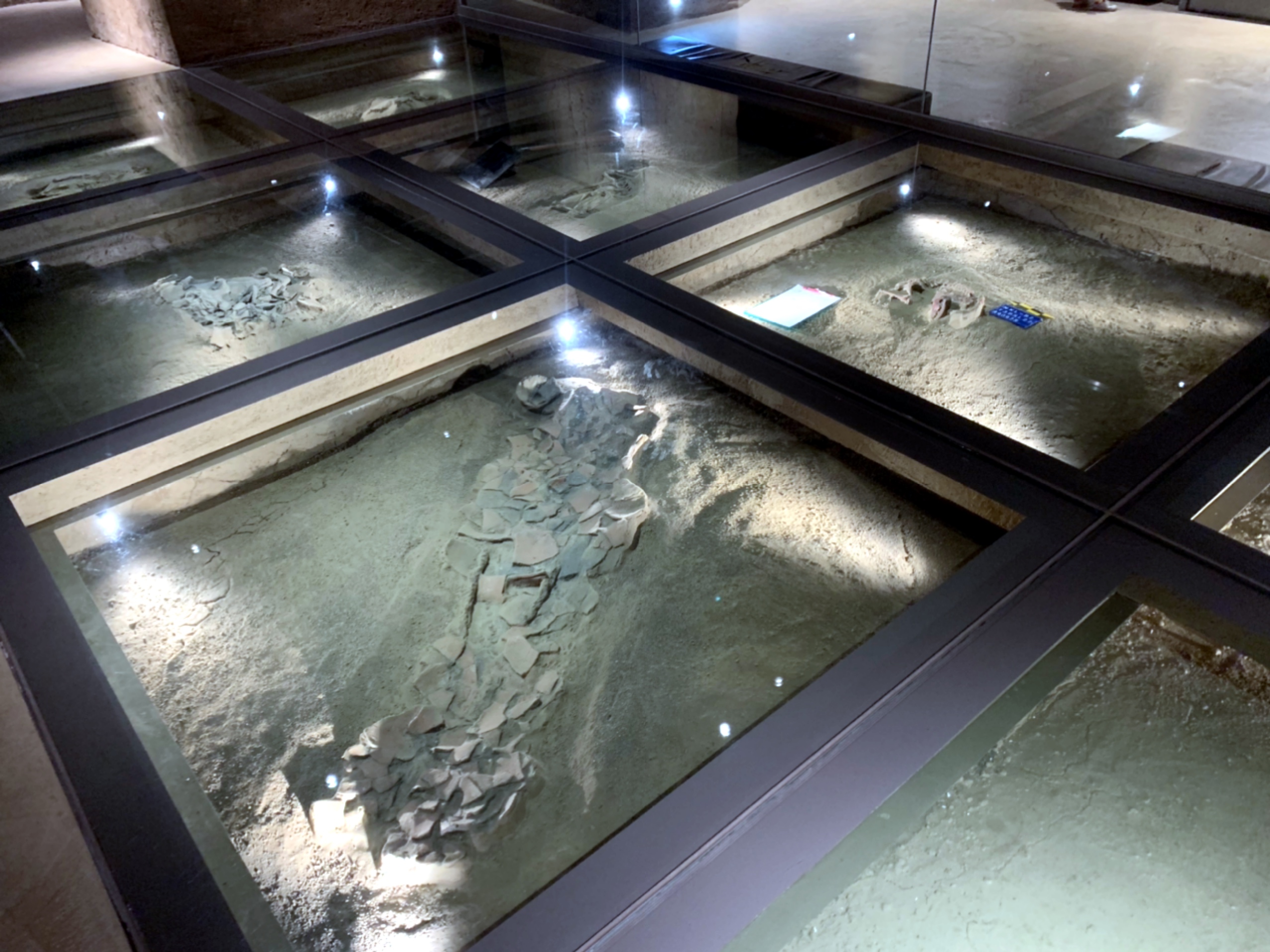
Some objects (which may be replicas) are even presented in ways that show how archaeological digs actually look -- there's an entire glass-floored room where you can walk over what would be the roped-off grid on a dig. I have a friend who's an archaeologist and I came away with a fresh appreciation for how she could look at, say, a specific shape of stone and identify it as a tool rather than just an interesting rock. One floor has dioramas -- along with real artifacts found in places that might have hosted scenes like these -- of how the people who used these items lived. You access each floor by going down a gentle ramp, as though you're descending through layers of the earth. The floors themselves are often made of materials meant to mimic a semi-natural, semi-industrial look. It is in a science park, after all, and the metal beams holding up all that glass on the way to the top remind visitors of that.

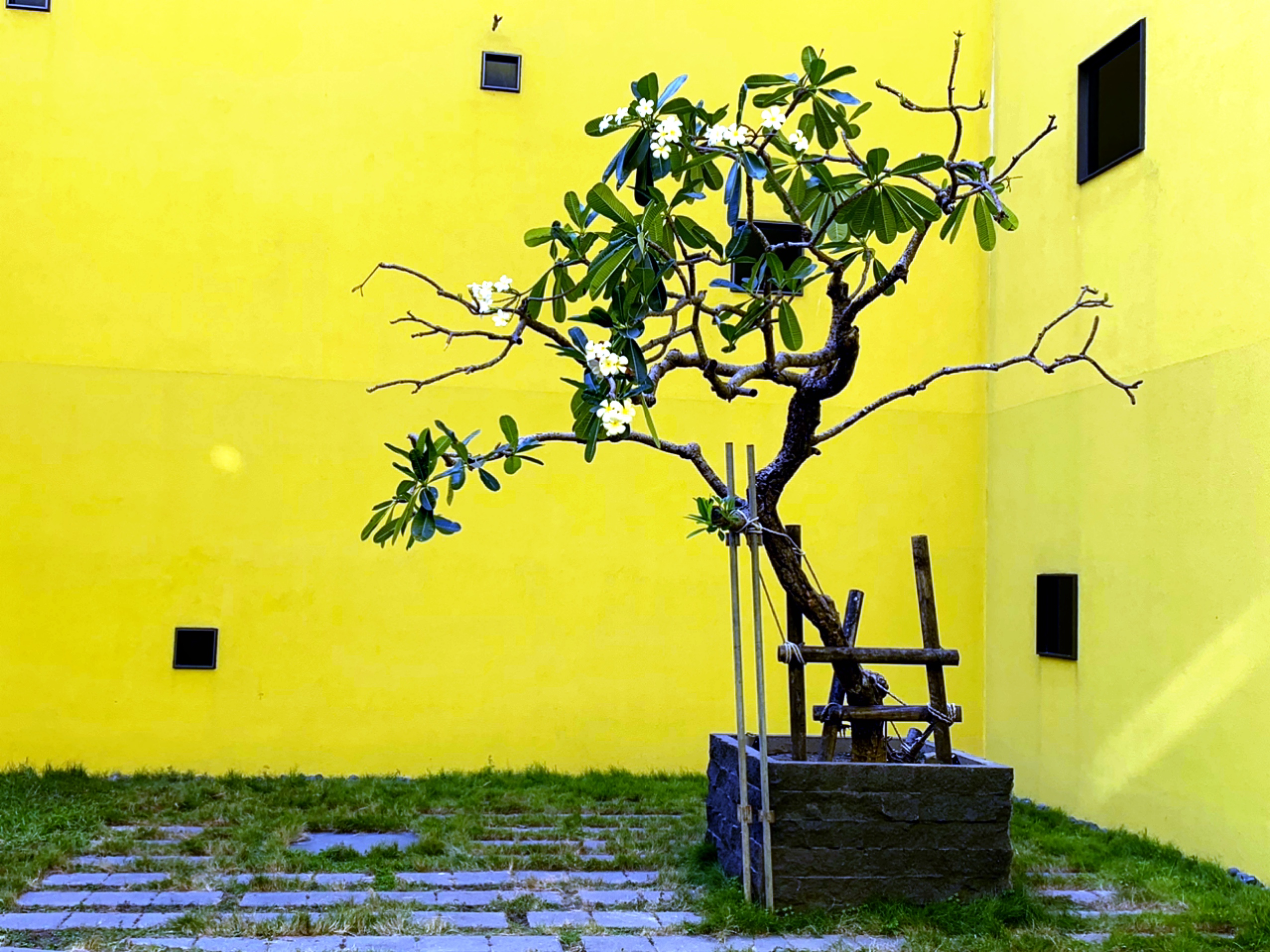
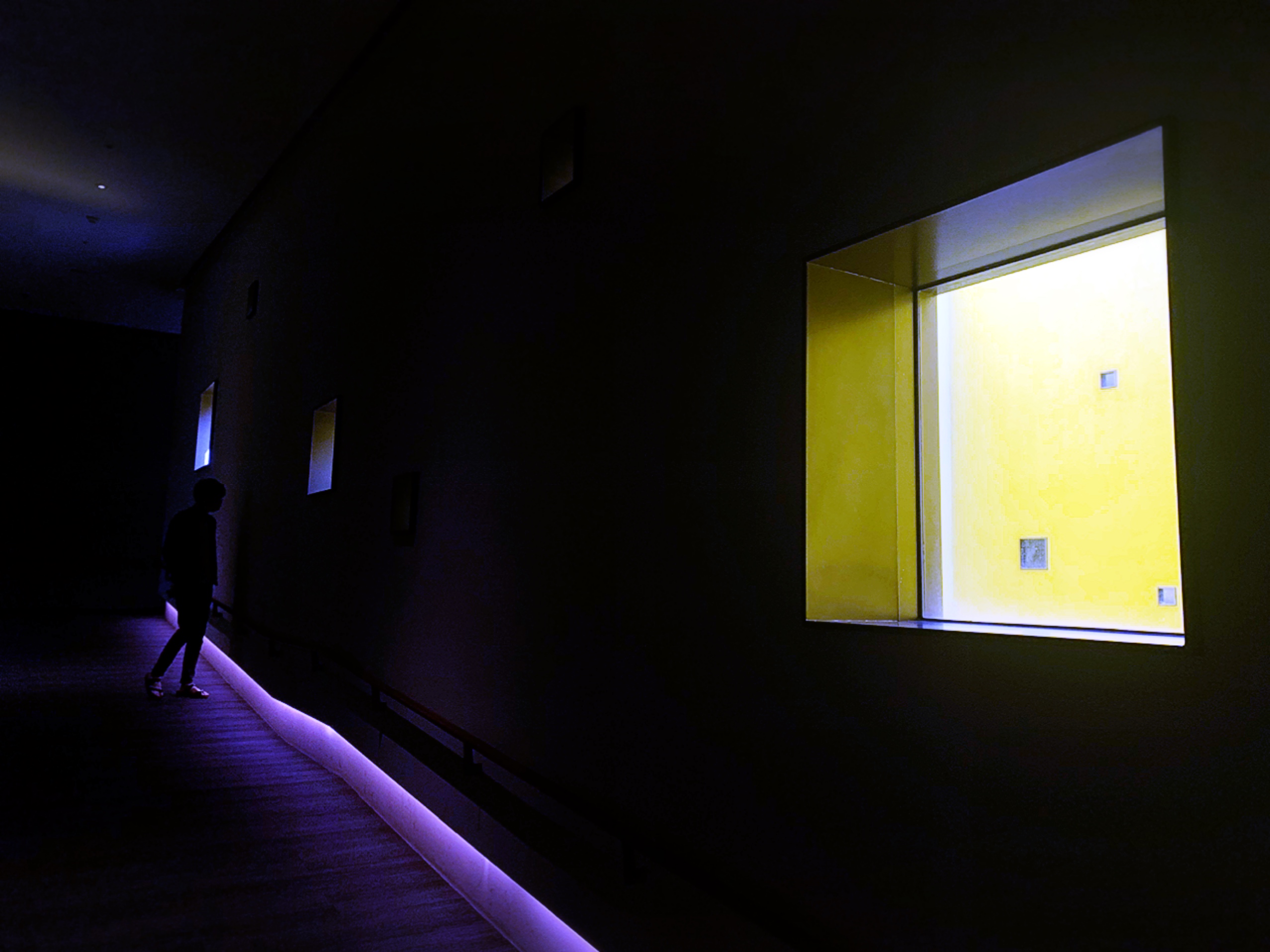
As you do, square windows offer odd light from a bright yellow courtyard. They're all at different heights and sizes, seemingly sprinkled down the hall. The effect is once again of peeking through at different levels of visibility, the way a reconstructed pot or a carved knife-handle might allow you to have a peek through a tiny window about lives lived in the distant past. 


Untitled

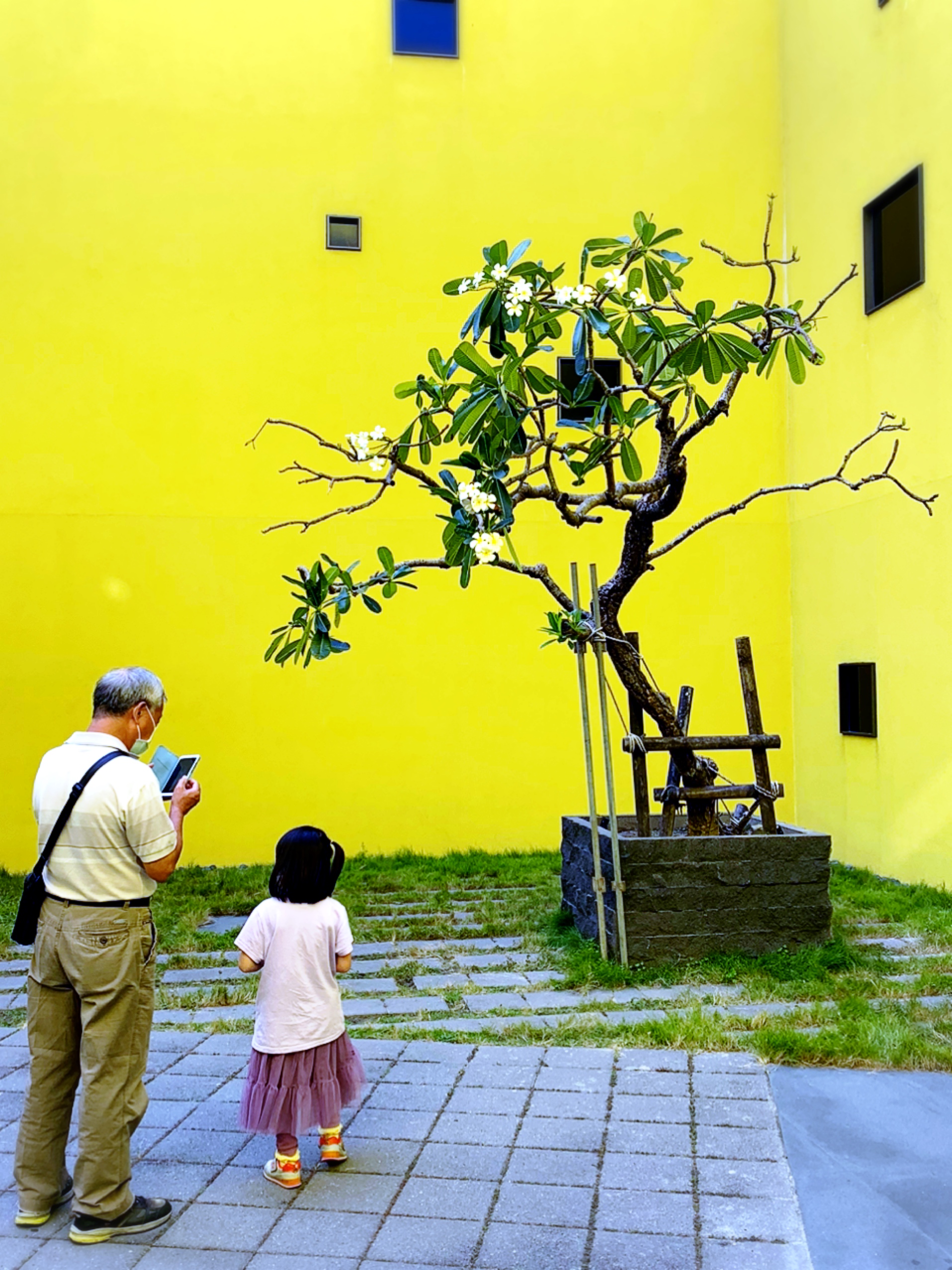
The courtyard itself is where all these windows converge, sunny-hued in even the cloudiest of weather. A single bench, a single beautiful tree, and several stories of viewpoints peering down at balanced but irregular intervals.

It's small and difficult to get to, but this is a museum worth visiting. This is a museum that incorporates its mission into its very structure, which attempts to reach out and engage you. This is a museum about Taiwan

So what did I learn? Don't dwell so much on what is wrong -- though you can, if it's merited. Spend perhaps even a little of that time talking about what is right.


Untitled