Friday, December 20, 2019

An awkward conversation on Andrew Yang and identity (which is not actually about identity)

Andrew Yang (48571504852).jpg
By Gage Skidmore from Peoria, AZ, United States of America - Andrew Yang, CC BY-SA 2.0, Link


Before I even begin, let me say that I know there are issues surrounding a non-Taiwanese person writing this. Taiwan is my home, but I'm not from here. I look different and am therefore treated differently. My cultural roots are different.


So, before you read this, go read Catherine Chou's excellent piece in Popula about this issue. (The only thing I'd change is that the article does not specifically call the ROC a colonial entity. It is one -  however, I doubt she'd disagree with me on that, or at least not too strongly.)

It's hard to pull a quote as it's all fantastic, but here you go:


As the PRC has risen in might, it has consistently tried to erase the island nation’s unique political and cultural identity, making it clear that any attempt to shed the ROC framework, or otherwise formalize its independence under the name of Taiwan, might be met with invasion. 
This makes the silence around Andrew Yang’s Taiwanese-American heritage that much more striking. In December 2016, then president-elect Donald Trump was lambasted for taking a phone call from Tsai Ing-wen, the moderate, wonkish president of the ROC, by liberal American commentators demonstrating little knowledge of the relevant geopolitics. In September 2018, Peter Beinart penned an article in the Atlantic proposing that the US secure peace in East Asia by allowing the PRC to take over Taiwan, an argument that has aged poorly in the wake of the Hong Kong protests and the continuing revelations of the internment camps in Xinjiang. As part of a coordinated campaign of intimidation, the PRC recently pressured dozens of multinational corporations to describe Taiwan as ‘Taiwan, China’ or ‘Taiwan, Province of China’ on their websites. 
Given the obvious tensions, it’s worth asking why there’s been so little discussion about what it might mean for international relations to nominate a Taiwanese-American as the Democratic presidential candidate.


With this in mind, I don't want to come at the Andrew Yang identity debate from the angle of talking about how he should identify. That's a personal decision. He can identify as he wishes and I am supremely unqualified to critique the choice (or non-choice) he makes.

Yang's choice does seem to be a non-choice: he's identified as both Chinese and Taiwanese, though he only seems to pull out the word "Taiwanese" when not many people are paying attention. Otherwise, he's either Generic Asian, blunting his Taiwanese family history - though to be honest that's about as much as white America can often process - or using "Chinese".

What I want to add is this: the choice itself isn't the only point. It may not even be the most important one.

When someone makes a choice (or non-choice) between Taiwanese and Chinese, that choice is not made in a vacuum. It's not a level playing field. There are consequences to identifying as Taiwanese - for a US presidential candidate, these could include angering China (a country he'd have to engage in dialogue with if elected), alienating Chinese-American voters, and spooking other voters who read media reporting of the issue. China has made sure there are consequences; this is an intentional strategy. There are far fewer consequences to identifying as Chinese - fewer people are angered. Fewer friends lost. One less whiny big baby government throwing a tantrum. For a candidate, fewer voters alienated.

And on this unfair playing field, Taiwan always gets screwed. Because there are (intentional) consequences, it takes real guts to insist on Taiwanese identity on a public stage. Even privately, I've heard stories of Taiwanese and Taiwanese-Americans losing friends for refusing to acquiesce to the idea that Taiwanese are Chinese.

So to choose not to go down that road is not a mere matter of personal identity. These are not two neutral choices that come with equal consequences. 

I'm not judging that on a personal level; we all make choices about how we present ourselves based on how that will be received, and as I don't inhabit a Taiwanese body, I can't truly know on a personal level how it feels to face this specific set of choices and how they might impact me. Yang specifically faces much steeper consequences for making that choice than most of us ever will; it's important to understand that. 

But, as someone who loves Taiwan, would fight to defend it, and considers it her true and only home, Yang's choice also has consequences for me, for people I love, and for Taiwan. Shying away from the choice to be Taiwanese has implications regarding one's foreign policy, how they'll handle China, and whether they will stand up for Taiwan.

Despite Yang having Taiwanese ancestry, I simply do not trust that he will stand up for Taiwan, or that he is the best choice for Taiwan.  Any candidate regardless of background will face some consequences for choosing to stand with Taiwan policy-wise. 

Besides, I am someone who loves Taiwan enough that I've seriously considered whether I'd die to defend it (or more broadly, what it stands for). Again, it is my true and only home. Yet I don't get to choose to be Taiwanese; someone who looks like me, with my cultural roots, simply can't do that, yet. Taiwan is multicultural in a regional sense, but isn't in the same way that many Anglophone countries are; it's accepted that anyone can be American, but not that anyone can be Taiwanese. I accept this.

It's enough to say I'm an ally; I'll leave it at that.

I don't know if that will ever change, but if I were in a position to stand with Taiwan and make a real difference, I would do so.

As Catherine notes, in a perfect world, Taiwanese is a chosen identity. 


It does sort of hurt to see someone who could choose it, in a position to make a real difference to Taiwan, not do so consistently.

I think it's fair to say that in a world where Taiwaneseness can be freely chosen without the consequences deliberately set by China, Yang (and others) would be more likely to choose it. It's disappointing that we don't live in that world and so he hasn't, although he's under no obligation to do so. 


Regardless of identity, does Yang stand with Taiwan?

If he had an informed Taiwan policy that was good for this country, I wouldn't care how he identified or what he said about it. As above, that's personal. In the end I'll support who is best for Taiwan no matter what they say (or choose not to say) about their background.

Sadly, that person is not Yang. His statements on Taiwan are a mélange of unenlightened, status-quo, China-benefiting pap:


Perhaps his lengthiest public comments on Taiwan so far came in October, when he told CBS reporter Nicole Sganga that ‘the Taiwan issue has been with us for decades’ and that a ‘positive continuation of the status quo should be one of our top priorities’, including ‘a relationship that works for both Taiwan and China’.

You have to be really ignorant of how things work in the Taiwan Strait to think that this situation 'works' for Taiwan. It is begrudgingly accepted by Taiwan for lack of a better alternative, thanks to Chinese bullying and fears of war. But 'work'? Not unless you think Taiwan wants this and wants to be the ROC, and believes in 'One China'. Data consistently show that on all counts, it does not.

This situation works for China, and helps the US avoid taking a clear stand in support of Taiwan. Nothing more. Yang should know that. Why doesn't he?


Yang stated incorrectly that the US has a ‘mutual defense treaty with Taiwan’. (The Sino-American Mutual Defense Treaty was abrogated in 1979, the year that the US established formal diplomatic relations with the PRC. In its place, Congress passed the Taiwan Relations Act, which governs arms sales to Taiwan and allows for the maintenance of an unofficial embassy on the island, the American Institute of Taiwan.) Yang also failed to clarify that under the ‘status quo’ Taiwan is already independent from the PRC.


Taiwanese, Chinese, American, hyphenated, whatever: I would have hoped that, given his familial ties to this part of the world, that he'd know better and be a better ally to Taiwan.

And Catherine has already done a fine job of pointing out the erasure of Taiwaneseness, even (especially) among Asian-Americans:


The sociologist Nancy Wang Yuen recently described Andrew Yang on Twitter as the ‘first Chinese American presidential candidate’ and responded to evidence of his (sometime) identification as a Taiwanese-American by arguing that the ‘difference between [Chinese and Taiwanese] is much more nuanced’ than her critics seemed to think and that ‘there are Taiwan-born [and] -raised folks who identify as Chinese, not Taiwanese’. Her statements, however, overlook trends in present-day Taiwan, where 73% of people ages 20 to 29 identify as Taiwanese only. Polls now consistently show that fewer than 5% of people living in Taiwan identify as Chinese only. [Emphasis mine].

At this rate, I'll end up quoting the whole piece here! I try not to do that but no matter, I do believe her voice is more important than mine on this issue so it's great if her words take up real estate on my blog.

Angry people will say "stop playing identity politics", "don't tell people how to identify", "that's just ethno-nationalism" or some variation on that theme, and then use that rationale to go ahead and just lump Taiwanese in with Chinese.

In other words, they insist that nobody can dictate identity, and then go ahead and decide how Taiwanese should identify by erasing their existence and considering them Chinese. They seem completely unaware of how the second half of that equation completely negates the power of the first.

Everyone else gets to be proud of their roots and identify how they wish, but when Taiwanese want to do the same, their desire is called 'nationalist' or 'ethnocentric' or 'divisive'.

Erasing Taiwanese identity this way is the result of an intentional strategy on the part of China to influence such dialogue, but people who engage in it seem ignorant of this.

Those same people then go on to have earnest conversations about what identity - including more specific identity - means to them, without considering how this attitude makes it difficult for Taiwanese to do the same. To stand up and be fully themselves, however they may choose to identify and articulate it.

How is it that we agree nobody can tell anyone else how to identify, but Taiwan isn't supported as a potential identity by the very people who say that? Do they realize they're playing a part in the intentional strategy of making it difficult to choose Taiwaneseness?


If you don't see it, consider this: Hasan Minhaj did a whole segment on the Asian-American vote, listed the various ethnic groups under the hypernym 'Asian', interviewed a candidate whose ancestry is from Taiwan, and still managed to not mention Taiwan at all. 

If that's not a case of an Asian-American erasing the possibility of identity for other Asian-Americans, I don't know what is.

What's interesting here as well is that every time I've heard Yang's non-choice discussed, it's under the assumption that he must waver on whether he is Taiwanese American, Chinese American, neither or both because his parents must be KMT diaspora (that horrible term 外省人 which I hope, along with its twin 本省人 will cease to hold real social meaning as expeditiously as possible, for many reasons.  'KMT diaspora' is the most neutral term I could come up with; it includes those who came here not as oppressors but refugees, though many were oppressors and some refugee attitudes supported that.) 

However, that's not the case:


This is backed up by the thread that follows.

Frankly, I don't care where Yang's family comes from or how long they've been here. It's just really interesting that many people have made this incorrect assumption. 


It's a perfect illustration, in fact, of why it shouldn't matter. A few generations on, plenty of grandchildren of KMT diaspora are strong supporters of Taiwanese identity. Many of my friends are - I don't care where they came from; I care about what they think regarding Taiwan. And plenty of people whose families have been here for far longer hold Han nationalist or anti-Taiwan views. Yang is a good example of a person with old Taiwanese roots who still isn't exactly in Taiwan's corner.

It's sad but not surprising, by the way, that Taiwanese identity is associated with 'ethno-nationalism' but Han supremacism/Han chauvinism isn't, even though it's ethno-nationalism in favor of an ethnic Chinese state. Whereas Taiwaneseness is by its nature anti-ethno-nationalist - if Taiwanese and Chinese are ethnically/culturally similar - whatever that means - but Taiwan doesn't want to be a part of China despite this, Taiwaneseness must be founded on something else, no? Something more values-and-history based?


At the end of all of this, considering Yang's freedom to define his own identity, all I can say is this:

If you think allies of Taiwan who can vote in the US are going to support Yang just because he has Taiwanese roots in some sort of identitarian frenzy, you're sorely mistaken. At least regarding me. I don't want 'the Asian guy' - by going that route, he's Generic Asian-ed himself out of my consideration.

There is something to be said for an Asian-American simply being on that stage; it's an important moment of representation. However, as I'm not Taiwanese, I can't speak to whether having Andrew Yang and his non-choice is specifically an important moment for Taiwanese-American visibility specifically. I'd think not, but it's not for me to say.

To repeat my earlier point: his personal identity choice and what he says about it matter less than whether his stated policy beliefs as a presidential candidate show he's a Taiwan ally. I want the socially liberal candidate who is best for Taiwan.

Identity aside, that person is Elizabeth Warren, not Andrew Yang. 


Thursday, December 19, 2019

Update: Speaking up works - YouBike will allow foreign residents to register

Here's the great thing about Taiwan - when something actually gets done, it happens so efficiently and with such personal care, that it can be astounding. 

Of course, this assumes that something is done properly in the first place, which isn't always the case (see: every English language education initiative the government has ever announced).

But yesterday, YouBike did (mostly) the right thing, and so fast that the news cycle could barely keep up with it. 


After the news broke that YouBike's new insurance scheme wasn't available to foreign residents or tourists, and therefore foreign residents and tourists could not register their EasyCards to use YouBikes normally but would have to go through complicated and expensive processes each time they wanted to rent, we positively tsunamied them (I made a new verb!) with complaints. 

Within a day those of us who complained by e-mail received a reply that they would talk to the Department of Transportation about the issue, and then they actually did so. Now, foreign residents would be able to register their EasyCards to use YouBike on December 24th. (This is quite acceptable; it will surely take time to update the code).

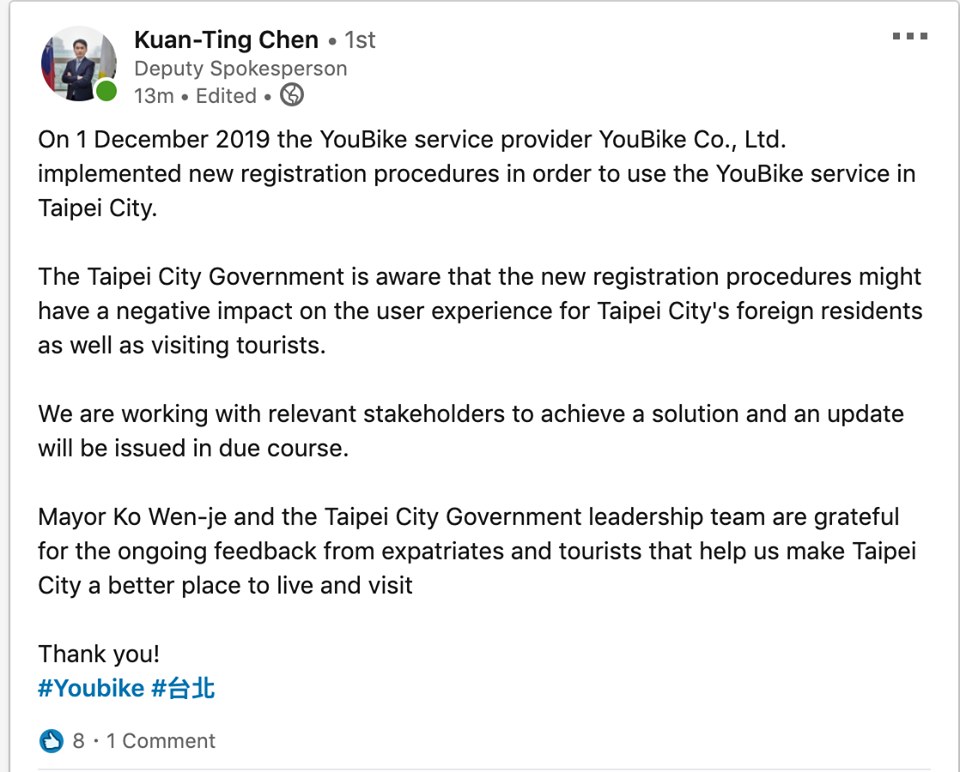
The city government even released a statement acknowledging the volume of complaints:


80731281_3272997529437301_1496665260772294656_o


I honestly believe that in the country I come from, those complaints would have simply been ignored. If a solution came, it would be long after the fact with no clear notification made. (Not that any American cities except New York have remotely acceptable public transportation in the first place, mind you, and even New York's transit smells end-to-end like pee). If you were lucky you might get a form letter in reply that did not actually address your issue in any substantive way.

There are good and bad things to say about the course of events. I'm in a positive "we got stuff done!" in a positive mood, so let's start with the good.

What we've learned from this is that speaking up works. It works!

There were a lot of comments on social media saying we were just "complainers", "first world whiners" or "guests in this country" who should never complain, or that we couldn't possibly get the problem fixed so the only choice was to accept it.

What they didn't realize was that this wasn't whining, it was strategy. The more people make noise, the more likely the problem will get fixed. If even 5% of the people who read this post wrote to the city government, that's still several hundred e-mails they received. 


And we did get the problem fixed, so all those "don't complain, you can't change it" people were simply wrong.

That doesn't mean everything's great because the problem is solved, however.

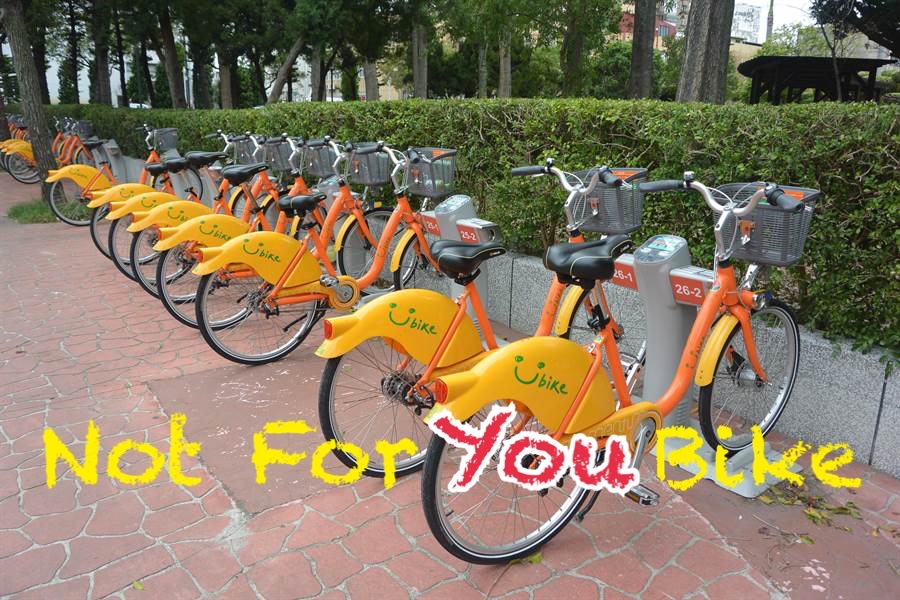
Tourists still have to go through the more cumbersome process of one-time rentals, which require an NT$2000 deposit on a card which is not refunded for up to 15 days. The process also takes a lot longer, and it's frankly silly that Taipei city encourages tourists to get EasyCards but then doesn't make them useable for YouBikes. The city rolled out YouBikes in part to appeal to tourists, and routinely recommends tourists use them (here's one example, originally published in Taipei magazine. Making rentals annoying and expensive for tourists is self-defeating when all they have to do is add code to the system that opts foreign visitors out of the new insurance scheme that caused this whole mess. 


And, of course, the quick turnaround we got on this issue does highlight "expat privilege" to an extent. I discussed the issue with a few students who said they didn't think of the Taipei city government as particularly responsive, and we may have gotten the problem solved in a day simply because we were foreigners. Not only that, but we were mostly (though not entirely) white "expat" foreigners who tend to get preferential treatment.

To be frank, that almost certainly played a role. Let's not pretend it didn't. 


Which means that, if we can make change by speaking out as a privileged group, maybe we should do that more often, in service of goals that benefit people who are more likely to be ignored by the powers that be.

Finally, there's the fact that this simply should not have been a problem in the first place. I doubt it was active discrimination, but rather that the impact of the new policy on non-citizens was simply not considered. That results in discriminatory impact. Discrimination can exist in impact just as much as intent (if not more so).

To avoid these sorts of issues in the future, the government can't just passively ignore the foreign community and pretend that's the same as 'not discriminating'. It has to actively consider its actions through the lens of understanding that the city it governs has foreign residents, too, and that its tourism strategy should be coherent and synchronized across departments. 

Monday, December 16, 2019

Youbike discriminates against foreigners

Untitled


It feels as though every time life in Taiwan for the foreign community gets better - websites improve, companies will take our resident visa numbers rather than saying they're "invalid" - it's inevitable that soon, it'll also get a little bit worse. Two steps forward, one step back.

Today, the issue is YouBike.

The Facebook group Taiwan Foreign Residents' Association confirmed just a few hours ago that YouBike, once open to registration by all residents, including foreigners who have made Taiwan their home, now does not allow foreigners to register their EasyCards for use with YouBike.

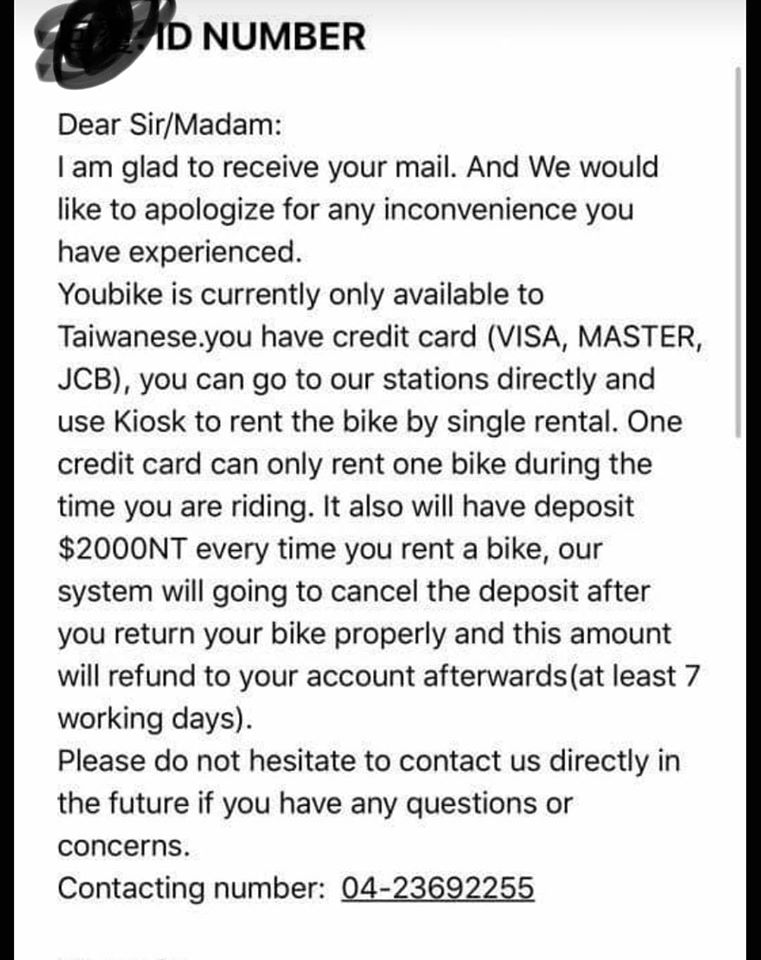
Apparently, the reason is that YouBike now offers personal injury insurance, and such insurance is not available to foreign residents, therefore, no new registrations will be allowed (they had been allowed previously).


79207193_984285061934381_8895619229911351296_o


Of course, there is no reason why they can't offer foreign residents this insurance. We pay taxes and pay into NHI just as citizens do. Many of us - myself included - also pay into labor insurance. We pay our dues, and deserve equal treatment.

Suggestions from YouBike staff so far have been to recommend that we register with a local friend's information - you know, like we're criminals trying to hide - or have a friend rent a bike for us (because of course, we should all have Taiwanese friends with nothing to do willing to come out and meet us every time we want to rent a bike, and also be available to us at our destination when we return the bike. Yeah, right). The other workaround is to rent one on your bank card with a one-time registration and NT$2000 deposit.

Nevermind that NT$2000 - around US$60 - is a lot of money in the local economy for something as simple as a bike ride. You do get the money back, but imagine if you rented a YouBike every day. Your bank account would be a mess, with that $2000 deposit coming and going daily. Apparently it can take up to 15 days to be refunded, but if you ride YouBike every day, does that mean every 15 days you have to hand the government NT$30,000 in deposits? If you ride it twice a day - say, to and from work - that's NT$60,000, more than the average local salary.

How is someone supposed to stay on top of their finances that way? Do they expect that foreigners will only rent YouBikes occasionally? I know people who rent one every single day. 


The other suggestion, apparently, is to giggle at the person calling because there are no other options.

Let me be clear: this is discriminatory. It is unfair. We have made Taiwan our home. We live here, work here and pay taxes here. YouBike is a government project. It is simply not acceptable to withhold government services to foreigners as though we are second-class citizens. Unwanted, untrustworthy.

Is this the face Taiwan and YouBike want to present to the world? The famous hospitality and friendliness of Taiwan, oh, except you can never truly live here as a normal person, we'll always make life difficult for you for no reason at all?

If Taiwan wants to open up to the world, to be an international nation and Taipei and international city, it must do better. It cannot treat foreigners like undesirable scum. We are not criminals. We work and pay into the system like everyone else, and so we deserve the same transportation benefits as everyone else. Period.

Even tourist deserve better - part of the whole point of YouBike is to encourage tourism by helping people get out of the city. Taipei Magazine routinely suggests tourist itineraries that use YouBike - how do they expect tourists to use it if they can't even register with the EasyCards they're going to get? Do you really think they'll pay NT$20,000 for every YouBike rental on their visit, to be refunded long after they leave? It's ridiculous!

It shouldn't be hard for the time being to create a registration system that opts out all registrants without a National ID. Hopefully the law will be changed to allow residents to participate in the insurance scheme, but for now that would be a sensible workaround.

In fact, what happens if a friend does register for you, and there's a crash? Does the insurance apply? If not, can't you sue, as technically the insurance was activated upon registration? If that's the case, doesn't that just create more confusion? If current users can still access the system, what happens if they are in a crash? The workaround suggestion negates the rationale for the change.

Finally, aren't the format of ARC and APRC numbers supposed to change soon, to match national ID numbers? What happens then? The whole thing is a mess. It doesn't make sense, meaning the reason boils down not to regulatory issues, but idiotic, discriminatory, self-defeating and short-sighted decisions.


Do better, Taipei. Do better, Taiwan. And do better, YouBike. 


If you want to complain to YouBike, you cannot contact them from their website because that requires a national ID card number. ARC numbers are not accepted. But you can email or call them:

City Hotline: 1999, ext. 5855 / 02-89785511
service-taipei@youbike.com.tw

Or, you can send a complaint to the Taipei City government under the "simple petition system" here. You can leave the National ID section blank (unlike on the YouBike website).

I suggest you do all of those things. Let's make them feel this.

This is what I wrote:

Hi, 
I'm writing because it's becoming well-known in the foreign community in Taiwan that Youbike is no longer offering Easycard registrations for foreigners who live here, even if we are permanent residents or otherwise have a resident visa. 
This is unfair and discriminatory. We pay taxes and pay into National Health Insurance (so insurance issues should not be a reason to discriminate). I personally have lived here for over 13 years; to say that I cannot access the same services as other Taipei residents makes me feel like an unwanted, second-class citizen. Is this the face Taiwan and Youbike want to show the world? That they are unfriendly - even hostile - to foreigners? 
Having to put down an NT$2000 deposit is simply not fair for people who have built their lives in Taiwan. We are not tourists. We are *residents* and we live, work and pay taxes like *residents*. We deserve to be treated like *residents*, not "scary foreigners" who can't be trusted. We are not criminals! 
Taiwan must do better, and Youbike must do better.
I am sure that this story will hit the media soon, so I request kindly that the policy be changed as soon as possible to end all unfair discrimination against the foreign community here. 
Best regards, 
Jenna Cody


Friday, December 13, 2019

'Tis the season: 2020 campaign posters (with extremely biased commentary!)

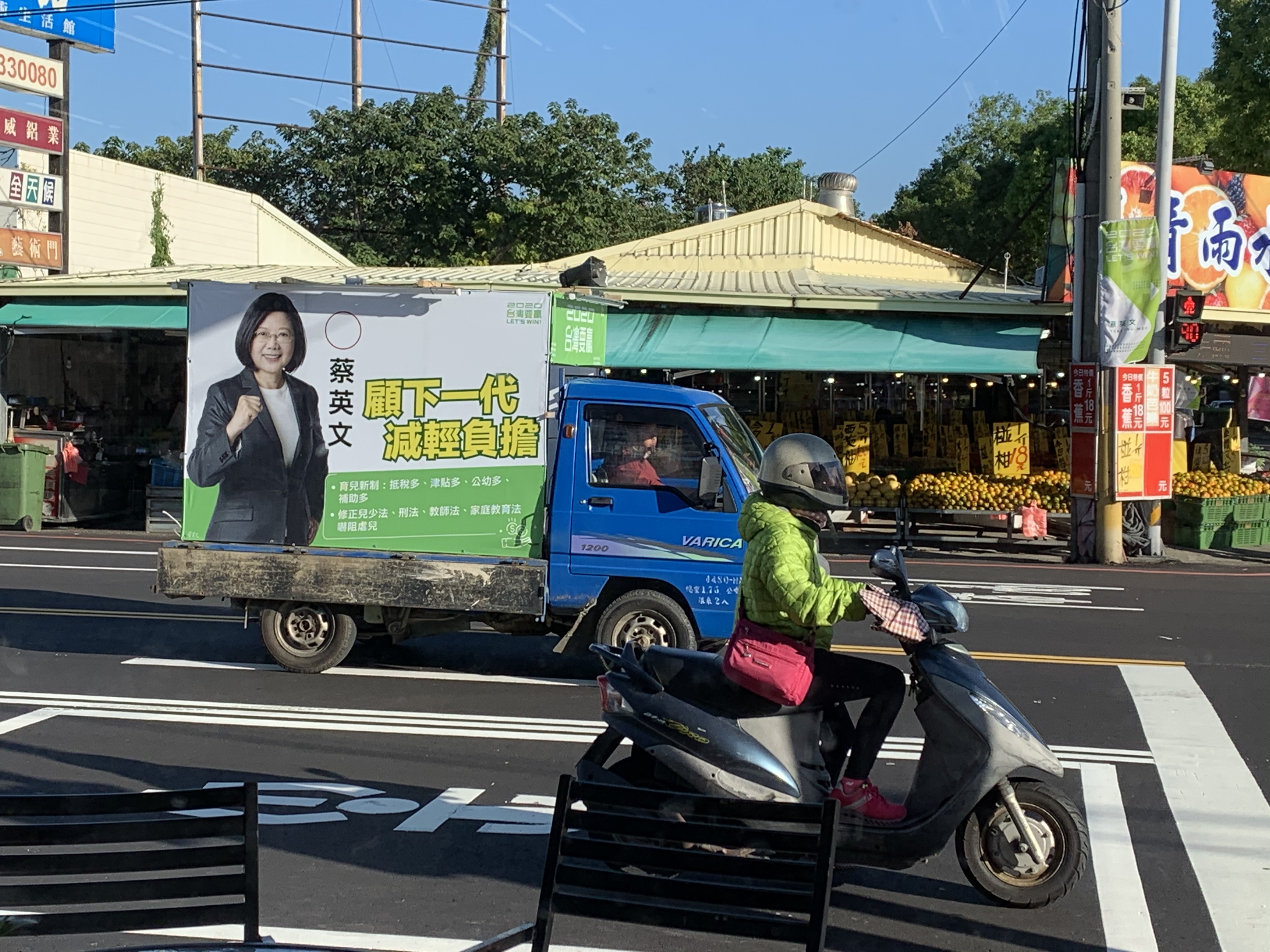
Untitled


Since no other blogs are left that do this, I've decided to put up a few that I've collected this year. Although this isn't the most interesting one, I've decided to start with it because I didn't want the KMT to get the headlining photo. It's a typical noise truck on the outskirts of Miaoli, and says "Look to the next generation, alleviate [their] burden" - in line with Tsai's youth-vote focused campaign.


Untitled

In Beitou (northern Taipei), we have Wang Zhi-bing (Zhibing meaning something like "Aspiring Ice" which is an interesting thing to be called).

Anyway, the poster and candidate are both noteworthy - look at the slogan. She deliberately uses ㄟ to represent 的, a way of showing that what you're writing is meant to be read in Taiwanese. That's rare for a KMT candidate unless they're trying to pander to a Taiwanese-speaking electorate (Ma Ying-jeou would occasionally deliver prepared speeches in Taiwanese, especially on 228, and he was terrible at it.)

You wouldn't think of Beitou necessarily as a Taiwanese-speaking area, but if you walk in the backstreets around Beitou MRT, you'll find that it actually is, at least to some extent. So this is probably a smart campaign move.

Because it could be Taiwanese and not Mandarin, I'm not sure if my translation is correct, but 尚好 means "best" or "first class" - the literal translation then is "first-class election". It's a positive message, and if you look Wang Zhibing up, you'll learn that she has a close friendship with at least one DPP legislator in her district, He Zhiwei, from their time as city councilors, and has even helped campaign for him. They both encouraged each other when they went to register for the legislative race.

Maybe I'm not reading enough into it, but I think that's nice. Maybe her use of Taiwanese is genuine!

Wang and her good buddy He Zhiwei are not running against each other, as they're in different legislative districts. Wang's DPP opponent is Wu Siyao.

That's related to the poster below, with the inspiring message, "I'm here!"


Untitled

This is "unaffiliated" candidate Li Wanyu.

I don't really know what's up with her party-wise right now, and I thought she might be a pan-blue/unificationist/New Party type from the color of her sign, but no. She's formerly (and then again?) DPP, has close ties to Chen Shui-bian, and apparently joined the Taiwan Action Party Alliance  (一邊一國黨, also known as TAPA) recently, a party closely associated with Chen.

No, I didn't know any of that off the top of my head. I looked her up.

Anyway, Li Wanyu has a...colorful personal history. Two incidents of public drunkenness in her past continue to haunt her image, and apparently the second time around she had to spend 20 days in jail after being convicted of hitting a police officer. There are other bits and bobs of personal gossip going around too, that I won't bother with because I don't care. Apparently in 2014 she was expelled from the DPP for voting for herself in some internal election, but was later allowed to re-enter the party.

So, Li is also running against Wu Siyao, which means she's also in the race against Wang Zhibing above (even though I am pretty certain I took these photos in two very different neighborhoods, I suppose the district is large-ish). There was a bit of a political kerfuffle recently when former president Chen went to a book signing with Li Wanyu, and seemed to be supporting her over DPP candidate Wu.

But then that's hardly surprising - Chen is TAPA, she's TAPA even though she's running as "unaffiliated" (at least that's what her poster says). Who would expect otherwise?

Ugh. So now we turn to...blatant slogan thieves!


Untitled


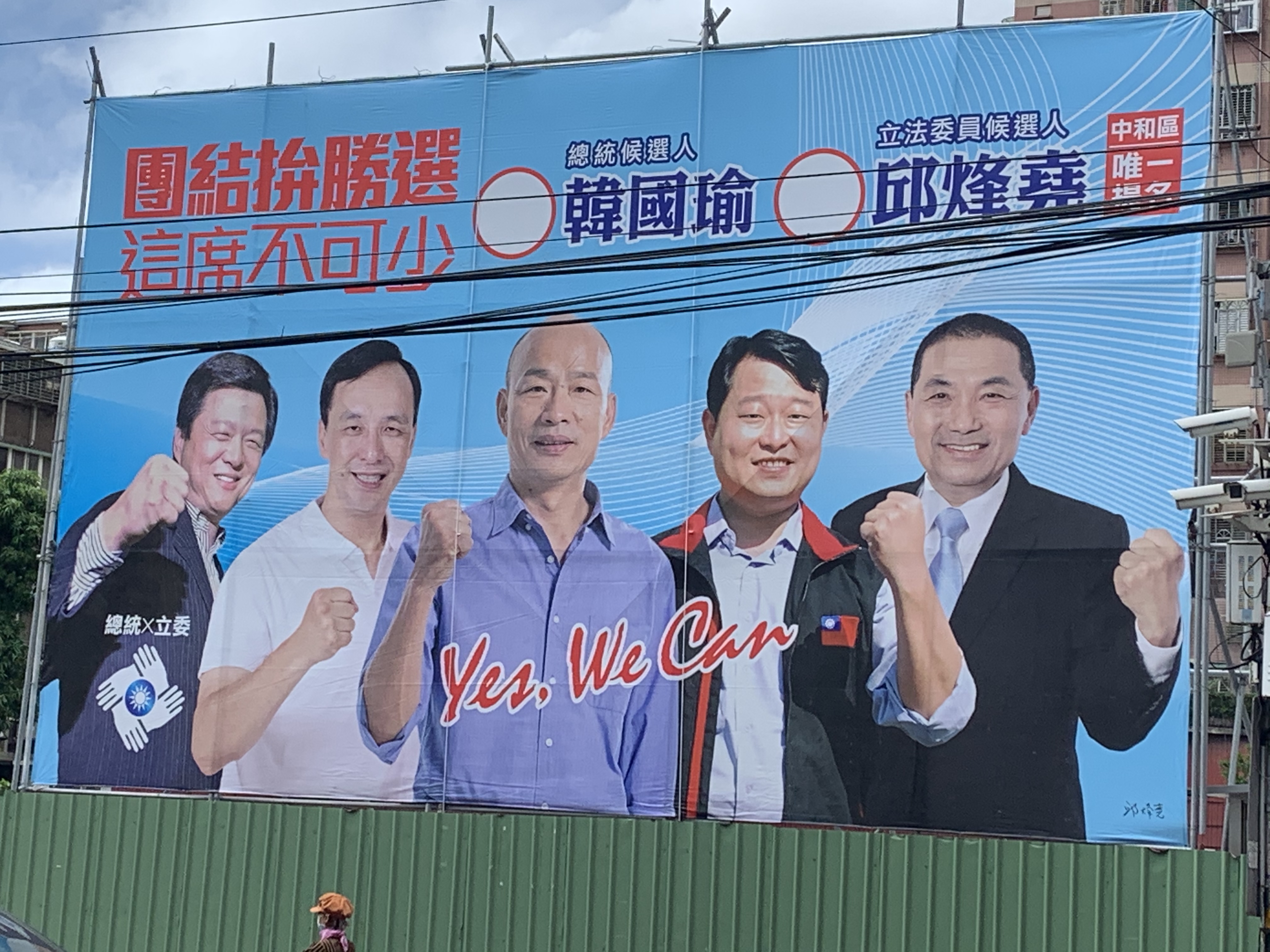
This poster in Zhonghe, near Burma Street, features Some Guy, Mr. Generic (that's former New Taipei mayor Eric Chu, which you may have forgotten because he's just that boring), Big Uncle Dirk, Poppin' Fresh (whom I think is actually the candidate here, Chiu Feng-yao, and yes, calling him Poppin' Fresh is super mean and uncalled-for but I'm not sorry), and Hou You-yi, the current New Taipei mayor, who seems to be genuinely kinda popular. Brendan's first comment is that they're positioned in such a way that they look like those Chinese god idols, when there's more than one on an altar.

It seems Chiu is already a city councilor who is now running for the legislature.

I noted that, although I don't like any of these guys, at least two people on this poster appear to be reasonably competent at their jobs. No, the current presidential candidate in the middle is not one of them.

Both of us noted that their slogan isn't exactly original, and isn't even current as of the 2010s. I do understand that English on these signs is often merely decorative and few people who can actually vote will bother to read it, even if they're able to (which, honestly, most people in greater Taipei are).

But still. Don't you even want to try?

Aaaaanyway, the slogan here is "Unite to win the election, this seat is indispensable". Which is about as exciting as Eric Chu.

I still can't figure out who the guy on the far left is. I know Chiu has campaigned with Lin De-fu, but unless that's heavily photohopped to make him look less like a grandpa and to have a full head of shiny hair, it ain't him.

Oh yeah, and I also pointed out when we were gazing in awe at how this poster manages to be terrible and boring at the same time, that they are all men. While I'm willing to criticize the DPP for not doing enough to promote female visibility in the party, it would be impossible for them to make a sign like this without at least one woman. That is - the president.

In other words, I think this poster could use some improvements.


Untitled 

Untitled


Here's Wang Zhibing again, this time posing with Han Kuo-yu (ugh, maybe I don't think she's so okay after all) with a whole 'let's win the boxing match' theme going on. Cute.

Time for a palate-cleanser. 


We're back at the DPP, this time with Da'an/Wenshan legislative candidate, Hsieh Pei-fen. Since Empty Suit Chiang Nai-hsin decided to retire (despite his campaign posters as recently as a few years ago still using photos of him in his 40s), this seat is up for grabs. KMT rising star and whiny tantrum-thrower Lin Yi-hua is running for the KMT, and the DPP is putting up Hsieh, who at age 32 - so the DPP really is trying to run a few younger candidates - has graduated from Harvard Law and NTU and worked in international affairs ever since, with an impressive string of credentials. 


I'm not biased, of course. 

She'll probably lose because this is Da'an, but it will give her exposure. I'm just pleased the DPP is bothering to run a real candidate. It shows they think this race is worth fighting for. The other guy is Wang Minsheng, a city councilor whose office is in that building. 

Back to the KMT. 


Untitled


This vaguely interests me because it shows the KMT thinks Ma Ying-jeou still has star power, despite everyone hating him and even KMT voters heckling him at a Han rally. After learning the hard way what Taiwanese think about the 1992 Consensus, it's interesting as well that they give it such a prominent place on this poster, which has all the KMT symbolism just crammed in. We've got:

- Only men
- Many shades of blue
- Two prominent KMT "white sun on a blue sky" symbols, one on the ROC flag and the other on Han's Taiwanese Political Candidate/Taiwanese Grandpa vest (the DPP's fashion choices this year are way better, I have to say)
- The word "KMT" on two articles of clothing
- A reference to the 1992 consensus

- FISTS! (Except for Ma, who probably can't make a fist). Also, arm-crossing which I think they think is aggressive and business-y but just comes across as weird and defensive.
- A signal that they still think they are the party of a strong economy (as though we haven't figured out that, to the extent that's true - which it isn't really - it's because China helps them)

Also get a load of the "We Shall Return" logo on Ma's shirt. LOL.

The slogan here is "1992 Consensus, Fight for the economy". From trying to re-group after 2016 and perhaps rethink the way they approached voters, they seem to be trying to roar back into power by taking a hard right turn back to their old-school platforms. 


The candidate here is Lai Shi-bao (Shih-pao? My Romanization is all over the place today), who seems to be trying to look younger with the hoodie and all. He's actually 68 years old, and very old-school KMT (minority leader in the legislature...and more. Basically super establishment).

Apparently this sign has appeared in more than one place, and there's a bit of a public debate going on about whether it's even a good idea to campaign on promoting the 1992 Consensus. Is it conspiracy-mongering tinfoil hattism to suggest that perhaps the CCP is directing the KMT to campaign this way - whether blatantly or tacitly - because it is just that tone-deaf?

In any case, apparently in another area where this poster appeared, DPP opponent Ruan Zhaoxiong put up a sign directly beneath it saying "the 1992 Consensus is One Country Two Systems" (a phrase which is even more unpopular in Taiwan). 


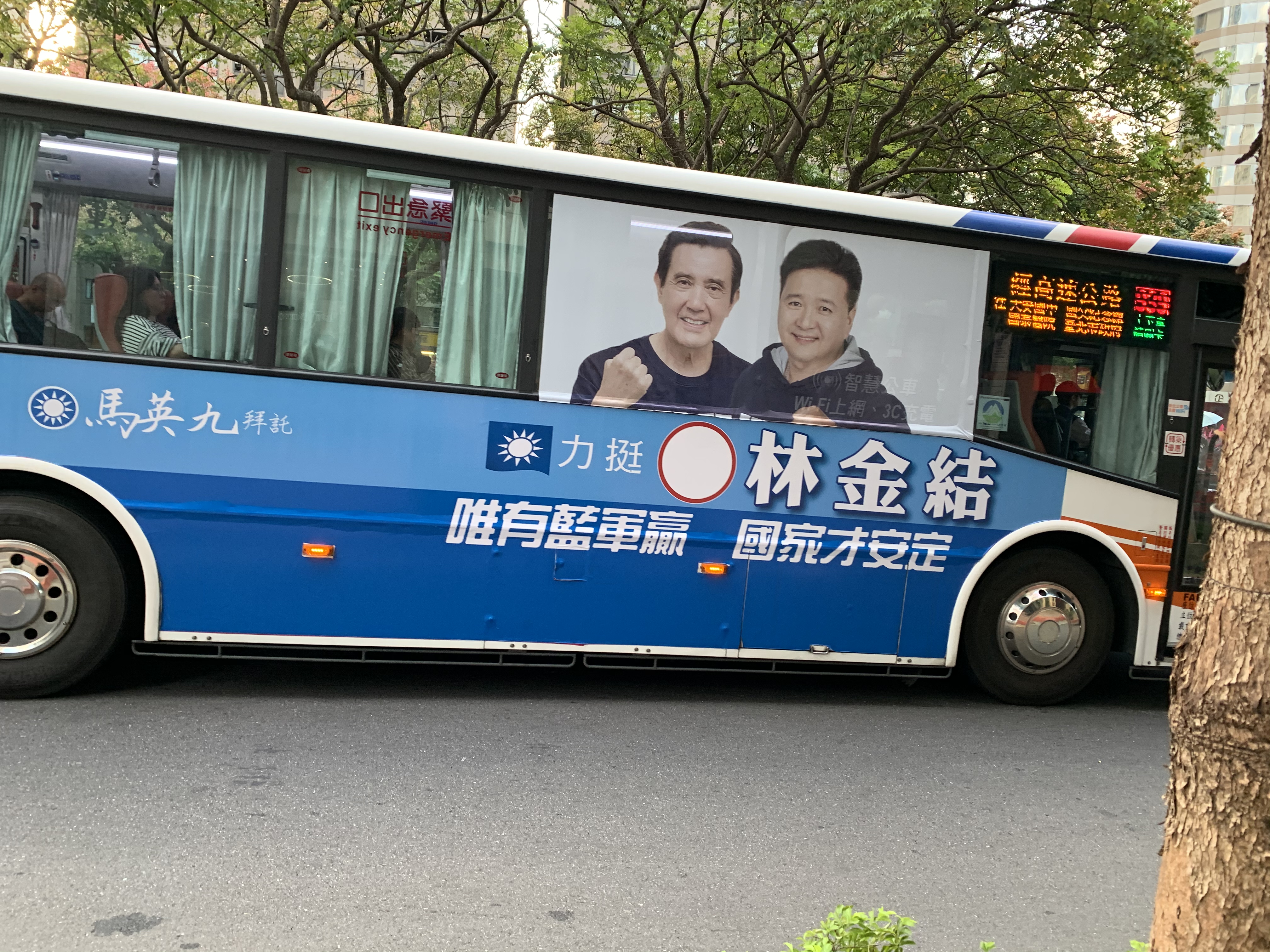
Here's a campaign poster on a bus that also includes Ma Ying-jeou (who apparently can make a half-hearted fist). 


Untitled


He's with Lin Jin-jie  - and no, I'm not even bothering to try and standardize my Romanization. Lin is a candidate in New Taipei (Tucheng and Sanxia). He doesn't seem that interesting except that Terry Gou, who I suppose is a Big Man in the Tucheng area, where there is a big and rather ugly industrial park, and they don't seem to get along. Apparently people are not optimistic about his chances, and Gou has said "he won't be elected".

That photo is heavily photoshopped - the real Lin Jin-jie looks quite a bit older.

The slogan is "support the blue army to win, only then will the country have peace of mind" (it sounds better, though not less boring, in Mandarin).

The irony of that is staggering, seeing as it's the "blue army" that is routinely accused of working with China to undermine the country. Anyway, "an ding" (安定)is also a way of referring to a kind of sedative, though I suspect that usage is very rare. Somehow, "support the blue army to win, only then will the nation be heavily tranquilized" sounds more accurate, though.


Untitled


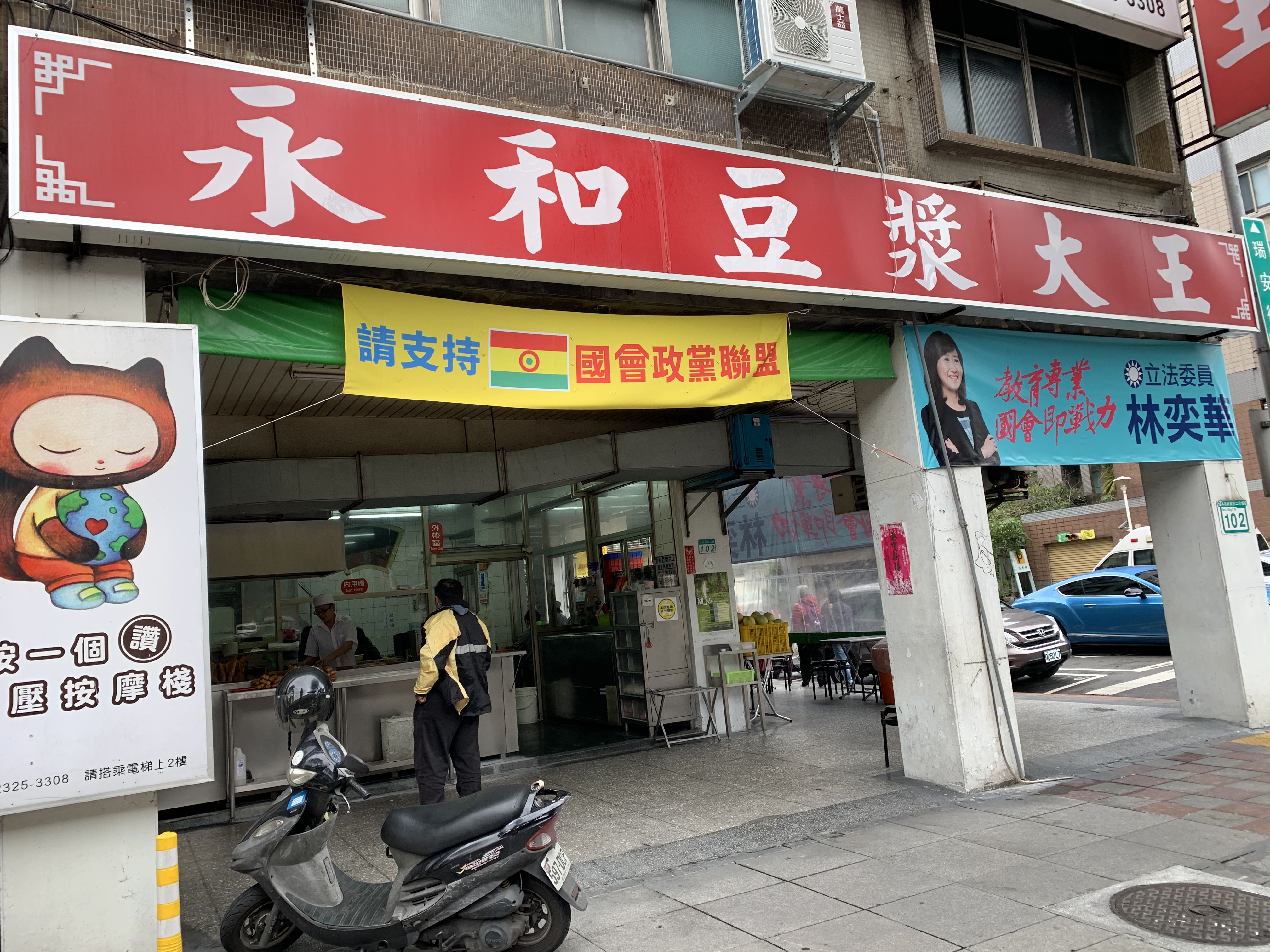
This is Lin Yi-hua - as with other politicians, photoshopped to look younger than she is - on a banner outside my favorite soy milk place on Fuxing Road. Lin is running against Hsieh Pei-fen in Da'an and Wenhua, and she pretends to be ill for political gain.

That's a shame; this Yonghe Soy Milk's breakfast grub (also, late night grub) is good and they're open 24 hours. The distance and the weird font mean I can't really read the slogan but it has to do with business and education - a platform-based sign. One could do worse.

Next to her, also put up by Yonghe Soy Milk, is a banner for the Congress Party Alliance (國會政黨聯盟). I don't know a lot about them except that they merged with the Minkuotang earlier this year. The Minkuotang has a weird religious component, is basically unificationist, and is pan-blue, so we can assume the Congress Party Alliance is too (apparently the chairman, Wujue Miaotian, is also a cultish religious figure and is the chairman of the newly-merged single party).

They strike me as creepy, and I'm not sure what's up with Yonghe Soy Milk in that they put up both a standard KMT banner (which I guess I can ignore) alongside the weird cult people banner. 


This is a poster in a rural part of Miaoli Country for Chu Ying-hao, an unaffiliated candidate running against a KMT incumbent (Miaoli is super blue). I don't know if there's a DPP candidate campaigning as well, but they seem to be making a real effort to get whatever minority votes there are in Miaoli to come out for President Tsai, so maybe. 

Nobody seems to know much about Chu, as he's a political newcomer. His main platform seems to be "more funding for Miaoli!" which will probably appeal to voters there - remember Miaoli is once the county that went broke thanks in part to simply not having enough money, but mostly due to previous financial mismanagement by the KMTers they keep electing for some reason. 

(I think part of the reason is that Miaoli is heavily Hakka and Hakka voters tend to vote KMT, often though not always out of some deep-seated dislike for the old Hoklo chauvinism of the DPP, which many refuse to believe is waning. I'm not sure it matters, even, that Tsai is part Hakka.) 


Untitled


In fact, I spent the whole weekend in Miaoli and took as many campaign poster photos as I could.

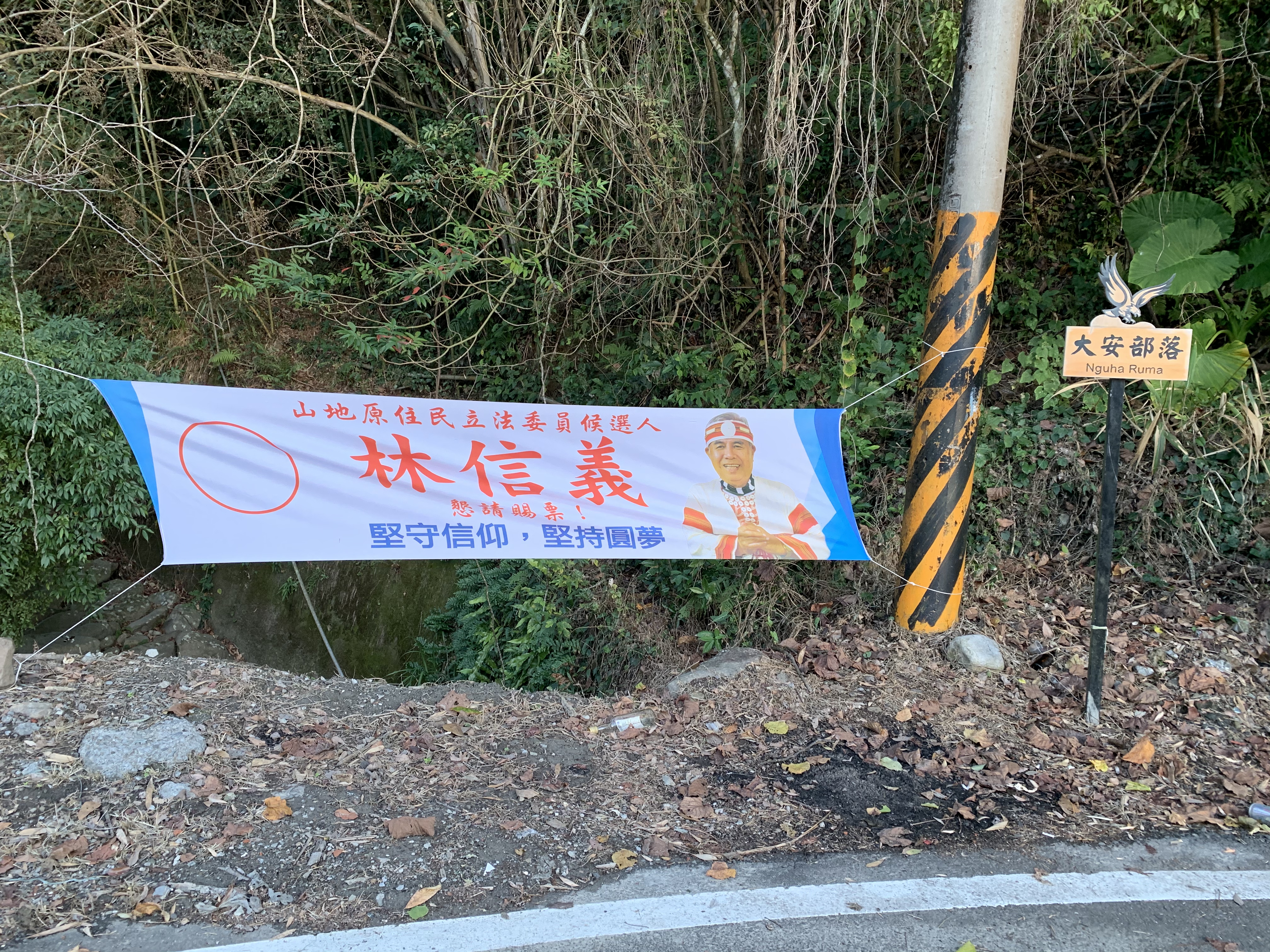
At one point we got a little turned around up in the mountains and ended up in the small Indigenous village of Da'an. Candidates here campaign heavily on their Indigenous heritage - this poster above for Wu Li-hua references the "dreams of the Indigenous people" and the full autumn moon (not only is Mid-Autumn Festival important to Taiwanese with ancestry from China, but a fair number of Indigenous festivals take place around that time as well.)

Untitled


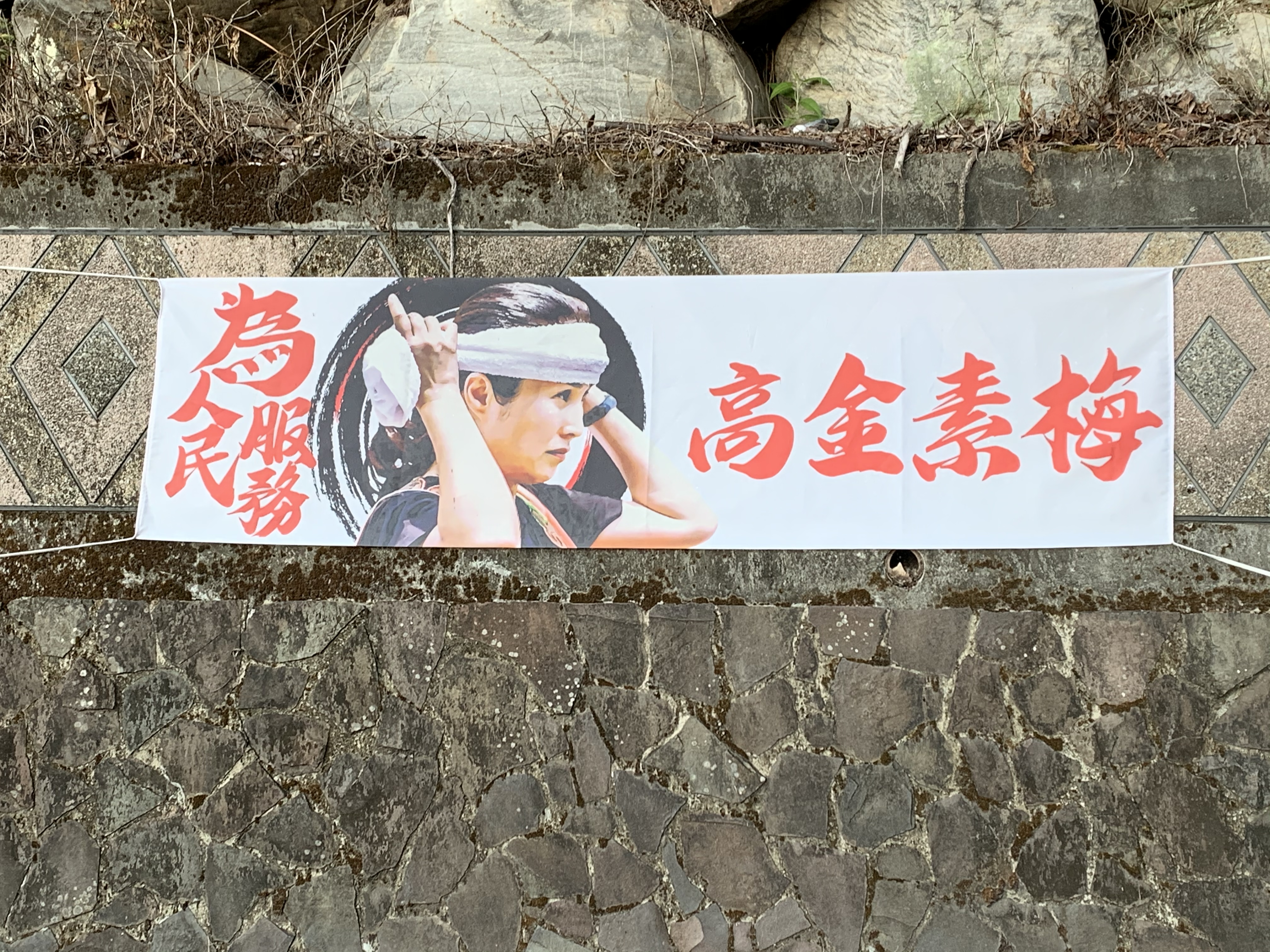
This one - with the ultra-boring slogan "To Serve The People" - is for May Chin (Gao Jin Su Mei or Ciwas Ali), a famous actress-cum-politician with Atayal (and Manchu) heritage. You may know her from Ang Lee's The Wedding Banquet. She's a member of the highly-partisan Non-Partisan Solidarity Union. On the good side, she's a strong advocate of Indigenous rights. On the other hand, she's also a unificationist.

Untitled


Running for re-election to the legislature is Lin Hsin-yi. No, not the former Vice Premier under Chen Shui-bian (I had to check too - in any case, the Indigenous population also tends to vote blue despite the KMT not caring one whit about them). This Lin Hsin-yi is not affiliated with a party and has criticized both the DPP and KMT sharply for not caring about Indigenous rights. I'm not sure why he's campaigning in Miaoli as he seems to be more closely associated with Fuxing township in Taoyuan, and at least used to be KMT? Not sure.

His slogan is "Hold fast to faith, hold fast to fulfilling your dreams". The first part is pretty standard, as Indigenous Taiwanese also tend to be Christian.

Anecdotally, I feel like even just ten years ago, it was common for whatever KMTer wanted to win to just show up and shake some hands in Indigenous areas, and then once elected proceed to do nothing at all for them. So it's interesting to me that now, it seems to win in an Indigenous area, Indigenous candidates lean heavily on their heritage. 


Untitled


There's not a lot to say about this absolutely huge and yet utterly boring poster for the DPP. The guy on the left is Luo Gui-xing (who is almost certainly Hakka - if you are a Luo from Miaoli, that's a dead giveaway). I can't see who the guy on the right is.

I can't find much about Mr. Luo, except that he was previously elected to the Miaoli County Council. Not sure how I feel about the square hair, though.

This is a good chance for me to opine on the DPP's slogan, however.

In Chinese, I like it. In English - yawn.


The Chinese is an adorable and lovely pun - "we want to win" sounds just like "We want Ying [the nickname of Tsai Ing-wen, who actively campaigns as 'Little Ying']". In English, "Let's Win" is pretty uninspired, though at least it's not stolen like 'Yes We Can'.

The good news is that I doubt Taiwanese voters care, even if they can read it. The blandness probably doesn't matter. 


Then there's this guy:

Untitled

Untitled


Oh, Lin Yu-fang, how I hate you so.

I really hate this guy. He was defeated in 2016 by rock star and Sexy Legislator Freddy Lim, after a dirty and hateful campaign making fun of Freddy's hair (saying that men with long hair are 'abnormal') and putting up legitimately scary pro-death penalty posters near elementary schools, which said things like "Freddy Lim will let murderers walk free" (Freddy is against capital punishment, like a sensible sexy person.)

I know I don't have a leg to stand on being all indignant about making fun of Freddy's sexy, sexy hair, seeing as earlier in this post I called a guy Poppin' Fresh. But I'm still not sorry. Anyway, I'm a blogger, not someone working on campaign messaging.


Anyway, he might win his seat back, which sucks. Freddy's got a shot at re-election, but it seems at least one major temple in their very temple-heavy district  - Qingshan Gong or the Green Mountain Temple - has decided to endorse Lin Yu-fang. I thought at first that allowing him to come pray at the head of the festival parade was just something the temple allowed candidates to do, but the two giant posters on either side of the temple point to more active support. 

I can't read the first poster as the photo got cut off, but the second one has him posing in front of a little cartoon boring place. I think the message is, Make Wanhua Boring Again! 


In truth, the message is "finish the MRT, push urban renewal". Seeing as the KMT's version of "urban renewal" is "tear down things that are interesting without giving adequate compensation to current residents, and build things that suck", I suspect Make Wanhua Boring Again is the more accurate phrase.

Gross. 


Here's Sincere (and Sexy) Freddy Lim's noise truck rolling down Zhongxiao Road so you don't have to think about Lin Yu-fang anymore. 

Untitled


Though to be honest, they've sort of toned down the rocker look and hidden his hair for this campaign. He looks just like a normal guy here, but I am sure if re-elected he will once again morph into Sexy Legislator Freddy Lim.

In contrast to Lin Yu-fang's ads, which look like 1980s commercials for liver pills and real estate, Freddy's ad is bright, fresh and has clean lines and clear messaging.

Again, not that I'm biased or anything.