Wednesday, April 15, 2020

Of #nnevvy, Subaltern Linguistics and Global Divides (social justice language and authoritarian agendas: Part 2 of Zillions)

EVa8cJ0U0AADuDf-1


Strap in, folks, because this post goes to a few different places.

Anyone who cares about regional politics in Asia and hangs out on Twitter was treated to an absolute delight recently, when the hashtag #nnevvy went stratospheric. The details don't exactly matter - some movie star's girlfriend, named Nevvy, said she was dressing like a "Taiwanese girl", some Chinese Twitter users (and by "users" I mean a combination of real users, paid trolls, and bots) got mad and...honestly, who cares. The trolls look for reasons to get angry, so the actual reasons generally don't matter.

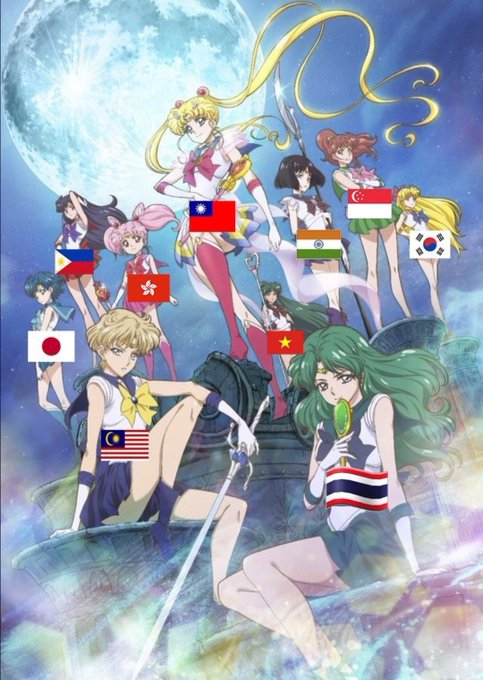
This caused huge numbers of young, progressive, socially-networked Thais to start roasting the Chinese trolls, whose insults about their king, government, level of economic development etc. didn't work. The big joke among Thais, of course, was that they actually love dunking on their government and new king, and basically pulled the century's greatest "Yes, And" on the trolls, trolling them back with Tiananmen Square and insisting Taiwan and Hong Kong were independent. Young people across Asia started getting in on the fun, including scores of Taiwanese. Among them you could find people from India, Malaysia, Hong Kong, Japan, South Korea and the Philippines and more all coming together to roast Chinese Internet users (yes, there were several "Avengers, Assemble!" memes, because of course there were).


93257519_225809478698172_6195074412731957248_n


I noticed two things about this, before I get into what I really want to say. First, I adore the sarcastic nihilism, the absolute existential absurdity, of the expert use of "Yes, And". It's an interesting contrast to the deadpan ironic humor of Taiwan, which often veers either into mildly dirty jokes (e.g. intentionally labeling a hair dryer "Blowing With Love") or wordplay.

So if you're ever tempted to go off on some Chad rant about how this or that group of Asians "has no sense of humor", I kindly suggest that you follow the advice of the hair dryer. 


Second, I am loving on the subaltern linguistics of it all. One will still meet English teachers and students who think of "learning English" language as a foreign system to be acquired (Pennycook and others call this langue).

What we saw with #nnevvy, however, was not langue - it was people from across Asia either translanguaging (using their own language and translation tools as necessary to be understood in a second language), or using often-imperfect English in order to negotiate and express meaning - not to 'inner circle' White native speakers, but other non-native speakers, for their own purposes. White-People-English had nothing to do with it. This is parole - language in performance.

The choice of English for these international exchanges occurred naturally in the moment, in the minds of users, but the fact that English was there to be used - enough of them had studied it and younger generations across Asia grow increasingly more adept at it - was neither a natural occurrence nor a neutral one. It was, of course, the role of imperialism both overtly (colonial) and implicitly
 (economic).

But the spread of English on the back of colonialism (both neo- and the regular kind) doesn't mean that it cannot be appropriated, or that its use cannot be empowering. If anything, these days in Asia the linguistic imperialism mantle has switched to Mandarin - again, a change that is neither natural nor neutral, and of dubious benefit. Of course, this is in line with China's attempts to step up to the plate as both regional and global hegemon. With this comes a healthy dose of Han supremacy, and tied to that, linguistic imperialism.

So when a bunch of people from various nations across Asia - some of whom speak Mandarin but many of whom don't - needed to take a collective dump on the regional supremacist jerk and their drone army of bots and trolls, they chose not the language of those bots and trolls (Mandarin), but the choice that has, by circumstance, become more neutral and therefore ripe for appropriation.

Honestly, I'm kind of waiting for the West to figure this out, because so many people seem to think the only flavor available at Ye Olde Supremacy Shoppe is vanilla White. 


EVZ1mGJU4AEbOLM


The main reason I found #nnevvy interesting, however, is how neatly it tears down a construct that the CCP is absolutely desperate to promote: the East-West divide. So many of their arguments - this is how we do things here, you can never understand our 5,000 years of culture, Asian-style democracy (thankfully no longer a buzzword), you're using Western thinking to try to understand Eastern ways but you can't push that imperialism on us! - are predicated on this.

Why? Because Westerners often buy it and then all their Orientalist fantasy "worldliness". Because if a person from "the East" insists it's true, it's difficult for a person from "the West" to contradict them without sounding like an ethnocentrist (this is actually a massive issue in intercultural communication, with no clear answers). Or worst, a "colonizer". Because it gives them a handy platform from which to say "you can't tell us what to do", which they then promptly use to tell the rest of Asia what to do. Because it gives them a region - a bloc of people supposedly "like them" - which they can then dominate without "the West" complaining too much, because to them, it looks like Asians working with Asians which sure seems a lot more PC than Westerners doing the same thing.

This is all cloaked in the language of pan-Asian cooperation - after all, why shouldn't the dominant voices from Asia be Asian? I'd certainly agree with that, when it's meant sincerely.

But, of course, the CCP's actual goal is to become the dominant voice from Asia, not to participate in (or even benignly lead) a cooperative effort. They squash rather than uplift the marginalized voices that are inconvenient to this narrative.

Cultural differences between regions do exist, on a broad scale. But there is no "East" and "West", but rather a variety of communities within each, with their own power and privilege differentials. There are people who believe in freedom, and those who believe in authoritarianism with many shades in between. There are people on an entire spectrum of liberal to conservative, and young people across Asia increasingly differ in values from their elders. They may express it differently, so you might not have noticed, but it's there. 


These ideas straddle "East" and "West", to the point that a little cultural adaptation goes a long way when befriending locals my age or slightly younger, whereas I suspect my Grandma L., were she still alive, would get along quite well with a typical KMT Taiwanese Christian Auntie.

To the extent the idea is useful, it's to demarcate an extremely fuzzy boundary for the purpose of examination, with the hope of deepening knowledge, exploring intersectionality and building inclusivity, not creating new fiefdoms for new pantsless bear-kings.


Basically, you can tell they're full of shit not because they voiced the idea of an "East"-"West" cleavage, but by what they want to accomplish by advancing it.

It also serves the CCP's purpose to convince you this divide means that "democracy" and "human rights" are inherently "Western" and therefore not suitable for "Eastern" people. And boom, you've just been talked out of believing that democracy may not be perfect but it's sure better than dictatorship, that human rights are universal for a reason, or even believing that these are false constructs of "Western" imperialists - imperialism is only "Western" in this worldview, see - there's no Han or Chinese imperialism possible. That's pretty convenient, eh? You've conveniently forgotten how many Asian nations are successful democracies and want to stay that way, including Taiwan! You definitely don't remember that human rights have been defined by an organization - the UN - which has Asian members.

In fact, you may even become convinced that Asian countries, like Taiwan, who ascribe to certain so-called "Western" values and try to build sincere, friendly relations with Western nations are filthy dens of evil capitalist brainwashed colonizer sympathizers. You might start thinking of them as one of the "bad" guys, because they've teamed up with the Evil West and don't want to cooperate with their friendly local hegemon.

If you go down this path, you've talked yourself into believing that you support people across Asia by opposing "Western imperialism", when all you've really done is become a useful idiot for the power that seeks to rule them.


Take one look at #nnevvy, however, and you'll see it's all a ruse. So many people across Asia can't stand the CCP, and can't stand their cyber-armies of rabid nationalists (both the real ones and the bots). I mean, it felt like almost all of Asia just teamed up to take them down, so the idea that they're all on some sort of "same side" and China is simply the munificent and benevolent leader of that "side" is a joke.

Honestly, if you're a long-time reader, you know all this. Even a casual visitor has probably got a clue.

But you'd be shocked how many tankie so-called leftist Westerners there are who still haven't figured this stuff out. They tend to substitute viciousness for evidence, and as such I find them hard to talk to, so I'm not really sure how to help them see the toxicity, authoritarianism, anti-Asian racism and straight-up Orientalism of their views, all cloaked in the 'social justice' language of supporting people of color. All while making excuses to deny those people of color the same rights and freedoms they themselves enjoy.

I have more to say about global divides and suddenly believing ideas like human rights are "relative", but will save those for future posts.

In the meantime: 

Sunday, April 12, 2020

The CCP uses social justice language to advance an authoritarian agenda: Part 1 of Zillions


First, I apologize for not blogging much. It's dissertation time. I said blogs would be more rare, and I meant it. It'll be like this through June, if not longer. But, every once in awhile I can catch a breather, and today is one of those days.

Now, with that aside...

There’s something I want to talk about, which has a lot of associated bits and pieces, which begins and ends with the CCP adopting the language of the social justice left to advance an authoritarian, right-wing agenda. This is the first part of that, let’s see how far I get into a series of posts exploring it further before my dissertation takes.

As everyone in Taiwan knows by now, the Director-General of the WHO, Dr. Tedros Adhanom Ghebreyesus, accused Taiwan of online attacks that included racism and death threats. I won't summarize: there are plenty of sources for that (New Bloom includes a video link with relevant comments). Some say the director - whom I'll call Tedros as that's how he's referred to on Wikipedia despite (I think) being his given name - accused the Taiwanese government of being behind the attacks. Or, in his exact words: the Ministry of Foreign Affairs (MoFA) knew about the attacks and "didn't disassociate itself" from them.

Which of course it didn't, because why would it need to "disassociate" from the comments of thousands of angry Taiwanese? You only need to do that when the attack is organized. You can tell the difference between this and organized 'cyber armies' because the language used in various posts was novel, not copy-pasted or the same arguments, almost verbatim, again and again. The memes, too, were new and creative in ways that organized troll armies simply cannot (or at least, do not) replicate.

It's almost as though he can't fathom why tens of thousands of Taiwanese people would be furious with him, after he repeatedly denied the existence of their country, ignored early-warning data Taiwan provided, excluded Taiwan from most proceedings, and then peddled (false) Chinese data far too late.

Tedros is not a stupid man. Incompetent, yes, but not stupid. He is capable of understanding the very reasonable explanation behind why he is so reviled in Taiwan. His insistence that this is something else is a choice. It is intentional. It looks quite similar to the tactics the CCP employs when it decides to ignore plain truth and push the narrative it has decided is most convenient.

Were some comments from Taiwanese racist? Almost certainly. I haven't seen them, but racism exists everywhere. However, I've witnessed racism against Southeast Asians in Taiwan and heard stories of racist treatment in Taiwan from friends who are people of color, and I can tell you that the majority of comments were not that: they were attacking Tedros and the WHO for their treatment of Taiwan and poor handling of the coronavirus outbreak - two issues that are now deeply linked.

A lot of the racist comments, it's worth noting, were in Simplified Chinese (or from accounts that only interact with accounts that write in Simplified). A wave of "apologies" from "Taiwanese" (all using identical wording, and all in Simplified) has also since appeared. So, while there was certainly some organic racism in the comments against Tedros, I wonder how much of it was, in fact, organized and planted...by the CCP.

Of course, the CCP has figured out that accusations of racism can, in fact, be weaponized. A person accused of racism defending themselves who is actually guilty of racism sounds exactly like someone who was falsely accused speaking up about it.

Let’s admit it: when you have to defend yourself as definitely not racist!  - very often that just convinces people that you are racist. Only a racist would have to insist they weren't racist, after all. If you're not, it should be obvious. You might be tempted to reach for trite right-wing cliches like "you're playing the race card!" which, honestly, just makes a person sound more racist. Even pointing out that an innocent and a guilty person defending themselves against accusations of racism sound exactly the same, and that such accusations can therefore be weaponized, sounds like a right-wing talking point! There is literally no way out of this discursive cesspit: the only way to go is down.

There are also very reasonable calls for Taiwan to do some self-reflection on the racism that does exist here (both by Han Taiwanese against non-Han Taiwanese, and against foreigners, especially directed at Black and Southeast Asian residents in Taiwan). However, that shifts attention away from the fact that Tedros is intentionally lying about the attacks being 'organized' with the blessing of the Taiwanese government.

Of course, these baseless accusations only take away from the very necessary discussion on real issues of race in Taiwan, but that's also the point.

It will be very difficult indeed to make this point to Western audiences, because generally speaking, racism isn’t weaponized in quite this way. If someone in the West says they are the victim of racist attacks, generally they should be believed. (Exceptions exist: Clarence Thomas comes to mind). You get the occasional White person who insists they’re the victim of racism, but the left usually doesn’t take the bait. They know that racism is prejudice plus power, and that White people have the most power.

I’m not at all sure that this same Western left knows what to do with accusations of racism that don’t involve White people, however. And accusations by a Black person, against a population of Asians, who themselves are marginalized in Asian discourses, supported (and quite possibly created, or at least helped along) by a repressive Asian government that claims to represent a dominant group but in fact doesn’t, in order to attack the democratically-elected government of the marginalized group? When racism exists in that marginalized group, but was not the issue in this particular case? Yikes.

This brings me to the point I really want to make: if you haven't noticed that the CCP has been adopting the language of the social-justice, post-colonial left in order to push what is essentially a right-wing, neo-colonial agenda, you aren't listening. This is just one bomb lobbed from that particular trebuchet.

The point is to deflect the media attention from all the good work Taiwan is doing, pushing their success out of the spotlight by creating a new firestorm for people to pay attention to. This was highlighted by former Sunflower Movement and current DPP member Lin Fei-fan:

我認為理由無他,正是因為台灣正積極協助更多國家的防疫工作,而台灣的防疫成果也正被國際社會肯定。我們不僅輸出手術口罩協助其他國家第一線防疫人員,陳建仁副總統也在昨天接受了國際媒體BBC的專訪分享台灣的防疫經驗。 
台灣正在被國際看見,也被許多國家肯定和感謝,這是中國想要摧毀的一切,也是中國的傳聲筒之所以要攻訐台灣的原因!

My translation:

I think there is no other reason, it is precisely because Taiwan is actively assisting more countries in their epidemic prevention work, and Taiwan ’s epidemic prevention achievements are being recognized by the international community. Not only have we exported surgical masks to assist frontline epidemic prevention staff in other countries, Vice President Chen Chien-jen also accepted an exclusive interview with the BBC yesterday to share Taiwan's experience with epidemic prevention. 
Taiwan is being seen by the world, and it is also being acknowledged and appreciated by many countries. This is everything China wants to destroy, and therefore the reason why China's mouthpiece is attacking Taiwan!" 

Since then, MoFA released the letter it sent to the WHO, and that too has been attacked (either for MoFA “overstepping”, or for them overstating the case that they “tried to warn the WHO” when mostly they were asking for more information, or...whatever.) I’m not particularly interested in this saga (and I’m not the only one). As far as I see it MoFA generally does an amazing job, the letter did raise alarms about what was going on in China, and it shows that Taiwan attempted to use the channels available to it and made no headway. That people are making a big deal over it honestly just feels like more of an attempt to cut down the amount of positive coverage and praise Taiwan is receiving.

The honest truth is that the WHO has done an awful job dealing with thecoronavirus and its refusal to acknowledge Taiwan hinders efforts at protecting global health, while trying to convince the world that it’s done an amazing job. This follows the exact same narrative trajectory of China, and that’s not an accident. While China is still recovering from the outbreak, it continues to try and confuse and destabilize the narrative on Taiwan so the world doesn’t notice that Taiwan has done the best job in the world of handling the pandemic. While the WHO should be focusing on the ongoing global crisis, it’s spending its time challenging Taiwan to fisticuffs because it can’t handle sincere criticism. Again, these matching narratives are not a coincidence.

I want to explore this a lot more, but I’ll save that for the next post.

A lot of people have since pointed out that there’s growing anti-foreigner (and specifically anti-Black, anti-African) racism in China. In fact, it’s always been there but it’s been getting worse thanks to the coronavirus. In Guangzhou, there are reports of exchange students from Africa and other African residents (the city has a fairly large African community) being evicted from hotels, not allowed to buy food, and reduced to sleeping under bridges.

The CCP doesn’t seem to have offered a coherent response, and I tend to agree with those who say it is likely incapable of doing so. Considering that these actions are directly related to the aftermath of coronavirus (plus suddenly forcing people to sleep on the street doesn’t seem like a great move public health-wise even when there’s no global pandemic), you’d think the WHO and Tedros, who are ever so sensitive to issues of racism, and seem to care very deeply about how African people are treated by Asians, would also offer some sort of response or acknowledgement.

You would be wrong.

Compare that to Taiwan, the country accused of  “racism” against Tedros. I spoke out recently regarding businesses in Taiwan discriminating against foreigners. Then, as now, I want to point out that the majority of these businesses changed their policies when approached. Some resisted and had to be complained at rather strongly - calling the discrimination what it was, being told their policies would be publicly blogged about - others were receptive after an initial polite request. Though not all listened to reason, most did.

I didn’t say anything at the time, but while this was happening I reached out to a few friends I have who work in government after one business insisted that “a visiting police unit” suggested such a discriminatory policy, to confirm that this was not a government policy. It certainly was not. (A friend in the Taipei City government actually said, “first, these businesses should be happy to get customers, business is down everywhere. Second, that’s stupid.”)

In fact, I missed it at the time, but it seems Mayor Ko specifically tweeted, asking businesses not to discriminate. Whoever wrote the tweets did not thread them, so I’m just going to post an image:


Although I’d love to have a statement from the national government specifically calling on businesses not to discriminate, this is fantastic, and the issue (mostly) seems to have died down. A few people were denied Airbnb or hotel rooms, but nobody had to sleep under a bridge. Nobody was unable to buy food.

Over in China, reports are that the treatment of Black residents described above is not only not being stopped by the government, but in some cases actively carried out by the police. The Chinese government has offered a few stock phrases - “we treat all foreigners equally” - but not much more than that.

That’s the difference. Those are the facts.

Speaking of “facts”, there’s more I want to say about the CCP using the left’s tendency toward subjectivity and (total) cultural relativism as further excuses for its authoritarian agenda, but I think that’s the subject of a future post.

In the meantime, facts are facts. Don’t be distracted.

Tuesday, March 31, 2020

Hau Pei-tsun is dead now


In this post, I will attempt to say things which are not
specifically negative, per se. I will make factual comments, but facts are facts, they are not negative for the sake of negativity.

Let’s see...

He was alive until recently.

I feel bad for his adult offspring, who did lose a father. That's always sad.

The Presidential Office was super classy about it and expressed their condolences. Regardless of my personal views, that was the right thing to do.

He was not notably ugly, at least in physical appearance. 

The New Party, which he had supported in the past, has not been popular in the past few years.

He opposed Taiwanese independence and identity. It was his right in a liberal democracy to have these views. It is my right in a liberal democracy to have an opinion about those views, and I do.

At some point in the past, he did in fact oppose the CCP. His support of the New Party (unificationists who are known to actively work with the CCP) calls that into question, but his previous dislike of that regime is well-documented.

Further to that, his opinions on Taiwan’s destiny being ultimately as part of China do not enjoy popular support and therefore he can be said to have been fairly harmless in his later years, mostly due to irrelevance.

This shift in Taiwanese identity came about naturally - or was able to emerge thanks to the efforts of activists that brought about democratization, and he was powerless to stop it. 

He was rich.

Stupid and terrible are not the same thing. He was not stupid.

He played a key role in modernizing the military.

He probably actually believed the things he said.

He wanted peace, of a sort. 

He was once expelled from the KMT for being too much of a hardliner (well, for supporting the New Party, which is basically the same thing). Then the KMT decided they were into hardliners and he was allowed back in. 

His son, whom he tried to maneuver into power, was not able to inflict significant damage on Taiwan because, while I have no opinion of his general personality, we can all agree he isn’t the brightest bulb in the chandelier. 

People I know who don’t follow politics had thought he was already dead. 

He never attempted to sing KTV-style and then release an embarrassing YouTube video announcing his lack of talent to the public, as far as I am aware. 

He was slightly more interesting as a person then Eric Chu.

He seems to have identified as male. 

I am reasonably sure he did not
personally murder any democracy or Taiwan independence activists with his own hands.

Although a friend of mine who knows him said he apologized to political prisoners and 228/White Terror victims, this source says otherwise, and he has tried to minimize the number of deaths that occurred due to 228.

He had black hair. Well, it was probably white toward the end.

His wife died a few years ago, also at a ripe old age.


He was very old. 

Saturday, March 28, 2020

Taipei Antique and Vintage Hunting

Untitled

Honestly, I think we're all sick of Constant Coronavirus Coverage. Let's talk about something else.

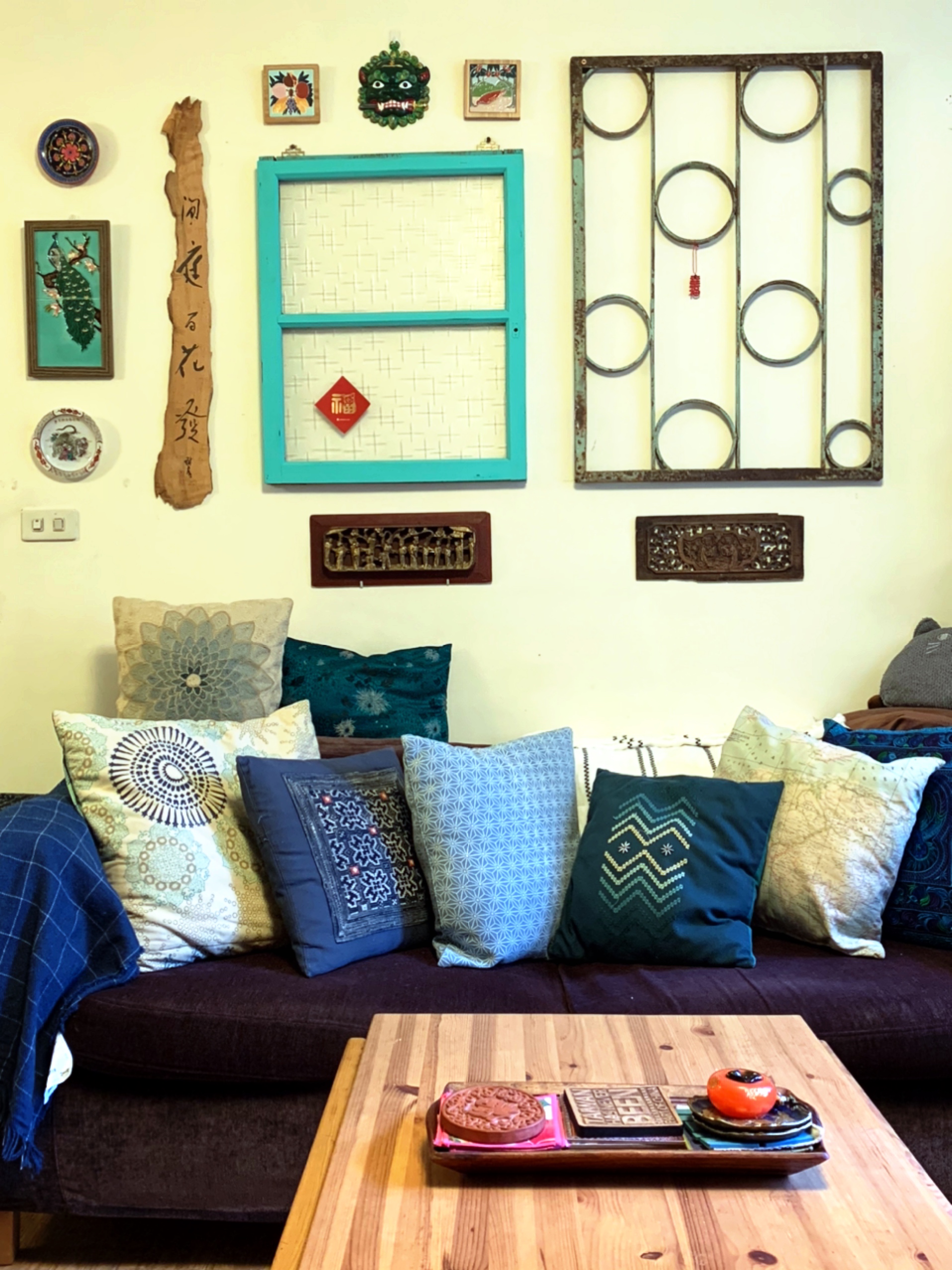
Over the past few years, I have enjoyed giving my home a sort of modern-retro look by decorating with vintage finds of dubious value - I don't really care what a thing is 'worth' as long as I like it, and the price is acceptable. In fact, everyday vintage items of lower value are preferable, as I can use them without worry.

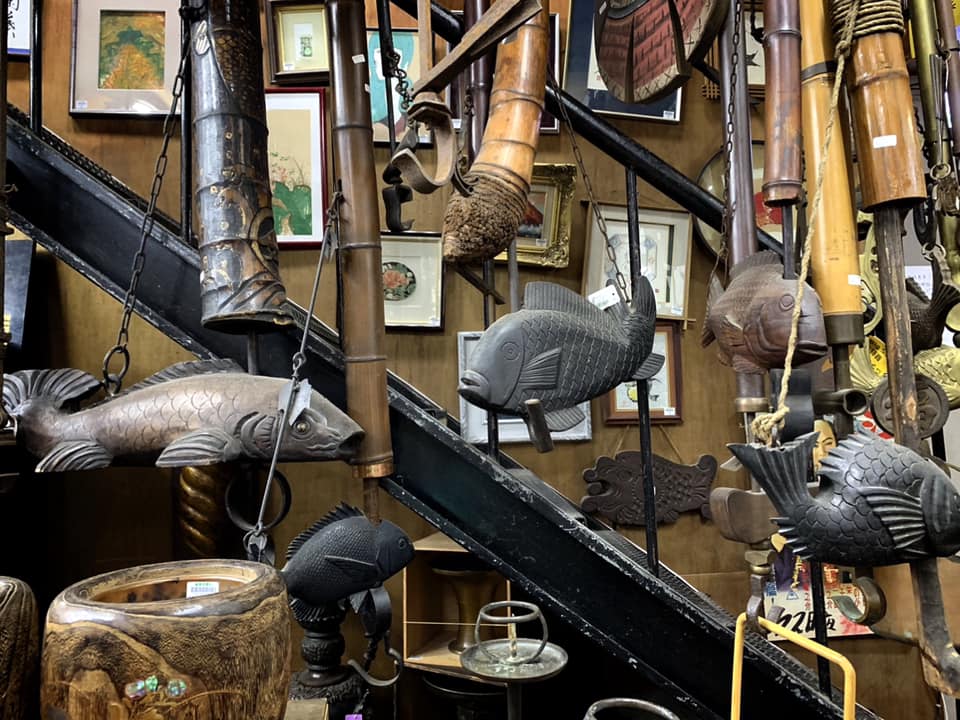
The shops where I hunt these items down are also great places to check out, as we look for ways to get out of the house, possibly while we still can. I'm not talking about the high-end antique shops or the "vintage stores" that sell the clothing I grew up wearing for a Generation Z crowd. I mean the places that sell a combination of old Taiwan and Japan flair (which is what I'm after) and the sort of Western kitsch I'd generously call "Goodwill finds" back home.

I wouldn't want to go to a bar full of people or high-traffic department store right now - not that I do so typically - but these shops tend to be lower-traffic, and they are also businesses trying to stay afloat in an economy that's suddenly turned against everyone.

Since deciding to create that 'vintage Taiwan' feel on a wall display at home, I've had even more reason to trawl my favorite vintage stores, so now feels like the right time to write about them.

Untitled

There are surely more than these in Greater Taipei, so feel free to add any that you know in the comments.


April's Goodies (唐青古物商行)
Update: Moved! 
#155 Hami Street, Datong District
台北市大同區哈密街155號
MRT Yuanshan

Untitled
The entrance to April's Goodies 

With old windowframes and some larger furniture outside, and everything from old Taiwanese dinnerware to teapots to a few vintage clothing items inside, this place is small but packed with quality vintage goods.

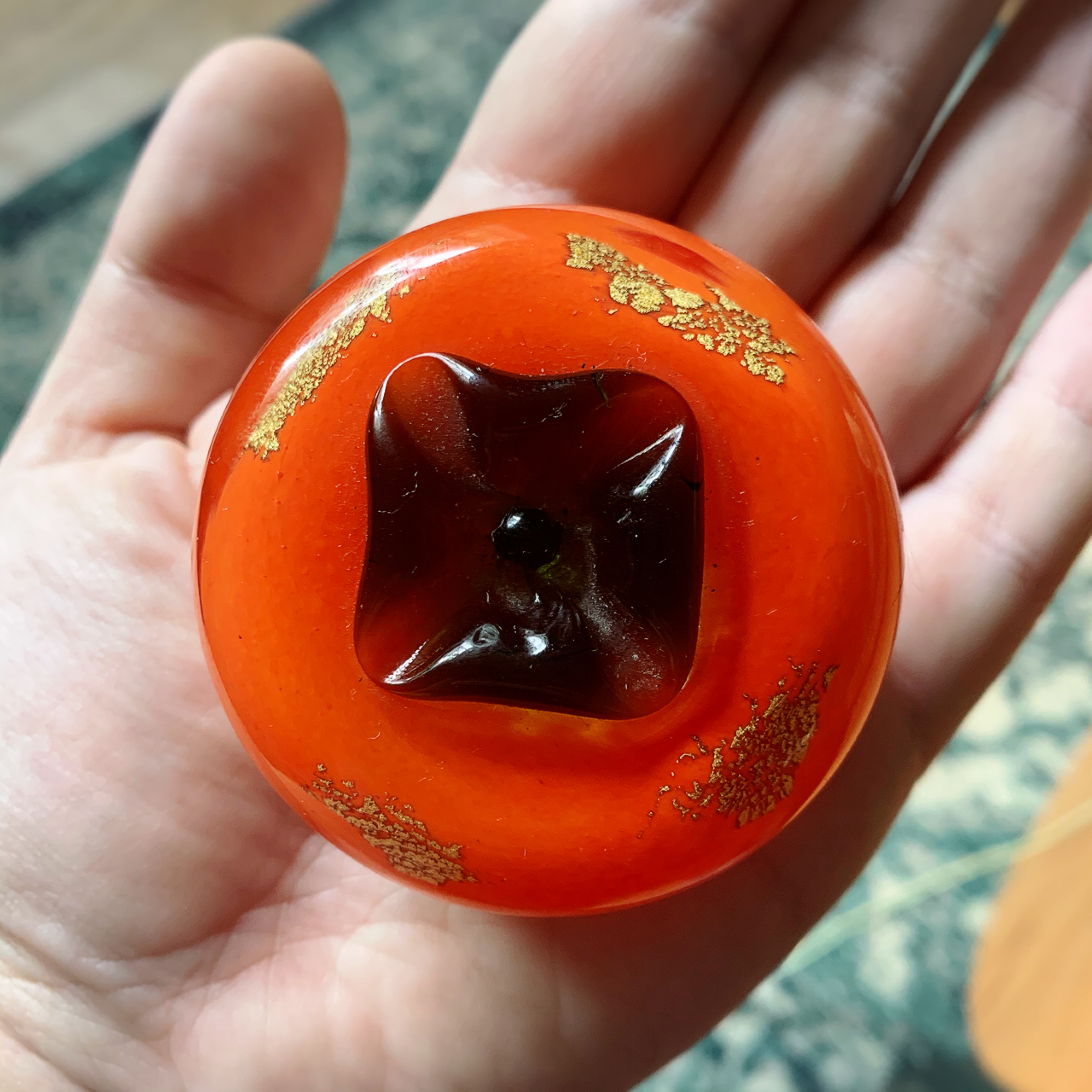
Not only did the window with the textured glass on my wall come from there, my glass persimmon did, too.

Untitled

(No, I don't know the actual names of vintage glass patterns, I'm not that much of a nerd about it, but this one, the vaguely floral pattern and a reeded or fluted textured glass are the most common textured glass found in vintage Taiwanese windows).


Treasure Hunters (藏舊尋寶屋)
100台北市中正區羅斯福路二段38號
#38 Roosevelt Rd. Section 2, Zhongzheng District, Taipei
MRT Guting

COVID19 Update: the store isn't open to customers but they have a Line group with daily sales -- look for their store name in Chinese

66798488_10157484556171202_9127080618130145280_n


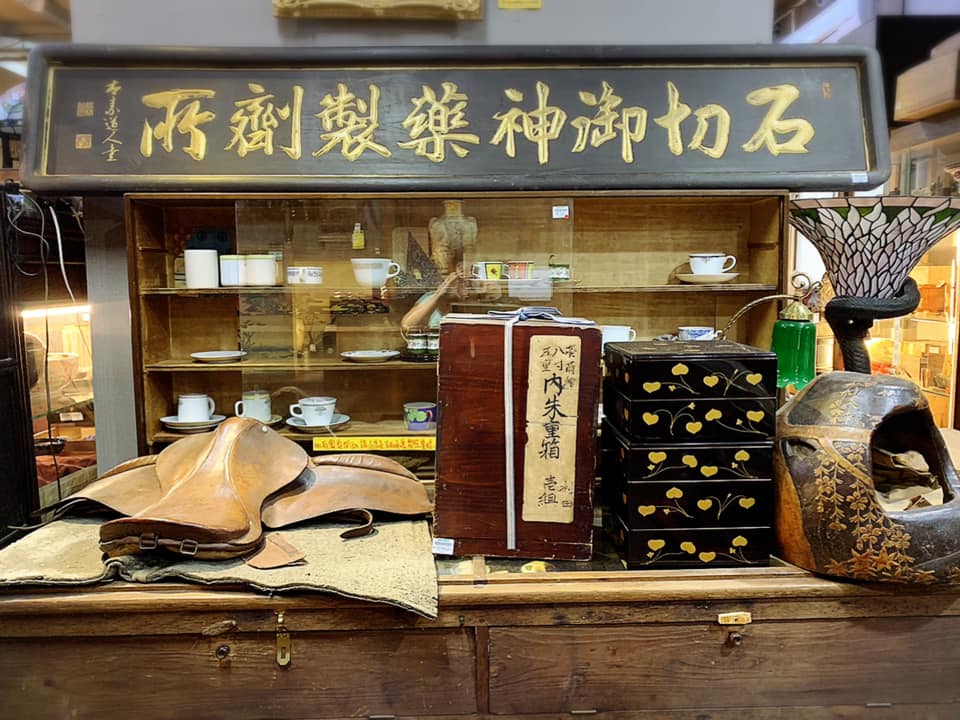
This well-known store specializing in Japanese antiques looks small when you enter. Then you find it stretches further and further back (with an alley separating buildings at one point), and has an upstairs! A lot of the antiques here are actually from Japan, not Taiwan's Japanese era, but there's a lot here if you want to capture a bit of the Japanese influence of a vintage Taiwanese look. Also, their ceramics and lacquerware are highly sought-after by collectors.


Untitled
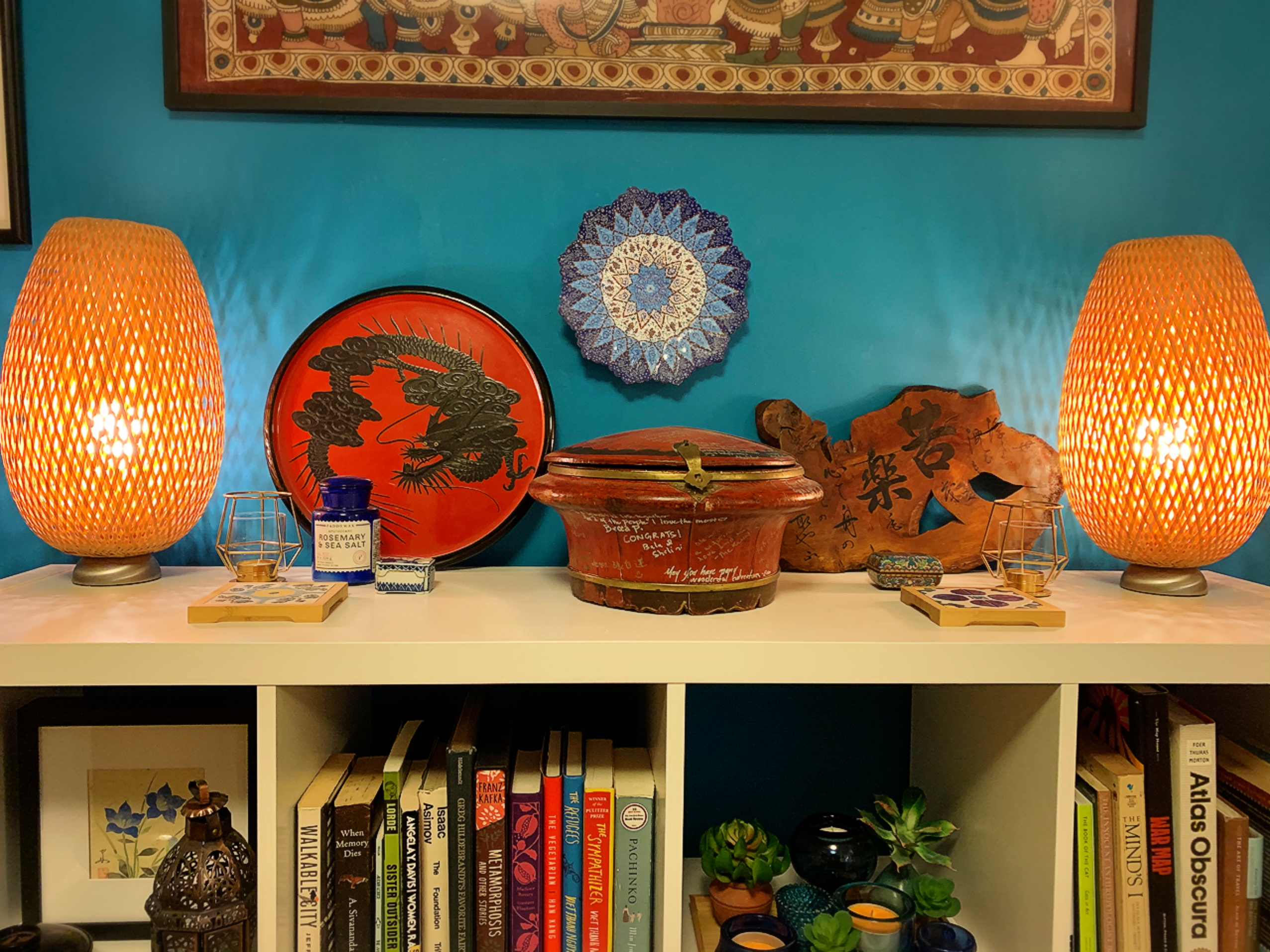
All three antiques on this bookcase came from Treasure Hunters


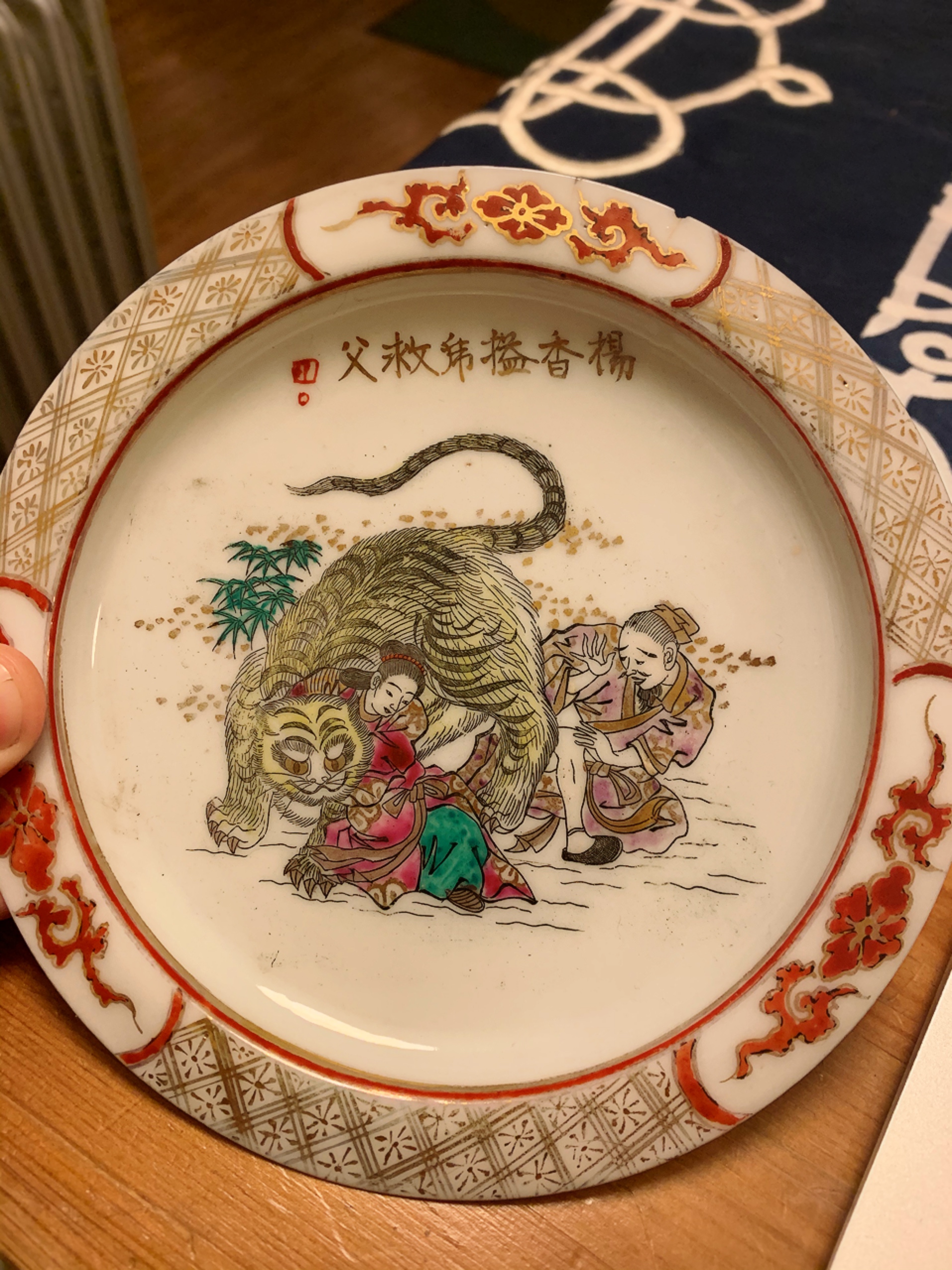
Prices may seem high but for a lot of what they have, you'll find it's actually fairly reasonable. For example, I've picked up 1970s vintage Zohiko and Wajima lacquerware here for a song (Zohiko is a brand, and Wajima is a Japanese island known for lacquer), as well as a beloved lacquer tray with a beautifully rendered dragon from Okinawa. The 閑庭百花發 wooden calligraphy board on my wall came from here, too, and wasn't particularly expensive.

 66454902_10157484556206202_3639742787722674176_n

Recently, Treasure Hunters has been holding half-price antique markets in small space on Lishui Street, I suppose to clear out old stock. Follow their Line account to get updates on when they occur.


Qinjing Old Warehouse (秦境老倉庫)
103台北市大同區民樂街153號
#153 Minle Street, Datong District, Taipei
MRT Zhongshan or Shuanglian (but there are buses that stop closer by)

Update: they're moving -- more information when I learn where

Untitled


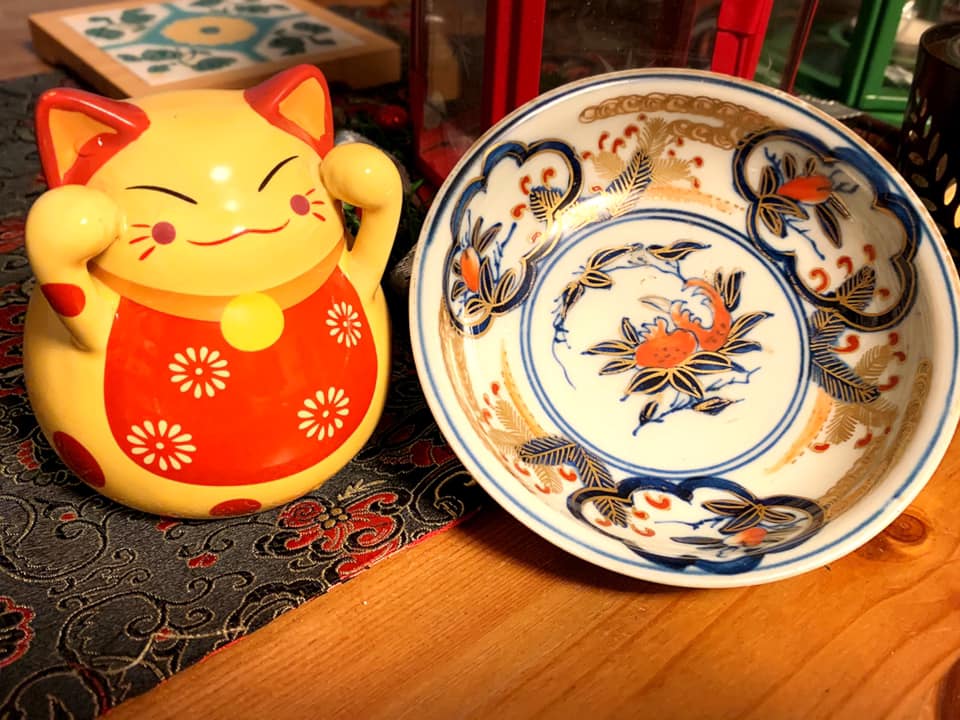
This tiny shop, crammed with vintage goodness, is where my vintage window grate came from. They occasionally have windows and window grates here, but the real finds at Qinjing are vintage dishware. Small items sometimes go for cheap - I picked up an small ceramic 招財 cat for NT30 here, and some crystal prisms for NT50 each, that I plan to hang in my window to create rainbows my cats can chase around on sunny days.

Untitled

Qinjing also tends to be a good place to look for vintage appliances, toys, old brand gimmick items, worn-out funky keychains, wooden signs and the occasional farm implement. I can't even describe how eclectic it is, so I'll let Elmo in a Blender speak for itself.


Swallow Used Furniture (Swallow燕子老傢俱)
Moved! 天水路38號 / #38 Tianshui Road
MRT Beimen, also walkable from Zhongshan


The old Swallow Used Furniture in Beitou -- now on Tianshui Street

On a side street in Dadaocheng (note: they've moved from their old Beitou location!), you'll find Swallow. This place seems to be run by a pair of hipster guys, and you'd be forgiven for mistaking the front courtyard for a junkyard, or the private home of a hoarding grandpa. When I wandered in, it was only apparent that it was an actual shop by the open door and music, and prices on most (though not all) items.
 
It's packed, and it seems tiny, but this place actually has three floors. The first floor is mostly small items. The second floor has more Japanese-era antiques, and the third floor is furniture. Old windows and screens can be found in the balcony off the 2nd floor (as well as in the courtyard).


One of the friendly hipster guys seems to work on creating upcycled furniture, much like W2 (though the look is different).

I picked up a Japanese-style sliding window screen here, but haven't figured out what to do with it yet.

This place is fun to check out in person, but if you don't feel like going all the way to Mingde, they have an impressively organized Facebook page where you can click on albums of their various items, complete with prices, and shop at home. (I don't know if they deliver but they put a lot of work into their Facebook page so they should be accessible by Messenger). If you want to score some old windows or window frames for yourself, their Facebook albums are a fantastic place to start.

Moungar (莽葛拾遺二手書店)
108台北市萬華區廣州街152巷4號

#4 Guangzhou Street Lane 152, Wanhua District, Taipei
(right behind Cafe 85)

MRT Longshan Temple

Moungar is housed in an old brick shophouse half-hidden by a large bougainvillea. Decorative Majolica tiles grace the front and make it an inviting space to enter.

This is more of an antique book shop - their selection of actual antique items is smaller than the other places I've listed. I have a book from them on my shelf - a collection of Pushkin stories.

Even if you don't buy anything, the old building is very much worth a look inside. I don't know if they still serve coffee. 


Aphrodite
114台北市內湖區民權東路六段16之1號
#1-16, Minquan East Road Section 6, Neihu District, Taipei
Not near the MRT - take any of the cross-Minquan buses to get here (278, 556 and 902 also stop nearby)

To be honest, I haven't been here in years, because it's no longer convenient to any of my worksites (I used to have a class in an office not far from here).

Unlike the other antique stores on this list, Aphrodite focuses on European antiques. The other shops sometimes have items from Western countries, but this place looks like your German immigrant grandma's attic. I've purchased old wooden coasters, some glassware and some copper items here, though much of their stock is furniture.

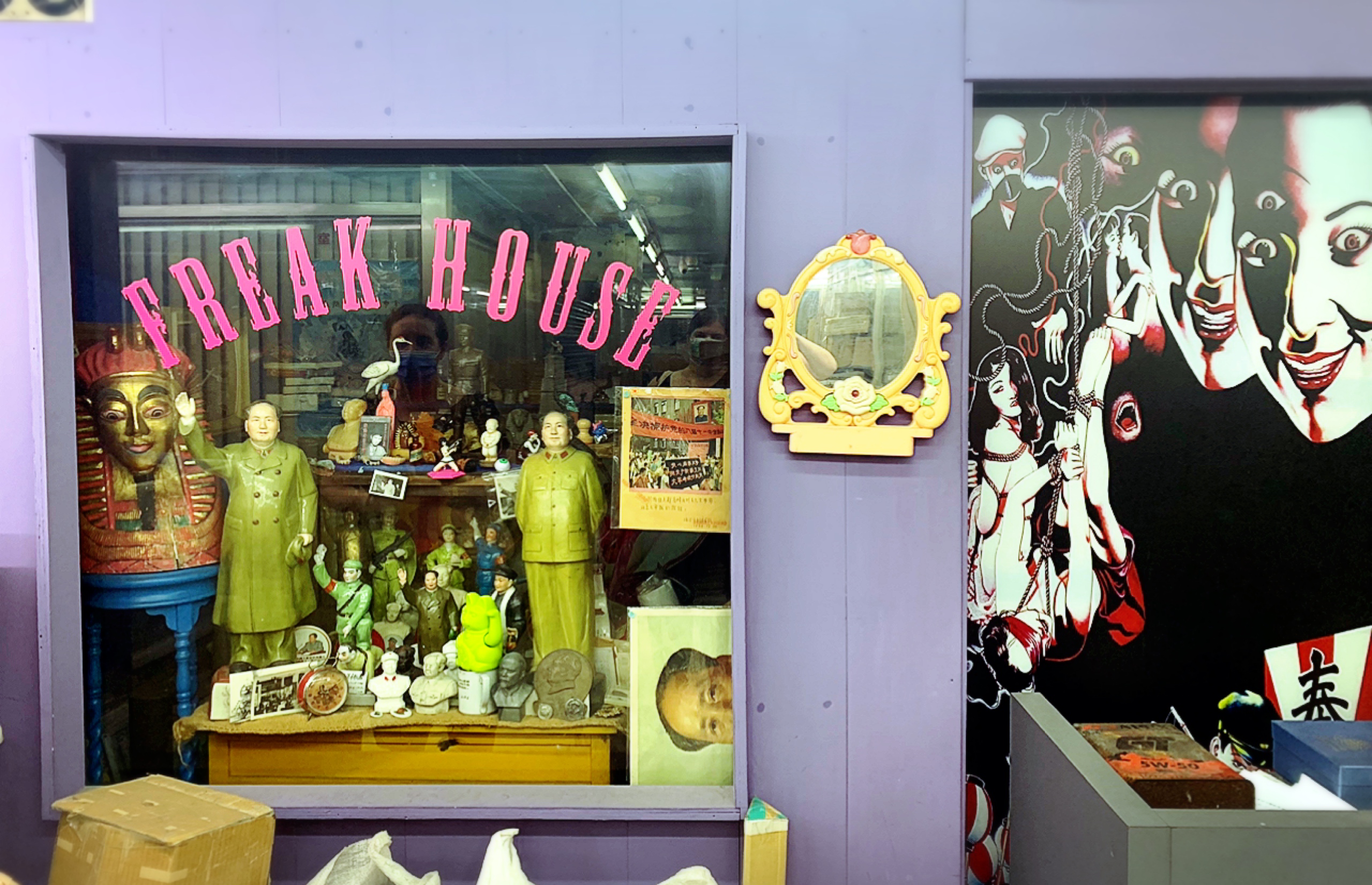
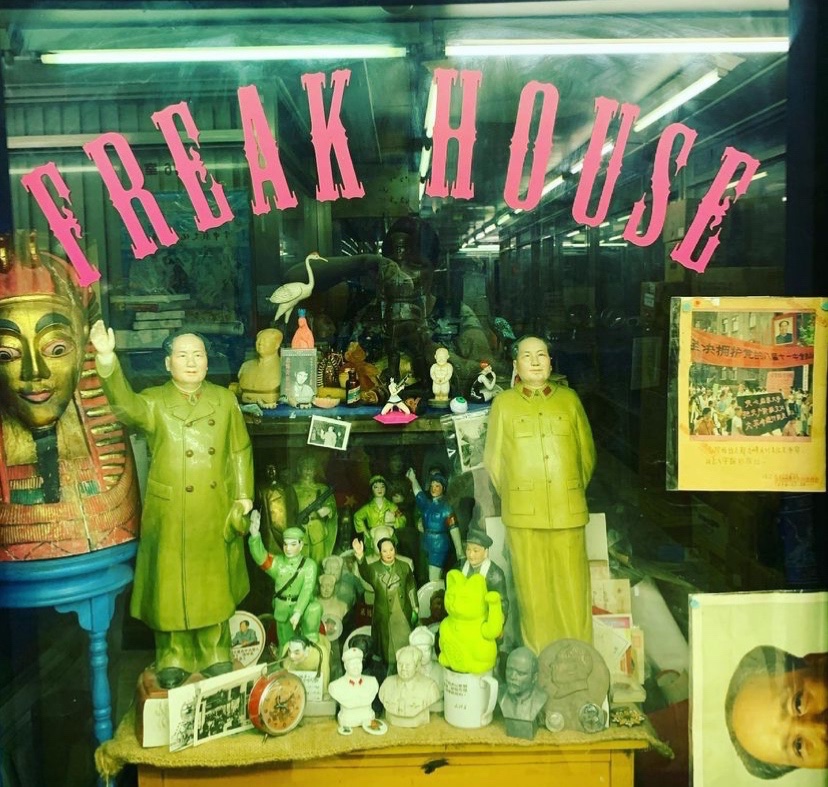
Freak House 怪奇館

Shop online via Facebook, Instagram (freak_house77) or Line  -- QR codes for that can be found on their other social media -- they also seem to have specific Line group sales times.


Untitled

I'm not going to tell you where Freak House is, because most of their actual sales seem to be online. Their "shop front" is in a derelict shopping mall in one of the older neighborhoods of Taipei, but while it's fun to peek inside, they aren't really for in-person sales. If you want to try and find it, consider this a challenge to explore all the old shopping arcades from Wanhua up to Dalongdong.

They're not actually into Mao or communism, but they like the art, and kitschy propaganda art sells well. 

If, however, you happen to pop by when the proprietor has come to pick up an item he's sold, he might let you peek inside (some of the items are not for the prudish). 


Untitled


56 Deco
台北市士林區延平北路九段348號(社子島)

#348, Yanping North Road Section 9 (Shezi)
Take buses 2, 215, R10 or 536 to get there (most of them connect to the red or yellow MRT lines)

56 Deco is hard to get to, and they prohibit photographs, but they have an array of cool stuff, including a large collection of vintage chairs and other oddities. But they are very, very local -- not many foreigners make it this far up Shezi unless they're biking -- and friendly, and the selection is pleasingly eccentric.

They're a bit overpriced but not stratospherically so. I came close to buying a piece of an iron window grate but ultimately decided against it.

This place is far from everything else in Taipei, and I would never have found it if I hadn't been looking for the nearby cafe on Google Maps. But it is near the park at the very tip of 社子島 (the Shezi peninsula, which is called an island in Mandarin) and quite close to a friendly cafe with great views. Buses up there take awhile and don't come frequently, but if you time your bus departure it's not too much trouble - or just bike it. The bike path is very popular. There's also a popular local restaurant nearby, so you could combine a stop there with an exploration of that quiet part of Taipei.

They keep very short hours (daytime Tuesday-Friday only) but the cafe nearby opens at 3pm and closes late, so you can time your departure with the bus schedule.


Fuhe Bridge Flea Market (福和橋市場)
Under Fuhe Bridge on the Yonghe (New Taipei) side
Open until noon, most popular on Saturdays
Not near the MRT but many buses stop nearby, including the 275, R25, 660, 254, 672 and 208)


Oh, Fuhe Bridge Flea Market, with your stolen shoes and dodgy goods. With your weird, wonderful weirdness and wonderfulness.

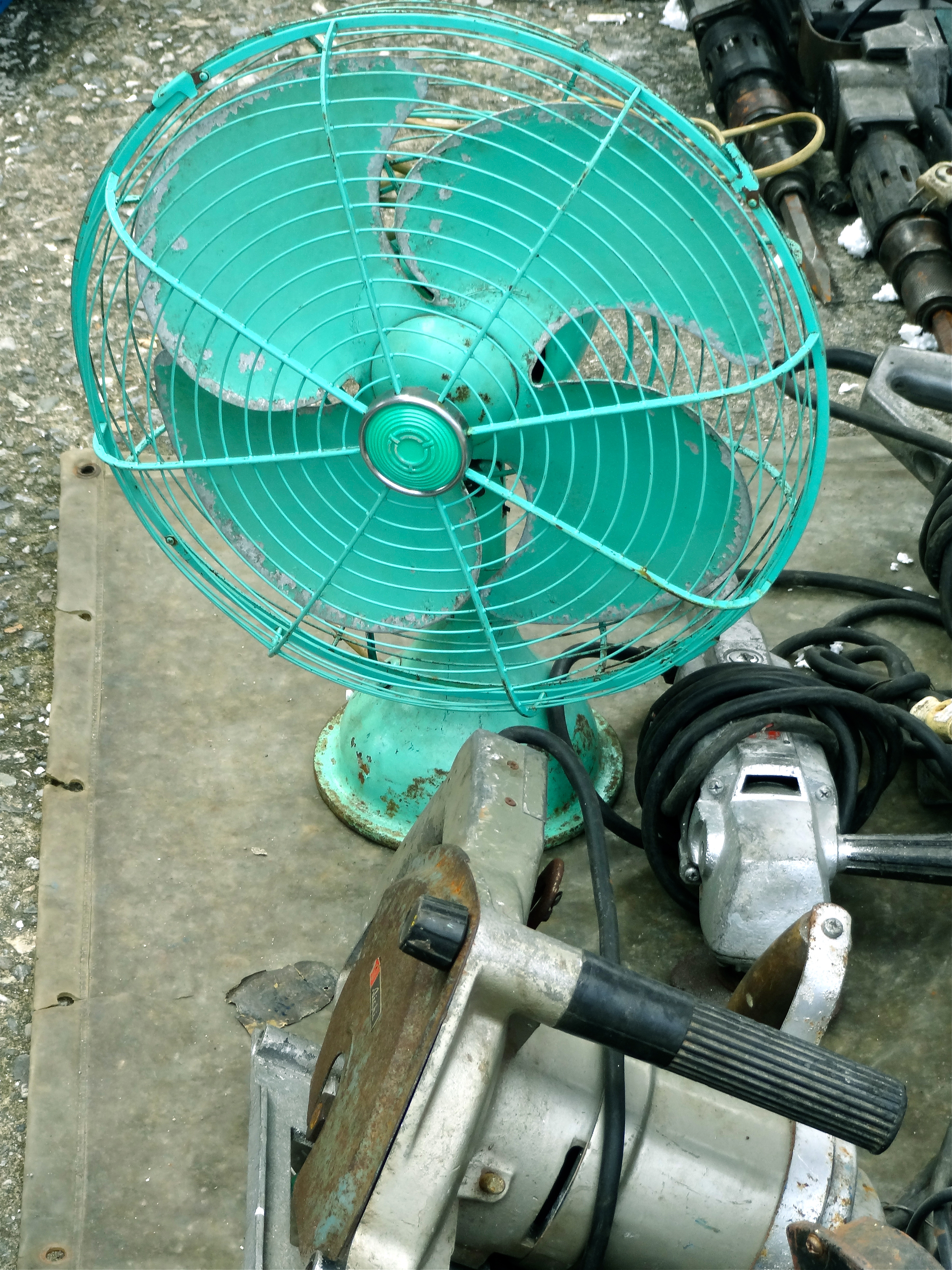
I haven't been here in years either, mostly because I have a private class on Saturday mornings, but I'm told it's still going strong and is a great place for old vintage finds, as you can see from my pictures from 2013. (If you're wondering, I eventually got that Datong fan - did you know they still make them and you can get one new?)

DSC06300

A few vendors at this market actually hold Yixing clay teapot auctions, so if you trust your auctioning skills and can get in on the fun in Chinese (or Taiwanese), you might get a good deal.

The link in my original post lists a few other flea markets in the Taipei area.


Yongkang Street Jin'an Market  (錦安市場)
106台北市大安區永康街60號
#60 Yongkang Street, Da'an District, Taipei

Honestly, I have less to say about this market. It's full of cool old stuff but it's also been 'discovered', meaning that prices are higher (it's also in a fancy part of town, surrounded by antique stores that sell high-end items).

But, it's worth a stroll-through, and I'll occasionally poke around the various shops, though I don't know if I've ever actually bought anything there.


Facebook Groups

Honestly, some of the most interesting things I've come across can be found in dedicated Facebook groups to vintage shopping. I'm a fan of Grocrery Store (no idea if the typo is intentional, and don't care), 寶島新樂園二手舊貨、古董、民藝 and 二手。古董。老件。收藏。裝飾 but there are honestly tons of choices - join a few and Facebook will suggest more for you.


I will say that I have not actually tried to buy anything from these groups,  but they're great fun for browsing.

Happy hunting!


79406513_10157960939411202_6838606576920559616_n