Thursday, July 1, 2021

An Open Thank You Letter to the Taiwan CDC

Untitled

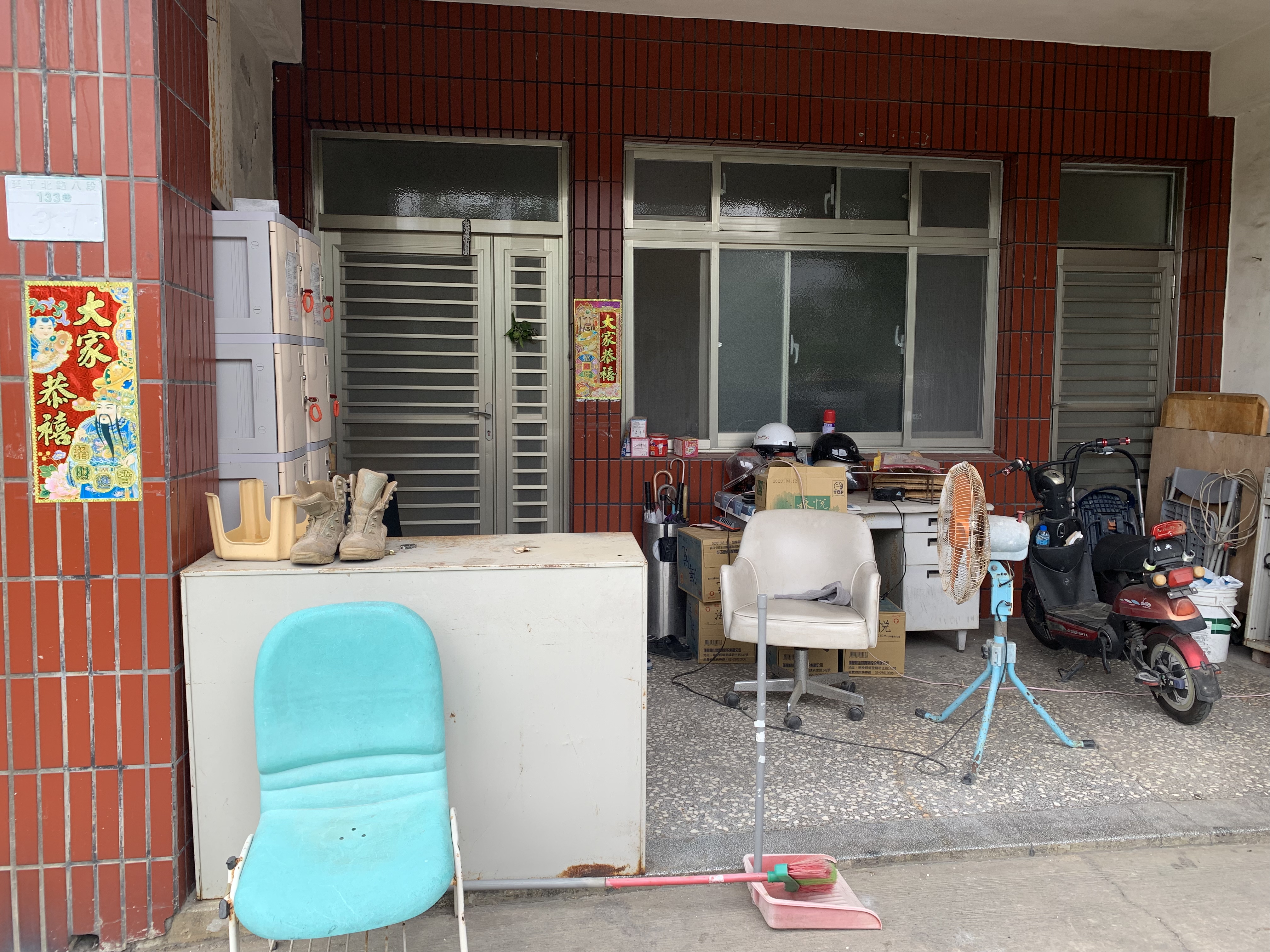
Something about this scene just makes me think of "home in Taiwan" even though my place looks nothing like this.


There have been a lot of complaints about the new quarantine regulations announced for returnees to Taiwan. Essentially, families cannot quarantine together -- one child per parent -- and home quarantine is no longer allowed. Government facilities are available for NT$2000/night (the hotel options are nicer, but more expensive). There have been reports of hotels quoting inflated rates, but that's an issue for law enforcement -- it's a scam, not government policy. The government facilities are plain, but livable. 


A lot of people are unhappy about this, especially those with children who were planning to travel this summer. 

The thing is, family quarantine hasn't been much of an option for awhile -- "one person per residence" has been the rule for months, although there were exceptions if you had your own rooms with bathrooms (how many families have one bathroom for every member?) and minors. 


I understand the frustration: I haven't seen my 95-year-old Grandma since 2018. I was always aiming for the holidays, but any chance of an earlier visit is now shattered. Not all travel is a choice: emergencies happen. And, of course, some people had already left to travel thinking that they could quarantine at home upon their return. This does make their lives more difficult, and I sympathize. It's tough, and we're all stressed. 

That said, most travel is a choice. I miss the country of my birth too -- well, some of the food and people in it anyway. But ultimately most travel plans are optional, and can be canceled. The convenience of people who chose to travel does not trump the good of the country.

The people who created these new rules are medical specialists with more expertise in how to contain something as scarily transmissible as the Delta variant. It's an inconvenience and a cost burden to quarantine away from home, but do people really believe they are better qualified to decide if home quarantine is safe in light of the Delta variant's spread than actual epidemiologists? 

I'm also a bit distraught that people are buying into the idea that Taiwan was late to acquire vaccines. As far as I'm aware, negotiations started as early as possible: the "lateness" was more due to what companies like Moderna and AZ could provide and when, which was influenced by a global vaccine shortage. And, of course, we all know how China created the BioNTech drama.

They -- mostly foreign residents, from my observation -- are  upset that life in Taiwan is not as normal as it has been for the past 16 months, and are turning on the government that gave them those months of normalcy because things have changed.

I do not care for this: when I feel the Taiwanese government is being unfair to foreign residents -- be they blue-collar workers or well-off expatriates -- I'll speak up. But I just don't think that's true here: the good of the country takes precedence over our own convenience.  The government is not perfect, but they are not being unfair.

Perhaps the government facilities should be free for all, but then again, why should they be? Most travel is a choice. 

A reimbursement program for true emergencies would be a kindness, but there is no reason why the government should pay for quarantine after travel one chose to do. Offering rooms with facilities for very young children would be smart; some kids need cribs, and not all families can afford the pricier hotel options. However, it would be reasonable to suggest this without writing entire "complaint" letters. 

In other words, the Delta variant does not care if you would prefer to quarantine together, or at home.

Although I am still distraught that the central government did not do enough to stop the racist treatment of foreign blue-collar workers, I think overall they've been working diligently since the beginning of 2020 to keep Taiwan as safe as possible.

As a result, I feel safer here than I would in the US (yes, still), and I notice that Taiwan is still continuing strict measures despite having fewer per capita cases than countries which are opening up (and probably shouldn't be). Yes, there was an outbreak because some people didn't follow the rules, but Taiwan contained it faster than just about any other country could. 

So rather than complain to the CDC, I wanted to thank them, while reminding them that blue-collar foreign workers still need to have their human rights protected more decisively. 

Of course everyone is free to voice their own opinion, and if you're one of the unhappy people, my "thank you" letter doesn't take away from your ability to write a complaint. I don't agree -- in fact I think it has the potential to cast the foreign community in a bad light as most of us are comparatively well-off, or at least have the resources to consider traveling at all. But it's still everyone's right to write whatever they want. I, personally, chose a "thanks". I can only hope others will do so, as well. 

Or, if you do have a suggestion, to write them a thank you for all those months of keeping you safe, and then add it in: better children's facilities. Emergency travel payment exemptions. Whatever you want. But complaining? I do not encourage that.

This is the letter I wrote. You can write your own here.

Hi,

First, I just wanted to thank the CDC for working hard to keep Taiwan safe. I know you are getting a lot of complaints right now, but I understand what you're doing and why it's necessary and I am grateful that the outbreak is being contained in Taiwan due to your hard work. I feel safer in Taiwan than I would in the country of my birth thanks to Taiwan's excellent response, even though times are hard now.

However, I do want to suggest that the central government should do more to stop the racism against Southeast Asian blue-collar workers. I've heard that Miaoli County hasn't actually stopped the restrictions, just relaxed them to let workers out for 45 minutes a day, and some companies are still locking them up like slaves or animals. It's not right. Since the CDC was able to revoke other local orders when they didn't comply with CDC regulations, I think you could do more to stop this. It is wrong and blatantly racist, and it really looks bad for Taiwan's human rights record. Clearly, you have the ability to stop it, so you should.

In fact, foreign blue-collar workers should be prioritized for vaccines, as their living and working conditions create danger of an outbreak, and they do mix with Taiwanese as well. I know this is politically difficult to do (probably a lot of Taiwanese would complain about them getting priority), but it's the right thing to do. At the very least, the blatant racism has got to be stopped. If local governments won't do it, the central government should take a stronger stand.

Thanks again for your hard work and for managing the pandemic well for over a year. Taiwan did a lot better than most other countries due to your efforts and they have not gone unnoticed.


I hope others will follow my lead and put the good of the country first. If this is our home -- not a playground where we get all our desires met -- we should act like it. 

Tuesday, June 29, 2021

BREAKING NEWS: Racism Still Racist


Except it's not just Miaoli, is it?


Now with updates! Don't worry, the updates are still about how racism is racist.

Yesterday, news broke that Miaoli County was ending the forced containment of blue-collar migrant workers (quoted at length because Focus Taiwan makes their archives inaccessible after a few months):

A controversial stay-at-home order imposed by the Miaoli County government on migrant workers earlier this month will end Tuesday, as the number of new COVID-19 cases recorded among the group has fallen.

In a statement, the county government said that while some migrant workers continue to test positive for the disease in Miaoli, they have all been in quarantine because they were contacts of previously confirmed patients....

The Miaoli County government banned migrant workers from going outside, with the exception of traveling to and from work, on June 7....On June 10, the order was partially relaxed to allow migrant social welfare workers, such as caregivers and domestic helpers who usually live with their employers, to go out when necessary, such as buying basic necessities.


I refuse to call it a "stay at home order" as Focus Taiwan does. Honestly, these were closer to internment camp conditions as the dormitories where many factory workers live are overcrowded, poorly ventilated and frankly, perfect sites for fast viral spread. 

Update:
it's unclear that the order was indeed fully rescinded. Some reports indicate that it was merely relaxed:


Focus Taiwan: if this is indeed the case, your reporting leaves something to be desired.

Before you say "but I only go out for 45 minutes a day!" or whatever, remember that nobody is forcing you to do that. Besides, you almost certainly live in better conditions than most foreign blue-collar workers. You probably don't live in a cramped hellhole where 6 people share a room meant for perhaps 2.

Despite human rights groups rightly calling the order discriminatory (or in my words, racist), Miaoli County Magistrate and Racist Clown said...well, here's the quote:

In response to the criticism, Miaoli Magistrate Hsu Yao-chang (徐耀昌) said the county government was forced to issue the order to curb the spread of COVID-19 in migrant worker clusters and to prevent a transmission of the virus in communities.

"If new cases, more deaths are reported, how can human rights protection be possible?" Hsu argued at the time.


In other words, he refused to admit that the racist thing he did was racist. And it was racist, as the people forced to stay in their accommodations were decided based on national origin (that is, they are not Taiwanese), and Taiwanese coworkers of the affected groups were not subject to the same order. Foriegn white-collar workers in Miaoli were not subject to the order, or we'd be hearing about cram school teachers in Nanzhuang forced to stay in their apartments.

The forced internment of these workers was not due to contact history with infected individuals, and the Miaoli county government was not "forced" do to anything. It chose to be racist. 

But of course, Hsu will never admit that. And sadly, he doesn't have to: foreign workers can't vote, and Taiwanese voters most likely don't see this as a critical issue. Certainly there has not been strong agitation for change despite being aware of how badly most Southeast Asian immigrants are treated, and some even (wrongly) defend such practices. Nobody in Miaoli is going to lose their elected office over this, even though arguably most of them should. 

Obviously, trying to avoid accountability for such actions is a global phenomenon: I could imagine a political suit from just about any country refusing to own up to their own racism (some, including several former US presidents, build entire brands on it). 

What I'm curious about is this: 

When questioned by reporters, Central Epidemic Command Center (CECC) officials said on June 9 that it had "reminded" Miaoli authorities that it could only enforce orders that were in line with the national Level 3 COVID-19 alert.

The CECC did not revoke the order, however, as it had done previously with other local government policies it had not authorized.


I freely admit that I haven't paid much attention to which local government policies the CECC has revoked. (Update: here's one example of where they did just that).

This implies they always had the power to just shut the Miaoli government's racism down, yet chose not to. The Tsai government, sadly, has a track record just as abhorrent as previous administrations on human rights for blue-collar immigrants: a weak spot in an administration that is competent in most other ways. There's a chance they simply don't care enough, or did political calculations on what this would cost them and made a choice. There are a lot of questions there that I simply can't answer (but feel free to leave observations in the comments). 

There are some bright spots, however. The international media, which until recently tended to ignore Taiwanese domestic issues or presented them only in the light of "China tensions" somehow mysteriously being enrisen-ified, took up this issue across several media outlets (including Channel News Asia, which is usually more of a concern troll regarding Taiwan than actual reliable news). 

Locally, there's been some movement too. Not just on the part of human rights groups either. To vent my own rage, every few days I go into Hsu's Facebook page and call him a racist, because he is one (this has zero effect but makes me feel better). Generally, even though sometimes I get lazy and post in English -- I think enough Taiwanese know the word "racist" that it probably doesn't matter -- there are often locals doing the same thing. This issue does seem to have brought more attention to the overall issue of foreign worker treatment in Taiwan.

It's hard to say what happened. I find it hard to believe that the Miaoli government decided to be slightly less racist (without apologizing at all) because it was making Taiwan look bad internationally. International media attention does tend to have an effect nationally, so it's possible that the CECC's public "reminder" came with stronger behind-the-scenes recriminations. But would the KMT-led county government really care what the DPP-led national government had to say? Did getting slammed by human rights groups make a difference? Probably not: this is the KMT, it's not like they care about human rights! 

More likely -- and I am wildly speculating here -- the national KMT apparatus realized it was getting dunked on an international scale, called up their Miaoli people and told them to quit it. 

That possibility carries a lot of implications. Generally, I've concluded that international media exposure is a one way to get the national government to stop dicking around. Overall, while it's good for critical domestic issues to receive international attention for this reason, I find it wise to try to promote a positive image for Taiwan internationally. I have less confidence that it has an effect at more local levels. However, if the international media can (potentially) help create change by getting one of the major parties to rein in their own? Well, that matters.

Saturday, June 26, 2021

A Concise History of Taiwan (Bilingual Edition) Review, and more!


The Concise History of Taiwan: Chinese-English Bilingual Edition
By Tai Pao-tsun, translated by Ruby Lee

I know I haven't been blogging that much in the past week or so: in part I needed a break, but I've also been busy with other things. I did a podcast with Startup Taiwan on the Bilingual by 2030 initiative (similar to my other podcast with Taiwan Context on the same issue). And perhaps you've noticed an article in the Taipei Times about my debilitating insomnia-driven push to get Last Week Tonight to do an episode on Taiwan. While I'm not spending a huge amount of actual time on this, I did take the time to give the Taipei Times an interview. The petition is still going, so by all means please do sign. 

But mostly, it's that these days I live in front of the computer for work, so I just haven't wanted to spend more screen time blogging. But anyway, down to business. 

A year or so ago, I realized that Brendan and I had, combined, managed to read almost every general history book on Taiwan in existence in English, and that no direct comparison exists. So we made a final push. I'd been working through the politically subjective works (think Taiwan's 400 Year History) while Brendan read the drier tomes (such as Taiwan: A New History, which is more of a collection of articles than a true general history). We both read the works we consider to be most seminal (Forbidden Nation and A New Illustrated History of Taiwan). 

Then, just as we were about to write the piece together, another publication popped up on my radar: The Concise History of Taiwan: Chinese-English Bilingual Edition by Tai Pao-tsun, translated by Ruby Lee. As it is indeed concise, I thought I'd give it a review before including it in the longer article. 

The book itself lives up to the name: it's not particularly thick, and with half the pages in Mandarin and a double-spaced font, it can be read in an easy day. It follows the same notion of how to cover history as many other 21st century publications (this was published in 2007): rather than a chronological telling of events, it covers areas of interest. Specifically, these are Indigenous Peoples, Immigrants, Colonization, Towards a National State and Taiwanese and World Citizens (which has the least clear title and is also the least clear chapter). Chapters 1-3 look at the whole of history, although only Chapter 1 goes into pre-written Indigenous history, and only at the very end does the narrative follow a clear chronology, from KMT authoritarianism to democratization.

I appreciated certain elements of this book: the clear case for Taiwanese sovereignty without fiery political soapboxing or outdated references to long-dead compradores. (I admire what it would have meant at the time for Su Beng to call them out by name, and the fact of their existence is worth including, but in 2021 I'm not sure we need a list.) I noted the attempt to discuss Indigenous affairs through the modern era, rather than relegating all discussion of Indigenous culture to "prehistory". And anyone could improve on Ong Iok-tek's (A History of Agonies) abject anti-Indigenous racism.

In some ways, Tai outdoes Chou Wan-yao: at no point does this book pretend that it is in any way acceptable for an occupying foreign government to force a "national language" on a people who've never spoken it before. (I've said it before and I'll say it again: this was the single worst line of reasoning in Chou's book, which was otherwise a delight to read. It brought the whole thing down.)

In others, however, the Concise History leaves a lot to be desired. The chapter on immigrants considers Taiwanese with Han ancestry to be immigrants, which is correct (or settlers, or colonizers: choose your discourse) and handles this well. It then covers "New Taiwanese" (the KMT diaspora that accompanied the 1940s occupation) and it handles the topic critically but fairly. It even covers immigration from Southeast Asia. But -- I dunno man, call me selfish -- a single sentence pointing out that there is a small community of long-term Westerners who also call Taiwan home would have been appreciated. Truly, just a sentence would have been enough. I don't want Westerners in Taiwan to take up too much space when we are a tiny minority of immigrants, but we do exist. 

In Colonization, Tai considers the Dutch and Japanese eras, but completely elides the Qing colonization and the ways that the ROC is itself a colonizer of Taiwan. Other historians have dealt with this in different ways: Su Beng was anti-Qing but pro-Han immigration. Manthorpe (Forbidden Nation) says obliquely that there is a case to be made for both the Qing and the ROC to be considered colonizers. Chou (A New Illustrated History of Taiwan) doesn't quite take that step, but she does offer up all the objective evidence for coming to that conclusion oneself. 

By not engaging with the issue at all, Tai is essentially saying that there is no need to question whether the Qing and the ROC acted as colonizers: it is assumed by their exclusion from this chapter that they did not. I disagree, strongly. What is the justification for this? How did they act meaningfully differently from any other foreign occupiers? Is it because some people still argue that the legal structures that kept (and keep) these governments in place are not generally considered "colonial", even if the actions of the government absolutely are? Is it because the colonizers came from China, so they aren't different enough to be "colonizers"? None of these options is convincing, so it doesn't really matter which assumption informed Tai's thinking. 

One final matter must be dealt with: the translation. I don't want to say too much about this, as I am not against a non-native speaker doing a translation, and don't want to come across otherwise. However, there are some real issues here. Some of these are mildly humorous rather than overtly confusing ("The Taiwanese are a generous and tolerable people" -- a stereotype, but I understood what was meant).  Other areas, however, simply don't cohere well, and small mistakes come across as unprofessional, such as calling the DPP the "DDP". 

Even native-speaker translations benefit from a good editor, and that's what this book needs, too. Translators are not editors and shouldn't be asked to do both jobs: in an ideal world, there's funding for both. It's a shame that dedicated and sincere Taiwanese voices are perhaps not being heard more widely because the funding just isn't there to hire a good editor. 

There are reasons to choose this particular book, however. Like every other general history we've read, it takes a pro-Taiwan stance. Honestly, I think this is because reality leans pro-Taiwan: the case for Taiwan is based on certain objective truths, such as the traumas of the authoritarian era or the simple fact that the Taiwan is not currently controlled by China, and does not wish to be a part of China, period. There's probably another reason at play, however: if you're so in love with the concept of Taiwan-as-China, why would you write a history book focusing on Taiwan? You'd probably just write a history of China and include Taiwan as a small part of it. 

(Which, incidentally, is exactly how China would treat a subjugated Taiwan: as an unimportant backwater, a footnote. That is, after the genocide.) 

And it is short: if you are a newcomer to Taiwan and don't even know things like the fact that the ROC is a decorative name underwriting a concept on life support, that Taiwan was once a colony of Japan, that the KMT have an awful history or that there even are Indigenous Taiwanese, this is a quick way to get up to speed on the basics. That said, Forbidden Nation covers most of that as well, and is only a little bit longer. 

Mostly, I'd recommend A Concise History of Taiwan: Chinese-English Bilingual Edition for one specific purpose. If you are looking to read about Taiwanese history and want to actually practice your foreign language skills, this could be a place to start. Say you studied Mandarin in college, maybe spent a year in China but also learned to read Traditional characters. Then you move to Taiwan because -- let's be real -- it's a better country to live in. You can read Chinese but aren't that well-versed in local history. Start here, and read in both languages. Or say you've lived here for awhile and your Chinese reading comprehension is okay. You already know the history, so you want to practice reading in Chinese on a topic you're already familiar with -- the way Taiwanese teens read Harry Potter in English after having seen the movies or read the books in Mandarin. Perhaps you need the English there to support you. 

In those circumstances, this would be a good book to pick up. A learner of English could do the same, although I'd warn them to be aware that the translation is not always polished and clear. However, if we're considering English as a lingua franca or an international language, it's good enough for that purpose. 

A Concise History of Taiwan: Chinese-English Bilingual Edition is available on books.com.tw, and the price is quite attractive.

Tuesday, June 15, 2021

ONE WEIRD TRICK to stop INFLAMMATION OF CHINA TENSIONS that doctors don't want you to know!

 Untitled

If you need this explained to you like Richard Dawkins needs explanations of literature, China is the shark.


Two articles appeared recently over Taiwan's vaccine struggles amid a global shortage, one in Nikkei Asia and one in The Guardian. Both articles are fine, though they both get the same thing wrong (which I'll address later). They both cover how Taiwan's attempts to secure enough vaccines to beat the outbreak have turned into a political imbroglio.

However, the media narrative from both can be examined through the titles that editors chose for them, and that's what I'd like to look at. How does an article about Taiwan where the media outlet wishes to center Taiwan craft a headline, compared to an article about Taiwan where editors are stuck in the past and feel they must stick to tired cliches about the Taiwan-China relationship?

Both do the right thing by questioning China's narrative, or by putting it in parentheses, like this: 

China’s altruistic statements have been somewhat contradicted by its objections to the US and Japan donations, and by Taiwanese allegations (which China denies) that it actively blocked a deal Taiwan was working on with the German vaccine producer BioNTech.


This is great: it shows increased interest in and reporting on Taiwan by major international media, and it shows more willingness to look at the Taiwanese perspective or at least consider it through an international or local, rather than Chinese, lens. While international reporting on Taiwan is still tied to China, it's no longer guaranteed to follow the script that China puts forward. That's an improvement. 

However, I will come out and say that the Asia Nikkei piece is superior to the Guardian one. This is not a slight against Helen Davidson, and I'm not trying to pit her against Erin Hale. Rather, the issue is with the titles. 

Asia Nikkei:

Vaccines become political as Taiwan wakes up to COVID reality

President Tsai's approval rating drops as island struggles to procure doses


This isn't great news for Taiwan, but it is a good headline. It's neutral, and it centers Taiwan. China enters the narrative in the actual article, as it must (because it's the one doing the politicizing, with the help of the KMT and their various compradores) but the reader of this article is brought in through a focus on Taiwan.

Skimmers who just read the headlines will come away with that with a reasonably accurate view that something dodgy is going on with vaccine procurement in Taiwan, and might click to find out what those struggles are. Then they learn that the struggles are caused in part by a global shortage, but also Chinese interference.

Compare that to The Guardian: 

How Taiwan’s struggle for Covid vaccines is inflaming tensions with China

As island faces new outbreak and mistrust of Chinese jabs, Beijing objects to donations from US and Japan 


This headline sucks

I want to make it clear that headlines are almost always written by editors; writers rarely get a say in them. This is not a jab at Helen Davidson (it is a jab at her editor, but I don't know who that person is.)

It sucks because it totally bungles who is doing the inflaming of what. "Taiwan's struggle for coronavirus vaccines" is not inflaming tensions with China. China is inflaming tensions over Taiwan's vaccine struggle. This is an active choice on the part of the Chinese government, which does indeed have free will. 

All Taiwan is trying to do is get some damn vaccines. They don't want to play political games or "inflame" anything. And tensions aren't gout. They don't inflame on their own. Someone has to inflame them. That someone is China.

The subtitle isn't great either. It's not wrong per se, but the reader is invited to wonder "why would Taiwan distrust Chinese vaccines?" If they don't really know a lot about Taiwan/China issues, and the headline has not clarified that China is the inflamer (not the inflamee) they might preemptively conclude that Taiwan is being unreasonable, when it is not.

It also centers Beijing's reaction to the US and Japanese donations, rather than how these have affected the Taiwanese situation, even though the article is ostensibly about Taiwan. China starts out being centered, and the reader is then invited to keep centering China. 

The actual article is a lot better -- again, this isn't about Davidson's work -- but someone really ought to inflame tensions with the Guardian editors.

You may be curious what the two articles get wrong. It's relatively minor, but worth pointing out one last time. Both include some version of this narrative:

China said Fosun – the Shanghai-based manufacturer with exclusive regional production rights for Pfizer/BioNTech – had offered to supply Taiwan, but Taiwan had refused.

[Drew] Thompson said there were scientific and transparency concerns about China’s vaccines, which made it unsurprising and potentially sensible for Taiwan to reject an offer of Chinese-developed vaccines. But if the Fosun offer is legitimate, refusing it is “entirely political”.


Clearly, Thompson doesn't actually know that Fosun never made a legitimate offer. To distribute your drug in Taiwan, you need to apply through the Taiwan FDA. It is possible to do this, though as Terry Gou is finding out, you can't just leave out important documents. 

Fosun never applied. So it never offered those vaccines to Taiwan in any capacity that Taiwan could officially accept. How can Taiwan reject an offer it never actually received? 

I explore this process in more detail here, by the way.

Hale's article also commits this error, and includes discussion of vaccines actually manufactured in China, not Germany. I can't quote it because I've hit the paywall on Asia Nikkei (I read the article days ago), but it leaves out the fact that Chinese-made drugs are banned in Taiwan, by law. To accept drugs made in China would require changing the law. That's not going to happen. The German-made doses are a gray area, but Fosun would still need to apply. To date, it has not done so. 

A minor point, but one I wish the international media would get this point right.

I'm also really starting to wonder about this Thompson fellow in the Guardian article, however. He says: 


“Pfizer and BioNTech have a huge incentive to ensure that the Fosun product is equivalent, so I would think there is no concern,” he said. “There’s no reason not to take it.”


But he himself provides a very good reason just a few paragraphs up:


If Taiwan accepted Chinese vaccines it would be the political “kiss of death for the DPP [Taiwan’s ruling party]”, Thompson said. “It’s quite likely China would take some sort of gratuitous swipe … see it as a capitulation or recognition of Beijing’s superiority.”

Right -- how is that not a good reason not to take this "offer"? Why is Thompson spinning this as somehow Taiwan's fault?

This is not entirely political: it's also about public health and safety.

China does indeed have every reason to try to harm Taiwan, including tampering with vaccines. And of course, the main reason Fosun never applied is probably because it would require a level of submission that national governments require, not regional ones. Fosun can't just treat Taiwan like Hong Kong and Macau, but to apply, it would essentially have to admit that Taiwan is a place not controlled by China


So instead it uses its doses as media fodder, because it knows they're never going to make it to Taiwan. The China-proffered solution to a problem China created is (perhaps literally) a poison chalice.

Why Thompson is implying that this is mostly political on the Taiwanese side despite laying out exactly why it's actually a political move on the Chinese side is beyond me. How is China deliberately inflaming tensions somehow politicking on the part of Taiwan?

There is one more thing both articles fail to clarify. Both are correct that Tsai's popularity has fallen, however, both fail to contextualize this: the general reader might be left with the impression that Tsai's drop in approval is especially concerning. In fact, at about the same time in their administrations (mid-2nd term) both Chen Shui-bian and Ma Ying-jeou had lower popularity ratings than Tsai. Chen dropped to about 18% I believe, and Ma hit an astounding 9%: the latter was so awful that students occupied the legislature. And they managed to be that unpopular without a pandemic (and with Ma not being constantly attacked by the CCP). 

Taiwanese voters have high expectations and tend to be critical. Properly contextualized, Tsai's 40% is actually pretty impressive. I won't say it's great, but frankly, it's better than one might expect, and surprisingly so. The typical international reader, however, won't realize that from reading these pieces.

A lot of people who think they are knowledgeable about Taiwan and China don't seem to want you to know how to stop this kind of inflammation. A lot of them have PhDs, so it's fair to say that there is indeed one weird trick to stop inflammation of China tensions that doctors don't want you to know. 

It's simple to pinpoint, but difficult to execute. If you want to stop inflammation, the best thing you can do is look for the source. If your feet swell up because you're not wearing supportive shoes, the answer isn't to elevate your feet with an icepack. That will help, but the shoes will just cause inflammation again tomorrow.

The trick is to do something about your shoes.

Ahem. China is the shoes.