Tuesday, July 9, 2019

An Incomplete Taiwanese History of Cyan

IMG_7018
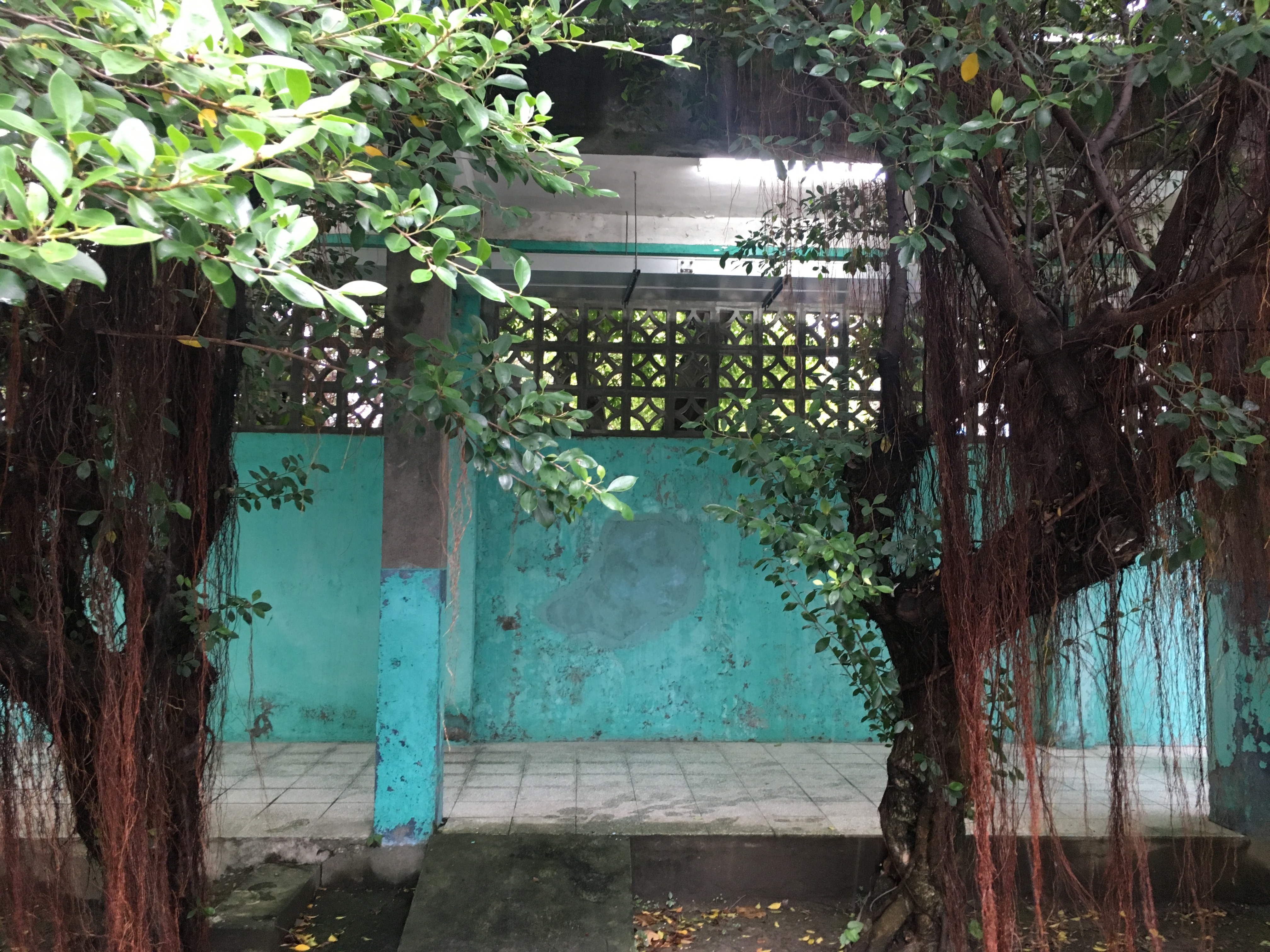
Perimeter wall of the Jingmei Human Rights Museum

Several months ago, I went to the Jingmei Human Rights Museum and noticed that a cyan or light teal color featured prominently on many of the buildings, especially on doors, bars and outdoor perimeter walls. I've seen this color frequently in Taiwan and if it hadn't been so predominant, I might not have even noticed it here. But it was everywhere, in a place meant to be a prison toward the end of the White Terror era.

I asked a few people who worked there, who said it was just a popular (and therefore possibly inexpensive) color at the time, and the builders perhaps wanted to bring a little bit of a 'sky' color to otherwise dank, gray, unforgiving cell blocks. I found the desire to make living quarters nicer suspicious - after all, the guards would engage in soul-crushing cruelties in other ways, so why would they care about the cells looking brighter? But that the paint was perhaps inexpensive and readily available made more sense.


I find it hard to believe that the people who built and ran this hellhole would care one bit about
making the inmates feel more comfortable by painting some things bright colors. 

Another worker there told me that one name for this color, which I would call 藍綠色 lán lǜsè or 青色 qīngsè (though you have to clarify which 青 you mean, as it just denotes 'nature's color' - think new plants, a view across blue mountains, that sort of thing - and is also a way to describe rice liquor) was 防空色 fángkōng sè, or "air defense camouflage". Googling that, however, I found most things labeled 防空色 were brown, khaki or dun-colored, meant to blend into the earth from the sky. I suppose you'd really only use a bright teal or cyan as 'air defense camouflage' if the thing you were trying to obscure stuck out into the sky - but that's just conjecture.


I wanted to know more, but being both busy with graduate school and not exactly a great investigative reporter, I didn't get very far. Tatung (大同) famously made electric fans in that color - fans which have become one of the traditional products that form a sort of iconography or semiotic imagery of Taiwanese history and identity, alongside rice cookers from the same company, small Taiwan Beer glasses, those three-color plastic shopping bags and more. They still make those fans: I would know - I have one. The color is even called "classic green". 

I hate calling people, so I dropped Tatung a Facebook message to ask why these fans were traditionally that green-blue color (it seems like it might be possible to email through their website but the only avenue seemed to require a lot of information about the product purchased, meaning it's probably not the best avenue for finding out what I want to know). I haven't received a response but I'll update here if they ever reply.

Untitled
My own Tatung retro fan in "classic green"

At that point I considered that these fans had been around since the mid-20th century, and that turquoisey greeny blue was quite popular in the 1950s in the US, which was the country that Taiwan was most looking toward as it cut off contact with China and was a strong ally to the United States. Maybe it was just, well, popular. Popular things tend to be easy to come by, and cheap, so that might be a simple explanation that goes a long way.

In any case, I Googled "air defense camouflage" in Chinese and came up with this fascinating article on the use of color and tile on Taiwanese buildings during the Japanese era (link in Chinese, by a professor at NTU).

It's a lot to sift through, but essentially there is no specific color called "air defense camouflage",  and the term has been typically used for all of the yellowy browns, cement, dirt and khaki colors you might imagine. In fact, a quick look at this traditional Japanese color chart lists a bland dun-yellow-brown as "national defense color" (國防色 guófáng sè). That said, according to Horigome in the Chinese-language link above, "light green", "bright blue green" and "green-green", are colors described as 'air defense camouflage' by a the Kaohsiung City Museum and Kaohsiung City Culture Bureau. He then goes on to note that it's not at all clear that the purpose of such colors was actually to help camouflage buildings from aerial assault, but that such colors might simply have been considered pleasing or fashionable and might have been chosen for a number of reasons: performatively (to display how patriotic one was by using national defense colors); aesthetically (they just liked it), or because it was thought to fit in with the surrounding area or other colors. 


Untitled
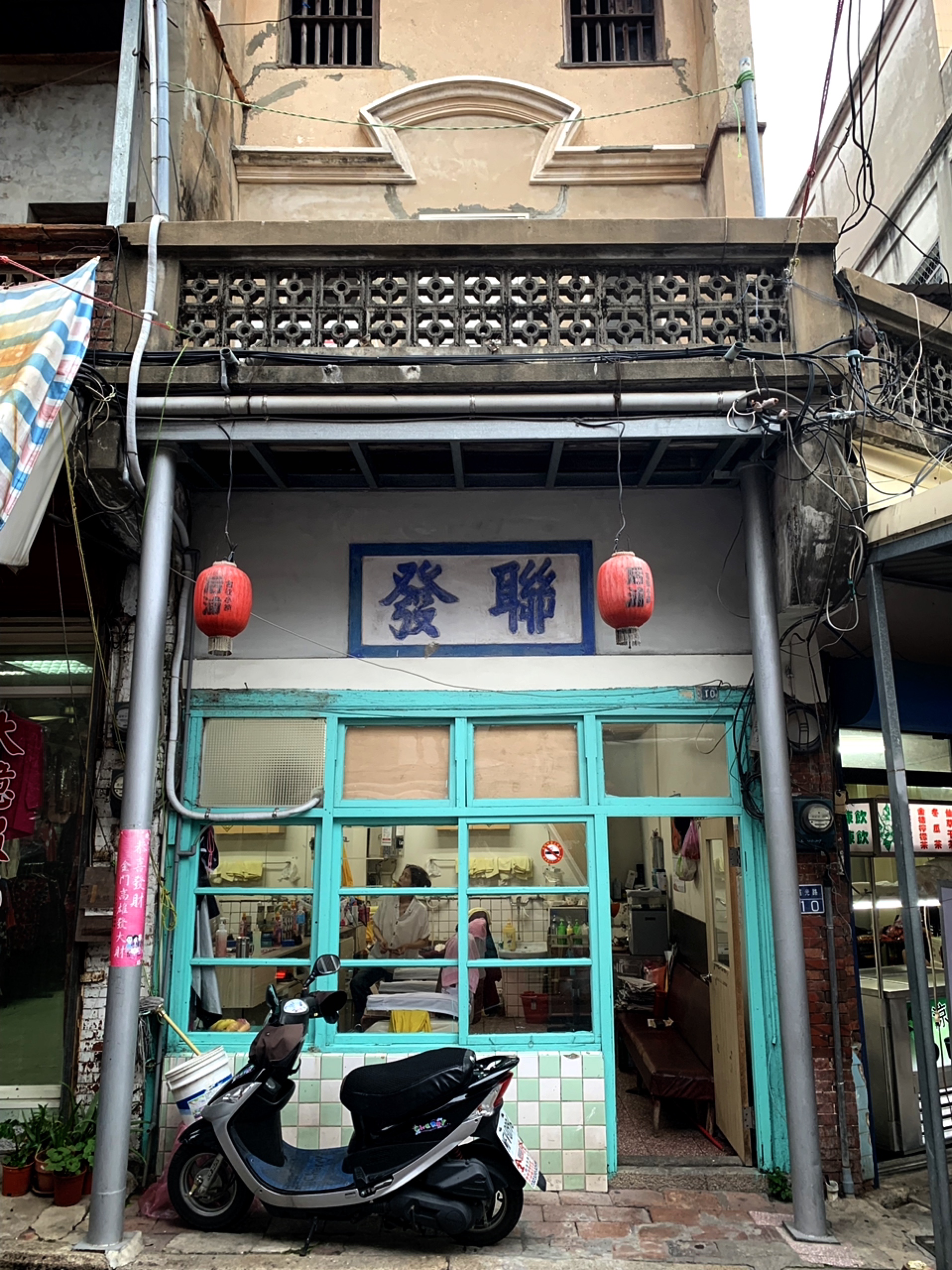
A building in Kinmen, Taiwan (Kinmen was never Japanese so I doubt it would have become popular here as a result
of Japanese influence)

Looking more at that color chart again, the colors most similar to the cyans and teals seen in Taiwan seem to be either 'new bridge' or "Shinbashi" color (新橋色), clear blue-green (青綠色), fresh bamboo (青竹色), celadon (青磁色), 'ancient' green-blue (青色). Of all of these, I think 'new bridge' is the closest match, and this helpful website in Japanese explains that it was a popular color in the late Meiji era, especially among the geishas of the Shinbashi neighborhood of Tokyo. 

The late Meiji is right around the time that Japan was consolidating its rule of Taiwan, so if the popularity of teal came from that...cool. Though it seems like quite a stretch to say that a color popular in Japan during the colonial era would influence, say, the color that prison bars were painted during the White Terror, or the color of electric fans in the mid-twentieth century. 
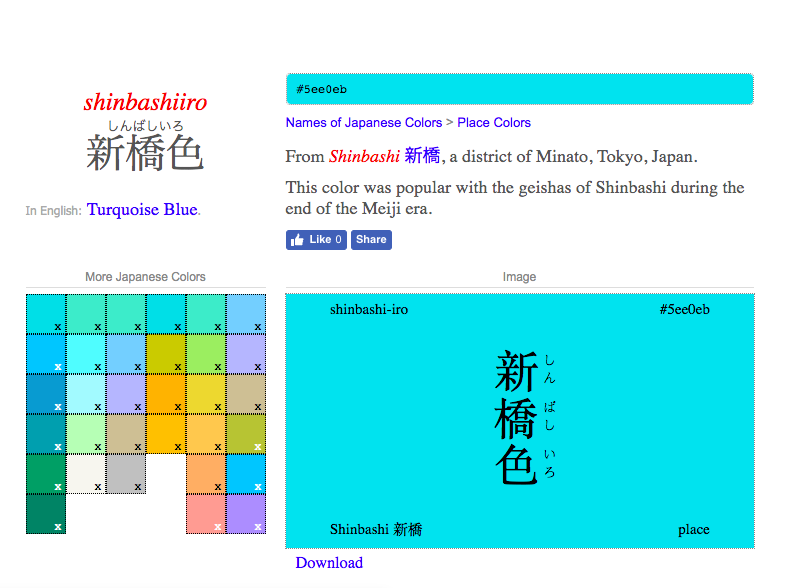


Screen Shot 2019-07-09 at 9.25.35 PM
The history of "Shinbashi" blue


Untitled
The color remains popular in Japan


IMG_9517
A Japanese-era wooden building in Chiayi city
(Yeah, I went to Chiayi for a bit and never told y'all)

My guess is that perhaps the color may have become widely used in Taiwan during the Japanese era, possibly for 'air defense' reasons or possibly simply because it was also popular in Japan. It sure does appear on the window frames and casements of a lot of Japanese-era buildings, especially brick or wood ones. Then I'd guess it simply stayed popular because it's a nice color and offers a striking and pleasing contrast with the brick and dun shades of Taiwanese buildings.

Another pet theory that I can't prove at all is that it's a popular color for window casements and bars because it is similar to sky blue - with blue window bars, you might be able to look outside on a clear day and feel like the bars (which are unsightly but considered "necessary" for safety reasons) were perhaps not there at all. 


That brings us to the modern era - the color has seen a bit of a resurgence in political activism. All of those "I support Taiwanese independence" stickers, flags, towels and t-shirts use it. It's been around since at least 2014 and the Sunflower Movement, and (so I was told anyway) a well-known activist who runs a coffeeshop in Taichung designed the current popular crop of designs.


Screen Shot 2019-07-09 at 9.13.24 PM
A screenshot of the designs popular today
IMG_7508
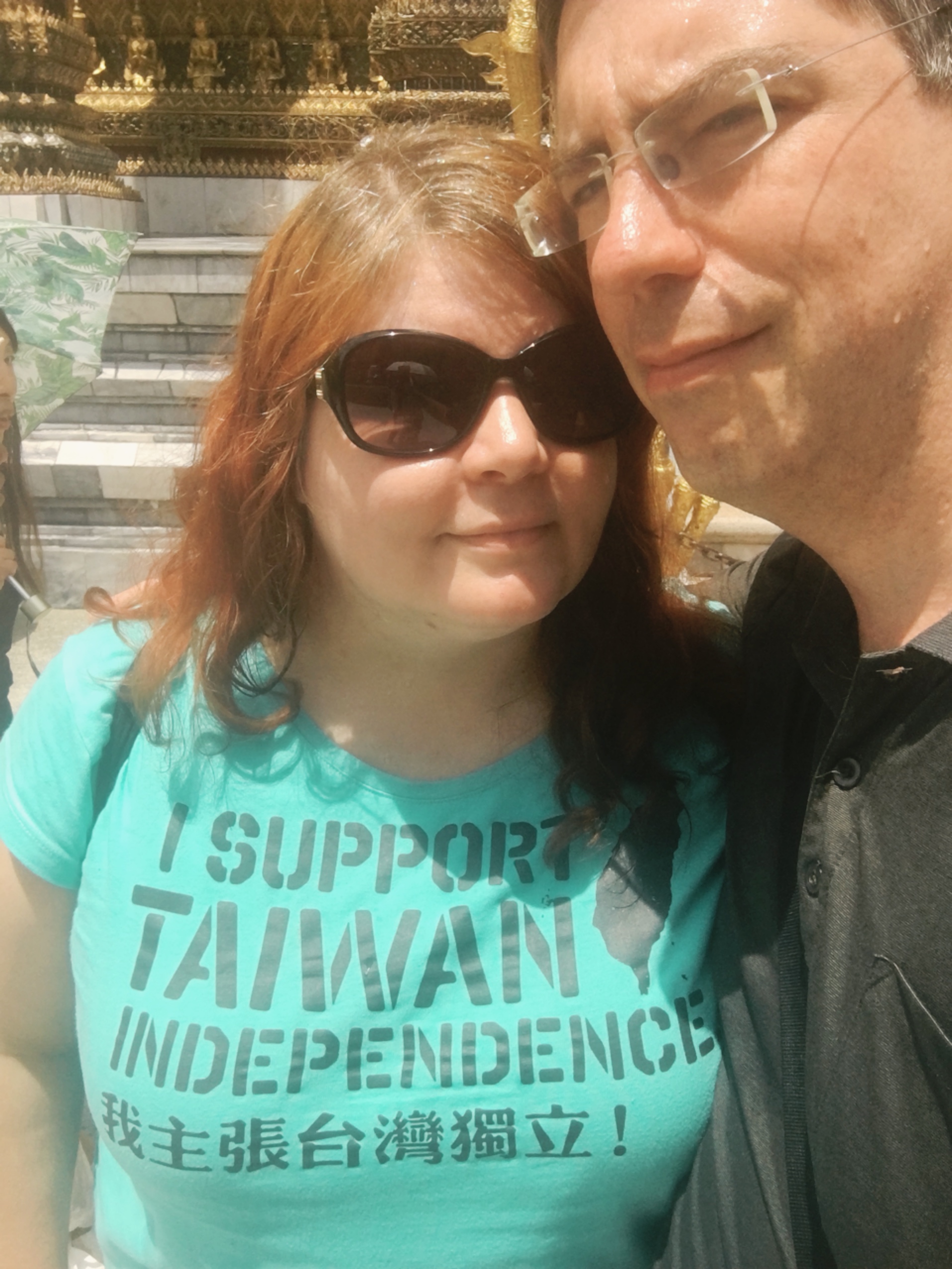
Even I have the t-shirt! 


I asked around - including the person who I was told had created the designs (who wasn't too forthcoming) and didn't get any clear answers. One activist friend said he'd heard the use of the color was meant to symbolize "the mixing of green and blue, because we are all Taiwanese regardless", but expressed doubt that that was the actual intent behind the color choice. I noted the historical roots of the color, but neither of us is sure if that plays any role. Perhaps it was chosen simply because it is an attractive color that happens to be popular right now, but color symbolism in Taiwanese politics is far too complex and just inextricably intertwined with parties, ideas and movements here that I do believe it was chosen for a reason. However, I'm still unsure of what that reason is.

You might also notice that many candidates of another political party have been using that same color - the DPP. Were they using it to try and identify more closely with social movement activists? Were they trying to tap into it as a historically symbolic color of Taiwan? Why was it popping up everywhere in DPP campaigns too, as late as this last spate of elections in 2018?


See? (Lime green is popular too now)


I asked a friend of mine who campaigned in 2018 (and won!) and who had used this color in his campaign and his answer was much more pragmatic: first, he (and perhaps other) DPP candidates felt that the party's traditional deep green was too old-fashioned - "very 1980s". The other was that since everyone was using it, it was cheaper to order campaign materials in that color.

Well, so much for trying to tie current political trends to historic notions of Taiwanese identity through color symbolism - avoiding the usual suspects of red, blue and green. Perhaps someday I'll get to the bottom of teal/cyan/"new bridge color"/"air defense camouflage", and I'll keep you updated if so.

Whether or not the color just happened to be popular in the past, there's no question that its use in political imagery is somehow intentional. It was chosen for a reason; I just don't know what that reason is. For DPP candidates, it may just be that it's inexpensive and popular but also modern, and doesn't scream "old guard DPP" while still retaining a callback to the party's traditional colors. (You'll notice that in an attempt at feminization, some female KMT candidates have been using shades of pink - this seems less popular among the DPP.)
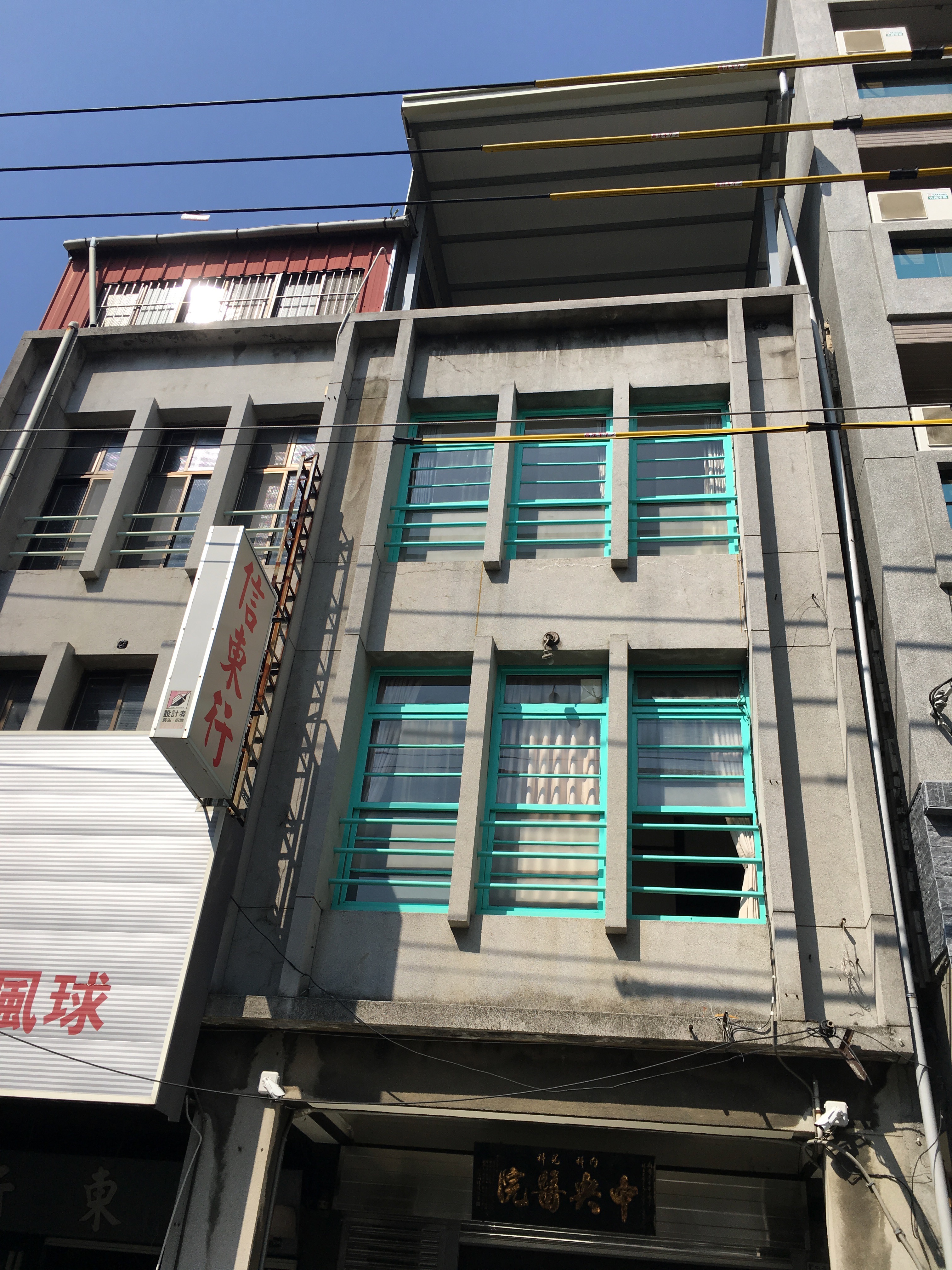


IMG_9518
Another building in Chiayi city, probably built in the 1940s (?), but that paint is pretty new.
It must be a contemporary and purposeful choice. 


If you were wondering, by the way, whether my choice to use a color very similar to this on Lao Ren Cha was intentional...it was. I've associated this color with modern Taiwan and Taiwanese identity for years. It also happens to be one of my favorite colors. 

We all know how this ends: a howl for Hong Kong and Taiwan

62606874_10157418699441202_2408392624785326080_n
Support rally for Hong Kong in Taipei in mid-June


A lot of op-eds and thinkpieces have come out recently regarding the events in Hong Kong and Taiwan's status - in fact, one side benefit for Taiwan (other than a boost for President Tsai) is that the turmoil in Hong Kong is causing the world to also take a closer look at Taiwan. I may blast the international media for not getting Taiwan 'right' (and they often don't, even the most well-intentioned among them), but these past few weeks, journalists who aim to raise awareness about Taiwan to the world have really come out in force to tie the two issues together, and I am grateful for that.

Instead of linking throughout the piece, let me draw your attention to some of this excellent work:

Taiwan's Status is a Political Absurdity
Wishful Thinking and the China Threat

Hong Kong Has Nothing Left To Lose
Support for Hong Kong rises in Taiwan amid fears for a future under Beijing's rule

Hong Kong And Taiwan Are Bonding Over China (in fact they've been close since 2014 but nobody in the international media cared until a few weeks ago)
Hong Kong's Desperate Cry

...and more.

All I could think while I read this excellent work were of two things I experienced recently. First, at the 'support Hong Kong' rally outside the Legislative Yuan, one of the speakers quoted Dylan Thomas - slightly out of context but I'm cool with it - exhorting us to "rage against the dying of the light".

And another context, over a week later, in which a friend made me her plus-one to a reception at AIT and I told some random employee quite directly that it was time to officially recognize Taiwan - not as the Republic of China but as Taiwan. He wasn't wrong when he mentioned anger from China, or that the US does do what it can (generally, depending on whose in charge). But I said to him:

"Look, you know where this ends, right?"
Random Guy: ...
"You know this ends in war."

And that's just it - all I can see in Hong Kong's future is bleakness. War, massacre or the dying of the light. I don't predict a much brighter future for Taiwan, though at least there's a sliver of hope remaining.

I mean, pro-democracy forces in Hong Kong should not back down, and will not back down. There is no legal pathway for Hong Kong to go from where they are now to full democracy, and the protesters realize this means civil disobedience is necessary (I have a link for this as I'm not the only one who's had this idea, but I can't find it). In any case, if you accept that there is in fact a 'right' and a 'wrong' here and those who want greater freedom and autonomy for Hong Kong are right, they should not back down: Carrie Lam, LegCo and their Beijing handlers should. It's not the protesters' job to ensure peace - it's their job to fight for what's right. Peace will come when the bad guys stop being bad.

But that's not going to happen.

It's even worse than that - the anger here isn't just over the extradition bill. Withdrawing it won't fix the problem.

The problem is that what Hong Kongers want - as a general consensus - is actual democracy and a greater degree of sustained and guaranteed autonomy (with a vocal subset wanting full independence). And that is like oil to Beijing's water. Worse still, there is no emulsifying agreement in the world that could make them mix. This isn't just because democracy anywhere on Chinese soil (or on claimed Chinese soil) scares Beijing as it might give their own citizens ideas they find unacceptable, but also because they fundamentally don't understand why it should matter. They just don't see why Hong Kongers should need or want it. They have no intention of negotiating an agreement that gives Hong Kong real democracy and human rights, let alone allowing such a system in perpetuity - and yet that's exactly what Hong Kong wants. And nothing less will do, because anything less is not democracy or human rights, period.

And in 27 years, these two notions of how a country should be are headed for a game of chicken, with millions of lives at stake - with no real middle ground for negotiation. Either you have a democratic system with a trustworthy assurance that it will not be eroded, or you don't. There is no universe in which the CCP has power and is willing to offer that assurance.

I mean, look at who the pro-democracy forces are talking to - a leader who cries more over broken glass and spray paint than people who actually died, and is now presiding over the widespread arrests of demonstrators, and a huge government that once rolled over their own people with tanks, is in the midst of a literal genocide in Xinjiang, and will do it all again if they can get away with it because they fundamentally don't see what's wrong with any of it.

So when you've got one side that isn't going to readily accept anything less than this, and another (more powerful) side that doesn't even see why it should be considered important, and the second side basically owns the first...well. None of the thinkpieces on Hong Kong want to go that far or say the words, but come on. We know where that ends.

All I can say is I don't know what the UK was thinking when it assumed that 50 years - or any number of years - would be an acceptable period of time in which to convince an entire city that the democratic norms they never really had but do want were not necessary, and that it would be acceptable to let a regime like the CCP determine Hong Kong's future. They had to know that at the end of the One Country Two Systems timeline, that Hong Kongers wouldn't be clamoring to give up what limited rights and freedoms they had to be more like the rest of China. Was the UK really that shortsighted - thinking it was doing the right thing by giving up its colonial rule to deliver Hong Kong to an even worse master?

(Yes.)

Is there any way to stop the inevitable? Perhaps if the world does more than pledge verbal support to Hong Kong and actually does something to make China feel a bit of pain - though probably not. I don't think any country is willing to actually send in troops to stop the slow erosion of Hong Kong, when the process by which it is happening is entirely legal and was in fact somewhat negotiated. I also somewhat doubt that they'd put the economic screws to China, because it'd blow back on their economies as well. If there's one thing I've learned in the 21st century, it's that even when it might be effective, wealthy countries are terrified of doing anything that might cause economic discomfort.

It's not much different for Taiwan. We know where that ends too.

China's not going to stop insisting on annexation, and Taiwan is just going to move further away from China. There's no common ground there either: either Taiwan is sovereign, or it isn't. Either Taiwan has a real democracy with real democratic norms and rights, or it doesn't. China can promise this under a unification framework, but it doesn't understand why it should have to keep such a promise. Beijing either genuinely can't tell the difference between a "democracy" in which all candidates are pre-approved by the CCP and other freedoms or limited, or they don't care, and they're not exactly known for keeping promises, so there is no incentive to follow through in good faith.

So what happens to Taiwan when China finally has the wherewithal to actually force the issue? Does Taiwan fight and hold off the first wave, only to possibly/probably lose later? Does it become a protracted bloodbath not unlike Syria, because annexation isn't exactly an over-and-done deal and Taiwan is more of a poison pill than an easily-subjugated territory? What happens if a future KMT president tries to ram through a "peace treaty" the way they tried to ram through CSSTA? Do we have another Sunflower Movement, except bigger and with escalating police violence this time?

What happens when Taiwan and the world fully wake up to what many of us have known for awhile: that there is no middle ground that can be negotiated with China? That there is no "you two sides have to settle this peacefully", because one side cannot be trusted?

Does the world step in?

Because "we're doing what we can" (under current frameworks, agreements, treaties etc. that are in place) isn't exactly reassuring. When we're down to the wire and troops are rolling in, do you do something or not?

If we don't do anything - if we cry and wail and make verbal statements of support, or "talk behind closed doors" (or even open doors) but don't actually lift a finger, if you're afraid to even wobble the economy just a little bit...where does it end?

Does it end with a victorious Taiwan, sovereign and rejoicing that it fought off a massive enemy on its own?

Does it end with a victorious Hong Kong, with true, full democracy and all the rights and freedoms that implies?

Does it end with a free world that can co-exist peacefully with China, their raging expansionism sated? A world free of debt traps, Chinese-owned transport infrastructure that is never held hostage whenever China wants something from the country that infrastructure is in, and technological infrastructure that is safe for the world to use?


Obviously not.

When we say "well, we're doing what we can...it's complicated...I mean, Hong Kong is a part of China...we know Taiwan deserves better but China might get angry...I mean, it's tough to do anything about those concentration camps" and pretend that that is sufficient, we all know how this ends.

When we try to talk about these issues as though it's still acceptable to kick this can down the road - okay you guys, just sit in the morass for awhile because cleaning up the morass would make Beijing angry, eventually we'll figure out how to drain it even though Beijing is opposed to every form of drainage system that works - we know how this ends.

I know that's been how tricky diplomacy has worked for decades - just find a way to put it off until later, even if the people who actually live there have to exist in an anxious limbo for generations - and I'm not the first person to have this thought. But it's not going to keep working. So why are we letting the ghosts of the '80s and '90s try to convince us that it will?

When we pretend that short-term band-aids can fix long-term disagreements, and pretend that there is always a middle ground if we just "keep talking" until we find it, and keep telling the good guys to "just wait" because the bad guys need to "agree" to a solution, when we pretend that the only 'evil' or colonial powers in the world are Western ones, and when we pretend that an oppressive authoritarian regime might possibly - with the right negotiations - be acceptable someday to people in freer places like Hong Kong and Taiwan, or that Beijing is interested in working towards an acceptable solution at all...

...well, we all know how this ends.

Don't pretend that the rest of the world can decline to step in and there will still be a happy ending. Don't pretend that China is actually interested in any sort of happy ending that doesn't result in them getting everything they want, regardless of what others want.

So gird your loins, folks. It might be taboo to give voice to what we're all actually worried about - to say "this could be another Tiananmen, or another Syria, or worse", but...


...unless we make Beijing back down now and stop pretending a compromise exists, that's where it ends and you know it.  

Sunday, June 30, 2019

Book Review: The Astonishing Color of After

51F1q-O2BsL._SX330_BO1,204,203,200_


The Astonishing Color of After
Emily X.R. Pan


I like to situate my book reviews in the real world - whatever is going on in my life, I try if possible to relate it to what I've read. I do this because I'm not a professional book reviewer, and I want to offer something more unique than a bog-standard review you might read in a newspaper.

As it so happens, I read The Astonishing Color of After - which deals with depression and suicide - during a time when I was (am?) coping with anxiety, mostly related to graduate school. I don't have depression - anxiety is not the same thing - but what drew me in was a line towards the beginning of the novel - the colors around me were all wrong. I was lucky, if only because I was able to see that something was wrong in time to seek professional advice (it turns out that my case is mild and I don't really need anti-anxiety medication if I make a few lifestyle changes - breathing exercises, no social media before bed, that sort of thing). But what really helped me connect with this novel was realizing that while I'd always known intellectually that sometimes brains just don't work the way they're supposed to, I hadn't really understood personally - viscerally - what that could be like, even mildly. Now I do.

The Astonishing Color of After is, theoretically, YA (Young Adult) literature. The writing style is fairly straightforward, the first-person viewpoint character is a teenager dealing with teenage issues and it fits nicely alongside other YA classics. Because of this - and despite it being quite fat - it's a quick read for adults. I didn't realize that when I picked it up, but I'm happy things shook out that way - I'd just finished my dissertation proposal and needed some mental rest with easier prose. It surprises me that it doesn't seem as though this novel has gotten a lot of press among English-speaking Taiwan bibliophiles. I knew when Green Island, Lord of Formosa, My Enemy's Cherry Tree and Wedding in Autumn all came out, but hadn't heard of this book until I came across a copy at eslite. It's a shame, too - YA literature about Taiwan that can be enjoyed by anyone, even if they have no connection to Taiwan, is a niche that needs filling. That kind of soft power helps.

That said, because the narrator is a 15-year-old girl, the prose is written a bit too...muchly. There's explicitness where something might be implied, melodrama where subtlety and implication would suffice. It works, though - the story is told as a 15-year-old might tell it. You can almost envision what the journal entries of the narrator would be like.

Without spoiling too much, the story follows Leigh Chen Sanders, 15-year-old American-raised daughter of Dory Chen and Brian Sanders. When her mother, Dory, commits suicide, Leigh is convinced she's turned into a huge red bird, and eventually seeks answers to her mother's family history in Taiwan. Leigh not only grapples with her mother's death, family secrets and feeling lost in an unfamiliar country, but a father who can barely cope himself as well as a very common teen issue: wanting to do something creative with your life as one of your parents pushes you down a practical path that you are entirely unsuited for.

This struck home for me too. I'm not a teenager anymore, and I'm not in a 'creative' profession (writing is a hobby, not a consistent income source). But along with my dissertation, I've been grappling with exactly why I chose to become a teacher when I don't feel the money I earn really justifies my choice (and don't always feel appreciated in a professional capacity either). I know people think foreign teachers out-earn other professions here, but that's really only true early on. When you hit your thirties, gain experience and professional development and credentials, you start to notice that if you'd gone to work for some corporate machine you'd be earning more by now. But, as with art or music, there are other reasons to choose teaching.

Taipei is rendered as accurately - if generically - as post-smartphone suburban America, and the story is deeply engaging. Pan does a great job of narrating the difficulties Leigh has with Mandarin - a language she is familiar with but doesn't really speak and can't read at all - and Taiwanese, which is incomprehensible to her. The flourish of her Taiwanese mother not really wanting to return to Asia despite her American father being keen do to so - and that same American father speaking and writing fluent Mandarin as his Taiwanese wife avoids her native language - presents a flourish to the story that upends stereotypes readers may have. Frankly speaking, it's a circumstance I've seen play out in real life, and it was interesting seeing it depicted in fiction. It reminded me of how my own grandfather, himself not a native speaker of English, purposefully never taught any of his children Western Armenian. As a result, I never learned it either.

I'm of two minds about Pan's depiction of Taipei. Everything was accurate - the alleys, the doors, the weather, the parks, the house slippers, the apartment shrines, the shops and temples. The depiction of supernatural events fits fairly well within Taiwanese religious beliefs, and the touch that Leigh's mother would visit both a Taoist and a Buddhist temple and not see any problem with that sort of syncretic belief (a fairly common thing to do in Taiwan) was a thoughtful flourish. Leigh's grandparents could be any number of older couples in Taipei city.

But...but. I wish she'd been more specific. Which street with brick arches did she reference? Was it Dihua Street? If so, the temple she described looks nothing like the most famous temple on that street. Was it Longshan Temple? It could have been. But if so, what street? What neighborhood did the Chens live in? Which spot on the North Coast did they actually go to? (Jiufen is referenced but then not much more is said about it or what the scenery is like.) One thing I love when reading novels that take place partly or entirely in Taipei is reading about the author's description of very specific places that I can go visit, if I like. When Pai Hsien-yung talks about Longjiang Road and a park which is obviously 228, I have specific mental images I can conjure up to give life to the story. There's something to be said for referencing a generic residential lane, a generic neighborhood park - the Chens could be anyone and there's literary merit to that - but I like my fictional Taipei to be grounded in a reality that I can personally reference.

I was intrigued by the very common Taiwanese family story of the Chens - a grandmother born in Taiwan and growing up in poverty, and a grandfather who came with the ROC military from China. Leigh's grandmother speaks Mandarin and Taiwanese (her grandfather's linguistic background is less clear). When we start to see flashbacks of Leigh's mother's life in Taiwan, one reference concerns her marrying someone "Chinese" (me: not Taiwanese?) but later that's references as "Chinese or Taiwanese". Which...huh.

There's a lot of digging that could be done into family political dynamics there, a lot of engagement in that particular issue that Pan - and by extension Leigh - could have pursued. But it's left there; there's no further discussion of issues of Taiwanese linguistic, historical or cultural identity. I suppose that'd be a bit much for a YA novel not necessarily marketed only to readers familiar with Taiwan, but it would have been interesting to explore.

Where the novel does a little better is discussing Taiwanese religious beliefs and superstitions, especially regarding ghosts and the afterlife, and Ghost Month in particular. Although I wish the novel had actually gone to Keelung for Ghost Month after explicitly referencing it, beliefs about ghosts roaming the earth and burning items for them to use in the afterlife, I think foreign readers will find these descriptions interesting.

All in all I'm happy I read The Astonishing Color of After, especially when I did. Its ideas and plot threads came through at a time when they could resonate especially strongly for me, and its clear prose was an inviting fictional place for my mind to escape to when it very much needed an escape.

Even better? I think you can still buy it at eslite!

Wednesday, June 26, 2019

The kids are all right

65325263_10157441334191202_9143348154656096256_n

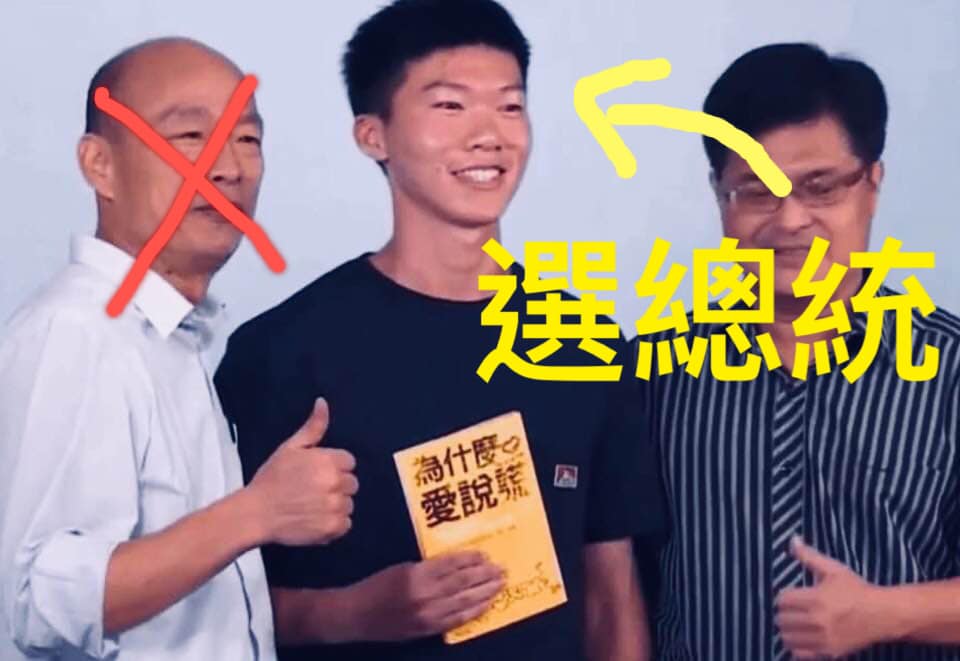
Yes, it's been almost two weeks since I've updated, and no, it wasn't planned. I just really had to get my dissertation proposal in. I was going to jump back into blogging with a few restaurant reviews, a few long-overdue trip reports, a book review...you know, the sorts of things that a person who's just spent the past two weeks deeply stressed out might post. But no, some kids in Kaohsiung decided to be awesome, and now that has to come first.

I have a jumble of thoughts about these kids - who are old enough to have been my kids in a very different timeline, which is super weird because I totally want to buy each of them a Taiwan Beer like an old friend or Cool Aunt. I love how creative they are, how willing they are to take public risks to say what they think, and how thoughtful and full of integrity they are at that age. How civil the points they are making are - there is nothing uncivil about telling the mayor to finish his term, or pointing out that he lies. He does lie. It's speaking truth to power at an admirably young age.

I mean, damn - I was a total dipshit at 17. To be honest, I'm jealous. If these are our future leaders, we're going to be okay.

My first thought is that if we can keep Taiwan safe - as in, still a functioning democracy and not sold out to China - long enough for this generation and their immediate elders (think Millenial Taiwanese) to be the most influential voting block, then Taiwan will be just fine. A large enough percentage of them are smart enough to see Chinese media infiltration and other nefarious tricks for what they are, and showed up in droves (tens of thousands, not thousands) to protest it. They understand what equal rights really means and are willing to put in the time to physically show up and voice their discontent.

In fact, their way of protesting Mayor Han was creative and ballsy enough, clear and concise yet civilized, that Taiwanese civil life will be made better as more of them grow up to be activists and public figures, or start otherwise contributing to the discourse here. They are quite literally doing what their parents and grandparents won't, seeing things their ancestors are too naive (or wrongheaded, or brainwashed) to see, and noticing that if a public protest against Han is going to be lodged, they're the ones who have to do it. They're doing what their elders should be doing - but aren't - as it becomes clearer that Han is a Manchurian candidate, with a whole host of undesirable puppet masters.

They know the pro-Han, pro-China, pro-KMT media won't report on their rebellion, but they also know their parents and grandparents will be in the audience or see those photos. They're aiming their protest not just at the media, at Han, and Taiwan at large, but at their own elders, in such a way that they can't look away or ignore it. That's just smart.

That's the thing, though - China knows this. The KMT knows this. The unholy China-KMT Union (yes, it is a thing, don't pretend you don't know) knows this. They are perfectly well aware that they will never, ever win the hearts and minds of the youth, so the plan is to rip the carpet out from under the youth before they gain enough political power to stop it. The war (yes, it is a war - yet again, don't pretend you don't know) is escalating because they know their window of potential victory narrows every time an easily-manipulated older person dies, and a more attuned one gets the right to vote. They need to destroy Taiwan's democratic norms and will to resist before that happens, and frankly, we're not fighting back fast enough.

That's not to say every older person is 'easily manipulated', but enough of them are that it's a real problem, and China is absolutely seizing on it.

My next thought concerns this response from Han, from the Taipei Times link above:

“I think it is a great thing when young people speak their mind,” Han said yesterday in response to media queries. 
He has always encouraged young people to express their opinions and will support them under any circumstances, but it is “inappropriate” to tie political issues to an educational event, he said. 
“If students have opinions, they can express them off-stage,” he added. 
Taking a photo on stage with the mayor after receiving an award for graduating with top grades is the “most honorable moment of [a student’s] life” and he hopes such educational events can remain pure, Han said.

First, Mr. Han, if you really thought it was a 'great thing for young people to speak their mind', you wouldn't say that they should do it offstage - in the least effective way, where it won't hurt you at all. You're fine with them saying what they want as long as nobody listens.

Secondly, this whole thing is a massive concern troll - "inappropriate", "it's an honorable event, keep it pure"? Yeah, okay, and I bet you're just "worried about their health" or "don't want them to have any trouble later", too. Whatever buddy.

And, of course, it's absolutely laughable that a politician showing up at an event would say that event should be free of politics. If you want a politics-free event, politicians should not be invited. They are public figures and must accept that they are fair game at any public event. They make it political by being there. Otherwise Han's just saying that his politics - photo-ops with award winning students are inherently a political activity undertaken to make a politician look good - are apolitical, but everyone else's politics 'impure'.

A lot of people are saying that these kids are the brightest, the award-winners, the smart ones - they're not representative of Taiwanese youth as a whole. And yes, they do stand out. But every generational shift and successful social movement has the people at the tip of the spear. That doesn't mean the rest of the spear isn't there, or isn't important.

If anyone knows where I can formally offer to buy every last one of them a beer - yes, even the underage ones though they can have bubble tea if they'd prefer - I'd love to hear it. And I'm not sure I'm joking.